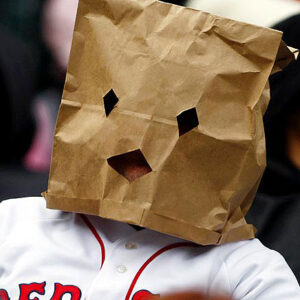
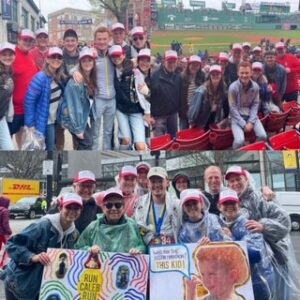
Taking Off My Red Sox?

Joe Posnanski, the fantastic sportswriter and podcaster, simply had enough. After a lifetime of Cleveland Browns fandom, after “Red Right 88,” “The Drive,” “The Fumble,” a middle-of-the night absconding to Baltimore, after a revival of the franchise, after all the heartbreak, and near elation, the ownership of the Browns dropped one additional straw — a $230 million guaranteed contract straw — onto an oft-injured camel, and Joe was out. As he has written in his terrific blog and talked about on The Poscast, when the Browns threw caution and morality to the wind and signed (alleged) serial sexual harasser Deshaun Watson to a fully guaranteed $230 million contract, with only $1 million allocated to this season when he was certain to be suspended (he was, for 11 games), Joe took his rooting interest elsewhere. Where? He is not sure yet; he has spent this season searching for a new team.

Last year, Cincinnati Reds fans were none-too-pleased that the team traded Sonny Gray, Jesse Winker, Eugenio Suárez, and Amir Garrett. When a reporter asked team COO (and son of the owner) Phil Castellini how he would respond to the fans booing the product on the field, he asked: “Well, where are you going to go?” Now that is a front office executive who really seems to care about the fans, their enjoyment, and their willingness to support the organization. While it is not possible to know if — or how many — Reds fans called Castellini’s bluff and went elsewhere (Posnanski style), we do know that fewer fans showed up to watch the Reds play last season than at any point since 1984 (2020 excluded).

Joe’s plight with the Browns, and Cincinnati fans’ rejection of the Reds, got me thinking about my beloved Red Sox. It seems that Boston’s ownership group, who should never need to buy another drink anywhere in New England ever again after bringing four World Series championships since 2004, has turned its back on the fans they claim to cherish so much.

These owners formed Fenway Sports Group to spread their investments over the BoSox, Fenway Park, Liverpool in the Premier League, the NHL’s Pittsburgh Penguins (who lost the NHL Winter Classic at Fenway Park on Monday while John Henry was heckled and cursed walking the concourse), 80% of NESN, and 50% of NASCAR’s RFK Racing. 

With all of these disparate interests, the owners seem to have taken their eyes off the Red Sox ball, or are just too busy keeping their eyes on Boston’s bottom line. They appear to care little about the success of the club or their fans’ feelings. So — like it was for Joe P. — the question becomes: When are ownership’s actions so egregious that it is time to pick a new favorite team? In the case of the Red Sox, when is too little simply too much?

Jon Lester

One could argue that the beginning of the end was offering home-grown hero Jon Lester (overcame cancer, threw a no-hitter, and won the World Series in 2007 and 2013) a ridiculously below-market deal before the 2014 season. Lester had said that he would take a hometown discount to stay in Boston. So, the club offered him four years and $70M. Lester viewed that offer insulting and never even responded. He was traded to the A’s before the end of the season, and ultimately signed a six-year, $155M deal with the Cubs (and helped break their curse in 2016).

Mookie Betts

And then there was the trade of the beloved Mookie Betts. Entering his final season before free agency in 2020, the Red Sox traded Mookie and David Price to the Dodgers for pennies on the dollar. (Note: This trade got worse in the past few weeks when the Red Sox DFA’d Jeter Downs, one of the highly-touted prospects included in the deal.) 

The organization will say that they tested the contract extension waters with Mookie, and couldn’t come to terms. Mookie will say that he would have agreed to the deal that the Dodgers ultimately lavished on him (12/$365M). In the interest of candor, I was (and remain) in favor of trading Betts, as I believe he truly wanted to become a free agent, and I find his after-the-fact proclamation that he would have taken a similar deal in Boston a touch too convenient. That said, the team didn’t make a competitive offer for Betts, and off he went.

Hunter Renfroe – JBJ = JBJ – Hunter Renfroe

In 2021, the Red Sox signed Hunter Renfroe to a $3.3M contract, and let fan-favorite (but chronic offensive under-performer) Jackie Bradley Jr. leave in free agency. Sentiment aside, these were good/smart deals. But after the season, rather than paying Renfroe the $7.6M he was due to make in arbitration, they elected to trade him to the Brewers to bring back … JBJ — at a much higher salary ($9.5M + an $8M buyout). Huh?

Last season in Milwaukee, Renfroe hit 29 dingers with a 126 OPS+. No Red Sox player hit that many home runs, and only two players had an OPS+ of more than 126 — we will get to them below. Oh, and Jackie played only 90 games in Boston, posting a 60 OPS+, before he was unceremoniously traded to the Blue Jays.

Xander Bogaerts

Mistakes can be overcome, and the spring of 2022 provided an opportunity. The Red Sox faithful could easily overlook losing Renfroe and replacing him (at considerably more cost and considerably less productivity) with JBJ, if the team could have locked up the de facto captain, the heart and soul of the club, Xander Bogaerts. As a reminder, in 2019 Bogaerts signed a team-friendly six-year, $120M contract, with an opt-out after three seasons. 

Knowing that an opt-out was likely, the Red Sox engaged Bogaerts in negotiations last spring. Those words are italicized because what the team offered was neither engagement nor a negotiation. With three years and $60M left on the deal, the Red Sox proposed making it four years and $90M. Said differently, they wanted Bogaerts to forego the open market by taking one additional year at $30M. As the saying goes: Those who don’t learn from the past are destined to repeat it.

Suffice it to say, like Lester eight years earlier, this “offer” landed with a thud. As such, the Xander contract/opt-out hung over the player and the team all season. But, if there is a silver lining in a last-place finish, it is that you get a full month head start on the off-season. After failing in Spring Training, the Red Sox had the entire month of October and into November to fix it. Narrator: “They didn’t.”

At 9 a.m. on Nov. 6, 31 days after the final out of their season, Bogaerts was, for the first time in his professional career, not a member of the Red Sox. But, all was not lost. When the general managers met in Las Vegas later that week, there was hope that something would get done. Narrator: “It didn’t.”

But there were still the Winter Meetings in San Diego in early December. Presumably, the owners of a multi-billion dollar conglomerate wouldn’t let history repeat itself; wouldn’t lose another face of the franchise; wouldn’t let Rafael Devers’ big brother, and the role model to their other young players, don another uniform. They couldn’t be that obtuse, could they? Well, on the eve of the close of those meetings, after much silence, there was a glimmer of light. Jon Heyman (he of the “Arson Judge appears headed to the Giants” fame), tweeted that the “Red Sox are in heavy discussions with” Bogaerts. Apparently “heavy discussions” were a six-year, $162M offer. Sure, that is $7M per season, and three seasons longer, than his current deal, but not nearly close enough.

Not 24 hours later, Xander signed a 11-year/$280M deal with the San Diego Padres. Now those were “heavy negotiations.” Of course, that deal is stupid; of course, that deal won’t pan out when Xander is a 40-year-old third baseman. But the Red Sox fiddled, and the team got burned. Six years and $162M probably would have gotten it done in March. It might have gotten it done in November before Trea Turner signed for $300M and Carlos Correa signed for more than $300M (twice, or maybe not at all). But once those deals were agreed upon, there was no world in which Scott Boras was going to let Bogaerts sign a deal without a “2” up front; and if it meant signing for 11 years to get it done, well, age is just a number (as is $280M).

And so, another star has fallen. The Red Sox now have a hole at shortstop that could be filled by moving Kiké Hernández there, which creates a hole in center field; or by moving Trevor Story there, which creates a hole at second base (assuming Story’s arm is even strong enough to play short). And they are left with a massive hole in their clubhouse, where the guy who did everything but wear a “C” on his jersey will be missed immensely.

Rafael Devers

Rafael Devers — Bogaerts’ “little brother,” best friend, and protégé — will feel Xander’s absence most acutely. During the writing of this article, Devers and the Red Sox agreed to a $17.5M deal for 2023 to avoid arbitration. And moments before this article was sent to the editors, Devers and the Red Sox agreed to a 11-year/$331M contract (subject, of course, to that pesky physical).

After the above-referenced losses, Devers was the Red Sox’ top priority, and ownership came through. This was a rarity, as, at every turn over the past decade, with the exception of the disastrous Chris Sale deal, the team has taken a conservative approach to spending. Dave Dombrowski fleeced the farm system to win “now,” and accomplished that in 2018. But ownership, knowing Dombrowski would want to spend real free agent money to keep the party going, let him go. (Dombrowski went to the Phillies, spent a truckload of John Middleton’s money, and won another pennant.)

The Red Sox still care about winning; I truly believe that. Lately, however, pennants are secondary to profits. The organization has chosen to lose “smartly” rather than win imprudently. And that reputation seems to be preceding the club. Multiple free agents have foregone Red Sox’ money and taken the same deal elsewhere. Why do you think that is? When Justin Verlander signed with the Mets, he was asked why. His response: “Steve.” Now ask yourself if any free agent would sign with Boston and respond: “John” or, even worse, “because of Fenway Sports Group.” All of that said, John Henry and Fenway Sports Group stepped up and paid Devers — words I never thought I would write.

As fans we ask: “Why own a team if you aren’t going to do everything you can to win?” An owner may respond: “Why own a team and lose money?” However, in Boston — unlike, say Oakland – they don’t have to make that Hobson’s choice (the Red Sox are valued at $3.9 billion and Fenway Sports Group is valued at $9.8 billion). Any yet, the Red Sox owners consistently make it so. But with the Devers signing, maybe the tide is beginning to turn.

Which leads us back to the original question: Is it time to cut bait? Is this my Joe Posnanski moment? Is it time to call the Phil Castellini bluff? With Rafael Devers in the organization for eleven more years, with Kiké Hernandez signed for another year, with Tanner Houck in the rotation, and Marcelo Mayer soon manning short, I’m not sure I can. The Red Sox have tested my and millions of fans’ mettle, and they have failed that test time and again. But on Wednesday they started the long road of earning back the fans’ trust. It came not a moment too soon.

PLAY BALL!!

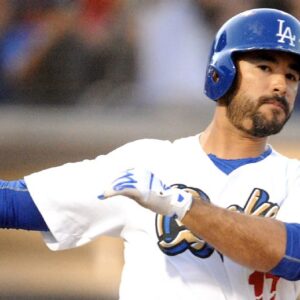
Re-Examining Andre Ethier

On May 28, 2006, the Los Angeles Dodgers started Matt Kemp in center field and Andre Ethier in left. This was the first time the two “rookie sensations” played together in Dodger blue. Kemp went 1-for-4 to start his career, and Ethier went 0-for-2 with a walk in his 22nd career game.

Starting on that late May day, these two would play side-by-side for the next eight seasons. By all accounts, the players got along just fine, with their only competition being who could do more to help the team win. But in the stands and on talk radio and on the message boards, there was definitely a split allegiance: people were either Team Kemp or Team Ethier. In the interest of full candor, I was always an Ethier guy (that could be owing to my being a L/L guy who loved Andre’s smooth swing).

Ethier was a solid player who was never too flashy. He ended his career hitting .285 with 162 home runs, and 21.5 bWAR (24.2 fWAR). His Baseball Reference page shows a dearth of black ink – he never led the league in ANYTHING. He was fifth in Rookie of the Year voting in 2006, and sixth in MVP voting in 2009 when he won a Silver Slugger award; he went to two All-Star Games, and won a Gold Glove. Ethier earned more than $115M for his very respectable career, all with the Boys in Blue.

Kemp, on the other hand, was an athletic gem. Although his rookie campaign was lackluster (.259/.289/.448 in 52 games), he hit his stride in 2007. From 2007 through 2018, he never dropped below 101 OPS+, topping out with 172 in his remarkable 2011 season. After leading the league in games played in 2010 (his first black ink), Kemp roared into 2011 and throttled the rest of the league. He hit 39 homers, knocked in 126, scored 115 runs, had 353 total bases, and had the above-referenced 172 OPS+. All of those stats appear in bold on his player page. Some will argue (this writer included) that he got screwed out of the MVP award by a cheating and lying and unrepentant Ryan Braun, but one can shed no more tears about that spilled milk. In lieu of the MVP, he was an All-Star (his first of three appearances), a Silver Slugger, and a Gold Glover. All-in-all, an MVP-caliber season.

In 2011, Kemp signed an 8/$160M deal with the Dodgers. However, by 2016, that salary was being paid by three different teams: the Padres (to whom Kemp was traded in 2015), the Braves (to whom Kemp was traded in 2016), and the Dodgers (who remained on the hook for $3.5M/year through the end of the contract). At first blush, the various trades of Kemp may be a reflection of a player’s worth. And to adapt Malcolm Gladwell’s “Blink,” that would be correct.

After posting an 8.0 bWAR in 2011, Kemp reeled off seasons of: 2.8, 0.7, 1.2, 0.5, 0.2, 0.1, -1.3, 1.2, -1.0, and 0.1. Rarely has a star player had such a precipitous and expeditious fall from grace. After those stints in San Diego and Atlanta, and since they were already paying him, the Dodgers brought Kemp back in 2018. He played 146 games in blue and treated the Chavez Ravine faithful to a decent season with 21 home runs, an .818 OPS, and 121 OPS+, good for a 1.2 bWAR. But the good times didn’t last. The Dodgers traded Kemp to the Reds, who released him by early May of the following season. The Mets signed him three weeks later, only to release him within seven weeks. Kemp signed with the Marlins for the 2020 season, only to be released before the Covid-reduced season began. Kemp then signed with the Rockies, playing in 43 games and hitting .239 with 41 Ks in 132 plate appearances. That was the end of the line.

The above wasn’t written to dunk on Matt Kemp. He played 14 more years in the major leagues than all but a tiny percentage of humans on the planet; and for a brief moment in time, he was amongst the best; and he earned more than $170M for his efforts. I wrote the above because I believe that the common perception is that Matt Kemp was a better ballplayer and had a better career than Andre Ethier. I believe that is simply incorrect (Ethier bests Kemp in bWAR 21.5 to 21.4, but Kemp bests Ethier in fWAR 25.3 to 24.2). Sure, Kemp had higher highs (that 2011 season is one for the ages), but he also had WAY lower lows. Injuries derailed Ethier’s career in 2016 and 2017, and he elected to retire at the end of the 2017 season (after appearing in his 50th post-season game, a Dodger franchise record). He unretired, didn’t get signed, and then officially called it quits in July of 2018.

Ethier vs. Kemp came to mind because Andre’s name appears on the 2023 MLB Hall of Fame ballot. This is his first – and most likely last – time on the list. He is nowhere close to being a Hall of Famer; he isn’t even close to being in the Hall of Very Good. Andre Ethier was simply a solid major league outfielder who went about his business with no fuss and no muss for twelve seasons. He was a pillar in the community, who was appreciated by teammates and opponents, alike. Unfortunately, for the bulk of his career, he was overshadowed by a player with considerably more athletic ability, more raw tools, and one season of VERY flashy stats. But that should not cloud our memory of Andre Ethier. Every team wants and needs a few Andre Ethiers. And, if he fails to garner 5% of the HOF votes (which, let’s be fair, is highly likely), and thus this is the last time we truly reflect on his career, I want to make sure we all appreciate who and what he was.

PLAY BALL!!

Quit Your Whining

In the end, the best team won. That sort of vindicates the system, no?

At the beginning of these playoffs, the first under the expanded format wherein 12 teams were allowed into the dance (2020 excepted), there was a great deal of Sturm and Drang about the early outcomes. When the 89-win Padres knocked off the 101-win Mets in the Wild Card round, and then when those same Padres bested the 111-win Dodgers in the NLDS, and when the 87-win Phillies beat the 101-win Braves, Rob Manfred’s name was being burned in effigy from coast to coast, and even down south.

“How could we let this happen?,” fans cried. “What is the purpose of being great in the regular season?,” fans lamented. To me, all I heard was whining. Buck Showalter, the terrific manager of the Mets (as well as many other teams) put it perfectly, and perfectly succinctly: “Play better.” That’s it; that’s all it takes. And maybe a little luck. But it certainly doesn’t require yet another re-working of the playoff schedule because your team, who played so well during the 162-game marathon, forgot to bring their clutch hitting to the playoffs; or had starters get sick; or just got beat in a short series. Welcome, my friends, to baseball.

But with all of this bellyaching early in October, I decided to take a look back to determine if what we were witnessing was an anomaly or part of the game. What I found was neither shocking nor surprising. In fact, what I learned is that these playoffs were very much like most of the ones in the past. Going back to 2000 (just to choose an arbitrary round year), and excepting the wonky 2020 season, there have only been three seasons in which an “upset” didn’t occur (2007, 2009, and 2018). Sure, the Padres-Dodgers 22-win differential is an extreme outlier, but the Phillies-Braves 14-win differential is right there with the 2003 Cubs (13), the 2008 Dodgers (13), and the 2019 Nationals (13).

So, having lower-seeded teams win – regardless of the number of teams in the playoffs – is not a bug, but actually a feature of baseball playoffs system. That’s what makes October (and now November) so great. Let’s take a look:

SEASONROUNDWINNER (Seed/Wins)LOSER (Seed/Wins)WIN DIFFERENTIAL
     
2001NLDSBraves (3/88)Astros (1/93)5
2002ALDSAngeles (4/99)Yankees (1/103)4
2002NLDSGiants (4/95)Braves (1/101)6
2003NLDSCubs (3/88)Braves (1/101)13
2003NLDSMarlins (4/91)Giants (1/100)9
2004NLDSAstros (4/92)Braves (2/96)4
2005NLCSAstros (4/89)Cardinals (1/100)11
2006ALDSTigers (4/95)Yankees (1/97)2
2008ALDSRed Sox (4/95)Angels (1/100)5
2008NLDSDodgers (3/84)Cubs (1/97)13
2010ALDSRangers (3/90)Rays (1/96)6
2011ALDSTigers (3/95)Yankees (1/97)2
2011NLDSCardinals (4/90)Phillies (1/102)12
2012ALDSTigers (3/88)A’s (2/94)6
2012NLDSCardinals (5/88)Nationals (1/98)10
2013ALDSTigers (3/93)A’s (2/96)3
2013NLDSDodgers (3/92)Braves (2/96)4
2014ALDSRoyals (4/89)Angels (1/98)9
2014NLDSGiants (5/88)Nationals (1/96)8
2015NLDSCubs (5/97)Cardinals (1/100)3
2016ALDSBlue Jays (4/89)Rangers (1/95)6
2017ALDSYankees (4/91)Indians* (1/102)11
2019NLDSNationals (4/93)Dodgers (1/106)13
2021ALDSRed Sox (4/92)Rays (1/100)8
2021NLDSBraves (3/88)Brewers (2/95)7

*To keep the historical record accurate, the Yankees beat the “Indians” in 2017.

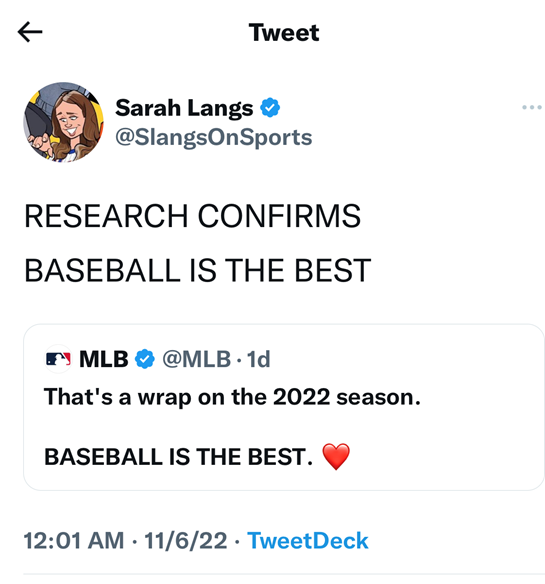
Sure, by dint of the Padres and the Phillies making a run, the numbers look skewed in 2022. And if the 87-win Fightin’s had beaten the 106-win ‘Stros, there would have been a lot of talk about upsets and unheard ofs, etc. But did the collective masses say we should re-do the World Series format after the Dodgers beat the A’s in 1988? Or when the Marlins felled the Yankees in 2003? Would we have wanted it changed if they had a parade in Philadelphia this week? The obvious answer to all of these is “no.” So kick and scream and lament that your team fell short. But quit your whining. The current system is here to stay (until there is expansion, and then we will see). Do all the math, crunch all the numbers, and then listen to the inimitable Sarah Langs:

PLAY BALL!!

Witnessing History: Albert Hits #700

On a Saturday afternoon in 2002, I walked into Pacific Bell Park to watch a pre-game montage of Barry Bonds’ milestone home runs, culminating with #600, which Bonds reached the night before. I was 18 hours too late to witness history. And when Bonds proceeded to go 0-1 with three walks, I didn’t even get a chance to see #601.

When I ventured into Dodger Stadium a three Friday nights ago, I had a hope – but not a ton of confidence – that this time I would be luckier. Truth be told, I didn’t really believe Albert Pujols had a chance to hit two home runs on a cool(ish) night at Chavez Ravine. I figured he might get one, at which point we would have seen history, but all of us in attendance would have been left on the cusp of immortality.

In my years going to ballgames across the country, I have been lucky enough to see some pretty cool things – many of which I didn’t expect. Dennis Martinez throwing a perfect game on scalding Sunday afternoon; Big Papi hitting a walk-off dinger at Fenway; the wind playing tricks at Candlestick; a Justin Turner walk-off in the NLCS; my son catching a foul ball at Comerica Park; the longest World Series game ever played; and a wild 13-12 ten-inning World Series Game 5 in Houston. Not to mention seeing my beloved Red Sox clinching the World Series with Manny Machado bending the knee.

Many of these moments were jaw-dropping and scream-inducing. Many had me leaving the park with a perma-grin that could not be wiped off for hours if not days. But what I witnessed a few Friday nights ago was something else. It was surprising, but not totally unexpected. From 2001 to 2010, there may not have been a better, more consistent hitter on the planet than Albert Pujols. And even when that run ended, he posted six additional seasons with an OPS+ between 113 and 148.

But when the mighty fall, they fall hard. Since 2017, Pujols has been a shell of himself, and that of an average ballplayer. When the Angels released Albert in May of 2021, many thought that was the end of the line – a Hall of Fame career ending with a whimper. But the Dodgers – as they so often do – breathed new life into someone else’s castoff, and got the most out of Pujols’ aging bat. In 189 at bats over 85 games for the Dodgers, Pujols socked 11 home runs and posted a 99 OPS+. But, more importantly, in his new role as “Tio Albert,” he re-found his love of the game.

Going into 2022, signing back with the Cardinals, we all wondered if Albert Pujols could – like Billy Chapel, his fictional counterpart – “push the sun back up in the sky and give us more day of summer.” For the first half of the season, he couldn’t. Through July 2nd, Pujols was hitting .192 with four dingers and a .325 slug. At that point, forget Alex Rodriguez, forget 700, all we were hoping for was an ending slightly better than Willie Mays following down in the Shea Stadium outfield. But then something happened – maybe it was Independence Day BBQ in St. Louis, or maybe Albert just began guzzling from a fountain of youth at the Gateway Geyser. Either way, as Ben Linbergh wrote about, from July 4th to the end of the season, Albert hit .321, and pounded 20 home runs with a .695 slug. To bastardize Vin Scully twice in the same paragraph, when the Cardinals arrived in Los Angeles on September 23rd, what once seemed impossible, became improbable, became possible, and then simply became.

Prior to the game, Albert and Yadier Molina were honored and gifted with custom Dodger golf bags. Albert addressed the Dodgers, thanking them for giving him a new lease on life last season (after the game he was quoted as saying: “If they didn’t give me that opportunity [last season] I don’t think I would be sitting here today or you [would] have seen history tonight”), and thanking the Dodger fans for embracing him after his ignominious departure from the team to the south.

When Albert batted in the first inning, everyone stood, and nearly everyone held a camera hoping to document history. Alas, it was not to be.

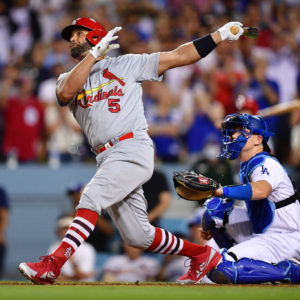
Albert didn’t disappoint when he came to the plate in the top of the third, crushing a 1-2 fastball more than 400 feet into the left field bleachers. The place exploded. The Dodgers had already clinched the NL West, so the fans didn’t care about the score. And when Pujols pointed to the sky upon touching home plate, we all collectively did the math: it’s the third inning, he potentially has three more at bats. Could he? Would he? Was that too much to ask?

In nearly 50 years, only 42,256 fans have seen a 700th home run in person. That was the attendance in San Francisco 18 years ago when Bonds joined the Hammer and the Babe. Now an additional 50,041 sat on the edge of their seats hoping to join a pretty exclusive club of fans.

Albert didn’t keep us waiting long. In the top of the fourth, after the Dodgers swapped lefty Andrew Heaney for righty Phil Bickford, Albert blasted a cement-mixer slider high and deep into the Los Angeles night. This one did not travel nearly as far as the first, but there was something romantic about the towering nature of the drive. #699 was hit so hard and so fast, we didn’t have time to appreciate it – we just hollered and watched Pujols circle the bases. But #700 was wholly different. It was majestic; it gracefully hung in the air, allowing us to track its flight, to give us hope, to build our anticipation, and ultimately to exult in its final resting place in the glove of an ecstatic fan in the first row of the left field pavilion. If a professional athlete and his fans can ever truly share a moment, the arc of this particular home run allowed for it to happen.

I cannot say that the Dodger Stadium crowd reached the same volume level as it did in after JT’s shot in the 2017 NLCS, or Max Muncy’s in the 2018 World Series, but it was damn close. If you love the roar of the crowd, the shower of cheers (to paraphrase Vinny, once again), then you could not help but be delighted by “what we just saw” (h/t Jack Buck).

Upon crossing home plate, Pujols sprinted to the backstop to give a high ten to Adrian Beltre, a fellow Dominican and dear friend, who made sure he had a literal front row seat for history. And then he offered a bunch of high fives before fully embracing Yadi – his teammate for nine seasons, both of whom are enjoying a pretty righteous send-off.

Tim Kurkjian, the Hall of Fame baseball writer, likes to say that what he loves about baseball is that you never know what you are going to see when you go to the ballpark. Those of us fortunate enough to be at Dodger Stadium on September 23, 2022 got the chance to witness history; it was not something we ever thought we would see, and something we as baseball fans may never see again.

PLAY BALL!!

Stadium Dilemma: For Having A Ball or Watching Great Ball?

Many years ago, I was watching an NFL game from Dallas. Al Michaels had the call, and he was raving about the beauty and grandeur of AT&T Stadium, Jerry Jones’ then-new gift to the world and the world of football. Al could not stop talking about the sight lines and the massive video screen that stretches more than 50 years on each side of the field. In short, Al was smitten.

A few years later I found myself at Jerry’s World, and while I was impressed with the size and the scope of the stadium, I could not have been less impressed with the fan and the viewing experience. The security queue felt endless; the bathroom lines ran into the beer lines; the sections/aisles were not well marked; and the video screen was more distracting than anything else. And don’t even get me started about the quality or the cost of the food.

I was reminded of this journey to North Texas a few weeks back when Buster Olney was discussing his favorite baseball parks. He stated that Tropicana Field is way up his list as it has the shortest distance from the press box to the clubhouse, which makes his life easier. You see, Buster, like Al, is at the stadium to do a job, not to enjoy a game. Rather than paying good money to be entertained, these media members are looking for ease of use to ply their craft.

I have no doubt that the press box at AT&T Stadium has all of the amenities an announcer needs, including a bathroom close enough in proximity to go to and fro during a typical TV timeout. I am sure Al’s car dropped him under the stadium right next to an elevator that propelled him straight to an area where all of his needs were met. The same goes for Buster, who is used to the bowels of a ballpark, so when the rest of the place looks the same, it does not much matter.

Unfortunately for most of us, we rely on these announcers to give us a feel for the parks and the stadiums where they do their work. Most of us don’t get to visit each Major League city and do our own analysis. So, when we hear trusted voices like Al Michaels and Buster Olney tell us how great something is, or how they like this one more than that, we are inclined to believe them — even if their reasoning is flawed, or at least subjective.

Because I love baseball and because I subscribe to the “trust but verify” school of thought, I have been traveling the country to visit every ballpark. I have one active stadium left, and will need to leave the country to get there, with Rogers Centre in Toronto the last box to check. As such, I consider myself a pretty good judge of what each stadium has to offer. And, just as I wholeheartedly disagree with Al’s view of AT&T, so too do I with Buster’s feelings about The Trop (as written here).

One of the reasons I have not yet ventured to Canada to see the Blue Jays is that I read that there is a two-phase set of renovations planned to start after this season. Phase One will modernize the fan experience. Now they are speaking my language. 

One would assume, in 2022, with so many pulls on the entertainment dollar, and with ticket, parking, and concession prices consistently outpacing even the most robust inflationary period in four decades, teams would be doing everything in their power to insure that a visit to their yard is fun for the whole family — and not just the diehards. In too many cases, that assumption is incorrect. And, unfortunately, I know why. Fans don’t seem to care.

According to ESPN’s Jeff Passan, MLB estimates that about 40 percent of revenues come from tickets, concessions, and other gate-related income. As we saw during the 2020 season, when faced with the prospect of no or few fans in the seats, owners VERY quickly leaned into the need to increase attendance to supplement their bottom line.

So how can they do that? By putting a better team on the field? By making the fan experience better? A mixture of the two? Unfortunately, the answer just isn’t clear.

Oakland-Alameda Coliseum (using its most well-known name) is a dump. Since 2006, the A’s have had attendance in the bottom third of all American League teams every year but one, despite four first-place finishes and four second-place finishes. The action on the field may have been good, but the ballpark experience is not, so people didn’t come.

Let’s look at the Mariners, who provide arguably the best fan experience in the game. Since 2006, they have not ranked higher than sixth in overall attendance. Is that because in those 17 years, the team has mostly been mediocre (at best) and not once made the playoffs?

Or Pittsburgh, with its beautiful skyline and delicious pierogis. Since 2006, its high-water mark is ninth in the National League (both in 2014 and 2015), which were the two seasons they made the playoffs. They are in the bottom third in attendance nearly every other year.

The Brewers have an incredible fan experience. Their attendance has been above 2 million since 2004 (excluding 2020, of course), even though they finished sixth in the NL Central that season, and have chalked up five fourth-place finishes and five third places in that time.

Since moving into Petco Park in 2004, the Padres have had at least 2 million in attendance in every year but one. And during that time, they have finished in fifth place five times, and fourth place four. Yet, fans still come to the park because it is a hell of a good time.

What about the crown jewel of the new-old ballparks: Camden Yards? Since 2006, the Orioles have been in the bottom third of AL attendance every season except for four. They topped out in sixth place the year they won the AL East (2014). Camden was “the” place to be when it opened, holding first or second place in attendance for the first eight years of its existence. But after Baltimore finished in fourth place four out of five seasons, attendance plummeted. Without a winning team, not even the most charming place in Charm City could draw fans, as the O’s found themselves in the bottom third for eleven out of sixteen seasons (2020 excluded).

For my money (and, often, it is my money), the Dodgers have one of the worst fan experiences in the entire sport. And yet, they get TONS of fans. They have drawn at least 2.8 million every year since 1996 (not counting 2020), and this includes 3.85 million and 3.56 million in seasons in which they finished fourth.

So what is the moral of the story? People don’t come to the park just for the fan experience. And they don’t just come for the winning. With that knowledge, one wonders why the Dodgers undertook a $100 million renovation to improve the fan experience if doing so wouldn’t have any impact on their attendance figures? Why would the Blue Jays spend nearly $300 million over two years to make life better for their fans? There must be some reason.

My hope is that this is a harbinger of great things to come. It would be incredible if, in an effort to create the next generation of baseball fans, teams dedicated themselves to upgrading their facilities to make the local baseball stadium a destination, a place where kids — and their parents — want to go; a place where people of any age can be entertained, regardless of the action on the field. And, if while they’re at it, they could find it in their heart to reduce the price of a beer, that would be great too!

PLAY BALL!!

Catch Therapy: An Open Glove and An Open Heart


It was the darkest moment of my life. Darker even than the actual moment, just three hours earlier, when the doctors broke the news to me. Darker even than the moment just two hours earlier, when I was the one breaking the news to a mother. A fitful 90 minutes of sleep does not prepare you for the hardest conversation you (hopefully) will ever have. I saw my nearly six-year old’s smiling face, and told him – as straight as I possibly could – that his mom had died.

The facts of what else transpired that day and over the next few weeks are unimportant, other than to say that I did my level best to make sure that my son (as well as his two younger sisters) knew that they were loved and cared for. And one way that manifested itself was our playing catch in front of the house every morning while he waited for his carpool. I would stand on the porch, he would stand on the sidewalk, and we would toss the ball back and forth, chatting about the upcoming day. When his ride arrived, he would flip me his glove, say goodbye, and be off to school. I wanted him to have normalcy, and playing catch was something we always did, so this became part of our daily ritual.

That daily ritual slowed as the years went on, but it never stopped. Through grade and middle and high school, we continued to play catch – whether in the street or at the park or anywhere else there was space to air it out. “Air it out” is an interesting phrase, as the process of throwing a 5 oz. piece of leather back and forth allowed us to have frank, interesting, and insightful conversations. There is something about that metronomic exercise. We always start slow, pick up the pace and intensity, and then take it back down after the curveballs have fatigued our elbows and shoulders.

Thankfully, leaving for college did nothing to change our tradition. When my son came home for spring break last March, he grabbed two gloves, came into my office, and asked, “Do you want to play catch?” So back out to the street we went.


Throughout the spring, my stepson, enjoying his senior year of high school, had a friend over nearly every day. She hung out, went swimming, and watched movies. She is the twin sister of one of my stepson’s closest friends, a boy who was simply ideal; beloved by everyone – kids and adults alike. But one summer evening about two years ago, a reckless driver struck his car, and this wonderful young man was gone in an instant. The grief – for the family and the community – was overwhelming. We all shared moments of pain and lost possibility. The kids rallied around each other, and were there for this boy’s sister. And now this boy’s sister became one of my stepson’s new best friends. She did not replace her brother, it is just that the qualities that made him so special are present in her as well; and my stepson is a great judge of character.

So it was with this as the backdrop that I opened The Athletic this spring to an article by Rustin Dodd. It took me two paragraphs to get chills; it took five for me to start crying. I could never tell the story of Ethan Bryan, or his father, Dan, better than Rustin did. Or Ryan McGee at ESPN; or Jeff Truesdell of People Magazine; or Anthony Castrovince of MLB.com; or Harry Smith at the Today Show. But here is a short summary:

Dan’s son, Ethan, a talented pitcher/utility player, was killed in a car accident during his sophomore year – just like my stepson’s friend. The shock of losing his son was – at times – more than Dan could bear. Some days he didn’t want to get out of bed; others he was simply too numb to do or feel anything. But after Dan threw out the first pitch at a West County High School baseball game, he found a gift – a book – waiting for him in the dugout: “A Year of Playing Catch: What a Simple Experiment Taught Me About Life.” The book was written by a man named Ethan D. Bryan. The book was published one week before the death of Ethan C. Bryan. Dan devoured it. And then he decided he would honor his son, and try to begin healing, by playing catch every day in 2022. He started in his backyard on a cold New Year’s Day with Ethan’s best friend, Tycen, and he hasn’t stopped since.

Reading Rustin’s story about Dan was a gut punch. I know the feeling of tremendous loss; I know the therapeutic value of playing catch; and in my home nearly every day this spring was a reminder of a car accident that took a sophomore high school student’s life. I needed to meet Dan Bryan. So I reached out to Rustin, who got us in touch. We emailed back and forth, and put a date on the calendar. There is virtually no distance I won’t go to see baseball, so there was absolutely no reason I wouldn’t go to St. Louis to throw one.

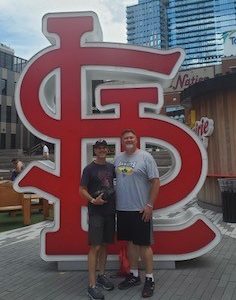
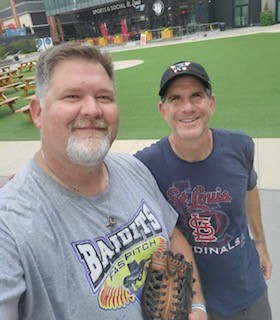
Last week, about 15 hours after I dropped my catch partner for his sophomore year in Wisconsin, and about five months after Dan and I started communicating, we met at Ballpark Village next to Busch Stadium. We decided to play catch on the makeshift field in the middle of the Village. I had asked my son for one of his game balls – just to be safe. Dan told me: “I have the ball” – the one that was in Ethan’s glove in the back of his car that fateful day.

The Inspiration and the Author (and Ethan’s glove)

Dan and I started throwing and started talking, and we shared more than you can possibly imagine. If misery loves company, so too do people trying to transcend it. What started as therapy for a grieving father has turned into a two-way street of recovery. Many of the people who have contacted Dan for a catch have lost children, and they have found solace in Ethan’s story, in Dan’s story, and their ability to share their own story in an unconventional setting, where there are no preconceived notions of what should be said, or how one should feel or react.

Dan told me that the phrases he hears most often while flipping a ball back and forth are: “I didn’t expect to share this” and “I have never told this to anyone.” There is something about the process, the rhythm of throwing a baseball that allows one to open up. But it is also Dan himself. A bear of man, we had known each other not five minutes when he asked if he could give me a hug. He is open and honest about his feelings; he is vulnerable to strangers; he is not afraid of his emotions, and thus allows others to share theirs.

Dan is a Midwesterner who found God in his journey to restoration, and was saved earlier this year. I am a West Coast Jew who has a deep ambivalence about God’s role in all of this. And yet we were able to talk religion, spirituality, and faith. We found common ground in our respective losses, but also recognized the differences in our experiences. We each shared pearls of wisdom to take back to our daily lives, and created memories and a friendship that will survive well past our respective rotator cuffs.

Jason Kander, the former Army Captain who served in Afghanistan, was elected to the Missouri state legislature, and served as the Missouri Secretary of State, wrote a book about his battle with PTSD and mental health. In “Invisible Storm,” he wrote the following:

“My decision to go public about my mental health came with certain challenges, but it definitely helped me heal. Not having to put on a show for myself or others made a big difference. I encourage everyone to be up front about their own struggles, in their own way. You don’t need a huge platform. Just letting some coworkers or your circle of friends know what you’re going through can have strong positive effects, and you’ll be glad you did it. In this age of social media, we all live a public life to one degree or another, and you never know who might see your story, follow your example, and give themself permission to seek help.”

Kander is a massive baseball fan and a fellow Missourian, so it is possible that he knows Dan and Ethan’s story. Or maybe there is just something in the water in Missouri that makes people wise. Like Kander, Dan Bryan elected to share his sadness and grief with others with the hope that he could heal himself. What Dan discovered is that he was helping them heal as well.

Dan has met with people old and young, girls and boys, strangers and family members. He has tossed the ball with someone from as far away as Israel, and – on September 9th (his wedding day) – as close as his bedroom, when he will play catch with his fiancé, Jennifer. Dan was contacted by a 10-year old boy who wanted to play catch “with that man, because he can’t he play with his son anymore.” And he has been stopped in the street and outside the ballpark, as his and Ethan’s story is something that people want to be part of. The potential apotheosis of this whole affair was Dan playing catch with Albert Pujols on the field at Busch Stadium, talking about parenting, first catches, and fathers and sons.


It has been nearly 14 years since I had that dreadful conversation with my kindergartner. He is now a sophomore in college. I have spoken with countless people over the years; I have sat in many counseling sessions; I have attended various loss groups; I have offered advice and guidance for people who have lost loved ones, and have I received the same in return. But none of those interactions had the impact of my day with Dan Bryan. What started with Ethan D. Bryan’s book became a mission to celebrate Ethan C. Bryan’s life; what began as an idea to foster Dan’s road to emotional recovery became an act of philanthropy for people far and wide.

Dan and I finished playing catch after working up a lather on a typical August day in St. Louis. And then we sat on a bench and chatted some more; and then we ate. We spent nearly three hours together, learning about each other’s lives, and offering unconditional love and support. I left Ballpark Village with a full yet heavy heart. I could call my son and tell him whom I met and what we did, but Dan cannot. Dan told me that his biggest fear was that his son would be forgotten. But through this project, by reaching all manner of people, by opening his glove and opening his heart, Dan has insured that that will not happen. As long as people have a memory of their time with Dan, Ethan’s story will continue to resonate, will continue to have an impact, and will continue give context and meaning to a life cut short. And Dan will continue to leave each throwing session feeling better, stronger, and more connected – to both his son and the world at large. As Dan likes to say, and as he has dubbed this adventure: “Baseball Seams to Heal.”

So go home, grab a friend or a kid, grab a ball and glove, and tell them it’s time to:

PLAY BALL!!


The Legend, The Myth, The Man

Maya Angelou said it best: “When someone shows you who they are, believe them.” Never has this been truer than in Philadelphia a few weekends ago. On Aug. 7, the Phillies held a 42-year celebration of their 1980 World Series championship. The team invited Pete Rose to attend. Rose showed everyone who he is (again). So, hopefully, that will be the last we see or hear from the 81-year old former batting champ.

Rose holds a special place in the mind, if not the heart, of many baseball fans. But, in order to truly appreciate the adage, “the man, the myth, the legend,” it is important to review the concept in reverse. When you do this for the all-time hits leader, the results are below replacement level.

Growing up in the late ‘70s and ‘80s, Rose was a god. With hits in 44 straight games in 1978, he is the closest anyone has come to matching Joe DiMaggio’s 56-game streak. And when he broke Ty Cobb’s hit record on Sept. 11, 1985, it was (unfortunately) just the first time the world stopped on 9/11.

Pete Rose’s legend was built on his resume. Over 24 years, 4,256 hits, the 1963 National League Rookie of the Year award, the 1973 NL MVP, three World Series titles, and a World Series MVP in arguably the greatest fall classic ever played (1975), Rose is one of the all-time greats.

The myth around Rose was personified in his nickname: “Charlie Hustle.” This is a guy who sprinted to first base after every walk. He famously decked (and effectively ended the career of) Ray Fosse in the 1970 All-Star Game. But, in later years, that “Charlie Hustle” moniker took on new meaning when we learned that Rose was an inveterate gambler who bet on baseball games, including those that he was managing for the Reds. When MLB discovered such transgressions in 1989, Rose was banned from the sport for life.

Which leads us to the man. As part of Rose’s lifetime ban, he was given the right to apply for reinstatement. Then-commissioner A. Bartlett Giamatti gave Rose a roadmap: “The burden is entirely on Mr. Rose to reconfigure his life in a way he deems appropriate.” So what did Mr. Rose do? He didn’t reconfigure a damn thing.

He set up card-signing tables in Cooperstown each Hall of Fame induction weekend; he bad-mouthed Giamatti, who died a week after instituting Rose’s ban; and he denied he bet on baseball for nearly 15 years. Then, in 2003, while on a publicity tour for his forthcoming autobiography, he spilled his guts. And when asked what took so long, Rose blamed his delay in coming clean on MLB, explaining to ABC News that he “never had the opportunity to tell anybody that was going to help me … I couldn’t get a response from baseball for 12 years.”

It seems that the only place to seek absolution is at MLB’s Manhattan offices, or in a news studio when you are trying to hawk books. It seems that the only reason to tell the truth and take responsibility for your misdeeds is if someone is willing to help you — in this case, help you get reinstated so you can (potentially) be inducted into the Hall of Fame.

That should tell us all we need to know about Pete Rose, the man. But then, in 1990, Rose pleaded guilty to two counts of filing false income tax returns. He spent five months in jail, paid a $50,000 fine, and ultimately paid $350,000 in back taxes.

The final straw has to have been in 2017, when a report surfaced that Rose had a sexual relationship with at least one (if not more) underage girl during his playing days. Per the Philadelphia Inquirer: “Rose admitted in court filings that he had sex with the woman in question, but believed that she was 16 at the time their relationship began ‘sometime in 1975,’ when Rose was 34 years old and married with two children.” (For the record, Rose was not charged with any crimes because the statute of limitations had expired.)

Despite all of this information, despite the ever-changing landscape wherein gambling is still verboten for players (even if it is actively encouraged among the fans), despite the fact that women now have larger and more significant positions within the game, despite the idea that sensitivity training is at the forefront of all organizations, despite MLB’s best efforts to rid the sport of its old boys’ network, despite the Phillies becoming a feel-good story in the second half, Rose’s invitation somehow didn’t get lost in the mail. On the eve of the celebration, the team released the following statement:

“In planning the 1980 reunion, we consulted with Pete’s teammates about his inclusion. Everyone wants Pete to be part of the festivities since there would be no trophy in 1980 without him. In addition, the club received permission from the Commissioner’s Office to invite Pete as a member of the championship team.”

In the face of the protests of many Phillies fans (especially women), Rose walked onto the field with Larry Bowa, Bob Boone, and Greg Luzinski. I guess there was no (real) harm in that. Unfortunately, the Phillies didn’t send media training with the invite.

Prior to the game, Alex Coffey, a female reporter for the Philadelphia Inquirer, asked Rose what he would say to the people who say his presence at the game sends a negative message to women. His response (which, come on, who couldn’t see this coming a double into the gap away):

“No, I’m not here to talk about that. Sorry about that. It was 55 years ago, babe.”

Yes, that is what he said. And when the AP questioned Rose about that response, he retorted (while attending a celebration for a championship that happened 42 years ago):

“And who cares what happened 50 years ago.”

But wait, there is more. After showing such great sensitivity prior to the ceremony, NBC Sports Philadelphia decided it was a good idea to bring Rose into the booth during the game. Rose began regaling the broadcasters and the viewers (and the FCC, I am sure) with war stories from years past. 

After (affectionately) referring to Bob Boone as a “son of a bitch,” and after saying he had to watch out for “horseshit” on the field, he recalled a story wherein Hall of Famer Tony Perez told radio broadcaster Joe Nuxhall that he hit a “cock-high fastball.” He then tossed out one more “no shit” before the announcers did their level best to change the topic, describing a Nelson Cruz single to right, and telling Pete that there was no seven-second delay. Rose just laughed it all off.

I have previously written that Rose should be in the Hall of Fame. The Hall is a museum, and it tells baseball’s story. It should tell Rose’s story, warts and all. And those warts should be emblazoned on his plaque. But there is no reason to give a man like Rose a platform, an invitation to attend award ceremonies or team reunions, an audience with journalists while wearing a team’s uniform, or a microphone during a live broadcast. That is just common sense.

It is always great to hear from former players — they provide color and context and texture to the game. They have tales to tell and yarns to weave. And teams should celebrate the anniversary of great moments (although, I am not sure the Phillies needed to commemorate their Jasper anniversary) and have heroes on hand for the fans to applaud once more. 

But the teams and the league need to be circumspect about those decisions, and take a cautious approach. Players get older and more crotchety and less politically correct; they don’t necessarily know what words and behavior are no longer acceptable. As such, it is incumbent upon the organization to make sure that the players don’t embarrass the team or themselves.

But with Rose, it didn’t take much thought. Everyone from the Phillies to the Inquirer to NBC Sports had to know that Rose would bring scorn upon the team and the former players, make himself the focal point of the weekend, and ruin it for everyone. Of course he would. That is the story of Pete Rose, the legend, the myth, and the man.

PLAY BALL!!

A Salute to Vin Scully

A lawyer friend called me the other day to discuss a deal. But before we got down to business, we had to deal with important matters. He wanted my thoughts on the trade deadline and the passing of Vin Scully. I offered a few bromides about the Dodgers’ failure to land Juan Soto and then jumped into my feelings about Vinny.

As a general rule, I try to find silver linings. And so I told my friend I had two thoughts about what was a very sad day for baseball fans in general, and Dodger fans/Los Angelenos in specific:

THOUGHT #1:

We are just so very fortunate to have this man’s greatest hits, his greatest moments, on audio and video that we can pull up any time we want a trip down memory lane. It is not often that we are afforded that opportunity – just ask anyone who has watched grainy Hi-8 videos of dearly departed loved ones. About a day after I shared this thought with my friend, Steve Rushin wrote the following (which, as to be expected, is brilliantly articulated):

In death, his voice doesn’t fall silent, for it lives on in endless recordings and in the eternal hereafter of YouTube. Indeed, now that Vin has joined the celestial choir—the analogies are apt for the Catholic boy with the golden pipes—his voice travels with him, as broadcast signals travel through space. Somewhere, someone in the firmament is always being wished a very pleasant good evening, courtesy of Vin Scully—St. Vinny of Wherever You May Be.

Like I said…

THOUGHT #2:

We, as baseball fans, are lucky to have had a five-and-a-half-year separation from having Vinny in our everyday lives. Had this death happened a few years ago, say, in the hours after Vin called another Dodgers-Giants game, such that he was here today and gone tomorrow, well, I don’t know how we would have reacted. I don’t know if we could have watched another Dodger game for the rest of the season. I don’t know how you have that essential part of your life – at least the lives of millions of Dodger and baseball fans who listened to Vin every night – ripped from you and not felt that loss at an emotional, visceral level. Had his death occurred this way, it is not hyperbole to say that the season may have been ruined.

Vin stepped away from the mic after the 2016 season, and that has afforded us our own mourning period. We were given the opportunity to meet and get to know Joe Davis. We have learned to watch and enjoy Dodger games without Vin – something we didn’t have to contend with for nearly 70 years.

In the many, many hours of reading, watching, and listening about Vin that I have consumed since Tuesday night, this one idea stood out to me: People born in the 1800s listened to Vin call games, and so too did people born in the 2000s. Sure, none of those nineteenth-century fans are still with us, but all of us would feel this loss that much more acutely if Vin had still been a day-to-day, night-to-night presence when it happened.

A MOMENT WITHOUT VIN:

Shortly after Vin retired in 2016, the Dodgers found themselves in an epic playoff battle with the Washington Nationals. After watching Clayton Kershaw save Game 5 for the Dodgers, giving them the NLDS title, I couldn’t have been more excited – for the Dodgers and for Kershaw. But I knew the moment was missing something. And, because I grew up in Los Angeles, and because I live here now, Vin’s voice and viewpoint are in my bloodstream; I can hear him calling a game, even when he is nowhere to be found.

So, this is what I wrote immediately after that game, and am republishing it today as it seems fitting to add to the canon:


THE CALL THAT COULD HAVE BEEN

(Originally published October 16, 2016)

*Editor’s Note: The words you will read below are what you might have heard when we came back from commercial Thursday night, starting as Clayton Kershaw finished up his warm-up pitches. As best you can, read this in Vin Scully’s voice.

“When Kershaw takes the hill, you get the sense that he is not pitching against Daniel Murphy, he is not pitching against the Nationals, nor is he pitching against the Phillies, the Cardinals, the Mets, or the millions of people who have written and spoken about Clayton’s troubles in the post-season.

No, you must imagine that Clayton is pitching against those doubts that bubble up in the head of every athlete – at one time or another – those doubts that ask, “Am I really that good?”

Anyway, enough about that.

Daniel Murphy digs in and Kershaw comes set at the belt.

Fastball, up and in.

Whoa! So much for fatigue.

That fastball had a little extra something on it. In fact, I don’t think Kershaw hit 95 even once on Tuesday afternoon but, sure enough, fatigue is no match for adrenaline.

Kershaw stares in at Ruiz, shakes his head, once, now twice. Kershaw comes set at the belt, and the one and oh pitch is a fastball in on the hands; short pop on the infield, Culberson takes a few steps back, and just like that, Daniel Murphy is retired.

You have to wonder if Dave Roberts will go out and get Kershaw, having gotten the one man he was brought in to get.

Well, I guess we have our answer.

Roberts is staying put, and you get the feeling that it would have taken Roberts, Honeycutt, and a team of coaches to pry the ball out of Kershaw’s hand at this point.

So the chess match continues.

Well, fresh out of options, Dusty Baker has gone to the last man standing.

Wilmer Difo, the rookie shortstop, is Baker’s and the Nationals’ last hope.

Wilmer, from Santiago de los Caballeros in the Dominican Republic, made his major league debut on May 19th, and here he finds himself square in the eye of the hurricane.

Difo, a switch hitter, digs in from the right side against the left-handed Kershaw.

Fastball, WAY inside. Difo had to do a little dance to avoid that 93-mile-per-hour heater. Difo must be wondering how he got himself into this situation, and wondering if he can pull a Houdini and get himself out of it.

Kershaw is ready, Harper leads from second, and Werth off of first. Gonzalez is playing behind Werth, and Seager is bird-dogging Harper, trying to keep him close.

The 1-0 delivery is a fastball fouled away. And Kershaw has squared his account.

When you look out in the infield, Seager is doing his best to keep Harper from getting too big of a lead, hoping to keep him from scoring on a single.

Of course, with two outs, the runners will be off on contact. Harper runs pretty well and knowing the way Harper plays the game, there will be no holding him at third if the opportunity to score arises.

Here comes the 1-1 pitch, Difo swings through a 91-mile-per-hour slider. I tell you, that just isn’t fair.

Difo started the season in Triple-A, and now, in the biggest moment of the year, in quite possibly the biggest moment of his life, he has to face arguably the best pitcher on the planet.

Kershaw brings his hands high above his head, and slowly brings them down and settles at the belt. He takes a look at the runners, and the runners GO.

Difo dribbles it foul up along third, and the runners have to return from whence they came.

Difo had an extremely defensive swing on that pitch, and really, who can blame him? He is doing his level best just to stay in the box at this point.

You know this is the 167th game that each of the Nationals and the Dodgers have played this season; they have split the first two games of this series, and here we are in the bottom of the ninth inning of a one-run game. Folks, it doesn’t get much closer than this.

Kershaw has rubbed up a new ball and is now ready to go.

Difo digs in while Harper and Werth take their leads. The 1-2 delivery is a BREAKING ball in the DIRT, SWUNG ON and MISSED. Ruiz keeps the ball in front of him and guns it to Gonzalez covering first to complete the strikeout.

At 12:41 in the morning, East Coast time, the Dodgers have won the division series; and maybe, just as importantly, Clayton Kershaw has slayed his demons.

I tell you, folks, just when you think you have seen it all – you get Clayton Kershaw saving a game in which Dodger CLOSER, Kenley Jansen, threw nearly three innings and 51 pitches.

And, not for nothing, but the last time Kershaw, the three-time Cy Young winner, recorded a save – it came ALL the way back in 2006, in rookie ball in the Gulf Coast League. His catcher that day…Kenley Jansen.

Well, that’ll do it from the nation’s capital where the Dodgers have defeated the Washington Nationals 4-3 to advance to the National League Championship Series.

For Charlie Steiner, Rick Monday, and the rest of our crew, this is Vin Scully wishing you a very pleasant good evening, wherever you may be.”

RIP, Mr. Scully. You were a one of one, and every time we look up into that “cotton candy sky,” please know:


PLAY BALL!!

“Free” “Agency”

Each offseason, this past one included, my son laments the players that the Boston Red Sox did not sign. During Spring Training, he railed that Eduardo Rodriguez should have remained in Boston (Rodriguez’s current disappearing act in Detroit seems to have proven him wrong), and that Anthony Rizzo should have come home to his original club and been the BoSox’s everyday first baseman.

But what my son — and many fans on message boards and talk radio — seem to forget is that it is called “free agency” for a reason. Players toil away in the Minors for years making considerably less than a living wage (do you hear that, Rob Manfred?), to make it to the Majors where they are subject to six grueling years of contract fights and the whims of owners and arbitrators, to get to the holy grail: free agency. So what does that mean?

In the most simple terms, it means that for (ostensibly) the first time in a player’s professional life, he gets to choose where he wants to play. It also means that he can create a bidding war, earn life-changing money, and garner economic and personal stability. But what we as fans don’t know and — absent a tell-all — will never know, is the driving force behind a particular player’s ultimate decision. 

Maybe he has some buddies on Club X that he wants to play with. Maybe he doesn’t like the heat and humidity of the south, or the cold of the northeast. Maybe it is political, and a player could not imagine living in a liberal bastion like Los Angeles or San Francisco. Maybe a certain team has a bad reputation for dealing with injuries, and the player wants to avoid that potentiality. Maybe he wants a winning culture, and that is all that matters. Or maybe, even when they say it isn’t, it is all about the Benjamins, and the highest bidder wins the right to his services. The point is, we just … don’t … know.

So when my son bristled at Rizzo re-signing with the New York Yankees rather than with the Red Sox, he looked at the two-year, $32 million contract and said, “the Red Sox should have matched or beaten that.” Sure, they could have. But only if Rizzo wanted that sweet Red Sox money. It should be noted that Yankee fans felt the same way about Freddie Freeman, and believed they could have matched or beat his deal with the Los Angeles Dodgers.

Keeping with that theme, the Yankee faithful could not believe the team did not match the three-year, $105 million deal that Carlos Correa signed with the Minnesota Twins (the Twins!!) with opt-outs after each season. But despite Correa’s Instagram post from Times Square shortly after the 2021 season, it is entirely possible that he did not want the white hot light of playing in New York. It is not for everyone; just ask Carl Pavano.

This issue came front and center during the All-Star break when Mookie Betts told the Boston Globe that he “absolutely would have stayed in Boston” for the same deal he signed with the Dodgers. Sure, it is easy to say that today. But he had previously told GQ magazine that he wanted to go to free agency. And when the Red Sox made various (admittedly low-ball) offers to Mookie in 2020, he could have countered with the “right” number. He didn’t. If I were in Chaim Bloom’s position, I too would have thought Mookie wanted to leave — which is his wont once he reached free agency.

Which brings us to the story of the day, week, month, and maybe next two to three years: Juan Soto. Many people could not believe that Soto turned down nearly half a billion dollars from the Washington Nationals. I am sure he (and agent Scott Boras) have their reasons. Maybe the offer needed to actually be half a billion (not just “nearly”). Maybe it had to be at least $30 million per year (not $29.33 million). Maybe it had to be the highest average annual value (AAV) ever (one wonders if that is for position players or all players, as getting $43.3 million/year for 15-ish years may be more than even Boras could envision). 

Or, as has been pointed out, it could be that Soto doesn’t want to commit the rest of his career to a team whose ownership is in flux, whose farm system is depleted (23rd in FanGraphs’ latest rankings), and whose manager and general manager are only signed through 2023. Come the end of the 2024 season, Soto will be “free” and he will have “agency.” That is what he has fought and struggled for (to the extent he has ever struggled playing baseball). He is well within his rights to say, “No thank you.” 

Is he taking a risk? Sure. But how big of a risk? He has made close to $30 million in his MLB career to date, and he will probably make another $50-$60 million in arbitration over the next two years. Could he get hurt? Could he lose his ability to hit like Ted Williams? Could something catastrophic happen? Yes, to all. But those are unlikely results, and (1) he is insured and (2) he still has made enough money to live comfortably (and even book his own private plane to the Home Run Derby if he desires) for the rest of his life. Soto has the luxury of youth, time, and an ever-expanding bank account to decide where he wants to play next, and for how much.

This is an evergreen topic that gets lost in the haze of recriminations about how our team’s front office responds to free agents. That said, there is absolutely NO EXCUSE for the Red Sox not to pay Xander Bogaerts, as he has said repeatedly that he wants to stay in Boston. But that (and the Rafael Devers situation) is another topic for another day.

We, as fans, reflexively lambaste the greedy billionaire owners. And for good reason. We consider them miserly, refusing to pony up for that one player that the team needs who can change the direction of the franchise. But sometimes the owner’s decisions are not their decisions; the owner’s choices are not their choices. Front offices are subject to the wants and desires of the players the teams want and desire. And, as in life, sometimes those two simply don’t match up.

So, the next time you want to take a shot at Brian Cashman, Chaim Bloom, Andrew Friedman, or Farhan Zaidi, remember that they can only answer the calls and texts they get; they can only sign the players who want to be signed; and they can only field a team with free agents who want to be there. Of course, it hurts to think that a certain player doesn’t want to play for “your” team, but everybody hurts, sometimes.

PLAY BALL!!

The Dangers of Leading With Your Head

A few weeks ago, a friend of mine whose son plays Division I baseball told me a story. She was watching her son’s game on television when a player (not her son) dove headfirst into second base on an attempted steal. The runner’s head smashed into the shortstop’s knee, whereupon the runner collapsed on the field. For many moments, the players, coaches, and umpires didn’t know if the runner was alive – he certainly wasn’t moving. After about five interminable minutes, the player regained consciousness and was helped from the field. He was later diagnosed (luckily, as it happens) with only a concussion.

My friend told me this story as a prelude to a question that I have been asking in various forms for years: Why do players slide headfirst? Why is this even allowed?

Now, I am sure there are old-timers out there who will tell me that banning headfirst slides would be un-American; a violation of individual rights; a further wimpifying of our culture; that it would be pillow-parenting run amok. Okay, fair enough. Here in America you are entitled to your opinion, as am I.

It seems like I write about this issue every year. It turns out I have only done so in 2015, 2016, 2017, 2019, and now 2022. And the reason I keep writing about it is because it is still an incomprehensible practice.

The issue came top of mind a few weeks back when I watched one of my favorite young players – Ke’Bryan Hayes – do something so monumentally stupid that I could not believe my eyes. And it made me question what his father (a former big leaguer) taught him, and what type of coaching he is receiving in the Pirates organization. Here was the situation:

Hayes was on second as the Manfred-Man to start the bottom of the 10th inning. With one out, Michael Chavis hit a short looper over first. Hayes never stopped running. Rafael Ortega scooped the ball up on one hop, turned, and fired a strike to home plate. Waiting to receive Ortega’s throw was well-known (illegal?) plate blocker Willson Contreras, all 225 pounds of him. So what did Hayes, three inches shorter and at least 20 pound lighter – not accounting for the mass of equipment Contreras was wearing – do? He dove headfirst into home plate, where he met the Cubs’ catcher, and his heavy plastic shin guards, and his oversized backside. Hayes scored the winning run, and then lay in the dirt for nearly a minute. The Pirates’ play-by-play guy stated: “I have never seen a celebration muted like this.”

Hayes was helped to his feet and off the field, and then missed then next two games with a sore shoulder. He was lucky it wasn’t considerably worse; but since he has been back in the lineup over the last nine games, he is 6-for-35, with no extra base hits. Because correlation does not prove causation, you can draw your own conclusions.

Why did Hayes dive into home rather than sliding feet first? Why not utilize a classic hook slide moving his entire body as far from Contreras, who was catching a ball thrown from right field, and thus could not get a specific bead on the runner? Or, for all you throwbacks out there, how about him knocking Contreras’ block off – Pete Rose style – in the hope of dislodging the ball from his mitt? I think a replay review would have shown that Contreras did not provide Hayes with a path to the plate prior to his receiving the throw. Any of those options would have been better than putting his fingers, hands, wrists, neck, head, and shoulders at risk. Why didn’t the Pirates coaching staff alert the players in their scouting report that Contreras likes to block the plate? Why didn’t the Pirates player development staff coach their players to be safe, not sorry, when trying to advance to the next base? Why?

Sure, we all love watching Javy Báez with a swim slide into second base avoiding the tag of an unsuspecting middle infielder. But, at what cost? In 2019, Báez dove into second base, fractured his thumb, and missed the month of September. Some lessons are never learned.

Since the Hayes incident, I have seen a handful of additional players dive into home plate, all avoiding serious injury. But that is just dumb luck. Baseball is a dangerous game on its own. Don’t believe me, ask:

  • Mookie Betts (ribs, from an outfield collision)
  • Jacob deGrom (shoulder)
  • Manny Machado (ankle, running to first)
  • Max Scherzer (oblique)
  • Salvador Perez (thumb, due to a swing)
  • Ozzie Albies (fractured foot from a foul ball)
  • Walker Buhler (flexor strain and bone spur)
  • Stephen Strasburg (ribs)
  • Chris Sale (ribs)
  • Bryce Harper (thumb, due to a HBP)
  • Anthony Rendon (wrist, due to an errant swing)
  • Jazz Chisolm, Jr. (back strain)
  • Jack Flaherty (shoulder)
  • Tyler O’Neill (hamstring)
  • Hunter Renfroe (calf)

This list could go on and on. The point is that there is enough that can go wrong on a baseball field that players don’t need to take it upon themselves to up the ante. Sliding headfirst has shown, time and again, to be a fool’s bargain; and as I wrote in 2016, extremely costly. MLB teams need to get smart about this. But so, too, do college teams. And high schools. Yes, it is legal there as well.

When and where will the madness stop? When an aspiring physicist or politician or doctor playing baseball for an Ivy League institution dies on the field because his neck and head couldn’t endure the impact with another kid’s knee? Or will it require a $30M/year superstar becoming paralyzed on a major league diamond in front of 40,000 fans and on national television because he believed that leading with his head offered him the best chance to score a run in the fifth inning of a 7-2 ballgame?

MLB has shown a willingness to change its rules when big-name players get injured on a big stage (see, the Chase Utley Rule; see, the Buster Posey Rule). Why wait until we have to name this new rule? Or, if we must, let’s call it the Hayes Rule, named for a legacy player who narrowly avoided disaster and forced baseball to do the same.

PLAY BALL!!