A version of this article first appeared in the May 13th edition of the IBWAA “Here’s The Pitch” newsletter.
In the last two weeks, two former big leaguers sat in the stands and watched their sons come through in the clutch.
In the sixth inning of a 1-1 game two Saturdays ago, Minnesota Twins infielder Kody Clemens, playing his first game at Fenway Park, smacked as two-run home run into the bullpen to give the visiting team a lead they would not relinquish. Kody did this in front of his proud dad (and mom) in the ballpark where that dad made his major league debut and starred for thirteen seasons.
Similarly, two Sundays ago in Milwaukee, Brewers right fielder Daz Cameron had a key run-scoring single in the sixth inning to help knock out Cubs’ ace Shota Imanaga, helping his club as they eventually completed a 4-0 victory. Daz did this with his father, Mike, sitting in the stands at the aptly named American Family Field. Cameron père played in Milwaukee for two of his 17 years in the majors.
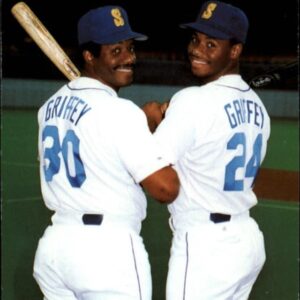
There have been more than 250 father and son combinations in MLB history. We know the big ones, like the Ken Griffeys as well as the Cal Ripkens, not to mention the Jose Cruzes, Fernando Tatises and Vladimir Guerreros. But, more than just providing DNA and/or coaching progeny to help them reach the highest level of baseball, at its most basic level, the sport is simply about fathers and sons.
This past weekend I watched my son walk across the stage and receive his college diploma (well, he walked across a stage to receive a certificate, and the diploma will come in the mail). I have provided my baseball-loving son my DNA, and like Roger Clemens and Mike Cameron, watched games at Fenway and American Family Field. However, in my case, my son was sitting next to me, and not standing in the batter’s box.
My son and I have visited a dozens of ballparks and seen countless games. Those are some of our best times together. But just because he has grown up and finished college, that doesn’t mean anything has to change. Heck, I took my dad to Wrigley Field just a couple of years ago, so there is no reason that baseball will not continue to be a form of connective tissue in our future.
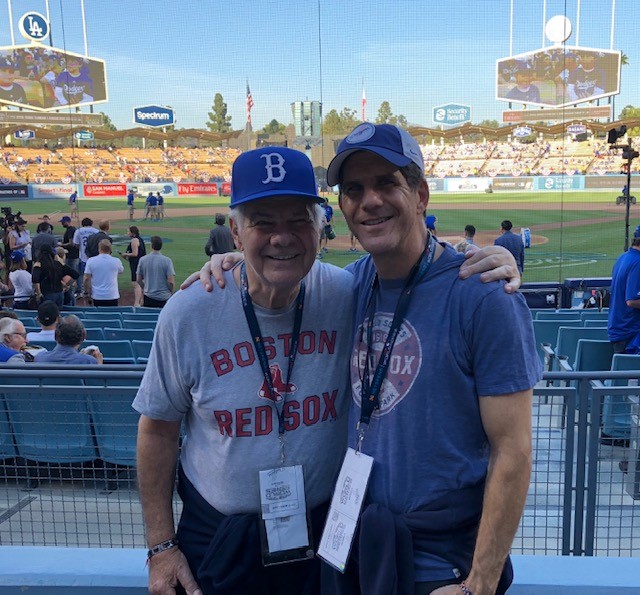
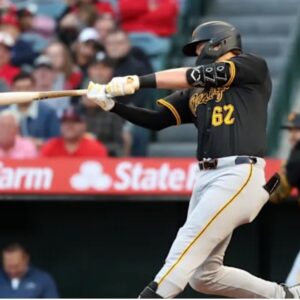
If you are reading this newsletter, you don’t need me to tell you what Field of Dreams was all about. A kid just wanted to have a catch with his dad; and he literally moved the earth to do it. There is a reason these stories resonate with us. There is a reason why we get misty when we watch a parent (not always a father) cheering on his (or her) son as he takes the field for the first time. Who didn’t get the “feels” when the camera caught Matt Gorski’s family celebrating his hitting a home run in his first major league at-bat just a few weeks ago?
Sunday was Mother’s Day, so we cannot give mom short shrift. Cubs’ sensation Pete Crow-Armstrong was just discussing with a Cubs’ beat reporter how much it meant to him to have him mom at Coors Field when he entered his first game as a pinch runner. It is now widely believed that Abner Doublebay didn’t actually invent baseball, so that fact that he didn’t have any children is perfectly on-brand. (Alexander Cartwright, who maybe did invent baseball, had three boys.) From its inception, this has been a game of fathers and sons.
It was Freddie Freeman jumping into the netting to high-five his dad after hitting the triumphant walk-off grand slam in Game 1 of last season’s World Series. It was Max Muncy giving his father credit for getting his career back on track by throwing batting practice to him at a local high school. There is Doug Glanville candidly discussing how his career faltered when his father got sick and eventually passed away. The stories are legion.
And although my son stopped playing baseball his junior year of high school, he (and I) have never let go of the game. It is our generational lingua franca. Nearly four years ago I wrote about a pre-college trip where we traveled through the Midwest to watch baseball. I wrote about how East Ninth Street in Cleveland was a Rubicon. We went from “let’s go” to “letting go,” as he was about to embark on college, and I was about to let my first born out into the great wide world.
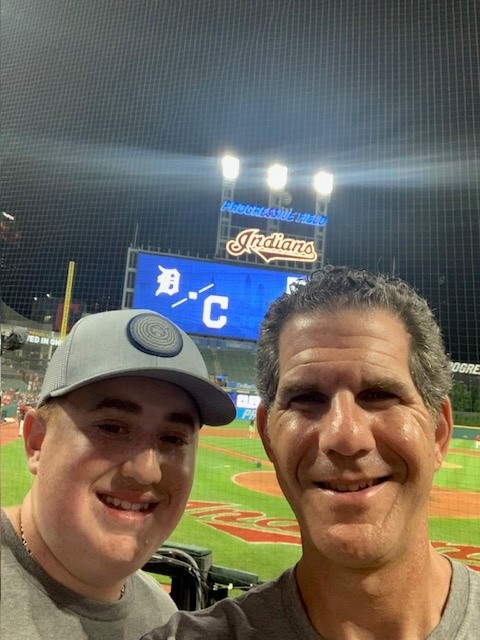
Well, Camp Randall Stadium in Madison, Wisconsin represented another Rubicon this past weekend. He completed what he set out to accomplish less than four years ago. Our time apart gave us space, but did not create distance. And now that he truly faces the real world, with a potential job even farther away, with adulting in the offing, baseball (among many topics) remains.
As Terence Mann says in that seminal film: “The one constant through all the years…has been baseball.” ‘Twas ever thus.
PLAY BALL!!