The Angels’ Roster Would Be Solid If It Were Just A Few Years Ago

As of this writing, the Angels are the worst team in baseball…even worse than the Colorado Rockies. They are currently playing on a below-70-win pace. They won 72 last season, 63 the year before, and 73 two years before that. One thing in their favor, they have never lost 100 games in a season. So there’s that.

For a while there (2018-2023) they employed two of the greatest players to ever lace up their spikes. And yet, they still couldn’t do anything. And yet, they have averaged more than 2.5 million fans per year for the last four seasons, and are on pace for the same this year as well.

Prior to the season owner Arte Moreno cited an internal fan survey that said winning is not a top-five priority for the fanbase. And that may be why he doesn’t seem to care who he puts on the field, or how far past their sell-by date they may be.

On Episode 2490 of the Effectively Wild podcast, hosts Ben Lindbergh and Meg Rowley discussed how good the Angels could be with their current roster if it just were another year, or maybe even another decade.

Let’s take a look:

Vaughn Grissom has 211 plate appearances for the Angels this year, which is 55 more than his previous career high with Atlanta in 2022. That year he accrued 0.8 bWAR, also a career high.

Jorge Soler is essentially the Angels’ everyday designated hitter this season. He was the 2021 World Series MVP with the Atlanta Braves. And yet you would need to go all the way back to 2019 to find a year in which he had more than 1 bWAR (he had 3.5 for the Royals).

Josh Lowe has played 60 games for the Angels this year. He put up 3.7 bWAR for the Tampa Bay Rays in 2023.

Yoán Moncada has come to the plate 130 times for Anaheim this year. But we are seven years from 2019, when he had 5.1 bWAR for the Chicago White Sox.

In 2021, while playing for the Pirates and the Padres, Adam Frazier put up 4.0 bWAR with a 176 hits. This year has played in 41 games with the Angels and banged out 17 hits.

Travis d’Arnaud has received limited reps at catcher this year, which is good because we are four years removed from when he was 2.8 bWAR player with the Braves.

Jeimer Candelario had 3.6 bWAR for the Detroit Tigers in 2021 when he led the league with 42 doubles. This year he has gotten 20 plate appearances for the Angels.

Nick Madrigal was once a hot prospect in Chicago, with both the White Sox and the Cubs. He has never lived up to his promise as a hit-first middle infielder, but he did have a 111 OPS+ in 2021. This year he 12 hits in the 15 games he has played in SoCal.

Alek Manoah pitched in the All-Star Game in 2022 when he came in third in Cy Young voting. This year the Angels have given him five starts. He has 9.82 ERA.

In 2022, Jordan Romano pitched in 59 games for the Blue Jays, and ended the year with 2.9 bWAR. He had 2.2 the following season. The Angels have ran him out of the bullpen 11 times for a 10.13 ERA before releasing him.

Trey Mancini is an incredible feel-good story. He came back from colon cancer, thought about retiring, had a daughter and decided to give it another go. The Angels put him on a minor league contract and he made his way back up, getting three hits in his debut with the Halos. But you have to go back to 2019 to find his best season. That was when he hit 35 home runs, drove in 97, and accrued 3.7 bWAR for the Orioles. After five games with the Halos, he was released in late June.

If we wanted to continue this exercise into last season, we could keep it going. Kyle Hendricks pitched for the 2016 World Champion Cubs and he made 31 starts for the Angels in 2025. We also could add Kenley Jansen, JD Davis, Tim Anderson, Chris Taylor, Taylor Ward, Andrew Chaffin, and Nicky Lopez to this list of players who were once something, but weren’t anything when the Angels elected to employ them.

Moreno may be right. Fans may show up regardless of who takes the field in their crisp white jerseys. Mike Trout may be enough of a draw to keep the faithful happy. But at some point he will retire (or demand a trade); at some point the fans will grow tired of watching retread players trying to compete with teams that have an actual plan for winning. If and when that happens, the Angels will need to do more than look to the past if they want to have any hope for the future.

PLAY BALL!!

War Hero Lou Brissie And His Most Famous Moment

A few weeks back, on the Baseball Tonight podcast, in advance of our nation’s 250th birthday, Buster Olney and Todd Radom discussed the most “American” moments in baseball history. Olney brought up Lou Brissie.

Leland Victor Brissie was born in South Carolina in 1924. He began his baseball career at the tender age of 16 in a textile league, where he caught the attention of Connie Mack. Brissie’s father insisted he finish his education before becoming a professional baseball player, and so he attended Presbyterian College in Clinton, South Carolina after high school.

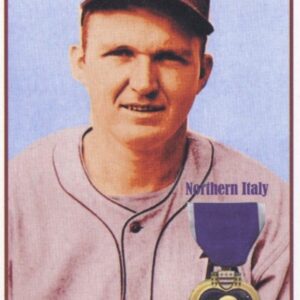
At age 18, Brissie enlisted in the United State Army, and soon found himself fighting in World War II. As part of the 88th Infantry Division, he was involved in heavy fighting in Mussolini’s Italy. On December 2, 1944, at just twenty years of age, an artillery shell shattered his left shinbone into 30 pieces. At an Army field hospital Brissie was informed that the leg would need to be amputated. The budding pitcher pleaded with the medics, telling them that he was ballplayer and that he needed his leg to continue his career. He said he was willing to risk his life to save the leg.

Two years and twenty-three surgeries later, with his left leg now shorter than the right, and a metal brace holding everything in place, Brissie was home from the war and able to resume playing. The injury caused lifelong pain in the leg, but that was nothing compared to his desire to pitch in the big leagues. Mack was finally able to sign him in 1946. Brissie began at Double-A Savannah in 1947, and won 25 games. He got “the call” in late September of that year, making his major league debut against the Yankees. He went seven innings, allowing nine hits and five earned runs; he did strike out four in taking the loss.

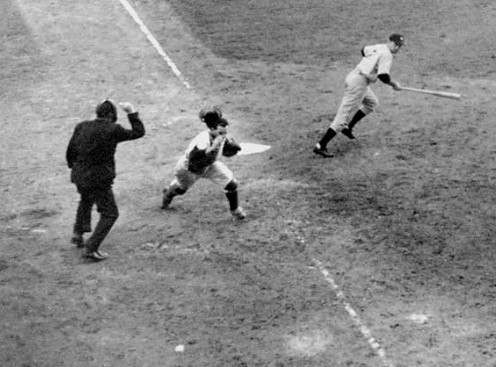
The next time Brissie took the hill was the second game of the 1948 season against the Red Sox. In the sixth inning, with Dom DiMaggio on second after a double, Ted Williams hit a line shot back up the middle that smashed into Brissie surgically repaired left leg. DiMaggio scored on the play and Williams reached first safely. Everyone quickly crowded around the fallen pitcher. In his memoir, My Turn At Bat, Williams recalled how guilty he felt in the moment, and he rushed over as well.

Williams propensity to hit the ball to the right side of the field was so pronounced that he was often the victim of the “Ted Williams Shift” (originally known as the “Boudreau Shift”). This, of course, was long before analytics and spray charts and Joe Maddon and the Tampa Bay Rays and then MLB rules changes banning “the shift.” But on this April day, Williams went back through the box and right into the war hero pitcher.

When Williams reached the mound, Brissie, by all reported accounts, looked up at the slugger and yelled: “For chrissakes, Williams, pull the damn ball!” Brissie shook off the injury and retired 10 of the next 11 batters – including striking out Williams in the ninth – to complete the 4-2 victory for the Athletics.

Brissie’s career would last seven seasons, with him playing the final two-plus years in Cleveland. He finished with a record of 44-48 with a 4.07 ERA and a 102 ERA+. But the stats are secondary to the mere fact that he played major league baseball at all.

And it is quite possible that he is most remembered on the baseball field for the time when two war heroes faced off against one another, one giving it his best shot, the other taking the shot, and then dusting himself off to stay in the fight.

Brissie was awarded a Bronze Star and a Purple Heart as well as an American Campaign Medal for his services in World War II. After his retirement, Brissie served as the National Director of American Legion Baseball, and was part of President Kennedy’s Physical Fitness Council. Later on he would scout for the Dodgers and the Braves.

We should never forget the story of Lou Brissie, who defied the odds to live – with two legs, a full heart, and a baseball career – 89 fine years.

PLAY BALL!!

The Sad Story Of Mel Hall

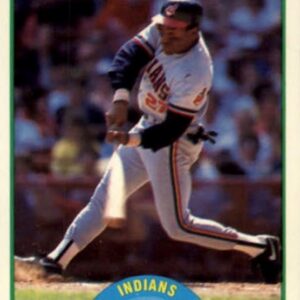
When I was a kid, there was a outfielder for the Cleveland Indians who used to put batting gloves in each back pocket so that when he hit a home run, he could “wave goodbye” to the other team. In the parlance of the day, Mel Hall was a “hot dog.”

Funnily enough, he never got to wave goodbye to the other team more than 18 times in a season, so the gimmick may have been lost on the masses.

The Chicago Cubs selected Hall in the second round of the 1978 draft out of Port Byron High School in New York, which is about 30 miles west of Syracuse. Three years later, on September 3, 1981, he made his MLB debut, flying out to right field against Doyle Alexander of the Giants. He would get into ten more games the remainder of the year, collecting one hit in twelve plate appearances.

Hall became an everyday player for the Cubs in 1983, slashing .283/.352/.488 for a 128 OPS+, which was good for third place in Rookie of the Year voting.

The Cubs traded the outfielder to the Indians in mid-June of 1984. And while his numbers with Chicago were better than with Cleveland, he was still a solid performer for his new American League club (104 OPS+).

A car accident kept Hall out of nearly the entire 1985 season. He came back in 1986 and slashed .296/.346/.493, with a then-career-high 18 home runs. 1987 and 1988 were more of the same.

Prior to the 1989 season, Cleveland traded the outfielder to the Yankees, and that is when and where the real trouble began. During spring training, he brought both his wife and his girlfriend to the team hotel and then proceeded to watch them get into a fight near the pool. While on the injured list, he got into a violent wrestling match with Rickey Henderson. And then he brought a gun into the clubhouse. In the years before “Manny being Manny,” the team seemed to shrug it all off, with Hall stating, it’s “me being Mel Hall.”

He still played in 113 games that year for the Bombers, hit 17 homers and had a 103 OPS+.

His production was roughly the same in 1990. 1991 was up there with his best seasons, as he slashed .285/.321/.455, setting a career-high with 19 homers and 80 RBI. In 1992, he did it again, putting up about the same numbers, including his all-time high of 81 RBI.

And yet, when his contract with the Yankees expired, no MLB team wanted him. So, Hall took his talents east, and signed a two-year, $4 million contract to play for the Chiba Lotte Marines in the NPB. He then played for the Chunichi Dragons, before coming back stateside in 1996 with the San Francisco Giants. That experiment lasted a month, as the club released him after he got three singles in 25 at-bats.

Not willing to give up, he signed a minor league contract with the White Sox, but that lasted only twelve days. Years later he would try his hand at independent ball, but that didn’t lead anywhere.

While playing in New York, Hall was known to have two great passions: spending money and chasing women. That, unto itself, made Hall like many athletes. Unfortunately, Hall had a proclivity for young women. It started with him inviting a 15-year-old (and her family) to a game at Yankee Stadium in 1989. And then there were others. It took until 2007 for Hall to be arrested. It happened in Texas, where he was charged with two counts of sexual assault and of having sex with a woman under the age of 17. During the investigation, a second victim – under the age of 14 – was identified. A twelve-year-old girl was determined to have been raped by Hall.

He was ultimately convicted of three counts of aggravated sexual assault of a child and two counts of indecency with a child. He was sentenced to 45 years in prison, where he currently resides. His earliest possible parole would be in late 2031, when Hall will be 71 years old. Based on his actions off the field, that simply may be too soon to let this predator free.

Hall could have made a name for himself as an irreverent player and a fan favorite. Instead, he became a clubhouse cancer, a pariah, and a convicted felon.

It will be a long time until Mel Hall can ever again… PLAY BALL!!

We Don’t Talk Enough About Orel Hershiser

Not enough is written about Orel Hershiser’s career, and, specifically, his 1988 season.

The Los Angeles Dodgers drafted Hershiser out of Bowling Green State University in the 17th round in 1979. He made his major league debut four years later, pitching one inning, giving up two hits, and one run to the Montreal Expos.

For the first few years of his career, Hershiser was an enigma:

  • 1984: 11-8, 2.66 ERA
  • 1986: 14-14, 3.85 ERA
  • 1987: 16-16, 3.06 ERA

Smashed in the middle of those middling seasons was 1985, when he went 19-3 with a 2.03 ERA, and came in third in Cy Young voting. So, everyone in baseball knew that greatness lived within him.

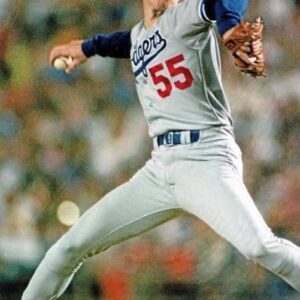
That greatness was achieved in his magical 1988. He started the year with a three-hit shoutout against the Giants. He then went 8-1/3 innings, giving up one run in a win against Atlanta. Followed by a complete game win against the Braves five days later. Then he threw six innings, allowing just one earned run against the Giants. Next, while facing the Cardinals, he went eight innings and gave up three (!) earned runs.

When the calendar flipped to May, the Pirates touched him up for ten hits, but could only manage two earned runs. With the win, he ran his record to 6-0. The Buccos apparently had his number, as in Pittsburgh a week later he had his first bad game (12 hits, seven earned runs, three walks, and three homers allowed), suffering his first loss of the year. The next week he gave up just one earned run on five hits, but the Dodgers didn’t score, so he took his second loss.

Over the next ten weeks Hershiser went 12-6 with a 2.99 ERA and a 2/1 strikeout to walk ratio, which was just fine, but actually below his season totals to that point: 18-8, 2.84 ERA, 2.25 K/BB ratio. And that is when he decided to turn legend. Well, maybe even a bit before that.

You see, on August 19th, he threw a complete game shutout against the Expos. On August 24th, he threw seven scoreless innings before giving up two runs in the top of the eighth to the Mets, but did not allow them to score in the ninth (the Dodgers lost 2-1). On August 30th, he held the Expos scoreless for four innings, had a two-run blip in the fifth, and then shut them down for the final four innings. Those four innings would be the start of the incredible month to follow. And, to be clear, even before “The Streak” began, Hershiser had allowed no runs in 12 of his previous 14 innings (two runs in each of those two blemished frames).

As we all know, Hershiser went all of September without giving up a run. He went 5-0, threw 55 innings allowing just 30 hits, and struck out 34 while walking only nine batters. Oh, did I mention that – prior to coming out of a tie game in which he pitched ten innings and broke Don Drysdale’s scoreless innings streak — Hershiser had thrown eight consecutive complete games.

In his first playoff start, against the Mets in the NLCS, he went 8-1/3, but got a no-decision when Jay Howell couldn’t hold the lead. Four days later, Hershisher gave up one earned run over six innings in another Dodgers’ loss.

But since six innings was mere child’s play, the ace came in as a relief pitcher in the 12th inning the next day. After Kirk Gibson’s home run in the top half of the inning staked Los Angeles to a 5-4 lead, Tim Leary gave up back-to-back singles before recording the first out of the inning. Jesse Orosco (the former Met) came on to face two lefties, walking Keith Hernandez to load the bases, but then he got Darryl Strawberry to pop out to second. With the right-handed hitting Kevin McReynolds coming up with the bases loaded and the Dodgers facing a potential 3-1 deficit in the series, Tommy Lasorda called on “Bulldog” to get the final out. Three pitches later, he did just that.

It was no shock when he took the mound for Game 7 of the NLCS three days later at home and threw a five-hit shutout, propelling the Dodgers to the pennant.

Even superheroes need a day off, so Hershiser skipped Game 1 of the World Series, but started Game 2 in Los Angeles against the shell-shocked Athletics (try to recall how Game 1 of the 1988 World Series ended). He, of course, threw a three-hit shutout to put the Dodgers up to two games to none. Four days later, he took the hill for Game 5 and threw yet another complete game, yielding two runs on four hits, as the Dodgers won the World Series.

When all was said and done, counting both the regular season and the playoffs, in 1988 Hershiser tossed 309-2/3 innings, threw 18 complete games including ten shutouts, and went a combined 26-8. He won the NLCS MVP, World Series MVP, and Cy Young Award.

Hershiser pitched for 12 more seasons after that historic 1988. For his career, he went 204-150, with a 3.48 ERA and a 3.69 FIP. He appeared in the 1995 World Series with Cleveland after being named the ALCS MVP. He is in the Top-100 of all-time pitcher bWAR, but, unfortunately, is not likely to ever gain induction into the Hall of Fame. No matter, he was still a force of nature.

And, like I said, not enough is written about him or his season for the ages.

PLAY BALL!!

A Look At The Best First Basemen Of All-Time

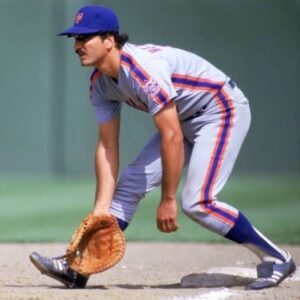
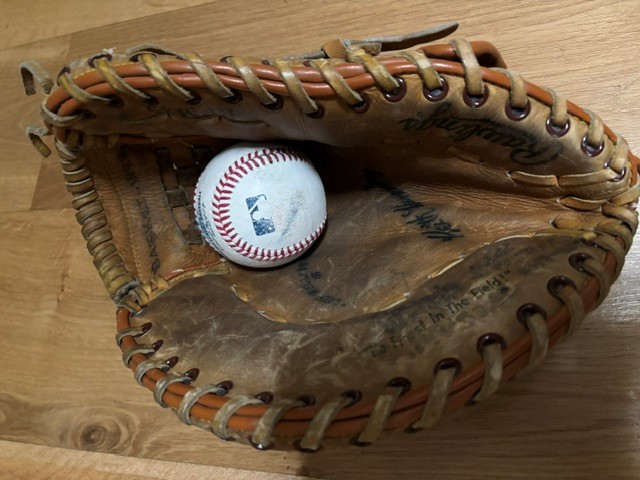
Fun fact, when I was 10 years old, my parents promised to buy me a first baseman’s mitt if I made my league’s all-star team. I did, so they did. It was a Rawlings Model RFM 35 with Keith Hernandez’s signature on the palm. So, the former Cardinal and Met holds a special place in my heart (even if he broke the same as part of the 1986 Mets squad, but I digress).

Hernandez has a strong case for the Hall of Fame, and that got me thinking about the greats of the game who played that/my position and how Hernandez compares to them.

The Top-10 players on the list of all-timers are all in the Hall of Fame, save for Albert Pujols, who should become the second unanimous entrant (along with Mariano Rivera) when he is on the ballot in 2028. His 101.3 bWAR is second only to the Iron Horse, whose 113.5 leads the way. The next eight are: Jimmie Foxx, Cap Anson, Roger Connor, Jeff Bagwell, Dan Brouthers, Frank Thomas, Johnny Mize, and Jim Thome.

Miguel Cabrera chimes in at #11, and he will become a Hall of Famer in 2029. Right behind him is Rafael Palmeiro, whose wave of a finger at the United States Congress while stating “I have never used steroids, period,” was undercut just weeks later when he tested positive for steroids. He need not make any plans to head to Central New York any time soon.

Behind Palmeiro will be this generation’s test for “Hall Worthy”: Joey Votto. He is a six-time All-Star and won the MVP in 2010. All of his Jay Jaffe’s JAWS and Bill James’ Hall of Fame Monitor/Standards measures are right at, just below, or just above Hall of Fame-level. Writers love him, he remains relevant as a guest broadcaster for NBC, and no one would balk at his induction.

Next is Paul Goldschmidt. Is he a Hall of Famer? Not to me, but his stats may say otherwise. He is a seven-time All-Star and, like Votto, won an MVP Award. And also like Votto, all of his Hall of Fame credentials are right on the line. He continues to play, so he continues to accrue numbers that will help his case five years after he retires.

Willie McCovey, Todd Helton, and Eddie Murray all have plaques in Cooperstown. Next is Freddie Freeman, who will be way higher on this list when his career ends, and should walk into the Hall. Mark McGwire would be in but for…

George Sisler and Hank Greenberg have had their days in the Hall of Fame sun. Then there is Bill Terry and Harmon Killebrew, inductees both. Sandwiched between these four players is Mr. Hernandez. Hernandez went on the ballot in 1996, and fell off nine years later when he only received 4.3% of the vote (a player needs at least 5% to continue).

Let’s take a look at how Hernandez measures up:

  • Black Ink (led the league in a category): 14 (average Hall of Famer: 27)
  • Grey Ink (top-10 in the league in a category): 118 (average HOF: 144)
  • Hall of Fame Monitor: 86 (likely HOF: 100)
  • Hall of Fame Standards: 32 (average HOF: 50)
  • bWAR: 60.4 (average HOF at 1B: 65)
  • 7-Year Peak bWAR: 41.3 (average HOF at 1B: 42.1)
  • JAWS: 50.8 (average HOF at 1B: 53.5)
  • bWAR/162: 4.7 (average HOF at 1B: 4.8)

All of the numbers above say that Hernandez is just below the borderline, and his failure to be inducted is warranted. But, as Bill wrote yesterday: “there has never been a first baseman who fielded the position the way he did, literally impacting opponents’ strategy.” His 11 Gold Gloves are a record for first baseman, and they were won consecutively from 1978 through 1988. In 17 seasons, the man committed 115 errors over nearly 20,000 chances. He finished with a .994 fielding percentage.

There is a reason I wanted his glove when I was 10 years old. And there is a reason more than 40 years later I want his skills at the plate, on the field, in the clubhouse, and now in the broadcast booth, to be recognized on a warm Sunday in Cooperstown. I may be biased, but that does not mean that I am wrong.

PLAY BALL!!

The 2024 Draft Class Is On Its Way To Being The Best Ever After Two Years

any of you readers listen to the Effectively Wild podcast, and if you happened to listed to Episode 2483 last week, you may be able to skip the rest of this article. On that show, hosts Ben Lindbergh and Meg Rowley discussed (among many other things) the 2024 draft class, and the impact those players are having on the 2026 season, which is barely two months old.

For context, over twenty rounds, there were 615 amateur players selected in the June, 2024 draft. According to various studies over the years, approximately 15-20% of drafted players make it to the big leagues. As such, we could typically expect that more than 90 of the players selected in 2024 will eventually make it to the major leagues. Again, according to various studies, the standard player will do so three to five years after he was drafted. So getting there in two years is a sign of something. But what?

  • The extreme skills of today’s young ballplayers.
  • Better training and preparation from Little League through summer leagues and travel ball and beyond.
  • Colleges acting more like professional baseball development programs than institutions of higher learning (said differently, athlete-students rather than student-athletes).
  • And, what we have seen a lot lately, teams accelerating their timeline for prospects.

So, if we figure that roughly 100 of the players from 2024 will make it at some point, it is not so shocking that 15 already have. By comparison to 2023, when 614 players were selected, 29 made their debuts two years later. So 2024/2026 is on a faster pace, but not crazily so.

But what is crazy is the production teams are getting from their “debutantes” (h/t to the aforementioned Ben Lindbergh). As of last week, players who have debuted in the major leagues this season have accrued 19.9 WAR. That is a pace of nearly 60 WAR for the whole season (which is only one-third done), and that is with just 15 players. The numbers are astounding.

The 2023 draft class put up 43.2 WAR with those 29 players – for the entire 2025 season. They were led by Paul Skenes and Wyatt Langford and Matt Shaw.

In 1987, the 1985 draft class of 36 players, led by some guy named Barry Bonds, and some guy named Barry Larkin, and some writer’s favorite player, Will Clark, put up 37.1 WAR, which stands as the second highest WAR two years after any draft.

So who and how is this group of 2024ers doing it? See some of the answers above for the how. As for the who, let’s take a look at the early bloomers:

Travis Bazzana was selected first in 2024, came up to Cleveland on April 28th, and is now slashing .294/.389/.450. He often finds himself in the leadoff spot for Stephen Vogt’s club.

Chase Burns went #2 to the Reds. So far this season he is 7-1 with a 1.96 ERA. He has struck out 72 batters against just 20 walks and is in the early Cy Young conversation.

Nick Kurtz went #4 in that draft, and already won Rookie of the Year. This year he is slashing .283/.432/.493 for the upstart Athletics.

Jac Caglianone (#6) is still trying to find his footing in Kansas City. There was early talk of “Jactani” being a two-way player when he came out of the University of Florida, but his natural power made him a better fit to be an everyday player. This year has seen improvement from a disastrous rookie campaign, but he is still not the middle of the order threat the Royals are hoping for.

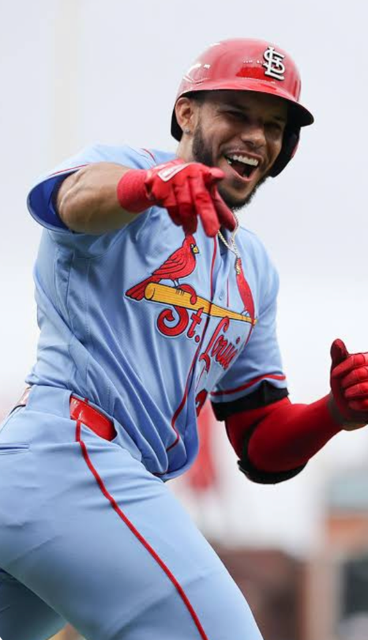
JJ Wetherholt (#7) made the Cardinals out of spring training and has not looked back. While his batting average is below par (.248), he is getting on base at a .350 clip while leading off for St. Louis and playing a terrific second base. He has already accumulated 2.6 WAR in two months.

Konnor Griffin (#9) looked like he could make the Pirates out of spring training, but the team decided to give the then-19-year-old reps in Triple-A insofar as he had never even played at that level. Well, he was ready. After putting up a 1.196 OPS through his first five games at Indianapolis, he got the call to Pittsburgh, where he is slashing .270/.327/.402 with fourteen extra-base hits and playing great defense at short.

The Cubs drafted Cam Smith with the 14th pick in 2024, and then sent him to Houston (with Isaac Paredes and Hayden Wesneski) in return for the right to rent Kyle Tucker. I would imagine Jed Hoyer would like to have that one back. Smith played fine as a rookie and is playing fine as a sophomore, but all of the talent is there, and Kyle Tucker is not.

Injuries and a lack of inspiration forced the Mets to bring up Carson Benge (#19) and give him run in their outfield. He has not set the world on fire (he has just an 90 OPS+ through 54 games), but the future looks bright for the youngster.

Trey Yesavage (#20) announced his presence with a jaw-dropping showing in last year’s post-season for the Toronto Blue Jays. He began this season on the injured list with a right shoulder impingement, but in his six starts to date, he has a 2.19 ERA, 2.42 FIP, and a 201 ERA+. He looks every bit the ace he did last October.

Ryan Waldschmidt was the 31st pick in 2024 and got the call to come to Arizona on May 8th. He has yet to hit his first big league homer, but he is batting .2964 with a 110 OPS+.

Payton Tolle went in the second round to Boston in 2024 (#50 overall) and has quickly found himself to be an integral piece of the Red Sox’ starting rotation. He has a 2.61 ERA and 0.895 WHIP over his seven starts.

Gage Jump (#73) just got the call to Sacramento, making his debut on the hill for the A’s last week. He went five innings and gave up four earned runs on nine hits to a Mariners team that is finding its stride. He struck five while only walking one in the loss.

Ryan Johnson (#74) made headlines when he skipped the minor leagues altogether and joined the Angels on their Opening Day roster in 2025 directly out of Dallas Baptist. After making four appearances this season with the Halos where he gave up 14 earned runs in 8-1/3 innings, he is currently back down in Triple-A.

Last (in draft order) is Sam Antonacci (5th Round, #140 overall) who made a name for himself with Team Italy in the World Baseball Classic. Antonacci is playing left field nearly every day for the surprising White Sox, and is hitting .275 with a .369 OBP. He has played five games at second base as well.

There is no doubt that additional players from 2024 will get the call this season. Charlie Condon (#3) got a taste in Colorado last season, but remains in Triple-A as of this writing. The White Sox may have reason to call up left handed pitcher Hagen Smith (#5). Christian Moore (#8) who got a cup of coffee with the Angels last season, may come up again. James Tibbs III, who was selected by San Francisco, then traded to the Red Sox as part of the Rafael Devers deal, and then subsequently traded to the Dodgers for Dustin May, is currently crushing it at Triple-A Oklahoma City. And there are many more who could add to the list and add to the WAR total for this special class of players.

PLAY BALL!!

Trevor Bauer Made His Bed And Now He Has To Lie In It

Trevor Bauer was selected third overall in the 2011 draft by the Arizona Diamondbacks out of UCLA, and made his MLB debut the following June. He started four games for Arizona in 2012, going 1-2 with a 6.06 ERA.

After clashing with his teammates in the desert, the team traded him (along with Bryan Shaw and Matt Albers) to Cleveland in return for Shin-Soo Choo, Jason Donald, Tony Sipp, and Lars Anderson. Bauer began 2013 at Triple-A Columbus, starting 22 games and going 6-7 with a 4.15 ERA before being called up to the big club. In four MLB games, Bauer essentially matched his 2012 season, going 1-2 with a 5.29 ERA.

2014 saw him again on the farm, but he was down there for only a short while (2.15 ERA). Once in Cleveland, he started 26 games, going 5-8 with a 4.18 ERA.

Bauer’s 2015 and 2016 seasons were remarkably similar (11-12, 4.55 ERA, 4.33 FIP / 12-8, 4.26 ERA, 3.99 FIP) as he settled in as an everyday pitcher in Terry Francona’s rotation.

In 2017, Bauer took a leap. He went 17-9, threw 176-1/3 innings, and struck out 196 batters while walking only 60. That season was worth 2.9 bWAR.

In 2018, he upped his game even more, going 12-6 with a 2.21 ERA and a 2.44 FIP. He pitched 175-1/3 innings and struck out 221 against just 57 walks. With 6.0 bWAR, he made the All-Star team, finished 6th in Cy Young Award voting, and got MVP consideration. At this point, Bauer was on his way to becoming somewhat of an “ace,” a moniker he had desired since college.

Bauer’s 2019 season started well enough, opening with a 4-1 record through his first seven starts. Then he lost five straight while sprinkling in three no-decisions. He followed that with four straight wins and five out of six. On July 23rd, Bauer pitched 7-2/3 innings, struck out nine while wielding just three hits and no runs. He left the game with a 1-0 lead, just to watch Brad Hand gave up a game-tying homer to Justin Smoak with one out in the bottom of the ninth. And then he had to endure Tyler Olson coming into the game in the bottom of the 10th and going walk, wild pitch, single, and walk-off single (Smoak, again) to give the Blue Jays the 2-1 win.

That was the backdrop as Bauer headed into his next start, a Sunday afternoon game in Kansas City on July 28th.

Staked to a 3-0 lead in the top of the first, Bauer started his outing by giving up hits to three of the first four Royals batters, but escaped surrendering just one run.

In the third inning, he gave up a leadoff single, followed by a walk, and then a wild pitch. A ground ball to first should have meant just one run, but first baseman Jake Bauers’ errant throw allowed Hunter Dozier to score to tie the game.

Cleveland retook the lead in the top of the fourth, and Bauer bounced back with a 10-pitch inning in the bottom half. Danny Duffy led off the top of the fifth with a home run, giving Bauer a two-run lead to work with.

Bauer, with a 5-3 lead going into the bottom of the fifth, gave up a leadoff single to Alex Gordon. Brian Dozier then lofted a fly ball to center field that Óscar Mercado lost in the sun, allowing it to drop on the warning track and bounce over the fence for an automatic double. Jorge Soler then walked on a very close 3-2 pitch (probably overturned in the ABS era) to load the bases. Ryan O’Hearn then hit a dribbler in front of the mound that Bauer couldn’t field, allowing a run to score (it was ruled a hit). Cheslor Cuthbert then hit a duck-fart (60.6-mph off the bat) into right field over the outstretched arm of second baseman Mike Freeman, which knocked in the tying run. After striking out Bubba Starling for the first out of the inning, Nicky Lopez hit a grounder up the middle that Bauer just barely missed fielding; it ended up in center field, scoring two runs. Bauer got a new ball from the umpire, and immediately rejected it by throwing it to the dugout. When he got a second ball, he noticed manager Terry Francona coming to the mound, so Bauer chucked that ball over the center field fence. When Tito got to the obviously frustrated and pouting pitcher, he asked: “What the fuck is wrong with you?!” Bauer put his hand on Francona’s shoulder, ostensibly in apology, and headed for the showers.

After the game, Bauer apologized for his behavior.

“I want to be clear that my frustrations were with myself and my inability to stop the situation and keep my team in the game. I’m an intense competitor. That fire is what drives me. Today, it completely consumed me and took over…It was unbecoming. It was childish. Unprofessional. There’s no place for it in the game.”

MLB fined the pitcher an undisclosed sum, but did not suspend him. However, Cleveland was done with him. Two days after the incident, they traded the immature 28-year-old to Cincinnati as part of a three-team deal (ironically, Francona would later become the Reds’ manager).

Bauer finished the season in Cincinnati, and pitched there in 2020 as well. Before the 2021 season, the Dodgers signed him to a three-year, $102 million contract. MLB placed Bauer on administrative leave in July of that year following sexual assault allegations. In April, 2022, he was suspended for 324 games (ultimately reduced to 194 games on appeal). Los Angeles released him in January, 2023, but not before they paid him roughly $61 million for 17 games and 107-2/3 innings.

Bauer was never criminally charged for the actions that predicated his suspension, and he actually won a civil judgment against his accuser. And yet, no MLB team wanted his services. Was he “blackballed”? It is hard to say.

Since his release by the Dodgers, Bauer has pitched in Japan, Mexico, and now on Long Island. At 35, he clearly still has skills and could be useful to some big league team in need of pitching. But, is he worth the hassle? Interestingly, after Bauer chucked the ball over the fence that day in Kansas City, Francona said the following to the assembled press: “I don’t want this to be his legacy. This kid’s a good pitcher.” What he didn’t say is as important – if not more important – than what he did say.

When Bauer threw a no-hitter for the Ducks, there was no grand celebration on the mound. Teammates, all the way back to college and possibly before, simply do not like Bauer. And organizations, from Arizona to Cleveland to Los Angeles, tire of his act pretty quickly.

If Bauer is anything, he is true to himself, and will not change for anyone or any amount of money. He has no one else to blame for his lot in life, but he does not seem to have the introspection or care for what others think to evolve in any way. And that has cost him his major league career. Hopefully the $112 million he earned over 13 seasons is enough to buy happiness, because it certainly won’t buy a positive or lasting legacy.

PLAY BALL!!

First Pitch Dingers: Welcome To The Show

On April 23rd, Atlanta Braves pitcher JR Ritchie made his major league debut. Taken 35th overall in the 2022 draft off Bainbridge Island in Washington State, he pitched in all levels in the minors, including making five starts at Triple-A Gwinnett to begin the 2026 season.

On that Thursday afternoon, after the Braves failed to score in the top of the first inning in Washington (DC), Ritchie took the hill. His first pitch was recorded as a 93.5-mph four seam fastball. It was also recorded that Nationals’ leadoff hitter James Wood turned it around at 102-mph, hitting it 387 feet into the right field stands. “Welcome to the Show!”

Two pitches later he induced Luis Garcia to ground out to second to record his first major league out. And five pitches later he had his first career strikeout, setting down José Tena with a nasty change-up. Ritchie struck out Tena again in the fourth inning before surrendering his second home run, this time to CJ Abrams. Abrams squared it up even better than Wood, crushing the ball 107-mph and 426 feet to center field. Ritchie bounced right back, striking out Jacob Young looking on a nasty 2-2 curveball. When all was said and done, Richie went seven innings, gave up five hits (two of which were those homers), two earned runs (on those dingers), walked two, struck out seven, and earned his first big league win. “Welcome to the Show,” indeed.

With that first inning big fly, Richie became the first Braves pitcher since 1977 to give up a home run on his first major league pitch, matching Mickey Mahler who did the same to/for Derrel Thomas against the Giants in a game the Braves ended up losing 8-7 in eleven innings. Mahler did not pitch nearly as well as Richie, going 3-2/3, giving up four hits, three earned runs, while walking two and striking out three. Like Ritchie, he also gave up two dingers in his debut, but he was long gone before the game was decided, whereas Richie got the win. The good news for Mahler is that, according to Baseball Reference, there was a total of 1,029 fans in attendance for that mid-afternoon Tuesday game at the old Candlestick Park (a meager 14,613 caught Ritchie’s mid-afternoon gem).

Tobias Myers was the last to pull off the feat in the National League, on April 23, 2024, while pitching for the Brewers against the Pirates. Andrew McCutchen took him deep, but then Myers settled in. He retired 14 of the next 18 batters, sprinkling in three singles and a walk against four strikeouts. Unfortunately for Myers, the Brewers could only muster one late run on a Gary Sanchez homer, and the rookie took the loss in his debut.

Interestingly, a first career pitch dinger has not happened in the American League since 2015, when Jose De Paula did so against Andrew Romine of the Tigers in the sixth inning of Detroit’s blowout victory over the Yankees (12-4).

After the game, Ritchie seemed to take everything in stride: “One pitch into it, I was kind of like, ‘Oh no.’ But after that, I bounced back really well. I stayed with my game plan. I was really happy about that. Yeah, this will always be a very, very special day for me.”

Ritchie, who ranks #79 on MLB’s prospect list, and #2 on the Braves’ list, was supposed to face the Jacksonville Jumbo Shrimp that day, but dialed it up at Nationals Park instead. He became the first Braves pitcher to record seven or more strikeouts and allow two runs or less, while throwing at least seven innings, in his debut. Not too shabby for a rookie pitcher and an organization that dates back to 1876.

PLAY BALL!!

After A 15-Year Hiatus, “This Week in Baseball” Is Back!

Up in my attic, in an old Alta Dena milk crate, are a bunch of dusty VHS cassettes with episodes of This Week in Baseball from the 1980s. They say you become a true baseball fan between the ages of 12 and 14. For me, that was 1984-86, the golden years of TWIB. And I never wanted to miss an episode. Back then, I would crib my mom’s copy of TV Guide to get a quick look at what time NBC’s “Game of the Week” would be broadcast, and then I could back out thirty minutes, as I knew that my favorite show always preceded the game – even if it wasn’t always listed on the schedule.

My Saturday morning routine had me setting the timer on the VCR before I left for my own baseball game, to make sure that the show recorded. And then I would come home in bathe in everything that Mel Allen had to offer. “Hello there, everybody,” is a phrase that still rings in my ears even forty years later. TWIB Notes, top plays, bloopers, and oddities, and who could ever forget the “Gathering Crowds” theme song, written by John Scott. The editing of the video highlights with the chords of that song was – and continues today – to be award-worthy.

The original TWIB ran from 1977 to 1998, with a revival from 2000-2011. So, imagine my shock when I got the MLB.com newsletter the other day and they reported that TWIB was coming back. And coming back in a very 2026 way: On X (formerly Twitter), with a short-form broadcast every Friday at noon ET. The show will include highlights of the best plays from the past week, amazing moments, fun stories, and, according to MLB.com, “all while keeping the vibe that made ‘This Week in Baseball’ a hit with fans for decades.”

The new version of the show will be hosted by Kait Maniscalco, the host of “The Hot Corner” podcast that seeks to bring in a younger generation of baseball fans. The show will bring back the TWIB Notes segment. And, most importantly, the iconic music will be back as well. One can only hope that modern technology has allowed the producers to incorporate the iconic voice of Mel Allen, if, for no other reason, than to add a touch of nostalgia for the viewers who remember the original with such fondness, and to give the youngsters a taste of how the greats used to do it.

I no longer have a VCR, and most likely don’t need any recording devices to make sure I can watch This Week in Baseball on a regular basis, which, I promise you, I most definitely will.

PLAY BALL!!

Troy Glaus Was A World Series MVP Plus A Whole Lot More

Troy Glaus, a Southern California “kid,” will turn 50 this summer. It does not seem possible that he played his last game sixteen years ago, when he finished his career in Atlanta. But it also seems fitting, as the player in the game today who most resembles Glaus is the Braves’ current third baseman, Austin Riley.

Glaus grew up in Carlsbad, California, which is just north of San Diego and just south of Anaheim. The Padres snatched the slugger in the second round of the 1994 draft, but he spurned their offer to play at UCLA. Three years later, the Angels made Glaus the third pick in the draft, signing him for $2.25 million.

Just over a year later, he made his MLB debut, playing third base and batting sixth against the Boston Red Sox. True to his billing, he smacked an RBI double in his first at-bat. Glaus played in only 48 games that season, hitting just a single home run. But in 1999, he showed the promise that the Angels (and Padres before them) had hoped for. In 154 games, he slugged 29 homers and accrued 3.1 bWAR. All of which was a prelude to 2000.

The 6’5” masher had a career year in 2000, slashing .284/.404/.604, with a league-leading 47 home runs, a 150 OPS+, and 7.8 bWAR. That was enough to make him an All-Star and to get him a Silver Slugger Award.

Things didn’t fall off too much in 2001, as he cranked another 41 homers, actually drove in six more runs (108), made another All-Star team, and won another Silver Slugger.

In 2002, Glaus’ numbers fell off slightly during the regular season, but not in the playoffs. The third baseman won the World Series MVP after hitting .385 with three homers and eight RBI, including a go-ahead double in Game 6, which was the coup-de-grâce* of their five-run comeback in that game.


*People always remember Scott Spezio’s three-run homer that got the Angels off the mat, and cut the Giant’s lead to 5-3. They may even remember Darin Erstad’s leadoff homer in the eighth inning that brought the Angels within one run. But they often forget Glaus’ two-run double that flipped the score in Anaheim’s favor.


With roughly the same numbers as 2002, Glaus was an All-Star again in 2003.

Unfortunately for the SoCal native, 2004 was his walk year, and he missed most of it with a shoulder injury, playing in only 58 games. Yet, he still hit 18 dingers with a 140 OPS+. That was not enough to convince Anaheim to give him a contract when he became a free agent. Instead, he signed a four year, $45 million deal with the Arizona Diamondbacks. All he did in Phoenix was crush 37 home runs, slug .522, and have 281 total bases.

After the 2005 season, the Toronto Blue Jays came calling, looking for offensive production, and the Diamondbacks had just the guy to send north. So, Glaus found himself on the East Coast for the first time in his career. He didn’t miss a beat, putting up nearly identical numbers to those from the year before in the desert, while even playing a handful of games at shortstop. He was an All-Star again, and for the first and only time, he received MVP votes.

Foot injuries, and his named being included in the Mitchell Report, slowed his progress in 2007. And yet, he still had a 120 OPS+ and accrued another 3.3 bWAR. At the end of the year, the Blue Jays and the Cardinals completed a so-called “challenge trade,” swapping third baseman, with Glaus switching places with Scott Rolen. Glaus had a great year in 2008, slashing .270/.372/.483, with 27 home runs, 99 RBI, a 125 OPS+, and 4.4 bWAR*. Plus, he committed just seven errors and led the league with a .982 fielding percentage.


*By comparison, Rolen slashed .262/.349/.431, with 11 home runs, 50 RBI, 109 OPS+, and 3.4 bWAR.


On September 3, 2008, Glaus hit his 300th career home run. He would hit just 20 more. In early 2009, he underwent arthroscopic surgery on his right shoulder. The Cardinals expected him to be ready for Opening Day, but setbacks kept pushing back his return, and he didn’t make his first appearance until September 2nd.

The Cardinals did not re-sign Glaus when his contract expired, so he signed a one-year, $1.75 million contract with the Atlanta Braves, which included up to $2.25 million in performance incentives. In Atlanta, he moved across the diamond to play first base, and was named Player of the Month for May, 2010 (.330, six homers, 28 RBI). But his production began to wane as the temperature started to rise. He hit .237 in June with six homers, then .182 with no dingers in July, .208 with two round-trippers in August, and went just 4-for-17 over the rest of the season. With Glaus’ production cratering, the Braves acquired Derrek Lee on August 18th to play first base, and Glaus went on the injured list with “knee fatigue.” Glaus did start Game 4 of the NLDS against the Giants, playing seven innings at third base, and going 0-for-3. That would be his last major league appearance.

Last May Glaus returned to Angel Stadium once again, this time to serve as a pinch hitter for the Savannah Bananas. He got a base hit to left field, which feels like a much more fitting end to his unfortunately unheralded career.

PLAY BALL!!