
Rooting for the B-Student

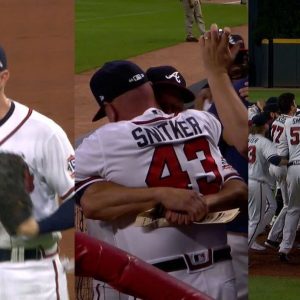
Forget the “banging scheme” or the alleged buzzers or the “it’s my time gestures”, forget Ken Lay and Enron Field, forget Yuli Gurriel’s racist dugout impressions. I am rooting for the Braves in this World Series because I see myself in that team. I was an 88-win student in high school, in college, and in law school. I started slow – albeit better than .500 (or C-level) for more than the first half – but was never in the upper echelon. No one ever looked at my report cards and thought “potential pennant winner” or “one game from capturing the World Series”. No, they saw a student who did fine, even well sometimes. Sure, I was someone who would easily graduate each institution, and find gainful employment, but I was no juggernaut; I wasn’t a 95-game winner (let alone a 107-game winner). I played in the right division and did enough to make it to the next round. And then I flourished; took what I had learned, added a few new skillsets, and rode those to new heights. I allowed my performance on the field (or, more accurately, in the workplace) to speak for more than my middling 88-win academic credentials.

It is easy to root for the sensation, the 2001 Mariners and their 116 wins. Or the Yankees or Dodgers nearly every year. And, of course, I cheered on my beloved Red Sox when they won 108 games in 2018. But it isn’t the same as rooting for the almost dregs, like the 2006 Cardinals. It would be generous to say that that Cardinals team limped in the playoffs and then caught fire. On September 19, 2006, the Red Birds throttled the Brewers 12-2, to move eleven games over .500. They then went 3-9 over their last twelve, which included a seven-game losing streak, to finish 83-78. But that team was more than their GPA. They went on to beat the Padres three games to one in the NLDS, and the 97-win Mets in seven games in the NLCS. That 83-win team then beat the 95-win Tigers in five to capture another World Series. Not bad for a B-student team and their .516 winning percentage.

As has been written in various and sundry places, this year’s Braves took longer to reach .500 than any other World Series team ever. But the team they were is not the team they are. As has been reported ad nauseum, president of baseball operations Alex Anthopoulos reworked the Braves outfield after losing Marcel Ozuna to bad sliding and bad life decisions, and Ronald Acuña, Jr. to a torn ACL. Over the course of two weeks, Anthopoulos acquired Joc Pederson from the Cubs, Adam Duvall from the Marlins, Jorge Soler from the Royals, and NLCS hero Eddie Rosario from the Guardians née Indians. From July 31st to the end of the season, the Braves had the best record in baseball (37-19). But unlike the 2006 Cardinals, the Hammers (one can hope, right?) went 12-2 heading into the playoffs. With that momentum, they beat the Brewers in four and the heavily-favored Dodgers in six, and then jumped out to a 3-1 lead against (say it again) the heavily-favored Astros. And yet, as of this writing, the Braves remain one win away from getting that piece of metal for the first time since 1995.

Sure, listening to the Atlanta (suburbs) crowd drone on with their tomahawk chant is annoying at best and incredibly offensive at worst, and watching the former president sit in one of the Braves’ luxury boxes was somewhat disconcerting. But those are not reason enough not to cheer for the team who overcame mediocrity to get to the precipice of glory. Root for Pederson’s pearls and Rosario’s beard; root for Brian Snitker’s 41 years in/with the organization and Freddie Freeman’s, well, everything. Root for the team whose Game 4 starter had never started a MLB game before that night, got only one out, and yet still won. Root for the Astros to lose a second World Series in three years in their home park. Root for the B-student to achieve success, because we can’t all be valedictorian, we can’t all go to Harvard, we can’t all win 95 games. Sometimes, we need to do just enough, get hot, and ride the wave.

PLAY BALL!!
The Season of Second-Guessing

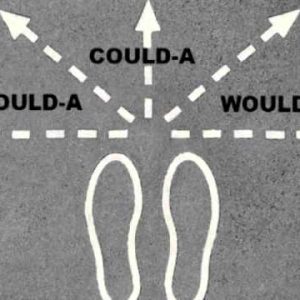
I guess it’s that time of the year. The leaves turn, the temperatures drop, the intensity heightens, and everyone becomes an expert. Fans have watched their team play for six months, they know their favorite roster backwards and forwards; they even know their opponents strengths and weaknesses. So, from the comfort of their couch, the typical fan –with beer in one hand and remote in the other – grunts, groans, and generally grumbles about the pre-game and in-game decision-making processes.

Take my son, for instance. Sitting behind the Red Sox dugout last Friday night in Houston, my son could not and would not stop lamenting Alex Cora’s decision to use Hirokazu Sawamura in the eighth inning of Game of the ALCS. In retrospect, and in terms of outcome, my son was correct. But, as I explained to him as we walked out of the ballpark, we simply had NO idea what Cora or pitching coach Dave Bush or anyone else in that dugout was considering when that decision was made. As a side note, I told him that one of the downsides of attending the game is that we miss out on the analysis you get from Ken Rosenthal and Ron Darling and Frenchy Francoeur, which is all that more important in the playoffs.

My final comment, as he hung his head and headed to the hotel, was that, at that moment, Cora had managed this team for 168 games, and was 15-5 as a post-season skipper. So, for some reason, I tend to trust his knowledge of the Red Sox pitching staff more than my own, and more than that of my 18-year-old son. He reluctantly mumbled his agreement.

And then there is (at least in my world) the much-maligned Dave Roberts. Depending on who I am talking to, or when, Roberts is either a front-office puppet or an over-manager who makes too many bad decisions. Try as I might, I have been unable to square that circle. To that end, I cannot recall how many texts I received last week when the Dodgers announced Corey Knebel as the NLDS Game 5 starter. “Roberts is screwing up again” my father wrote to me shortly after the lineup was released. My best friend sent an SOS text asking for an explanation. I tried to calmly explain to both – and others – that this was not just Dave Roberts’ call. He didn’t wake up Thursday morning, throw a thumb to the wind, and decide Knebel was his guy. I knew, in my soul, and as someone who follows baseball closely, that this was a whole-of-organization determination. And, much to my chagrin, Buster Olney didn’t help matters on Friday morning’s Baseball Tonight podcast, stating that if the Dodgers had lost, or if Knebel had given up a bunch of runs, Roberts would have had a lot to answer for. Thankfully, his guest, Karl Ravech, quickly made my point, and explained to both Buster and the listening audience that this wasn’t a one-man show.

And thank goodness for Andy McCullough of The Athletic. On Friday morning, he published a behind-the-scenes account of how and why the Dodgers decided to go with the opener in Game 5. I sent the article to my dad under the heading “As I was saying…” My father read it, and wrote me back: “After reading the backstory on the pitching strategy, it was genius. Wow!”

The point is, we – as fans – in the grand scheme of things, don’t know shit. We have more information at our fingertips than at any time in history. We subscribe to FanGraphs and check Baseball Reference each morning. We read Jayson Stark’s Weird & Wild column religiously, and listen to Buster and umpteen other baseball podcasts. We have fantasy teams and keeper leagues, and follow the goings-on in the Arizona Fall League. And yet, we have no idea who’s arm is dead, or who didn’t sleep the night before because his baby is sick, or who looked awkward walking back from the clubhouse. We don’t have a fraction of the analytics, advanced statistics, and player-by-player match-up information that each team loads onto those dugout iPads. We don’t know what Dave Roberts or Alex Cora or Brian Snitker or Dusty Baker know. We haven’t experienced what they have experienced. So, arm-chair Connie Mack, slow your roll.

All of that said, it doesn’t mean that managers can’t be and shouldn’t be second (and third) guessed. They can and they should. In fact, that is part of what makes being a fan so much fun. Managers make decisions nearly every night that confound not just us fans, but their front offices as well. And they don’t always do a very good job of explaining themselves. But the system is pretty much self-correcting: make too many of those bad calls, and they become former managers.

Tim Kurkjian has oftentimes repeated the advice that Buck Showalter once told him: a bad outcome doesn’t necessarily mean a bad process; and a good outcome doesn’t necessarily mean a good process. So, it might make sense to be a bit more judicious in our criticisms. We should probably give managers – especially those who have (repeatedly) made it to the final four – the benefit of the doubt before we chuck them under the team bus.

For instance, I have to believe there is some explanation as to why Roberts pulled Brusdar Graterol after nine (100 MPH) pitches to bring in Kenley Jansen to face Eddie Rosario in the ninth inning of Game 2. Brian Anderson opined on the telecast that he didn’t want to be like the aforementioned Buck Showalter, losing a playoff game with his closer in the pen. Fair enough, but from my couch, it seemed like a shaky move. And until Roberts tells me more, until he explains what he and his coaches saw and knew, until he conveys what information was contained on that iPad, you can bet I will second-guess that decision. And if/when he does, I will go back to thinking that the guy who has won six division titles, two pennants, and one ring is pretty good at his job.

Second guess with impunity, but do so with humility.

PLAY BALL!!