This Isn’t That Hard

In 2015, at the height of the Matt Harvey inning-limit nonsense, I wrote an article about the insanity of all of it. For those of you who don’t recall the piece, I had two thoughts:

(1) An inning count is a silly way to measure pitcher usage – that a more accurate analysis would utilize total pitches thrown. I have been harping on this for years, but I have now resigned myself to the fact that it is falling on deaf (and dumb?) ears.

(2) The Mets (and the Nationals before them) failed to properly prepare to have their best young pitchers available throughout the season – even with strict innings limits. I opined that in 2012, the Nationals could have shut down Stephen Strasburg for four weeks in July to preserve some innings for the pennant race. I stated that if the Mets had been literally and figuratively forward-thinking, they could have had Harvey skip four or five starts over four or five months to keep him available down the stretch. None of this happened.

And, as the story goes, those who don’t learn the from the past are doomed to repeat it. This time it could be a West Coast team.

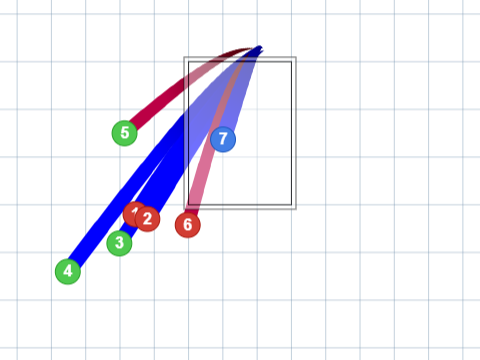
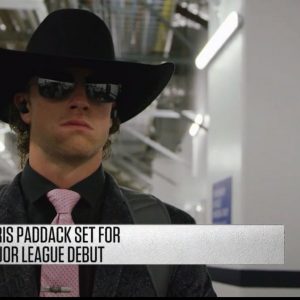
The San Diego Padres, who signed Eric Hosmer last season, and signed Manny Machado this season, and who brought up Fernando Tatis, Jr. to start the season (service time be damned), are set for the future. However, their future may have arrived a year early. In addition to Tatis, the Padres began the year with wunderkind Chris Paddack in the starting rotation (they should be praised for thumbing their nose at service time not once, but twice). And Paddack has been nothing less than fantastic. Through nine starts, he has a 1.93 ERA, with 56 Ks vs. 11 BBs. And for you real stat heads, he has a 2.74 FIP and a 211 ERA+ (which means he is currently 111% better than the average MLB pitcher). In short, he has become the ace of the Padres staff. But, with 51.1 innings thrown as of May 20th, and with a rough innings limit of 140 for the season, we – and more importantly, the Padres – risk not seeing Paddack on the hill in September.

The Padres are currently a .500 team and seven games back of the Dodgers. I don’t think they will catch the Boys in Blue to win the NL West. But, they are only half a game back in the Wild Card race, and may be in the hunt until the season’s final weeks – if not days. And if that happens, they will need their best pitcher taking the ball for some of the franchise’s biggest games in years.

As of this writing, Paddack is averaging 5-2/3 innings per start. If 140 is the magic number, he has about 89 innings left. Simple math has him starting 15-16 more games. On his current schedule – 5 days of rest between starts – Paddack’s last start will be August 25th at home against the Red Sox.

But what if the Padres approached this a little differently? What if they learned from mistakes made by the Nats and Mets? What if they read my 2015 column, and then this one, and decided – today – on a plan that would get them everything they want and potentially need? Below is a list of the Padres’ remaining games wherein Paddack would start (up to the 140 innings mark) based on his current 5-day rest schedule and his current 5-2/3 inning average. And next to that is a revised list, getting Paddack to the final game of the year.


Date (Current) Opponent (Current) Revised Date Opponent 
May 26 @ Blue Jays May 27 @ Yankees
June 1 Marlins June 2 Marlins
June 7 Nationals June 12 @ Giants
June 13 @ Rockies June 19 Brewers
June 19 Brewers June 28 Cardinals
June 25 @ Orioles July 4 @ Dodgers
July 1 Giants July 13 Braves
July 7 @ Dodgers July 23 @ Mets
July 13 Braves July 30 Orioles
July 19 @ Cubs August 8 @ Dodgers
July 25 @ Mets August 19 @ Reds
August 1 @ Dodgers August 25 Red Sox
August 7 @ Mariners September 1 @ Giants
August 13 Rays September 8 Rockies
August 19 @ Reds September 17 @ Brewers
August 25 Red Sox September 29 @ Diamondbacks


This took me fifteen minutes to figure out. Maybe, unbeknownst to the rest of us, the Padres have a plan like this in place. But they certainly haven’t told anyone about it.

Changing gears, and because I will die on the pitch count (as opposed to the inning count) hill, here is another way to look at it:

As of this writing, the average MLB inning takes 16.7 pitches to complete. (Paddack averages 15.4.) If we take the “average” and multiply that by 140 innings (this being the “accepted” measurement), Paddack could/should be on a 2,340 pitch count for the season. Since he has only thrown 788 pitches to date, he still has 1,552 in the bank. If Paddack can keep his pitches/inning constant, he would have nearly 101 innings still available (not the 89 based on innings alone). Give Paddack twelve more innings, and you give him two more starts on the schedule above.

Am I, a lowly baseball amateur, the only one thinking this way? Why haven’t the brilliant minds of baseball figured this out? Where is Padres G.M. A.J. Preller and his Ivy League education? How about Padres manager Andy Green, who graduated Summa Cum Laude from the University of Kentucky? Come on guys, this isn’t that hard.

Chris Paddack deserves to pitch those four additional games in September (and conceivably two more). The Padres fans deserve to have their best young pitcher throwing the most important games of the year. And we, the baseball fans, deserve to watch Chris Paddack with his cowboy hat and Texas swagger, on the biggest stage of all!

PLAY BALL!!
Money for Nothing – Why Give Pre-Arbitration Raises?

As I may have previously mentioned, I am a very lucky guy. Among the many reasons, I married a woman who doesn’t know a ton about baseball, but is always interested in learning. And, for that reason, she has no compunction about listening to me drone on about the game’s minutiae for long soliloquies.

Over a glass of wine a few weeks ago, the conversation turned to baseball free agency. My wife wanted to better understand how it works, so I started by explaining how players are locked into their “rookie” contract for their first three years, and then become arbitration eligible for their next three, all prior to becoming a free agent. For the sake of ease and our marriage, I did not delve into “Super-2 Status”, but I did briefly touch on service time because, who wouldn’t?

The starting point was the Major League minimum salary, and how teams have the right to give a player whatever raise they want for years two and three (at or above the minimum, of course). And then my wife asked me the most simple question: Why? Why, if the team has total control, and the player has no other options (within the confines of MLB), would the team pay the player a nickel above the minimum? It was such an obvious question, and yet I had no real response. I fumferred something about a small raise for a job well done; I tried to make a case for building loyalty that may/might be rewarded down the road; I said something about how it has always been done.

And yet she trumped me with another “why?” She tolerated the idea that a player could be entitled to a raise if he earned it. But, she asked, if he didn’t play well enough, couldn’t the team cut him, which I had to acknowledge. So, she said, signing him for another year was its own reward – and it got him another year closer to arbitration and ultimately free agency. All good points.

She then questioned the concept of loyalty. She asked me if there is any research on players choosing to stay with their team in free agency based on how they were paid in years two and three. I told her I was certain that someone at Baseball Prospectus or FanGraphs had written an article about this – what haven’t they written an article about? – but I did not know off the top of my head. But, I said, using my overall knowledge of baseball, representatives, and free agents, I doubted that teams curried too much favor by giving players big raises in those years. Thwarted again.

And her reaction to the “that’s how it’s always been done” justification was “that’s stupid”. She then added, “haven’t you been telling me how smart and analytical front offices are…?” I had no response for that.

The MLB minimum salary this season is $555,000, and is subject to a cost of living increase in each of 2020 and 2021. The COLA for last year was 2.8%. Assuming next year is roughly the same, a player would get a $15,000 increase just for being on the roster – whether he deserves a raise or not. While not the $30M that the superstars are getting paid, $570,000 and then $586,000 is nothing to sneeze at. So why pay more?

Now, to be clear, I think the MLB salary structure is totally out of whack. With more and more free agents being skipped over for younger, salary-controlled players (see above), veterans who spent their careers waiting for a big payday are finding themselves unemployed. Two weeks before the 2019 Opening Day, Jayson Stark was able to put together a pretty heady lineup of unemployed players. And the reason for this, as I alluded to above, is that front offices have become smarter and ever more efficient with player acquisitions and long-term contracts. Teams no longer pay for past performance – only for tomorrow’s.

So why do they pay additional during team-controlled seasons (i.e., when the don’t have to)?

Below is a list of the Top 11 rookies from 2018 (based on Rookie of the Year voting) and their team-determined 2019 salaries. The first two names (Otani and Acuña) won the ROY.

2019 Salary Increase Above Req’d
Shohei Otani $650,000 $95,000
Ronald Acuña $560,000 $5,000**
Miguel Andújar $617,600 $62,600
Juan Soto $578,300 $23,300
Gleyber Torres $605,200 $50,200
Walker Buehler $570,000 $15,000
Joey Wendle $570,400 $15,400
Daniel Palka $567,000 $12,000
Brian Anderson $585,000 $30,000
Ryan Yarbrough $563,400 $8,400
Jack Flaherty $562,100 $7,100


**Acuna signed an 8/$100M extension after his 2019 salary was determined.

And how about these: The Yankees only had to pay Aaron Judge $545,000 last season, but they paid him $622,300; and they only had to pay him $555,000 this season, but they are paying him $684,300. They were required to pay Gary Sanchez $545,000 last season, but they paid him $620,400; and instead of $555,000 this year, he is getting $669,800.

Cody Bellinger won the ROY in 2017, and got a $50,000 raise (in lieu of the requisite $10,000). He had a subpar sophomore year (14 less HRs, OPS down 119 points), and was rewarded with another $20,000 raise (the Dodgers could have given him a $30,000 pay cut). We could go on and on.

Which brings me back to wife’s thoughtful question: Why? Why did teams pay the 14 players listed above a total of $618,100 more than they were required? Do we believe that anyone of them (Acuña excepted) is more likely to sign a long-term contract come free agency because they got a $7,100 or $8,400 or even a $62,600 raise in one of their team-controlled seasons? Maybe. But that seems like a very risky proposition. There are countless more just like these.

There are exceptions, of course. The Angels gave Mike Trout a $1M salary in his third year, and he then signed a 6-year extension. Was giving him double the minimum in his third year the reason? Maybe. Most people tend to look favorably upon an employer who gives you a $500,000 raise.

But Bryce Harper got more than four times the minimum (a $1.5M raise) between years two and three, and that didn’t compel him to sign a long-term deal with the Nationals. Mookie Betts got a $384,000 raise between years two and three, and yet Red Sox fans throughout New England are sweating out a potential Betts free agency. Sully and Murph sitting on stools at the Cask ‘n Flagon aren’t too sure that that third year salary is going to make any difference in Mookie’s ultimate free agent decision.

So, if teams have all the leverage, and general managers have all the analytical tools, and every dollar saved is either a dollar in the owner’s pocket or a dollar that can be spent gaining a competitive advantage elsewhere in the organization, it begs the question: Why give raises at all?

The answer, unfortunately, may be the same as why Coke changed its flavor in 1985: No one knows.

PLAY BALL!!

Bell(inger) of the Box

We are a month-plus into the season, and it seems as if the National League MVP race has been whittled down to two players.

Christian Yelich started the season en fuego, hitting four home runs in his first four games, and 13 in his first 22 (two more were robbed).

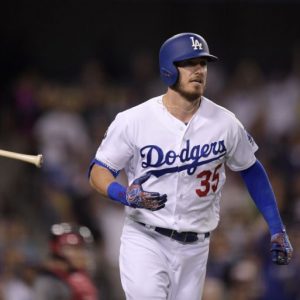
Equally impressive has been the start of one Cody James Bellinger. Through 32 games, all he is doing is leading the NL* in batting, HRs, RBI, hits, runs, OBP, slugging, OPS, and WAR. Unless over the winter he somehow became a crossbreed of Barry Bonds/Ted Williams/Wade Boggs/Tony Gwynn, we know these numbers cannot last. But it is clear that Cody is really good. He came into the season with a new approach and a chip on his shoulder, and is well on his way to becoming a superstar. I am certainly not the first person to notice this. He was just named NL Player of the Month, and there have been about a zillion Cody Bellinger stories already written.

But superstars have kryptonite, and Bellinger’s is analytics. The Dodgers are as forward-thinking of an organization you will find, and have established the deepest bench in the game. They utilize that depth to employ more platoons than any other team; and Bellinger has found himself platooned at first base as well as the outfield. In 2017, his rookie season, he essentially got twice as many plate appearances, had twice as many hits, and hit twice as many home runs against right handed pitchers (interestingly, his batting average was actually better against lefties).

  Starts PA Hits HRs Avg. Slugging OPS
vs. RHP 94 325 86 27 .265 .588 .948
vs. LHP 33 173 42 12 .271 .568 .903


Last season he had roughly the same ratio of starts and plate appearances as in 2017, but was considerably less successful against lefties.

  Starts PA Hits HRs Avg. Slugging OPS
vs. RHP 95 422 103 19 .278 .518 .880
vs. LHP 40 210 42 6 .226 .376 .681


Based on last season’s number, even Dave Roberts haters would have understood benching Belly against lefties this year. But that has not been the case. Bellinger has started 31 of the team’s 33 games, and played in 32. He is batting regardless who is on the hill. And he is hitting everything.

So it was not shocking to see Bellinger remain in the game in the seventh inning of last Sunday’s tilt, when the Pirates brought lefty-specialist Francisco Liriano into a tie game with two on and one out. It was in this at bat that I witnessed the Cody Bellinger transformation in specific relief.

Anyone who watches the Dodgers knows that, as team, they struggle to score with runners in scoring position and less than two outs. And the seventh inning Sunday was shaping up to be more of the same. After a lead-off walk and an E-3 put runners on the corners with no outs, Corey Seager popped out to short. Max Muncy was able to muscle a 2-2 pitch into right to score the go-ahead run, leaving runners again on the corners, still with one out.

Bellinger came to the plate with a chance to add an important insurance run. Facing the lefty, Belly proceeded to wave feebly at two low and away sliders. Over the course of Bellinger’s first two seasons, I have seen this scene play out too many times. Prior to this year (and not counting the post-season), Bellinger was 19 for 92, hitting .207 after falling behind 0-2. But 2019 has given us a brand-new Belly.

After getting weak swings on the first two sliders, Liriano tried the same pitch again (who wouldn’t?). Bellinger didn’t bite. So Liriano tried it a fourth time in a row. Bellinger didn’t bite. Now the count was even.

Liriano then tried to sneak a fastball by him, but missed high and away. Bellinger had taken a horrible looking at bat and pushed the count full. Maybe Liriano had lost confidence in his slider, as he tried another fastball, and Cody fouled it back. Maybe Liriano should have lost confidence in the slider, because he hung the next one, and Bellinger pounded it for an RBI single, giving the Dodgers the insurance run they would need, as they ultimately won the game 7-6.

Now, the ball Bellinger hit was nothing special. We would be shocked if he didn’t/couldn’t hammer a hanging 88 MPH slider. But what made this so special was that the Old Bellinger would never have been there. He would have K’d – if not on slider number three or four, then on the 2-2 fastball. Cody has reduced his K% from 26.6% in 2017, to 23.9% in 2018, to 11.8% this season.

Bellinger has a long, powerful, upper-cut swing that can do an immense amount of damage. But, as a third-year player, he has matured as a hitter. He has learned to fight off tough pitches, not swing at others, and shorten that swing – when necessary – to score an important run.

October is a long way off, but Bellinger looks to be a different hitter than the guy who has batted .172/.226/.336 over the past two post-seasons. Time will tell if this New Bellinger can do it when the stakes are highest and the lights are brightest, but he is off to a damn fine start.

PLAY BALL!!

*NOTE: All stats current as of May 2nd.

Who Do Agents Represent?

Shortly before I graduated law school, I decided I didn’t want to be a lawyer (well planned, I know). So, nearly six figures in debt, with graduation on the horizon, I visited a corporate consultant to figure out what the “anything” is that you can do with a law degree.

I sat in that office for more than an hour, filled out a few questionnaires, and answered a bunch of questions. When my time was up, I was told I should be an agent. Armed with that information, after graduation and the bar exam, I went to work for a talent agency.

My tenure at the agency didn’t last long, but that had more to do with money (or lack thereof) than desire. Nearly a decade later, when the company I was working for was sold, I briefly flirted with following my passion and becoming a baseball agent. But the constant travel, cut-throat competition, and lack of clients thwarted that ambition.

For more than two decades I have worked on the corporate side of the ledger. And events over the past few weeks have made me appreciate that choice all that much more.

As many you have probably read, the Writers Guild of America has declared war on talent agents. Simply put, the WGA believes that agents are guilty of self-dealing and breach of fiduciary duty. The guild feels as if the agents, rather than representing their clients, are putting their needs, desires, and financial interests first. Insofar as I don’t represent talent, I am not in a position to judge or even truly opine. Suffice it to say, the whole thing is a mess.

Now for the more obscure. I am sure most of you by now know that Mike Trout signed a 10/$360M extension with the Angels; that Bryce Harper got 13/$330M from the Phillies; Manny Machado will spend the next 10 years earning $300M with the Padres; and Nolan Arenado received an 8/$260M extension from the Rockies. But unless you follow the game super-closely, you probably missed some of these smaller deals:

  • Ronald Acuña, Jr. (Braves): 8/$100M
  • Blake Snell (Rays): 5/$50M
  • Aaron Nola (Phillies): 4/$45M
  • Luis Severino (Yankees): 4/$40M
  • Ozzie Albies (Braves): 7/$35M
  • Paul DeJong (Cardinals): 6/$26M
  • Brandon Lowe (Rays): 6/$24M

So what do all of these deals have in common? For starters, none of them had to be made – all of these players were still under team control (a quick reminder: players get paid the Major League minimum (or close to it) for their first three years, and then are arbitration-eligible for the next three).

Next, for most of these players, their new contract represents a vast underpay. Some pundits are speculating that Acuña left anywhere from $100-$150M on the table. Snell, Nola, and Severino were all in line to earn nine figures down the road, but gave that up for lesser, but still life-changing, generational money. There is an argument to be made that Albies could have made the same $35M through his arbitration years, and come out a free agent with the world as his oyster. Instead, he gave up at least two years of free agency, but most likely four, at $7M/season.

If we were to channel the cynical thought process of the WGA, one might wonder if there was something else at play. When negotiating these deals so far in advance of arbitration and free agency, there is a question as to whether or not the agents were working in the best interests of their clients?

Most of the players referenced above are represented by smaller agencies. None of them has Scott Boras or Dan Lozano or the Wasserman Group in their corner. And, as you know, agents can only commission deals they make. So, if Acuña or Snell or Albies elected to remain on their rookie deals, and then jumped ship to a larger agency when free agency came around, the agents who discovered, nurtured, and guided these players to superstardom would be left holding 4-5% of maybe $10-$20M in total – for upwards of a decade or more of work. And then the big-name/big-firm agent could “poach” the client, sign the high eight-figure or potentially nine-figure deal, and take 4-5% of that.

Sure, the new agent would bring large-scale negotiation experience to the table. Sure, the new agent would leverage relationships with front offices honed over years of deal-making. Sure, the new agent would earn his/her keep. But that is of little consolation to the agent who repeatedly flew to the Dominican Republic to scout an unknown kid; or who hung around the stands at some podunk high school on a cold March day to speak with a 17-year old and his parents; or who helped navigate the back roads of the minor leagues, coaxing and cajoling, challenging and inspiring a player to have a short memory and to keep his eyes on the prize. Those agents are left at the altar, only to see the prettier lady swoop in, sign the player and the big contract, and enjoy the riches gleaned therefrom.

So what is a little(r) agent to do? Maybe, and this is just speculation, maybe that agent signs the big-money contract before the client has a chance to split. As you can see, these deals are for considerably less money than those signed in free agency; but 4-5% of something is a whole lot better than 4-5% of nothing. Maybe the idea is to cash in now. Make the $40M deal and get a $2M commission rather than waiting three or four years for the player to potentially get double that on the open market – but with a different agent – leaving you holding the (empty) bag.

Are agents always acting in their client’s best interests? That would be my hope. The WGA doesn’t seem to think so. Many baseball writers are a bit dubious. And there are plenty of savvy general managers who are preying on agent’s greed(?), lack of scruples(?), exploitative desires(?) to make a quick deal heavily in favor of the team. And yes, in these cases, the player is set for life. And yes, we as outsiders have no way of truly knowing what motivated the player to sign early. And yes, absent a serious injury, all of these players should have another chance to sign a big-money contract down the road. But that doesn’t mean we shouldn’t look at these deals with a critical eye.

To take it back to Hollywood, we can certainly view agency productions as creating more jobs. We can reason that packaging fees save clients from paying a 10% commission. But, that doesn’t mean we shouldn’t look at those deals with a critical eye.

Hell, it all may be much ado about nothing. It may be that every agent is looking out for his/her clients and living up to their fiduciary and ethical duties. But it’s not beyond the pale to ask the question.

But unlike the WGA, I don’t already have the answer.

PLAY BALL!!