A few weeks back, on the Baseball Tonight podcast, in advance of our nation’s 250th birthday, Buster Olney and Todd Radom discussed the most “American” moments in baseball history. Olney brought up Lou Brissie.
Leland Victor Brissie was born in South Carolina in 1924. He began his baseball career at the tender age of 16 in a textile league, where he caught the attention of Connie Mack. Brissie’s father insisted he finish his education before becoming a professional baseball player, and so he attended Presbyterian College in Clinton, South Carolina after high school.
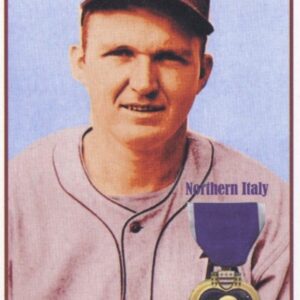
At age 18, Brissie enlisted in the United State Army, and soon found himself fighting in World War II. As part of the 88th Infantry Division, he was involved in heavy fighting in Mussolini’s Italy. On December 2, 1944, at just twenty years of age, an artillery shell shattered his left shinbone into 30 pieces. At an Army field hospital Brissie was informed that the leg would need to be amputated. The budding pitcher pleaded with the medics, telling them that he was ballplayer and that he needed his leg to continue his career. He said he was willing to risk his life to save the leg.
Two years and twenty-three surgeries later, with his left leg now shorter than the right, and a metal brace holding everything in place, Brissie was home from the war and able to resume playing. The injury caused lifelong pain in the leg, but that was nothing compared to his desire to pitch in the big leagues. Mack was finally able to sign him in 1946. Brissie began at Double-A Savannah in 1947, and won 25 games. He got “the call” in late September of that year, making his major league debut against the Yankees. He went seven innings, allowing nine hits and five earned runs; he did strike out four in taking the loss.
The next time Brissie took the hill was the second game of the 1948 season against the Red Sox. In the sixth inning, with Dom DiMaggio on second after a double, Ted Williams hit a line shot back up the middle that smashed into Brissie surgically repaired left leg. DiMaggio scored on the play and Williams reached first safely. Everyone quickly crowded around the fallen pitcher. In his memoir, My Turn At Bat, Williams recalled how guilty he felt in the moment, and he rushed over as well.
Williams propensity to hit the ball to the right side of the field was so pronounced that he was often the victim of the “Ted Williams Shift” (originally known as the “Boudreau Shift”). This, of course, was long before analytics and spray charts and Joe Maddon and the Tampa Bay Rays and then MLB rules changes banning “the shift.” But on this April day, Williams went back through the box and right into the war hero pitcher.
When Williams reached the mound, Brissie, by all reported accounts, looked up at the slugger and yelled: “For chrissakes, Williams, pull the damn ball!” Brissie shook off the injury and retired 10 of the next 11 batters – including striking out Williams in the ninth – to complete the 4-2 victory for the Athletics.
Brissie’s career would last seven seasons, with him playing the final two-plus years in Cleveland. He finished with a record of 44-48 with a 4.07 ERA and a 102 ERA+. But the stats are secondary to the mere fact that he played major league baseball at all.
And it is quite possible that he is most remembered on the baseball field for the time when two war heroes faced off against one another, one giving it his best shot, the other taking the shot, and then dusting himself off to stay in the fight.
Brissie was awarded a Bronze Star and a Purple Heart as well as an American Campaign Medal for his services in World War II. After his retirement, Brissie served as the National Director of American Legion Baseball, and was part of President Kennedy’s Physical Fitness Council. Later on he would scout for the Dodgers and the Braves.
We should never forget the story of Lou Brissie, who defied the odds to live – with two legs, a full heart, and a baseball career – 89 fine years.
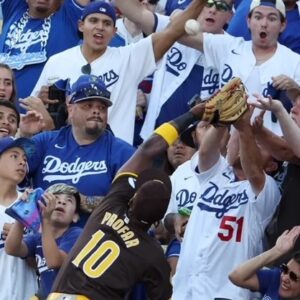
In the bottom of the first inning of Game 2 of the NLDS, Mookie Betts hit a ball 354 feet down the left field line. Jurickson Profar, a converted shortstop, went back to the wall, leaped into the stands extending his gloved left hand as far as he possibly could, and then retreated back onto the field of play, bouncing on both feet like a kid on Christmas morning. Betts was somewhere between second and third base when Profar finally divulged that he had caught the ball. His antics fooled Betts, the fans, and the television broadcast, which had displayed a home run graphic while Mookie circled the bases.
In the aftermath of Profar’s play, the Dodger fans were none-too-pleased, which led to jawing, and then ball-throwing, and then a nine-minute delay before the seventh inning while security encircled the outfield, led fans to jail, and cleaned up the beers dropped onto the warning track.
For starters, fan should NEVER act that way. Buying a ticket does not give you a license to say rude or offensive things to players (I understand some people may have a different view of this). Buying a ticket does not legally allow you to throw things – balls or beers – onto the field. In short, just because you buy a ticket doesn’t mean you automatically get to be a jerk.
But, buying a ticket, does give the fan a certain type of license.
MLB Rule 6.01(e), discusses “Spectator Interference” as follows: “When there is spectator interference with any thrown or batted ball, the ball shall be dead at the moment of interference and the umpire shall impose such penalties as in his opinion will nullify the act of interference.”
The penultimate two sentences of the official comment to the rule states: “No interference shall be allowed when a fielder reaches over a fence, railing, rope or into a stand to catch a ball. He does so at his own risk.”
As such, fans do have the right to catch a ball that comes into the stands. Fans are given license to mess with the player diving over the wall. Fans have as much right to the ball as the player, and if that means hitting an arm or knocking a glove off a hand, so be it.
Accordingly, while I blame the Dodger fans for their putrid behavior before the seventh inning, I also blame the fans for allowing Profar to make that catch. There is simply no world in which a visiting player, during a playoff game, in a packed stadium, should ever be able to make that play. In 1989, Bill Welch and Jeff Moses published “The Tenth Man: How Major League Baseball Teams Can Gain a 2 to 3 Run Advantage Every Game.” The Seattle Seahawks have made an industry out of the 12th man, as their fans have an adverse effect on visiting players. There is a real benefit to playing at home, but only if the fans do their job.
When you watch the video of Profar’s catch, you can clearly see multiple fans who had a clear shot to either catch the ball or interfere with Profar’s ability to do so. They all failed at their job. The poor security guard can be seen cowering, and he may have impeded some fans getting in Profar’s way, but there were plenty of others available.
Fernando Tatís had hit a home run in the top of the first inning of this pivotal game, and Betts was about to even the score. And, maybe more importantly, Betts was about to end his 0-for-18 post-season hitting woes. As it turned out, it took another full game – pushing the streak to 0-for-22 – before Betts got a hit, which was an actual homer over the outstretched arm of Profar (again). Who’s to say what the rest of Game 2, an eventual 10-2 Padres blowout, would have looked like had the score been 1-1 after 1, with Mookie feeling confident at the plate.
The Dodger fans cannot be blamed for the six home runs that Dodger pitchers surrendered in that game. But they can be blamed for the one home run that they allowed a Padres pitcher to not surrender. Fans can hoot and holler; they can sing and dance and call out their team’s name during “Take Me Out To The Ballgame.” Fans can wave rally towels and stand when their pitcher gets two strikes on an opposing batter. And they can – and should – do anything and everything possible to make sure that the opposing team does not reach into the bleachers and pull back an actual, verifiable, genuine home run ball. If they fail to do that when given that opportunity, then they have failed their team, they have failed to do their job. There is no question that the Dodger fans failed their team in the first inning of Game 2 of the NLDS.
A few weeks ago, a friend of mine whose son plays Division I baseball told me a story. She was watching her son’s game on television when a player (not her son) dove headfirst into second base on an attempted steal. The runner’s head smashed into the shortstop’s knee, whereupon the runner collapsed on the field. For many moments, the players, coaches, and umpires didn’t know if the runner was alive – he certainly wasn’t moving. After about five interminable minutes, the player regained consciousness and was helped from the field. He was later diagnosed (luckily, as it happens) with only a concussion.
My friend told me this story as a prelude to a question that I have been asking in various forms for years: Why do players slide headfirst? Why is this even allowed?
Now, I am sure there are old-timers out there who will tell me that banning headfirst slides would be un-American; a violation of individual rights; a further wimpifying of our culture; that it would be pillow-parenting run amok. Okay, fair enough. Here in America you are entitled to your opinion, as am I.
It seems like I write about this issue every year. It turns out I have only done so in 2015, 2016, 2017, 2019, and now 2022. And the reason I keep writing about it is because it is still an incomprehensible practice.
The issue came top of mind a few weeks back when I watched one of my favorite young players – Ke’Bryan Hayes – do something so monumentally stupid that I could not believe my eyes. And it made me question what his father (a former big leaguer) taught him, and what type of coaching he is receiving in the Pirates organization. Here was the situation:
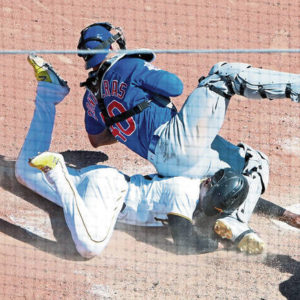
Hayes was on second as the Manfred-Man to start the bottom of the 10th inning. With one out, Michael Chavis hit a short looper over first. Hayes never stopped running. Rafael Ortega scooped the ball up on one hop, turned, and fired a strike to home plate. Waiting to receive Ortega’s throw was well-known (illegal?) plate blocker Willson Contreras, all 225 pounds of him. So what did Hayes, three inches shorter and at least 20 pound lighter – not accounting for the mass of equipment Contreras was wearing – do? He dove headfirst into home plate, where he met the Cubs’ catcher, and his heavy plastic shin guards, and his oversized backside. Hayes scored the winning run, and then lay in the dirt for nearly a minute. The Pirates’ play-by-play guy stated: “I have never seen a celebration muted like this.”
Hayes was helped to his feet and off the field, and then missed then next two games with a sore shoulder. He was lucky it wasn’t considerably worse; but since he has been back in the lineup over the last nine games, he is 6-for-35, with no extra base hits. Because correlation does not prove causation, you can draw your own conclusions.
Why did Hayes dive into home rather than sliding feet first? Why not utilize a classic hook slide moving his entire body as far from Contreras, who was catching a ball thrown from right field, and thus could not get a specific bead on the runner? Or, for all you throwbacks out there, how about him knocking Contreras’ block off – Pete Rose style – in the hope of dislodging the ball from his mitt? I think a replay review would have shown that Contreras did not provide Hayes with a path to the plate prior to his receiving the throw. Any of those options would have been better than putting his fingers, hands, wrists, neck, head, and shoulders at risk. Why didn’t the Pirates coaching staff alert the players in their scouting report that Contreras likes to block the plate? Why didn’t the Pirates player development staff coach their players to be safe, not sorry, when trying to advance to the next base? Why?
Sure, we all love watching Javy Báez with a swim slide into second base avoiding the tag of an unsuspecting middle infielder. But, at what cost? In 2019, Báez dove into second base, fractured his thumb, and missed the month of September. Some lessons are never learned.
Since the Hayes incident, I have seen a handful of additional players dive into home plate, all avoiding serious injury. But that is just dumb luck. Baseball is a dangerous game on its own. Don’t believe me, ask:
Mookie Betts (ribs, from an outfield collision)
Jacob deGrom (shoulder)
Manny Machado (ankle, running to first)
Max Scherzer (oblique)
Salvador Perez (thumb, due to a swing)
Ozzie Albies (fractured foot from a foul ball)
Walker Buhler (flexor strain and bone spur)
Stephen Strasburg (ribs)
Chris Sale (ribs)
Bryce Harper (thumb, due to a HBP)
Anthony Rendon (wrist, due to an errant swing)
Jazz Chisolm, Jr. (back strain)
Jack Flaherty (shoulder)
Tyler O’Neill (hamstring)
Hunter Renfroe (calf)
This list could go on and on. The point is that there is enough that can go wrong on a baseball field that players don’t need to take it upon themselves to up the ante. Sliding headfirst has shown, time and again, to be a fool’s bargain; and as I wrote in 2016, extremely costly. MLB teams need to get smart about this. But so, too, do college teams. And high schools. Yes, it is legal there as well.
When and where will the madness stop? When an aspiring physicist or politician or doctor playing baseball for an Ivy League institution dies on the field because his neck and head couldn’t endure the impact with another kid’s knee? Or will it require a $30M/year superstar becoming paralyzed on a major league diamond in front of 40,000 fans and on national television because he believed that leading with his head offered him the best chance to score a run in the fifth inning of a 7-2 ballgame?
MLB has shown a willingness to change its rules when big-name players get injured on a big stage (see, the Chase Utley Rule; see, the Buster Posey Rule). Why wait until we have to name this new rule? Or, if we must, let’s call it the Hayes Rule, named for a legacy player who narrowly avoided disaster and forced baseball to do the same.
Much has been written about organizations not caring enough to field a competitive team. In an effort to combat this scourge, the players tried to impose a salary floor in the latest CBA negotiations to thwart the concept of “tanking.” Shortly after the new CBA was signed, the Oakland A’s, doing their best Major League impression, went into fire-sale mode, bringing their 2022 salary commitments down to around $50M. The Orioles are in year pi of their rebuild. The Pirates are so parsimonious that the Effectively Wild podcast has dubbed any failure to pay players “Nutting” (after Pirates owner Bob Nutting).
We desperately need 30 teams to go out there and compete, to try to win.
We want teams to try to win, but, apparently, just not too hard. Based on what I have read and listened to since the start of the season, we don’t necessarily want our teams to try to win when doing so may come at the cost of individual achievements. We don’t want them to try to win when doing so might make the other team (or their fans) feel bad. We don’t want them to try to win when doing so might cause a violation of the so-called “unwritten rules.” To which I say, “Pick a lane.” What do we want?
The season is just a few weeks old, and we have already seen these issues rear their head on three occasions. Let’s take a look:
Clayton Kershaw & Dave Roberts
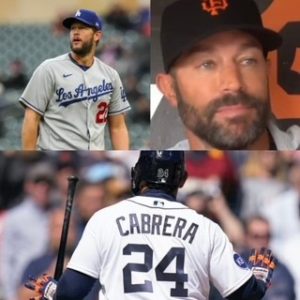
At this point, Clayton Kershaw is a national treasure. Love or hate the Dodgers, no one dislikes Kersh. The guy builds orphanages in Zambia; he hosts a ping-pong tournament each year to raise funds for Africa and the Dominican Republic. Oh, and he has had a Hall of Fame career, winning three Cy Youngs. However, the last few seasons have seen Kershaw make multiple trips to the IL with various ailments. His best days are behind him, but when healthy, he is still effective; and he is still someone the Dodgers will need in order to make a deep run in October.
So when Kershaw threw seven perfect innings, on only 80 pitches, in his first start of the season, baseball fans begged for him to keep going. But Clayton knows his body; Dave Roberts knows his star; and neither thought it made any long-term sense to send Kershaw back out there for the 8th inning. We fans were denied a shot at history; but so, too, was Kershaw. He didn’t seem to mind. But talk-radio jockeys, beat writers, and armchair managers all felt they knew better.
“He may never get another chance at a perfect game; you’ve got to let him go” was one refrain. “So what if he got tired? He could skip his next start or two,” was another. This latter take was maddeningly myopic. Suffice it to say that pushing an oft-injured, 34-year-old pitcher after a shortened Spring Training beyond what he felt he was ready for in his first start of the season just for the chance he would make history, is not good for the player or the team. Any potential injury could and would have a long-lasting impact on the Dodgers’ goal…of winning.
But, to hear “fans” lament “modern baseball” and it being ruled by “analytics” and “front offices” (a) takes away Kershaw’s agency in the matter (before the game he told Dave Robert he could only throw 85 pitches) and (b) flies in the face of the ultimate goal. How many Dodger fans would be happy exalting a perfect game in April, but being one pitcher – one Hall of Fame pitcher – short come the (expanded) playoffs? How would those “fans” feel when the Dodgers were forced to throw a bullpen game in Game 6 of the NLCS because Kershaw is on the shelf? I don’t love every decision Dave Roberts makes, but this one was one of his easiest.
Miguel Cabrera & Aaron Boone
If Kershaw is the most beloved player in MLB, Miguel Cabrera could make a case for being 1A. Who doesn’t love this guy? Hell, he gave his glove to rookie Spencer Torkelson, telling him to play first base while Cabrera moved permanently to DH, so Torkelson could start his big league career. Jayson Stark laid out the insanity of Cabrera’s hitting prowess, and the rarified air he breaths for those who have played the game and swung a bat.
And with three hits last Wednesday night, Cabrera entered Thursday’s game sitting on 2,999 hits. After going 0-fer in his first three at-bats, he came to the plate with two outs in the eighth inning of a 1-0 game, with runners on second and third. Aaron Boone had the Yankees trailing by a run with one of the greatest right-handed hitters in the history of the sport at bat, facing a lefty with a left-handed hitter on deck. So Boone did exactly the right thing: he intentionally walked Cabrera. The fans at Comerica Park went nuts. Even Cameron Maybin, in the Yankees’ broadcast booth, was shocked that Boone did it – but he agreed with the decision. You know why, because that is what you do when your job – and your goal – is to win games.
The AL East stands to be the most competitive division in all of baseball this season, where every win will be of paramount importance – and potentially the difference between making the playoffs and not. So, was Boone supposed to push that aside and let Cabrera swing away, potentially getting hit number 3,000, AND giving the Tigers a 3-0 lead? Would Brian Cashman and/or Hal Steinbrenner have looked the other way at that obvious malfeasance if/when the Yankees lose the prize by a single game?
The naysayers will say that Austin Meadows’ softly-hit double proved the Baseball Gods right, so it did not matter. But process matters. Good judgment matters. Bosses and owners can live with bad results that derive from good decisions. They can’t abide by putting the feelings of the hometown Tiger fans ahead of the goals of the team. And you know how I know I am right? When the inning ended the fans booed, Miguel Cabrera told them all to be quiet, to look at the scoreboard, to recognize that Aaron Boone made the right call.
Mauricio Dubon & Gabe Kapler
About a week ago the Giants started thumping their division rivals, the Padres, from the get-go. By the time there were two outs in the second inning, they led 10-2. Steven Duggar, who had just knocked in the tenth run with a single, elected to steal second base. Swiping a base with a nine-run lead is not de rigueur, but doing so in the second inning may be slightly more palatable. If the Padres were upset with Duggar, they hadn’t seen anything yet.
Leading off the bottom of the sixth, with the Giants comfortably ahead 11-2, Mauricio Dubon bunted for a single. When he got to first base, Eric Hosmer greeted him with some choice words. Hosmer told MLB.com that he told Dubon: “You’ve been playing professional ball for a good amount of time obviously if you’re at this level. You’ve got to be smarter than that.”
Smarter than what? Smarter than trying to play the game to win? Smarter than trying to increase his batting average so he will get a raise next season, and maybe more money when he reaches arbitration in a few years? Sure, the Giants were up nine runs, but Hosmer was still trying to win when he swung from his heels the inning before. The Padres were trailing by nine runs but still had their starters in the game (Bob Melvin did replace Hosmer and Manny Machado in the seventh). Clearly, one side was still playing to win. Why shouldn’t the other?
After the game, reporters threw a ton of mics in manager Gabe Kapler’s face, trying to get an answer as to what he and his players were thinking. Kapler (who it should be noted, I don’t always agree with), laid it out perfectly:
“Our goal is not exclusively to win one game in a series. It’s to try to win the entire series. Sometimes, that means trying to get a little deeper into the opposition’s ’pen…We’re not trying to hurt anybody. We just want to score as many runs as possible, force the other pitcher to throw as many pitches as possible. If other clubs decide that they want to do the same thing to us, we’re not going to have any issue with it.”
And there it is. Kapler is paid to help his team win games. If his strategy in game one of a series has an impact on games two and three, all the better. Last season the Giants won the division over the Dodgers by one game. Every game – including the games in the days after a blowout – counts. Were the Padres upset? Yes. Should they have been? Well, I do seem to recall a certain Padres star swinging on a 3-0 pitch with the bases loaded up by seven runs just a few years ago.
The “unwritten rules” of baseball aren’t worth the paper they aren’t written on – they take away the competitive spirit of the game (with the exception of throwing at someone’s head – that one actually should be written in stone).
In that same interview, Kapler spoke the truth and summed up the ultimate goal:
“Everybody is competing on a Major League Baseball field. It doesn’t make any sense how one part of the field stops competing and the other part of the field keeps competing. I can’t think of a reason why that makes sense. The pitcher on the mound is trying to get you out, the batter at the plate stops competing with all the tools at his disposal?”
Baseball is hard. Ask the heralded rookies over the past two seasons all hitting below the Mendoza Line. Ask the Blue Jays who didn’t make the playoffs last season despite possibly being the best team in the American League at season’s end. Ask the aforementioned Giants who won the division by a single robbed home run in May, only to be knocked out of the playoffs on a checked swing.
The goal is to win and to put your team in the best possible position to win. The goal is not to make the fans happy with individual achievements at the potential cost of long-term success; nor is it to mollify opposing managers who believe there is a “right way” to play the game. If we demand that our owners spend money to put quality players on the field, then we have to demand that our managers allow those players to play the game to win, both for today and for October. Otherwise, we are just a jumbled mess of contradictions and hypocrisy. So look in the mirror, baseball fans, and ask yourself what it is that you want.
Read enough newspapers or watch enough news or listen to enough podcasts, and you are bound to get slapped in the face with poor reportage. It’s the law of big numbers. But, as a discerning baseball fan, I have come to expect that, while I may not agree with all baseball takes and opinions, I believe they come from an informed and considered place. Football analysts shoot from the hip, basketball commentators like to make headlines, but baseball observers are more careful. Or so I believed.
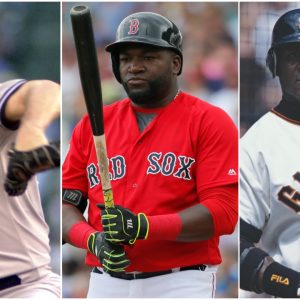
After the Hall of Fame released the results of the BBWAA vote last month, I listened to “The Athletic Baseball Show” podcast hosted by Ken Rosenthal. He had a murderer’s row of guests, and I knew there would be much to discuss regarding Roger Clemens, Barry Bonds, Curt Schilling, and A-Rod, and, of course, the election of David Ortiz. The show lived up to my expectations up to about the 2:40 mark, when guest Britt Ghiroli said the following:
“Well, David Ortiz still has some ties to PEDs, so how can you let him in and not let Clemens and Barry Bonds in?” And then she referenced a tweet by pitcher Kevin Gausman who asked, “How do you explain this?” And she then opined that a lot of people are left wondering, “How do you explain this?”
Now, this is by no means intended to be a pile on Ghiroli. I think she is a fantastic reporter and writer, and I find her articles thoughtful and insightful. That said, this issue is not hard to explain. And I was disappointed that not only did Ghiroli not clarify the situation, she perpetuated the question; she gave it life and further validity.
To be fair, I was equally disappointed with Rosenthal, who offered no rebuttal, no explanation. This was all unfortunate, because it is very easy (although slightly time-consuming) to explain. Since neither Ghiroli nor Rosenthal did so, I will.
2003 Anonymous Steroid Testing
In 2003 MLB conducted a random, anonymous test to get a loose idea of who was taking what. Coming off the “chicks dig the long ball era,” with Mark McGwire and Sammy Sosa imitating a modern-day Maris and Mantle — just doing it every year — and then with Barry Bonds asking both of them to hold his beer, MLB decided to dip its toe into the murky PED waters.
The results of that test were supposed to remain anonymous; but intent didn’t matter once the names began to leak. Ortiz’s name was included on a list of 104 players who tested positive … for something. The findings (i.e., what was discovered) were never disclosed and the urine samples have been destroyed (convenient, I know). At the time the names were leaked, the MLB Players’ Association said that 13 of the samples were in dispute, but they didn’t say which ones.
Years later, Commissioner Rob Manfred stated that the inclusion of at least 10 names on the list could be doubted for “legitimate scientific reasons.” He didn’t elaborate, other than to say, “even if you were on that list, it was entirely possible that you were not a positive” (emphasis added). Manfred put a button on the issue by stating that he felt it would be unfair for Hall of Fame voters to use that positive test against Ortiz.
David Ortiz’s Career
When the 2003 test was conducted, Ortiz was entering his seventh year in the big leagues. He had previous highs of 20 home runs and an .839 OPS. Drug testing began in earnest in 2004, with at least two tests per year: one during Spring Training and one during the season, with the possibility of additional random tests as, when, and where determined by MLB. Assuming Ortiz was never called out for additional checks (which he claims he was), he was tested for steroids at least 26 times between 2004 and when he retired. During that span, he hit 452 home runs, and averaged a .956 OPS. And do you know how many times he tested positive for PEDs? To quote Jayson Stark, “That would be none.”
Spring Trainings and regular seasons, playoffs and World Series. The world was watching every swing he took and every ball he crushed. And yet, other than his name appearing on an anonymous list in 2003, not a whiff of scandal, nary a scintilla of evidence of cheating. Those are the “ties” Ghiroli referenced.
Since Ghiroli mentioned Ortiz in the same breath as Clemens and Bonds, let’s take a look at what makes them different, let’s try to “explain it.”
Roger Clemens
In 2006, then-Commissioner Bud Selig appointed former senator George Mitchell to investigate the use of PEDs in baseball. Clemens’ former strength and conditioning coach, Brian McNamee, told the Mitchell Commission that he provided performance-enhancing drugs to Clemens. But an MLB commission — even one run by a former senator — is not great stakes. So it carried considerably more weight when McNamee put his hand on a bible and testified in front of Congress, and said the same thing.
Sure, McNamee could have been lying. But McNamee also testified that he provided HGH to Clemens’ teammate, Andy Pettitte, and Pettitte later acknowledged that to be true (and apologized for his use). After McNamee’s testimony, Clemens was charged with perjury and obstruction of Congress. Because of the he-said-he-said nature of the matter, Clemens was ultimately found not guilty. But that didn’t stop Clemens and McNamee from filing defamation cases against each other. Clemens’ suit against his former trainer was tossed out and McNamee’s case against Clemens was settled, with Clemens’ insurance company picking up the tab. Both men will likely go to their grave claiming they are right, righteous, and full of rectitude. But only one of these men had a bona fide reason to lie.
Regardless, in contrast to Ortiz, there were credible allegations — made in multiple courts of law and to Congress — that Clemens utilized PEDs during seasons in which he won two of his seven Cy Young Awards (at ages 36 and 39). The main witness who testified against Clemens was proven to be truthful by none other than Clemens’ best friend and former teammate. Those facts seem markedly different from a name on a list. That’s how you explain it.
Barry Bonds
In 2003, Greg Anderson, Bonds’ trainer, was indicted by a federal grand jury and charged with supplying steroids to a number of athletes. Bonds was called to testify before the grand jury, and he admitted to utilizing “the clear” and “the cream,” but claimed they were nutritional supplements, not illegal drugs. Prosecutors did not believe this testimony, and asked Anderson to testify in front of another grand jury to determine if Bonds had committed perjury. Anderson refused — even though a search of Anderson’s home found drug records, including some with Bonds’ name on them — was held in contempt of court, and taken away to jail.
Bonds was indicted for perjury and obstruction of justice, and was convicted on the obstruction charge. That conviction was ultimately overturned by the Ninth Circuit Court of Appeals on the grounds that Bonds gave a “rambling, non-responsive answer to a simple question” and that there was insufficient evidence that the statement was material to the investigation. It is important to note what the appeals court didn’t say: Bonds told the truth.
Anderson started training Bonds in 2000, the same year that Bonds set his then-career high in home runs with 49. The next year he hit a record-breaking 73 (at age 37). The following three seasons he hit 46, 45, and 45 (at age 40). Prior to engaging Anderson’s services, Bonds’ season high in home runs was 46, in his age-28 season. Bonds had a then-career high OPS that same season of 1.136. Nearly a decade later, after he started working with Anderson, Bonds had OPS seasons of 1.127, 1.379, 1.381, 1.278, and 1.422.
Bonds’ alleged PED use was the topic of the best-selling 2006 book entitled Game of Shadows, written by San Francisco Chronicle writers Mark Fainaru-Wada and Lance Williams. It should be noted that Bonds sued the authors and publisher of the book not for defamation, but over their use of grand jury documents. Bonds didn’t try to clear his name, he didn’t sue in open court that his reputation was in tatters due to vicious lies. Rather, he tried to block the authors and publisher from profiting from ill-gotten grand jury documents.
In contrast to Ortiz, whose name was on a single list leaked to a New York Times reporter, and who the Commissioner has somewhat exonerated, Bonds was involved in multiple state and federal lawsuits, leading to his (overturned) conviction. He was tied to the conviction of at least two of his associates (Anderson and Victor Conte, the owner and founder of BALCO). His name appears in drug files, journals, and affidavits. Although he never failed an MLB drug test, according to the aforementioned indictment, Bonds tested positive for anabolic steroids and other PEDs. I’m sure that Ghiroli, and Rosenthal, know all of this. Yet, they couldn’t “explain it.”
I am not here to say that Clemens or Bonds should or should not be in the Hall of Fame; that was up to the BBWAA writers (and now the Today’s Game Era Committee). What I am here to say is that we — as a society, and with all things — must stop the common practice of false equivalence. Not everything is equal; not all situations are the same.
It is imperative that those we trust with reporting the “facts” understand this, do their research, and be prepared to offer thoughtful and detailed rebuttals when lesser antagonists or clickbait wannabes try to say otherwise. This was a layup for Ghiroli and Rosenthal. They knew the topic ahead of time. No one expects reporters to be perfect, but we expect them to be prepared. Two writers who I truly respect both whiffed, and we are all worse off because of it.
Ortiz was elected to the Hall of Fame because enough writers believed that having your name on a list well before your career took off, followed by nothing but cleanliness as you built your Hall of Fame credentials, is not disqualifying. Clemens and Bonds were not elected to the Hall of Fame because the sum total of the allegations made against them — in court, before Congress, under oath, in affidavits, and in other testimony — was disqualifying.
Britt, Ken, Kevin, that is how you explain it. And please don’t get me started on A-Rod.
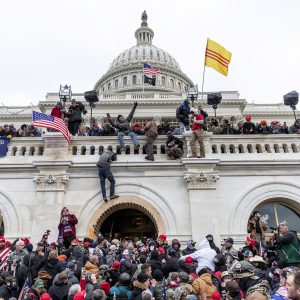
January 6, 2021 was an ignominious day in the history of this country. The President of the United States incited a riot in the people’s house in a hubristic and futile attempt to overturn the outcome of a free and fair election. While the size of the insurrection and the casualties and damage caused may not have been foreseen, the participants and their intent was clear from anyone with access to the Internet. One need not live on the deep web to have known what the President had in mind when he prompted his 88.7 million (former) Twitter followers with this exhortation: “Big protest in D.C. on January 6th. Be there, will be wild!” Or when he told a horde of masses that had gathered at The Ellipse that “we will never give up, never concede” and then directed them to march down to the Capitol to “show strength and…be strong.”
In the aftermath of the riot, Twitter (and various other platforms) denied Donald Trump service. Major corporations are refusing to endorse any politician who sought to undermine the election. And white supremacists, Proud Boys, and other miscreants all over the country are now finding themselves on the wrong end of law enforcement just days after they ran roughshod over the Capitol Police. It is clear – at least in the short run (we Americans tend to have very fleeting memories) – that the biggest losers of last Wednesday’s events were the soon-to-be ex-president, Josh Hawley, Ted Cruz, and the right-wing social media website Parler. And although there were no winners in the melee, there is someone who escaped the worst of its consequences.
Voting for the 2021 class of the Major League Baseball Hall of Fame ended on December 31st. As such, all ballots had to be submitted six days prior to the (attempted) coup. Six days before the Confederate flag was carried through the Rotunda. Six days before a man wearing a “Camp Auschwitz” sweatshirt and a man wearing a “SMWE” t-shirt strode through the halls of U.S. power without a care in the world. Six days before “Murder the Media” was scrawled on a door inside one of the most sacred buildings in the United States. In short, six days before any and all of these bilious acts would have, could have, (potentially) should have impacted the Hall of Fame candidacy of one Curtis Montague Schilling.
Over the past few years, Schilling – even more so than Roger Clemens and Barry Bonds – has become one of the most difficult Hall of Fame votes for members of the Baseball Writers Association of America. The PED candidates may be polarizing – did he or didn’t he? does it matter? – but Schilling has truly brought the rarely-ever-used-prior-to-Mark McGwire “character clause” into specific relief.
When Schilling’s name first appeared on the ballot in 2013, be received 38.8% of the vote (if I didn’t know better, I would think ol’ #38 pre-ordained that total). He fell to 29.2% the next year, bounced back to 39.2% the next, before jumping to 52.3% in 2016, slowly making his way to 70% last year. Schilling only has two more bites at the apple – this year and next – to get to the requisite 75%. But only one player in the history of HOF voting has ever received 70% of the vote with time remaining and not been inducted (don’t feel bad for Jim Bunning, he was later elected by the Veteran’s Committee).
It is possible that Schilling’s performance on the field is sufficient to move the needle despite his words and actions off of it. It is quite possible that his 11-2 playoff record, with a 2.23 ERA, 0.97 WHIP, and nearly 6-1 K-BB ratio, combined with four complete games, two shutouts, an NLCS MVP, a World Series MVP, and three rings to his name are enough to push him up and over 75% either this year or next.
It is possible that as the ranks of worthy names on the HOF ballot thinned, enough members of the BBWA would at last check the box next to Curt Schilling’s name.
It is possible that enough writers have taken issue with the selective and moralistic exercise of the “character clause” (that was hypocritically implemented by Kenesaw Mountain Landis, the racist former commissioner of baseball, who history now reviles to the point where his name has been taken off the MVP trophy) that they would hold their noses and vote for Schilling because he was one of the sport’s all-time great pitchers.
But, if Schilling’s name appears on at least 75% of the ballots this year, it just may be due to the luck of the calendar. If the BBWA required ballots to be submitted by, say, January 7th, I can imagine a drumbeat of writers chasing their mailman down the street like some rabid, remorseful, and regretful Orel Hershiser1, Bill Madlock2, or Greg Maddux3.
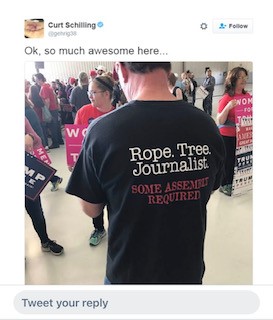
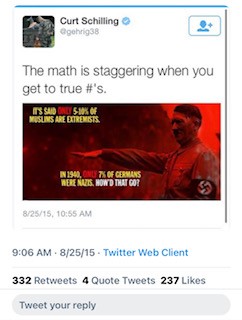
Just one week, that is all it would have taken. Does anyone honestly believe that with what transpired at the Capitol, that 75% of the BBWA would have voted for a man who retweeted this:
Or this:
Or a man who was, as Jay Jaffe pointed out in his FanGraphs pieceon December 28th , “…as of last week…promoting election conspiracy theories and calls for martial law on his Twitter account, not to mention comparingthe nation’s top infectious disease expert to a Nazi…”
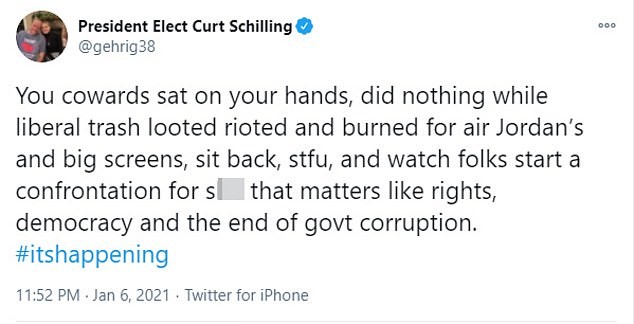
But that wasn’t enough. After the siege in Washington, and maybe just to rub the noses of those who voted for him a week earlier, Schill tweeted the following:
Do we believe that in the hours after the darkest day in our nation’s capital, the first time since 1814 it has been attacked, and attacked by people espousing all of the same beliefs that Curt Schilling not only holds, but shouts into every microphone – electronic or otherwise – that he can find, that the BBWA would still have voted for him? When Twitter banned Donald Trump; when Amazon stopped hosting Parler; when cabinet members resigned; when the 25th Amendment was openly discussed; and when the nationwide hunt for hooligans continued unabated? Does that seem like an environment for writers who previously chose not to look the other way, for writers who said – by their words and their votes – some bridges are simply too far, for writers who were looking for a reason not to include Curt Schilling on their ballot, to change their minds? If only the vote had been one week later, we know at least Steve Buckley would have had a different ballot.
Curt Schilling is a lot of things – a racist, a gamer, a homophobe, a clutch pitcher, a failed businessman, a Lou Gehrig aficionado, and a plain old asshole. But if his name appears on 75% of the Hall of Fame ballots when the results are revealed on January 26th, we can add “one lucky son-of-a-bitch” to the list.
With the House of Representatives impeaching President Trump for a second time; with Republican lawmakers facing denunciations from their hometown newspapers and, more importantly, their benefactors; with domestic terrorists being arrested; with cronies and acolytes running for the hills; wouldn’t it be a sad but ironic capstone to this whole sordid affair if Curt Schilling was the one person who avoided any repercussions.
A few days ago, for the first time this year, my son and I went to Dodger Stadium. Unfortunately, it wasn’t for a game or to ridicule the Astros. It was just to get a Covid test.
I simply cannot remember going this long without watching a baseball game in person (which makes me kick myself for not venturing to Spring Training before everything shut down). But, alas, even though Rob Manfred is opening the gates in Arlington, I would need to buy both plane and playoff tickets in order to attend any baseball games in 2020. At this point I would put the odds at 30/70.
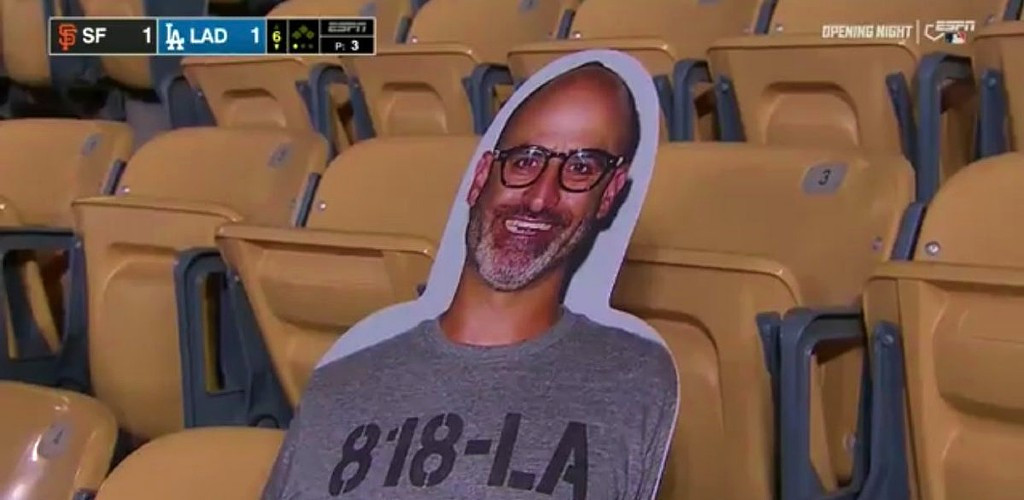
When the season started and certain teams populated their parks with cardboard cut outs, I was immediately on board. Putting aside the fact that a group of comedy friends bought one for the late Brody Stevens so he could posthumously represent the “818” at Dodger Stadium; and putting aside all of the great stories about family members getting to watch another game (or season) with a loved one, having “bodies” in the stands lent some dimension to the viewing experience. Having the “people” there made the ballparks look less empty, less cavernous, less lonely. But, the truth of the matter is that stadiums across the country were lonely this summer (just ask the play-by-play guys who broadcast away games from the press box in their empty parks). And that got me thinking about the impact of having insentient facsimiles rather than living, breathing fans in the stands.
Sam Miller of ESPN recently wrote an incredible article about the actual, real life impact of having patrons at the game, including the extra distance David Freese’s ball may have traveled in the ninth inning of Game 6 of the 2011 World Series due to the ambient heat of 43,000 fans. But I have a different angle: would the moments that we so cherish have the same resonance if they happened in sterile ballparks rather than ones foaming with fanatics?
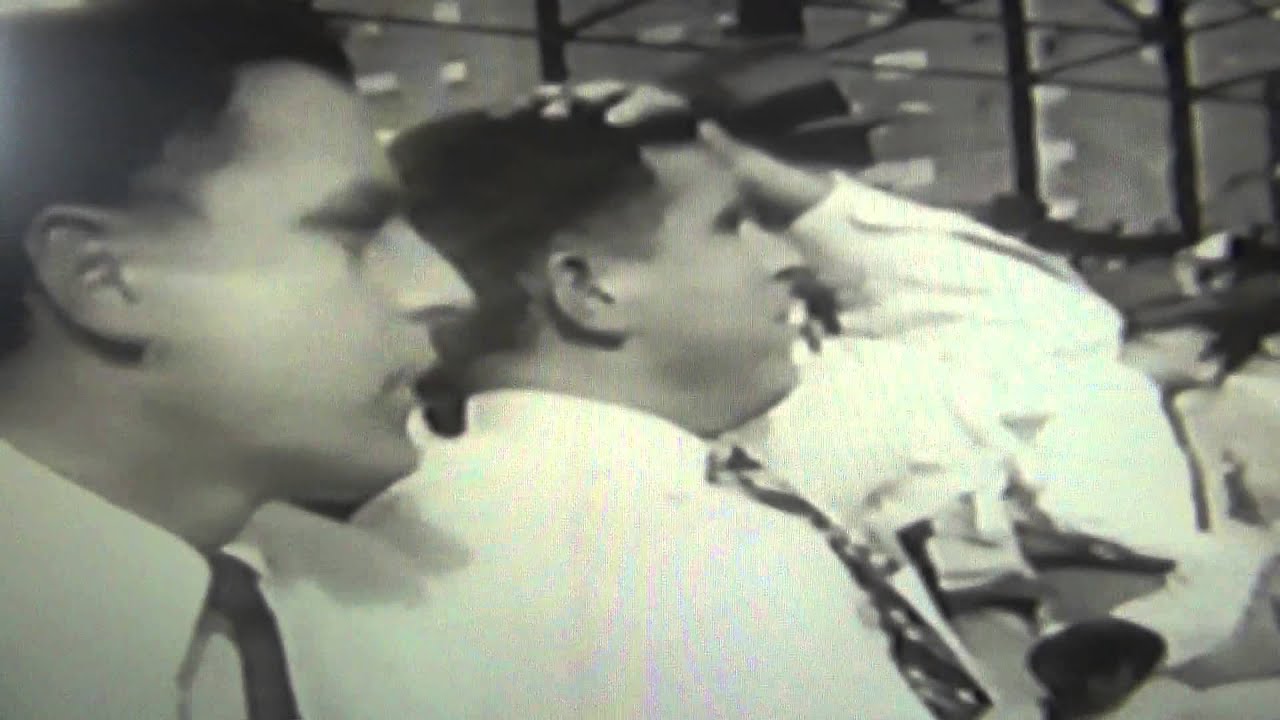
Sure Willie Mays’ catch in the 1954 World Series is an all-timer, but few of us actually saw it happen live. Is part of that memory more endurable because the camera caught a shot of these guys:
Imagine if Kirk Gibson hit his home run in the 1988 World Series into a poster board rather than a screaming hoard of Dodger bleacher bums? Go back and re-watch the full the nine-minute video and try to imagine the entire at bat happening in silence. But more than that, would this be the top-rated moment in Los Angeles sports history if Vin Scully didn’t turn off his mic for an astounding, stupefying, glorious 68 seconds (start at the 6:47 mark) and allow the roar of the crowd to carry Gibby and us – viewing at home – around the bases and back home again?
Piggy-backing on Sam Miller’s article, does anyone honestly believe that the 55,000 screaming patrons in Shea Stadium on the night of October 25, 1986, didn’t have any effect on Calvin Schiraldi? Do we think that Bob Stanley wasn’t at least a little rattled by the cacophony in Queens? Does Rich Gedman get crossed up on mediocre fastball if the park was so quiet that the players could hear Jason Gay pecking away on his laptop? (Ed. Note: Jason Gay was 16 in 1986, and most likely wouldn’t have had one of the first mass-market laptops, but you get the point.)
Is our memory of #755 made more indelible by the image of two white men chasing down a black man as he rounds second base after receiving too many death threats to count, after being provided FBI protection for him and his children, after breaking the most hallowed record in the game? Those two fans added to the relief then anxiety and then relief again of the moment. Not true if that had happened in an empty Fulton County Stadium.
Reasonable minds might differ about the distance of Jose Bautista’s bat flip/throw in the 2015 playoffs. But at least part of his reaction had to be attributable to the nearly 50,000 Fosters-induced Canadians losing their minds on contact. Bautista may have been fired up in a desolate Rogers Centre, but certainly not *that* fired up. That said, Fernando Tatís, Jr. did a pretty fair impersonation last night in an empty Petco Park, so who knows?
In the aforementioned Miller article, he makes reference to Mariano Rivera throwing over to first base only three times in Game 4 of the 2004 ALCS; and how, with no fans in attendance, pitchers are now more willing to throw over four times or more. Did New Englander’s lusty boos keep Rivera from doing so, as Sam posits? Did the energy of the crowd give Dave Roberts that tiny extra bit of adrenaline to beat a ridiculous pop time and throw from Jorge Posada to keep an 86-year curse at bay by a fingernail? Could the players have pulled that same rabbit out of their hats in a silent Fenway Park at 1:22am and then again less than 22 hours later? This lifelong BoSox fan is dubious. Would Mark Bellhorn’s dinger in Game 6 even have been reviewed if it hit off a cut-out rather than a lurching fan? Is a huge chunk of our collective memories of those final four games enhanced because of the insanity of the Fenway faithful and the silence of the Bronx zoo (especially after Johnny Damon’s grand slam in Game 7)?
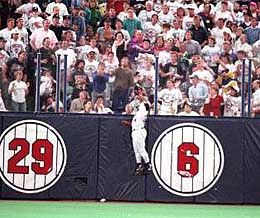
Did the sight of 55,000 white “Homer Hankies” flying around under the white roof of the Metrodome have any impact on our memories of the 1987 and 1991 Twins? Do the fans behind the outfield glass make Kirby Puckett’s Game 6 catch any more of a Web Gem?
And no list of this sort would be complete without asking about an eighth inning foul ball in Game 6 of the 2003 NLCS. With no fans in attendance, we would be able to answer the to-date unanswerable question of whether or not Moises Alou would have caught Luis Castillo’s pop fly. But assuming he couldn’t (some might say that is a fair assumption), our memory of that game, and the ensuing collapse (looking at you, Alex Gonzalez), and the following twelve years of futility, are forever altered by the fact that there were fans in the Friendly Confines on the night of my 31st birthday.
This recitation could go on and on (and I am sure you all are thinking of a few moments right now), but it will not for 2020. Regardless of how many people Manfred allows into the giant Costco that is Globe Life Field (it looks like it will be 11,500), it will not be comparable to having rabid fans rooting on their hometown team in the late innings on a cold October night. It will be antiseptic, it will be hollow, and it just won’t be the same. And, potentially, neither will the outcomes.
I spent nearly my first two decades on the planet playing baseball, and nearly the next three observing the game (some might claim too closely). What I learned in that time is that baseball players are a lot of things, they are tough, they are competitive, they are ready to fight, and they have hollow legs when it comes to post-game libations (see, Boggs, Wade). But one thing you don’t hear too often is “principled.” Sure, baseball players abide by the “unwritten rules,” and will willingly throw at a batter’s head if the previous guy pimped a home run (thankfully that practice is employed less and less these days), but they don’t often take a stand. Ask Bruce Maxwell how well kneeling for the national anthem worked out for him.
It is with this as the backdrop that I was shocked, I dare say astonished, to hear what transpired after an Indians’ team meeting late this week. For those you who may have missed the story or don’t know all the details, allow me a small recap:
The Indians, like all teams, are governed by the strict MLB rules and regulations regarding Covid protections.
The Indians, like some teams, are more acutely aware of the potential impact of violations insofar as one of their star pitchers, Carlos Carrasco, elected to play this season even though he missed most of last year after being diagnosed with leukemia. Carrasco’s doctors warned him against joining the team, but he wanted to help his club win their first World Series since 1948.
The Indians, unlike some other teams, have so far managed to avoid the Covid bug, and have played all of their scheduled games to date.
The Indians were in Chicago last week to take on the White Sox and then the Cubs. After Saturday’s game, pitchers Zach Plesac and Mike Clevinger went out to dinner with some friends and back to one of the friend’s houses to play cards. In violation of the rules, neither player informed the team he was leaving the hotel. And Plesac was spotted by MLB security arriving back after the 10pm curfew. Clevinger was not sighted, nor was his absence from the team known at the time.
After the team learned of Plesac’s malfeasance, they ordered a car service to drive him back to Cleveland, and forced him to quarantine for three days. Clevinger, however, kept his part of the sojourn to himself, and boarded the team flight home. A flight, it should be noted, that also carried Carlos Carrasco and rest of the Indians players and coaching staff.
The team ultimately learned of Clevinger’s participation, and sent him home to quarantine as well.
The Indians players – non-Chicago dinner division – were apoplectic. They felt betrayed. They were hurt.
Pitcher Adam Plutko put it bluntly:
“They lied to us. They sat here in front of you guys [the media] and publicly said things that they didn’t follow through on. So those grown-ass men can sit here and tell you guys what happened and tell you guys what they’re going to do to fix it. I don’t need to do that for them.”
All-star shortstop Francisco Lindor was a little more gentle, stating:
“We’re humans, and we make mistakes. We’ve got to be accountable when we make those mistakes, and we’ve got to understand that you can’t put yourself first. In the times we’re in, you cannot put yourself first.”
Here is where the story gets interesting. The team ultimately traveled to Detroit to take on the Tigers. After completing their quarantines, Plesac and Clevinger each loaded up their respective cars and drove to outskirts of the Motor City to meet the team at their hotel. Once there, they pleaded their case, and attempted to fall on their swords.
It bears mentioning here that prior to the trip to Detroit (or possibly on the way) Plesac recorded a six-minute video to Instagram (while driving) wherein he tried to explain his side of the story, intimated that the MLB protocols were confusing and did not match with the CDC, claimed he is a responsible human because his mother is a nurse, and then blamed the entire episode on the media. Here is my favorite nugget:
“The media really is terrible, man. The media is terrible and they do some evil things to create stories and to make things sound better, makes things sound worse. Truthfully, I’m disgusted the way the media has handled this whole situation surrounding our team.”
So, in short, Plesac is a good guy, MLB bolloxed their rule-making, and it’s all the media’s fault. Okay. Got it. Now back to two players driving themselves to Detroit.
At the hotel Plesac and Clevinger spoke with the team and there was a Q&A. They provided their accounts. Now, this is where one would expect that baseball players being baseball players, guys who care about winning first and foremost, guys who overlook their teammate’s transgressions each and every day, guys who know that losing two-fifths of their starting rotation is less than ideal in this 60-game sprint, would, if not forget, at least forgive, and allow the players to rejoin the team. And that is where you would be wrong.
The front office and the coaching staff, after taking the temperature of the players in the room, elected to send the two offending pitchers to the team’s alternative training site in Eastlake, Ohio, where they must remain – by league rules – for at least ten days (unless someone gets injured). They drove three hours with the hope of recovering their dignity and their place in the rotation; they were forced to drive three hours home with their tails between their legs and their reputations in tatters.
I have never been a Cleveland fan. I rooted against them in the 2007 ALCS when they played my Red Sox; I rooted against them in the 2016 World Series against the (There’s Always Next Year) Cubs. But, with this season in shambles for the BoSox, I am pulling for the Indians. I want them to go all the way. I want them celebrating on the mound; I want Tito Francona and this group of players who stood on principle, who stood by one another, and who refused to stand for selfishness and self-importance; I want them to stand at the podium and hoist the Commissioner’s Trophy for the first time in 72 years.
And if, by that time, Plesac and Clevinger have properly repented and re-earned their teammates’ respect and ultimately help the team achieve that goal, then all the better. Go Tribe!
About three years ago I wrote an article entitled “The $25,000 Fine,” which dealt with the scourge of batters not running to first on an uncaught third strike. Surprisingly, much of the feedback I received from that missive was negative, as people didn’t seem to care too much about players’ laziness; people did not seem to think that players should be pecuniarily punished for their failures on the field; people didn’t seem to think that publicly shaming athletes for their indolence was good policy. Okay, fine, whatever. It was an idea, a lark; it was meant at least 50% tongue-in-cheek.
But my latest concept has much more serious implications – many of which are playing out in real time. In an effort to play the season safely (if that is even possible), MLB and the MLBPA developed what is called the 2020 Operations Manual, a 101-page document detailing the league’s health and safety protocols. The sheer volume of this document is staggering, and covers nearly every eventuality you could imagine – except, of course, what to do if four players on one team test positive before a Sunday afternoon game. But I digress.
There is no need to delve too deeply into the inch-thick document, but suffice it to say that it was well thought out and intended to keep the players as safe as possible. For our purposes, however, it is important to highlight just a few of the provisions:
• The only contact allowed on the field are tag plays and other incidental contact that occur during normal play.
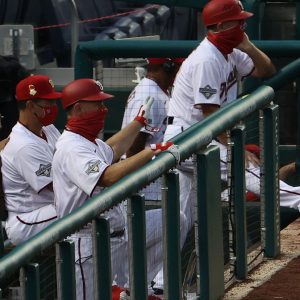
• Players, coaches, and trainers are required to wear face coverings everywhere except the field.
• High fives, fist bumps, and hugs are prohibited.
• Dugout seating requires at least six feet between each player.
• Players and staff are required to put a personal towel over the dugout railing when leaning over the same.
• A ball will be thrown away after it is touched by multiple players, and throwing the ball around the infield is discouraged.
• First- and third-base coaches are not to approach baserunners or umpires, and players should not socialize with opponents.
I have pointed out these specific rules because after having watched baseball for six days, it seems that all of them are being broken…with impunity. And, in Houston last night, the Dodgers and Astros came dangerously close to breaching the “fighting will be met with severe discipline” edict (I guess severe discipline can be assessed for not fighting as well, as Joe Kelly, Dave Roberts, and Dusty Baker learned this afternoon).
What don’t the players and coaches understand about the global pandemic? Maybe some of them believe it is just a hoax. Maybe some of them believe – like the recently diagnosed Congressman, Louie Gohmert – that wearing a mask can actually give you coronavirus? Maybe some of them believe that the rules don’t apply to them, or that they are impervious to a disease that does not discriminate based on age, gender, or profession.
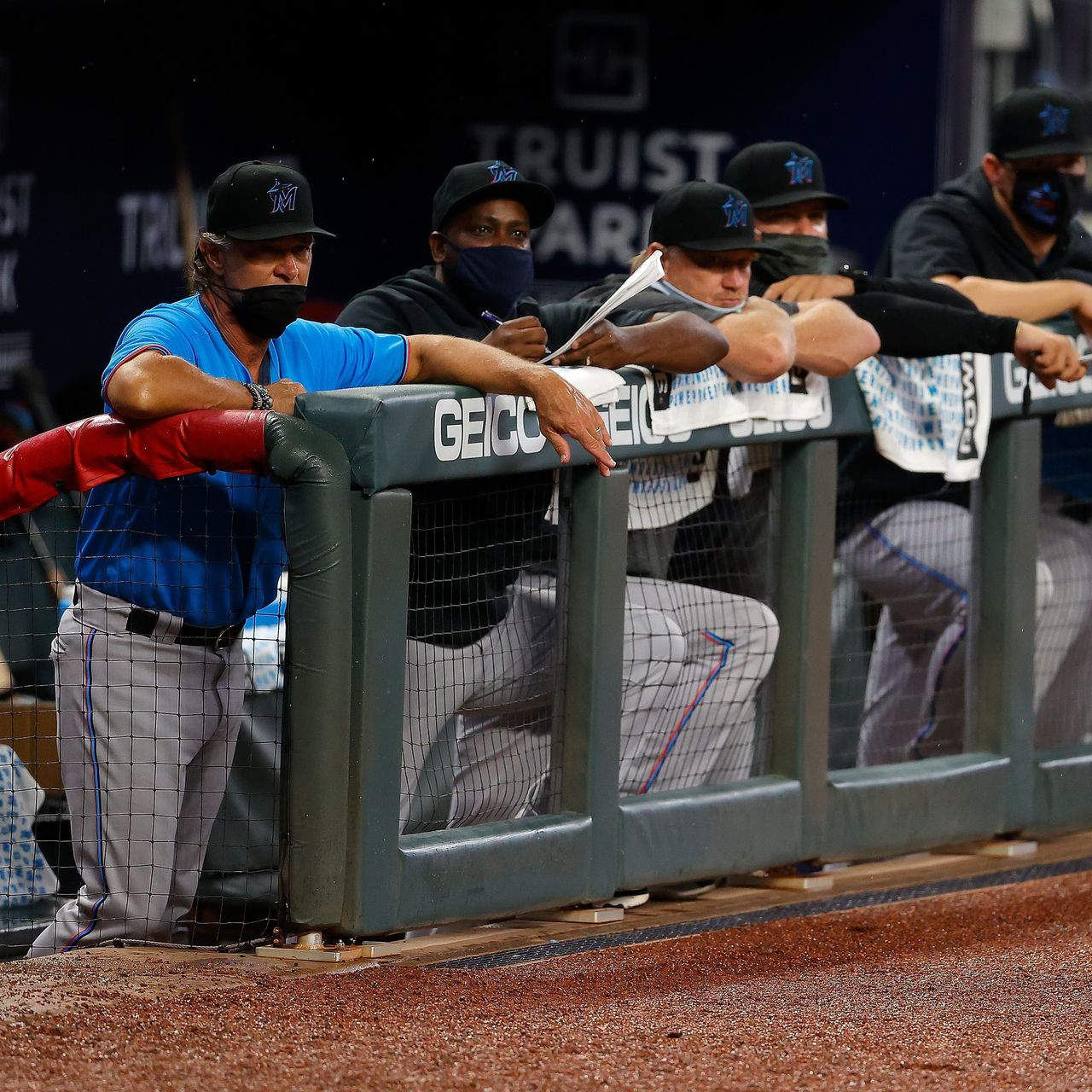
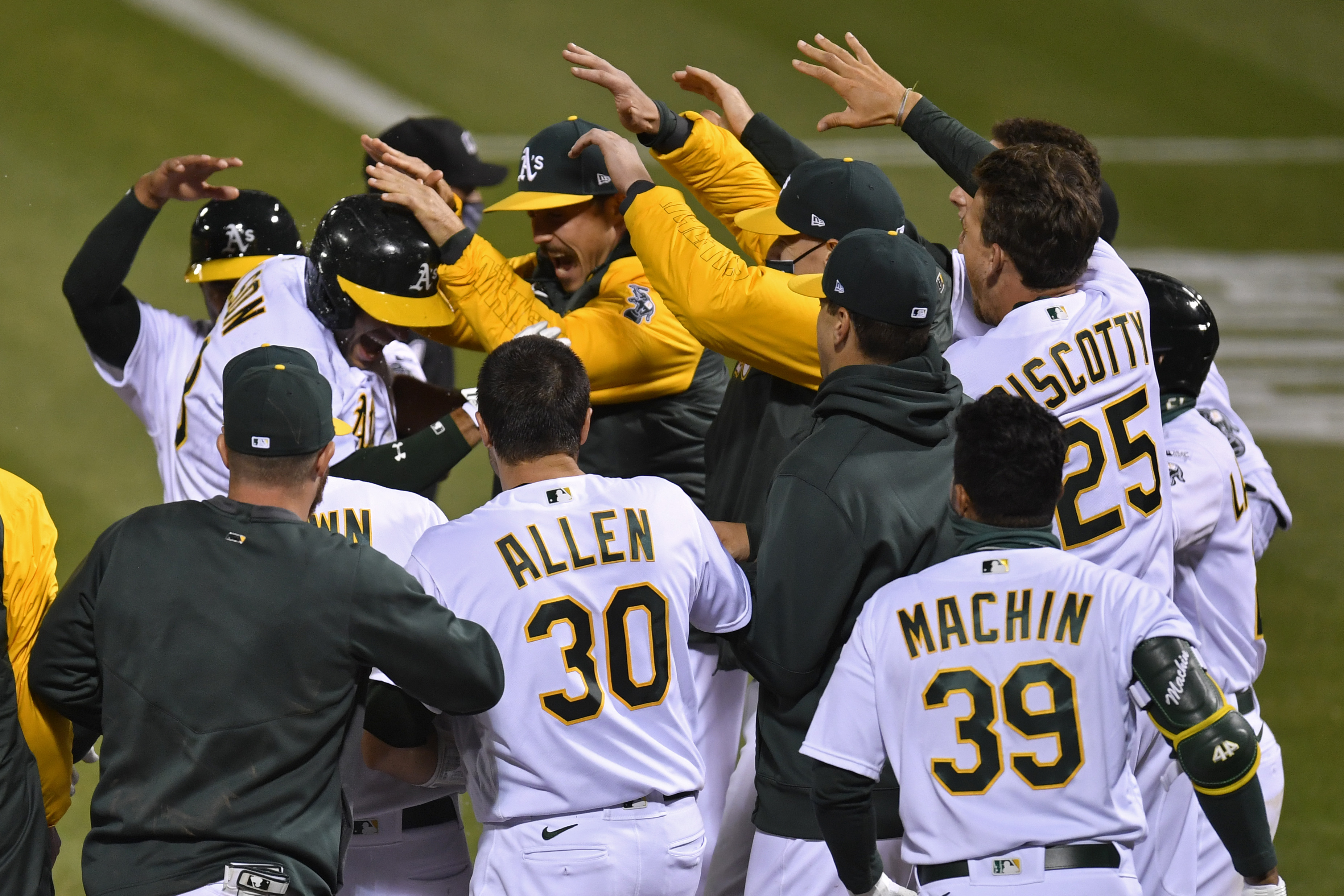
But if what happened with the Miami Marlins this week is not enough to scare players straight, I have an additional incentive. The players were informed of the litany of rules in late June, before they embarked upon Summer Camp. They have lived with the protocols for more than four weeks. If they don’t know or understand them by now, and if they don’t appreciate the gravity of adhering to them by now, they never will. So let’s put some money where their mask is supposed to be. Each player is given a mulligan for everything that has transpired to date – and that includes the Marlins players who (allegedly) went out on the town in Atlanta and were the architects of their own demise – and they are, as of today, given one additional warning for infractions. It is useful to note that while the league cannot track everything personnel does (especially away from the ballpark), a violation of any of the rules listed above can be seen on television every night. One need not contact trace to find an infringer; one just needs to log in to MLB.TV. After the warning, each player is fined $5,000 for each violation, and the team is punished in an equal amount. If Don Mattingly keeps his mask under his nose while in the dugout, $5,000 for him + $5,000 for the Marlins. If the Athletics jump on Matt Olson after a walk-off homerun (all but two without masks, natch), $5,000/each + $55,000 for the team (Olson does not get fined). All proceeds go to Black Lives Matters or other charities dealing with social justice issues.
Unlike the $25,000 fine I previously wrote about, there would be no announcement or public shaming aspect. Just cold hard cash. Players walk into the clubhouse the next day to find a bill from the league. Despite Charles Barkley’s protestations to the contrary, athletes are role models. And although it seems that more and more people are getting behind the idea of masks being incredibly helpful in curbing the spread of this disease (including, ever-so-gingerly, the Commander-in-Chief), and that social distancing is vital to keeping the disease at bay, you can turn on your television every night and see well-known athletes not abiding by these nearly-universally accepted concepts and not obeying their specific rules. What does that say to the general public?
And even if this is not about setting an example for society at large, what about the non-athletes these players encounter every day? It was reported today that a visiting clubhouse staffer in Philadelphia tested positive after the Marlins were in town. That guy doesn’t make millions of dollars per year; my guess is he doesn’t make six figures. And yet the players, so cavalier in their approach to the protocols, have put his life in danger. If the risk to the season isn’t enough; if care for your fellow man isn’t enough; if being a role model for kids and adults isn’t enough; then maybe taking a hit to their wallet will be. And you can be sure that if the owners, who fought and scratched to make the best financial deal possible for this abbreviated season, are forced to scratch a check every night for their team’s failures, they will be demanding that their manager starts running a tighter ship. There simply may not be any other way.
Here’s to hoping that everyone stays (and/or gets) healthy and that we continue to hear this every day from now through October:
Money, they say, is the root of all evil. The question is, is it also the root of all stupidity?
On Monday, MLB owners approved a proposal that Commissioner Rob Manfred presented to the MLBPA on Tuesday. There were a bunch of goodies in that proposal, including a potential 82-game schedule beginning in early July; expanding the playoffs to include 14, rather than 10, teams; universal use of a designated hitter in both leagues; playing only in your geographical area (e.g., AL East plays only against the AL East and the NL East); a 30-man roster, with up to 50 players being available. But the biggest item on the list is the one that may derail the whole enchilada: the owners want to put in place a one-season revenue sharing model, wherein the teams and the players would split all revenues on a 50/50 basis.
If you like math, or you want more specific details, I encourage you to read Jeff Passan’s article from Tuesday. Before this proposal even made it to the MLBPA, its president, Tony Clark, shot it down. Here is the quote that is getting a lot of press, and tells you the starting position of the players:
“A system that restricts player pay based on revenues is a salary cap, period. This is not the first salary-cap proposal our union has received. It probably won’t be the last. That the league is trying to take advantage of a global health crisis to get what they’ve failed to achieve in the past — and to anonymously negotiate through the media for the last several days — suggests they know exactly how this will be received. None of this is beneficial to the process of finding a way for us to safely get back on the field and resume the 2020 season — which continues to be our sole focus.”
This does not bode well.
It is necessary – or it certainly will become necessary – to parse Tony’s words to separate the fact from the hyperbole. While it is true that all other sports that have revenue sharing also have a salary cap, that is not necessarily the case here. If a vaccine for Covid-19 were discovered tomorrow, and the season were able to start in 30 days, then based on what the owners have offered, the players could potentially make more than they would under either the current 162-game construct, or the revised version wherein they get a prorated portion of their salary. Now, we all know that a vaccine is not coming that soon, so I have merely presented that as a strawman to thwart Clark’s rhetoric. In short, under this proposal, salaries would technically be capped by the total amount (actually 50% of the total amount) of revenues this season; but it is not, technically, a salary cap. This is because the salaries would be predicated on an unknown number (2020 revenues), and not prior year revenues (as utilized for the NBA and the NFL). But, let’s not get too deep into “Capanomics” here.
The union’s reasoning seems to be: we don’t get an uptick in salaries when the league, on the whole, does better in a given season, so we shouldn’t be penalized when the league, on the whole, does worse in a given season (which, without question, will be the case for 2020). This is a fair point, in a vacuum, but misguided in the current situation and under the current proposal. Again, this is a one-year fix in the face of a worldwide pandemic; not a reworking of the entire collective bargaining agreement. I know, I know, I can already hear the slippery slope arguments.
The better argument is that the player and owners already agreed to a new deal. You may have noticed the words “revised version” a few paragraphs above. Maybe you read right past them; but they are important. Although it may seem like several lifetimes ago, it was less than seven weeks ago that the two sides came to an agreement about salaries for the coming season. Or, at least they thought they did. That deal provided that the players would get $170M to be shared and allocated based on service time, and then those amounts would be applicable against any eventual salary for the season. The deal also provided that the players would get a prorated portion of their contracted salaries depending on the number of games played. So, in the 82-game version, players would get 50.6% of their 2020 contract amount. As far as the players are concerned, this issue was done and settled.
As an attorney, I live in fear that a contract I drafted or negotiated has some ambiguous language or some loophole that is only discovered after-the-fact. If this has ever happened to you, you can feel that pit in your stomach as you read these words. That must be what a bunch of high-priced lawyers in New York must be experiencing right now.
On Page 1 of the March 26th agreement between the players and the owners, the first point of the “Resumption of Play” section states: “[T]he 2020 championship season shall not be commenced unless and until each of the following conditions is satisfied.” It should be noted here that among the conditions is a laundry list of health and safety measures. Neither side was willing to take unnecessary risks just to play baseball; and, at present, none of those terms appear to be at issue.
However, one of the conditions ends with the following words: “[T]he Office of the Commissioner and Players Association will discuss in good faith the economic feasibility of playing games in the absence of spectators or at appropriate substitute neutral sites.” And that is where we find ourselves today – playing games without fans.
You can read that contract language ten times and still not be exactly certain what those words were intended to mean. ESPN sent the language to four attorneys not involved in the negotiation, and they got two in favor of the owners and two in favor of the players. But any posturing about the intent or specificity of that language is irrelevant. If we ever get to a point where we are determining which side has a the “correct” interpretation, the season is lost; and so too may be the sport as we know it.
Gordon Gekko once proclaimed that “Greed clarifies, cuts through, and captures the essence of the evolutionary spirit.” But, in this particular case, greed may take that evolutionary spirit to its logical conclusion: extinction. There are 30 million people out of work in this country; unemployment is headed towards 20%. More than 85,000 Americans have lost their lives in the last few months alone. No one, and I feel pretty confident in using those particular words, wants to hear that baseball wasn’t played in 2020 because millionaire players (and, yes, I know, not all of them are millionaires) and billionaire owners stood on principle claiming they were “right.”
They are so many smart ways to square this circle – without relying on courts to interpret contract language. There are too many smart people involved in these negotiations to allow it to go that far. The New York Post’sJoel Sherman posited that, as with this upcoming draft, players agree to a base salary for this season, with the remainder deferred and paid over the next two years. This solves the teams’ cash flow issues in what is a $10.7 billion industry. Agree to that concept, and then all you have to argue about is the interest rate.
The owners have stated – without actually opening their books – that if the games are played without fans, they will lose 40% of their revenue, and some teams will lose more than if the entire season is simply canceled. Okay, then open those books. Maybe seeing their actual revenues is worth the financial hit this year, giving the players ample ammunition when they start their collective bargaining after the 2021 season.
If the owners are going to lose 40% (again, for our purposes we will take them at their word), propose to split the baby with the players, and each player takes a 20% reduction in salary. Now we could be getting somewhere. And, in return, each player gets a hotel suite on the road. Or each player is allotted an additional 20% of service time for the upcoming season. Or the players agree to a 25% haircut, but the owners agree that free agency can begin after five years, rather than the current six. Give and take; back and forth. This isn’t hard. But, as we have seen all too often, egos get in the way of practical solutions.
It was heartening that after Tuesday’s meeting with the players, there were no leaks to the press. That is a step in the right direction. This battle cannot be won in public; it can only be lost. And, to be sure, a loss for either side is a loss for both.
On this morning’s Baseball Tonight podcast, Buster Olney said that Rob Manfred and Tony Clark should lock themselves in a conference room and not come out until they have a deal. I couldn’t agree more.
I won’t go as far as Scott Boras or J.B. Pritzker, but we need baseball this summer. We need it for the collective good. We need it for a feel-good distraction. We need it for civic pride. We need it for television content. The coronavirus is an actual life and death situation; baseball negotiations are not.
As Carl Fox says to his son Bud in that same seminal movie, “Money’s only something you need in case you don’t die tomorrow.” In this time of great uncertainty, player and owners would be wise to heed those words.