Head First Strikes Out…Again

As a writer (am I a writer?), I love an evergreen topic. It makes it so much easier to create content.

As a baseball fan (I am a baseball fan), however, certain evergreen topics are infuriating.

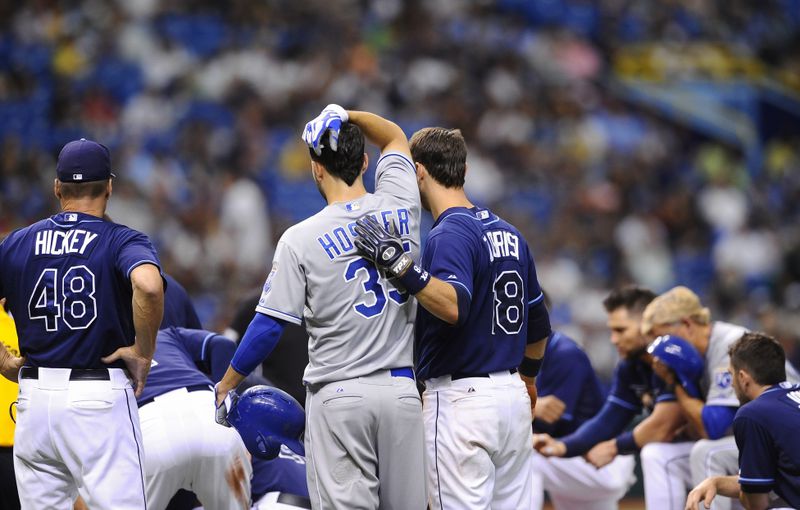
Last week I was listening to the Executive Access podcast (a must-subscribe if you love the inner working of baseball), and Mark Feinsand was speaking with Scott Sharp, Assistant GM of the Royals. They got to talking about the 2015 World Series, and Sharp was remarking about Eric Hosmer’s sprint home to tie Game 5 in the ninth inning. But, Sharp was lamenting about Hosmer got home, “after I told him countless times in the minor leagues: do not slide head first.” Sharp, as a former player, and a former director of player development, knows of the dangers that are inherent to leading with your hands, and instructed his players, repeatedly, not to do that. Obviously, they didn’t listen.

I wrote about this subject in 2015, and 2016, and 2017. I skipped last season, but as with other evergreen topics, we are back here again.

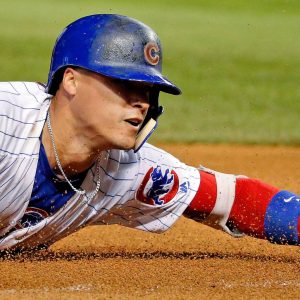
Two weekends ago, the Cubs MVP hopeful Javier Báez dove trying to steal second base. He ended up fracturing his thumb, and is out for the rest of the season. It’s not like the Cubs could use him for their last four weeks. It’s not like his .848 OPS, 4.7 WAR, and his glove work at shortstop would have been helpful down the stretch. The Cubbies are 6-5 since he got injured and fell out of a playoff spot for the first time since early in the season (as of this writing, they have a Wild Card spot). Do you think the Cardinals, leading the division and with seven games left against the Cubs, are licking their chops knowing that Nico Hoerner (he of the 20 career ABs) will be manning short in lieu of “El Mago”? I feel confident that the folks on the North Side don’t feel so good about that.

But I guess people (and teams) simply don’t learn their lessons. The other night I got home from work, plopped down on the couch, and turned on the television. The MLB Network was airing the Cubs vs. the Padres, and at the exact moment I turned on the game, Jason Heyward was diving into home plate, trying to score on a short fly ball to left. Upon review he was safe, and it may have been because of the impressive body control he displayed with the dive that he was so. The Cubs were trailing 6-2 at the time, and ended up losing the game. Did the reward of scoring a run down four in the fourth inning outweigh the risk of Heyward possibly breaking a finger, a hand, or a shoulder? In a pennant race? In a must-win game? When your best player had just been lost for the season doing the same thing? I can only imagine Theo, Jed, and Maddon all held their individual and collective breaths waiting for Heyward to pop up unharmed.
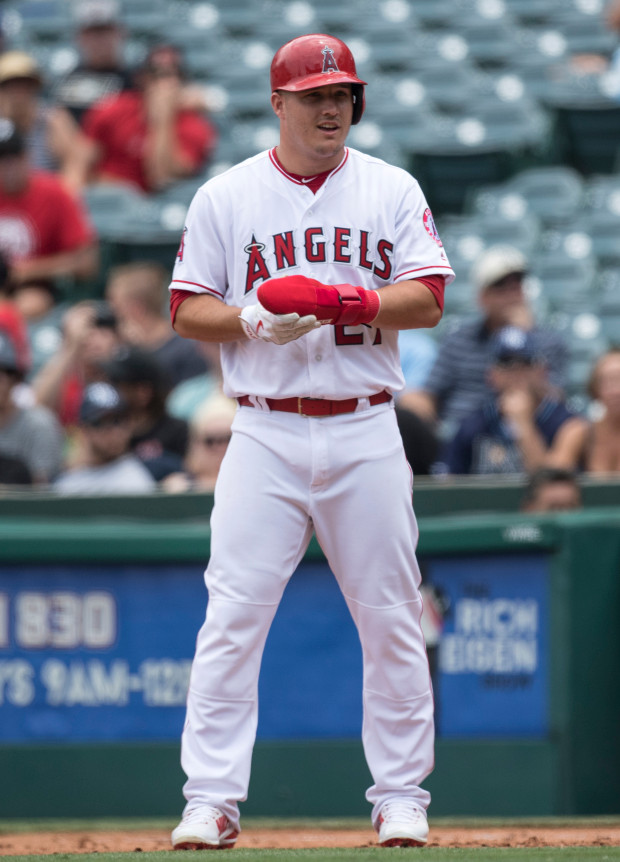
Why do players continue to do this? Why do teams still allow it? In 2017, Mike Trout potentially lost another MVP when he tore the UCL in his thumb sliding head first into second base. He was off to his best season ever. So what did Trout do upon his return? Did he forswear ever leading with his hands again? Nope. He got one of those new-fangled kitchen mitts that players wear to “protect” themselves when the slide…you guessed it, head-first. This is insanity.

What needs to happen to make this stop? Does a player need to break his neck and die on the field? Does a promising player have to have his career ended in one fateful moment? Does it need to start in Pony League (Little League already bans the practice)? High school? College?

All we read these days is how players who have swung the bat a certain way for 20+ years go to a hitting guru in the off-season and change their swing path. Think about that – a player has the ability to change something he has done probably a million times – swing a bat – in a matter of a few months. But, for some reason, he cannot “relearn” how to slide? Even though he slides feet first at least some of the time? Even though sliding is not as natural to him as swinging the bat. Any player who says he can’t change the way he has always done it is, pardon my French, full of shit. He doesn’t want to change – and no one is making him change. That has to change.

In 2016, I did a very rough break down of the costs associated with injuries resulting from head first slides (in salary terms only). That list and those costs could easily be recalculated upwards over the past three years. No matter; it is too depressing.

Every time I watch a player dive into a base, my heart stops – just for a moment. As a parent, it makes me angry; as a fan, it makes me nervous; and as a business person, it makes me crazy.

PLAY BALL!!

Head Shots and Humanity

In honor of Dustin May’s 22nd birthday, there is an issue that has been on my mind for a while.

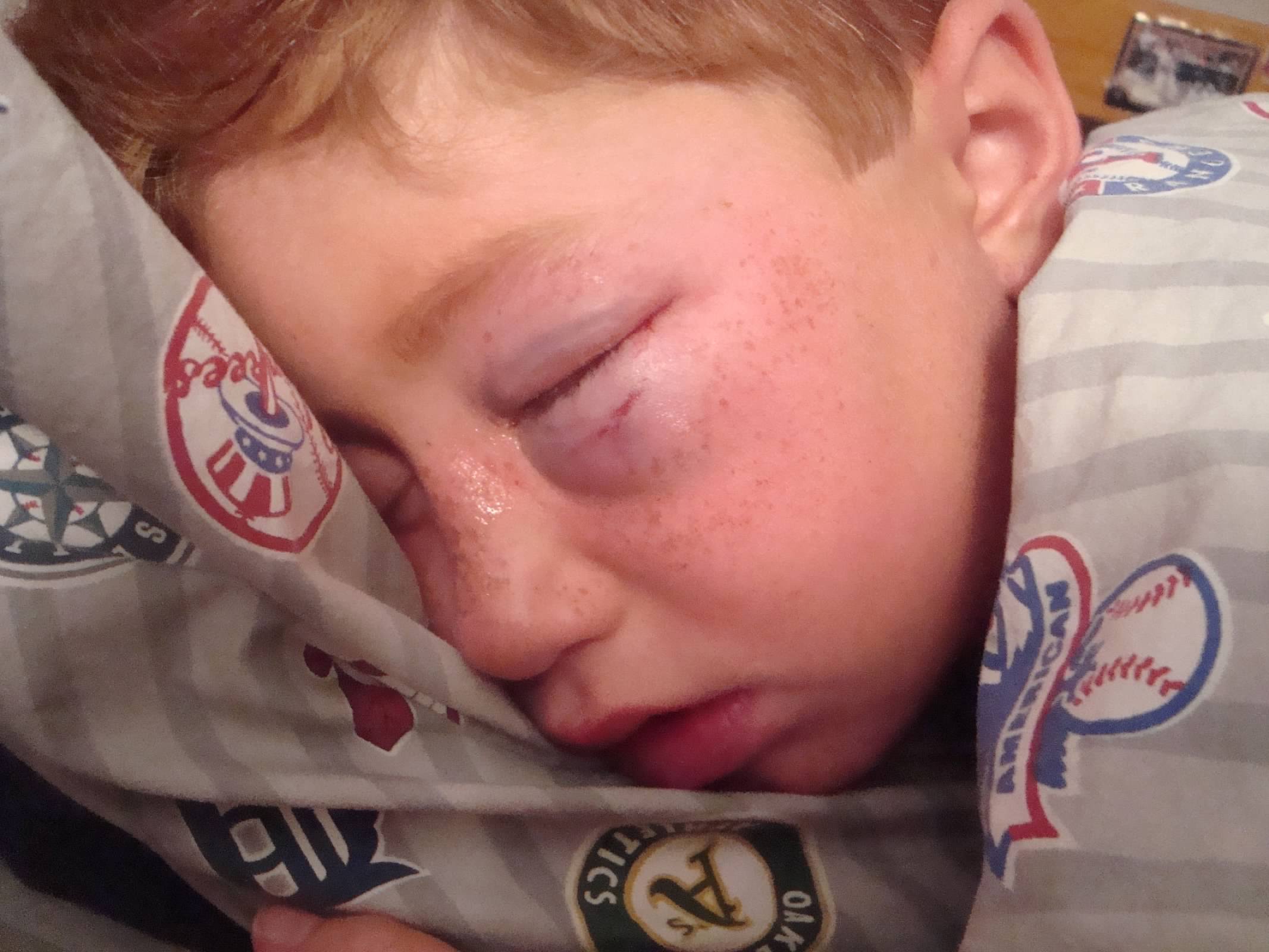
When my son was seven years old, he took a comebacker to his left eye. On impact, he dropped to the ground, the batter advanced to first base, and, as you might expect, everything stopped while the coaches tended to his wound. Although this was just a scrimmage, I have no doubt that had this been an official Little League game, nothing would have been different about the chain of events. However, as you move up levels, and the games have higher stakes, that is not necessarily the case.

Last week, in the fourth inning of a game in Arizona, with the bases loaded and one out, the aforementioned Dustin May took a line drive off his head. And, true to form, he hit the ground (a point that I have not yet heard: the impact of his head on the mound from the fall may have been worse than the one on his head from the ball – watch the video). The ball deflected into left field, and two runs scored. But here is the existential question: Should both of those runs been allowed to score?

As many of you know, they are trying out a slew of new rules to improve (?) the game in the Atlantic League this year. Among the “robo ump” and “stealing first base,” there is no rule with respect to potentially catastrophic on-field injuries. Maybe there should be.

When a batter gets beaned in the head, it is – by rule (5.05(b)) – a dead ball. And thus everyone has time to stop and make sure we don’t also have a dead player. The same is not true for a beaned pitcher. When a batter crushes a ball off the pitcher’s skull, the play remains live until its logical end, at which point time is called and the player is attended to. Should we be so callous? Would it be better to let the ball fall wherever it may, and then rule the play dead immediately?

There have been instances in which a ball goes off the pitcher and the defense catches it on the fly, resulting in an out. There have been instances in which the ball strikes the pitcher and then goes out of play, resulting in a dead ball. But what about when, like with May, the ball ricochets into the outfield and runners circle the bases while a man lies helpless in the middle of the diamond?

My simple suggestion is that except when the ball lands in a fielder’s glove, the batter is awarded first base and every runner advances ninety feet. It is neat, easy, and clean. With this rule in effect, no one needs to hustle to anything other than the care of their fallen comrade. We shouldn’t see left fielders making throws to the plate, or runners trying to score from second amongst the confusion and agony. That is, quite simply, untoward.

When you dig down beneath the “play the game the right way” bromides, what exactly is meant? The concept, in essence, is to be human and be a good sport. How does taking extra bases while a player is lying in who knows what state of injury or consciousness make you human or a good sport? And yet, I have never once heard an “old school” player or manager or announcer do this analysis. In their view, on the one hand, don’t show emotion as it is disrespectful to the opponent; but on the other hand, don’t show humanity because it is, what exactly? A competitive disadvantage?

When you watch videos of pitchers taking liners off their heads (and I watched too many in preparation for this), your breath catches. Every batter finds himself stunned, trying to process what just happened, what he just did. It goes without saying that taking a ball hit 100 MPH off the cranium is scary for everyone involved. I am just saying everyone involved (baserunners included) should treat the moment with the solemnity it deserves.

PLAY BALL!!

This Isn’t That Hard

In 2015, at the height of the Matt Harvey inning-limit nonsense, I wrote an article about the insanity of all of it. For those of you who don’t recall the piece, I had two thoughts:

(1) An inning count is a silly way to measure pitcher usage – that a more accurate analysis would utilize total pitches thrown. I have been harping on this for years, but I have now resigned myself to the fact that it is falling on deaf (and dumb?) ears.

(2) The Mets (and the Nationals before them) failed to properly prepare to have their best young pitchers available throughout the season – even with strict innings limits. I opined that in 2012, the Nationals could have shut down Stephen Strasburg for four weeks in July to preserve some innings for the pennant race. I stated that if the Mets had been literally and figuratively forward-thinking, they could have had Harvey skip four or five starts over four or five months to keep him available down the stretch. None of this happened.

And, as the story goes, those who don’t learn the from the past are doomed to repeat it. This time it could be a West Coast team.

The San Diego Padres, who signed Eric Hosmer last season, and signed Manny Machado this season, and who brought up Fernando Tatis, Jr. to start the season (service time be damned), are set for the future. However, their future may have arrived a year early. In addition to Tatis, the Padres began the year with wunderkind Chris Paddack in the starting rotation (they should be praised for thumbing their nose at service time not once, but twice). And Paddack has been nothing less than fantastic. Through nine starts, he has a 1.93 ERA, with 56 Ks vs. 11 BBs. And for you real stat heads, he has a 2.74 FIP and a 211 ERA+ (which means he is currently 111% better than the average MLB pitcher). In short, he has become the ace of the Padres staff. But, with 51.1 innings thrown as of May 20th, and with a rough innings limit of 140 for the season, we – and more importantly, the Padres – risk not seeing Paddack on the hill in September.

The Padres are currently a .500 team and seven games back of the Dodgers. I don’t think they will catch the Boys in Blue to win the NL West. But, they are only half a game back in the Wild Card race, and may be in the hunt until the season’s final weeks – if not days. And if that happens, they will need their best pitcher taking the ball for some of the franchise’s biggest games in years.

As of this writing, Paddack is averaging 5-2/3 innings per start. If 140 is the magic number, he has about 89 innings left. Simple math has him starting 15-16 more games. On his current schedule – 5 days of rest between starts – Paddack’s last start will be August 25th at home against the Red Sox.

But what if the Padres approached this a little differently? What if they learned from mistakes made by the Nats and Mets? What if they read my 2015 column, and then this one, and decided – today – on a plan that would get them everything they want and potentially need? Below is a list of the Padres’ remaining games wherein Paddack would start (up to the 140 innings mark) based on his current 5-day rest schedule and his current 5-2/3 inning average. And next to that is a revised list, getting Paddack to the final game of the year.


Date (Current) Opponent (Current) Revised Date Opponent 
May 26 @ Blue Jays May 27 @ Yankees
June 1 Marlins June 2 Marlins
June 7 Nationals June 12 @ Giants
June 13 @ Rockies June 19 Brewers
June 19 Brewers June 28 Cardinals
June 25 @ Orioles July 4 @ Dodgers
July 1 Giants July 13 Braves
July 7 @ Dodgers July 23 @ Mets
July 13 Braves July 30 Orioles
July 19 @ Cubs August 8 @ Dodgers
July 25 @ Mets August 19 @ Reds
August 1 @ Dodgers August 25 Red Sox
August 7 @ Mariners September 1 @ Giants
August 13 Rays September 8 Rockies
August 19 @ Reds September 17 @ Brewers
August 25 Red Sox September 29 @ Diamondbacks


This took me fifteen minutes to figure out. Maybe, unbeknownst to the rest of us, the Padres have a plan like this in place. But they certainly haven’t told anyone about it.

Changing gears, and because I will die on the pitch count (as opposed to the inning count) hill, here is another way to look at it:

As of this writing, the average MLB inning takes 16.7 pitches to complete. (Paddack averages 15.4.) If we take the “average” and multiply that by 140 innings (this being the “accepted” measurement), Paddack could/should be on a 2,340 pitch count for the season. Since he has only thrown 788 pitches to date, he still has 1,552 in the bank. If Paddack can keep his pitches/inning constant, he would have nearly 101 innings still available (not the 89 based on innings alone). Give Paddack twelve more innings, and you give him two more starts on the schedule above.

Am I, a lowly baseball amateur, the only one thinking this way? Why haven’t the brilliant minds of baseball figured this out? Where is Padres G.M. A.J. Preller and his Ivy League education? How about Padres manager Andy Green, who graduated Summa Cum Laude from the University of Kentucky? Come on guys, this isn’t that hard.

Chris Paddack deserves to pitch those four additional games in September (and conceivably two more). The Padres fans deserve to have their best young pitcher throwing the most important games of the year. And we, the baseball fans, deserve to watch Chris Paddack with his cowboy hat and Texas swagger, on the biggest stage of all!

PLAY BALL!!

Skullcaps and C-Flaps

About four years ago I was pitching batting practice to my then 11-year-old son’s team. One of his teammates, a nearly fully-grown 12-year-old (who, in his sophomore year of high school, already committed to play at Vanderbilt) hit a line drive back through the box that nearly decapitated me. I have played baseball my entire life, am pretty athletic, and have decent reaction time. And yet, it was just dumb luck that I didn’t end up in the hospital – or worse.

When we got home that night I told my son that if he wanted to pitch that season, it was not his arm I was worried about – it was his head. And then I informed him that I was invoking my “father’s prerogative” and requiring him to wear a skullcap when he took the hill. You can imagine how that went over. But I could not, in good conscience – after seeing what had happened at the Major League level (watch below), what had happened in the Minors, and what nearly happened to me – allow him to take the mound unprotected.

https://www.youtube.com/watch?v=qQyJ01qT94I

There was some confusion in the league the first time my son donned the skullcap, but it soon became his “thing.” He then took pride in being the first to do it. (After my son’s debut, another parent bought one and forced his son to wear the helmet on the mound, so now my son was a trend-setter.) My kid wore the skullcap all season and through all-stars. But, truth be told, the concept didn’t hold, and I did not require him to wear it the next season. And, truth also being told, I regret that decision.

Image result for c-flap

It was with that as the backdrop that I found myself in the garage a few weeks ago affixing a C-Flap to my son’s batting helmet. If you don’t know the C-Flap by name, you certainly know it by sight – they are ubiquitous this season. The history of the C-Flap is set out in this great Paul Lukas article, with much more background and detail than I could muster. An interesting fact, found about halfway through the piece, caught my unprotected eye: the C-Flap has not yet been approved for high school baseball. This insanity can be filed under the “bureaucracy run amok” heading, and is putting our children at risk. Personally, I don’t care about the regulation, and have thrown caution to the batter’s box. If my son’s school or league wants to ban his helmet, let them tell me that to my face (to date, there have been no issues).

I imagine that, with literally the best players in the game (Trout, Harper, Stanton, Correa, Cabrera, Lindor, and more) now wearing C-Flaps, it won’t be long until our kids are begging for the C-Flap. In the not-too-distant future, your preseason trip to the local sporting goods store (do they still exist?) will include batting gloves, multiple Evoshields, cleats, and a C-Flap-adorned helmet. As Paul states in his article, Rawlings and Easton are already working on prototypes; and we all know that where there is demand, there most certainly will be supply.

What is shocking to me is that no leagues require kids to wear skullcaps on the mound or C-Flaps at the plate.

Image result for little league world series kid hit in hat gif

What is shocking to me is that we all watched a pitcher at the Little League World Series almost have his life forever altered, saved only by the happenstance of less than a ¼ inch of plastic and wool. And yet, no rules were changed.

What is shocking to me is that we don’t allow our kids to play Pop Warner football for fear of head injury, but we allow our kids to stand 54 feet (closer after release) from post-pubescent 12- and 13-year-olds-with metal bats in their hands. We teach our kids to turn away from an inside fastball while also imploring them to “wear one” for the team, but we don’t think about the impact (both long and short term) of taking a fastball to the orbital bone.

Sure, I am soft; we as a society, are soft.

I can already hear the Don Drysdale, Bob Gibson, Goose Gossage, Roger Clemens, Randy Johnson, skirt-wearing, softball-playing shots coming my way.

Fine. I will “wear” those. Just know I will be wearing a skullcap and a C-Flap as those shots come in.

PLAY BALL!!