Dustin Pedroia a Hall of Famer? A Case Can Be Made

The 2025 Hall of Fame votes are in. Ichiro Suzuki, CC Sabathia, and Billy Wagner will be celebrating in central New York at the end of July. Carlos Beltrán and Andruw Jones are on the cusp, and will be hoping for a better outcome next year.

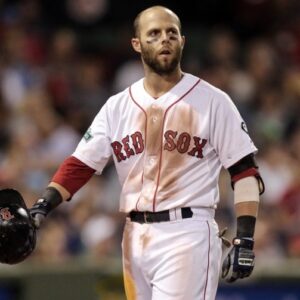
But there are certain players who deserve better (David Writer), who should have received more votes (Andy Pettitte), who should have remained on the ballot for at least one more year (Ian Kinsler). And then there are players such as Dustin Pedroia, the height-challenged second baseman who played his entire career for the Boston Red Sox, who received 11.9% of the vote this year.

Pedroia was drafted in the second round of the 2004 draft out of college baseball powerhouse Arizona State University. He made his major league debut in 2006, getting 98 plate appearances over 31 games, while preserving his rookie status for 2007. In 2007, Pedroia took the league by storm. He slashed .317/.380/.442, with 39 doubles and more walks than strikeouts, all on the way to becoming Rookie of the Year.

More importantly, he was a vital cog in Boston’s second World Series title in four years. Then, in 2008, Pedroia got even better. He slashed .326/.376/.493, with 213 hits, which included 17 home runs and 54 doubles. He also stole 20 bases while becoming a first-time All-Star, first-time Gold Glover, first-time Silver Slugger, and first (and only) time American League MVP.

In 2009, he led the league in runs with 115, while tallying another 185 hits and 48 doubles, to go along with 20 more steals. Pedroia was an All-Star in 2009 and in 2010. In 2011, he won another Gold Glove and finished ninth in MVP voting. He did not lead the league in any category, nor did he win any awards in 2012, but he did slash .290/.347/.449, with 57 extra base hits.

In 2013, with the Red Sox on their way to yet another world championship, Pedroia played in 160 games (after tearing a UCL in his thumb on April 1st) and led the league in plate appearances. He hit .301 with 53 extra base hits, was named an All-Star for the fourth time, won his third Gold Glove, and finished seventh in MVP voting.

His 2014 and 2015 were off years by comparison, as he only accumulated 3.9 and 2.6 bWAR in those two seasons, but he still had an OPS+ of 101 and 112 OPS, making him above average each season. In 2016, he regained his form, playing in 154 games and adding another 52 extra base hits to his .318/.376/.449 slash line, for a robust 117 OPS+.

On April 21, 2017, Pedroia’s left knee was injured while trying to turn a double play. Despite the fact that team doctors told him that playing with the injury could (and ultimately did) have long-term consequences, the diminutive second baseman gutted out a total of 105 games that season, still hit .293, still had a 101 OPS+, but he managed only 26 extra base hits (seven home runs), with his second-worst career slugging percentage.

Knee surgeries limited him to a total of nine game and 34 plate appearances over the 2018 and 2019 seasons. He recorded his last hit and his last RBI on April 11, 2019 in a 7-6 victory over the Blue Jays in front of the Boston faithful. He would go 0-for-12 over four more games. On April 17th, he came to bat at Yankee Stadium and lined out to right on an 0-2 pitch. That—fittingly, going the other way, refusing to concede a single pitch let alone an at bat—would be his final plate appearance.

Pedroia played in all or part of 14 seasons. His career slash line is .299/.365/.439, with a 113 OPS+. He was a Rookie of the Year and MVP and a four-time All-Star and four-time Gold Glove winner. In 1,512 games, he had 1,805 hits, 394 doubles, and 140 home runs. He had five seasons with at least 185 hits, and six seasons with at least 50 extra base hits. He was the emotional leader of a team that won three World Series. He was the loudest voice in the clubhouse, in the dugout, and on the field. He was beloved by his coaches, his manager, his teammates, and the fans.

But none of that—even when added up and given a high shine—probably makes Pedroia a Hall of Famer.

The average Hall of Fame player has black ink (leading the league in a specific category) 27 times, according to the Bill James Black Ink test. Pedroia had eleven.

According to James’ Hall of Fame Standards, where the average Hall of Fame player scores 50, the Red Sox second baseman merits only 32.

And Jay Jaffe’s robust JAWS system has Pedroia as the 19th best second baseman of all-time, well behind non-Hall players Lou Whitaker and Willie Randolph. Further, when compared to players of his ilk, here is how it shakes out:

  • Career bWAR: 51.9 (average Hall of Fame second baseman: 69.5)
  • 7-Year Peak bWAR: 41.0 (average Hall of Fame second baseman: 44.4)
  • JAWS: 46.5 (average Hall of Fame second baseman: 57.0)

Pedroia was on his way to a Hall of Fame career. But for the Machado slide in 2017 (a slide, it must be noted, that Pedroia felt was clean and for which he holds no grudges), he might have played out his contract through 2021 (through his age-37 season), accumulated another 750 hits (150 hits/season is not an unreasonable guess), plus another 60 home runs (twelve per season was well within range), finished up with a .300 batting average (not just .299), and collected more than 2500 lifetime hits.

Those additional five seasons, at let’s say 3.0 bWAR per year, gets him in the neighborhood of Roberto Alomar and Ryne Sandberg, and probably gets him a speaking slot one weekend in late July and a lifetime of cold beverages on the porch at the Otesaga Hotel in Cooperstown, New York.

It should be noted that Chase Utley received 157 votes for the Hall of Fame this year, which is 39.8%. He is definitely trending in the right direction. He compares to Pedroia favorably, too:

 UtleyPedroia
Hits1,8851,805
OPS+117113
HOF Monitor*9494
5.0 bWAR Seasons66

*Per Bill James Hall of Fame Monitor, 100 is a likely Hall of Famer.

Of course, a career is made up of more than the above stats. The good news is that by appearing on nearly 12% of the ballots this year, we can continue to analyze Pedroia’s Hall of Fame worthiness.

PLAY BALL!!
Should David Cone Be in the Hall of Fame?

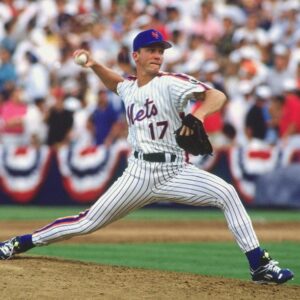
Rob Friedman, the Pitching Ninja, recently did an interview with, and a deep dive into, David Cone, the variety of his nasty pitches, and the highs and lows of his long career.

For the uninitiated, over a 17-year career, Cone won 194 games (against 126 losses), finished with a 3.46 ERA, struck out 2,668 batters, and compiled 62.3 bWAR. He was a five-time All-Star, won twenty games on two separate occasions, led major league baseball in strikeouts twice, and won the 1994 Cy Young. From 1988 to 1999, only Roger Clemens and Greg Maddux had a higher bWAR than Cone, and only Randy Johnson and Clemens had more strikeouts. And oh, by the way, Cone through a perfect game in New York in 1999, won five World Series, with a 2.12 ERA in six appearances Fall Classic appearances. And yet, even with that résumé, Cone received only 3.9% of the Hall of Fame vote in 2009, making it his first and only year on the ballot (a player must receive 5% of the vote to be eligible the following year).

Granted, 2009 had some heady players eligible for induction. Namely, the recently-deceased Rickey Henderson, who cruised in with 94.8% of the vote; and Jim Rice, who squeezed in with 76.4%. Andre Dawson, Bert Blyleven, Lee Smith, Jack Morris, Tim Raines, Alan Trammell, Dave Parker (this year), and Harold Baines all fell short of the 75% threshold in 2009, but all eventually made it in. Cone’s 3.9% was behind Mark Grace’s 4.1% and Baines’ 5.9%. Grace and Baines both had fine careers, but none were as impactful or as laudable as Cone’s. To wit, Grace finished his career with 46.4 bWAR, Baines with 38.8.

For New York Yankees fans, Cone’s career looks eerily similar to Whitey Ford’s, as each were part of dynasties (Ford won six World Series in New York vs. Cone’s four). Cone bests Ford in bWAR: 62.3 vs. 57; Cone had two 7-bWAR seasons while Ford never achieved more than 6.7 (once, in 1964). Cone’s five-year peak bWAR was 33.3, while Ford’s was 25.6. Despite that, Ford was elected to the Hall of Fame on his second try – in 1974 – while Cone was knocked off the ballot on his first.

According to Baseball Reference, Cone had 19 instances of leading the league in a pitching category, while the average HOFer has 40. According to Bill James’ Hall of Fame Monitor, where a score of 100 means a “good possibility” of being elected and 130 is a “virtual cinch,” Cone scores 103.

James also has a Hall of Fame Standard, where the average HOFer scores 50. Cone comes in with 39 (Ford was at 56).

Jay Jaffe’s JAWS scoring system, which is to many the current gold standard in these assessments, ranks Cone as follows:

 Avg. HOF PitcherDavid Cone
Career bWAR73.062.3
7-Year Peak bWAR49.943.4
JAWS61.552.8
bWAR/1624.54.9

By those objective measures, Cone isn’t up to snuff. But, he most certainly should have gotten more than one look at it. If Cone were on the ballot this year, he would most likely be compared to Andy Pettitte, whose numbers are 128 on James’ Hall of Fame Monitor; 60.2 career bWAR; 34.1 7-year peak; 47.2 JAWS. Pettitte did win 256 games (vs. Cone’s 194), but his ERA is nearly half a run higher; he never won a Cy Young; and only led the league in any category seven times (again, Cone did this 19 times). And yet, Pettitte is currently on the ballot for the seventh time. With 13.5% last year, it is unlikely he will find enough votes to get to 75%. But the point is that he is still in the game. And David Cone deserved (and still deserves) that same consideration.

Frank Tanana Deserved At Least 1 Hall of Fame Vote!

I previously wrote about a former fire-baller who, midway through his career, became considerably more crafty, and pitched for nearly two decades, winning more than 200 games. My conclusion was that while David Cone may not have had a Hall of Fame resumé, he deserved at more than one year on the ballot.

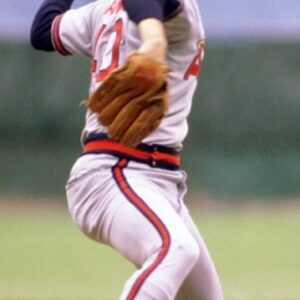
This week we will look at another former fire-baller who, midway through his career, became considerably more crafty, and pitched for more than two decades, winning more than 200 games. My conclusion, as you will see below, is that Frank Tanana deserved at least one vote on the Hall of Fame ballot.

The then-California Angels made Frank Tanana the thirteenth pick in the 1971 draft. And two years later, at the tender age of 19, he made his major league debut. He threw four innings and gave up four earned runs in his first appearance, taking the loss against the Kansas City Royals. He faced the Royals again five days later, and didn’t relinquish the hill or the ball, going nine innings, giving up one earned run, en route to his first big league complete game and victory. Tanana would finish the season with a 2-2 record and a 3.08 ERA.

Tanana spent eight years in Anaheim, was traded to Boston for a year, then to Texas for three-plus seasons, before being sent to his hometown team, the Detroit Tigers. Tanana finished his career in New York – spending parts of the 1993 season in Queens and then the Bronx. When the final tally was done, he won 240 games against 236 losses, with a 3.66 ERA, 3.79 FIP, and a 106 ERA+. At first glance, with those stats, he was a just-above-average pitcher who played long enough to accumulate more counting stats.

But the truth is harder to parse. When Tanana first came on the scene, he was part of a one-two punch with Nolan Ryan that rivaled Warren Spahn and Johnny Sain (there was a common saying during the time: “Tanana and Ryan, and two days of cryin’”) and other local heroes, Sandy Koufax and Don Drysdale. In 1975, Tanana led the American League in strikeouts with 269 (Ryan had only 186), including 17 in one game against the Rangers, and came in fourth in Cy Young voting. He was an All-Star the next three seasons, leading the league in WHIP in 1976, and ERA and bWAR in 1977. But injuries started to take their toll, and by the end of his tenure with the Angels, he had gone from a fastball pitcher to one who relied on off-speed pitches and deception to get batters out. And yet, from 1981 through the end of his career in 1993, he still averaged 31 starts and 198 innings per season (which would make him a workhorse today). Despite a 138-158 record during that time, he pitched to a 100 ERA+ – perfectly average.

And although it was a different time, it is notable that Tanana completed more than twenty percent of his career starts: 143 of 638.

Unfortunately for the lefty, he only made two post-season appearances, both in the American League Championship Series. In the first, in 1979 for the Angels against the Orioles, he went five innings, surrendering two earned runs, taking a no-decision in his team’s loss. The second, eight years later while pitching for the Tigers against the Twins, he went 5-1/3, giving up three earned runs, and took the loss.

When sizing up Tanana’s Hall of Fame bona fides, he doesn’t really stack up. The average Hall of Fame pitcher has 40 instances of black ink (leading the league in a category) on his Baseball Reference page. Tanana has nine.

Bill James’ Hall of Fame Monitor, which has a score of 100 as a likely Hall of Famer, nets the lefty out at 55.

And according to Jay Jaffe’s JAWS measurement, Tanana comes up short in every category:

  • Career bWAR: 57.1 (Avg HOF Pitcher: 73.0)
  • 7-Year Peak bWAR: 38.1 (Avg HOF Pitcher: 49.9)
  • JAWS: 47.6 (Avg HOF Pitcher: 61.5)
  • WAR/162: 3.1 (Avg HOF Pitcher: 4.5)

Tanana appeared on the 1999 Hall of Fame ballot along with his former teammate Nolan Ryan, and other future Hall of Famers George Brett, Robin Yount, Carlton Fisk, Tony Pérez, Gary Carter, Jim Rice, Bruce Sutter, Jim Kaat, Dave Parker (this year), Bert Blyleven, and Minnie Miñoso. Even with Steve Garvey, Dale Murphy, Tommy John, Dave Concepción, Luis Tiant, and Dwight Evans on the same ballot, some writer – from the Orange County Register or the Detroit Free Press – from some publication, could have found some room on their ballot for one measly vote for a pitcher who, at the time, was eleventh all-time in left-handed pitcher wins. Alas, it was not meant to be, and Tanana joins the ranks of very good players who only got one shot at Hall of Fame induction.

PLAY BALL!!