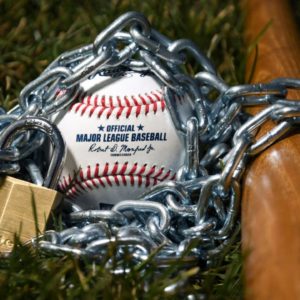
MLB Labor Negotiations: Moving Mountains

From the moment word came down that the owners and players had reached an agreement and the MLB lockout would be lifted, baseball writers all over the country took to their keyboards to bang out stories about the new CBA. 

Jeff Passan, weary and exhausted, the victim of a Twitter hack, was able to hash out a quick summary of the deal.

Jayson Stark did another of his many-thousand-word summaries.

Evan Drellich, who followed this process as closely as anyone, wrote a great piece about how and what the players won. But I don’t think he went far enough.

What the MLBPA was able to achieve after a 99-day lockout was nothing short of monumental.

Did they get everything they wanted at the outset? Of course not. Did they fundamentally alter the financial landscape of the game? No, but that was never in the offing. Unfortunately, in the excitement of “a deal” and players reporting to Spring Training and the season being salvaged, I believe many of the changes they were able to achieve are either being overlooked or elided.

When negotiations got really heated late last month, Michael Bauman of The Ringer tweeted that it is hard to negotiate with a party when their singular response is “Fuck you, that’s why.” And that, truly, is what the players were up against. As has been written time and again – whether or not it is true may be immaterial – neither Rob Manfred nor the owners who employ him seem to like baseball. They may like owning their teams, and the reflective glory of being 1 of 30; they may like the tax benefits that come from owning a unique civic institution; they may like the centerpiece of their real estate portfolio, the item that draws people to their parking lots, hotels, and other “around the ballpark” destinations. But the game itself, and the players who make it great, well, whatever.

Oh, and they have billions of dollars. And most – if not all – have alternative revenue sources from which to pay their mortgages and fund their vacations. But the players – save for a few who have potentially lucrative hobbies on the side (looking at you Ross Stripling) – have baseball, and only baseball. And they only have that for a limited period of time. And the period of time during which they can be fairly compensated has been lessened by the owners repeated insistence on artificially deflating salaries and/or the ability to spend. 

The Long Road to Riches

When a player gets drafted, he doesn’t get to pick his team, and “slots” restrain his signing bonus. That player is beholden to that organization for years in the minor leagues making below-poverty wages. Once he reaches the majors, he is skilled enough to be (arguably) one of the best 750 in the world at his profession, and yet is paid a minimum salary for at least three years. After those three years, if he is still employed, he is forced to not only advocate for himself in an arbitration proceeding, but he is forced to listen to a fully-fleshed out assault on his worth, his value, and the team’s desire to keep him employed. And after three years of running that gauntlet, he is afforded “free agency,” where teams now tell him he is too old, his most productive years are behind him, that teams don’t pay for past performance, and/or they would but for that pesky Competitive Balance Tax, which has thwarted the team’s ability to pay your market value. Sorry!!

Here is where we insert the “poor baseball players…they get paid to play a kid’s game and, at worst, make more than ten times the US median income in any given year” trope. But when you think they have just a few years to make that salary, and then the rest of their lives to live (who amongst us is considered old for our profession once we turn 30, let alone 35?), the players’ plight is not that outrageous.

And that is all a red herring. Professional athletes’ salaries should not ever be measured against lunch pail carrying Joes and Janes. They, by virtue of their talents, are simply different. No one pays $50 plus parking to watch me negotiate contracts all day – just sayin’.

The Long Road to Change 

With that as the backdrop, the players went about doing the absolute best they could – and for the right people. The negotiations were centered (not exclusively) on the youngest players and those in the middle class. Max Scherzer and his $43M/year and Marcus Semien and his 7/$175M deal sat at that negotiating table and fought for everyone else. And when the owners said, “Fuck you, that’s why,” and then locked out the players to “jump-start negotiations” and then didn’t offer a response for six weeks, and then began setting artificial deadlines to finalize the deal or the players would begin losing paychecks, the players had to pick their battles and fight the fights they could win.

They did better than that. 

Set forth below, in simple terms, is what the players were able to achieve in the face of complete intransigence and an apparent total lack of care:

I. Minimum Salary

Who amongst us wouldn’t like to get a 23% raise? The players were able to increase the minimum salary (in year one) from $570,500 to $700,000. To put this in context, roughly one-third of the league made the minimum salary last season, and 62% had salaries of less than $1M. This change alone may ultimately impact more players than any of the other issues. It was a huge win.

II. Limitation on Options

Related to the minimum salary, but not getting nearly enough press, is the limitation of the number of times a player can be optioned to the minors in a given season. A team can now only do that five times. So, players like Tanner Houck of the Red Sox will not be optioned seven times, being sent down after each start during July and August. Houck accrued 64 days of service time and was paid approximately $275,000 – less than half the 2021 MLB minimum – even though he was one of Boston’s most effective pitchers. Will teams utilize all five? You bet. Will some players be stuck in the minors due to this limitation? No doubt. But, if a player is performing, and the team is trying to win, this will ultimately be a net positive for young players (especially pitchers).

III. Pre-Arbitration Bonus Pool

As if conjured out of thin air, the players were able to obtain an additional $250M for the players over the life of the deal. With the $50M/year pre-arbitration pool, exceptional players (and many not so exceptional players) will receive additional monies that simply never existed before. 

The Jayson Stark article referenced above does a nice job of explaining who gets paid for what. To give this some context, when Pete Alonso won the 2019 Home Run Derby, he nearly tripled his salary. And by winning again in 2021, Alonso has now earned more from the Home Run Derby ($2M) than he has in three seasons with the Mets ($1.47M, due to his rookie contracts). Something about that just doesn’t seem right. 

But with this new pool, players who are not yet eligible for arbitration will get paid bonuses for their performance. As Stark pointed out, Vlad Guerrero, Jr. would have netted an additional $1.75M last season (2nd in MVP voting), which is more than three times his salary. The $50M will be given for various awards, and then allocated amongst the best remaining 100 players (which means that even not-so-exceptional players will reap the benefit of this hard-fought MLBPA win).

IV. Thwarting Service Time Manipulation

Players who excel have a chance to thwart the owner’s ability to manipulate their service time. In fairness, this provision does not go far enough, nor will it truly compel teams to stop this heinous practice, but it does afford players like Kris Bryant (for whom this new rule is all but named) from getting hosed by teams utilizing financial calendars.

If a player finishes first or second in Rookie of the Year voting, he gets a full year of service time, whether he was rostered for 150 days, or 15. Would a team keep a player in the minors for so long that he has no realistic ability to win ROY, maybe – never underestimate the audacity of MLB front offices. But that would be a serious tank job, and a result that no amount of bargaining could ever eliminate, and one sure to be the topic of a grievance.

V. Universal Designated Hitter

It took 50 years for both the AL and the NL to have the same positions in their starting lineup every day. And while the addition of the designated hitter in the National League will most likely benefit older players rather than younger ones, as guys like Nelson Cruz and Albert Pujols will now be able to cash at least a few more checks before their lack of defense ends their careers, any change that essentially adds a roster spot is good for the game and potentially good for young and middle-class players.

VI. Expanded Playoffs

Increasing the playoff pool from 10 to 12 teams means an additional $85M in television money for the teams, which was sprinkled out to the players in the form of the increased minimum salary and higher CBT thresholds (more about those below). Now, baseball purists who were just digesting the Wild Card and the expanded Wild Card are having none of this, but the truth of the matter is that more playoff baseball is more baseball, and more baseball is good for baseball…and baseball players.

With the new format, there are four additional teams coming into your living room each October. With young (and old) players now afforded the chance to play on the biggest stage, in front of the largest viewing audience, they get more exposure and more opportunity for financial gain. Mike Trout may not need the playoffs to get another Subway sponsorship or increase his value, but Bobby Witt, Jr. sure might. And if the Royals can sneak into a 12-team playoff where they would have been left out of a 10-teamer, and the Midwesterner gets to play in primetime in the fall in front of millions of viewers – and millions of impressionable kids – and he performs as we all expect he will, well then Bobby, Jr. may be the guy to get the next Subway deal. 

VII. Increased CBT Thresholds 

I have covered this one last even though, by all accounts, it was the most contentious issue in the labor negotiations. Quite obviously, the increased amounts are a win for all players. For years teams have worried about exceeding the “soft cap,” so much so that only two exceeded it last year, and another half dozen double-checked their abaci to make certain that they spent within $5M without going over.

But now, with an additional $20M (in year one), teams may not be as concerned about throwing an extra million or two to that middle reliever who will be an asset down the stretch. And where this may become really beneficial (and which I have not seen written about), is teams’ willingness to make trades at the deadline. In years past, teams wouldn’t make a trade that jeopardized their CBT situation, even if it gave them a better chance to win. With that additional $20M to play with (more in later years of CBA), teams will have more wiggle room to take on salary and give their team a chance to play in the expanded playoffs…which will give players more exposure…which will open up additional opportunities…which will potentially be a financial boon (in fairness, to both the players and the owners).

Moving Mountains

The MLBPA moved mountains over the course of the past four months, but really in the past few weeks. They won the social media battle. They won the PR battle (Rob Manfred didn’t help the owners’ cause by lying about profitability, setting artificial deadlines, laughing at somber moments, and practicing his golf swing while players, ticket takers, and hot dog vendors were staring down the gauntlet of being out of work). And they won the negotiating battle. At no point did it seem that the owners wanted to make a deal. At every turn they threw up another obstacle: one day it was an international draft; the next it was refusing to take “yes” for an answer because it came past the 6 pm deadline; lastly, it was a requirement that the players drop two grievances against the owners as a condition to closing (one of which the players agreed to drop). 

But in spite of all of that, the players held together and got way more than any reasonable observer would have thought possible. The players went into these negotiations with wide eyes and great aspirations. But they had to know, at a visceral level, that there were no 8-run homers available; they could not make up all of the ground lost in 2011 and 2016 in one CBA negotiation. They quickly made concessions where they could; they gave up on redefining the sport; they remained focused on protecting the most vulnerable amongst them. And by a vote of 26-12, they prevailed. Hopefully, one day, we will learn why all eight Executive Subcommittee members voted “no,” and why four other player reps felt the same. But, for now, the players won, and baseball is back.

And we, as fans, are nothing less than elated. But before we start booing Gerrit Cole for another lousy outing, or Manny Machado for not running out a grounder, remember the work that these guys did – collectively – to protect the sport. Because there were many times when it seemed like the players were the only people at the table who cared to do so.

Mountains were moved. And, as per usual, it was labor that did the work. I cannot wait to hear, on April 7th:

PLAY BALL!!

How Do You Explain PEDs and the Hall of Fame?

Read enough newspapers or watch enough news or listen to enough podcasts, and you are bound to get slapped in the face with poor reportage. It’s the law of big numbers. But, as a discerning baseball fan, I have come to expect that, while I may not agree with all baseball takes and opinions, I believe they come from an informed and considered place. Football analysts shoot from the hip, basketball commentators like to make headlines, but baseball observers are more careful. Or so I believed.

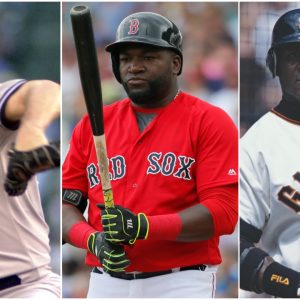
After the Hall of Fame released the results of the BBWAA vote last month, I listened to “The Athletic Baseball Show” podcast hosted by Ken Rosenthal. He had a murderer’s row of guests, and I knew there would be much to discuss regarding Roger Clemens, Barry Bonds, Curt Schilling, and A-Rod, and, of course, the election of David Ortiz. The show lived up to my expectations up to about the 2:40 mark, when guest Britt Ghiroli said the following:

“Well, David Ortiz still has some ties to PEDs, so how can you let him in and not let Clemens and Barry Bonds in?” And then she referenced a tweet by pitcher Kevin Gausman who asked, “How do you explain this?” And she then opined that a lot of people are left wondering, “How do you explain this?” 

Now, this is by no means intended to be a pile on Ghiroli. I think she is a fantastic reporter and writer, and I find her articles thoughtful and insightful. That said, this issue is not hard to explain. And I was disappointed that not only did Ghiroli not clarify the situation, she perpetuated the question; she gave it life and further validity.

To be fair, I was equally disappointed with Rosenthal, who offered no rebuttal, no explanation. This was all unfortunate, because it is very easy (although slightly time-consuming) to explain. Since neither Ghiroli nor Rosenthal did so, I will.

2003 Anonymous Steroid Testing

In 2003 MLB conducted a random, anonymous test to get a loose idea of who was taking what. Coming off the “chicks dig the long ball era,” with Mark McGwire and Sammy Sosa imitating a modern-day Maris and Mantle — just doing it every year — and then with Barry Bonds asking both of them to hold his beer, MLB decided to dip its toe into the murky PED waters.

The results of that test were supposed to remain anonymous; but intent didn’t matter once the names began to leak. Ortiz’s name was included on a list of 104 players who tested positive …  for something. The findings (i.e., what was discovered) were never disclosed and the urine samples have been destroyed (convenient, I know). At the time the names were leaked, the MLB Players’ Association said that 13 of the samples were in dispute, but they didn’t say which ones.

Years later, Commissioner Rob Manfred stated that the inclusion of at least 10 names on the list could be doubted for “legitimate scientific reasons.” He didn’t elaborate, other than to say, “even if you were on that list, it was entirely possible that you were not a positive” (emphasis added). Manfred put a button on the issue by stating that he felt it would be unfair for Hall of Fame voters to use that positive test against Ortiz.

David Ortiz’s Career

When the 2003 test was conducted, Ortiz was entering his seventh year in the big leagues. He had previous highs of 20 home runs and an .839 OPS. Drug testing began in earnest in 2004, with at least two tests per year: one during Spring Training and one during the season, with the possibility of additional random tests as, when, and where determined by MLB. Assuming Ortiz was never called out for additional checks (which he claims he was), he was tested for steroids at least 26 times between 2004 and when he retired. During that span, he hit 452 home runs, and averaged a .956 OPS. And do you know how many times he tested positive for PEDs? To quote Jayson Stark, “That would be none.” 

Spring Trainings and regular seasons, playoffs and World Series. The world was watching every swing he took and every ball he crushed. And yet, other than his name appearing on an anonymous list in 2003, not a whiff of scandal, nary a scintilla of evidence of cheating. Those are the “ties” Ghiroli referenced.

Since Ghiroli mentioned Ortiz in the same breath as Clemens and Bonds, let’s take a look at what makes them different, let’s try to “explain it.”

Roger Clemens

In 2006, then-Commissioner Bud Selig appointed former senator George Mitchell to investigate the use of PEDs in baseball. Clemens’ former strength and conditioning coach, Brian McNamee, told the Mitchell Commission that he provided performance-enhancing drugs to Clemens. But an MLB commission — even one run by a former senator — is not great stakes. So it carried considerably more weight when McNamee put his hand on a bible and testified in front of Congress, and said the same thing.

Sure, McNamee could have been lying. But McNamee also testified that he provided HGH to Clemens’ teammate, Andy Pettitte, and Pettitte later acknowledged that to be true (and apologized for his use). After McNamee’s testimony, Clemens was charged with perjury and obstruction of Congress. Because of the he-said-he-said nature of the matter, Clemens was ultimately found not guilty. But that didn’t stop Clemens and McNamee from filing defamation cases against each other. Clemens’ suit against his former trainer was tossed out and McNamee’s case against Clemens was settled, with Clemens’ insurance company picking up the tab. Both men will likely go to their grave claiming they are right, righteous, and full of rectitude. But only one of these men had a bona fide reason to lie.

Regardless, in contrast to Ortiz, there were credible allegations — made in multiple courts of law and to Congress — that Clemens utilized PEDs during seasons in which he won two of his seven Cy Young Awards (at ages 36 and 39). The main witness who testified against Clemens was proven to be truthful by none other than Clemens’ best friend and former teammate. Those facts seem markedly different from a name on a list. That’s how you explain it.

Barry Bonds

In 2003, Greg Anderson, Bonds’ trainer, was indicted by a federal grand jury and charged with supplying steroids to a number of athletes. Bonds was called to testify before the grand jury, and he admitted to utilizing “the clear” and “the cream,” but claimed they were nutritional supplements, not illegal drugs. Prosecutors did not believe this testimony, and asked Anderson to testify in front of another grand jury to determine if Bonds had committed perjury. Anderson refused — even though a search of Anderson’s home found drug records, including some with Bonds’ name on them — was held in contempt of court, and taken away to jail.

Bonds was indicted for perjury and obstruction of justice, and was convicted on the obstruction charge. That conviction was ultimately overturned by the Ninth Circuit Court of Appeals on the grounds that Bonds gave a “rambling, non-responsive answer to a simple question” and that there was insufficient evidence that the statement was material to the investigation. It is important to note what the appeals court didn’t say: Bonds told the truth.

Anderson started training Bonds in 2000, the same year that Bonds set his then-career high in home runs with 49. The next year he hit a record-breaking 73 (at age 37). The following three seasons he hit 46, 45, and 45 (at age 40). Prior to engaging Anderson’s services, Bonds’ season high in home runs was 46, in his age-28 season. Bonds had a then-career high OPS that same season of 1.136. Nearly a decade later, after he started working with Anderson, Bonds had OPS seasons of 1.127, 1.379, 1.381, 1.278, and 1.422.

Bonds’ alleged PED use was the topic of the best-selling 2006 book entitled Game of Shadows, written by San Francisco Chronicle writers Mark Fainaru-Wada and Lance Williams. It should be noted that Bonds sued the authors and publisher of the book not for defamation, but over their use of grand jury documents. Bonds didn’t try to clear his name, he didn’t sue in open court that his reputation was in tatters due to vicious lies. Rather, he tried to block the authors and publisher from profiting from ill-gotten grand jury documents.

In contrast to Ortiz, whose name was on a single list leaked to a New York Times reporter, and who the Commissioner has somewhat exonerated, Bonds was involved in multiple state and federal lawsuits, leading to his (overturned) conviction. He was tied to the conviction of at least two of his associates (Anderson and Victor Conte, the owner and founder of BALCO). His name appears in drug files, journals, and affidavits. Although he never failed an MLB drug test, according to the aforementioned indictment, Bonds tested positive for anabolic steroids and other PEDs. I’m sure that Ghiroli, and Rosenthal, know all of this. Yet, they couldn’t “explain it.”

I am not here to say that Clemens or Bonds should or should not be in the Hall of Fame; that was up to the BBWAA writers (and now the Today’s Game Era Committee). What I am here to say is that we — as a society, and with all things — must stop the common practice of false equivalence. Not everything is equal; not all situations are the same.

It is imperative that those we trust with reporting the “facts” understand this, do their research, and be prepared to offer thoughtful and detailed rebuttals when lesser antagonists or clickbait wannabes try to say otherwise. This was a layup for Ghiroli and Rosenthal. They knew the topic ahead of time. No one expects reporters to be perfect, but we expect them to be prepared. Two writers who I truly respect both whiffed, and we are all worse off because of it.

Ortiz was elected to the Hall of Fame because enough writers believed that having your name on a list well before your career took off, followed by nothing but cleanliness as you built your Hall of Fame credentials, is not disqualifying. Clemens and Bonds were not elected to the Hall of Fame because the sum total of the allegations made against them — in court, before Congress, under oath, in affidavits, and in other testimony — was disqualifying.

Britt, Ken, Kevin, that is how you explain it. And please don’t get me started on A-Rod.

PLAY BALL!!


Laying Down With a Dog

I have always loved the Theo Epstein story. Local Boston kid leaves home, cuts his teeth, comes back and orchestrates the roster that ended an 86-year curse. When management wanted to go in another direction, he moved to the Midwest and orchestrated the roster that ended a 108-year curse. And then he became best buds with Eddie Vedder, the lead singer of his all-time favorite band. All the while he married a Harvard girl and had two adorable kids. What is not to love?

Well, there is this. It is a small detail that has always stuck in my craw. It is this one transaction that has sullied my appreciation for what Theo built in Chicago and my excitement over their finally turning “Next Year” into “This Year.” Right before the 2016 trade deadline, the Cubs sent pitcher Adam Warren and prospects Rashad Crawford, Billy McKinney (lately of the Dodgers), and Gleyber Torres (currently playing Derek Jeter-level defense in the Bronx) to the Yankees in return for All-Star closer Aroldis Chapman. The Cubs were looking for something to put them over the top, and Chapman had the highest K/9 in MLB and was rocking a 105 mph fastball. At the time of the acquisition, Chapman was 20 for 21 in save opportunities on the year. It seemed like a great deal, except…

Chapman started the 2016 season serving a 30-day suspension under the MLB Joint Domestic Violence Policy (“JDVP”) after an incident with his girlfriend wherein he allegedly choked her, pushed her against a wall, and then fired eight rounds in his garage in his ensuing fit of pique. Epstein and General Manager Jed Hoyer spoke with Chapman before closing the deal and felt sufficiently confident that he had learned his lesson, paid his debt to baseball (if not society), and was ready to help the Cubs win the World Series. Flags fly forever, but you have to ask yourself, at what cost?

As much as I – a fan of baseball – reveled in the Cubs victory in 2016, it pleased me to no end that Chapman melted down in Game 7 against Cleveland and wasn’t on the hill when the last out was recorded. He didn’t deserve that front page photo, that SI cover, that memory seared into the minds of every Cub fan within earshot of 670 The Score. The Chapman signing has always left a bitter taste in my mouth, and will always be a blight on Theo Epstein’s legacy.

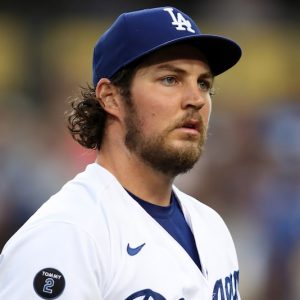
If there is a Theo Epstein 2.0, it would be former Rays GM, and current Dodgers President of Baseball Operations, Andrew Friedman. A wunderkind from the world of finance, he cut his teeth with a microscopic budget in the backwaters of Tampa Bay, and then moved to the glitz, glamour, and gargantuan pocketbooks of Los Angeles. One can question some of the moves Friedman has made since joining the Bums in 2014, but none more so than signing Trevor Bauer last February to the richest deal on per-year basis (first season only) in baseball history.

Bauer’s exploits and “look-at-me” personality has rubbed enough people the wrong way, and enough writers have addressed his personality – shall we say – “issues,” that I feel no need to recount them here. But all of those incidents look quaint when compared to what we learned on June 29, 2021. On that day it was reported that the Pasadena Police were investigating a potential sexual assault by Bauer with an unnamed woman from San Diego. The more details that were released, the worse the story got.

We all knew Bauer wasn’t a good guy. He may not be Aroldis Chapman (or Milton Bradley), but he certainly isn’t anybody’s Nelson Cruz. It is hard to imagine any Dodger player learning that Bauer was joining their club and thinking, “alright, a great new addition to the team.” At best they were thinking, “hopefully he pitches well every fifth day, and shuts the hell up the other four.” Alas, it wasn’t Bauer’s mouth that got him into trouble.

Bad behavior from Bauer – in some form – was expected. What we should not have expected (and on this your mileage may vary) is the Dodgers woeful reaction and response to that behavior. When the news broke, the Dodgers publicly stated that Bauer would make the team’s road trip to Washington and would be on the mound the following Sunday. That was followed by Dave Roberts’ incredibly tone deaf – most charitably, ignorant – comment that the matter was “out of our hands.” It seems that Roberts believed he could sidestep the issue by relying on the JDVP, which defers punishment to the league, not the team.

But last I checked, Rob Manfred does not fill out the lineup card (insert, “no, the Dodgers front office does” joke here). The Dodgers could have come up with a valid reason – the emotional toll of being charged with a serious crime being a pretty easy one – for skipping Bauer’s next start. Hell, they could have come up with a magical hamstring strain – the same one that has caused the slumping Cody Bellinger to miss a few games last week. And while the Collective Bargaining Agreement prohibits teams from retaliating against players by benching them, the worst case scenario is that Bauer would have filed a grievance. And the Dodgers lost. And they were forced to pay a fine. As of last year, the team was worth $3.4 billion. You would think with that kind of scratch they could afford a small penalty from an arbitrator (assuming they lost the grievance) to retain the moral high ground, to send a message to the team that this conduct will not be tolerated, and to let their fans – many (50%?) of whom are women – know that despite signing Bauer in the first place, they are a class organization. Yeah, they chose not to do any of that.

Per the terms of the JDVP, MLB has the right to put a player on administrative leave for up to seven days while it investigates an incident. They have right to extend that with the consent of the MLBPA. Both of those things have occurred with Bauer. While on administrative leave, the player continues to get paid, continues to accrue service time, and has the right to continue working out at the team’s spring training facilities. And as much as I dislike Bauer, the first part of that makes me very happy.

If MLB ultimately determines that Bauer violated the terms of the JDVP, they can and will suspend him without pay. Since 2016, the shortest such suspension has been 15 games (twice), with five suspensions of 75 games or more. Sam Dyson incurred the harshest punishment: the entirety of the 2021 season.

As I am sure you are aware, Bauer has vowed to fight the charges, and there is a real chance that MLB elects not to take any action unless/until the criminal matter is resolved, whenever that occurs. But Bauer could force everyone’s hand and not consent to any additional administrative leave (he agreed this week to extend it through August 6th). If he were to do that, he would make the Dodgers put up or shut up, as they would no longer have the ability to punt their decision about what to do with their problematic pitcher.

Bauer’s contract is not public. We don’t know if the Dodgers would or will have a valid justification to terminate it. But, if such an off-ramp does exist in the legal boilerplate, it is unlikely that it would be possible to enforce that provision until the criminal matter is adjudicated. And that seems unlikely before September (when Bauer’s last 2021 paycheck will be due). And that makes me happy.

Sure, I don’t like seeing Bauer getting rich and not playing and trying to plead the fifth. But I find the idea of the Dodgers getting out their financial bind considerably more odious. The Dodgers bought their ticket; they bought a ticking time bomb; they knew the risks; they injected a virus into their World Series-winning clubhouse on a wing and a prayer that it would not turn into a cancer. Well, guess what?!? According to the Los Angeles Times’ Bill Plaschke, the majority of Dodger players do not want Bauer back under any circumstances.

Even if Bauer is ultimately exonerated in the criminal matter, he still may be suspended by MLB without pay (each tribunal has different standards). That would benefit the Dodgers in the event Bauer exercises his $32M option for next year. But even if Bauer were suspended without pay for the entirety of the 2022 season (see Dyson, Sam), he still could theoretically exercise his 2023 option and make the Dodgers pay him $32M to either pitch as a pariah or play somewhere else. Oh, and if Bauer threw the Dodgers a bone and opted out of the 2023 obligation, the Dodgers would still owe him a $15M buy-out.

So, absent a criminal indictment or conviction that allows the Dodgers to terminate Bauer’s contract, the Dodgers WILL PAY. It may not be the entire $102M, but they will cough up a huge chunk of it. And as loathsome as I find Bauer, the Dodgers being forced to spend nearly nine figures to rid themselves of this mess makes me happy.

The Boys in Blue can remove all the Bauer merchandise they want; they can cancel all the bobblehead nights they had planned; they can try to retcon their response to this episode however they choose. But we all know that they made a cold and calculated decision when they signed Bauer, who, as Plaschke rightly pointed out, “had a history of harassing and bullying women online, mocking transgender people, and spreading conspiracy theories.” Andrew Friedman, like Theo Epstein before him, put FIP and WPA and a recent Cy Young award ahead of character and rectitude and principle. The Dodgers laid down with a dog. And now they have to pay for the fleas.

PLAY BALL!!

What Are We Doing?

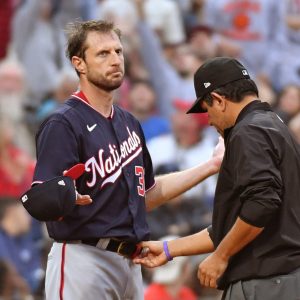
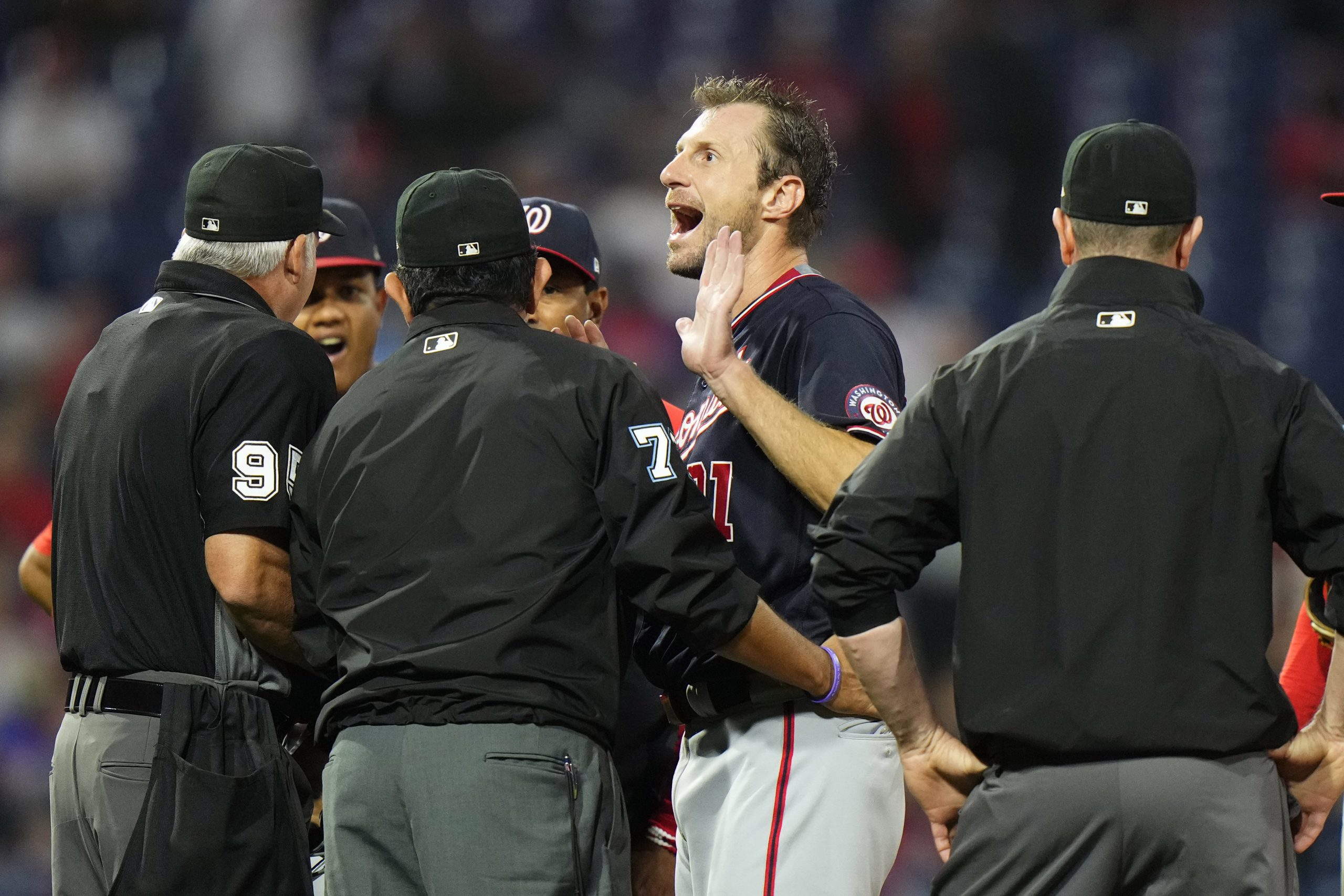
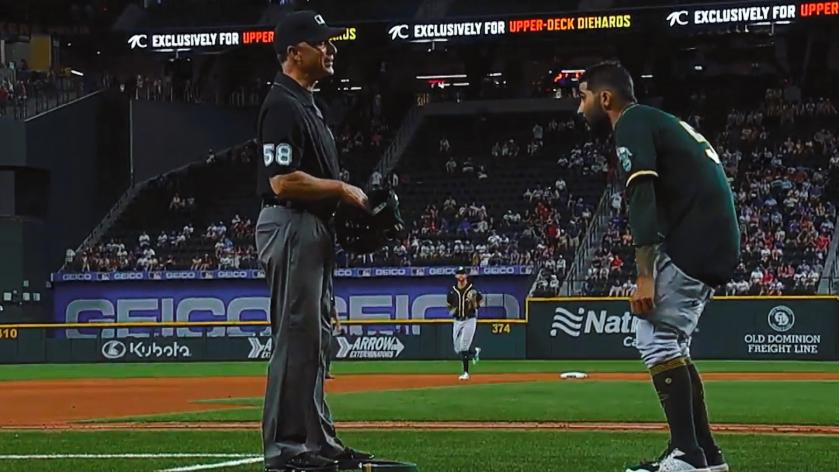
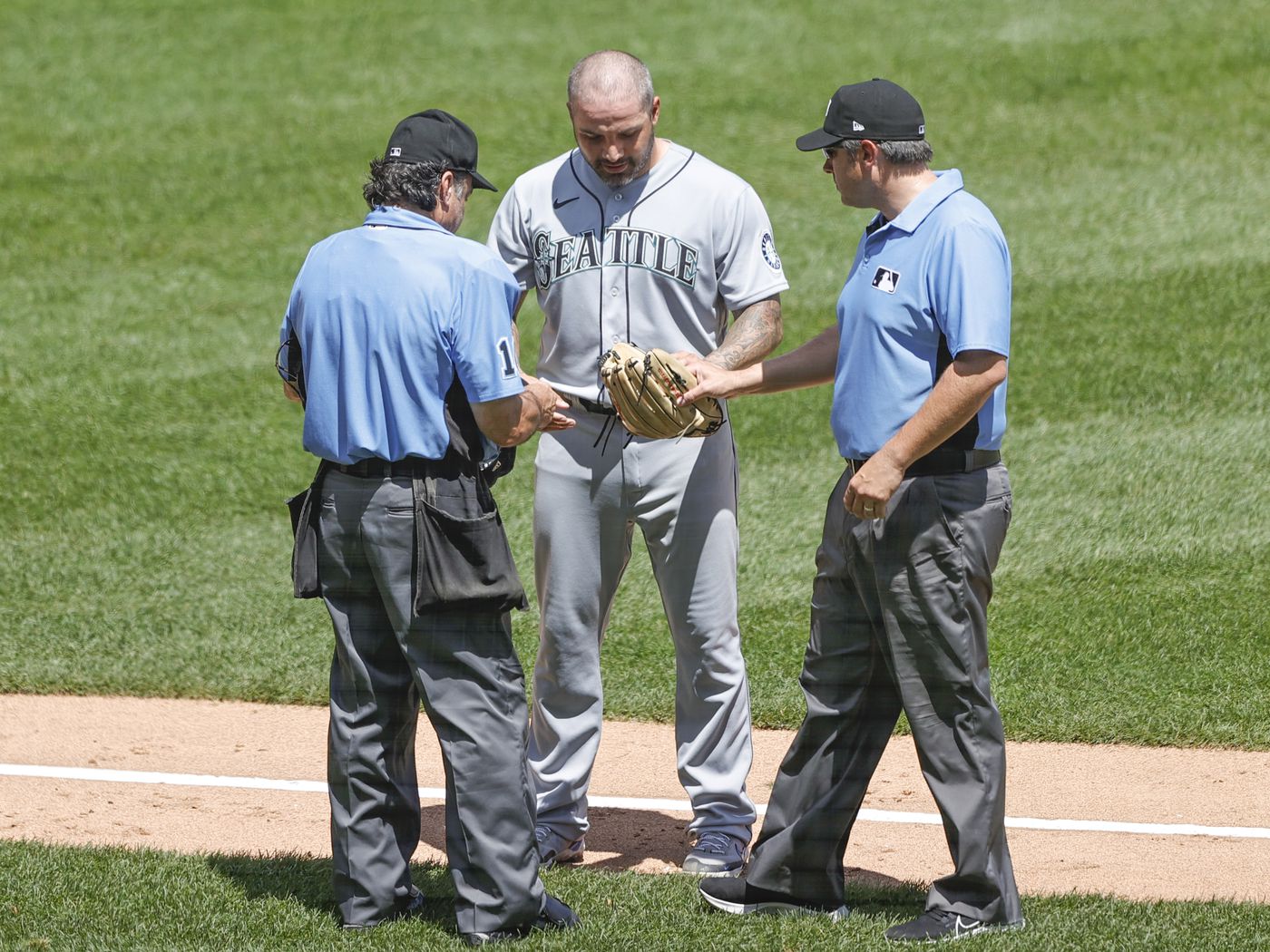
One of my best friend’s favorite thing to say is “What are we doing?” I have thought about that expression often the last couple of weeks with respect to MLB umpires turned TSA agents ferreting out illegal substances. By now we have all witnessed the Max Scherzer interrogations as well as the Sergio Romo striptease, and, of course, the Shohei Ohtani giggle-fest with the boys in blue. We know that the Mariners Héctor Santiago became the first victim of this new “sticky stuff” enforcement regime. But, really, what are we doing?


Santiago has already appealed his suspension, claiming his glove contained only sweat and rosin. And truth be told, what schmuck would load up with anything illegal the first week of spot checks? Scherzer, after Joe Girardi specifically asked the umpires to check him, said it best: “I would be a super fool to use something [that day].” This all begs the questions: Since when did umpires become scientists? Since when do they have the requisite knowledge and training to determine rosin + sweat is different than rosin + Bull Frog? Sure, a lump of pine tar on Michael Pineda’s neck is an easy call. Stevie Wonder could find a piece of sandpaper in Kevin Gross’s glove. It didn’t take the Hubble Telescope to spot the emery board flying out of Joe Niekro’s back pocket. And maybe Spider Tack is easy to discover – that shit makes Gorilla Glue look like Elmer’s. But we are now living in the gray area where pitchers may or may not be cheating, and – by rule – we have appointed the umpires judge and jury.

After his ejection last week, Santiago’s glove was confiscated and deposited into a plastic evidence bag for the guys at CSI Park Avenue to analyze. But why? As Jesse Rogers of ESPN reported: “Per source, the league didn’t need to inspect Santiago’s glove any further. The ejection and discipline are based on the umpires’ report of having detected a foreign substance.” So, why don lab gloves and radioactive tongs and make a show of taking the mitt out of play? Once they determined there was “sticky stuff,” they could have tossed Santiago – setting up his eventual 10-game suspension – and let him go to the clubhouse with at least his glove, if not his dignity. The rest of the performance was simple frippery.

Santiago, like Scherzer and Romo before him, denied any wrongdoing. And for the reasons articulated above, I tend to believe them all (but check back in a month or two when the inspections have become more lax). But what I find comical about this entire drill is that it is always the same: pitcher leaves the mound, umpire checks his hat, his glove, and his belt, and off he goes (well, not Santiago). Are those the only three places a pitcher might hide an illegal substance?

Buster Olney reported in the lead up to this new investigation routine that umpires were going to use scouting reports on different pitchers to check them for their specific tendencies. That is what Girardi was getting at with Scherzer – claiming that on all other nights Scherzer never touched his hair, but on this night he touched his hair, so obviously he was hiding something on his follicularly-challenged head. But outside of that one inspection, the umpires largely have stuck to the big three locations.

I was at a game in Cincinnati last weekend, and a Braves pitcher went behind the mound and bounced the rosin bag on his hand. He then adjusted his pants right above the ankles. The whole thing may have been totally innocuous. Or, he may have had some unlawful compound on his leg. We will never know. As this was happening I said to my son, “Let’s see if the umpires check his pants at the end of the inning.” Sure enough, the third out was recorded, and the umpires checked his hat, his glove, and his belt. The pants – which he touched immediately after loading up with rosin – were left uninspected. Which led me to ask: “What are we doing?”

It is my sincere hope that the June 15th memo, and the June 21st commencement of inspections, was a “scared straight” plan of attack. MLB is hoping that players, knowing that the Rule 6.02 (c-d) is now being enforced and suspensions are forthcoming, will stop the practice. If that was the wish, it seems to have been fulfilled. In the period between the day that word leaked that the hammer was about to fall and the day that umpires actually pulled out their science kits, spin rates dropped 22rpm for four-seam fastballs, 42rpm for sliders, and 47rpm for curveballs; strike out rates dropped a full percentage point; and batting average rose about six points (which seems small, but is actually a huge jump league-wide in a few short weeks). And since enforcement began, those rpm numbers have dropped even further and batting average has gone up another two points.

But since there have been countless inspections and only one (alleged) culprit, the current system of checks and re-checks is nothing more than Kabuki theater. If they really want to catch some culprits and end this endemic violation of the rules, the umpires should begin spot-checking different pitchers during random innings and in varied uniform and equipment locations. The pitchers can and should know that the “sticky stuff” highway is heavily patrolled, but they shouldn’t know behind which bush Smokey is hiding, and they certainly shouldn’t know what part of their person or equipment will be searched. Do that, and pitchers will have something to fear and a reason to not use the banned substances; do that, and teams will be disinclined to continue their never-ending quest to gain a competitive advantage (rules be damned); do that, and we will finally have some true law enforcement.

Otherwise, what are we doing?

PLAY BALL!!

p.s.  For more about this topic, and much, much more, tune in to the IBWAA Podcast.


Through the Looking Glass

When I was six years old, I MC’d my elementary school’s production of “Alice in Wonderland.” Memory does not serve if I was afforded that lofty position because I could neither sing nor act, but if the current state of affairs is any marker, both of those analyses would ultimately be proven correct. In any event, and with apologies to Johnny Depp, Tim Burton, and, of course, Lewis Carroll, I don’t think any of them could have imagined the upside down world in which we are currently living.

To wit, for some reason, having the ability to speak on the floor of the U.S. House of Representatives and consistently having conservative voices be the top ten most engaged posts on Facebook means Big Tech is shutting you down and your First Amendment rights are being thwarted. For reasons that I cannot fully appreciate, wanting the free market (not the government) make decisions means that the government should compel private companies like Twitter and the aforementioned Facebook to allow individuals to say what they want, when they want, to whomever they want. Even with a law school degree, I don’t truly understand how strict constructionists believe that the Constitution applies to non-state actors, but I guess I am just not fully enlightened.

That is why, in some people’s minds, it makes perfect sense to claim fraud against one side, all the while demanding, cajoling, and coercing others to “find” votes for themselves. Or claiming holding one accountable for their actions isn’t a show of “unity,” but claiming the other side “stole” an election is? I just feel like I am back in the North Stratfield Elementary School multi-purpose room all over again, living in a world where left is right, right is wrong, and you cannot believe what you read, because you can only believe what you hear, unless what you hear (e.g., rioters stating: “Trump said to do so”) doesn’t comport with what you want to believe (it was Antifa conducting a false flag operation), so then you just go back to believing whatever it is you want to believe.

Which brings us to one Curtis Montague Schilling. That wind chime you hear in your backyard is from the collective sigh of relief from members of the BBWA whose votes didn’t reach 75% for Schilling earlier this week. Thus they don’t have to permanently regret voting for someone who sympathizes with Nazis and insurrectionists (although, to be fair, if it took the events of post-January 6th to get you off the Schilling bandwagon, maybe you don’t deserve said sigh of relief).

After falling 16 votes shy of induction on this year’s ballot, Schilling penned a lengthy note to the Hall of Fame, which he then posted on Facebook. In it, Schilling extols his many and varied virtues, and conveniently forgets about his many sins. I guess that is normal and typical PR spin. But where this gets all Through the Looking Glass is with regard to specifics.

Based on his letter, Schilling has a great relationship with the Hall of Fame. But they – for reasons that don’t make a whole lot of sense – have nothing to do with the HOF voting. That is the BBWA. And the BBWA, as you know, is made up of writers. And 71% of those BBWA writers thought Schilling was worthy of HOF induction. And yet, when discussing what has been written about him in the past, Schilling claims that “nothing, zero, none of the claims being made by any of the writers hold merit.” Does that include those who voted for him? I am confused.

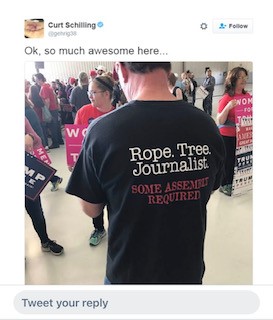
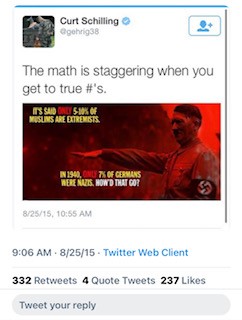
He states: “The media has created a Curt Schilling that does not and has never existed.” So, when a reporter reports on what Schilling said in an interview, or on his radio show, or what he tweeted, who is it that creating something? When you tweet this:


who is the creator? I just don’t understand. Reporters report. Sure, they have biases like the rest of us, but Schilling is and has been hoisted on his own petard, not some imaginary boogeyman the “press” created out of whole cloth because, to his thinking, they don’t like his politics (more about that below).

Schilling wrote: “I stood at my locker 400+ times after my starts and took every question and answered honestly.” Does doing your job (and admittedly, more openly and honestly than many other professional athletes) give you the right, the permission structure, to call them liars or advocate their death? Should writers just look past his violent rhetoric because he answered a handful of their questions?

Schilling accuses writers of deceit: “Those people who stood there asking the questions KNOW [his emphasis] what they are claiming is untrue yet they quote, re-quote and link to one another story after story that began as lies and grew into bigger ones.” If that is the case, if the writers “know” what they are writing and linking to are false, why hasn’t Schilling filed a defamation suit against any of them? If someone accused me of being a Nazi-lover, or a homophobe, or an insurrectionist, I would be shouting from the mountaintops and suing in courtrooms to get the record corrected. All Schilling has done is confirmed the stories with his big mouth and his twitchy thumbs.

Schilling claims what a great teammate he was (and, I have no doubt that is true). He talks of all the different types of people he has played with, including gays. If that isn’t the “I have many black/Jewish/gay friends” argument, I have no idea what is. I hate to deliver this piece of obvious news, but being a great teammate to a gay person does not give you license to be a homophobe.

Schilling feels he is being unfairly maligned and lumped in with cheaters or other scofflaws. I think he is (shockingly) being narrow-minded. Writers can hold two thoughts in their minds at once. They can choose not to vote for players for a multitude of reasons. It is highly likely that Clemens and Bonds are not in the HOF because of their respective PED allegations. And it is very possible that Omar Vizquel’s vote tally fell because of the domestic violence claims by his wife. And we can assume that Schilling has fallen short because he is an asshole.

In his letter to the HOF, Schilling points out all the humanitarian awards he has won, many of which were voted on by writers. “Do those awards and 22 years absent of a single validating event to support their claims define me?” he asks. Schilling is a bright guy. There is no world – outside of Wonderland – that he does not see that his words and actions over the past decade have had a deleterious effect on people’s view of him. Schilling wants his HOF election to be solely about his actions on the field: “I’ll defer to the veterans committee and men whose opinions actually matter and who are in a position to actually judge a player.” But it is those same players who have been exceedingly quiet in his defense. One might turn that deference on its head and ask: Do those players want to be lumped in with this particular reprobate who gets post-career attention being a right-wing troll and social media flamethrower? Do they want to share a stage with this man? Or a drink on the porch of the Otesaga? Do they want their HOF credentials tarnished by his admission? I don’t know the answer to these questions; and if he gets 16 additional votes next year, none of us ever will.

Schilling would have you believe that he has been excluded due to his conservative politics. He states – without any evidence, ahem – that most of the BBWA are “left-leaning.” If what he avers was true – that writers are lefties and won’t vote conservatives into the HOF – then the Hall would be a lonely place. Oh, and has been pointed out repeatedly, this guy got 100% of the votes a few years ago (the guy on the right, in case there was any confusion).

But, in the upside down world, Steve Carlton’s politics weren’t too conservative for the BBWA, but Schilling’s are?

I don’t – and won’t ever – have a vote for the Hall of Fame. But I am what some people call a “Big Hall” guy. It is a museum of the history of the game, and that history – warts and all – should be on display. And I find it a bit hypocritical to have Bonds, Clemens, and Pete Rose prominently displayed in exhibits upstairs, while refusing to give them plaques downstairs. As I have written before, I think these guys should get in on their merits, and then all the facts should be included on their plaque – not just their stats. Like “…In addition, Rose was banned from baseball for betting on Reds games when he was their manager.” Or “In addition, Bonds’ records are viewed as dubious due to his rumored use of performance-enhancing drugs throughout the second half of his career.” Schilling’s could say, “In addition, Schilling came under fire for his racist, homophobic, anti-democratic screeds after his career ended.”

But I would also add another wrinkle (Mina Kimes referenced part of this wrinkle the other day, and whenever you can be in the company of Mina Kimes, you are doing something right). Each ballot should have two boxes:

  • Induction
  • Induction Weekend

Writers would be able to vote for induction, but they could also vote to do so without the pomp and circumstance of induction weekend. The player doesn’t get the right to be on stage for the ceremony; and he doesn’t get the platform to spew anything. He doesn’t ride, go to the dinner, or hang out with the other players drinking scotch and reminiscing about the “glory days.” It will be confirmed that he is and was part of the fabric of baseball, and his career merits the honor of being in the Hall of Fame, but his actions – on and/or off the field – do not comport with what the Hall wants represented on their most hallowed weekend.

If we could do both – have the plaques state the whole truth and have the weekend not tarnished by their presence – I would vote for Rose, Bonds, Clemens, and maybe even Curt Schilling, to be inducted into the Hall of Fame.

But asking for that amount of change from two pretty stodgy organizations is something that could probably only happen to Alice, in Wonderland.

PLAY BALL!!

HOF Voting Ended One Week Too Early

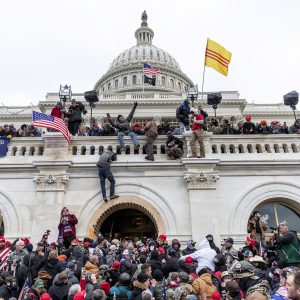
January 6, 2021 was an ignominious day in the history of this country. The President of the United States incited a riot in the people’s house in a hubristic and futile attempt to overturn the outcome of a free and fair election. While the size of the insurrection and the casualties and damage caused may not have been foreseen, the participants and their intent was clear from anyone with access to the Internet. One need not live on the deep web to have known what the President had in mind when he prompted his 88.7 million (former) Twitter followers with this exhortation: “Big protest in D.C. on January 6th. Be there, will be wild!” Or when he told a horde of masses that had gathered at The Ellipse that “we will never give up, never concede” and then directed them to march down to the Capitol to “show strength and…be strong.”

In the aftermath of the riot, Twitter (and various other platforms) denied Donald Trump service. Major corporations are refusing to endorse any politician who sought to undermine the election. And white supremacists, Proud Boys, and other miscreants all over the country are now finding themselves on the wrong end of law enforcement just days after they ran roughshod over the Capitol Police. It is clear – at least in the short run (we Americans tend to have very fleeting memories) – that the biggest losers of last Wednesday’s events were the soon-to-be ex-president, Josh Hawley, Ted Cruz, and the right-wing social media website Parler. And although there were no winners in the melee, there is someone who escaped the worst of its consequences.

Voting for the 2021 class of the Major League Baseball Hall of Fame ended on December 31st. As such, all ballots had to be submitted six days prior to the (attempted) coup. Six days before the Confederate flag was carried through the Rotunda. Six days before a man wearing a “Camp Auschwitz” sweatshirt and a man wearing a “SMWE” t-shirt strode through the halls of U.S. power without a care in the world. Six days before “Murder the Media” was scrawled on a door inside one of the most sacred buildings in the United States. In short, six days before any and all of these bilious acts would have, could have, (potentially) should have impacted the Hall of Fame candidacy of one Curtis Montague Schilling.

Over the past few years, Schilling – even more so than Roger Clemens and Barry Bonds – has become one of the most difficult Hall of Fame votes for members of the Baseball Writers Association of America. The PED candidates may be polarizing – did he or didn’t he? does it matter? – but Schilling has truly brought the rarely-ever-used-prior-to-Mark McGwire “character clause” into specific relief.

When Schilling’s name first appeared on the ballot in 2013, be received 38.8% of the vote (if I didn’t know better, I would think ol’ #38 pre-ordained that total). He fell to 29.2% the next year, bounced back to 39.2% the next, before jumping to 52.3% in 2016, slowly making his way to 70% last year. Schilling only has two more bites at the apple – this year and next – to get to the requisite 75%. But only one player in the history of HOF voting has ever received 70% of the vote with time remaining and not been inducted (don’t feel bad for Jim Bunning, he was later elected by the Veteran’s Committee).

It is possible that Schilling’s performance on the field is sufficient to move the needle despite his words and actions off of it. It is quite possible that his 11-2 playoff record, with a 2.23 ERA, 0.97 WHIP, and nearly 6-1 K-BB ratio, combined with four complete games, two shutouts, an NLCS MVP, a World Series MVP, and three rings to his name are enough to push him up and over 75% either this year or next.

It is possible that as the ranks of worthy names on the HOF ballot thinned, enough members of the BBWA would at last check the box next to Curt Schilling’s name.

It is possible that enough writers have taken issue with the selective and moralistic exercise of the “character clause” (that was hypocritically implemented by Kenesaw Mountain Landis, the racist former commissioner of baseball, who history now reviles to the point where his name has been taken off the MVP trophy) that they would hold their noses and vote for Schilling because he was one of the sport’s all-time great pitchers.

But, if Schilling’s name appears on at least 75% of the ballots this year, it just may be due to the luck of the calendar. If the BBWA required ballots to be submitted by, say, January 7th, I can imagine a drumbeat of writers chasing their mailman down the street like some rabid, remorseful, and regretful Orel Hershiser1, Bill Madlock2, or Greg Maddux3.

Just one week, that is all it would have taken. Does anyone honestly believe that with what transpired at the Capitol, that 75% of the BBWA would have voted for a man who retweeted this:

Or this:

Or a man who was, as Jay Jaffe pointed out in his FanGraphs piece on December 28th , “…as of last week…promoting election conspiracy theories and calls for martial law on his Twitter account, not to mention comparing the nation’s top infectious disease expert to a Nazi…”

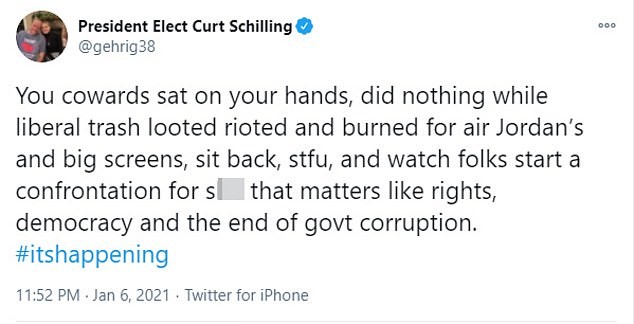
But that wasn’t enough. After the siege in Washington, and maybe just to rub the noses of those who voted for him a week earlier, Schill tweeted the following:

Do we believe that in the hours after the darkest day in our nation’s capital, the first time since 1814 it has been attacked, and attacked by people espousing all of the same beliefs that Curt Schilling not only holds, but shouts into every microphone – electronic or otherwise – that he can find, that the BBWA would still have voted for him? When Twitter banned Donald Trump; when Amazon stopped hosting Parler; when cabinet members resigned; when the 25th Amendment was openly discussed; and when the nationwide hunt for hooligans continued unabated? Does that seem like an environment for writers who previously chose not to look the other way, for writers who said – by their words and their votes – some bridges are simply too far, for writers who were looking for a reason not to include Curt Schilling on their ballot, to change their minds? If only the vote had been one week later, we know at least Steve Buckley would have had a different ballot.

Curt Schilling is a lot of things – a racist, a gamer, a homophobe, a clutch pitcher, a failed businessman, a Lou Gehrig aficionado, and a plain old asshole. But if his name appears on 75% of the Hall of Fame ballots when the results are revealed on January 26th, we can add “one lucky son-of-a-bitch” to the list.

With the House of Representatives impeaching President Trump for a second time; with Republican lawmakers facing denunciations from their hometown newspapers and, more importantly, their benefactors; with domestic terrorists being arrested; with cronies and acolytes running for the hills; wouldn’t it be a sad but ironic capstone to this whole sordid affair if Curt Schilling was the one person who avoided any repercussions.

PLAY BALL!!

1Bulldog

2Mad Dog

3Doggy

The Baseball Gods

Every season, it seems, for one reason or another, we are thrown into the abyss of the “unwritten rules.” The list is long, if not readily understood. There are the age-old tropes of the “right way to play” and “that’s not how it is done” and “everyone knows not to do that.” And even with those, we learned a new one this week – one with obvious racial undertones – by Rangers manager Chris Woodward when discussing not swinging on a 3-0 pitch up by seven runs:

“It’s kind of the way we were all raised in the game [emphasis added].”

There has been much written about Fernando Tatís, about his exuberance, and that of fellow Latin players. There has been gallons of ink spilt about new school vs. old school, about “letting the kids play,” about stodgy standard-bearers, and the aforementioned “unwritten rules.” There is no need to rehash the same here.

But what struck me this week was the beauty of the Baseball Gods (capitalized out of reverence). Don’t believe in them? Live as a Red Sox fan until mid-October, 2004; or as a Cubs fan until the rain started to fall in Cleveland on November 2, 2016; ask an announcer about mentioning the number of base hits allowed when a pitcher is pulling his car up for his date with destiny; or just ask any Astro about the status of their pitching staff this season. Or read either of these books.

The Baseball Gods struck back this week in ways only they know how.

On Wednesday, I had the following text exchange with my brother-in-law about the aforementioned Tatís brouhaha:

Him: Our house is buzzing with Tatís talk. We don’t get all the hoopla because in MLB people come back from 7 run leads and it’s on the pitcher to not give him that pitch.

Me: 7 runs in that bandbox is not insurmountable…

We discussed more, like Chase Tingler’s poor handling of the matter, and how Tatís should be more accountable if he missed a sign, but you get the essence.

And here is where the Baseball Gods decided to show up and flex all their celestial might: On Thursday, just about twenty-fours after the above back-and-forth, the Phillies put up seven runs on the Blue Jays in the first inning. Now, granted, a seven-run lead after half an inning is different than a seven-run lead after seven; and, granted, Sahlen Field is not the new Globe Life Field. Nevertheless, the lead is/was the same. The Jays scored two in the bottom of the first; and then – that magic number again – seven in the bottom of the sixth to take a 9-7 lead, ultimately winning 9-8.

No sooner had the baseball purists stepped down from Mt. Pious to say that players should play differently with a seven-run lead did a team come back from that exact deficit. Was the ultimate outcome of that Phillies-Blue Jays game the impetus for Tingler and Chris Woodward to change their respective tunes? Did all-timers like Johnny Bench and Reggie Jackson coming out on Tatís’ behalf change the temperature?

Did the sheer number of think pieces and/or the leveling of Woodward’s hypocrisy make this nothing more than a tempest in a teacup?

Or, did the Baseball Gods strike down once more to remove this silliness from the front pages of sports columns by opening Thom Brennaman’s mic before the second game of the Reds-Royals double-header on Thursday night? The truth is, we will never know.

But, if we learned anything these past few days it is that we doubt the Baseball Gods at our own peril.

PLAY BALL!!

Honor Among Cleves

I spent nearly my first two decades on the planet playing baseball, and nearly the next three observing the game (some might claim too closely). What I learned in that time is that baseball players are a lot of things, they are tough, they are competitive, they are ready to fight, and they have hollow legs when it comes to post-game libations (see, Boggs, Wade). But one thing you don’t hear too often is “principled.” Sure, baseball players abide by the “unwritten rules,” and will willingly throw at a batter’s head if the previous guy pimped a home run (thankfully that practice is employed less and less these days), but they don’t often take a stand. Ask Bruce Maxwell how well kneeling for the national anthem worked out for him.

It is with this as the backdrop that I was shocked, I dare say astonished, to hear what transpired after an Indians’ team meeting late this week. For those you who may have missed the story or don’t know all the details, allow me a small recap:

  • The Indians, like all teams, are governed by the strict MLB rules and regulations regarding Covid protections.
  • The Indians, like some teams, are more acutely aware of the potential impact of violations insofar as one of their star pitchers, Carlos Carrasco, elected to play this season even though he missed most of last year after being diagnosed with leukemia. Carrasco’s doctors warned him against joining the team, but he wanted to help his club win their first World Series since 1948.
  • The Indians, unlike some other teams, have so far managed to avoid the Covid bug, and have played all of their scheduled games to date.
  • The Indians were in Chicago last week to take on the White Sox and then the Cubs. After Saturday’s game, pitchers Zach Plesac and Mike Clevinger went out to dinner with some friends and back to one of the friend’s houses to play cards. In violation of the rules, neither player informed the team he was leaving the hotel. And Plesac was spotted by MLB security arriving back after the 10pm curfew. Clevinger was not sighted, nor was his absence from the team known at the time.
  • After the team learned of Plesac’s malfeasance, they ordered a car service to drive him back to Cleveland, and forced him to quarantine for three days. Clevinger, however, kept his part of the sojourn to himself, and boarded the team flight home. A flight, it should be noted, that also carried Carlos Carrasco and rest of the Indians players and coaching staff.
  • The team ultimately learned of Clevinger’s participation, and sent him home to quarantine as well.

The Indians players – non-Chicago dinner division – were apoplectic. They felt betrayed. They were hurt.

Pitcher Adam Plutko put it bluntly:

“They lied to us. They sat here in front of you guys [the media] and publicly said things that they didn’t follow through on. So those grown-ass men can sit here and tell you guys what happened and tell you guys what they’re going to do to fix it. I don’t need to do that for them.”

All-star shortstop Francisco Lindor was a little more gentle, stating:

“We’re humans, and we make mistakes. We’ve got to be accountable when we make those mistakes, and we’ve got to understand that you can’t put yourself first. In the times we’re in, you cannot put yourself first.”

Here is where the story gets interesting. The team ultimately traveled to Detroit to take on the Tigers. After completing their quarantines, Plesac and Clevinger each loaded up their respective cars and drove to outskirts of the Motor City to meet the team at their hotel. Once there, they pleaded their case, and attempted to fall on their swords.

It bears mentioning here that prior to the trip to Detroit (or possibly on the way) Plesac recorded a six-minute video to Instagram (while driving) wherein he tried to explain his side of the story, intimated that the MLB protocols were confusing and did not match with the CDC, claimed he is a responsible human because his mother is a nurse, and then blamed the entire episode on the media. Here is my favorite nugget:

“The media really is terrible, man. The media is terrible and they do some evil things to create stories and to make things sound better, makes things sound worse. Truthfully, I’m disgusted the way the media has handled this whole situation surrounding our team.”

So, in short, Plesac is a good guy, MLB bolloxed their rule-making, and it’s all the media’s fault. Okay. Got it. Now back to two players driving themselves to Detroit.

At the hotel Plesac and Clevinger spoke with the team and there was a Q&A. They provided their accounts. Now, this is where one would expect that baseball players being baseball players, guys who care about winning first and foremost, guys who overlook their teammate’s transgressions each and every day, guys who know that losing two-fifths of their starting rotation is less than ideal in this 60-game sprint, would, if not forget, at least forgive, and allow the players to rejoin the team. And that is where you would be wrong.

The front office and the coaching staff, after taking the temperature of the players in the room, elected to send the two offending pitchers to the team’s alternative training site in Eastlake, Ohio, where they must remain – by league rules – for at least ten days (unless someone gets injured). They drove three hours with the hope of recovering their dignity and their place in the rotation; they were forced to drive three hours home with their tails between their legs and their reputations in tatters.

I have never been a Cleveland fan. I rooted against them in the 2007 ALCS when they played my Red Sox; I rooted against them in the 2016 World Series against the (There’s Always Next Year) Cubs. But, with this season in shambles for the BoSox, I am pulling for the Indians. I want them to go all the way. I want them celebrating on the mound; I want Tito Francona and this group of players who stood on principle, who stood by one another, and who refused to stand for selfishness and self-importance; I want them to stand at the podium and hoist the Commissioner’s Trophy for the first time in 72 years.

And if, by that time, Plesac and Clevinger have properly repented and re-earned their teammates’ respect and ultimately help the team achieve that goal, then all the better. Go Tribe!

PLAY BALL!!

The $10,000 Fine

About three years ago I wrote an article entitled “The $25,000 Fine,” which dealt with the scourge of batters not running to first on an uncaught third strike. Surprisingly, much of the feedback I received from that missive was negative, as people didn’t seem to care too much about players’ laziness; people did not seem to think that players should be pecuniarily punished for their failures on the field; people didn’t seem to think that publicly shaming athletes for their indolence was good policy. Okay, fine, whatever. It was an idea, a lark; it was meant at least 50% tongue-in-cheek.

But my latest concept has much more serious implications – many of which are playing out in real time. In an effort to play the season safely (if that is even possible), MLB and the MLBPA developed what is called the 2020 Operations Manual, a 101-page document detailing the league’s health and safety protocols. The sheer volume of this document is staggering, and covers nearly every eventuality you could imagine – except, of course, what to do if four players on one team test positive before a Sunday afternoon game. But I digress.

There is no need to delve too deeply into the inch-thick document, but suffice it to say that it was well thought out and intended to keep the players as safe as possible. For our purposes, however, it is important to highlight just a few of the provisions:

• The only contact allowed on the field are tag plays and other incidental contact that occur during normal play.

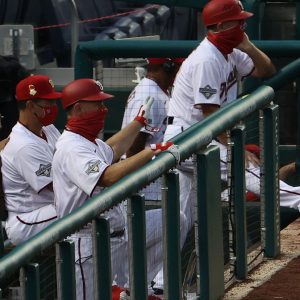
• Players, coaches, and trainers are required to wear face coverings everywhere except the field.

• High fives, fist bumps, and hugs are prohibited.

• Dugout seating requires at least six feet between each player.

• Players and staff are required to put a personal towel over the dugout railing when leaning over the same.

• A ball will be thrown away after it is touched by multiple players, and throwing the ball around the infield is discouraged.

• First- and third-base coaches are not to approach baserunners or umpires, and players should not socialize with opponents.

I have pointed out these specific rules because after having watched baseball for six days, it seems that all of them are being broken…with impunity. And, in Houston last night, the Dodgers and Astros came dangerously close to breaching the “fighting will be met with severe discipline” edict (I guess severe discipline can be assessed for not fighting as well, as Joe Kelly, Dave Roberts, and Dusty Baker learned this afternoon).

What don’t the players and coaches understand about the global pandemic? Maybe some of them believe it is just a hoax. Maybe some of them believe – like the recently diagnosed Congressman, Louie Gohmert – that wearing a mask can actually give you coronavirus? Maybe some of them believe that the rules don’t apply to them, or that they are impervious to a disease that does not discriminate based on age, gender, or profession.

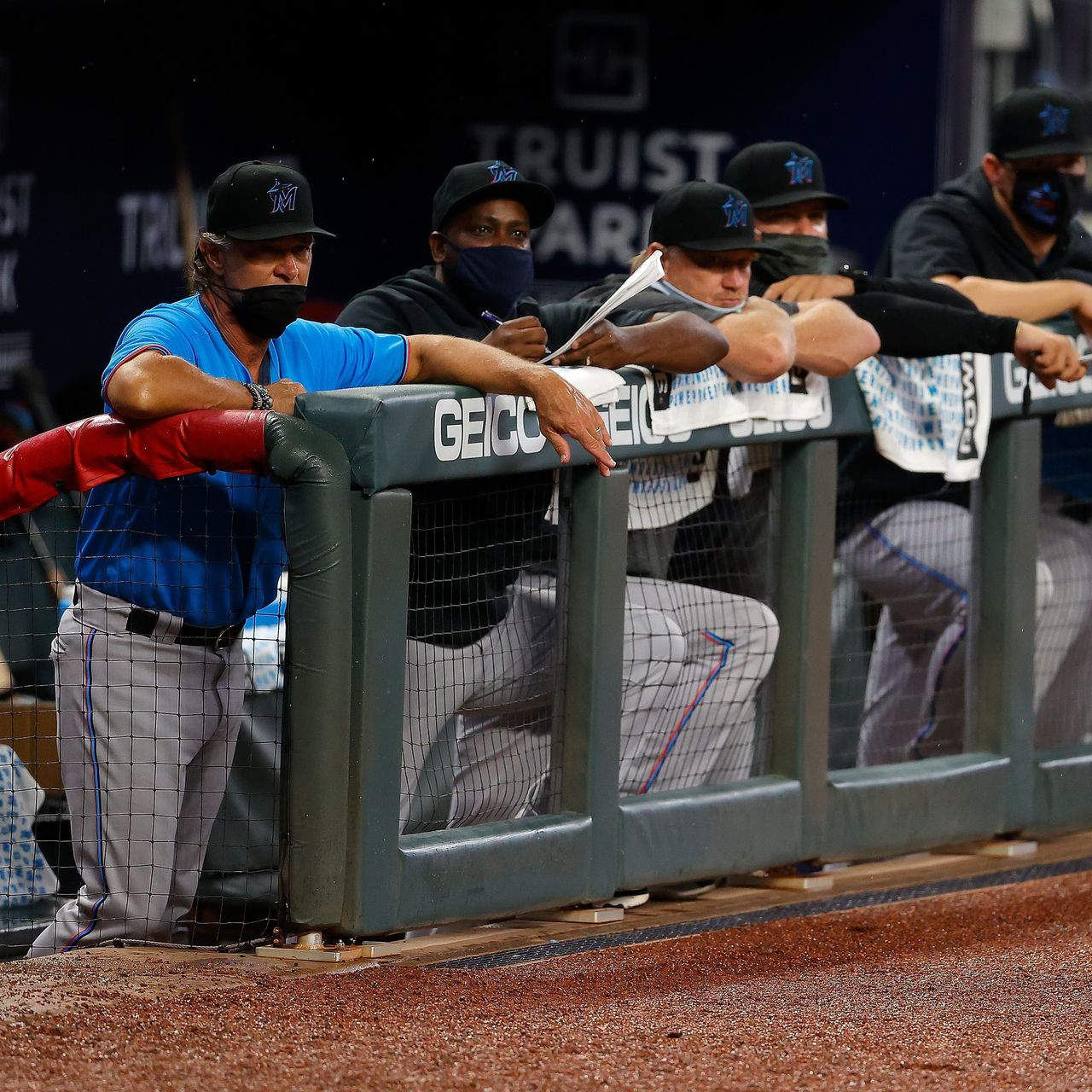
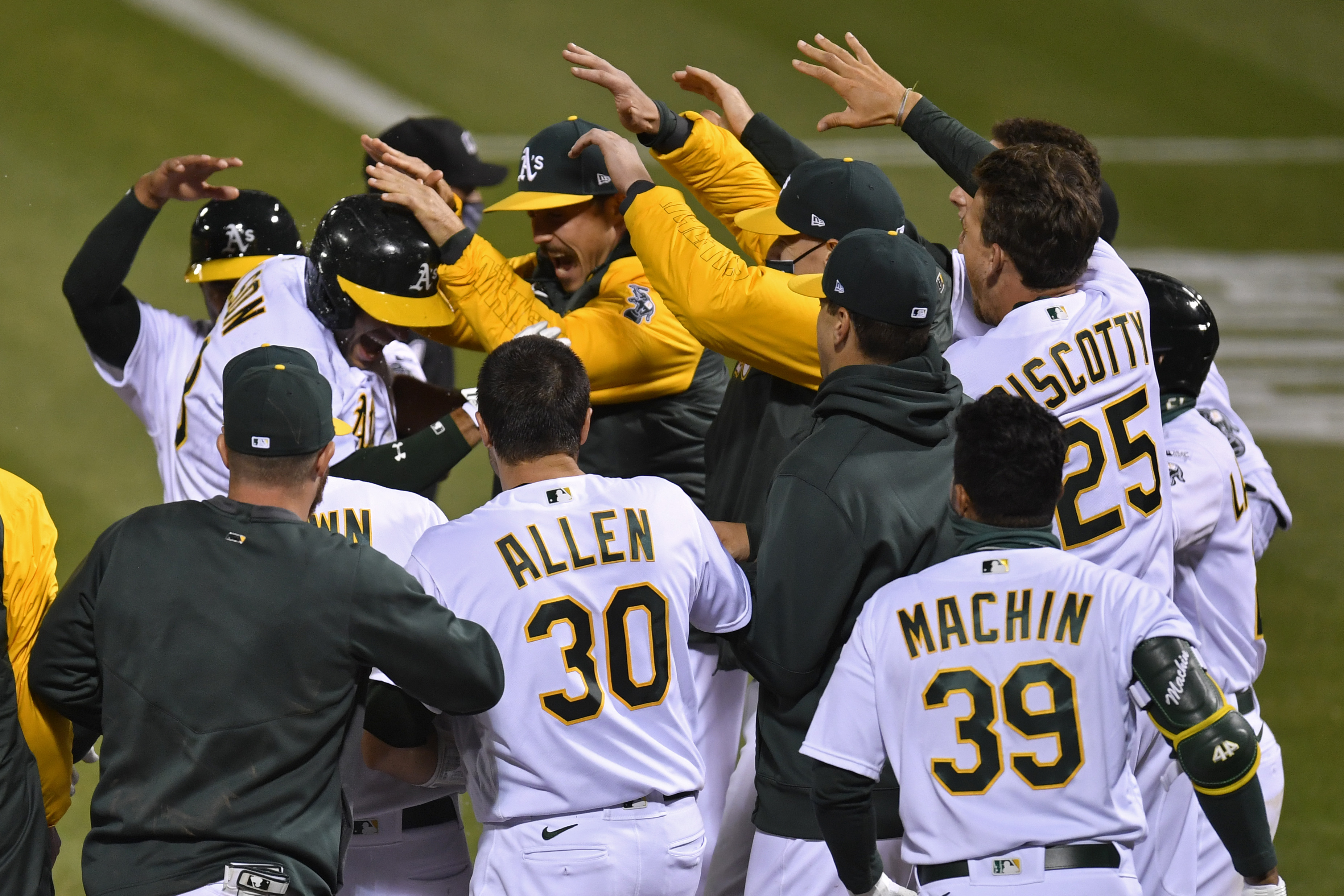
But if what happened with the Miami Marlins this week is not enough to scare players straight, I have an additional incentive. The players were informed of the litany of rules in late June, before they embarked upon Summer Camp. They have lived with the protocols for more than four weeks. If they don’t know or understand them by now, and if they don’t appreciate the gravity of adhering to them by now, they never will. So let’s put some money where their mask is supposed to be. Each player is given a mulligan for everything that has transpired to date – and that includes the Marlins players who (allegedly) went out on the town in Atlanta and were the architects of their own demise – and they are, as of today, given one additional warning for infractions. It is useful to note that while the league cannot track everything personnel does (especially away from the ballpark), a violation of any of the rules listed above can be seen on television every night. One need not contact trace to find an infringer; one just needs to log in to MLB.TV. After the warning, each player is fined $5,000 for each violation, and the team is punished in an equal amount. If Don Mattingly keeps his mask under his nose while in the dugout, $5,000 for him + $5,000 for the Marlins. If the Athletics jump on Matt Olson after a walk-off homerun (all but two without masks, natch), $5,000/each + $55,000 for the team (Olson does not get fined). All proceeds go to Black Lives Matters or other charities dealing with social justice issues.

Unlike the $25,000 fine I previously wrote about, there would be no announcement or public shaming aspect. Just cold hard cash. Players walk into the clubhouse the next day to find a bill from the league. Despite Charles Barkley’s protestations to the contrary, athletes are role models. And although it seems that more and more people are getting behind the idea of masks being incredibly helpful in curbing the spread of this disease (including, ever-so-gingerly, the Commander-in-Chief), and that social distancing is vital to keeping the disease at bay, you can turn on your television every night and see well-known athletes not abiding by these nearly-universally accepted concepts and not obeying their specific rules. What does that say to the general public?

And even if this is not about setting an example for society at large, what about the non-athletes these players encounter every day? It was reported today that a visiting clubhouse staffer in Philadelphia tested positive after the Marlins were in town. That guy doesn’t make millions of dollars per year; my guess is he doesn’t make six figures. And yet the players, so cavalier in their approach to the protocols, have put his life in danger. If the risk to the season isn’t enough; if care for your fellow man isn’t enough; if being a role model for kids and adults isn’t enough; then maybe taking a hit to their wallet will be. And you can be sure that if the owners, who fought and scratched to make the best financial deal possible for this abbreviated season, are forced to scratch a check every night for their team’s failures, they will be demanding that their manager starts running a tighter ship. There simply may not be any other way.

Here’s to hoping that everyone stays (and/or gets) healthy and that we continue to hear this every day from now through October:

PLAY BALL!!


Taking the Low Road

I have been negotiating deals for more than two decades. In fairness, I have never been involved in collective bargaining, nor have I had any multi-billion dollar deals cross my desk. But, there are some principles of negotiation that are applicable to all types of deals – regardless of industry, venue, or value. One of those principles is that the best place to be in any negotiation is on the high road. You may win some and you may lose some, but in the end, you can hold your head high if your side of the street is clean. Muddy the waters, hedge on the truth, or fail to be forthcoming, and you will either cower under a sword of Damocles for the life of the deal, or, in the event of an impasse, you will carry the burden of “what if.” Neither is a great way to go through life; and neither bodes well for a long and/or successful career.

As I watched what I guess can be called a “negotiation” between Major League Baseball and the Major League Baseball Players Association unfold over that past two months, I kept asking myself, “Who is going to take the high road?” I wanted to know which side – press coverage be damned – was going to present an offer or series of offers that would allow them and their constituents to sleep well at night, regardless of the outcome. Well, baseball is starting up again (maybe?), no “deal” was done, and neither side ever even hinted at taking the northern route.

I can understand and appreciate that many of you reading this didn’t follow this as closely as I did; and some of you may be confused by the outcome. So, at the risk of being pedantic, and without stepping on the thousands of fingers that have already written about the current state of the state of baseball, allow for this basic primer.

After spring training shut down and the prospect of an actual season became tenuous, the owners and the players – back in late March – came to an agreement about what to do for the coming season (or, what to do if there was no season). The problem is that once they pulled that contract out of the drawer, they couldn’t agree upon what they had previously agreed upon. That’s an inauspicious place to start. But we do know a few things for sure:

  • The players were provided an advance of $170M against their eventual 2020 salaries, to be divvied up based on service time. If the season didn’t happen (it still may not), this money was the players to keep, no give backs.


  • If the 2020 season happens, no matter how many games get played, each player would get credit for a full season of service time. (For the uninitiated, service time affects when a player is eligible for salary arbitration and free agency. This is obviously an important issue.) And if the season is scrapped, players would get the same amount of service time for 2020 as they received for 2019. So, Mookie Betts would still become a free agent next fall as he would get credit for a full season (he played a full season in 2019); and Gavin Lux would only get credit for about 1/7th of the 2020 season, as he only spent about that much time on the Dodgers’ roster in 2019.


  • The one issue that you have been reading about ad nauseam is what would happen if the teams played with no fans in the stands. The players believed the March contract was iron clad that they received a pro rata share of their salaries – with or without fans. The owners disagreed, and seized on this language: “[T]he Office of the Commissioner and Players Association will discuss in good faith the economic feasibility of playing games in the absence of spectators or at appropriate substitute neutral sites.” Somehow the players didn’t believe this says what we can all read it says. And this, my friends, was the first time the players could have taken the high road and chose otherwise.

My guess is that the players received some bunk legal advice. I think they were told that it was pro rata no matter what, and then the die was cast. There was no slinking back to the membership to say, “Um, guys, remember what we told you about that pro rata thing? Yeah, well, we forgot about that other provision that mentions economic feasibility and the absence of spectators.” Rather, they charged right ahead and essentially dared the owners to “prove us wrong.”

It seems that the owners must be afraid of heights as well, because they twisted themselves into various Wetzels trying to get out paying the players. First they claimed that pro rata was only if fans were in the stands (not an unfair reading). But then they said they could only play X number of games because they would lose $640,000 for each game played in empty parks. When asked to provide the proof such assertion, they hemmed and they hawed, but they didn’t bring any receipts. Then they dawdled. They fiddled while Rome burned. They took their sweet time responding to the players. And when they did respond, they simply dressed up the same offer in different clothes. When you drilled down on their offers, they presented the players with about $1B in salaries, payable either (a) over 82 games, or (b) over 76 games, or (c) over 60 games, or (d) to be allocated amongst the players based on how much they would otherwise be paid. But it was like a Taco Bell menu each and every time – all of the ingredients were the same, it was just a question of what shape you wanted it delivered. The players rejected each one.

“Wait a minute”, you may be saying. “Didn’t they come to an agreement? And isn’t that why we have an upcoming season?” Unfortunately, they didn’t. One of the provisions of that March agreement allowed the commissioner to set the schedule if no agreement could be reached. And it seems that this was the trump card the owners kept in their back pocket the whole time. If they could just delay the negotiations until only 50-ish games became feasible, they could implement the schedule and save a bunch of dough.

The players knew this; they knew that at the end of the day, they could be “forced” to play. But, they wanted to make sure if that ever happened, they would get their pro rata salaries. So, they continually pushed back against offers that would have actually earned them more money (e.g., 80% for 70 games vs. 100% for 50 games), because they should get “a day’s pay for a day’s work.” At some point in this battle (about two months too late), the owners realized two things: (1) the players were never moving off the pro rata concept (right or wrong, they were willing to die on that hill); and (2) the players were setting the owners up for a grievance.

A quick sidebar about grievances. These are available in labor situations when one side doesn’t believe the other side acted reasonably in a negotiation. They are long and costly. But, by the players estimation, if they could show the owners were being unreasonable, they could win a grievance and extract the value of the difference between the number of games the owners instituted, and what they could prove was a reasonable and feasible number of playable games. The players believe(d) this could be somewhere in the neighborhood of $1 billion. A grievance could and would happen while games are being played, so it would not result in any work stoppage.

Back to our story. Once the owners gave up on trying to reduce salaries below a pro rata share, they offered the players a 60-game schedule, but conditioned on the players waiving their right to file a grievance. The players countered at 70 games with the aforementioned waiver. The owners responded by saying they would not respond. The players then took to press releases and social media to proclaim, “Tell us when and where.” They told the owners to set the schedule and they would be there. So the owners did just that.

Low road, meet the players. The players then started to balk at some of the health and welfare provisions; they started to complain about the number of days in the schedule; they said they couldn’t necessarily be there “when and where” the owners wanted. Ultimately, the owners set a schedule the players would abide by, the health and welfare issues were resolved, and a season was set.

So now we have a season to look forward to. I am not a huge fan of Trevor Bauer – I think he is mercurial, not a great teammate, and oftentimes thinks he is the smartest guy in the room. But, I have to say he nailed it with this tweet:

“So we gave up shares of playoff money, eliminating the qualifying offer for 2021, paycheck advance forgiveness, Covid 19 protections, and protection for non-guaranteed arb contracts for next year in order to hold on to our right to file a grievance…”

As stated above, the grievance may ultimately be worth a lot of money, so waiving that right is a big deal. But, that is a roll of the dice. And it is money that if it comes, won’t come for years. And the players were willing to waive it for just an additional 10 games. So, to preserve their right to file a lawsuit, the players passed on the following (h/t to Jeff Passan), all of which were on the table at one point or another:

  • Expanded post season (from 10 to 16 teams) for 2020 and 2021. This was agreed. It was a done deal. More teams competing (which, over 60 (or 70) games, would have been incredible). More money for more playoff games (see below). Losing this was simply asinine.


  • Universal DH for 2020 and 2021. This was agreed. It was a done deal. As it stands, we will have it for 2020, but no guarantee beyond this season. This is an additional roster spot for an aging slugger, or a toolsy fringe prospect who can play various positions allowing a corner outfielder or first baseman to have an occasional day off. Losing this is taking money out of players’ pockets.


  • Forgiveness of $33M of the above-referenced $170M advance. This one was not agreed, but seemed playable. And it has real-life implications for certain players. If a player has a guaranteed MLB contract, he received a minimum of $286,500 from the $170M allotment. The players demanded pro rata compensation; and now they are playing 60 games, or 37% of the regular season. Some examples:

A player like Collin McHugh of the Red Sox has a guaranteed contract of $600K, of which he is only entitled to 37%, or $222,000. But he has already been paid $286,500. So, he technically owes the Red Sox $64,500 for the right to play this year. Yes, they figured that out, and he does not have to write a check to the team every two weeks. But save for incentives in his agreement, he will not be paid anything additional for playing in 2020. Cant’ see how that was a win for the players.

But McHugh is relatively rich (he has made about $16M so far). Take the case of Braves prospect Cristian Pache. He is entitled to $46K for a “split” contract (between the majors and the minors). If he doesn’t spend any time in the majors this season, he is entitled to $17K. Per the March deal and the $170M advance, he has already been paid $16,500. There is no minor league season this year, so no minor league salaries. But Cristian won’t go home to become a barista. He most likely will be on the 60-man “taxi squad” that is ready to fill in when a player gets hurt or gets Covid. For that right, for being a professional athlete required to remain in shape, for being ready to play at a moment’s notice and exposing himself to sickness with roommates and in the clubhouse, Mr. Pache will get an additional $500 over the next three months. Yes, that is correct. He will get about $40/week – pre-tax. I am sure Pache could have used some of that $33M in salary forgiveness.

According to Bob Nightengale of the USA Today, 19% of all players will be playing for virtually free this year, earning $25,000 or less since they already received their share of the $170M advance. Doesn’t seem like a good deal.


  • The players had asked for a 50/50 split of incremental playoff money. The league offered a flat $50M. They will get neither.


  • To protect future free agents in a down economy, the league offered to eliminate direct draft-pick compensation for free agents tagged with qualifying offers. Teams losing a top free agent would get a compensatory draft pick, but the signing team would not be penalized by having to give up a top pick. This would be a boon to the players and an extra incentive (or not a disincentive) for teams to sign a free agent. That proposal, too, went the way of the dodo bird.


  • And for the fans, the owners had asked and the players had agreed to additional commitments to wearing microphones on the field and other broadcast enhancements. The players had also offered to hold events such as an off-season All-Star Game or Home Run Derby to generate additional revenue. All gone in a fit of pique.


  • If there is one silver lining in all of this, it is that in the player’s final proposal, they offered to allow advertising on jerseys. Thankfully, that also died in their inability to close a deal.


Covid-permitting, there will be baseball in 2020. To crib Jayson Stark, ultimately they didn’t drive the bus off the cliff. But neither side passed the driving test. It is easy to stand on the sidelines and judge the parties and their various chess moves; it is much harder to be in the arena. And yet, some decisions seem quite simple on their face.

Joel Sherman, I believe, was the first to posit that the owners could offer pro-rated salaries, with a three-year deferment. Imagine how much more smoothly this could/would have gone if the owners offered that as soon as the players hardened their position with regard to further salary reductions. Sure, the owners didn’t want to take on additional debt in these trying times, but they could have made up the difference by offering smaller contracts and making fewer free agent signings in the future. Three years down the road, they could have been in an even better financial position. And they would have called the players’ bluff. And they could have started down the road to recovery with additional playoffs, and additional television revenue, and advertising on uniforms, and an extra-seasonal All-Star Game and Home Run Derby. And they would have taken the high road which would go a LONG way towards mitigating the risk of a potential $1B grievance award. They did none of that.

The players could have made the same deferment offer. They could have gotten more players, and more games, and more revenues, and more advantageous free agency, and more fun and excitement. They could have positioned the owners to make more money to give them less ability to cry poverty next off-season. And they could have shown strength by wisdom, not intransigence. Going into the 2021-22 labor negotiations, the players will have very little leverage; the game is somewhat damaged; the billionaires have the resources and capital reserves to hang on a whole lot longer than the vast majority of players. The owners’ assets will be there for decades, they have ample time to recoup any losses brought on by a strike or a lockout. But the players have just a few years to make their money, to monetize their asset. Lose (part of) another season to labor strife and the losses will be considerably more than the value of 10 games (which, due to Covid, may never get played).

The players won this battle in the court of public opinion, but they didn’t win anything else. They lost time, they lost money, and they lost the high road and any chance to win the next one. And whether they actually play the 2020 season or not, the next one portends to be a doozy.

July 23…

PLAY BALL!!