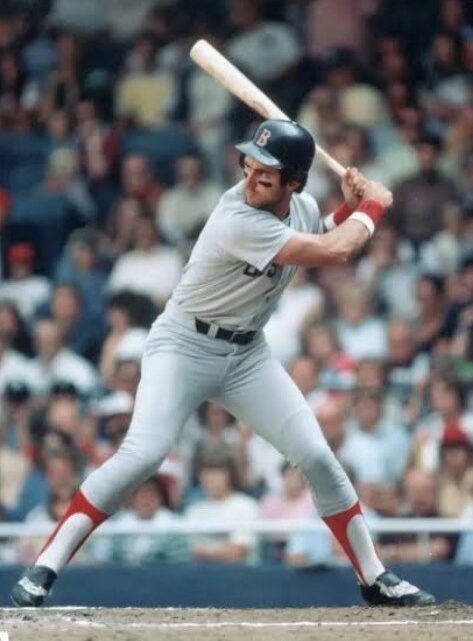
Fred Lynn Deserves Additional Hall of Fame Consideration
It was 1973 in Bristol, Connecticut. Two outfielders from vastly different backgrounds got together to play for the Boston’s Double-A affiliate. The next year they teamed up in Pawtucket, the club’s Triple-A team. So, for those following the Red Sox closely in the mid-70s, it was not a shock when the “Gold Dust Twins” took their respective positions in the outfield at Fenway Park to start the 1975 season (to be precise, they didn’t play at home until the third game of the season, after playing the first two in Baltimore).
Fred Lynn grew up in Southern California, and played collegiately at USC. He spurned the Yankees when they drafted him in the third round in 1970, signing with Boston after being drafted in the second round in 1973.
Boston selected Jim Rice with the 15th pick in the 1971 draft out of Hanna High School in Anderson, South Carolina. He played in the New York Penn League as an 18-year old, then in Winterhaven in 1972. Rice actually started the 1973 season in Triple-A, but was demoted to Bristol after ten games despite slashing .378/.425/.757 in that short span of time.
When Rice arrived in Bristol, he was paired up with Lynn, and it would remain that way for the next nine years, until Lynn was traded away to the (then) California Angels.
Both Lynn and Rice got cups of coffee with the Red Sox at the end of the 1974 season, playing in 15 and 24 games, respectively. Lynn collected 18 hits in 43 at-bats, while Rice got the same number of hits over 67 at-bats.
In 1975, Rice, playing left field, slashed .309/.350/.491, with 22 home runs and 102 RBI. To his left, playing centerfield, Lynn slashed .331/.401/.566, with 21 homers and 105 RBI. Lynn was an All-Star, won a Gold Glove, won Rookie of the Year, and was named the American League MVP. Rice came in second in Rookie of the Year and third in MVP voting. The future in the Back Bay was bright.
Rice was an All-Star eight times, won an MVP award in 1978*, and was top-five in MVP voting four more times in his sixteen year career.
*In 1978, Rice led the league in: bWAR (7.6), games played (163), plate appearances (746), at-bats (677), hits (213), triples (15), home runs (46), RBI (139), slugging percentage (.600), OPS (.970), OPS+ (157), and total bases (406). Rare has been a player been more deserving of an MVP award.
Lynn was an All-Star eight more times, over the course of the next eight seasons. He had one more top-five MVP year (fourth place in 1979), but didn’t truly do anything of note after 1983. That said, starting in 1983, he was still a high-quality ballplayer, with an OPS+ above 100 every season from 1984 through 1988, falling to 99 in his penultimate season, 1989.
Lynn’s reputation became that of an injury-prone player who could not stay on the field. Nicknamed “Fragile Freddy” by the Boston press, he played all-out and often suffered the consequences. From 1980 through 1990, he averaged just 114 game per season, but still had a 121 OPS+ for that decade-plus. Ironically, over roughly the same period, Rice – not labeled injury-prone – averaged just 129 games per season, with a 120 OPS+.
In 2009, on his fifteenth (and last) appearance on the ballot (this was reduced to ten years in 2015), Jim Rice was elected to the Hall of Fame. By contrast, Lynn got 5.5% of the vote in his first year of eligibility (1996), and then fell off the ballot the following year when he received only 4.7% (a player needs at least 5% to roll over to the next year’s ballot).
But when you look at these players side-by-side, they look a heck of a lot more similar than you might imagine. Where Rice outpaces Lynn, it is just by a hair.
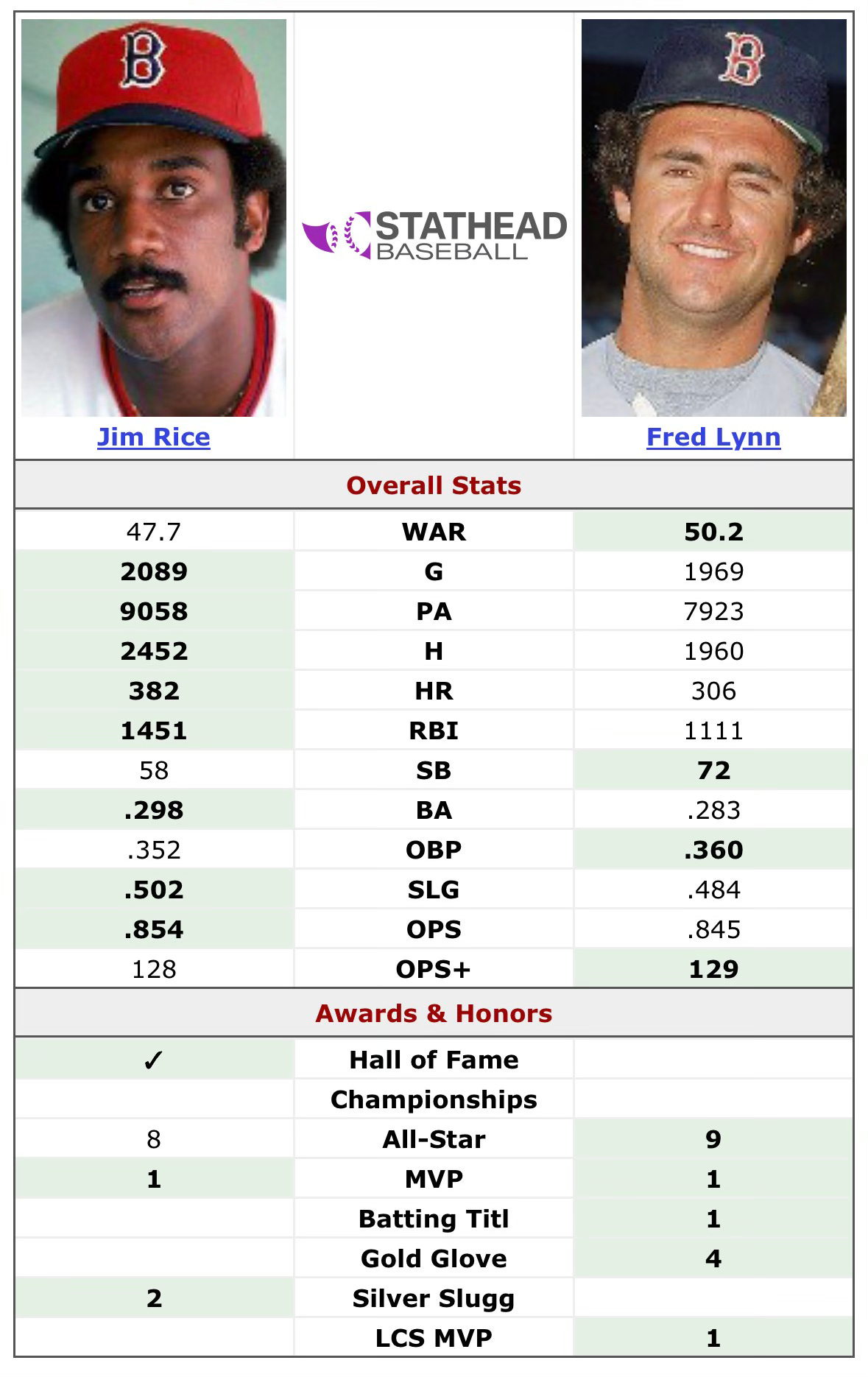
Should Fred Lynn be in the Hall of Fame? Was his candidacy given short shrift by the votes? Should a future Contemporary Baseball Era Committee give Lynn another look? All fair questions. If Jim Rice is the barometer, I think the answer to the last question is most certainly yes.
PLAY BALL!!
