Fathers & Sons

When I first walked through the gates of Sancet Field (now Stadium) at the University of Arizona, my eyes were immediately drawn to center field. Shagging fly balls out there was the best baseball player I had ever seen. He wasn’t huge (5’11”, 195 pounds), but he was so smooth. He tracked down every line drive, had a cannon attached to his shoulder, and hit the ball a country mile. Little did I know that that guy was the son of former big leaguer Clyde Mashore, who played five years in the National League in the ‘70s, finishing with -1.7 of total bWAR. My new college teammate (however temporarily) was Damon Mashore, who made it to “The Show,” played three seasons, and ended his career in 1998 with a total of .5 bWAR. Advantage: Son.

In Joe Posnanski’s fantastic book, The Soul of Baseball, the late, great Buck O’Neil had the following soliloquy: “Why do you think there are so many fathers and sons in the game? Maybe it’s because baseball is a sport you hand down to your kids. Does a father teach his son how to be a running back? No, see, that’s instinct. Everybody runs with their own style. Does a father teach his son how to play basketball? Maybe, there are a few fathers and sons in basketball, right? But it’s not the same thing. In baseball, you play catch with your son. You teach him how to hold a bat, how to swing it, how to get under a pop-up, how to throw to the right base. You teach him how to run the bases. You teach him how to run back on a ball over his head. You teach him how to throw a curveball. In baseball, you pass along wisdom, like your father did for you in your backyard.”

With apologies to Helen Callaghan, baseball is a sport of fathers and sons. So, in honor of Father’s Day and in keeping with Buck O’Neil’s brilliant insights, let’s take a look at some other apples that have fallen from trees.

Per CBS Sports:

  • There are 240 father-son combinations to have reached the big leagues.
  • There are 46 active second-generation players.
  • Five families have produced third-generation players: the Bells (Gus, Buddy, David, and Mike), the Boones (Ray, Bob, Bret, and Aaron), the Colemans (Joe, Joe Jr., and Casey), the Hairstons (Sammy, Jerry, Johnny, Jerry Jr., and Scott), and the Schofield/Werths (Ducky Schofield, Dick Schofield, and Jayson Werth).

And when Bret Boone’s son, Jake, was taken in last year’s draft by the Washington Nationals, we were given a puncher’s chance of seeing our first fourth-generation player. Suffice it to say, one (but certainly not the only) prerequisite to becoming a Major League player is having a father who did so.

That in itself is not that interesting. What is interesting is that in lineups all across the big leagues you can find the name of a second-generation player who is markedly better than his father. And, when you include two Hall of Famers in the mix, that is high praise indeed. Here is just a handful of these comparisons (all statistics current through June 17th):

Fernando & Fernando, Jr. Tatis: I am not sure we even need to do this analysis. Senior had a fine 11-year career, finishing with 6.4 bWAR. But, if he hadn’t hit two grand slams in a single inning at Dodger Stadium in 1999, we probably wouldn’t know too much about him. Now he is best known for rearing his namesake. Junior is one of (if not the) most exciting players in the game today. He is a five-tool star who does everything better than nearly everyone else. If he can avoid injuries (a valid concern), he is on his way to living up to his $324M contract and possibly to Cooperstown. Sure, that is a long way off; but, in 2.5 seasons he already has 10.1 bWAR, 50% more than dad. Senior may get the biggest piece of chicken, but Junior gets the biggest applause.

Vladimir & Vladimir, Jr. Guerrero: This one is the most fascinating of the father-son combos. Vladdy had a historic career. Over 16 seasons he collected 2590 hits, slugged 449 home runs, knocked in 1496, had an OPS of .931, and ended with 59.5 bWAR. He was elected to the Hall of Fame in 2018 with 92.9% of the vote. And yet, Vladito may be better (but not quite yet). The son learned to control the strike zone (“do as I say, not as I do”), hits the ball harder and more consistently than dad, and is off to an incredible start. But at similar places in their careers, dad still outpaces son in nearly all metrics:


  G H R HR BB SO
Vlad 258 305 154 50 61 137
Jr. 250 266 137 46 107 174


That said, take a look at this from MLB’s Instagram account:

Dante & Bo Bichette: You will recall that Dante had a great career as part of the Blake Street Bombers in the thin air at Coors Field. He started with the Angels and then moved to Milwaukee before landing in Denver. He rounded out his tenure with Toronto, Cincinnati, and Boston, compiling 274 home runs, an .835 OPS, and 107 OPS+, with 5.6 career bWAR.

Those are fine numbers, and it was a fine career. But if we just look at his and his son Bo’s first chunk of time, we will see how much better the fils is than the père.


  G H R HR BB SO
Dante 178 130 54 18 22 110
Bo 142 176 107 30 37 148


Craig & Cavan Biggio: Craig was elected into HOF in 2015. He is clearly one of the best to ever play the game. As such, he left his son, Cavan, with huge shoes to fill. As such, Cavan may be the one kid on this list who doesn’t surpass his father in either skills or (ultimate) stats. Craig came up as a catcher, moved to centerfield, and landed at second base. Cavan is also a bit of Swiss Army knife, playing second, third, and a little outfield, and has actually gotten off to a better start to his career than his dad. But he has a long way – any many hit-by-pitches – to go before he can carry dad’s jock. Considering where they started, it will be interesting to see where they finish:


  G H R HR BB SO
Craig 184 140 78 16 56 93
Cavan 205 172 125 30 135 235


One additional note about the above three from Jayson Stark’s “Weird and Wild” column in The Athletic: Last weekend, all three players, all three sons of former big leaguers, hit home runs at Fenway Park two games in a row. That has never happened before.

Clay & Cody Bellinger: Clay Bellinger had an unremarkable four-year career. But, hey, he was a big leaguer. His best contribution may have been passing his DNA to his son Cody. Since Clay only played four years, let’s take a look at Cody’s first four years (which combines the 60-game 2020 and the 16 he has played to date in 2021):


  G H R HR BB SO
Clay 183 60 57 12 22 82
Cody 522 508 337 124 267 466


If Cody doesn’t play another MLB game, he has already won a Rookie of the Year, an MVP, and a World Series. It is already clear that Cody > Clay.

Charlie & Ke’Bryan Hayes: This one may be too soon to tell, but we can make an educated guess. Charlie had a very nice career, culminating with his squeezing the last out of the 1996 World Series. Over 14 years, he collected 1379 hits, 144 of which left the yard, and accumulated 10.5 bWAR.

Ke’Bryan is the top prospect in the Pirates organization, may soon be deemed the best defensive third baseman in baseball, and hits like a mule kicks. Putting aside his lack of understanding that you must step on all of the bases when you hit one over the fence, his career looks awfully bright, and it seems he may pass papa in no time flat.

Raúl & Adalberto Mondesi: One might claim this one is too soon to tell, but I think it is safe to say that dad will have bragging rights at Thanksgiving. Raúl played 13 years, hit 271 home runs, and threw runners out with abandon. He finished his career with 29.5 bWAR.

Adalberto is a middle infielder with not much pop (35 dingers over six seasons), not much contact (359 Ks in 1200 plate appearances with 30% K-rate), not much selection (4.2% BB-rate), and a .709 OPS. If you doubled Adalberto’s career and got him to 12 seasons, he would be WAY short of his dad’s ultimate numbers. I guess, theoretically, Adalberto’s 13th season could be Mike Trout-ish and get him the win in the last furlong, but I wouldn’t bet on it.

Bobby & Bobby, Jr. Witt: This one is truly too soon to know, but you know. Putting aside the difficulty in comparing pitchers and hitters, we are stymied by the fact that Junior has yet to reach the majors (despite having an incredible spring training and tantalizing the people in Kansas City). Bobby played with eight teams over 16 seasons, collected 142 wins against 157 losses (if you are into that type of thing), with a 4.83 ERA and a 1.569 WHIP. He ended with 14.6 bWAR. If Bobby, Jr. lives up to even half the hype, he will pass Senior in his third or fourth big league season.

As you may have guessed, there are many more former fathers and current sons we could compare, including the McCullers (Lance & Lance, Jr.), the Pedersons (Stu & Joc), the Brantleys (Mickey & Michael), the Bedrosians (Steve & Cam), the Quantrills (Paul & Cal), and the Shaws (Jeff & Travis). But the players listed above are a great cross-section of the current crop of kids, most of whom are boat-racing the men who taught them the game.

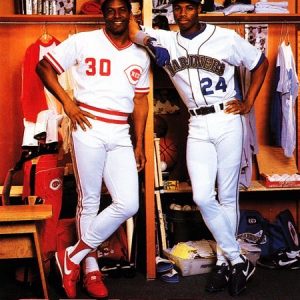
However, regardless of how many records they set or how much money they make, my guess is that they will all live by Ken Griffey, Jr.’s credo: Dad still pays.

Have a wonderful Father’s Day. Grab your pops, or grab your son, or grab them both, and…

PLAY BALL!!
When Playing Politics, Play to Win

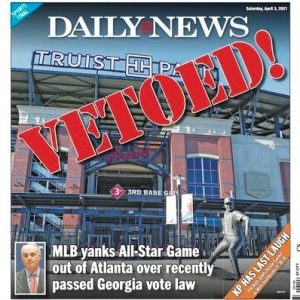
Much has been written, including by my IBWAA colleague Dan Schlossberg, about Rob Manfred’s (unilateral?) decision to move the 2021 All-Star Game from Cobb County, Georgia (it is important to note that the Braves technically do not play in Atlanta) to Denver, Colorado due to Georgia’s new election law. MLB issued a statement saying that this was “the best way to demonstrate our values as a sport.”

More than 200 companies, including Coke, Delta, Apple, and Microsoft have spoken out about the bill and voting rights in general. And, in response, politicians from Marco Rubio to Ted Cruz to Greg Abbott have weighed in, with Mitch McConnell saying that corporations have “the right to participate in the political process [but should] stay out of politics.” Said differently, please keep those sweet corporate donations coming, but please keep your corporate mouths shut.

Our former president jumped into the fray – why wouldn’t he after suggesting that fans boycott football (and a whole host of other companies, products, channels, shows, etc.) – stating, “I would say boycott baseball, why not? I think what they did was a terrible thing.”

In lieu of (or in addition to) a boycott, a handful of congresspersons introduced legislation to strip MLB of its antitrust exemption. We can debate whether or not such an exemption should remain in effect, but what is perfectly clear is that it should not be removed as retribution for a disliked business decision.

These elected officials are doing a lot of pearl clutching about a major sports league wading into the political sphere. These are the same pearls that were clutched when NFL players kneeled for the national anthem, or when WNBA stars wore Raphael Warnock t-shirts, or when the NBA elected not to play after the death of Jacob Blake. But none of these people seemed to have an issue with military flyovers or President Bush throwing out the first pitch in the 2001 World Series, or any of the other countless political events that take place in ballparks and arenas and stadiums each and every year. And, as Howard Bryant rightly pointed out: “For people upset about sports applying political pressure on states, it appears they’ve forgotten the only reason Atlanta even has a baseball team is because in 1965 the city agreed to integrate seating at Fulton County Stadium as a condition for the Milwaukee Braves to move.”

But Manfred’s decision struck a nerve because it went right to the heart of the political process and the means and methods people use the same to get elected. I am not here to opine about the virtues or iniquities of the law, other than to say that the dialogue about it in the media and elsewhere has been misguided, focusing on prior versions of the legislation as well as the wrong aspects of it. The discourse has been exaggerated (at best), and outright wrong (at worst). Those failures – as well as the failures in the law itself – seem to be easily correctable, however.

But claiming sports and politics should not mix is a fool’s errand, a naïve desire, and a willful evasion of the world in which we live. And it is through that lens that I view Manfred’s decision to move the game. I believe that Manfred felt he had no choice. As has been pointed out by Buster Olney and others, if Manfred elected to keep the game in Georgia, this would have been a topic of conversation every day from now until July. Players would have been asked about it, throwing them – oftentimes unwillingly – into a political scrum. This had the potential to splinter clubhouses, forcing players to make what could and would be viewed as a political decision if/when they were given the honor of being an “All-Star.” Some guys just want to play ball.

Further, I am certain Manfred envisioned a scenario in which one or two players elected to forego the game, and then many more followed suit. And, of course, there is the issue of sponsors withdrawing their financial and cultural support for both the game and “the game.” And, as Schlossberg pointed out in his article, Dave Roberts’ ambivalence about managing the NL squad must have had some impact on the Commissioner’s final verdict. If I were sitting in Manfred’s gilded chair, I would fear that I might ultimately be required to cancel the All-Star Game, which would be a blemish considerably harder to erase than letting one end in a tie.

It has been reported that some owners wanted more input. But from my cynical perspective, they less wanted a seat at the table, and more wanted to delay the decision until it was too late, until it was economically and practically unfeasible to actually move the game. And, if for whatever reason, the game was eventually canceled, it would not be the owners’ fault – they would hang the whole mess around Manfred’s neck. They would disclaim any responsibility, and attempt to claim the high ground with their players, sponsors, and communities.

Again, it is easy to see why Manfred did what he did when he did it. But, that resolution seems a bit facile to me.

There is no doubt that this whole situation is fraught. And there is no doubt that politics and race have butted their way into the national pastime in a way that neither fans nor players nor owners nor the Commissioner would have ever wanted. But complaining and being outraged and calling for boycotts are all now competing to become the national pastime. And I firmly believe that some of that could have been avoided by doing the hard thing, by keeping the game in Georgia, and by having a plan.

Had Manfred taken a beat, gathered some very smart, very capable, very experienced, people in a room and given them twenty-four hours to come up with a list of ways to make this work – had he considered it less from a public relations perspective and more a human relations perspective – he may have come to a different conclusion. He may have determined that as much good could come from keeping the game in Georgia as moving it.

If it were me, and I were making $11,000,000 per year to be the leader of a $10B industry and 30 oftentimes self-interested billionaires (actually only 23 billionaires, and 7 hundred millionaires, but let’s not quibble) of various political leanings, I would have come up with a different solution.

To start, I would have gathered Stacey Abrams, Curtis Granderson, and Hank Aaron’s family to issue a statement denouncing – with specificity – the new Georgia voting law. I wouldn’t have relied on Democratic talking points or an early version of the bill. I would have quoted non-partisan election experts to explain – in clear and simple language – how and why this new law is intended to and will disenfranchise people of color.

Next, I would have laid out a comprehensive plan of how MLB intends to use All-Star week to highlight the inequities of voting laws, not just in Georgia, but across the country. This would include setting up voter registration events in Atlanta, at Truist Park, and at every MLB stadium each day of the All-Star break (utilizing the same infrastructure that made NBA arenas voting locations, and MLB parks Covid testing/vaccination sites).

And then I would re-affirm MLB’s plans to honor the late, great Henry Aaron at this year’s game. But, I would make it perfectly clear that MLB is going to focus on all of Hank’s on-field achievements as well as his civil rights advocacy. And, if they were willing to do so, I would ask Hank’s family to come on the field before the game and read a statement about his activism and how Hank would view the current state of race relations and civil rights in this country.

Lastly, I would use my power as the Commissioner of Baseball to pressure each team to make hefty donations to organizations dedicated to advocating for stronger and more equitable voting rights. And then I would commit MLB to match those donations. Utilizing my bully pulpit at the annual State of the State press conference, I would further explain how and why keeping the game in Georgia, and all of the social justice events around the event, have been a net positive; and how MLB strives to be and continues to be a leader in making positive change in communities across the country.

From my perspective, doing those thing would actually “demonstrate our values as a sport.”

But hey, that’s just me.

On Opening Day Manfred told ESPN he wasn’t moving the game. By the next day, he said he was. What happened in-between is anyone’s guess. But based on what Stacey Abrams, Jon Ossoff, and Raphael Warnock had to say about the decision, I feel confident that none of them were included in the deliberations. Manfred played politics, but he didn’t play to win. And, as a result, businesses and workers and fans in Fulton and Cobb counties, and the civic engagement of the country, all lost.

PLAY BALL!!

Mixed Emotions

I first visited Fenway Park in 1978, and so began my love for the Boston Red Sox. In those heady years, I was too young to read the box scores, and even with an outfield of Rice, Lynn, and Evans, I didn’t have a favorite player. Yaz may have come close.

I really became interested in baseball in the mid-‘80s, at which point I was following Wade Boggs and Roger Clemens, and for some reason, Marty Barrett. Mike Greenwell, begat Mo Vaughn, who begat Nomah, who begat Varitek, who begat, pound-for-pound, the best pitcher of all time: Pedro. But it was in 2004, oh that magical year of 2004, that I finally landed on my favorite player. How could you not love David “Big Papi” Ortiz? He was everything you wanted in a star – the charisma, the smile, the clutch hits, and, of course, the hugs. He carried the team on his back, and he had a blast doing it. Even as Dustin Pedroia, Jon Lester, and Mike Lowell got headlines, Papi remained my guy. Ortiz brought the “fucking city” together in 2013, and led the Red Sox to another improbable World Series title.

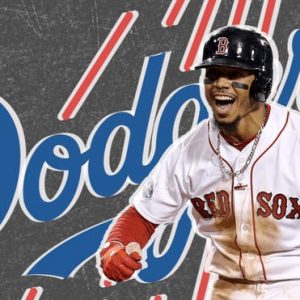
This is all a long way of saying that my personal die was already cast when Mookie Betts arrived in 2014. He is an electric player; he carries all five tools on his slight shoulders, has had five straight top-10 MVP seasons (including winning it in 2018), five straight Gold Gloves, has won four Silver Sluggers, and owns two rings in two cities in the last three years. He is a 300-bowler, and feeds the homeless when no one is looking. He checks every “favorite player” box, and yet he wasn’t my A-Number One; that spot is reserved for Papi. So when the Red Sox traded Mookie to the Los Angeles Dodgers before the 2020 season, I was quite sad, but not crushed. As I have previously written, I actually agreed with the team’s decision. But I cannot imagine a world in which Ortiz ever wore another uniform.

My family moved to the West Coast in 1979, and I started going to Dodger Stadium in 1980. It was an embarrassment of riches in those years. We had “Fernandomania” and an infield of 30-HR hitters. We had the antics and clutch pinch-hitting of the recently passed Jay Johnstone. We had the pride of San Pedro De Macoris: Pedro Guerrero (and if you grew up in L.A., you can hear Vin Scully saying those words as you read them here).

As the decade wore on, we had Sax and Hershiser and Gibby. Mickey Hatcher took over where Johnstone left off. And then Mike Piazza, a 62nd round draft pick, who took the league by storm. And, of course, there was Tommy. But none of these men were ever “my guy.” It took nearly another two decades of living here and going to games to find that one player. And, ironically, it started in a ballpark 70 miles north of Dodger Stadium, while this guy was playing in Single-A for the Astros. I wrote all about that here.

But when Enrique (“Kiké”) Hernández joined the Dodgers in 2015 from the Marlins, I had “my guy.” And how could you not a love an undersized overachiever who played every position (save for catcher, but not for lack of trying), hit in the clutch, and made having fun Job #1?

While that 2015 season was Kiké’s high-water mark for batting average (.307), he later hit 24 dingers in 2018 and knocked in 64 runs in 2019. But it was in the postseason when he shined the brightest. Check out these stats of a guy who never had an appointed place in the lineup, was rarely used against righties, and never knew – day to day – when or where he would play:

2015 NLDS: .308/.400/.308

2017 NLDS: .333/.500/.667

2017 NLCS: .444/.545/1.444

2019 NLDS: .429/.500/1.000

2020 NLCS: .308/.357/.769

But you can throw all of those stats away and just look at Game 5 of the 2017 NLCS and Game 7 of the 2020 NLCS. In the former, Kiké went yard three times at Wrigley Field to help propel the Boys in Blue to the World Series and raise $2,000,000 for the people of his native Puerto Rico. In the latter, he tied the game in the bottom of the 6th inning, giving the Dodgers new life, and setting the stage for Cody Bellinger’s 7th inning home run that provided the pennant-winning margin of victory.

But you can throw all of those clutch hits away and just remember Kiké sitting in the dugout in a banana costume – on the orders of Andrew Friedman – to help the Dodgers win an extra-inning affair against the rival San Francisco Giants.

In 2019, MLB came out with the “Let the Kids Play” motto. They shot a commercial with eleven players on the dais, including Mike Trout, Christian Yelich, Francisco Lindor, Aaron Judge, Giancarlo Stanton, and Ronald Acuña Jr. From my perspective, Kiké Hernández was an obvious oversight. He personifies the “let the kids play” mantra, and it is hard to find anyone having more fun and getting more from his G-d-given talent than Mr. Hernández.

So, when Kiké entered the free agent market after the World Series, I held out hope that the Dodgers would re-sign him, and that my season tickets would allow me to watch another few years of my favorite player (fans in the park permitting). But as the offseason wore on, it became ever more clear that the Dodgers had no designs on retaining Hernández. If one man’s trash is another man’s treasure, it was to my great delight that my beloved Red Sox reeled in Kiké. He got the two-year deal I had hoped for him; he took Nomar’s number, and it would seem he has finally found an everyday position, filling the rather large (metaphorically only) shoes left by Dustin Pedroia’s retirement.

Gordon Gekko once said: “Mixed emotions…like Larry Wildman going off a cliff in my new Maserati.” That is how I feel. Forty years of going to Chavez Ravine, and for the last half-decade I had my favorite player. And now he is gone. Gone 3,000 miles away, but gone to my favorite team. Having Mookie here on a career-ending deal softens the blow, but I would be lying if I said that Dodger Stadium will be a little less colorful, a little less joyful, a little less fun, without the Banana Man sliding and diving and jumping for joy. Consider me dubious, but I don’t think Trevor Bauer can fill that role or that hole – either on the field or in the clubhouse.

The people of Los Angeles will miss Kiké more than he can possibly appreciate. The analytics may say that players like him are easy to find and replace, that a guy with no specific position and who averages 1.5 bWAR/year isn’t that valuable. This is where the newfangled baseball analysis falls short.

Kiké is more than any numbers on the back of his baseball card or on any quant’s spreadsheet. He is the personification of what we want to watch and root for, and what we want our kids to aspire to be. He is a grown man playing a kids game with the exuberance of youth. You can tell he takes nothing for granted and appreciates the sport, his teammates, and most especially, the fans. So I will take solace in the fact that while I can no longer watch Kiké Hernández in person every day, I can still root for him and know that his special skill set is bringing joy to the people of Boston.

Mixed emotions indeed.

PLAY BALL!!

The Joys (and Memories) of Youth Baseball

According to USA Today, more than 25 million kids played baseball or softball in 2018. The number of kids enrolled in Little League and Pony League has actually been trending up over the past few years while overall youth participation in all sports has remained relatively static. That is great news for the future of baseball. Many boys and girls are getting the opportunity to learn the game, to love the game, and to make lifelong friends. And that last part may be the most important.

Earlier this year, one of my lifelong friends (starting from my time in Pony League) passed away. Last week there was a celebration of his life, and so many of those old baseball friends appeared on my computer screen, telling stories of times long ago. Unfortunately, I have lost touch with many of these guys over the last thirty-plus years, but hearing their voices and being reminded of old stories, I realized that while much has changed, much remains the same. I was instantly brought back to my childhood. The bonds that formed while breaking in a new, stiff Rawlings remain solid after all these years.

Molly Knight recently published a two-part interview with Clayton Kershaw in The Athletic. She, of course, asked him about his childhood friend, his former Little League teammate, Matthew Stafford, coming to Los Angeles to play for the Rams. Kershaw referenced how he has been a Lions fan for years, rooting on his old buddy, but now he can direct his excitement to the Los Angeles team. It will be just like they did so many years ago. One wonders if that friendship would have formed without Little League baseball.

Clayton Kershaw and Matthew Stafford: The Wonder Years | Bleacher Report | Latest News, Videos and Highlights

There are a great many MLB players who excelled in Little League, including Cody Bellinger, Randal Grichuk, Lance Lynn, and Todd Frazier. Hell, Jason Varitek and Michael Conforto played in the Little League World Series, the College World Series, and the World Series. But the better question is whom they all met along the way, and how close those friends are today?

During my friend’s memorial service, one of the speakers told a story of driving with the deceased from Boston to Philadelphia after watching another one of our Pony League buddies strap on the tools of ignorance at Fenway Park. The guys were on their way to Citizens Bank Park to watch our friend play some home games. That was just one of many such anecdotes. These are friendships forged through long days on freshly cut grass, followed by cheap pizza, pitchers of soda, and Thrifty ice cream cones. Friendships made early in life that stuck through adolescence, high school, the minors, and all the way to the big leagues.

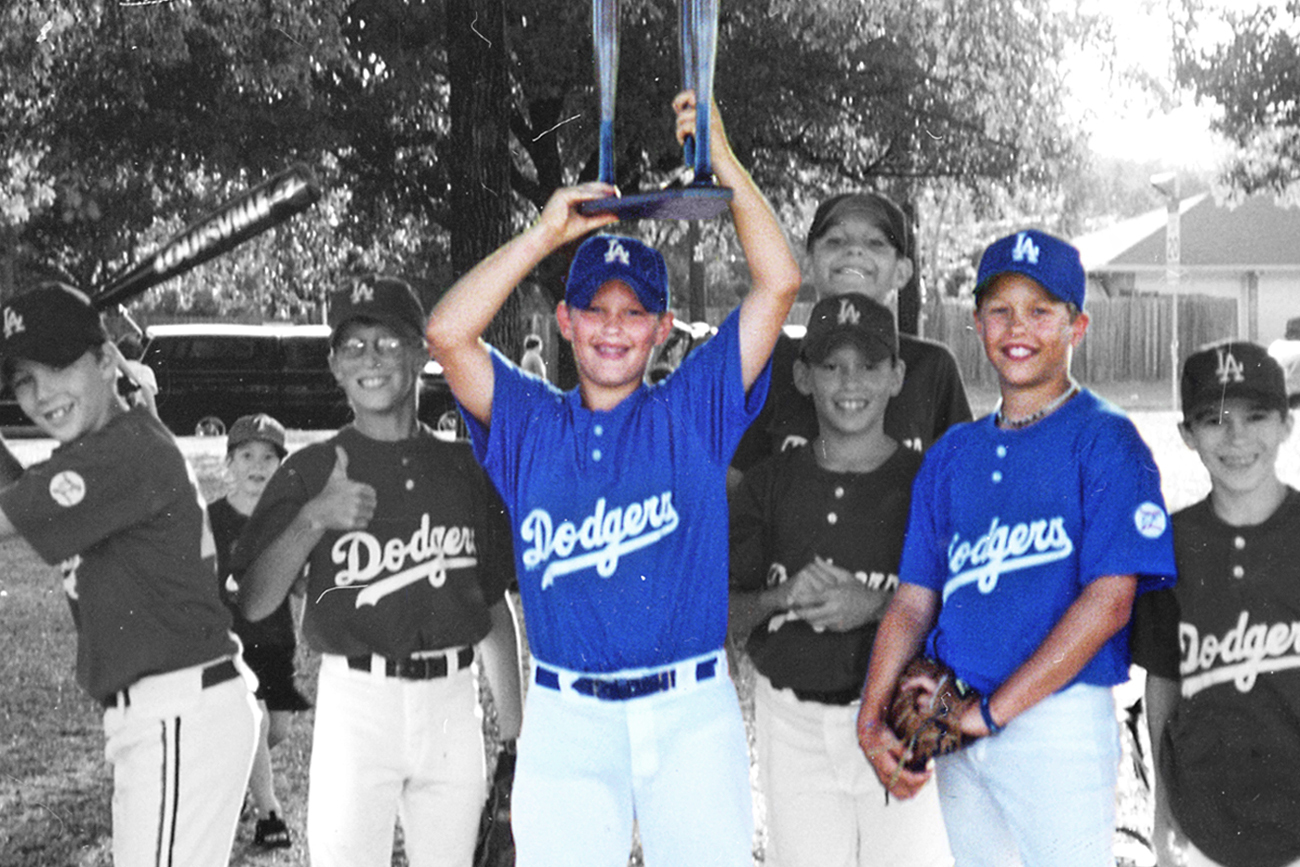
Last week my son, who is preparing to leave for college in the fall, got together with three of his Little League buddies. They go to different high schools and have gone their separate ways in the past few years. But it took all of about ten seconds for them to fall back into their old ways; reliving their “glory days,” talking about their long afternoons hanging out at the Little League park watching their friends play, eating burgers, chasing foul balls, and living their best pre-teen lives. I have no doubt that their futures will be filled with similar road trip tales.

Whether it was my son coming home with a smile on his face, or old friends recalling memories with tears in their eyes, it is the friendships formed on ball fields across this great land that are built to last – regardless of where adult duties and responsibilities take us.

With strict Covid protocols in place, it seems that Pony League and Little League baseball will be played this spring. According to littleleague.org, the Little League World Series is tentatively scheduled for August 19-29. For countless reasons, we must have youth baseball this year. Kids need to let the horsehide fly and feel that leather on their palms; they need to hear the ping of their bats and the smell of the grass. They need to run around the bases and around their local sports complexes. They need to play ball games and get game balls. They need to eat at least two meals per weekend at the snack shack, and to form friendships that will last a lifetime. I know that I sure did.

PLAY BALL!!

Through the Looking Glass

When I was six years old, I MC’d my elementary school’s production of “Alice in Wonderland.” Memory does not serve if I was afforded that lofty position because I could neither sing nor act, but if the current state of affairs is any marker, both of those analyses would ultimately be proven correct. In any event, and with apologies to Johnny Depp, Tim Burton, and, of course, Lewis Carroll, I don’t think any of them could have imagined the upside down world in which we are currently living.

To wit, for some reason, having the ability to speak on the floor of the U.S. House of Representatives and consistently having conservative voices be the top ten most engaged posts on Facebook means Big Tech is shutting you down and your First Amendment rights are being thwarted. For reasons that I cannot fully appreciate, wanting the free market (not the government) make decisions means that the government should compel private companies like Twitter and the aforementioned Facebook to allow individuals to say what they want, when they want, to whomever they want. Even with a law school degree, I don’t truly understand how strict constructionists believe that the Constitution applies to non-state actors, but I guess I am just not fully enlightened.

That is why, in some people’s minds, it makes perfect sense to claim fraud against one side, all the while demanding, cajoling, and coercing others to “find” votes for themselves. Or claiming holding one accountable for their actions isn’t a show of “unity,” but claiming the other side “stole” an election is? I just feel like I am back in the North Stratfield Elementary School multi-purpose room all over again, living in a world where left is right, right is wrong, and you cannot believe what you read, because you can only believe what you hear, unless what you hear (e.g., rioters stating: “Trump said to do so”) doesn’t comport with what you want to believe (it was Antifa conducting a false flag operation), so then you just go back to believing whatever it is you want to believe.

Which brings us to one Curtis Montague Schilling. That wind chime you hear in your backyard is from the collective sigh of relief from members of the BBWA whose votes didn’t reach 75% for Schilling earlier this week. Thus they don’t have to permanently regret voting for someone who sympathizes with Nazis and insurrectionists (although, to be fair, if it took the events of post-January 6th to get you off the Schilling bandwagon, maybe you don’t deserve said sigh of relief).

After falling 16 votes shy of induction on this year’s ballot, Schilling penned a lengthy note to the Hall of Fame, which he then posted on Facebook. In it, Schilling extols his many and varied virtues, and conveniently forgets about his many sins. I guess that is normal and typical PR spin. But where this gets all Through the Looking Glass is with regard to specifics.

Based on his letter, Schilling has a great relationship with the Hall of Fame. But they – for reasons that don’t make a whole lot of sense – have nothing to do with the HOF voting. That is the BBWA. And the BBWA, as you know, is made up of writers. And 71% of those BBWA writers thought Schilling was worthy of HOF induction. And yet, when discussing what has been written about him in the past, Schilling claims that “nothing, zero, none of the claims being made by any of the writers hold merit.” Does that include those who voted for him? I am confused.

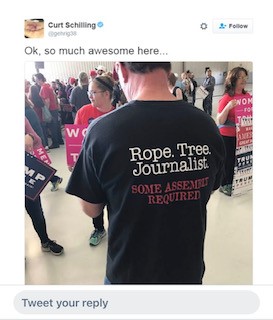
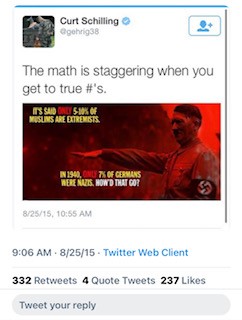
He states: “The media has created a Curt Schilling that does not and has never existed.” So, when a reporter reports on what Schilling said in an interview, or on his radio show, or what he tweeted, who is it that creating something? When you tweet this:


who is the creator? I just don’t understand. Reporters report. Sure, they have biases like the rest of us, but Schilling is and has been hoisted on his own petard, not some imaginary boogeyman the “press” created out of whole cloth because, to his thinking, they don’t like his politics (more about that below).

Schilling wrote: “I stood at my locker 400+ times after my starts and took every question and answered honestly.” Does doing your job (and admittedly, more openly and honestly than many other professional athletes) give you the right, the permission structure, to call them liars or advocate their death? Should writers just look past his violent rhetoric because he answered a handful of their questions?

Schilling accuses writers of deceit: “Those people who stood there asking the questions KNOW [his emphasis] what they are claiming is untrue yet they quote, re-quote and link to one another story after story that began as lies and grew into bigger ones.” If that is the case, if the writers “know” what they are writing and linking to are false, why hasn’t Schilling filed a defamation suit against any of them? If someone accused me of being a Nazi-lover, or a homophobe, or an insurrectionist, I would be shouting from the mountaintops and suing in courtrooms to get the record corrected. All Schilling has done is confirmed the stories with his big mouth and his twitchy thumbs.

Schilling claims what a great teammate he was (and, I have no doubt that is true). He talks of all the different types of people he has played with, including gays. If that isn’t the “I have many black/Jewish/gay friends” argument, I have no idea what is. I hate to deliver this piece of obvious news, but being a great teammate to a gay person does not give you license to be a homophobe.

Schilling feels he is being unfairly maligned and lumped in with cheaters or other scofflaws. I think he is (shockingly) being narrow-minded. Writers can hold two thoughts in their minds at once. They can choose not to vote for players for a multitude of reasons. It is highly likely that Clemens and Bonds are not in the HOF because of their respective PED allegations. And it is very possible that Omar Vizquel’s vote tally fell because of the domestic violence claims by his wife. And we can assume that Schilling has fallen short because he is an asshole.

In his letter to the HOF, Schilling points out all the humanitarian awards he has won, many of which were voted on by writers. “Do those awards and 22 years absent of a single validating event to support their claims define me?” he asks. Schilling is a bright guy. There is no world – outside of Wonderland – that he does not see that his words and actions over the past decade have had a deleterious effect on people’s view of him. Schilling wants his HOF election to be solely about his actions on the field: “I’ll defer to the veterans committee and men whose opinions actually matter and who are in a position to actually judge a player.” But it is those same players who have been exceedingly quiet in his defense. One might turn that deference on its head and ask: Do those players want to be lumped in with this particular reprobate who gets post-career attention being a right-wing troll and social media flamethrower? Do they want to share a stage with this man? Or a drink on the porch of the Otesaga? Do they want their HOF credentials tarnished by his admission? I don’t know the answer to these questions; and if he gets 16 additional votes next year, none of us ever will.

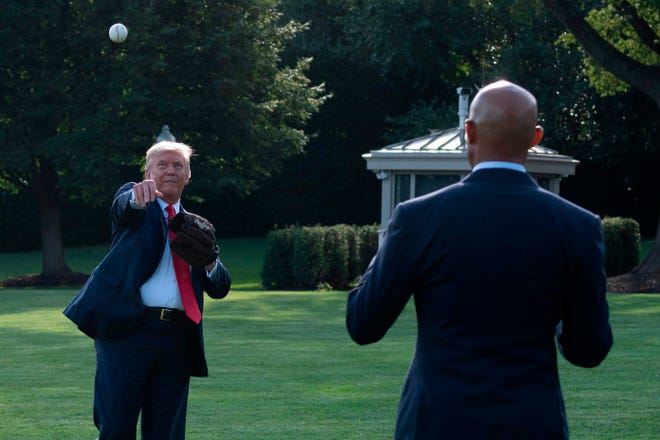
Schilling would have you believe that he has been excluded due to his conservative politics. He states – without any evidence, ahem – that most of the BBWA are “left-leaning.” If what he avers was true – that writers are lefties and won’t vote conservatives into the HOF – then the Hall would be a lonely place. Oh, and has been pointed out repeatedly, this guy got 100% of the votes a few years ago (the guy on the right, in case there was any confusion).

But, in the upside down world, Steve Carlton’s politics weren’t too conservative for the BBWA, but Schilling’s are?

I don’t – and won’t ever – have a vote for the Hall of Fame. But I am what some people call a “Big Hall” guy. It is a museum of the history of the game, and that history – warts and all – should be on display. And I find it a bit hypocritical to have Bonds, Clemens, and Pete Rose prominently displayed in exhibits upstairs, while refusing to give them plaques downstairs. As I have written before, I think these guys should get in on their merits, and then all the facts should be included on their plaque – not just their stats. Like “…In addition, Rose was banned from baseball for betting on Reds games when he was their manager.” Or “In addition, Bonds’ records are viewed as dubious due to his rumored use of performance-enhancing drugs throughout the second half of his career.” Schilling’s could say, “In addition, Schilling came under fire for his racist, homophobic, anti-democratic screeds after his career ended.”

But I would also add another wrinkle (Mina Kimes referenced part of this wrinkle the other day, and whenever you can be in the company of Mina Kimes, you are doing something right). Each ballot should have two boxes:

  • Induction
  • Induction Weekend

Writers would be able to vote for induction, but they could also vote to do so without the pomp and circumstance of induction weekend. The player doesn’t get the right to be on stage for the ceremony; and he doesn’t get the platform to spew anything. He doesn’t ride, go to the dinner, or hang out with the other players drinking scotch and reminiscing about the “glory days.” It will be confirmed that he is and was part of the fabric of baseball, and his career merits the honor of being in the Hall of Fame, but his actions – on and/or off the field – do not comport with what the Hall wants represented on their most hallowed weekend.

If we could do both – have the plaques state the whole truth and have the weekend not tarnished by their presence – I would vote for Rose, Bonds, Clemens, and maybe even Curt Schilling, to be inducted into the Hall of Fame.

But asking for that amount of change from two pretty stodgy organizations is something that could probably only happen to Alice, in Wonderland.

PLAY BALL!!

Feel-Good Stories

I’m a sucker for a feel-good story. Catch me watching any of those military parents-coming-home videos and I am sure to get misty. Show me Alex Smith battling back from near death to lead the Washington Football team, and something catches in my throat. So when a bunch of feel-good stories fall from the sky in a single week – all overcoming the same issue – I couldn’t help but notice.

And after the hell of this week (including the death of Don Sutton, The Hammer, and a lifelong friend), after the hell of the last few weeks, after the hell of the last year, after the hell of the last four years, we all need some feel-good stories. In the span of twenty-four hours, four individuals, all of whom have extremely different backgrounds and who vary in ages and skillsets, but all of whom share a trait with approximately three million other Americans, all had beautiful moments in the sun.

Here are my/our feel-good stories of the week:

GEORGE SPRINGER

Because I write about baseball, let’s start there. George Springer grew up in Connecticut, and dealt with a crippling stutter. In his words, it was “brutal,” as he sat in the back of class, afraid to raise his hand. He has previously stated it took him until age 24 or 25 to “embrace [the stutter]…I am who I am.” Springer is now the national spokesperson for SAY: The Stuttering Association for the Young. Each year the former World Series MVP hosts a bowling tournament to raise funds so that kids can attend Camp SAY, which is a summer camp for young people who stutter.

All eyes were on Springer this off-season, and not because of how he speaks, but because of how he hits, fields, and runs. As one of the top free agents available, many believed his deal would define the market. This week Springer decided to take his skills (and hopefully his philanthropy) north of the border, signing a 6/$150M deal with the Blue Jays (the first $100M+ deal of the off-season). It is hard to ever say any player is worth $150M, but when measuring a player’s contribution both on and off the field, it is equally hard to find anyone more worthy than George Springer. Good for him; and great for the people of Toronto.

BRAYDEN HARRINGTON

After meeting Joe Biden on the campaign trail last February and bonding with him over their respective stutters, young Brayden was called upon to give a short speech at the virtual 2020 Democratic National Convention. But Brayden wasn’t done. After the convention, he wrote a book to inspire other kids with speech impediments. And this week, as part of the inaugural celebration, Brayden – sporting a very dapper bowtie – read arguably the most famous passage from John F. Kennedy’s 1961 inaugural address to an audience of millions.

When (now) President Biden first met Brayden last year, he told him not to let his stutter “define him.” Through words both spoken and written by Brayden, I don’t think there is any chance of that.

AMANDA GORMAN

At around 12:30pm eastern time on January 20, 2021, the world fell in love with Amanda Gorman. Standing on the inaugural platform in her bright yellow coat and flaming red head band, this 22-year-old from Los Angeles took us all by storm with her words and her delivery. The first person to be named National Youth Poet Laureate finished writing her poem, “The Hill We Climb,” after rioters ransacked the Capitol on January 6th. Although she was not given any guidelines for the poem she was to deliver, when Amanda learned that the theme of the inauguration was “America United,” she knew what and how to write. And thus, to the assembled masses on the west side of the U.S. Capitol, and to millions more watching on television, the young woman recited a poem that included the following verse:

And so we lift our gaze, not to what stands between us, but what stands before us.

We close the divide because we know to put our future first, we must first put our differences aside.

We lay down our arms so we can reach out our arms to one another.

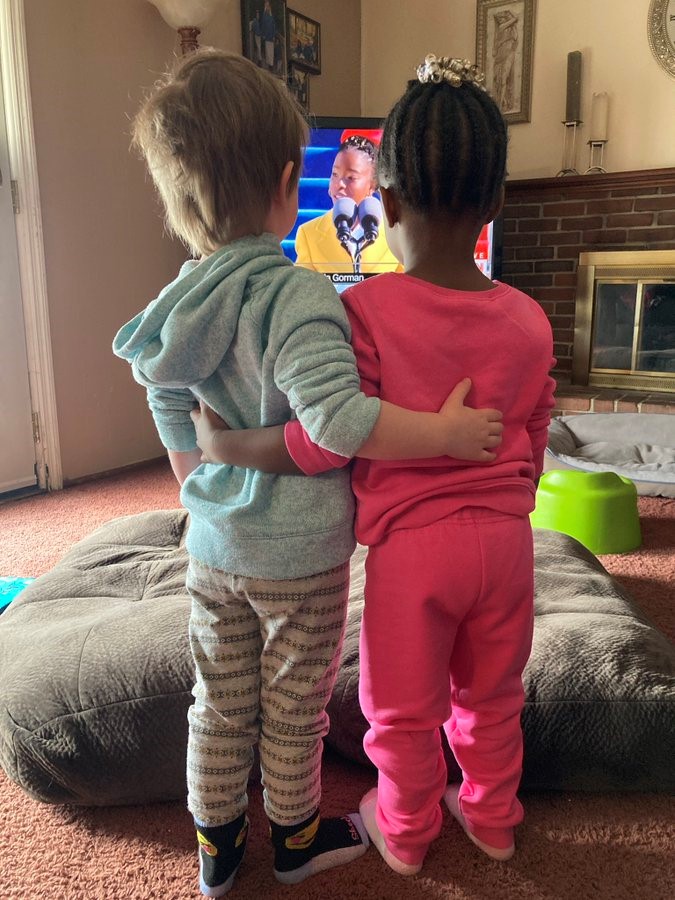
Amanda Gorman read such beauty into the world for nearly six minutes. She rose to the lectern after Lady Gaga, Jennifer Lopez, and the President of the United States, and no one would have ever known that she has an auditory processing disorder and a speech impediment, and that, until just a few years ago, she couldn’t pronounce the letter “R” sound. Her recital was one for the ages, and set an example for countless people about what is possible. I am not sure there is any image that more perfectly captures the import of her words than this:

JOE BIDEN

There isn’t really much more to add about the 46th President of the United States and his lifelong struggle to overcome a stutter. It is still noticeable at times, but that didn’t stop him from giving a 24-minute acceptance speech at the Democratic National Convention in August, nor did it keep him from delivering what Fox News anchor Chris Wallace called “the best inaugural I ever heard” on Wednesday afternoon.

It was Joe Biden who befriended Brayden Harrington, and it was Jill Biden – the First Lady and a 40-year school teacher – who first learned of Amanda Gorman. Although we are just a few days into the Biden Administration, it is not too soon to state with certainty that this White House will be a considerably more welcoming place to people of all stripes and obstacles than it has been for the last four years.

It seems we are constantly taking two steps forward, and one step back. But for a few hours this week, we were able to revel in the accomplishments of four people who overcame vocal barriers to find themselves at the top of their respective games and recipients of much-deserved adoration. That is something to celebrate.

Twenty-four days until pitchers and catchers report (theoretically).

PLAY BALL!

HOF Voting Ended One Week Too Early

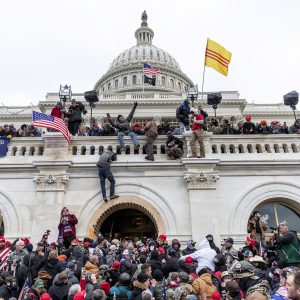
January 6, 2021 was an ignominious day in the history of this country. The President of the United States incited a riot in the people’s house in a hubristic and futile attempt to overturn the outcome of a free and fair election. While the size of the insurrection and the casualties and damage caused may not have been foreseen, the participants and their intent was clear from anyone with access to the Internet. One need not live on the deep web to have known what the President had in mind when he prompted his 88.7 million (former) Twitter followers with this exhortation: “Big protest in D.C. on January 6th. Be there, will be wild!” Or when he told a horde of masses that had gathered at The Ellipse that “we will never give up, never concede” and then directed them to march down to the Capitol to “show strength and…be strong.”

In the aftermath of the riot, Twitter (and various other platforms) denied Donald Trump service. Major corporations are refusing to endorse any politician who sought to undermine the election. And white supremacists, Proud Boys, and other miscreants all over the country are now finding themselves on the wrong end of law enforcement just days after they ran roughshod over the Capitol Police. It is clear – at least in the short run (we Americans tend to have very fleeting memories) – that the biggest losers of last Wednesday’s events were the soon-to-be ex-president, Josh Hawley, Ted Cruz, and the right-wing social media website Parler. And although there were no winners in the melee, there is someone who escaped the worst of its consequences.

Voting for the 2021 class of the Major League Baseball Hall of Fame ended on December 31st. As such, all ballots had to be submitted six days prior to the (attempted) coup. Six days before the Confederate flag was carried through the Rotunda. Six days before a man wearing a “Camp Auschwitz” sweatshirt and a man wearing a “SMWE” t-shirt strode through the halls of U.S. power without a care in the world. Six days before “Murder the Media” was scrawled on a door inside one of the most sacred buildings in the United States. In short, six days before any and all of these bilious acts would have, could have, (potentially) should have impacted the Hall of Fame candidacy of one Curtis Montague Schilling.

Over the past few years, Schilling – even more so than Roger Clemens and Barry Bonds – has become one of the most difficult Hall of Fame votes for members of the Baseball Writers Association of America. The PED candidates may be polarizing – did he or didn’t he? does it matter? – but Schilling has truly brought the rarely-ever-used-prior-to-Mark McGwire “character clause” into specific relief.

When Schilling’s name first appeared on the ballot in 2013, be received 38.8% of the vote (if I didn’t know better, I would think ol’ #38 pre-ordained that total). He fell to 29.2% the next year, bounced back to 39.2% the next, before jumping to 52.3% in 2016, slowly making his way to 70% last year. Schilling only has two more bites at the apple – this year and next – to get to the requisite 75%. But only one player in the history of HOF voting has ever received 70% of the vote with time remaining and not been inducted (don’t feel bad for Jim Bunning, he was later elected by the Veteran’s Committee).

It is possible that Schilling’s performance on the field is sufficient to move the needle despite his words and actions off of it. It is quite possible that his 11-2 playoff record, with a 2.23 ERA, 0.97 WHIP, and nearly 6-1 K-BB ratio, combined with four complete games, two shutouts, an NLCS MVP, a World Series MVP, and three rings to his name are enough to push him up and over 75% either this year or next.

It is possible that as the ranks of worthy names on the HOF ballot thinned, enough members of the BBWA would at last check the box next to Curt Schilling’s name.

It is possible that enough writers have taken issue with the selective and moralistic exercise of the “character clause” (that was hypocritically implemented by Kenesaw Mountain Landis, the racist former commissioner of baseball, who history now reviles to the point where his name has been taken off the MVP trophy) that they would hold their noses and vote for Schilling because he was one of the sport’s all-time great pitchers.

But, if Schilling’s name appears on at least 75% of the ballots this year, it just may be due to the luck of the calendar. If the BBWA required ballots to be submitted by, say, January 7th, I can imagine a drumbeat of writers chasing their mailman down the street like some rabid, remorseful, and regretful Orel Hershiser1, Bill Madlock2, or Greg Maddux3.

Just one week, that is all it would have taken. Does anyone honestly believe that with what transpired at the Capitol, that 75% of the BBWA would have voted for a man who retweeted this:

Or this:

Or a man who was, as Jay Jaffe pointed out in his FanGraphs piece on December 28th , “…as of last week…promoting election conspiracy theories and calls for martial law on his Twitter account, not to mention comparing the nation’s top infectious disease expert to a Nazi…”

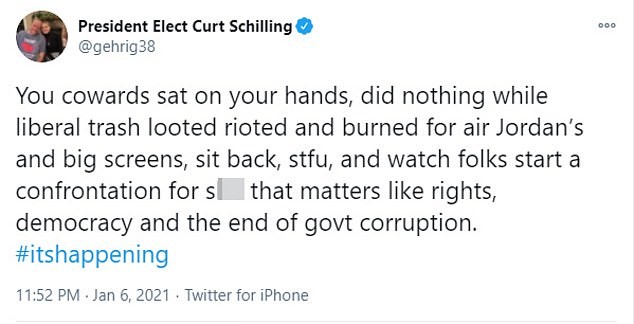
But that wasn’t enough. After the siege in Washington, and maybe just to rub the noses of those who voted for him a week earlier, Schill tweeted the following:

Do we believe that in the hours after the darkest day in our nation’s capital, the first time since 1814 it has been attacked, and attacked by people espousing all of the same beliefs that Curt Schilling not only holds, but shouts into every microphone – electronic or otherwise – that he can find, that the BBWA would still have voted for him? When Twitter banned Donald Trump; when Amazon stopped hosting Parler; when cabinet members resigned; when the 25th Amendment was openly discussed; and when the nationwide hunt for hooligans continued unabated? Does that seem like an environment for writers who previously chose not to look the other way, for writers who said – by their words and their votes – some bridges are simply too far, for writers who were looking for a reason not to include Curt Schilling on their ballot, to change their minds? If only the vote had been one week later, we know at least Steve Buckley would have had a different ballot.

Curt Schilling is a lot of things – a racist, a gamer, a homophobe, a clutch pitcher, a failed businessman, a Lou Gehrig aficionado, and a plain old asshole. But if his name appears on 75% of the Hall of Fame ballots when the results are revealed on January 26th, we can add “one lucky son-of-a-bitch” to the list.

With the House of Representatives impeaching President Trump for a second time; with Republican lawmakers facing denunciations from their hometown newspapers and, more importantly, their benefactors; with domestic terrorists being arrested; with cronies and acolytes running for the hills; wouldn’t it be a sad but ironic capstone to this whole sordid affair if Curt Schilling was the one person who avoided any repercussions.

PLAY BALL!!

1Bulldog

2Mad Dog

3Doggy

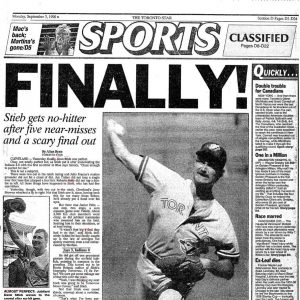
Dave Stieb Tried, And Tried, And Tried, And Tried, And Finally Climbed The Mountain

With Mark Buehrle, Tim Hudson, and Dan Haren on the Hall of Fame ballot this year, I am reminded of a similar type pitcher who held sway over the course of three different decades, and was an absolute stud in my formative years, the ‘80s. For a guy who never took the mound before his college-playing days at Southern Illinois University, Dave Stieb was the essence of a “pitcher,” with an overpowering fastball (for the era), a plus breaking ball, and a devastating slider towards the end of his career. He quickly caught the eye of the Blue Jays scouts after only his second relief outing in college, and the rest, as they say, is history. No one has ever won more games for the Blue Jays than Stieb, who garnered 176 over a career that spanned from 1979 to 1992. But over the course of 412 starts, there are five in particular [watch after you read] that make him a legend in my (and many others’) eyes. And the fact that they happened sequentially makes it all the more delicious.

Herewith:

Game #1: August 24, 1985 vs. the White Sox

Stieb walked the second batter he faced in the bottom of the first, then induced Harold Baines to ground into a 1-6-3 double play. He then hurt his own cause in the fourth with a wild throw on a Bryan Little bunt. But he struck out the next two batters to escape unscathed. He walked Carlton Fisk to lead off the fifth; and Little in the sixth; but through eight innings, he had not given up a hit.

All of that changed in the ninth. With a 6-0 lead, Stieb went right after the White Sox, and was rewarded thusly: home runs by Rudy Law and Little (that guy again) to start the frame. At that point, Stieb’s night was done. As an aside, the White Sox were not. Gary Lavelle relieved Stieb and promptly gave a home run to Baines. He lasted only two more batters (a ground out a single), giving way to Tom Henke who sandwiched a single around two pop outs to end the game.

But Stieb established himself that night with eight innings of no-hit baseball that were only a precursor of things to come.

Game #2: September 24, 1988 vs. the Indians

Stieb retired the first seven batters before yielding a full-count walk to Andy Allanson. Two pitches later Allanson was cut down trying to steal second. And three pitches later, Paul Zuvella struck out to end the third inning. But Stieb was not exactly cruising, as it took him 46 pitches to get through the order a single time.

Things didn’t start great in the fourth, with a leadoff walk to the leadoff hitter, Julio Franco. But only four pitches later the side was retired, after a 4-6-3 double play and a three-pitch strikeout.

Stieb sailed through the fifth, sixth, and seventh. He hit a bump in the road with a hit batter with two outs in the eighth. But when pinch hitter Terry Francona flew out deep to right, Stieb was three outs away…again.

Allanson struck out swinging and Willie Upshaw grounded out to second to start the ninth. Now Stieb was one out away. After four pitches to the next batter, Stieb was one strike away. Then Franco hit was seemed like a harmless ground ball to second. But the ghosts of Lake Erie must have been present that Saturday night, as the ball hit the lip of the infield and catapulted over Manny Lee’s head into center field to end the no-hit bid. Shocked, if not dismayed, Stieb couldn’t spend too much time lamenting his bad luck. He was nursing a 1-0 lead, and Dave Clark was coming to the plate representing the winning run. Stieb got Clark to fly out to deep center to end the game, but it was – at best – a moral 1-0 victory.

Game #3: September 30, 1988 vs. the Orioles

If you are paying close attention, you will note that this was Stieb’s very next start after the heartbreak by the lake six days earlier.

Stieb cruised through the lineup the first time, on only 31 pitches. He plunked Joe Orsulak to lead off the fourth, but got square one pitch later with a 3-6 double play. When Cal Ripken, Jr. grounded out, Stieb was through four on only 40 pitches. He was through six on 58; and after issuing a one-out walk to Pete Stanicek in the seventh, got Ripken to promptly line into a double play to retire the side having thrown only 70 pitches.

It took eight pitches for Stieb to get through the eighth, at which point he had faced 24 batters. Three pitches into the ninth he was, once again, one out away. Four pitches later he was, once again, one strike away. Pinch hitter Jim Traber hit a ball even more softly (if that is possible) than Julio Franco had the week before. This time it was a blooper over the head of first baseman Fred McGriff. When the ball landed harmlessly inside the right-field foul line, all Stieb could do was roll his head around in despair. But Dave was able to keep his composure and get Orsulak to ground out to third to end the 4-0 Blue Jay victory.

Game #4: August 4, 1989 vs. the Yankees

Stieb started his 23rd game of the 1989 season against the Yankees with a 10-6 record and a 4.11 ERA. He had a season-high eight Ks on April 21 against the Rangers, and hadn’t had more than five (twice) the rest of the year. He had walked at least one batter in each of his starts in ‘89. And yet, on this night in Ontario, through 8-2/3, after facing the minimum 26 batters, he had recorded 11 strikeouts and yielded nary a walk, tossing only 82 pitches. Stieb was, once again, one out away. But after falling behind 2-0 to Roberto Kelly, he gave up a solid double down the left-field line. It just was not meant to be, and my guess is that Stieb was beginning to wonder if it was ever meant to be.

But just like in the game against the Indians, Stieb didn’t have time to bemoan his fate, as Steve Sax came to the plate representing the tying run. Yet unlike his previous outings, Stieb allowed the moment to get the best of him, giving up a single to Sax to make it a one-run game. But the Yankees’ comeback was quickly quashed three pitches later. Stieb got the win, but lost the perfect game, lost the no-hitter, and lost the shutout in the space of three pitches.

Game #5: September 2, 1990 vs. the Indians (again)

When Dave Stieb found himself back on the mound in Cleveland the first weekend of September two years after the fact, he was having the best season of his career. By that point he was 16-5 with a 3.07 ERA. He had gone at least six innings on all but three of his 26 starts and had only surrendered nine home runs pitching in the AL East during the steroid era.

The afternoon started inauspiciously, as Stieb walked Alex Cole to start the game. Cole was promptly cut down trying to steal second, and Stieb finished off Jerry Browne and Dion James to end the first.

Stieb walked Carlos Baerga with two outs in the second, but he too was caught stealing, to make it (essentially) six up, six down.

Stieb then retired the next fifteen batters in a row before walking Ken Phelps on a 3-2 pitch to start the eighth. With 103 pitches thrown, nursing a 2-0 lead, and the 5-6-7 batters coming to the plate, Cito Gaston elected to keep Stieb on the hill. Three deep fly balls later from Brook Jacoby, Baerga, and Cory Snyder ended the frame.

And so here he was…again. For the fifth time in five years, for the fourth time in two years, where it all began at Cleveland Stadium (commonly known as Municipal Stadium), Stieb was three outs away. After Chris James flew out to deep left-center and Candy Maldonado struck out swinging, Stieb was, once again, one out away. It is impossible to know what was going through Stieb’s mind as he toed the rubber to face Alex Cole (who, remember, led off the game with a walk), but it is fair to think that he momentarily lost focus, as he walked Cole on four pitches. Stieb locked in on Jerry Browne, allowing Cole to take second on defensive indifference. Fortunately, Stieb never got himself to one strike away. On a 1-1 pitch, Browne lined out to right sealing the 2-0 win; but, more importantly, ending Dave Stieb’s five-year no-hit odyssey. He had finally climbed the mountain and stood, exultantly, with his first (and ultimately only) career no-hitter.

We often talk about athletes overcoming adversity to achieve greatness. But this type of adversity is of an individual nature. Stieb – and the Blue Jays – won all four of the previous no-hit bids. The accomplishment of throwing a no-hitter had nothing to do with his team’s success, but only with slaying the demons that had thwarted him time and again. It takes great mental fortitude to deal with “failure” (such as it was) and to get back on that mound and do it over and over again. With those five games, culminating with a much-deserved no-no on September 2, 1990, Dave Stieb cemented himself in the hearts and minds of baseball fans everywhere.

PLAY BALL!!

Take the Money and Run

If you follow baseball at all – and if you are reading this newsletter, it’s a good bet that you do – you have seen the start of the cold-stove season bloodletting. Jay Jaffe of FanGraphs and Ben Lindbergh of The Ringer have already written about it, as have countless other baseball scribes.

When you look at the sheer number of options that were not picked up (only 4 of 28 of >$5M, and only 2 of 12 of <$5M) and the limited number of qualifying offers proffered (only 6, the lowest amount ever), you get that feeling in your belly. And that is before we learn how many arbitration-eligible players will simply be non-tendered, with Kris Bryant being potentially the biggest fish in what may become a great lake of free agents-who-didn’t-expect-to-be.

Hell, not only did the Indians decline to pick up Brad Hand’s $10M option, they put him on waivers in the hope that someone else would sign him, allowing them to avoid their $1M buy-out – and no one claimed him. Things are not looking good for players this off-season.

But, as I wrote during the Covid-related CBA squabble last spring, I am keeping an eye out for the 2022 season as well. With that on the horizon, my suggestion to any free agent and/or any arbitration-eligible player, is the following: sign the first contract they put in front of you. Bring a pen to any meeting you have with the front office; check to make sure they spelled your name correctly; and then find the dotted line toot sweet. Here is why:

As Patrick Ewing once famously said about professional athletes: “[We] make a lot of money, but we spend a lot too.” But the truth is that the making side of that ledger has become and will continue to be increasingly difficult. As we all know, players only earned 37 per cent of their annual contract amount for the 2020 season. We have no idea what 2021 will look like, but there is definitely reason to believe that MLB may again play less than 162 games, and most likely in less-than-packed ballparks. So that means that the owners will be looking to reduce salaries yet again. It is hard to calculate what that will mean, but it could result in having players’ salaries reduced by up to 50 per cent for 2021.

Which brings us to the 2022 season –- if it happens. Long before the world had ever heard the phrase “novel coronavirus,” there was talk of a potential lockout after the current CBA expires in December 2021. The players and owners have not been on the best of terms for quite some time, and after Michael Weiner passed away and Rob Manfred was elevated from chief labor negotiator to commissioner, things have only gotten worse. Throw in a global pandemic, a massive recession, a shortened season with no fans (save for limited capacities during the NLCS and the World Series), and the rancorous negotiations just to get us this far, and we are primed for players to find the gates locked when they arrive at Spring Training a year from February.

This is all conjecture, and there is no way to know if there will be a lockout or if there is, how long it will last. But, operating on the reasonable assumption that labor strife is in the offing, you certainly expect that players who earned 37 cents on the dollar in 2020 will most likely take some form of haircut in 2021 and may earn even less in 2022.

That may be due to a shortened season (after a prolonged work stoppage) or owners demanding more concessions after two seasons of reduced operating revenues. It could be because television revenues are down, or that the price of consolidating the minor leagues under the MLB umbrella was more costly than expected. However you slice it, the 2022 season could be the third year in a row for reduced player salaries.

And that only accounts for the players who have guaranteed contracts. If you think the current hot stove is going to be chilly, wait ‘til you see the 2021-22 version. In November of next year, teams won’t have any idea what the 2022 season will look like, so they will have a devil of a time setting a budget. Fewer qualifying offers will be extended, fewer options will be picked-up, fewer free agents will be signed. And once (if ever) that all gets cleared up, it stands to be another buyer’s market, with players taking dimes on the dollar to play professional baseball.

Let’s say you are Kiké Hernández. You were supposed to make $5.9M in this, your walk year, but due to the pandemic, you took home less than $2.2M. The Dodgers, for obvious reasons, did not extend Kiké a qualifying offer, and he is now a free agent. In a pre-Covid world, a player of his skills may have expected something like $5-$10M/year on a multi-year deal. But here is a brief list of players on the market in the same (relative) category as the Banana Man: Tommy La Stella, Kolten Wong, Brad Miller, Jurickson Profar, César Hernández, Jonathan Villar, Jonathan Schoop, Brock Holt, Ha-Seong Kim, and Dee Strange-Gordon. That is a lot of options to choose from – and this list specifically excludes DJ LeMahieu, Didi Gregorius, Justin Turner, and Marcus Semien, all of whom stand to get contracts regardless of who else is available.

So back to Kiké. He made $3.7M less than expected in 2020. His career earnings are $8.6M. Let’s say the Royals offer him a 2/$8M deal. Under normal circumstances, he would reject the offer and wait it out. He might look for a higher AAV or just a better one-year deal. But the problem is, he has no idea what 2021 or 2022 will look like. So rather than taking a “pillow contract” (which, truthfully, would be pretty lumpy for someone of Hernández’s stature), he needs to get multiple years, even if the AAV is low. Again, under normal circumstances, a player of Kike’s unique IF/OF skills, his ability to crush left-handed pitching, his post-season experience, including a two huge home runs in the most recent NLCS, might be able to do better. But he lost 63 per cent of his salary last season, and if he holds out for more this year, teams will easily and gladly move on to one of the other names listed above, or someone from their farm system (see, Witt, Bobby, Jr.) whom they can play on a split contract and save millions. And all of that is before we get to 2022.

Come next off-season, there will be even more available players –- some of the names we already know who didn’t get signed or took one-year deals; free agents; non-tenders; prospects rising through the ranks. But having a multi-year, locking in the guarantee of a few million bucks –- which may (again) be prorated in 2021 and/or 2022 if either season is truncated -– is considerably better than hocking your wares (again) in another crowded market.

Current free agents may think a better deal is out there –- that Steve Cohen will become their personal benefactor –- and will play the odds. But the market stands to be slow and choppy, and at some point the money music will stop, and many players –- whose agents led them astray –- will find that there are simply not enough chairs. And that will have a lasting impact on both 2021 and 2022.

So, as I stated above, bring a Mont Blanc, a Bic, or even a Sharpie to your next meeting with the front office, and just sign whatever they put on the table. Two years from now, you –- and your accountant –- will be glad you did!

PLAY BALL!!

Note: This article first appeared in the IBWAA Heres The Pitch Newsletter.

Enough Already About the Mookie Betts Trade

After stealing second, stealing third, and then diving around a sweeping tag to score in the 5th inning of Game 1 of the World Series, my son asked me: “Are you still mad that the Red Sox traded Mookie?”

My response, which has not changed since the rumors began last off-season: “I was never mad that they traded him. I thought it was the right thing to do.” I went on to lament that I am sick of hearing Bill Simmons cry that they traded the best Red Sox player of his lifetime, or how the team will regret making the deal, or what a stupid decision it was, or how Boston fans must enjoy wearing their “payroll flexibility” jerseys around the North End. Enough already!

On the eve of the season I wrote the following about the trade:

But the fact of the matter is that Boston could never “force” Mookie to sign a deal – a concept that keeps getting lost in the haze of vitriol. The team offered him at least $300M and he didn’t even counter – he was quite clear that he wanted to test free agency. Maybe he didn’t want to finish his career on the east coast and wanted to go somewhere warmer; maybe the pandemic changed his point of view and he felt like it was a bad idea to go into the market after an abbreviated season; maybe he just so loved it in L.A. that he couldn’t imagine playing anywhere else. We may never know why he chose to sign, but sign he did. And kudos should be given to Andrew Friedman and the Dodgers ownership, not criticism of their counterparts in the Back Bay.

And this week NBC Sports reported that the Red Sox actually offered Betts what he wanted, but he turned it down. That story has not been verified, but it jibes with Buster Olney’s reporting over the winter and into Spring Training that Mookie wanted to test the free agent market, and that he was under tremendous pressure from the MLBPA to get the best/highest deal possible to lift all other boats. One thing we do know for sure: Boston offered Betts at least 10/$300M to finish his career with the club, and he didn’t even respond. So, sure, go on with how the Red Sox could have resigned Betts if only they wanted to, if only they weren’t too cheap.

Fast forward to the 2020 playoffs, and Mookie is doing EVERYTHING. He is hitting and robbing home runs, he is making shoestring catches and stealing bases. Hell, he is responsible for delivering tacos to an entire country. CC Sabathia and Joe Posnanski (he of the Top 100 Players of All-Time List) proclaimed that Betts is now the best player in the game; and Joe Buck and John Smoltz are taking turns delivering Mookie hosannas every other inning. And they are all deserved – Betts is that good.

In 2020, Mookie turned in a 3.4 bWAR season, which, when extrapolated over a full 162 games, would/could have been his third best season in his short career. But if he had done that next to the Pesky Pole this year, the Red Sox arguably would have still only won 27 or 28 games and still would have missed the playoffs. And once you account for Alex Verdugo’s 1.9 bWAR as a steady if considerably less flashy or beloved replacement, the net loss was a total of 1½ wins. Instead of losing Betts to free agency and getting a supplemental draft pick, the Red Sox have Verdugo under team control for four more years, and have Jeter Downs and Connor Wong waiting in the minors.

“But wait,” Red Sox critics will say, “Boston could have still held on to Betts.” The haters point to the fact that Betts signed an 12/$365M extension with the Dodgers as ample evidence that the BoSox could have done the same. But that omits a few glaring details that no one – not writers, not radio callers, not broadcasters, not the “Boston Sports Guy” – ever seem to mention:

  • First, as stated above, Betts plan all along had been to hit the open market.
  • Second, the Dodgers organization is in a much better position – organizationally and financially – to compete now and into the future. Had Betts signed an extension with Boston on the same day that he signed his extension with the Dodgers, he would have known the following: (1) the team’s best pitcher would be out for at least twelve months, and most likely longer; (2) their second best pitcher was out indefinitely (due to Covid); (3) their second best hitter had opt-outs in his contract at the end of each of the 2020 and 2021 seasons; (4) one of his best friends on the team was about to become a free agent with only a small chance of being retained; and (5) only five teams had a worse farm system than the team he just resigned with (according to MLB Pipeline 2020 rankings).
  • Third, and most importantly, after the trade we all collectively faced a global pandemic. Much has been written (including by me) about the financial hit that MLB teams took having a shortened season with no fans in attendance. It is well beyond the conventional wisdom that this year’s free agent market is going to be a blood bath. Where Betts may have been thinking 10/$400-$420M, and thus looked at the Red Sox $300M offer as at least nine-figures too low, once the pandemic hit, everyone – including the (second) best player in the sport – had to downgrade their expectations.

Maybe the Red Sox – with their analytic gurus – could have anticipated Covid-19, and the long, hard CBA negotiations to get the players on the field, and the resulting 60-game schedule, and the lack of fans in the stands. And maybe they could have analyzed the massive impact that all of that would have on society at large and on baseball writ small, and been prescient about the upcoming off-season, and determined, with all of that information, how to discount Mookie’s expectations by just the right amount. And then Mookie would had to have bought into such a flight of fancy – he would have to have believed that Chaim Bloom was a soothsayer and knew more than the President of the United States, the CDC, the WHO, and Anthony Fauci – and said to himself: If what you say about a once-in-century plague is true, it is probably safest for me just to stay here in Boston. That whole scenario is and was a fairy tale.

When the Red Sox traded Mookie in early February, they were staring down the barrel of: a 162-game schedule; improved Yankees and Rays clubs (which proved to be exactly right); a middling season with holes in their rotation, their bullpen, and the right side of their infield; a low-ranked farm system; and another season over the CBT.

If the NBC Sports story is correct, there was nothing more the Red Sox could have done to keep Betts. But, if we assume the story is wrong, we can only speculate how Mookie would have reacted to a “Godfather” offer. My guess is that he would have shopped it to see if the bottomless-resourced Dodgers, or the newly-ownered Mets, or the another World Series season-less Yankees, or the nearly-made-it Braves, or the rebuilding Giants, or the brand new-ballparked Rangers, or the have-to-win eventually Phillies, or the we must get Trout to the playoff Angels, would have been willing to match whatever the Red Sox put on the table. And my hunch is that one of those teams – probably the Dodgers – with more resources and better short and long term prospects would have done so.

And if that had happened – if the Red Sox played the season with a lame duck star – they would have won about 27 games, missed the playoffs, and have no right fielder for next season. They would have an additional draft pick after the fourth round in 2021; so they would have that going for them…which isn’t so nice. Instead, they had a wasted season (which would have happened either way), found a potential new quasi-star in Verdugo, have an infield prospect who could make some noise in Spring Training next year, have a catching prospect that may make Christian Vasquez expendable in a year or two, and have reset their luxury tax.

So, again, go on with your howls about the Red Sox being cheap, or stupid, or short-sighted. Let’s continue to hear about Babe Ruth and the potential of a second curse. Let’s have another writer/broadcaster/guy at the bar (I know there is no such thing in 2020) tell us how we don’t root for financial flexibility and what is the point of owning a team if you don’t care about winning or having players like Mookie Betts.

The word “fan” is short for “fanatic.” Merriam-Webster defines fanatic as: “marked by excessive enthusiasm and often intense uncritical devotion.” The key word there is “uncritical.” It is easy to get caught up in emotion – especially when Mookie Betts is making a game-saving catch every night, running all over the bases, hugging his teammates and his opponents, and leading his team back to the World Series. But if you step back, just for a moment, and stop being a fan, stop being uncritical, and use reason, logic, and sound judgement, you are left with no alternative other than the Red Sox absolutely made the right decision in making the trade.

And that is even before we talk about the extra benefit of dumping David Price and the $96M left on his deal.

Agree or disagree, it’s time to…

PLAY BALL!!