All I Want for Christmas

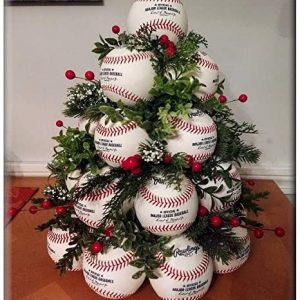
It’s that time of the year when champions are crowned and parades are held; when Christmas tree lots spring up seemingly out of nowhere; and stoves get hot. And sure, the stoves may stay tepid this off-season with impending expiration of the current CBA and the expected lockout in December, but that doesn’t mean we, as baseball fans, can’t speculate and create our wish lists.

I, like most of you, am a fanatic baseball fan. And I, like you, follow the sport all year round. But, possibly even more than being a fan of baseball, I am a fan of nostalgia, and origin stories, and people coming home and old friends getting together once again. And this year, with so many free agents with so many compelling possibilities and so many teams with obvious needs, it would be nice if they were all paired with happy endings. So, when I head to my local mall and climb up onto Santa’s lap (does this still happen in a post-Covid world?), here is what I will be wishing for.

Max Scherzer and Justin Verlander are reunited in Detroit. The poor Motor City deserves something to smile about (non-Miguel Cabrera division). After the Malice at the Palace and Darko Miličić, after settling for Jared Goff, after the hollowing out of the rust belt, it would be great if Tigers fans had something great to root for, again. None of Aníbal Sánchez, Doug Fister, or Rick Porcello are available, but no matter. The Tigers have a young crop of power arms (which now includes Eduardo Rodriguez) who could learn at the hip of these aging (but not yet aged) veterans both of whom still have plenty in the tank.

Kris Bryant heads to the City of Brotherly Love to join his fellow Las Vegan, Bryce Harper. According to FanGraphs Roster Resource Depth Chart, the Phillies plan to have Adam Haseley (.190/.190/.238) in left field and Alex Bohm (.247/.305/.342) at third base. Tell me that Bryant isn’t a better option at either position. And with Andrew McCutchen gone, and Nate Fassnacht seemingly ready to get a cup of coffee at either third or in left, Bryant provides a great deal of flexibility.

Javy Báez stays in New York, keeping the Lindor-Báez double-play combo intact. These two are old friends, playing with and against each other on the fields of Puerto Rico, and on the Puerto Rican national team in the World Baseball Classic. Keeping them together will allow them to get past the thumbs down kerfuffle, and could create the most exciting up the middle duo since Omar Vizquel and Roberto Alomar (Cleveland, 1999-2001). Of course, the Mets will need someone in the front office to actually sign Báez, so this may take a while.

The Seager Brothers – Corey and Kyle – head to the Bronx. Sure, the Yankees may be fitted at third base with DJ LeMahieu, but he could easily slide over to first base, splitting time with Luke Voit, while the Brothers Seager handle the left side of the infield. Corey is perfectly suited for Yankee Stadium and its short porch in right, and the Yankees desperately need more left-handed hitting. Both Kyle and Corey grew up Yankee fans idolizing Derek Jeter. Is there a better coda for the Seager boys than taking over the position Jeter played and the position to which he should have moved later in his career?

Oakland needs to resign Marcus Semien. Has there ever been a more perfect Oakland A? Semien grew up in the Bay Area, turned down a draft offer to go to Cal Berkeley, where both of his parents went. He was nothing less than solid for the green and gold from 2015 through 2020. Unfortunately, his breakout 2021 season may have priced him out of Oakland’s market. But if anyone would be willing to take a literal hometown discount, it would seem Semien is the ideal candidate.

Speaking of hometown discounts, if the Braves do anything this winter other than finding the perfect place to display their World Series trophy, it is to resign Freddie Freeman. It is not truly a “hometown” insofar as Freddie is from Southern California, but has anyone since Chipper Jones more/better represented the city of Atlanta and this team? Could you imagine Freddie in any other uniform? He could probably play for another ten years; but even if he can’t, there will be value in having him around the team, at Spring Training, in the press box, well into his 40’s. It might require that the team to break the bank, it might require some additional year ingenuity, and it might require Freddie backing off what he could get from, say, the Rangers, to be in Atlanta on opening day to collect his World Series ring, and to never have to buy a drink in that town again. But there are enough smart people in this equation to figure it all out.

Speaking of players never to be seen in another uniform, and as I have previously written, the Dodgers MUST resign Clayton Kershaw. I don’t care how many years it takes – remember co-owner Magic Johnson once signed a 25-year player/personal services agreement with the Lakers – but something needs to be worked out. My thoughts about this are written in more detail here.

Like Semien, I want Kyle Schwarber to go home again and play for the Guardians. The Middletown, Ohio native, who played his college ball in Indiana and his formative baseball seasons in Chicago, needs to keep his midwest roots and, like Chrissie Hynde, he needs to go back to Ohio. Franmil Reyes probably has the DH slot filled, but Schwarber showed this year that he could be serviceable at either first base or in left field. And with an off-season to work on his infield skills, he even could become average. What is not average is his bat. This season he had a 148 OPS+, with a career OPS+ of 119. He is an on base machine, and makes every clubhouse a better, happier place. In the 2016 World Series, Schwarber went 7-16 at Progressive Field; and for his career, he has a .364/.417/.788 slash line with 4 home runs while playing the “The Jake.”

With Báez in New York, Bryant in Philly, and Schwarber in Cleveland, Anthony Rizzo needs to go back to the Cubs. He belongs there. He is an institution there. Enough with the Yankee pinstripes and the #48. He and Jed Hoyer have been together from the Red Sox to the Padres to the Cubs. And while there will no more “Bryzzo” t-shirts for sale on Waveland Avenue, they will sell plenty of #44 jerseys. His easy smile, smooth glove, and ferocious bat play well on the North Side. And Rizzo doesn’t have any of the service-time manipulation baggage that Bryant carries. The Cubs deserve Rizzo, but more importantly, the Cubs’ fans deserve Rizzo.

And speaking of teams and communities deserving of a player, let’s end this with Chris Taylor going back to Seattle.The Mariners fans never got a chance to witness CT3 in full, with 86 total games and only 68 hits in his 2+ seasons there. But they have witnessed him – from afar – grow up, and they have seen the player that he has become, on the biggest of stages. With the Dodgers, Taylor has shown his versatility, playing above-average all over the diamond. With Kyle Seager gone, Taylor could become an everyday third baseman. Or he may be an even better option at second base than Dylan Moore. Or he could play a different position every day. It doesn’t matter, insofar as Taylor has shown over the past four seasons that any team is better when he is on the field.

That’s it, Santa. That is all I want for Christmas. That, and for the owners and players to come to a quick resolution so we don’t have a protracted labor battle; and that spring training and the season start on time. That’s not too much to ask, is it?

PLAY BALL!!
Rooting for the B-Student

Forget the “banging scheme” or the alleged buzzers or the “it’s my time gestures”, forget Ken Lay and Enron Field, forget Yuli Gurriel’s racist dugout impressions. I am rooting for the Braves in this World Series because I see myself in that team. I was an 88-win student in high school, in college, and in law school. I started slow – albeit better than .500 (or C-level) for more than the first half – but was never in the upper echelon. No one ever looked at my report cards and thought “potential pennant winner” or “one game from capturing the World Series”. No, they saw a student who did fine, even well sometimes. Sure, I was someone who would easily graduate each institution, and find gainful employment, but I was no juggernaut; I wasn’t a 95-game winner (let alone a 107-game winner). I played in the right division and did enough to make it to the next round. And then I flourished; took what I had learned, added a few new skillsets, and rode those to new heights. I allowed my performance on the field (or, more accurately, in the workplace) to speak for more than my middling 88-win academic credentials.

It is easy to root for the sensation, the 2001 Mariners and their 116 wins. Or the Yankees or Dodgers nearly every year. And, of course, I cheered on my beloved Red Sox when they won 108 games in 2018. But it isn’t the same as rooting for the almost dregs, like the 2006 Cardinals. It would be generous to say that that Cardinals team limped in the playoffs and then caught fire. On September 19, 2006, the Red Birds throttled the Brewers 12-2, to move eleven games over .500. They then went 3-9 over their last twelve, which included a seven-game losing streak, to finish 83-78. But that team was more than their GPA. They went on to beat the Padres three games to one in the NLDS, and the 97-win Mets in seven games in the NLCS. That 83-win team then beat the 95-win Tigers in five to capture another World Series. Not bad for a B-student team and their .516 winning percentage.

As has been written in various and sundry places, this year’s Braves took longer to reach .500 than any other World Series team ever. But the team they were is not the team they are. As has been reported ad nauseum, president of baseball operations Alex Anthopoulos reworked the Braves outfield after losing Marcel Ozuna to bad sliding and bad life decisions, and Ronald Acuña, Jr. to a torn ACL. Over the course of two weeks, Anthopoulos acquired Joc Pederson from the Cubs, Adam Duvall from the Marlins, Jorge Soler from the Royals, and NLCS hero Eddie Rosario from the Guardians née Indians. From July 31st to the end of the season, the Braves had the best record in baseball (37-19). But unlike the 2006 Cardinals, the Hammers (one can hope, right?) went 12-2 heading into the playoffs. With that momentum, they beat the Brewers in four and the heavily-favored Dodgers in six, and then jumped out to a 3-1 lead against (say it again) the heavily-favored Astros. And yet, as of this writing, the Braves remain one win away from getting that piece of metal for the first time since 1995.

Sure, listening to the Atlanta (suburbs) crowd drone on with their tomahawk chant is annoying at best and incredibly offensive at worst, and watching the former president sit in one of the Braves’ luxury boxes was somewhat disconcerting. But those are not reason enough not to cheer for the team who overcame mediocrity to get to the precipice of glory. Root for Pederson’s pearls and Rosario’s beard; root for Brian Snitker’s 41 years in/with the organization and Freddie Freeman’s, well, everything. Root for the team whose Game 4 starter had never started a MLB game before that night, got only one out, and yet still won. Root for the Astros to lose a second World Series in three years in their home park. Root for the B-student to achieve success, because we can’t all be valedictorian, we can’t all go to Harvard, we can’t all win 95 games. Sometimes, we need to do just enough, get hot, and ride the wave.

PLAY BALL!!

The Season of Second-Guessing

I guess it’s that time of the year. The leaves turn, the temperatures drop, the intensity heightens, and everyone becomes an expert. Fans have watched their team play for six months, they know their favorite roster backwards and forwards; they even know their opponents strengths and weaknesses. So, from the comfort of their couch, the typical fan –with beer in one hand and remote in the other – grunts, groans, and generally grumbles about the pre-game and in-game decision-making processes.

Take my son, for instance. Sitting behind the Red Sox dugout last Friday night in Houston, my son could not and would not stop lamenting Alex Cora’s decision to use Hirokazu Sawamura in the eighth inning of Game of the ALCS. In retrospect, and in terms of outcome, my son was correct. But, as I explained to him as we walked out of the ballpark, we simply had NO idea what Cora or pitching coach Dave Bush or anyone else in that dugout was considering when that decision was made. As a side note, I told him that one of the downsides of attending the game is that we miss out on the analysis you get from Ken Rosenthal and Ron Darling and Frenchy Francoeur, which is all that more important in the playoffs.

My final comment, as he hung his head and headed to the hotel, was that, at that moment, Cora had managed this team for 168 games, and was 15-5 as a post-season skipper. So, for some reason, I tend to trust his knowledge of the Red Sox pitching staff more than my own, and more than that of my 18-year-old son. He reluctantly mumbled his agreement.

And then there is (at least in my world) the much-maligned Dave Roberts. Depending on who I am talking to, or when, Roberts is either a front-office puppet or an over-manager who makes too many bad decisions. Try as I might, I have been unable to square that circle. To that end, I cannot recall how many texts I received last week when the Dodgers announced Corey Knebel as the NLDS Game 5 starter. “Roberts is screwing up again” my father wrote to me shortly after the lineup was released. My best friend sent an SOS text asking for an explanation. I tried to calmly explain to both – and others – that this was not just Dave Roberts’ call. He didn’t wake up Thursday morning, throw a thumb to the wind, and decide Knebel was his guy. I knew, in my soul, and as someone who follows baseball closely, that this was a whole-of-organization determination. And, much to my chagrin, Buster Olney didn’t help matters on Friday morning’s Baseball Tonight podcast, stating that if the Dodgers had lost, or if Knebel had given up a bunch of runs, Roberts would have had a lot to answer for. Thankfully, his guest, Karl Ravech, quickly made my point, and explained to both Buster and the listening audience that this wasn’t a one-man show.

And thank goodness for Andy McCullough of The Athletic. On Friday morning, he published a behind-the-scenes account of how and why the Dodgers decided to go with the opener in Game 5. I sent the article to my dad under the heading “As I was saying…” My father read it, and wrote me back: “After reading the backstory on the pitching strategy, it was genius. Wow!”

The point is, we – as fans – in the grand scheme of things, don’t know shit. We have more information at our fingertips than at any time in history. We subscribe to FanGraphs and check Baseball Reference each morning. We read Jayson Stark’s Weird & Wild column religiously, and listen to Buster and umpteen other baseball podcasts. We have fantasy teams and keeper leagues, and follow the goings-on in the Arizona Fall League. And yet, we have no idea who’s arm is dead, or who didn’t sleep the night before because his baby is sick, or who looked awkward walking back from the clubhouse. We don’t have a fraction of the analytics, advanced statistics, and player-by-player match-up information that each team loads onto those dugout iPads. We don’t know what Dave Roberts or Alex Cora or Brian Snitker or Dusty Baker know. We haven’t experienced what they have experienced. So, arm-chair Connie Mack, slow your roll.

All of that said, it doesn’t mean that managers can’t be and shouldn’t be second (and third) guessed. They can and they should. In fact, that is part of what makes being a fan so much fun. Managers make decisions nearly every night that confound not just us fans, but their front offices as well. And they don’t always do a very good job of explaining themselves. But the system is pretty much self-correcting: make too many of those bad calls, and they become former managers.

Tim Kurkjian has oftentimes repeated the advice that Buck Showalter once told him: a bad outcome doesn’t necessarily mean a bad process; and a good outcome doesn’t necessarily mean a good process. So, it might make sense to be a bit more judicious in our criticisms. We should probably give managers – especially those who have (repeatedly) made it to the final four – the benefit of the doubt before we chuck them under the team bus.

For instance, I have to believe there is some explanation as to why Roberts pulled Brusdar Graterol after nine (100 MPH) pitches to bring in Kenley Jansen to face Eddie Rosario in the ninth inning of Game 2. Brian Anderson opined on the telecast that he didn’t want to be like the aforementioned Buck Showalter, losing a playoff game with his closer in the pen. Fair enough, but from my couch, it seemed like a shaky move. And until Roberts tells me more, until he explains what he and his coaches saw and knew, until he conveys what information was contained on that iPad, you can bet I will second-guess that decision. And if/when he does, I will go back to thinking that the guy who has won six division titles, two pennants, and one ring is pretty good at his job.

Second guess with impunity, but do so with humility.

PLAY BALL!!

The Man Before “The Man” – The Walk Before the Trot

Lost in the hullabaloo of huge walk-off home runs are the little things immediately preceding that make them possible. Watching the Dodgers-Cardinals game last week, I had an incredible flashback that I don’t believe was discussed on the broadcast.

Ranked the No. 1 sports moment in the history of Los Angeles sports, Kirk Gibson’s walk-off two-run home run against the Oakland A’s in the opener of the 1988 World Series was truly something to behold. And when reliving the event with the nearly ten minute clip on YouTube (as I have done countless times), we almost forget the five-pitch walk Mike Davis earned before Gibby hobbled his way out of the dugout.

Mike Davis is a footnote in baseball lore. He played 10 seasons in the big leagues, eight with his opponent that night, the A’s. In 1988 with the Dodgers, he walked only 25 times in 310 plate appearances. As such, he certainly wasn’t the ideal choice when needing a baserunner in the bottom of the ninth. In fact, it bears asking if he was actually a better option than Alfredo Griffin (for whom he pinch hit), with his .199 batting average and .259 on-base percentage.

Davis has a pretty brutal ’88 season, and the Dodgers limited him to 103 plate appearances in the second half. At season’s end, he sported a .196 batting average, and a .260 OBP with just nine walks after May. But manager Tommy Lasorda called his number in the ninth inning of Game 1 of the World Series, with the directive to find a way on base so someone, anyone, could try to drive him in. Davis worked a five-pitch walk off Dennis Eckersley, a pitcher who issued a mere 11 walks in 72 2/3 innings that season.

But Davis wasn’t done. With the crowd going wild and Gibson fouling off pitches like the battered horse that he was, Davis swiped second base. This was important for a multitude of reasons, not the least of which was that now any Texas Leaguer, duck fart, or blooper over short would have at least tied the game (note, in Gibson’s condition, any ground ball in the infield – and maybe a shallow grounder to the outfield – would have resulted in an out at first to end the game). Also, in the years before multiple sets of signs, and quarterback-type wristbands, and back-pocket information cards, and center-field cameras relayed to dugout monitors, it was still to the batter’s advantage to have a runner on second base.

Of course, it is well-documented that the Dodgers had a pre-series scouting report that Eck would go to the backdoor slider on a 3-2 count, so it is unknown how helpful Davis’ positioning at second base may have been. Regardless, Davis was inexplicably on base representing the tying run when there was “a fly ball to right field…”

Kirk Gibson's home run moment still as powerful 25 years later – Daily News

Which brings me to last Wednesday night, in that same ballpark. Mike Davis was never the caliber of player that Cody Bellinger is. Cody has won Rookie of the Year and MVP awards. He is a two-time All-Star who has hit 47 dingers in a single season. But 2021 has been, in a word, a disaster for Cody. He played in 95 games, struck out three times as often as he walked, and had a .240 OBP. If not for the injury to Max Muncy on the last day of the year, it is highly likely that Bellinger wouldn’t have even been in the lineup in the Wild Card Game against the Cardinals. And yet, there he was.

So with the stage set for Albert Pujols to hit a pinch-hit, walk-off homer against his former club, he merely lined out to center. When Steven Souza Jr. did the same, it was up to Bellinger to keep this contest from going to extra innings. In August of this year, Bellinger had two walks in 93 plate appearances. He improved that a bit in September and October, with five in 59. But he hadn’t walked twice in a game since June 24, and seeing how he had already received a free pass in the third inning, another one didn’t seem likely.

Shockingly, after swinging through a 2-1 sinker, Bellinger took two sinkers just off the plate to earn the walk. There wasn’t a Dodgers fan in attendance, nor one watching on television, who wasn’t certain that Belly would swing through at least one of those pitches — but he didn’t.

Like Mike Davis, Bellinger found a way to get on. And then, like Davis, he stole second base.

Bellinger had previously swiped two bags in a game three times in his career: once in 2017, once in 2018, and then last September. But here he stole his second base of the night, and he did it with two outs in the bottom of the ninth inning of a win-or-go-home game in October. And in doing so, like Davis, he put himself in scoring position (this time for a chance to win, rather than just tie).

We will all remember Chris Taylor’s line shot into the left-field pavilion to propel the Dodgers to the next round of the playoffs. It wasn’t Gibby. But it may have scooted in front of Muncy and Justin Turner in the annals of celebrated Dodger moments. CT3 walked off the Cardinals and gave the Dodgers the Wild Card Game victory. But lest we forget, as so many have since 1988, it was the little noted two-out walk, and the subsequent stolen base, that truly set the stage. A tip of the cap to Davis and Bellinger, whose keen eyes and fleet feet paved the way for legends to be born.

PLAY BALL!!


It Can’t End Like This

As you may know, I have a great deal of affection for Clayton Kershaw. In recent years, I, like many Dodger fans, hold my breath when he takes the mound in the playoffs. We feel, at almost a cellular level, the pain of his many post-season losses. We know, with absolute certainty, that his managers and his teams have done him dirty too many times to count – keeping him in one inning (or one batter) too long, not providing sufficient run support, allowing inherited runners to score, etc. And yet, the big Texan never complains, never makes excuses, always owns the defeats.

Last year, Kershaw flipped the monkey off his back, finally winning the World Series. According to Andy McCullough of The Athletic, Kershaw was still playing “We Are the Champions” on his home stereo well into the off-season. And good for him. But, even with that title, even with all the victories, even with the first-ballot Hall of Fame induction waiting for him five years after he hangs ’em up, it just can’t end like this.

Clayton Kershaw deserves a better send-off. His career cannot end with a ruined elbow – whether it requires Tommy John surgery or is just never the same. Clayton Kershaw deserves to walk off the mound in the seventh inning of a meaningful game in September or October, tipping his cap to the crowd while they chant his name. It can end with a “Public Enemy #1” at 72MPH making a batter look foolish. It can end with a loss after Kershaw, gassed, gives up yet another late-inning hit. It can end in any number of ways. It just can’t end like this.

This was always going to be an interesting off-season as far as Kershaw was concerned, insofar as he becomes a free agent after the last out is recorded. He made – in effect, due to a signing bonus – $31M in salary this year. He has averaged 25 starts-per-year over the past five full seasons, down from nearly 32-per in the previous five. Since 2018, he has made six trips to the IL; most of these have been related to his balky back, but now he is having trouble with his elbow and his forearm. You don’t need to be a FanGraphs member or have a subscription to MLB.tv to have a vague sense what that means…and that it isn’t good. Kershaw already ruled himself out for the remainder of the season. So what happens next?

Even if healthy(ish), the Dodgers had a decision to make with their franchise pitcher. He certainly isn’t/wasn’t going to get (ahem) Trevor Bauer money, nor Gerrit Cole money. He was probably set up for 2/$50M on a “thank you” contract. Would he have accepted that? Will the Rangers, with money to spend, try to lure Kershaw home to North Texas by offering 3/$75M or 2/$60M? Will Kersh take more to be closer to his wife and kids? We know that Kershaw doesn’t play the game for money; and we know his family is the most important thing in his life, followed a close second by charity. Will loyalty or the desire to keep wearing Dodger Blue for the entirety of his career win the day? No one knows.

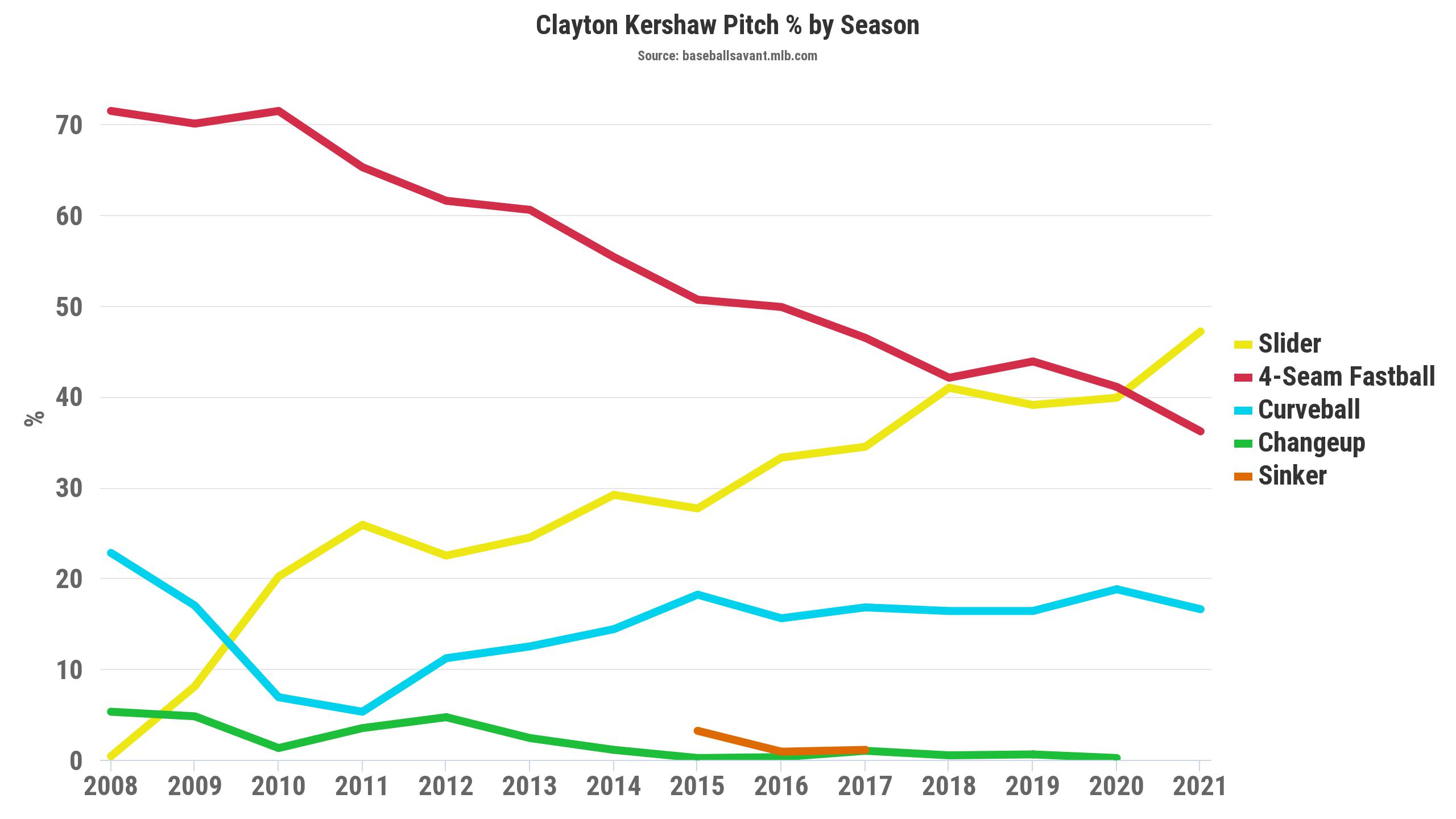
With this current injury potentially ending his 2022 season, the situation becomes even more complicated. The Dodgers have the prospect of paying the aforementioned Bauer $40M this year for half a season’s work, and will probably have to pay him something before they cut him next year (here’s to hoping that (a) he gets suspended and (b) the Dodgers finally do the right thing, admit their mistake, and bid Bauer adieu). Can they/will they pay $20M+ to another pitcher who cannot/will not take the hill next year? We know they can. So the question becomes: do they have the will? There is a reasonably good chance that Clayton Kershaw will not throw another pitch until after his 35th birthday. The history of pitchers faring well in their mid-30’s is quite ominous. Kershaw has already changed his game from power to crafty. What will he look like two years from now? What is that worth?

All of that conjecture aside, Kershaw is the final arbiter, and he may make it very easy for the club. He may elect to retire. He has nothing left to prove on a baseball field. He has his youth, his family, his foundation, and his millions. There is no reason – other than sheer desire to be great and to keep competing at the highest level – to play another game. But we know Kershaw has an unending desire to be great, that he loves nothing more than competing at the highest level. We know he bleeds for the game, and plays through pain for his teammates, and works harder than most, just for the honor of taking the bump every fifth day (or out of the bullpen).

So, from my selfish perspective, here is a logical solution for both the club and the player: 3/$66M, with the understanding that the team is paying $22M for a rehab year in 2022; $22M as a show of goodwill (to cleanse their souls for that other pitcher they signed last off-season); $22M as a “thank you” for all of the memories, all of the great moments, all of the mentoring and long-toss sessions, all of the charity ping pong tournaments, all of the jerseys sold, and all of the times he refused to throw anyone under a bus; $22M for #22. They pay $22M next year on the hope that they can pay $44M over the next two for a middle-of-the-road number three or four starter who will take the ball, take the heat, and never – not once – ever take it for granted. That is what I want. But I will take any variation on the theme…

It just can’t end like this.

PLAY BALL!!

Waiting For the Other Sock to Drop

When I was in my last year of law school, I visited a head hunter because, after almost three years of schooling and nearly six figures of debt, I decided I didn’t want to be a lawyer; and hell, “you can do anything with a law degree.” The recruiter and I bandied about a bunch of ideas, but, surprisingly, one that did not come up was MLB general manager. It should have, as according to Alex Anthopoulos — the general manager of the Atlanta Braves — one of the main responsibilities of that job is to worry about what will happen next. And, as a lifelong Boston Red Sox fan, that is my metaphysical condition from April through October (if we are lucky). 2021 has been no different.

Going into spring, I was care and worry free. ESPN predicted the Red Sox would win 79 games; SI: 80; PECOTA: 85. As of this writing, the Red Sox have already won 88 games, with nine still to go. They have surpassed all expectations, and thus increased my anxiety level many-fold. And regardless of their over-performance (at least against preseason predictions), this team consistently seems to underperform. As such, they trigger my general manager tendencies, and cause me to worry.

The BoSox spent 85 days in first place, but fell out on July 30th. Five weeks later, on September 7th, they were 10 games back of the Rays. In those 38 days, the team went 16-20, which wasn’t horrible, but neither was it great. And, truth be told, despite their record and their position in the standings, they are not very good. According to FanGraphs, their Pythagorean Record would have them at 84 wins, and their Base Runs record would have them at 81. All better than expected, but still not a team worthy of World Series aspirations.

As a team, the Red Sox are hitting .262; .269 with runners in scoring position, and .294 with the bases loaded. And yet, it feels like they never capitalize on those situations (including again last night). By comparison, the Rays are hitting .241 as a team; .250 with runners in scoring position, but .390 with the bases loaded. And that may be why the Rays have scored 17 more runs than the BoSox (811-794).

And if you have watched the Red Sox lately, you can’t miss another glaring difference: defense. Here, as above, the stats don’t even begin to tell the whole story. Boston leads the A.L. with 103 errors (by comparison, the Rays rank 8th with only 78). The Red Sox have given up 77 unearned runs, while the Rays have only given up 58. But it’s not just the errors and the unearned runs, it’s the plays that should be made, but are not. If you watched Tampa Bay’s 11-10 come-from-behind win in Boston on Sept. 6, you will know exactly what I am talking about.

Yet, the season has but nine days to go, and the Red Sox are in pole position for the Wild Card. Assuming you can get past the unclutch hitting and the woeful defense, you then have to contend with a deadly virus. Kiké Hernandez went down with COVID-19 on Aug. 27th, and the team suffered no fewer than 12 player cases (plus two staffers), including ace Chris Sale (who, we have learned, is not vaccinated — see the great piece by Steve Buckley in The Athletic). 

It would have been considerably easier if they had tanked during that period, ending their season — and my worries — once and for all. But the team went 10-9 and kept themselves in contention, adding to my angst.

So now, after getting past their pandemic woes, we fans must steel ourselves for nine innings of high leverage baseball with this pitching staff. At this point, the best outcome is hosting the Wild Card game against (most likely) either the New York Yankees or the Toronto Blue Jays. And, at this point, the best outcome is the Red Sox are able to line up Sale to pitch that game. But, since coming back from Tommy John surgery on Aug. 14th, he has gone 5, 5, 5 1/3, 6, 3 2/3, 5, and 5 innings. 

Which means that even if Sale gets the ball to start the Wild Card game, the shaky bullpen will be there to try to finish it. Do you really trust Adam Ottavino and/or Matt Barnes and/or Hansel Robles to get through either the Bronx Bombing Beef Boys or the Canadian Clubbers of Springer, Semien, Vladito, Bichette, and Teoscar Hernández — even if it is only one time through the order? As a lifelong Boston fan, I most certainly do not.

Oh, and if Sale and the bullpen are able to walk between the raindrops and make it to the ALDS, they will have to face the Rays in a best of seven. In short, I won’t be booking any flights to Boston for late October this year.

But my sincere hope is that it just doesn’t end too badly. I have seen this movie too many times. I was just a hair too young to remember Bucky Dent, but I do remember 1986 (which, conveniently, was the main focus of ESPN’s four-part documentary released last week). I will never forgive Grady Little or Aaron “Bleeping” Boone. None of us will ever forget 2011. There have been too many bad moments, too many bad months, too many bad streaks, too many bad hops and bad breaks to think anything other than bad news is on the horizon. When the end comes, just make it painless…

It is in these moments of heightened tension that I envy my son. Because, even with 2011, he has really only known Red Sox success. He has witnessed four World Series titles in his 18 short years. To him, the Red Sox are winners, not chokers; there is no curse or jinx or hex on his favorite team, just glory every three or four years.

That is why my son had no compunction about mocking the Yankees after they acquired Anthony Rizzo and Joey Gallo, saying, with absolute earnestness and confidence, that “it won’t mean anything when the Yankees don’t make the playoffs.” At which point I told him to go outside, turn around three times, and spit. In my heart, I know he didn’t stave off the wrath of the baseball gods. In fact, if history and thaumaturgy are any guide, it will be Rizzo and Gallo who hit the game-tying and game-winning home runs in the Wild Card game.

But, no matter. Whether it is the Yankees, the Jays, or the A’s, I will not — and never will — feel one bit confident that the Red Sox — this, or any other version — will come through. It is part of being a Red Sox fan; it is in our DNA. We live our lives waiting for the other sock to drop.

PLAY BALL!!

Laying Down With a Dog

I have always loved the Theo Epstein story. Local Boston kid leaves home, cuts his teeth, comes back and orchestrates the roster that ended an 86-year curse. When management wanted to go in another direction, he moved to the Midwest and orchestrated the roster that ended a 108-year curse. And then he became best buds with Eddie Vedder, the lead singer of his all-time favorite band. All the while he married a Harvard girl and had two adorable kids. What is not to love?

Well, there is this. It is a small detail that has always stuck in my craw. It is this one transaction that has sullied my appreciation for what Theo built in Chicago and my excitement over their finally turning “Next Year” into “This Year.” Right before the 2016 trade deadline, the Cubs sent pitcher Adam Warren and prospects Rashad Crawford, Billy McKinney (lately of the Dodgers), and Gleyber Torres (currently playing Derek Jeter-level defense in the Bronx) to the Yankees in return for All-Star closer Aroldis Chapman. The Cubs were looking for something to put them over the top, and Chapman had the highest K/9 in MLB and was rocking a 105 mph fastball. At the time of the acquisition, Chapman was 20 for 21 in save opportunities on the year. It seemed like a great deal, except…

Chapman started the 2016 season serving a 30-day suspension under the MLB Joint Domestic Violence Policy (“JDVP”) after an incident with his girlfriend wherein he allegedly choked her, pushed her against a wall, and then fired eight rounds in his garage in his ensuing fit of pique. Epstein and General Manager Jed Hoyer spoke with Chapman before closing the deal and felt sufficiently confident that he had learned his lesson, paid his debt to baseball (if not society), and was ready to help the Cubs win the World Series. Flags fly forever, but you have to ask yourself, at what cost?

As much as I – a fan of baseball – reveled in the Cubs victory in 2016, it pleased me to no end that Chapman melted down in Game 7 against Cleveland and wasn’t on the hill when the last out was recorded. He didn’t deserve that front page photo, that SI cover, that memory seared into the minds of every Cub fan within earshot of 670 The Score. The Chapman signing has always left a bitter taste in my mouth, and will always be a blight on Theo Epstein’s legacy.

If there is a Theo Epstein 2.0, it would be former Rays GM, and current Dodgers President of Baseball Operations, Andrew Friedman. A wunderkind from the world of finance, he cut his teeth with a microscopic budget in the backwaters of Tampa Bay, and then moved to the glitz, glamour, and gargantuan pocketbooks of Los Angeles. One can question some of the moves Friedman has made since joining the Bums in 2014, but none more so than signing Trevor Bauer last February to the richest deal on per-year basis (first season only) in baseball history.

Bauer’s exploits and “look-at-me” personality has rubbed enough people the wrong way, and enough writers have addressed his personality – shall we say – “issues,” that I feel no need to recount them here. But all of those incidents look quaint when compared to what we learned on June 29, 2021. On that day it was reported that the Pasadena Police were investigating a potential sexual assault by Bauer with an unnamed woman from San Diego. The more details that were released, the worse the story got.

We all knew Bauer wasn’t a good guy. He may not be Aroldis Chapman (or Milton Bradley), but he certainly isn’t anybody’s Nelson Cruz. It is hard to imagine any Dodger player learning that Bauer was joining their club and thinking, “alright, a great new addition to the team.” At best they were thinking, “hopefully he pitches well every fifth day, and shuts the hell up the other four.” Alas, it wasn’t Bauer’s mouth that got him into trouble.

Bad behavior from Bauer – in some form – was expected. What we should not have expected (and on this your mileage may vary) is the Dodgers woeful reaction and response to that behavior. When the news broke, the Dodgers publicly stated that Bauer would make the team’s road trip to Washington and would be on the mound the following Sunday. That was followed by Dave Roberts’ incredibly tone deaf – most charitably, ignorant – comment that the matter was “out of our hands.” It seems that Roberts believed he could sidestep the issue by relying on the JDVP, which defers punishment to the league, not the team.

But last I checked, Rob Manfred does not fill out the lineup card (insert, “no, the Dodgers front office does” joke here). The Dodgers could have come up with a valid reason – the emotional toll of being charged with a serious crime being a pretty easy one – for skipping Bauer’s next start. Hell, they could have come up with a magical hamstring strain – the same one that has caused the slumping Cody Bellinger to miss a few games last week. And while the Collective Bargaining Agreement prohibits teams from retaliating against players by benching them, the worst case scenario is that Bauer would have filed a grievance. And the Dodgers lost. And they were forced to pay a fine. As of last year, the team was worth $3.4 billion. You would think with that kind of scratch they could afford a small penalty from an arbitrator (assuming they lost the grievance) to retain the moral high ground, to send a message to the team that this conduct will not be tolerated, and to let their fans – many (50%?) of whom are women – know that despite signing Bauer in the first place, they are a class organization. Yeah, they chose not to do any of that.

Per the terms of the JDVP, MLB has the right to put a player on administrative leave for up to seven days while it investigates an incident. They have right to extend that with the consent of the MLBPA. Both of those things have occurred with Bauer. While on administrative leave, the player continues to get paid, continues to accrue service time, and has the right to continue working out at the team’s spring training facilities. And as much as I dislike Bauer, the first part of that makes me very happy.

If MLB ultimately determines that Bauer violated the terms of the JDVP, they can and will suspend him without pay. Since 2016, the shortest such suspension has been 15 games (twice), with five suspensions of 75 games or more. Sam Dyson incurred the harshest punishment: the entirety of the 2021 season.

As I am sure you are aware, Bauer has vowed to fight the charges, and there is a real chance that MLB elects not to take any action unless/until the criminal matter is resolved, whenever that occurs. But Bauer could force everyone’s hand and not consent to any additional administrative leave (he agreed this week to extend it through August 6th). If he were to do that, he would make the Dodgers put up or shut up, as they would no longer have the ability to punt their decision about what to do with their problematic pitcher.

Bauer’s contract is not public. We don’t know if the Dodgers would or will have a valid justification to terminate it. But, if such an off-ramp does exist in the legal boilerplate, it is unlikely that it would be possible to enforce that provision until the criminal matter is adjudicated. And that seems unlikely before September (when Bauer’s last 2021 paycheck will be due). And that makes me happy.

Sure, I don’t like seeing Bauer getting rich and not playing and trying to plead the fifth. But I find the idea of the Dodgers getting out their financial bind considerably more odious. The Dodgers bought their ticket; they bought a ticking time bomb; they knew the risks; they injected a virus into their World Series-winning clubhouse on a wing and a prayer that it would not turn into a cancer. Well, guess what?!? According to the Los Angeles Times’ Bill Plaschke, the majority of Dodger players do not want Bauer back under any circumstances.

Even if Bauer is ultimately exonerated in the criminal matter, he still may be suspended by MLB without pay (each tribunal has different standards). That would benefit the Dodgers in the event Bauer exercises his $32M option for next year. But even if Bauer were suspended without pay for the entirety of the 2022 season (see Dyson, Sam), he still could theoretically exercise his 2023 option and make the Dodgers pay him $32M to either pitch as a pariah or play somewhere else. Oh, and if Bauer threw the Dodgers a bone and opted out of the 2023 obligation, the Dodgers would still owe him a $15M buy-out.

So, absent a criminal indictment or conviction that allows the Dodgers to terminate Bauer’s contract, the Dodgers WILL PAY. It may not be the entire $102M, but they will cough up a huge chunk of it. And as loathsome as I find Bauer, the Dodgers being forced to spend nearly nine figures to rid themselves of this mess makes me happy.

The Boys in Blue can remove all the Bauer merchandise they want; they can cancel all the bobblehead nights they had planned; they can try to retcon their response to this episode however they choose. But we all know that they made a cold and calculated decision when they signed Bauer, who, as Plaschke rightly pointed out, “had a history of harassing and bullying women online, mocking transgender people, and spreading conspiracy theories.” Andrew Friedman, like Theo Epstein before him, put FIP and WPA and a recent Cy Young award ahead of character and rectitude and principle. The Dodgers laid down with a dog. And now they have to pay for the fleas.

PLAY BALL!!

A Game of Inches

I think I was about 14 years old when we had a bang-bang play on the baseball field. Some wise-beyond-his-years kid in the dugout said – to no one in particular – “Baseball is a game inches.” One of our wise-due-to-his-years coaches quickly retorted, “Baseball isn’t a game of inches. Sex is a game of inches.” This statement went over our heads, but we all laughed because our coach said “sex” and we were teenage boys. If life has taught me anything, it is that both the player and the coach were correct. And we saw the player’s view unfold last night at Dodger Stadium.

If the Dodgers ultimately find themselves in the one-game wild card round facing Yu Darvish, they will look back to July 22nd and they will be thinking about a game of inches.

If you didn’t watch or see highlights of the slow motion dumpster fire that was fourth game of the most recent Giants-Dodger series, allow me to set the stage.

On Monday night, the Giants thumped the Boys in Blue 7-2.

On Tuesday night, it looked to be more of the same. But the Dodgers scored three in the sixth, and then walked it off on a Will Smith three-run homer in the bottom of the ninth to complete a comeback from being down 6-1.

Wednesday night had the Dodgers poised to draw even in the standings with the Giants, leading 2-1 going to the top of the ninth. And then Kenley Jansen brought his gas can to the mound. Single, homer, K, double, walk, walk, Jansen replaced, K, walk, ground out. Giants 4, Dodgers 2. Gut punch.

But the Dodgers bounced back in the finale, going for the split and a one-game deficit. They led 3-1 going to the top of the ninth. Despite throwing 27 pitches (and blowing the save the night before) Dave Roberts sent Jansen back out there to try yet again. There are myriad reasons why a manager might want to get his closer back on the horse and wash the previous two save opportunities off. Roberts may believe that the Dodgers have no chance in October without a healthy Kenley (both physically and mentally), so now is the time to get him right. Maybe, as some opine, the front office dictated that the ninth inning belongs to Jansen. Maybe he demanded the ball, and Doc was too intimidated to say no. We will never know the truth. What we do know is that Kenley came out of the pen throwing darts. The announcers observed that it may have been a combination of adrenaline and embarrassment that got him to 96 MPH on the gun.

Whatever the impetus, Jansen used it to strike out Mike Yastrzemski on three pitches. He then gave up a single to Wilmer Flores (the ninth inning home run hero from the night before); followed by a strike out of Alex Dickerson on said 96 MPH heater. He started Donovan Solano with another 96 MPH cutter for a swinging strike. But MLB players can hit speed without movement, and Solano crushed the next offering (94 MPH) off the wall in dead center for a double. Tying runs in scoring position, two outs. Jansen got Jason Vosler, a rookie with all of 66 big league plate appearances, to 1-2. After a foul ball, we were introduced to our first game of inches. Jansen threw a nasty slider just inches low. The rookie spit on it; the umpire called it correctly. The next two pitches weren’t even close – bases loaded.

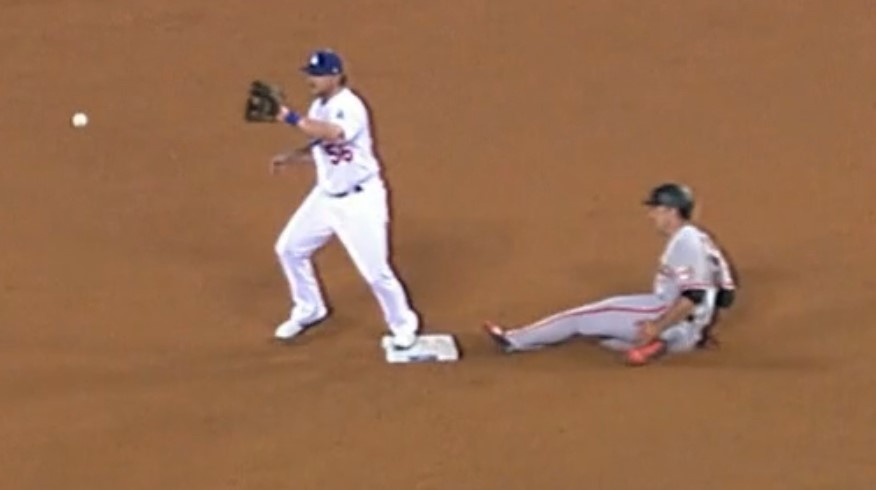
Next up, Thairo Estrada (yeah, me either). He hit a routine (although slow) grounder to short. Chris Taylor fielded it cleanly and tossed it to Sheldon Neuse who was standing on second base. Neuse caught the ball as if it were three hours before first pitch and he was having a catch with someone from the local Kiwanis Club. Neuse was drafted out of the University of Oklahoma by the Nationals in 2016. In college, Sheldon played exactly 1 game at second base. In the minors from 2016-2018, Sheldon played exactly 1 game at second base. Starting in 2019, both the A’s (to whom he was traded in 2017) and the Dodgers (to whom he was traded in 2021), started giving Neuse reps at 2B. He played 16 minor league games there before playing 20 for the A’s in 2019. He played there 21 times at Triple-A this season before being called up, and has now played there in 11 games with the Dodgers. So Neuse is no newbie at second base, but he certainly isn’t seasoned. Would a seasoned second baseman – or at least one more accustomed to the position, say Chris Taylor, or even Max Muncy who has played more than a thousand innings at second – have known to stretch for Taylor’s throw? I know Kiké Hernández would have (but he plays for the Red Sox). Gavin Lux would have (but he is out with a hamstring injury). Hell, Albert Pujols (he of 3.1 career innings at second base) would have. But that is not who was there with two outs in the ninth on Thursday night. That would be Sheldon Neuse, who didn’t heed the “game of inches” trope. So, despite an initial out call to end the game, upon further review, the runner was safe, the run scored, the bases remained loaded, and the game went on.

Still leading 3-2, the Dodgers just needed to retire Darin Ruf to go home happy. After working a 3-2 count, Ruf checked his swing on a cutter up in the zone, which, upon further review, was clearly a swing. But the first base umpire didn’t believe so. In the umpire’s “game of inches,” Ruf held up and took ball four, forcing in the tying run. Dave Roberts, likely frustrated with himself (why Kenley; why Neuse; why is this happening again?!), frustrated with his players (see, Jansen and Neuse), and angry at an umpire who blew the (would be) game-ending call, lost it. Out of the dugout he stormed, hat in one direction, arms in two other directions, and curse words and spittle in the direction of the offending (offensive?) umpire. Roberts got tossed, the next batter singled home two, at which point the game was all but done for.
The Dodgers were mere inches from splitting the series and being 8-5 on the season versus the Giants. They were mere inches away from being one game back of their NorCal rival. They were mere inches away from restoring some level of confidence in their $80M closer. Baseball, as the Dodgers learned the hard way Thursday night, truly is a game of inches. And, once again, the Dodgers fell short.

PLAY BALL!!

From “Let’s Go” to Letting Go

My son was three years old when I handed him a small glove and said, “Let’s go.” We were headed to Dodger Stadium and his first baseball game. But his early life experiences would not be limited to Chavez Ravine. No, as my father did before me, and as his father did before him, I elected to foist my ardor for baseball onto my son, to teach him the game and to teach him to love the game.

By the time he was six years old, he had already visited a handful of stadiums and walked on the field at Fenway Park. By age ten, he had seen a Home Run Derby and an All-Star Game, and met legends like Goose Gossage. Hell, before he could drive, he had visited the Baseball Hall of Fame and attended two World Series games. Sure, my dad and I were each raised on baseball, but neither of us had it nearly as good as my son, who was (and is) living the life of Riley when it comes to the game.

My son took to baseball like a fish to water, and began playing t-ball like the other kids. And soon he was working the Little League scoreboard on Saturday afternoons. Which led to him asking me to teach him how to keep score. He would walk around with an umpire’s indicator in his hand to keep track of the action. He learned the history of the game, watched present-day highlights, and kept an eye out for future stars (including one he played with). A running joke between us — but only because it is partially true — is that the only non-required reading he has done in the last five years is Dustin Pedroia’s biography.

My son has an affinity for baseball, and for baseballs. He has a knack for knowing just what level of annoyance is necessary to get a player to toss him one, and he knows where to stand at the end of an inning. Not even blue is safe, as my son positions himself by the umpire’s tunnel at the end of a game knowing that perfectly good pearls are in the home-plate umpire’s ball bag just waiting to be liberated and added to his collection.

But more than anything, my son loves the ballpark. Once he got his driver’s license, he would leave for games hours before me, parking outside the stadium and trekking in to be the first one through the gates. And he never wants to leave before the game is over. And by “over,” I mean that we need to step over brooms sweeping the stands.

Earlier this summer, our family spent some time in Chicago. So, of course, my son found his way to Wrigley Field hours before first pitch, leaving the rest of us to meet him there at a more reasonable time. And since we were going to be in the Midwest, and to continue my personal quest to get to every park in the majors, I booked us a trip through Ohio.

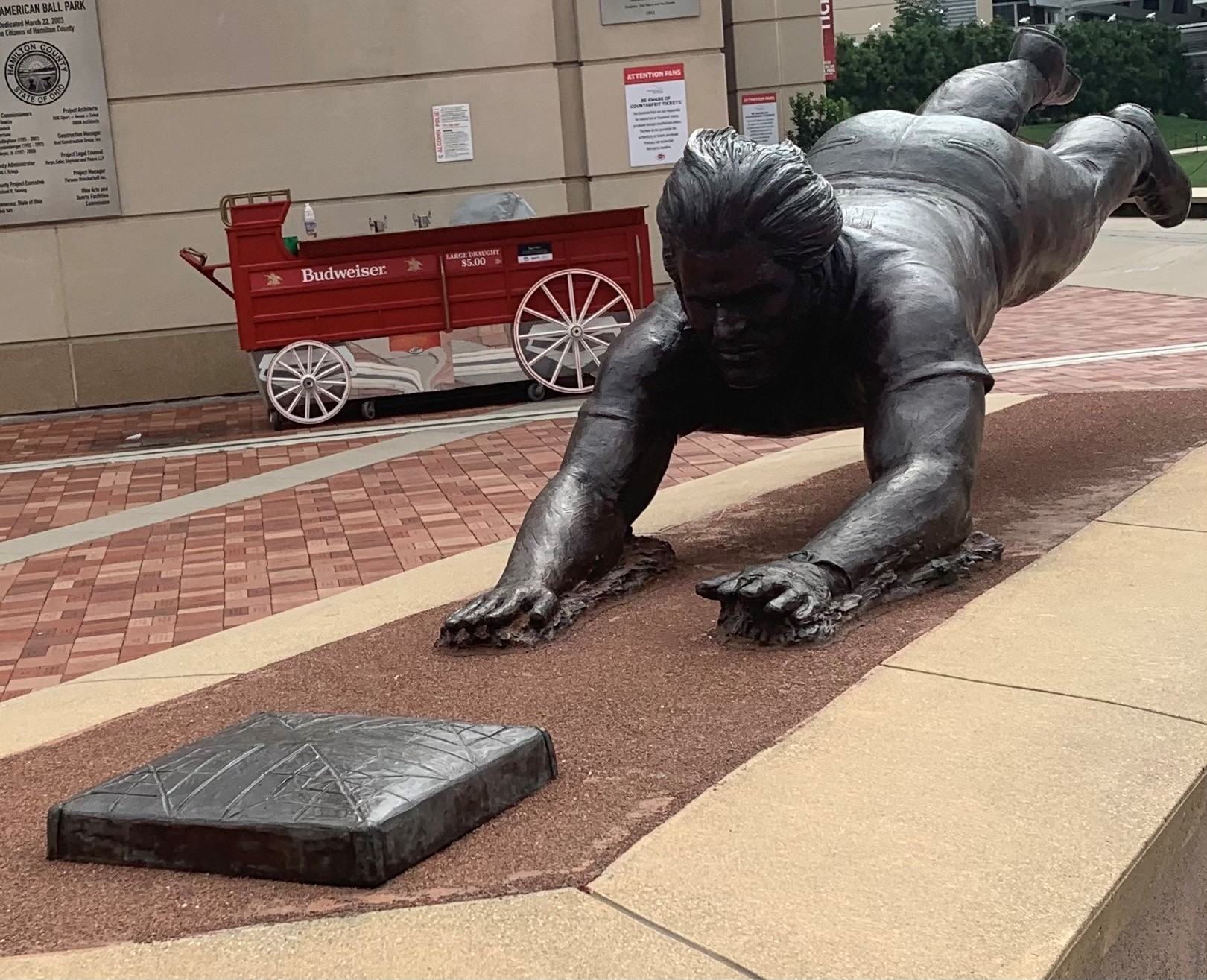
First stop: Great American Ball Park in Cincinnati. This time I went early with my son, but as soon as we had cleared the metal detector, he was off to chase a batting practice ball or a ballplayer interaction. Cincinnati was a revelation — a great park with an even better vibe. After walking past the statues of Reds greats on Joe Nuxhall Way, we were ready for our next stop: Huntington Park in Columbus.

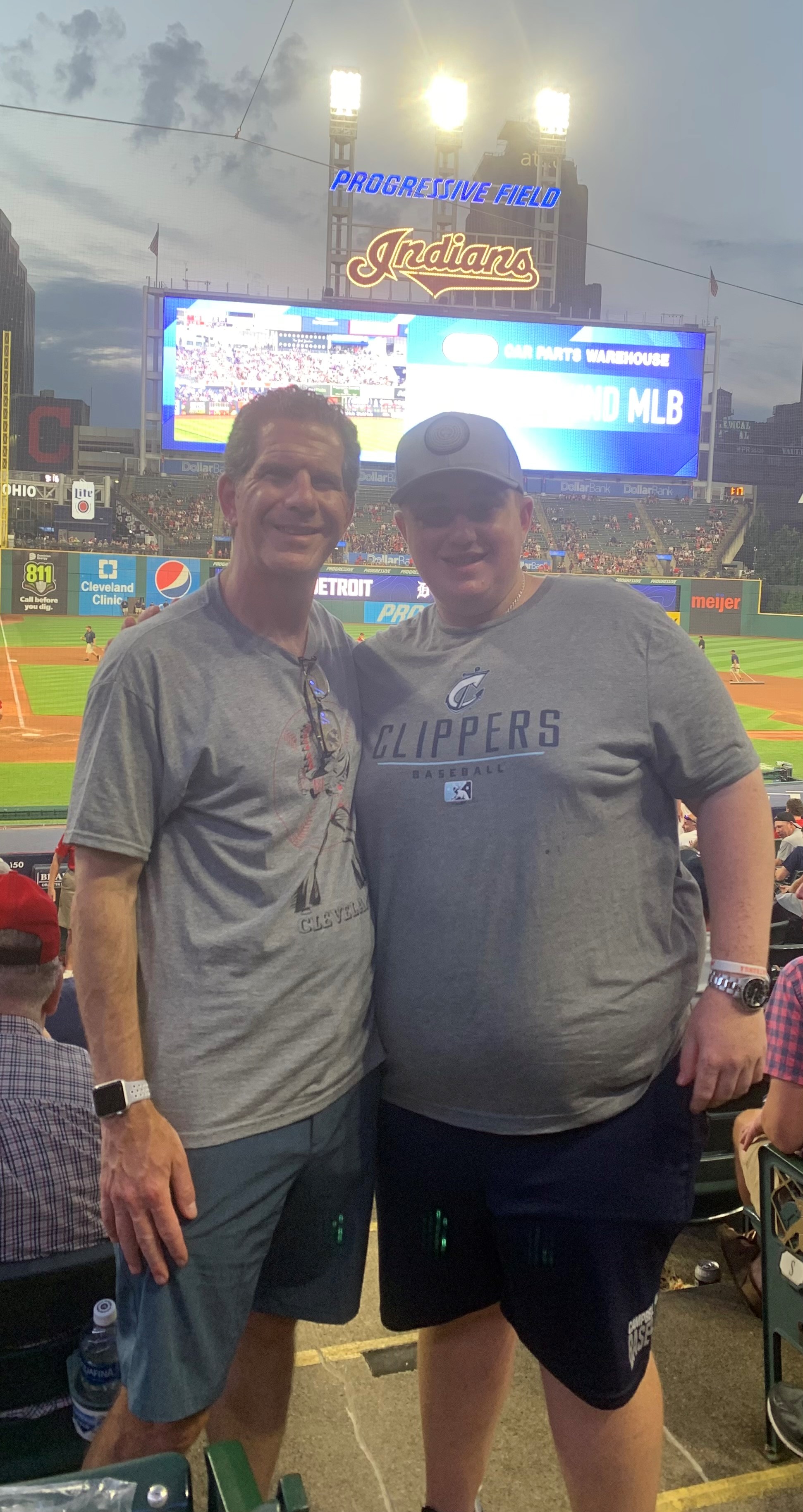
Truth be told, this Triple-A sojourn was my son’s idea. He looked at the map and the calendar, and realized that Columbus was on our way, and the team was in town. So, to the Clippers game we went. There we were treated to a grand tour of the minor league (in affiliation only) park for a team with a rich history. We sat along the first-base line and were close enough to hear the coach yell “Back!” when a pick-off attempt was made. Circling around the outfield, we could hear the center fielder call off his compadre on a fly ball in the gap. The food was great, the lines were short, and the parking was cheap. And the team store had a better selection than a major league team that I will not name to avoid offending any readers.

After a night in Columbus, we headed north to my son’s namesake yard: “The Jake.” Now known as Progressive Field, it lived up to the hype. Sure, I would have loved to have been at Municipal Stadium when the Red Sox won Game 5 of the 2007 ALCS, with Josh Beckett besting CC Sabathia. But from what I have heard about the “Mistake by the Lake,” I didn’t miss much from a ballpark standpoint. The Jake, er, Progressive Field, is fantastic. The sightlines are clean, the concourses are broad, the sausages are flavorful, and the beer is plentiful. The park holds 35,000, and it feels both larger and more intimate.

At one point late in the game, a collection of Indians faithful decided to taunt Miguel Cabrera. Even with a packed crowd, Miggy could hear them loud and clear. Their exchange was hilarious, and when the future Hall of Famer motioned for the group to stop drinking, the place erupted with laughter. The Indians scored 13 runs, Cabrera hit his 493rd career dinger, and the fans went home happy. This was one of those nights that you don’t want to end.

We took a long walk out of the ballpark — well after the grounds crew had descended onto the field. And then an even longer walk back to our hotel. Our journey was coming to an end. In that half mile stroll, I began to feel a great deal of nostalgia. Not only was this trip over, but so too was this phase of my relationship with my son.

Soon he will be a heady college student, with all that that entails. Soon he will be living nearly 2,000 miles and two time zones away. Soon he will be one of those rowdy guys drinking too many Great Lakes Lagers and shouting at opposing players. And, before too long, he will be taking his son (one can hope!) to ballgames and ballparks across this great land. East 9th Street in Cleveland, Ohio felt a little like a Rubicon, from which there was no going back.

But, like baseball, hope springs eternal. Once we were back in L.A., we had one more bite at the apple. With the Red Sox in town, we headed down to Anaheim Stadium to catch a glimpse of Shohei Ohtani (and to get his giveaway birthday pillow). Jake had a conversation with, and got a ball from, Jason Varitek, because, why wouldn’t he? And he caught a ball between innings. And the Red Sox won a nail biter. And we headed home. We drove a long way in silence. Him, with thoughts of baseball and the future. And me, with thoughts of baseball and the past.

PLAY BALL!!

What Are We Doing?

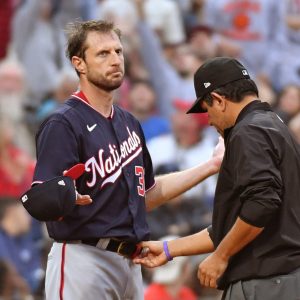
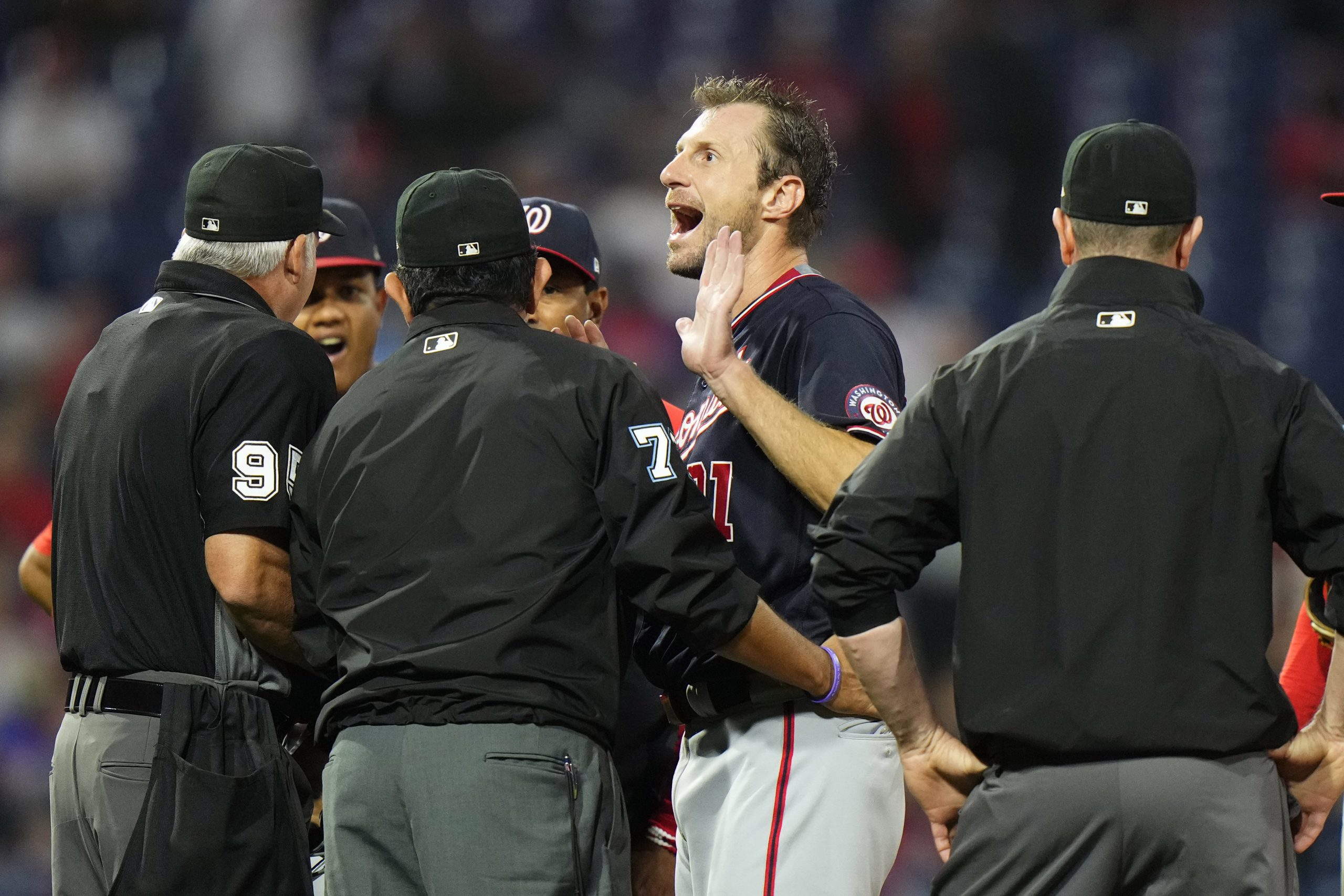
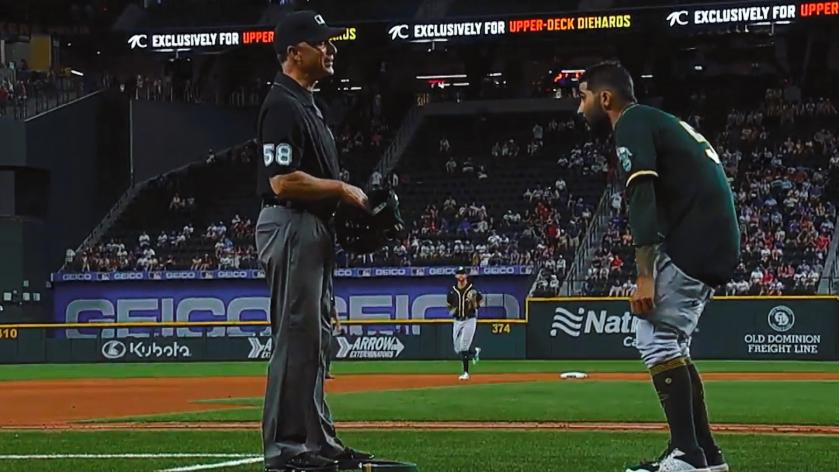
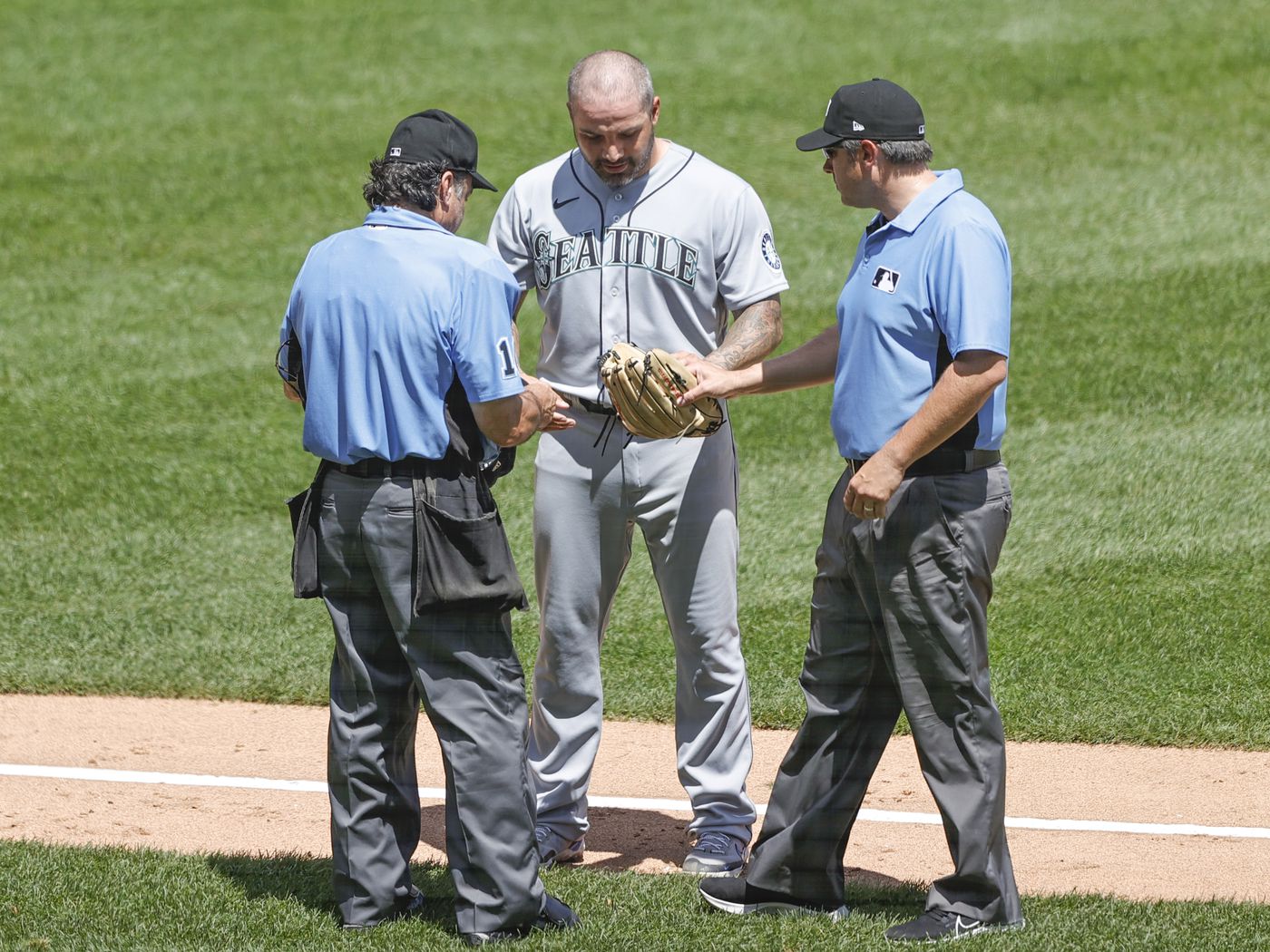
One of my best friend’s favorite thing to say is “What are we doing?” I have thought about that expression often the last couple of weeks with respect to MLB umpires turned TSA agents ferreting out illegal substances. By now we have all witnessed the Max Scherzer interrogations as well as the Sergio Romo striptease, and, of course, the Shohei Ohtani giggle-fest with the boys in blue. We know that the Mariners Héctor Santiago became the first victim of this new “sticky stuff” enforcement regime. But, really, what are we doing?


Santiago has already appealed his suspension, claiming his glove contained only sweat and rosin. And truth be told, what schmuck would load up with anything illegal the first week of spot checks? Scherzer, after Joe Girardi specifically asked the umpires to check him, said it best: “I would be a super fool to use something [that day].” This all begs the questions: Since when did umpires become scientists? Since when do they have the requisite knowledge and training to determine rosin + sweat is different than rosin + Bull Frog? Sure, a lump of pine tar on Michael Pineda’s neck is an easy call. Stevie Wonder could find a piece of sandpaper in Kevin Gross’s glove. It didn’t take the Hubble Telescope to spot the emery board flying out of Joe Niekro’s back pocket. And maybe Spider Tack is easy to discover – that shit makes Gorilla Glue look like Elmer’s. But we are now living in the gray area where pitchers may or may not be cheating, and – by rule – we have appointed the umpires judge and jury.

After his ejection last week, Santiago’s glove was confiscated and deposited into a plastic evidence bag for the guys at CSI Park Avenue to analyze. But why? As Jesse Rogers of ESPN reported: “Per source, the league didn’t need to inspect Santiago’s glove any further. The ejection and discipline are based on the umpires’ report of having detected a foreign substance.” So, why don lab gloves and radioactive tongs and make a show of taking the mitt out of play? Once they determined there was “sticky stuff,” they could have tossed Santiago – setting up his eventual 10-game suspension – and let him go to the clubhouse with at least his glove, if not his dignity. The rest of the performance was simple frippery.

Santiago, like Scherzer and Romo before him, denied any wrongdoing. And for the reasons articulated above, I tend to believe them all (but check back in a month or two when the inspections have become more lax). But what I find comical about this entire drill is that it is always the same: pitcher leaves the mound, umpire checks his hat, his glove, and his belt, and off he goes (well, not Santiago). Are those the only three places a pitcher might hide an illegal substance?

Buster Olney reported in the lead up to this new investigation routine that umpires were going to use scouting reports on different pitchers to check them for their specific tendencies. That is what Girardi was getting at with Scherzer – claiming that on all other nights Scherzer never touched his hair, but on this night he touched his hair, so obviously he was hiding something on his follicularly-challenged head. But outside of that one inspection, the umpires largely have stuck to the big three locations.

I was at a game in Cincinnati last weekend, and a Braves pitcher went behind the mound and bounced the rosin bag on his hand. He then adjusted his pants right above the ankles. The whole thing may have been totally innocuous. Or, he may have had some unlawful compound on his leg. We will never know. As this was happening I said to my son, “Let’s see if the umpires check his pants at the end of the inning.” Sure enough, the third out was recorded, and the umpires checked his hat, his glove, and his belt. The pants – which he touched immediately after loading up with rosin – were left uninspected. Which led me to ask: “What are we doing?”

It is my sincere hope that the June 15th memo, and the June 21st commencement of inspections, was a “scared straight” plan of attack. MLB is hoping that players, knowing that the Rule 6.02 (c-d) is now being enforced and suspensions are forthcoming, will stop the practice. If that was the wish, it seems to have been fulfilled. In the period between the day that word leaked that the hammer was about to fall and the day that umpires actually pulled out their science kits, spin rates dropped 22rpm for four-seam fastballs, 42rpm for sliders, and 47rpm for curveballs; strike out rates dropped a full percentage point; and batting average rose about six points (which seems small, but is actually a huge jump league-wide in a few short weeks). And since enforcement began, those rpm numbers have dropped even further and batting average has gone up another two points.

But since there have been countless inspections and only one (alleged) culprit, the current system of checks and re-checks is nothing more than Kabuki theater. If they really want to catch some culprits and end this endemic violation of the rules, the umpires should begin spot-checking different pitchers during random innings and in varied uniform and equipment locations. The pitchers can and should know that the “sticky stuff” highway is heavily patrolled, but they shouldn’t know behind which bush Smokey is hiding, and they certainly shouldn’t know what part of their person or equipment will be searched. Do that, and pitchers will have something to fear and a reason to not use the banned substances; do that, and teams will be disinclined to continue their never-ending quest to gain a competitive advantage (rules be damned); do that, and we will finally have some true law enforcement.

Otherwise, what are we doing?

PLAY BALL!!

p.s.  For more about this topic, and much, much more, tune in to the IBWAA Podcast.