A Good Reason to Sign Betts

The Los Angeles Dodgers just signed Mookie Betts to the largest contract in the team’s history. Depending on how you calculate the money and the years, and the reduction due to a shortened 2020 season, it is either worth more or less than the deals given to Mike Trout and Gerrit Cole. But where the deal ranks all-time is somewhat irrelevant. It is a monster contact, and one Mookie richly deserves as the consensus second best player in the game.

With the deal now done, the Red Sox are getting raked over the coals for not signing Betts to a similar contract. The argument being that the Boston ownership, which owns a regional sports network, Liverpool FC, and a racing team, could afford – competitive balance tax or not – to pay Betts whatever he is worth, plus 10%.

But the fact of the matter is that Boston could never “force” Mookie to sign a deal – a concept that keeps getting lost in the haze of vitriol. The team offered him at least $300M and he didn’t even counter – he was quite clear that he wanted to test free agency. Maybe he didn’t want to finish his career on the east coast and wanted to go somewhere warmer; maybe the pandemic changed his point of view and he felt like it was a bad idea to go into the market after an abbreviated season; maybe he just so loved it in L.A. that he couldn’t imagine playing anywhere else. We may never know why he chose to sign, but sign he did. And kudos should be given to Andrew Friedman and the Dodgers ownership, not criticism of their counterparts in the Back Bay.

The reasons the Dodgers chose to lock Betts up are obvious. He was the 2018 MVP; in six years he has accumulated 41.8 bWAR; has scored at least 100 runs in each of the last four seasons; and has never had an OPS less than .800. Not to mention that he is beloved by his teammates and plays hard every night. But in all of the writing and all the summaries of the deal that I have read, there is one angle I have not yet seen discussed.

When one thinks of the Dodgers, when one looks at their 2019 World Series lineup, when one peruses the official program (do they still have official programs without fans?), this is what one sees:

Clayton Kershaw
Cody Bellinger
Corey Seager
Justin Turner
Walker Buehler
Max Muncy
Chris Taylor
A.J. Pollock
Joc Pederson

What do all of these players have in common? In 2020, after the death of George Floyd, after the death of Ahmaud Arbery, after the death of Breonna Taylor, after the nationwide unrest and the Black Lives Matter marches and rallies, the Dodgers – playing in one of the most racially and ethnically diverse cities in the world – were an incredibly white group.

It is not every day that a team has the opportunity to sign one of the best players in the game. And when that team essentially has unlimited money, and that team has won seven straight division titles, but has lost two of the last three World Series, and that team hasn’t won a World Series in more than three decades, then you throw whatever you can to get that player. And so the Dodgers did.

But, I believe it would be naïve to think that Mookie being Black didn’t factor into their rationale, even just a little bit. He is a five-tool star. He is a pillar of the community. He is a player you want in your organization for the next baker’s dozen years. But his being Black, on a team with only two other Black players on its Opening Day roster, on a team without a marquee Black player since Matt Kemp roamed the outfield in the prime of his career in 2014 (an argument can be made for Yasiel Puig, but he was a polarizing figure in Los Angeles; and Curtis Granderson in 2017 doesn’t count as “marquee”), certainly helped the cause. This was a signing the Dodgers had to make; it was the right deal on many levels.

Much has been written about how patient Friedman has been; how he never handed out a nine-figure contract; how he was waiting for the one big score. But it is not like he didn’t try. He offered Gerrit Cole $300M; he offered Anthony Rendon more than $200M. He wanted either/both of those guys. And either/both would have made the Dodgers better…and whiter. So, in hindsight, it was a blessing they both chose to pass and sign elsewhere. Having the opportunity to sign Betts may not have been a happy accident, but it was made possible because two white players didn’t become Dodgers.

One has to believe that part of Betts’ $365M (or $375M depending on how you calculate it) contract served a public relations purpose; signing Mookie checked at least two boxes for the organization. I don’t fault them for that, but I also don’t overlook it. In these fraught times, when every corporate decision is viewed through multiple lenses, when companies and teams are working overtime on their DEI initiatives, when how you act is finally becoming a measure of who you are, it is not too far-fetched to believe that at least part of the Dodgers’ calculus in giving Mookie Betts more than a third of a billion dollars was the color of his skin.

And the team and the city (not to mention Mookie) are all the more rich because of that.

It’s Opening Weekend.

PLAY BALL!!

Taking the Low Road

I have been negotiating deals for more than two decades. In fairness, I have never been involved in collective bargaining, nor have I had any multi-billion dollar deals cross my desk. But, there are some principles of negotiation that are applicable to all types of deals – regardless of industry, venue, or value. One of those principles is that the best place to be in any negotiation is on the high road. You may win some and you may lose some, but in the end, you can hold your head high if your side of the street is clean. Muddy the waters, hedge on the truth, or fail to be forthcoming, and you will either cower under a sword of Damocles for the life of the deal, or, in the event of an impasse, you will carry the burden of “what if.” Neither is a great way to go through life; and neither bodes well for a long and/or successful career.

As I watched what I guess can be called a “negotiation” between Major League Baseball and the Major League Baseball Players Association unfold over that past two months, I kept asking myself, “Who is going to take the high road?” I wanted to know which side – press coverage be damned – was going to present an offer or series of offers that would allow them and their constituents to sleep well at night, regardless of the outcome. Well, baseball is starting up again (maybe?), no “deal” was done, and neither side ever even hinted at taking the northern route.

I can understand and appreciate that many of you reading this didn’t follow this as closely as I did; and some of you may be confused by the outcome. So, at the risk of being pedantic, and without stepping on the thousands of fingers that have already written about the current state of the state of baseball, allow for this basic primer.

After spring training shut down and the prospect of an actual season became tenuous, the owners and the players – back in late March – came to an agreement about what to do for the coming season (or, what to do if there was no season). The problem is that once they pulled that contract out of the drawer, they couldn’t agree upon what they had previously agreed upon. That’s an inauspicious place to start. But we do know a few things for sure:

  • The players were provided an advance of $170M against their eventual 2020 salaries, to be divvied up based on service time. If the season didn’t happen (it still may not), this money was the players to keep, no give backs.


  • If the 2020 season happens, no matter how many games get played, each player would get credit for a full season of service time. (For the uninitiated, service time affects when a player is eligible for salary arbitration and free agency. This is obviously an important issue.) And if the season is scrapped, players would get the same amount of service time for 2020 as they received for 2019. So, Mookie Betts would still become a free agent next fall as he would get credit for a full season (he played a full season in 2019); and Gavin Lux would only get credit for about 1/7th of the 2020 season, as he only spent about that much time on the Dodgers’ roster in 2019.


  • The one issue that you have been reading about ad nauseam is what would happen if the teams played with no fans in the stands. The players believed the March contract was iron clad that they received a pro rata share of their salaries – with or without fans. The owners disagreed, and seized on this language: “[T]he Office of the Commissioner and Players Association will discuss in good faith the economic feasibility of playing games in the absence of spectators or at appropriate substitute neutral sites.” Somehow the players didn’t believe this says what we can all read it says. And this, my friends, was the first time the players could have taken the high road and chose otherwise.

My guess is that the players received some bunk legal advice. I think they were told that it was pro rata no matter what, and then the die was cast. There was no slinking back to the membership to say, “Um, guys, remember what we told you about that pro rata thing? Yeah, well, we forgot about that other provision that mentions economic feasibility and the absence of spectators.” Rather, they charged right ahead and essentially dared the owners to “prove us wrong.”

It seems that the owners must be afraid of heights as well, because they twisted themselves into various Wetzels trying to get out paying the players. First they claimed that pro rata was only if fans were in the stands (not an unfair reading). But then they said they could only play X number of games because they would lose $640,000 for each game played in empty parks. When asked to provide the proof such assertion, they hemmed and they hawed, but they didn’t bring any receipts. Then they dawdled. They fiddled while Rome burned. They took their sweet time responding to the players. And when they did respond, they simply dressed up the same offer in different clothes. When you drilled down on their offers, they presented the players with about $1B in salaries, payable either (a) over 82 games, or (b) over 76 games, or (c) over 60 games, or (d) to be allocated amongst the players based on how much they would otherwise be paid. But it was like a Taco Bell menu each and every time – all of the ingredients were the same, it was just a question of what shape you wanted it delivered. The players rejected each one.

“Wait a minute”, you may be saying. “Didn’t they come to an agreement? And isn’t that why we have an upcoming season?” Unfortunately, they didn’t. One of the provisions of that March agreement allowed the commissioner to set the schedule if no agreement could be reached. And it seems that this was the trump card the owners kept in their back pocket the whole time. If they could just delay the negotiations until only 50-ish games became feasible, they could implement the schedule and save a bunch of dough.

The players knew this; they knew that at the end of the day, they could be “forced” to play. But, they wanted to make sure if that ever happened, they would get their pro rata salaries. So, they continually pushed back against offers that would have actually earned them more money (e.g., 80% for 70 games vs. 100% for 50 games), because they should get “a day’s pay for a day’s work.” At some point in this battle (about two months too late), the owners realized two things: (1) the players were never moving off the pro rata concept (right or wrong, they were willing to die on that hill); and (2) the players were setting the owners up for a grievance.

A quick sidebar about grievances. These are available in labor situations when one side doesn’t believe the other side acted reasonably in a negotiation. They are long and costly. But, by the players estimation, if they could show the owners were being unreasonable, they could win a grievance and extract the value of the difference between the number of games the owners instituted, and what they could prove was a reasonable and feasible number of playable games. The players believe(d) this could be somewhere in the neighborhood of $1 billion. A grievance could and would happen while games are being played, so it would not result in any work stoppage.

Back to our story. Once the owners gave up on trying to reduce salaries below a pro rata share, they offered the players a 60-game schedule, but conditioned on the players waiving their right to file a grievance. The players countered at 70 games with the aforementioned waiver. The owners responded by saying they would not respond. The players then took to press releases and social media to proclaim, “Tell us when and where.” They told the owners to set the schedule and they would be there. So the owners did just that.

Low road, meet the players. The players then started to balk at some of the health and welfare provisions; they started to complain about the number of days in the schedule; they said they couldn’t necessarily be there “when and where” the owners wanted. Ultimately, the owners set a schedule the players would abide by, the health and welfare issues were resolved, and a season was set.

So now we have a season to look forward to. I am not a huge fan of Trevor Bauer – I think he is mercurial, not a great teammate, and oftentimes thinks he is the smartest guy in the room. But, I have to say he nailed it with this tweet:

“So we gave up shares of playoff money, eliminating the qualifying offer for 2021, paycheck advance forgiveness, Covid 19 protections, and protection for non-guaranteed arb contracts for next year in order to hold on to our right to file a grievance…”

As stated above, the grievance may ultimately be worth a lot of money, so waiving that right is a big deal. But, that is a roll of the dice. And it is money that if it comes, won’t come for years. And the players were willing to waive it for just an additional 10 games. So, to preserve their right to file a lawsuit, the players passed on the following (h/t to Jeff Passan), all of which were on the table at one point or another:

  • Expanded post season (from 10 to 16 teams) for 2020 and 2021. This was agreed. It was a done deal. More teams competing (which, over 60 (or 70) games, would have been incredible). More money for more playoff games (see below). Losing this was simply asinine.


  • Universal DH for 2020 and 2021. This was agreed. It was a done deal. As it stands, we will have it for 2020, but no guarantee beyond this season. This is an additional roster spot for an aging slugger, or a toolsy fringe prospect who can play various positions allowing a corner outfielder or first baseman to have an occasional day off. Losing this is taking money out of players’ pockets.


  • Forgiveness of $33M of the above-referenced $170M advance. This one was not agreed, but seemed playable. And it has real-life implications for certain players. If a player has a guaranteed MLB contract, he received a minimum of $286,500 from the $170M allotment. The players demanded pro rata compensation; and now they are playing 60 games, or 37% of the regular season. Some examples:

A player like Collin McHugh of the Red Sox has a guaranteed contract of $600K, of which he is only entitled to 37%, or $222,000. But he has already been paid $286,500. So, he technically owes the Red Sox $64,500 for the right to play this year. Yes, they figured that out, and he does not have to write a check to the team every two weeks. But save for incentives in his agreement, he will not be paid anything additional for playing in 2020. Cant’ see how that was a win for the players.

But McHugh is relatively rich (he has made about $16M so far). Take the case of Braves prospect Cristian Pache. He is entitled to $46K for a “split” contract (between the majors and the minors). If he doesn’t spend any time in the majors this season, he is entitled to $17K. Per the March deal and the $170M advance, he has already been paid $16,500. There is no minor league season this year, so no minor league salaries. But Cristian won’t go home to become a barista. He most likely will be on the 60-man “taxi squad” that is ready to fill in when a player gets hurt or gets Covid. For that right, for being a professional athlete required to remain in shape, for being ready to play at a moment’s notice and exposing himself to sickness with roommates and in the clubhouse, Mr. Pache will get an additional $500 over the next three months. Yes, that is correct. He will get about $40/week – pre-tax. I am sure Pache could have used some of that $33M in salary forgiveness.

According to Bob Nightengale of the USA Today, 19% of all players will be playing for virtually free this year, earning $25,000 or less since they already received their share of the $170M advance. Doesn’t seem like a good deal.


  • The players had asked for a 50/50 split of incremental playoff money. The league offered a flat $50M. They will get neither.


  • To protect future free agents in a down economy, the league offered to eliminate direct draft-pick compensation for free agents tagged with qualifying offers. Teams losing a top free agent would get a compensatory draft pick, but the signing team would not be penalized by having to give up a top pick. This would be a boon to the players and an extra incentive (or not a disincentive) for teams to sign a free agent. That proposal, too, went the way of the dodo bird.


  • And for the fans, the owners had asked and the players had agreed to additional commitments to wearing microphones on the field and other broadcast enhancements. The players had also offered to hold events such as an off-season All-Star Game or Home Run Derby to generate additional revenue. All gone in a fit of pique.


  • If there is one silver lining in all of this, it is that in the player’s final proposal, they offered to allow advertising on jerseys. Thankfully, that also died in their inability to close a deal.


Covid-permitting, there will be baseball in 2020. To crib Jayson Stark, ultimately they didn’t drive the bus off the cliff. But neither side passed the driving test. It is easy to stand on the sidelines and judge the parties and their various chess moves; it is much harder to be in the arena. And yet, some decisions seem quite simple on their face.

Joel Sherman, I believe, was the first to posit that the owners could offer pro-rated salaries, with a three-year deferment. Imagine how much more smoothly this could/would have gone if the owners offered that as soon as the players hardened their position with regard to further salary reductions. Sure, the owners didn’t want to take on additional debt in these trying times, but they could have made up the difference by offering smaller contracts and making fewer free agent signings in the future. Three years down the road, they could have been in an even better financial position. And they would have called the players’ bluff. And they could have started down the road to recovery with additional playoffs, and additional television revenue, and advertising on uniforms, and an extra-seasonal All-Star Game and Home Run Derby. And they would have taken the high road which would go a LONG way towards mitigating the risk of a potential $1B grievance award. They did none of that.

The players could have made the same deferment offer. They could have gotten more players, and more games, and more revenues, and more advantageous free agency, and more fun and excitement. They could have positioned the owners to make more money to give them less ability to cry poverty next off-season. And they could have shown strength by wisdom, not intransigence. Going into the 2021-22 labor negotiations, the players will have very little leverage; the game is somewhat damaged; the billionaires have the resources and capital reserves to hang on a whole lot longer than the vast majority of players. The owners’ assets will be there for decades, they have ample time to recoup any losses brought on by a strike or a lockout. But the players have just a few years to make their money, to monetize their asset. Lose (part of) another season to labor strife and the losses will be considerably more than the value of 10 games (which, due to Covid, may never get played).

The players won this battle in the court of public opinion, but they didn’t win anything else. They lost time, they lost money, and they lost the high road and any chance to win the next one. And whether they actually play the 2020 season or not, the next one portends to be a doozy.

July 23…

PLAY BALL!!
Wally’s World

People really seem to be nostalgic these days. As I previously wrote, it could be The Last Dance or it could be being cooped up at home and finally going through those old family photos, or it simply could be that because we have no “present” sports, we need to look to the past. Whatever the reason, it is our current state of mind.

One of my daughters turned fourteen this week, which got me thinking about when I turned fourteen (there is that nostalgia again). The year was 1986, and baseball was great. Now, this article will make no reference to October of that year, nor will it mention a defunct stadium near La Guardia Airport, nor will you read the first name of the Dodgers’ (in theory, anyway) new right fielder. No, this piece will hearken back to the beginning of the season, and a player who captured everyone’s attention – seemingly out of the blue.

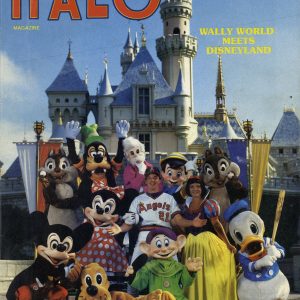
After having a break-out winter in Puerto Rico, the California Angels chose Wally Joyner, the fresh-faced kid from BYU, as their starting first baseman over team stalwarts Juan Beniquez, Daryl Sconiers, and “Hall of Famer Rod Carew.” And the rookie did not disappoint.

Many of us can still remember Wally Joyner’s first month in the big leagues. He was – in a word – incredible. Joyner went hitless in his first three Major League at bats before doubling for the first of his 2,060 career hits. And that double got him going. He hit in 20 of his first 25 games, collecting 35 hits, with a slash line of .337/.386/.615 and a 1.001 OPS, to go along with eight homeruns. It is hard to say if that is the best first four weeks of a MLB career, but it is up there.

Joyner’s hot start got him a feature article in the May 26th edition of Sports Illustrated, back when that meant something. By the end of May, Wally had played 48 games, hit 16 dingers, was batting .305, and had an OPS of .928. By the time we reached the All-Star break (where Wally was voted the starter over Don Mattingly and Eddie Murray), he was hitting .313 , with 20 homeruns, 72 RBI, and a .904 OPS. The kid was flying high.

And then the second half of the season happened. Wally hit .257 with only two more round-trippers and a .664 OPS. What was once a lock Rookie of Year season was passed on the outside by Jose Canseco (not the only time steroid use affected a year-end award).

By the end of the season, Canseco had the same slugging percentage as Joyner (.457) and a worse OPS (.775 vs. .805), but he hit 11 more homeruns and drove in 17 more runs. Canseco’s second half fell off as much as Joyner’s, but back in 1986, voters looked at counting stats, and Wally didn’t match up to Jose. Had Wally hit five or six more dingers, or drove in 10 or 15 more runs, there is great chance he walks away with the hardware. But the baseline for his career was set. It would be 14 years before Wally had a season with an OPS+ of less than 101, averaging a 120 OPS+ in that span (i.e., on average, Joyner was 20% better than the typical Major Leaguer for those 14 years).

We all remember that rookie season, and maybe we can still picture him in those Royals or Padres uniforms later on, but I don’t think we accurately recall what a totally consistent player he was for a decade and a half.

Wally finished his career with 11 seasons in which he hit .280 or better; 12 seasons with an OBP above .350; 12 seasons slugging at least .400; and 12 seasons with an OPS of .750 or higher (including eight with an OPS in the .800s). And yet, we remember Canseco’s career more fondly. We think he was the better player because he was a Bash Brother, won a World Series, and went 40/40.

A little thought experiment:

Player A (career): .266/.353/.515/.867; 42.4 bWAR
Player B (career): .289/.362/.440/.802; 35.8 bWAR

One additional fact, Player A played one more season than Player B, which may account for some of that bWAR discrepancy.

You are all smart readers, so by looking at that third column, you know that Canseco is Player A. But Joyner’s career is pretty comparable – on paper. He never dated Madonna or wrote a tell-all book or had a ball bounce off his head for a homerun in Cleveland. His name is Wally for heaven’s sake; he is easy to forget.

But Wally Joyner went about his business each and every day and put up solid Major League numbers. He was a joy to watch. He played the game the right way. He was slick defensively, and had a beautiful lefty stroke. I just wish more people remembered him, his game, and his career. Had he kept up the pace he started with, we would be talking about “Hall of Famer Wally Joyner.” But he wasn’t meant to be a superstar, just a super player. My guess is, at the end of the day, he is perfectly okay with that.

PLAY BALL!!

1982: What a Glorious Year

Sure, “The Last Dance” is on everyone’s lips as it taps our mental keg for nostalgia in this time of nothingness – sports-wise, at least. I watched those two hours last Sunday night, just like six million other people. And I will do the same for the next five weekends.

But what has really tickled my fancy, what has really brought me back to my youth, to the days of boat shoes and non-ironic trucker hats, has been a little gift from FS1. In our time of need – when there is no baseball and no baseball on the immediate horizon – FS1 has filled my Saturday mornings with…

Well, let’s just say: “Hello there everybody, this is Mel Allen.” If you cannot hear those words as you read them, if you cannot hear that theme song behind those words that you hear as you read them, if you do not get a tingle up your spine when you hear that theme song behind those words that you hear as you read them, then to quote Mrs. Landingham, “then, G-d, Jed, I don’t even want to know you.”

In an effort to find a silver lining in this cloud of corona virus, I have discovered watching my childhood unfold on the MLB Network every night and on FS1 every weekend. I am still amazed at what a thrill these are to watch, and how many players I still remember (Lenn Sakata, anyone?). And the beauty of TWIB is that FS1 has neither rhyme nor reason in their airing schedule – they are random shows from random years in the early ‘80s. Last weekend we were treated to an episode from September of 1982. The Brew Crew and the Cards were surging, but so too were the Orioles and the Braves. After the first commercial break – before we got to bloopers and great plays – Mel took us around the league to visit the best rookies of 1982. Oh my! I had long since forgotten – if I ever even knew – the murderers row of players who got their start in the second year of the Reagan Administration.

In case your memory is as foggy as mine, here is a list of the Top 20 from 1982 (ordered by career bWar; with an (*) denoting Rookie of the Year winner):

1. Cal Ripken, Jr.*
2. Wade Boggs
3. Tony Gwynn
4. Ryne Sandberg
5. Brett Butler
6. Frank Viola
7. Gary Gaetti
8. Jesse Barfield
9. Kent Hrbek
10. Chili Davis
11. Willie McGee
12. Von Hayes
13. Mike Moore
14. Dave Henderson
15. Dave Stewart
16. Steve Sax*
17. Johnny Ray (anyone remember JR?)
18. Howard Johnson
19. Tom Brunansky
20. Bud Black

That is a ridiculous group of players, with four Hall of Famers and 94 career All-Star appearances. By way of comparison, here are the three seasons on either side of 1982:

  • 1979: Rickey Henderson (HOF); 41 All-Star appearances
  • 1980: Harold Baines (HOF)?!; 40 All-Star appearances
  • 1981: Tim Raines, Lee Smith (HOF); 51 All-Star appearances
  • 1982: Ripken, Gwynn, Boggs, Sandberg (HOF); 94 All-Star appearances
  • 1983: No HOF; 35 All-Star appearances
  • 1984: Kirby Puckett (in fairness, Roger Clemens was in this class as well); 77 All-Star appearances
  • 1985: No HOF; 26 All-Star appearances

And, oh, by the way, here is a short list of players whom you may remember from 1982 that didn’t make the bWar Top 20:

• Wally Backman (he could have been on the manager list below, but he got fired by the Diamondbacks three days after he was hired due to his failure to disclose a bunch of personal issues (legal, financial, domestic))
• Bob Dernier (only included him on this list because I loved watching him on WGN when I got home from school)
• Jack Perconte (only included him here because I love the “what if” between him and Steve Sax)
• Onix Concepcion (only included because what list isn’t better with Onix Concepcion?)
• Rusty Kuntz (because, why not?)
• Eric Show (only included because he sat down on the rubber after giving up hit #4,192 to Pete Rose)

And here is a list of players who debuted in 1982 who have gone to manage in the big leagues:

• Bud Black (#20 above)
• Bob Brenly
• Terry Francona
• Ron Gardenhire
• Brad Mills
• Ron Roenicke
• Ron Washington

There is really no point of this other then to look back with fondness at Harvey’s Wallbangers and appreciate the greatness that was Darrell Porter, Tommy Herr, and Ken Oberkfell. There will be more This Week in Baseball on FS1 this weekend. It is strong recommendation that you tune in and flash back.

PLAY BALL!!

Is Dave Roberts That Bad?

My dad is in good company. Although he LOVES Dave Roberts for that certain stolen base in Game 4 of the 2004 ALCS, he DESPISES Dave Roberts as the manager of the Los Angeles Dodgers. He is at times exasperated by moves that Roberts makes, or – just as often – moves he doesn’t make. He quibbles with Roberts’ lineup construction, his bullpen usage, and the positioning of the defense. My father vacillates between thinking that Roberts makes all of these bad decisions on his own, and the idea that he is merely a pawn for the “propeller heads” in the front office (my dad is fond of phrases that could easily appear in Halt and Catch Fire and were certainly said at Comdex in the mid-80s). Regardless, my dad no like Dave Roberts.

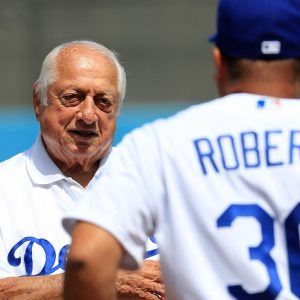
Contra to the Roberts-haters, Tommy Lasorda is universally beloved in Los Angeles. Maybe it is his jovial manner; maybe it is his raspy voice; maybe it is expletive-fueled tirades; maybe it is his beating the hell out of the Phillie Phanatic; maybe it is how he reacted with Gibby hit his dinger in ’88. Or maybe it is just that time heals all wounds, and now we view Tommy as an institution; carefully positioned in his dugout level seat behind the Dodgers’ on-deck circle, waiting for the camera to catch him so the crowd can whoop and holler, and then he can make his way under the stadium and back home again. Regardless, everyone loves Tommy.

On a recent Effectively Wild podcast, I was reminded of such hagiography. Sam Miller was recounting some amazingly bad managerial decisions from World Series past. And there were some doozies. Sam walked through Game 3 of the 1981 World Series in some detail, which I will expand upon here. After reading, ask yourself how you would feel about Tommy if you knew then what you know now about pitch counts, platoon advantages, times through the order penalties, and just plain ol’ common sense. Here goes:

The Yankees pulled into Dodger Stadium with a two games to none lead in the 1981 World Series. They won the opener 5-3, and had a 3-0 shutout the next night. The Dodgers were thus left in a must-win situation.

Jerry Reuss was 10-4 with a 2.30 ERA in 1981, so he was the logical choice to start Game 1. He gave up four earned runs in less than three innings. Burt Hooten, with a 11-6 record and 2.71 ERA was a perfect starter for Game 2. And he did not disappoint – going six innings, allowing three hits, and no earned runs. But Steve Howe brought his gas can to the mound in the 8th, facing three batters and giving up two runs to contribute to the loss.

Which brings us to the make-or-break Game 3. On the hill for the Bums was rookie sensation Fernando Valenzuela. It made perfect sense for Lasorda to wait for a home game to pitch Valenzuela. Fernando was 7-2 with a 1.57 ERA in 12 home starts during the regular season when Fernando Mania swept through the Southland. The Mexican sensation tossed eight shutouts, completed eleven games, and struck out 180 batters in 192 innings. Freddie won the Rookie of the Year and the Cy Young Award.

So the Dodgers must have felt [insert Larry David voice] pretty, pretty, pretty good going into Game 3 against Dave Righetti.

1st INNING

Fernando started the game by walking Willie Randolph; and with one out, walked Dave Winfield. But a pitcher’s best friend courtesy of Lou Piniella got him out of trouble. And when the Dodgers scored three times with two outs in the bottom half, Valenzuela was staked to a nice lead.

2nd INNING

So much for that lead. A homerun, a double, and a single made the score 3-2 after one and a half.

3rd INNING

Two singles, an intentional walk, and a homerun gave the Yankees a one-run lead. So, after three innings, Valenzuela had given up 4 runs on 6 hits, with 4 walks and 2 strikeouts, on 72 pitches. Not what Tommy or the hometown faithful were hoping for.

4th INNING

Fernando settled down in the fourth, and got out of there throwing only 12 pitches (which included another walk).

5th INNING

The fifth inning included yet another walk, but also a strikeout. By the end of the frame, Freddie was up to 101 pitches.

The Dodgers took the lead in the bottom of the 5th on a Pedro Guerrero double and a Mike Scioscia double play. Valenzuela, allowed to hit with two outs and Guerrero on third, grounded out to short. First moment of indecision: If Scioscia merely flies out so there are runners on first and second with one out, does Valenzuela still hit for himself? My guess is yes, as Tommy most likely would have had him bunt the runners into scoring position for Davey Lopes. But, with 101 pitches under his ample belt, and an important insurance run 90 feet away, would it have made sense to hit for Fernando in that moment? That wouldn’t have been a crazy idea. Alas, the fun was just beginning.

6th INNING

Fernando started the top of the 6th by walking Randolph again. 107 pitches, the tying run on via the walk, the 2-3-4 hitters coming up. Time for the hook? Nah. Randolph got caught stealing, and Valenzuela got out of the inning throwing only 14 pitches.

7th INNING

The 7th was a cakewalk, with Fernando getting Piniella, Bob Watson, and Rick Cerone on 10 pitches. At the stretch, #34 was up to 125 pitches.

This is a good time to point out that while the Dodgers bullpen had been a little shaky, they did have arms available. Tom Niedenfuer threw 24 pitches over three innings in Game 1, but did not pitch in Game 2. Dave Goltz threw two whole pitches in Game 1. Terry Forster threw six pitches in one inning of work in Game 2. But with Howe’s meltdown in Game 2, maybe Tommy was hoping to get at least eight out of his workhorse.

8th INNING

Tommy’s best laid plans seemed to go awry when the Yankees led off the top half with two straight singles, with a pinch hitter for the pitcher due up. Should Fernando have been pulled after the lead-off single and 126 pitches? Should he have been pulled after 132 pitches and the potential tying and lead runners on base? Apparently not. The Yankees, doing their level best not to win, had Bobby Murcer pinch hit, and he promptly bunted into a double play. Five pitches later Willie Randolph grounded to third and Fernando wiggled out of yet another jam.

Mike Scoscia led off the bottom of the 8th with a single. Pinch hit Fernando here, hoping to get the insurance run? How about just having him sacrifice Scioscia into scoring position? Both were too logical. Tommy let Fernando swing away; and he grounded into a force out. Now the abdominous pitcher had to run the bases. Sure, the Dodgers had a few players who were better suited to score from first on a gapper (Derrel Thomas, Jay Johnstone), but Tommy chose to stick with his guy – through thick and not so thin. Davey Lopes struck out and Bill Russell popped out, and Fernando had a short walk from first base back to the mound.

9th INNING

Fernando had walked seven, struck out five, given up nine hits and four runs as he toed the rubber for the final frame. He had thrown 134 pitches. He was about to face the 2-3-4 hitters – all right handed. I guess there was no need to call to the pen.

And such is the brilliance of Tommy Lasorda. A groundball to second, a flyout to right, and strikeout for the exclamation point brought the crowd to its feet. It took 15 more pitches to finish the job, but finish it he did.

If the Internet was functioning in 1981, if Twitter was alive in 1981, both may have broken as the innings and the pitches and the pressure kept ratcheting up. But Fernando Mania was a real thing, and Tommy knew best. But getting the right result with bad process doesn’t make you a genius – it just makes you lucky. That said, with one of only two World Series titles over the last forty years, I imagine Dodger fans would rather be lucky than good.

But it still begs the question: Was Tommy Lasorda a better manager than Dave Roberts?

PLAY BALL!!

Baseball is Hard

Baseball is hard. There remains nothing more difficult to do in sports than hit a round ball with a round bat.

Case in point, one Mr. Shaq Thompson. That name may sound familiar to you, as he has played five seasons as a linebacker for the Carolina Panthers. But before Thompson was collecting 356 combined tackles in the NFL, he was a three-sport star in high school – football, track, and baseball.

Shaq was good enough in spikes that the Red Sox drafted him in the 18th round of the 2012 draft. So before heading to Seattle to play football for the University of Washington, Mr. Thompson headed to the Sox’ rookie-level team in the Gulf Coast League. He played in 13 games and had 39 official at bats. He struck out 37 times. You read that correctly. An athlete who was a first-team All-American according to Rivals.com, Parade, and the USA Today, and who was a second-team All-American according to MaxPreps.com and Sports Illustrated; an athlete who was able to run 100 meters in less than 11 seconds and 200 meters in less than 22; an athlete so highly thought of that a storied professional baseball organization drafted him before Alex Bregman (out of high school), Josh Hader, Dansby Swanson (out of high school), Mike Yastrzemski, and Andrew Triggs. And yet, this athlete didn’t put a ball in play until his ninth game; and this against the lowest level of professional competition.

All was not lost: Shaq Thompson did draw eight walks in those 39 games. So when, in his final game, he made solid contact, but was retired on a line drive to right, Thompson ended his professional baseball career. He walked off the diamond and onto the gridiron where he would find a lot of success…and a lot of money (he recently signed a 4/$54M contract extension).

I love the Shaq Thompson story because it says so much about how difficult this game is to play. A 6 foot, 225 pound specimen of an athlete jogs on to the baseball field on top of the world, and walks off humbled, if not defeated. Who can’t relate?

There are many of these stories – athletes who went on to become stars in other sports but could not do so in baseball. Danny Ainge, Tracy McGrady, Tim Tebow, Russell Wilson, and, of course, Michael Jordan. So the next time you catch an old game on the MLB Network and see a player you hadn’t thought about in a long time (like this lineup: Jim Clancy (P), Alan Ashby (C), Jim Presley (1B), Mark Lemke (2B), Ernie Riles (3B), Iván DeJesús (SS), Kal Daniels (LF), Stan Javier (CF), Iván Calderón (RF), Steve Balboni (DH)), know that regardless of your individual recollection, he was an incredible baseball player. For a time, he was one of the best of the best. So even if our memory needs to be jogged from time to time, these guys deserve our reverence. Because, man, baseball is hard.

PLAY BALL!!

Opening Nay

As we all know, today was supposed to be Opening Day. Yes, I capitalized it because for those of us who love baseball more than any other pastime, Opening Day is every bit as sacred – and considerably less profane – than the Super Bowl. No one ever bitches about the “S”uper “B”owl.

All over the airwaves today we were peppered with baseball from years past. MLB did a heck of a job trying to lift our spirits with unforgettable games on the MLB Network, FS1, two of MLB’s YouTube channels, two Facebook feeds, and three different Twitter accounts. You had your choice of Giants v. Dodgers, four different Home Run Derby competitions, classic World Series games, no-hitters, perfectos, and even the A’s 20th straight win. It was all there, and it was nothing more than a cupcake for the kid whose birthday party was otherwise ruined.

In 1998, Bart Giamatti first read “The Green Fields of the Mind.” It, like the man himself, is a national treasure. The poem starts with the line: “It breaks your heart. It is designed to break your heart.” And with everything going on in the world today – like right now, today, tonight – baseball in many ways should be the furthest thing from our collective minds. But it is not. It is not because today is supposed to be Opening Day – a day of renewal, a day of hope. So, it not being here today – today of all days, when the U.S. death toll from this nasty pandemic nears 1,200 – like Bart said, breaks your heart. Under the current circumstances, what could be better to take our minds off the news, allow us to literally and figuratively change the channel to something less grim, than baseball.

The next line of the poem reads: “The game begins in the spring, when everything else begins again…”

But, this year, we cannot be certain there is any truth to that statement. Many writers, from Ken Rosenthal to Jayson Stark to Jeff Passan have written extensively on when this season may begin, but Stark owned it with a simple “we have no idea.” So Giamatti may end up being wrong this year, it may not begin in spring – hell, it may not begin at all.

Next up is “You count on it, rely on it to buffer the passage of time…”

Man do we need something to buffer the passage of time right now. We live in a moment where days roll into each other, with kids and partners home – locked in our homes – with no legal form of escape. No mental or theoretical escape from the body count and lack of testing and the lies – so many lies – and the worry when you wake at 3am with a dry throat wondering “is it my turn?”. The old adage is you don’t know what you’ve got until it’s gone. But we all knew. We love baseball, we revere it. We treat it with respect; we have bought the hats and the jerseys and the tickets. More than that, we have bought in. We have bought in to the myth; we have bought in to the idea that the game could change our day, our week, and sometimes even our year (looking at you, 2004 and 2016).

And now it is gone. And who the hell knows for how long.

For those of us living in Los Angeles, we were looking forward to the redeveloped Dodger Stadium and the All-Star Game. Now only one of those is assured.

For those of you in New York, you had a chance (not a great one, especially after Thor went down) for a Subway Series. The Yankees – if healthy – look unbeatable this year. And now you just have sickness, and death, and fear. But there is another saying that I have been repeating to my kids a lot these past few weeks: “This too shall pass.”

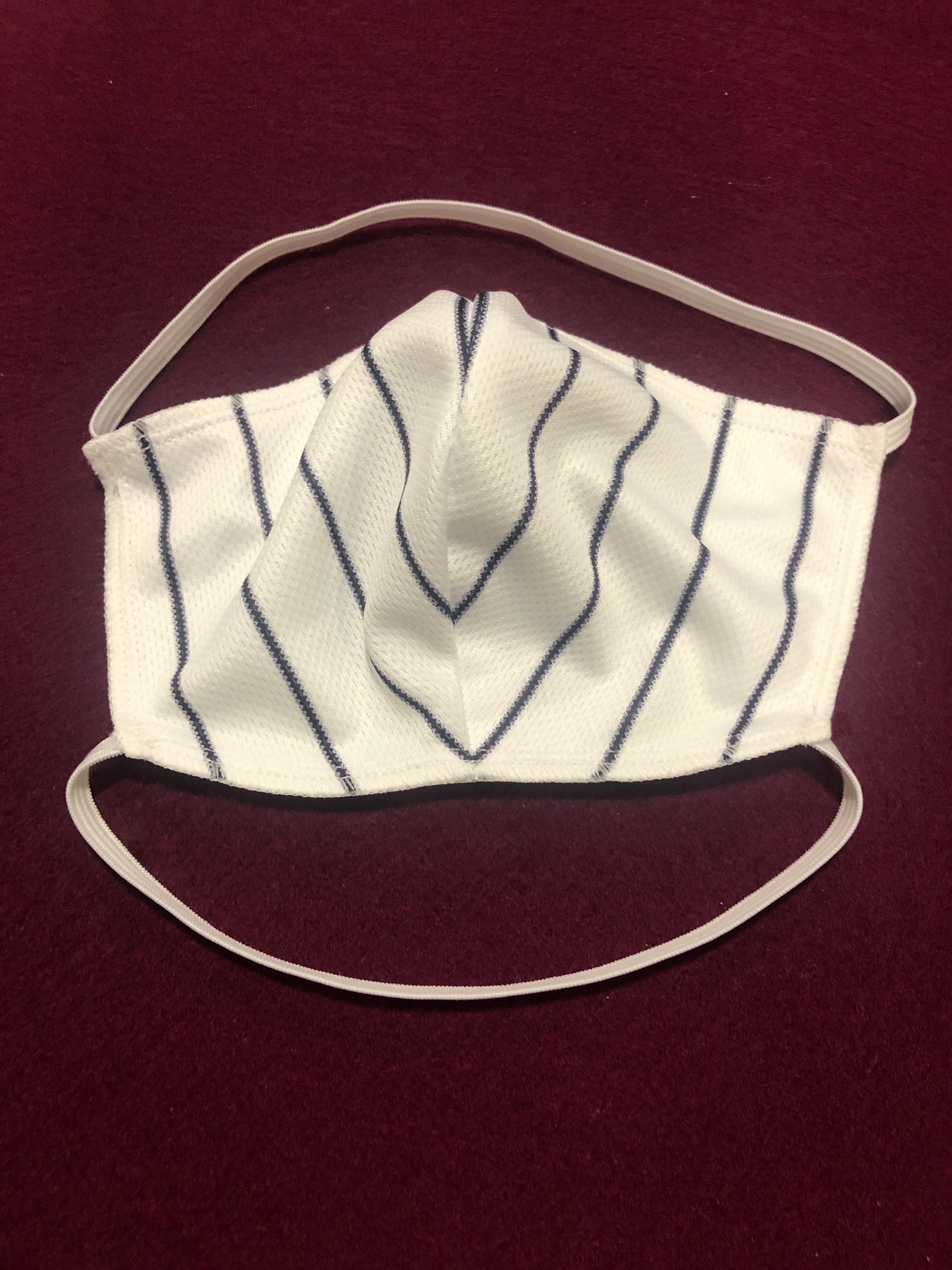
So maybe, if the baseball (and other) gods are willing to smile down upon all of us, we will soon have pinstripes on the field and not just on face masks.

I woke up today and wanted to find joy. I truly did. But as I sat in my home office and Zoomed with my colleagues, I couldn’t do it. I avoided all manner of old baseball except this.

There was no joy in Mudville today. Damn Casey never got to bat.

I hope you all are safe, a safe distance from others, and trying to find some pleasure in being with your families for dinner every night. And, who knows, maybe we will build enough family-time equity to enjoy a few extra ballgames this summer without feeling an ounce of guilt. Read as one man’s search for any potential silver lining.

Here’s to hoping that someday soon we will hear the words:

PLAY BALL!!

Anatomy of an Apology

About ten days ago I was on the phone with a friend when I got an alert on my computer that Carlos Beltrán and the Mets had agreed to part ways. One can parse that statement any way they want, but there is simply no denying that Beltrán was fired…before he managed a single game for the club. How very “Mets”.

My friend was devastated. It turns out that his son is a massive Carlos Beltrán fan; he even has a Beltrán bat framed in his bedroom. He didn’t know what to tell his son, how to break the news.

We were on the phone for a bit – long enough for Beltrán’s statement to be issued. I quickly read it and reported back that this was an easy one. Based on Beltrán’s own words, you can easily explain to your child that actions have consequences, that one must own their mistakes, apologize for their behavior, and vow to be better. In short, Beltrán’s statement covered all the bases. As poor as his decision to cheat, was how great his expression of regret.

“Over my 20 years in the game, I’ve always taken pride in being a leader and doing things the right way, and in this situation, I failed. As a veteran player on the team I should’ve recognized the severity of the issue and truly regret the actions that were taken. I am a man of faith and integrity and what took place did not demonstrate those characteristics that are so very important to me and my family.

“I’m very sorry. It’s not who I am as a father, a husband, a teammate and as an educator. The Mets organization and I mutually agreed to part ways, moving forward for the greater good with no further distractions. I hope that at some point in time, I’ll have the opportunity to return to this game that I love so much.”

Beltrán’s apology was all the more shocking (and heartening) because we have not seen that level of self-awareness in the recent past. Time and again athletes and executives do wrong, and time and again they fail to show the proper contrition. But not Beltrán. He may have lost his right to manage (for now), but he hasn’t lost his moral authority. This is an “A+” example of a proper apology; it is a confession we can share with our kids as a learning tool; and a model that others caught in the crosshairs would be wise to follow.

Now, contrast Beltrán’s words with the various and sundry apologies and non-apologies we have heard in the past few months:

Here is Jeff Luhnow, the suspended and now-fired GM of the Astros (condensed for brevity, the emphases are mine):

“I accept responsibility for rules violations that occurred on my watch…I apologize to the Astros organization, Astros fans and the Houston community for the shame and embarrassment this has caused…

I am not a cheater. Anybody who has worked closely with me during my 32-year career inside and outside baseball can attest to my integrity…I did not know rules were being broken…I did not personally direct, oversee or engage in any misconduct: The sign-stealing initiative was not planned or directed by baseball management; the trash-can banging was driven and executed by players, and the video decoding of signs originated and was executed by lower-level employees working with the bench coach. I am deeply upset that I wasn’t informed of any misconduct because I would have stopped it…”

The statement started well, with Luhnow owning the issue. But it quickly devolved into a “not my fault” recitation. This reeks of a “I am only apologizing because it is the *right* thing to do, but not because I am truly sorry” proclamation. He had the memo from the Commissioner; he spent time in the clubhouse and in the dugout. He knew or should have known what was happening over the course of two seasons. In this case, less would have been more. He could and should have ended the statement at “integrity,” and he would have received an “A”. As it stands, this is a “C+” at best.

AJ Hinch, the suspended and now-fired manager said the following (again, condensed with my emphasis):

“As a leader and Major League Manager, it is my responsibility to lead players and staff with integrity that represents the game in the best possible way. While the evidence consistently showed I didn’t participate in the sign stealing practices, I failed to stop them and I am deeply sorry.

“I apologize to Mr. Crane for all negative reflections this may have had on him and the Astros organization. To the fans, thank you for your continued support through this challenging time – and for this team. I apologize to all of you for our mistakes but I’m confident we will learn from it – and I personally commit to work tireless to ensure I do.”

This one is a little tricky in that Hinch was punished for essentially turning a blind eye to his coach’s and his team’s behavior. He certainly seemed to own his mistake, but he cannot help but add a little “but it wasn’t me” in there, which does take away a smidge of the repentance. Throughout the various Astros scandals, Hinch has been a voice of reason and remorse, so it was just a bummer that in trying to take the fall, he also had to try to clear his name. That said, this is still an “A-”.

Speaking of other Astros scandals, we all remember the case of Brandon Taubman. When he finally had to admit his wrongdoing, this is what he offered:

“This past Saturday, during our clubhouse celebration, I used inappropriate language for which I am deeply sorry and embarrassed. In retrospect, I realized that my comments were unprofessional and inappropriate. My overexuberance in support of a player has been misinterpreted as a demonstration of a regressive attitude about an important social issue. Those that know me know that I am a progressive and charitable member of the community, and a loving and committed husband and father. I hope that those who do not know me understand that the Sports Illustrated article does not reflect who I am or my values. I am sorry if anyone was offended by my actions.”

Did he really end this with the “I am sorry if anyone was offended by my actions” bromide? He knows people were offended. He said it to offend. Criminal law has the concept of mens rea (the intention or knowledge of wrongdoing). By all accounts, Taubman had the sufficient mens rea to be guilty, so his many-days-too-late non-apology simply doesn’t cut it. Only if you get points for trying will he earn a “D-”.

In the days after the Taubman clubhouse incident, not only did the Astros not apologize to the women affected, they attempted to obfuscate and impugn the reputation of a well-respected journalist. When the story became too large and too well known to slip under the champagne-soaked rug, after a five-day delay, Astros owner Jim Crane said the following:

“On behalf of the entire Astros organization, I want to personally apologize for the statement we issued on Monday October 21st. We were wrong and I am sorry that we initially questioned your professionalism. We retract that statement, and I assure you that the Houston Astros will learn from this experience.”

Rare is the captain of industry who can utter the word “wrong,” so Crane gets kudos for doing so. But even what appears to be a full-throated and well-meaning apology falls short. Crane, while acknowledging his organization questioned writer Stephanie Apstein’s professionalism, never acknowledges that what she wrote, and what the team denied for nearly a week, was absolutely correct. That would have gone a long way toward healing the wounds inflicted by the Astros’ callous indifference to the facts. Crane is a billionaire; he is a leader in at least three major business fields (energy, shipping, professional sports); the bar for him is considerably higher. So his statement gets a “B-”.

Last week, the Astros held their annual FanFest, and reporters, as they are wont to do, asked Jose Altuve and Alex Bregman about the sign-stealing scandal.

Altuve didn’t try to apologize. His simply said: “I think the time to comment about that will come. It’s a little too early for me.” Maybe that is genuine. Maybe the impact of the entire saga has been too much for him to process in such a short space of time. Maybe he just isn’t ready to discuss the topic, and will do so when the team gets to Spring Training next month. Personally, I find it weak and a bit cowardly, but it is too soon to tell. I give this an incomplete, with his ultimate apology grade TBD.

But Bregman is a whole other story. He didn’t even bother. He showed disdain for the entire process. On at least six different occasions, in response to various forms of questions, Bregman said the following: “The commissioner made his report, made his decision, the Astros made their decision, and no further comment on it.”

Like an automaton, Bregman could not even conjure an original thought. He would not address the press, the fans, or the 725 non-Astro MLB players (many of) whom feel like he and his teammates cheated their way to two pennants and one World Series title. This is an “F”.

A fish rots from the head down. Jim Crane set the tone for this club with his lies and then delayed response to the Taubman incident. Jeff Luhnow learned from his boss, as did AJ Hinch, and each tried to give the appearance of contrition while attempting to salvage his own reputation by throwing trusted colleagues under the team bus. So it is not shocking that players raised in the organization chose not to confront the issue with at least some level of regret; without at least giving lip service to the damage they have wrought.

I have often wondered who is providing advice to these athletes before they get in front of a microphone so woefully unprepared. And then I got an answer. In an interview withThe Athletic’s Ken Rosenthal, uber-agent Scott Boras offered us the following pablum (among many other nonsensical thoughts):

“But to suggest players make a team apology … the reality of it is that the apology from the people who had notice, not from the people who didn’t have notice. And the people who are responsible for providing notice. That’s who the apology should come from.”

Boras had the temerity to state that if the players knew what they were doing was wrong, they would have stopped. Despite the fact that the players hid the monitors, and despite the fact that the Commissioner’s Report states that there was “panic” in the Astros’ dugout when White Sox pitcher Danny Farquhar seemed to be on to the scheme, Boras wants us to believe that all participating players thought this entire arrangement was on the up-and-up, just because a bench coach was in on the caper. He doesn’t really believe we are that gullible, does he?

Boras loves an analogy, and he tried this one out: A man driving 55 in a 35 MPH zone only knows he is speeding if the law is clearly posted. Fair enough…on Route 66. The argument holds considerably less water if that man is driving through your local neighborhood. These guys have been playing baseball their whole lives; they are grown-ass men; they know right from wrong. And they chose wrong to achieve a competitive advantage. Trying to blame this on a lack of signage in the clubhouse is at best, hogwash, and at worst, utter and complete bullshit.

But, keeping with Boras’ theme, the Astros players didn’t even need to formally apologize (though Dallas Keuchel chose to do so). I am no crisis counselor, but it seems they really would have helped their cause if, when confronted by intrepid reporters, they said something like this:

“We regret that the Commissioner’s Report has cast a pall over our team and our organization. 

“Our number one goal is to restore the faith and earn back the trust that our fans and the MLB community preciously had in us. We are going to work hard every day to bring a championship back to Houston and prove to the world we are not who was portrayed in that report. 

“Whoever our next manager is, we will make him, our fans, and especially the kids who look up to us, proud of the Houston Astros.”

This doesn’t seem that hard. Bill Plaschke wrote another article claiming that the Astros lack of apology is an affront to the Dodgers. I respectfully disagree. It is an affront to the entire game, from within and without. This will not just go away – as Astros players will learn in each park they visit this season – just by burying their collective heads in the sand. This mark – this asterisk – will linger until fans and players alike feel justice has been done and/or proper remorse has been shown.

“I’m sorry” are two of the hardest and two of the most productive words in the English language. Maybe they can learn them deep in the heart of Texas.

PLAY BALL!!

Punishment Almost Fits the Crime

The dominoes have fallen – well most of them, anyway.

Around Thanksgiving I wrote my initial opus regarding the Astros’ cheating scandal. Little did I know that the cancer would spread eastward to New England, and right into the dugout of my beloved Red Sox. But here we are. MLB is still investigating the BoSox, and is withholding judgment until that is complete. In the meantime, let’s revisit what I wrote, and the questions I asked, back when this was all theoretical:

“[S]hould MLB suspend Jeff Luhnow for half the season? … To make it really hurt, they could extend this until August 1st so the Astros would be without Luhnow for the trade deadline?”

I was off by three months, as MLB suspended Luhnow through the 2020 World Series. But not an hour later, he got fired. I’ve got to say, I didn’t see that coming.

“And what about A.J. Hinch? The manager either knew or should have known what was happening just outside his dugout? In the NCAA they call that a lack of institutional control. Should he be suspended for half the season? More?”

Hinch also got a full season suspension. And then he got fired. Again, I didn’t see that coming. But it makes sense – how can owner Jim Crane and the new front office trust a guy who heard the banging, who disliked the cheating so much that he allegedly broke not one but two video monitors, but still did nothing to stop the practice. They call the manager the “field general,” but Hinch acted like a patsy.

“What about Alex Cora? He knew – or should have known. Regardless of the fact that he is now the Red Sox manager, he too should face discipline.”

When I wrote those words, I had no idea that the investigation was going to expand to include the 2018 Red Sox. Once I learned that, and once I read the report where Cora was mentioned 11 times and stated that the whole system was “originated” and “executed” in conjunction with him, the die was cast. There is no question that Cora is deeply implicated, and it makes perfect sense that the Red Sox fired him. As stated above, Rob Manfred has withheld Cora’s official punishment pending the outcome of that investigation, but my guess is that Cora goes on the permanently ineligible list, with the right to request reinstatement after the 2021 World Series. In essence, he will be banned for two years (plus however long it takes for some organization to look the other way and hire him).

“[H]ow about Carlos Beltrán? He was the veteran presence on that 2017 Astros club, who showed the younger players how to take certain advantages. My guess is that the investigation will cast a negative light on him as well. How Mets would that be to have their new manager suspended before he ever takes the field?”

This one remains fascinating. Manfred’s report only list seven individuals: Mike Fiers (the original whistleblower), Crane, Luhnow, Brandon Taubman, Hinch, Cora, and Beltrán. Beltrán escaped punishment as the league essentially gave all players (and Beltrán was a player in 2017) immunity to speak candidly during the investigation. However, the report stated that he “discussed that the team could improve on decoding opposing teams’ signs and communicating the signs to the batter.” Manfred declared that this was a “player-driven” scheme, but the only player he referenced was Beltrán. How can the Mets turn the page with a new manager under this level of scrutiny? How can Beltrán survive the onslaught of the New York media as a first-time manager (and someone who doesn’t have a great track record with the press) with this scandal hanging over his head? And it would seem that the Mets could fire him for cause. Either during the interview process or right after, Beltrán said the following to the NY Post about the scanadal:

“I’m not aware of that camera…”

“We took a lot of pride studying pitchers [on] the computer. That is the only technology that I use and understand…”

“The game of baseball for years, guys have given location and if the catchers get lazy and the pitcher doesn’t cover the signs from second base [then] of course players are going to take advantage. I don’t call that cheating. I call that using small details to take advantage. I think baseball is doing a great job adding new technology to make sure the game is even for both teams. It’s easy to blame someone when they win.”

At best, Beltrán shaded the truth. At worst – and most likely – Beltrán flat out lied. Now, I am no labor lawyer, but it seems to me that intentional misrepresentation gives rise to termination for cause. And if the Mets did fire him, what is his recourse? Would he sue the Mets? What is his cause of action? (Wrongful dismissal, I know.) Would he want the Mets to subpoena the entire Astros 2017 roster and make them assert – under oath – that Beltrán knew nothing, saw nothing, heard nothing? Historically the Mets have been on the wrong side of many lawsuits, but I like their odds in this potential litigation.

With respect to team punishment, I wrote: “How about a loss of the Astros’ 2020 first round pick (#30). And loss of $5M in bonus pool money (essentially their first round allocation). And, as a kicker, the loss of their international bonus pool as well.”

Here Manfred made me look weak. He took their first round and second round picks in 2020 and 2021. He didn’t take any international bonus pool money (a missed opportunity, in my opinion), but he did fine them the same $5M (more about that below).

I also averred that the Astros should get hit with a $2M fine for each offense. I hypothesized a total fine of $55M. I have not wavered from that. Manfred stated that the $5M is “the highest allowable fine under the Major League Constitution.” I have been trying to locate this provision, and the nearest I can find is the MLB Constitution that expired in 2012. That document states (as I have previously written) that the fines may be imposed “for each offense.” And Manfred makes quite clear in his report that the Astros’ actions went from 2017 well into the 2018 season. Simply put, he found more than a single offense. I believe he should have arbitrarily identified ten violations and fined the team $50M. The $5M is easily paid for by Hinch’s and Luhnow’s now-forfeited salaries. But $50M is much harder to cover.

In November I stated, “[t]he Astros need the professional sports equivalent of a five-week suspension; they need a reprimand that requires them to ‘fail’ next season; they need a rebuke that tells the world that this behavior will not be tolerated.”

The suspensions (and ultimate firings) conveyed that message to the individuals, but not necessarily to the teams. Many around baseball think that firing two individuals, losing four draft picks, and paying $5M, is a small price for a World Series championship. Reasonable minds may differ, but change that price tag to $50M, and I don’t think they would.

Lastly, Bill Plaschke is getting a lot of run for his article in the Los Angeles Times that the Astros should be stripped of their World Series title. I am not a big fan of this concept, as I don’t think you can un-ring a bell. It is the same reason I disagree with “vacating” wins for college sports programs. Those games were played, those trophies were hoisted, and those parades were held. You cannot change that. Jayson Stark wrote eloquently about this idea in The Athletic.

Rather, I would like to see the league require the Astros to either take down the World Series flag in Minute Maid Park, or add an asterisk to it. The same goes for any MLB-licensed World Series gear. You want to sell it, profit from it, you need to own it. Houston must add the caveat. The asterisk should be included in/on all official MLB sites and references to the 2017 World Series champion. They got their rings, they had their glory, and now they get to live with their infamy. That (plus $50M) is a punishment that fits the crime.

PLAY BALL!!

“What If”: The Butterfly Effect

One on my favorite things to think about when watching baseball is the “what if…” “What if” that last pitch had been called a strike…?  “What if” that ball had been an inch to the right? “What if” the third baseman caught that foul ball?

But now that the baseball season has been in the books for two months, and the hot stove has been burning up, I got to thinking about an interesting (to me, anyway) “what if”, and the butterfly effect that it had on the off-season.

Let’s go back to the bottom of the ninth of Game 5 of the NLDS. While the Dodgers had led 3-0 after five, the score was 3-3 going into the bottom of the ninth. With one on and one out, and rookie catcher Will Smith lined the first pitch he saw from Daniel Hudson to deep right field. According to Rob Arthur (@No_Little_Plans) (who, if you don’t follow, you should), during the regular season balls hit with the same characteristics (exit velocity between 99-101 MPH and a launch angle between 25-27 degrees) flew an average of 385 feet. If Smith’s ball had traveled that far, it easily lands in the right field pavilion, and Smith finds his name mentioned amongst Gibby and Turner and Culberson (look that one up). A few more feet and the Nationals’ curse remains in place, and we would have had yet another Dodgers-Cardinals NLCS, and we possibly get a 2017 World Series rematch.

That is the team analysis. But what about certain players? “What if” Smith became a hero and the Nats went home? What happens with Stephen Strasburg? He had an opt-out in his agreement with the Nationals, meaning he could have become a free agent and walked away from the remaining 4/$100M on his existing deal. It is likley that he would have opted out no matter what, trying to get the CC Sabathia / Clayton Kershaw leverage extension, adding maybe two years and $50M to the deal; or maybe even an additional $80M, pushing the AAV to $30M. But…

Smith’s ball landed in Adam Eaton’s glove, the Nationals won the game in the tenth, and then Strasburg threw seven innings of Game 3 of the NLCS, giving up one earned run while striking out eleven. The Nationals went on to win the pennant.

Then, Strasburg won Game 2 of the World Series, pitching six innings, giving up two earned runs, while striking out seven.

And to put a bow on his post-season, Strasburg went 8-1/3 innings in Game 6 of the World Series, yet again allowing only two earned runs while striking out another seven Astros. This led to him being named the World Series MVP. Which made opting out of his contract a no-brainer – he would never again have more value or more leverage.

So, rather than getting a deal like the ones described above, Strasburg got himself a record contract of 7/$245M. There is simply no way he gets that deal if his season ended at Chavez Ravine in the NLDS.

With Strasburg’s deal in the books, his agent Scott Boras had a baseline to negotiate Gerrit Cole’s new contract. If the Astros has been playing the Dodgers (or the Cardinals) in the World Series, there is a better than zero chance that Cole wouldn’t have been sitting in the bullpen begging to pitch in Game 7, only to be spurned while his team walked off the field in defeat. In fact, against those other opponents, there is a better than zero chance that Cole would have found himself bathed in champagne and on a parade float through the streets of H-Town. And, in that alternate universe, there is no bitter Cole donning a Boras Corp. hat in the clubhouse after said Game 7, seemingly making the decision right then and there that he would be taking his talents elsewhere.

With Cole truly on the market, and with Strasburg’s deal inked, Boras preyed on the Yankees to get a ridiculous 9/$324M out of the Steinbrenners. Without Strasburg’s deal as a precedent, there is simply no way that Cole gets that deal. In fact, odds are that Cole would have gotten – and been happy with – Strasburg’s 7/$245M.

And with those two record-breaking deals done, Boras went to work for Anthony Rendon. Had his season ended at Dodger Stadium, he doesn’t hit .317 with 10 RBI over the NLCS and the World Series, including two huge homeruns in the seventh inning of both Games 6 and 7 in Houston. Going into free agency, the benchmarks for Rendon were Manny Machado at 10/$300M and Nolan Arenado at 8/$260M. But Rendon was able to command $35M/year from the Angels – for 7 years. Without those extra eleven games, there is simply no way Rendon gets a higher AAV than both Machado and Arenado for that many years.

Seven feet. Less than an eyelash of seam height differential on the ball. A fraction of an inch on the barrel of the bat. The flap of a butterfly’s wings. That’s all it would have taken to change history…and destiny. Millions – maybe hundreds of millions – of dollars changed hands when Smith “flew” out to right rather than walking the Dodgers off. Families, teams, and cities were transformed over 84 inches. Will Smith has a long career ahead of himself, so maybe he has easily moved on. But for Clayton Kershaw (he of the back-to-back dingers in the eighth), Dave Roberts, and Andrew Friedman, they have probably gone to bed every night for the past three months thinking, “What if…?”

PLAY BALL!!