What Are We Doing?

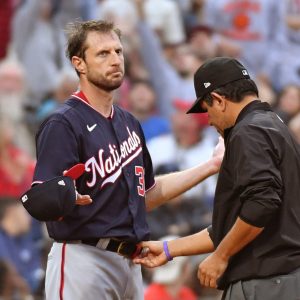
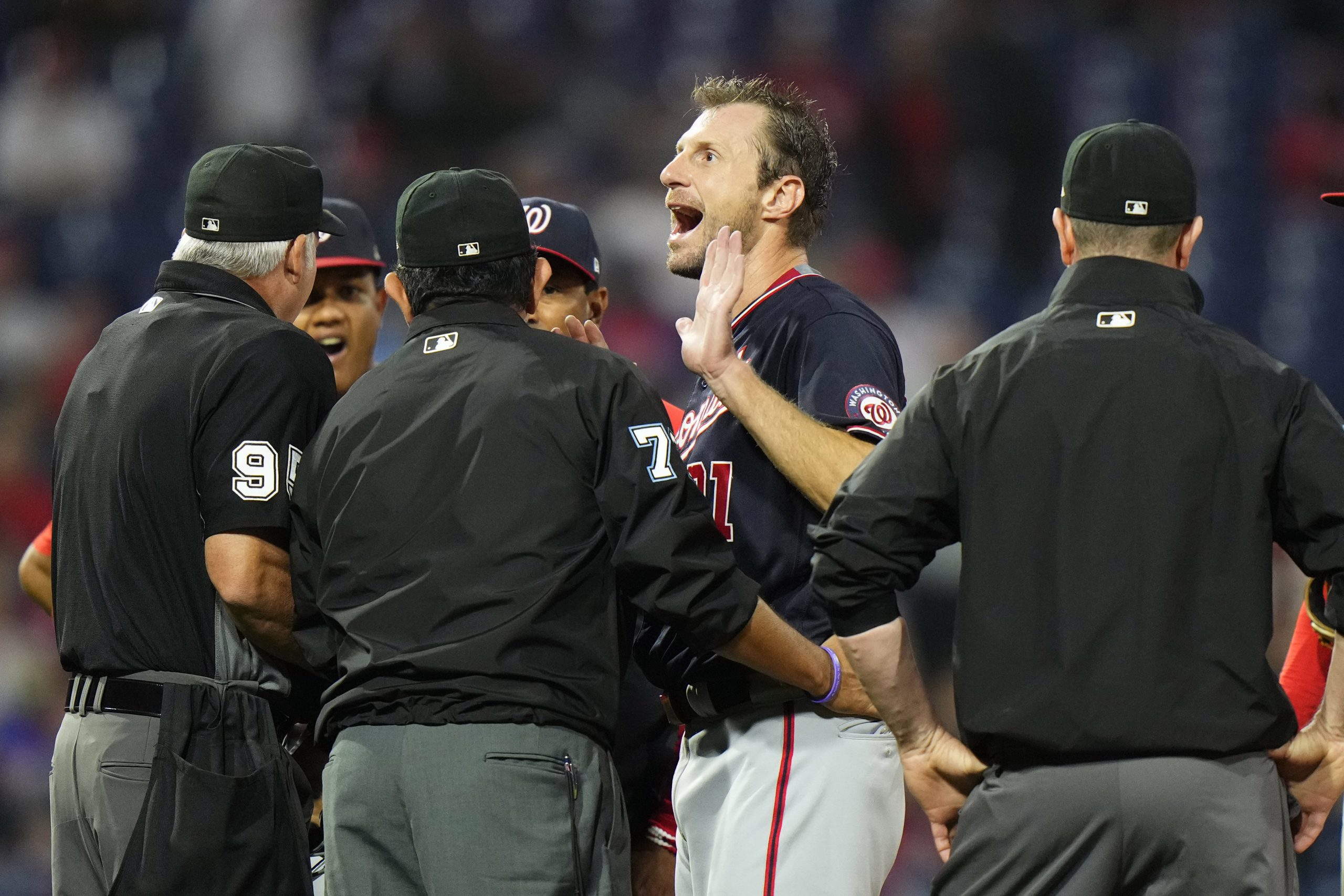
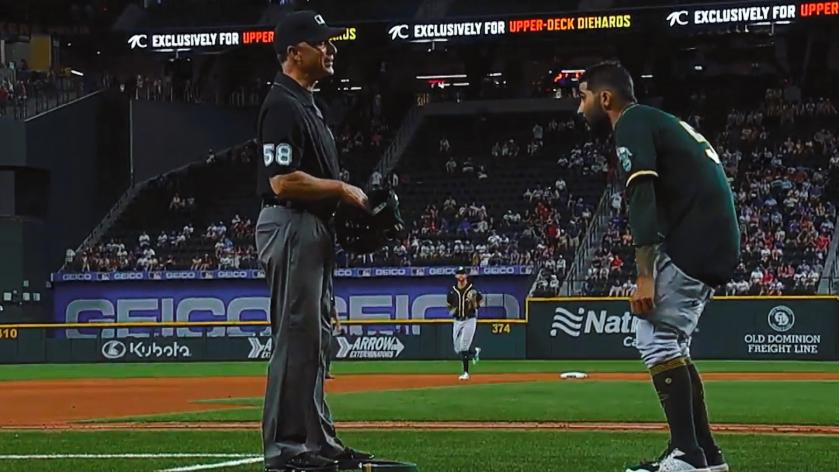
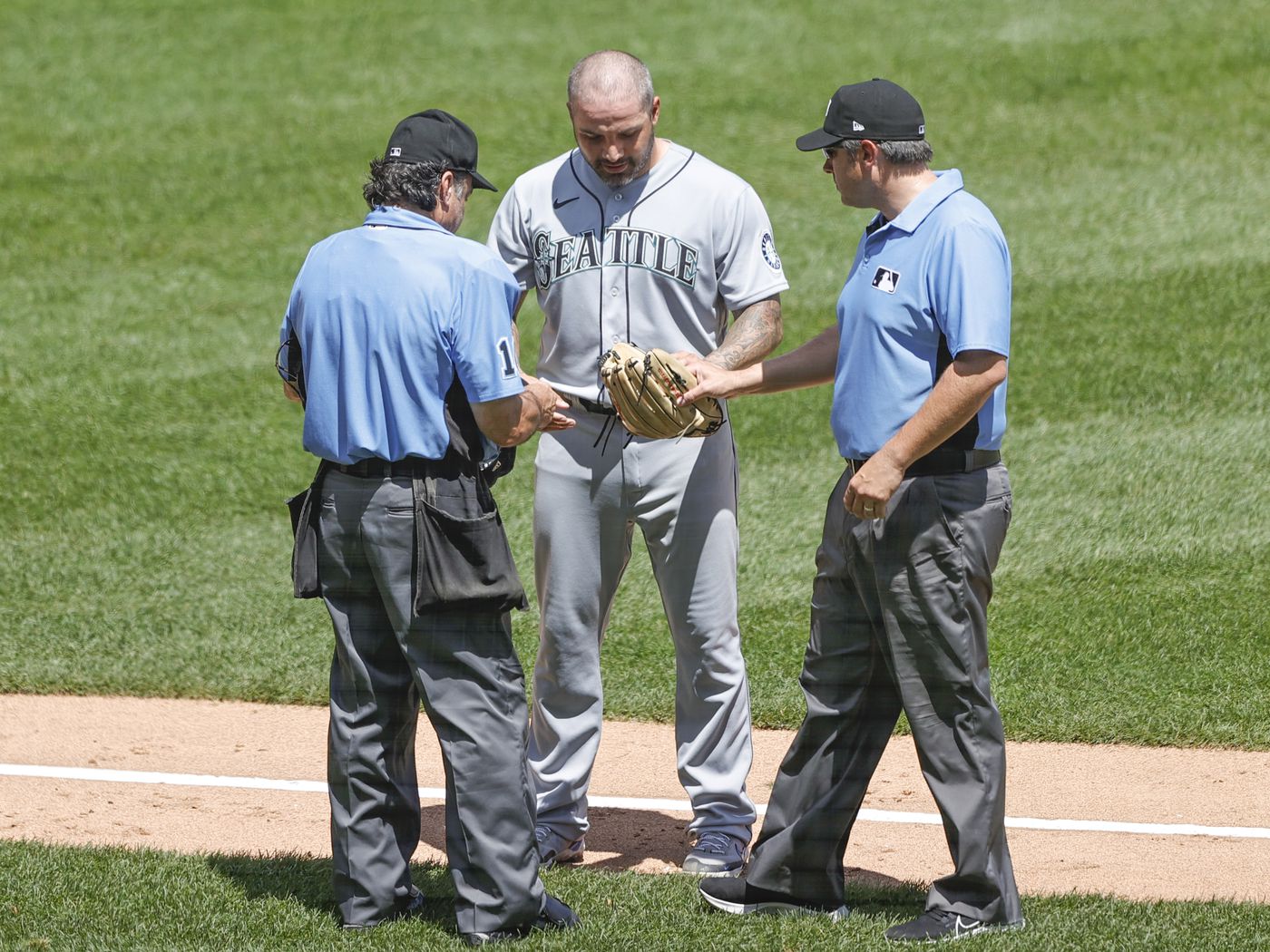
One of my best friend’s favorite thing to say is “What are we doing?” I have thought about that expression often the last couple of weeks with respect to MLB umpires turned TSA agents ferreting out illegal substances. By now we have all witnessed the Max Scherzer interrogations as well as the Sergio Romo striptease, and, of course, the Shohei Ohtani giggle-fest with the boys in blue. We know that the Mariners Héctor Santiago became the first victim of this new “sticky stuff” enforcement regime. But, really, what are we doing?


Santiago has already appealed his suspension, claiming his glove contained only sweat and rosin. And truth be told, what schmuck would load up with anything illegal the first week of spot checks? Scherzer, after Joe Girardi specifically asked the umpires to check him, said it best: “I would be a super fool to use something [that day].” This all begs the questions: Since when did umpires become scientists? Since when do they have the requisite knowledge and training to determine rosin + sweat is different than rosin + Bull Frog? Sure, a lump of pine tar on Michael Pineda’s neck is an easy call. Stevie Wonder could find a piece of sandpaper in Kevin Gross’s glove. It didn’t take the Hubble Telescope to spot the emery board flying out of Joe Niekro’s back pocket. And maybe Spider Tack is easy to discover – that shit makes Gorilla Glue look like Elmer’s. But we are now living in the gray area where pitchers may or may not be cheating, and – by rule – we have appointed the umpires judge and jury.

After his ejection last week, Santiago’s glove was confiscated and deposited into a plastic evidence bag for the guys at CSI Park Avenue to analyze. But why? As Jesse Rogers of ESPN reported: “Per source, the league didn’t need to inspect Santiago’s glove any further. The ejection and discipline are based on the umpires’ report of having detected a foreign substance.” So, why don lab gloves and radioactive tongs and make a show of taking the mitt out of play? Once they determined there was “sticky stuff,” they could have tossed Santiago – setting up his eventual 10-game suspension – and let him go to the clubhouse with at least his glove, if not his dignity. The rest of the performance was simple frippery.

Santiago, like Scherzer and Romo before him, denied any wrongdoing. And for the reasons articulated above, I tend to believe them all (but check back in a month or two when the inspections have become more lax). But what I find comical about this entire drill is that it is always the same: pitcher leaves the mound, umpire checks his hat, his glove, and his belt, and off he goes (well, not Santiago). Are those the only three places a pitcher might hide an illegal substance?

Buster Olney reported in the lead up to this new investigation routine that umpires were going to use scouting reports on different pitchers to check them for their specific tendencies. That is what Girardi was getting at with Scherzer – claiming that on all other nights Scherzer never touched his hair, but on this night he touched his hair, so obviously he was hiding something on his follicularly-challenged head. But outside of that one inspection, the umpires largely have stuck to the big three locations.

I was at a game in Cincinnati last weekend, and a Braves pitcher went behind the mound and bounced the rosin bag on his hand. He then adjusted his pants right above the ankles. The whole thing may have been totally innocuous. Or, he may have had some unlawful compound on his leg. We will never know. As this was happening I said to my son, “Let’s see if the umpires check his pants at the end of the inning.” Sure enough, the third out was recorded, and the umpires checked his hat, his glove, and his belt. The pants – which he touched immediately after loading up with rosin – were left uninspected. Which led me to ask: “What are we doing?”

It is my sincere hope that the June 15th memo, and the June 21st commencement of inspections, was a “scared straight” plan of attack. MLB is hoping that players, knowing that the Rule 6.02 (c-d) is now being enforced and suspensions are forthcoming, will stop the practice. If that was the wish, it seems to have been fulfilled. In the period between the day that word leaked that the hammer was about to fall and the day that umpires actually pulled out their science kits, spin rates dropped 22rpm for four-seam fastballs, 42rpm for sliders, and 47rpm for curveballs; strike out rates dropped a full percentage point; and batting average rose about six points (which seems small, but is actually a huge jump league-wide in a few short weeks). And since enforcement began, those rpm numbers have dropped even further and batting average has gone up another two points.

But since there have been countless inspections and only one (alleged) culprit, the current system of checks and re-checks is nothing more than Kabuki theater. If they really want to catch some culprits and end this endemic violation of the rules, the umpires should begin spot-checking different pitchers during random innings and in varied uniform and equipment locations. The pitchers can and should know that the “sticky stuff” highway is heavily patrolled, but they shouldn’t know behind which bush Smokey is hiding, and they certainly shouldn’t know what part of their person or equipment will be searched. Do that, and pitchers will have something to fear and a reason to not use the banned substances; do that, and teams will be disinclined to continue their never-ending quest to gain a competitive advantage (rules be damned); do that, and we will finally have some true law enforcement.

Otherwise, what are we doing?

PLAY BALL!!

p.s.  For more about this topic, and much, much more, tune in to the IBWAA Podcast.


Mixed Emotions

I first visited Fenway Park in 1978, and so began my love for the Boston Red Sox. In those heady years, I was too young to read the box scores, and even with an outfield of Rice, Lynn, and Evans, I didn’t have a favorite player. Yaz may have come close.

I really became interested in baseball in the mid-‘80s, at which point I was following Wade Boggs and Roger Clemens, and for some reason, Marty Barrett. Mike Greenwell, begat Mo Vaughn, who begat Nomah, who begat Varitek, who begat, pound-for-pound, the best pitcher of all time: Pedro. But it was in 2004, oh that magical year of 2004, that I finally landed on my favorite player. How could you not love David “Big Papi” Ortiz? He was everything you wanted in a star – the charisma, the smile, the clutch hits, and, of course, the hugs. He carried the team on his back, and he had a blast doing it. Even as Dustin Pedroia, Jon Lester, and Mike Lowell got headlines, Papi remained my guy. Ortiz brought the “fucking city” together in 2013, and led the Red Sox to another improbable World Series title.

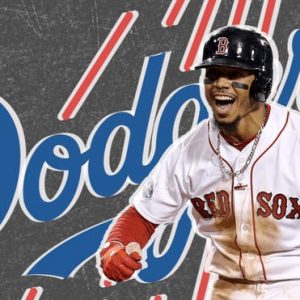
This is all a long way of saying that my personal die was already cast when Mookie Betts arrived in 2014. He is an electric player; he carries all five tools on his slight shoulders, has had five straight top-10 MVP seasons (including winning it in 2018), five straight Gold Gloves, has won four Silver Sluggers, and owns two rings in two cities in the last three years. He is a 300-bowler, and feeds the homeless when no one is looking. He checks every “favorite player” box, and yet he wasn’t my A-Number One; that spot is reserved for Papi. So when the Red Sox traded Mookie to the Los Angeles Dodgers before the 2020 season, I was quite sad, but not crushed. As I have previously written, I actually agreed with the team’s decision. But I cannot imagine a world in which Ortiz ever wore another uniform.

My family moved to the West Coast in 1979, and I started going to Dodger Stadium in 1980. It was an embarrassment of riches in those years. We had “Fernandomania” and an infield of 30-HR hitters. We had the antics and clutch pinch-hitting of the recently passed Jay Johnstone. We had the pride of San Pedro De Macoris: Pedro Guerrero (and if you grew up in L.A., you can hear Vin Scully saying those words as you read them here).

As the decade wore on, we had Sax and Hershiser and Gibby. Mickey Hatcher took over where Johnstone left off. And then Mike Piazza, a 62nd round draft pick, who took the league by storm. And, of course, there was Tommy. But none of these men were ever “my guy.” It took nearly another two decades of living here and going to games to find that one player. And, ironically, it started in a ballpark 70 miles north of Dodger Stadium, while this guy was playing in Single-A for the Astros. I wrote all about that here.

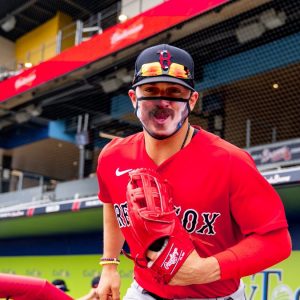
But when Enrique (“Kiké”) Hernández joined the Dodgers in 2015 from the Marlins, I had “my guy.” And how could you not a love an undersized overachiever who played every position (save for catcher, but not for lack of trying), hit in the clutch, and made having fun Job #1?

While that 2015 season was Kiké’s high-water mark for batting average (.307), he later hit 24 dingers in 2018 and knocked in 64 runs in 2019. But it was in the postseason when he shined the brightest. Check out these stats of a guy who never had an appointed place in the lineup, was rarely used against righties, and never knew – day to day – when or where he would play:

2015 NLDS: .308/.400/.308

2017 NLDS: .333/.500/.667

2017 NLCS: .444/.545/1.444

2019 NLDS: .429/.500/1.000

2020 NLCS: .308/.357/.769

But you can throw all of those stats away and just look at Game 5 of the 2017 NLCS and Game 7 of the 2020 NLCS. In the former, Kiké went yard three times at Wrigley Field to help propel the Boys in Blue to the World Series and raise $2,000,000 for the people of his native Puerto Rico. In the latter, he tied the game in the bottom of the 6th inning, giving the Dodgers new life, and setting the stage for Cody Bellinger’s 7th inning home run that provided the pennant-winning margin of victory.

But you can throw all of those clutch hits away and just remember Kiké sitting in the dugout in a banana costume – on the orders of Andrew Friedman – to help the Dodgers win an extra-inning affair against the rival San Francisco Giants.

In 2019, MLB came out with the “Let the Kids Play” motto. They shot a commercial with eleven players on the dais, including Mike Trout, Christian Yelich, Francisco Lindor, Aaron Judge, Giancarlo Stanton, and Ronald Acuña Jr. From my perspective, Kiké Hernández was an obvious oversight. He personifies the “let the kids play” mantra, and it is hard to find anyone having more fun and getting more from his G-d-given talent than Mr. Hernández.

So, when Kiké entered the free agent market after the World Series, I held out hope that the Dodgers would re-sign him, and that my season tickets would allow me to watch another few years of my favorite player (fans in the park permitting). But as the offseason wore on, it became ever more clear that the Dodgers had no designs on retaining Hernández. If one man’s trash is another man’s treasure, it was to my great delight that my beloved Red Sox reeled in Kiké. He got the two-year deal I had hoped for him; he took Nomar’s number, and it would seem he has finally found an everyday position, filling the rather large (metaphorically only) shoes left by Dustin Pedroia’s retirement.

Gordon Gekko once said: “Mixed emotions…like Larry Wildman going off a cliff in my new Maserati.” That is how I feel. Forty years of going to Chavez Ravine, and for the last half-decade I had my favorite player. And now he is gone. Gone 3,000 miles away, but gone to my favorite team. Having Mookie here on a career-ending deal softens the blow, but I would be lying if I said that Dodger Stadium will be a little less colorful, a little less joyful, a little less fun, without the Banana Man sliding and diving and jumping for joy. Consider me dubious, but I don’t think Trevor Bauer can fill that role or that hole – either on the field or in the clubhouse.

The people of Los Angeles will miss Kiké more than he can possibly appreciate. The analytics may say that players like him are easy to find and replace, that a guy with no specific position and who averages 1.5 bWAR/year isn’t that valuable. This is where the newfangled baseball analysis falls short.

Kiké is more than any numbers on the back of his baseball card or on any quant’s spreadsheet. He is the personification of what we want to watch and root for, and what we want our kids to aspire to be. He is a grown man playing a kids game with the exuberance of youth. You can tell he takes nothing for granted and appreciates the sport, his teammates, and most especially, the fans. So I will take solace in the fact that while I can no longer watch Kiké Hernández in person every day, I can still root for him and know that his special skill set is bringing joy to the people of Boston.

Mixed emotions indeed.

PLAY BALL!!

The Joys (and Memories) of Youth Baseball

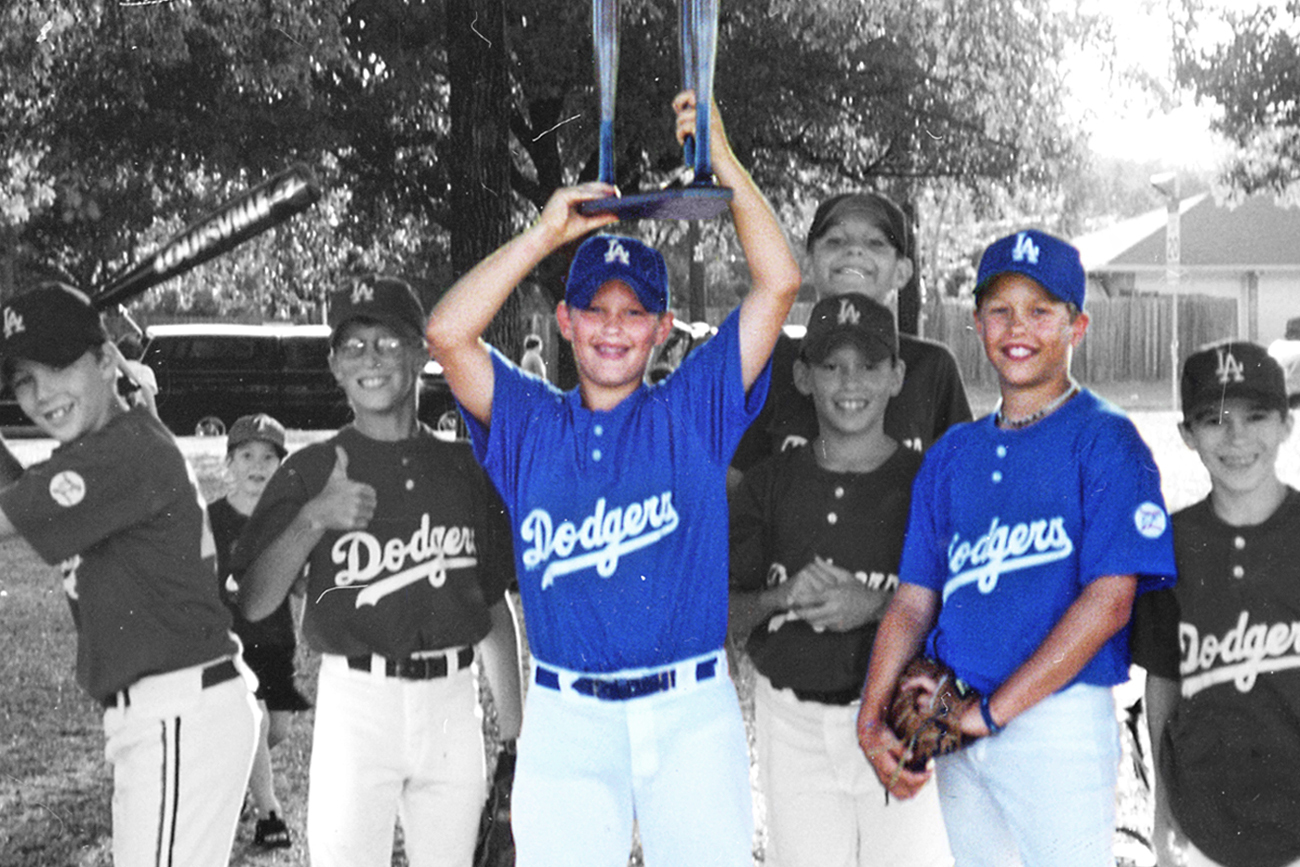
According to USA Today, more than 25 million kids played baseball or softball in 2018. The number of kids enrolled in Little League and Pony League has actually been trending up over the past few years while overall youth participation in all sports has remained relatively static. That is great news for the future of baseball. Many boys and girls are getting the opportunity to learn the game, to love the game, and to make lifelong friends. And that last part may be the most important.

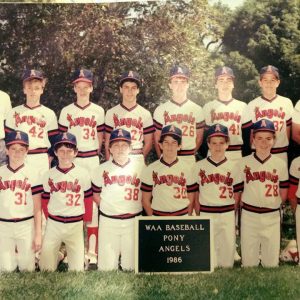
Earlier this year, one of my lifelong friends (starting from my time in Pony League) passed away. Last week there was a celebration of his life, and so many of those old baseball friends appeared on my computer screen, telling stories of times long ago. Unfortunately, I have lost touch with many of these guys over the last thirty-plus years, but hearing their voices and being reminded of old stories, I realized that while much has changed, much remains the same. I was instantly brought back to my childhood. The bonds that formed while breaking in a new, stiff Rawlings remain solid after all these years.

Molly Knight recently published a two-part interview with Clayton Kershaw in The Athletic. She, of course, asked him about his childhood friend, his former Little League teammate, Matthew Stafford, coming to Los Angeles to play for the Rams. Kershaw referenced how he has been a Lions fan for years, rooting on his old buddy, but now he can direct his excitement to the Los Angeles team. It will be just like they did so many years ago. One wonders if that friendship would have formed without Little League baseball.

Clayton Kershaw and Matthew Stafford: The Wonder Years | Bleacher Report | Latest News, Videos and Highlights

There are a great many MLB players who excelled in Little League, including Cody Bellinger, Randal Grichuk, Lance Lynn, and Todd Frazier. Hell, Jason Varitek and Michael Conforto played in the Little League World Series, the College World Series, and the World Series. But the better question is whom they all met along the way, and how close those friends are today?

During my friend’s memorial service, one of the speakers told a story of driving with the deceased from Boston to Philadelphia after watching another one of our Pony League buddies strap on the tools of ignorance at Fenway Park. The guys were on their way to Citizens Bank Park to watch our friend play some home games. That was just one of many such anecdotes. These are friendships forged through long days on freshly cut grass, followed by cheap pizza, pitchers of soda, and Thrifty ice cream cones. Friendships made early in life that stuck through adolescence, high school, the minors, and all the way to the big leagues.

Last week my son, who is preparing to leave for college in the fall, got together with three of his Little League buddies. They go to different high schools and have gone their separate ways in the past few years. But it took all of about ten seconds for them to fall back into their old ways; reliving their “glory days,” talking about their long afternoons hanging out at the Little League park watching their friends play, eating burgers, chasing foul balls, and living their best pre-teen lives. I have no doubt that their futures will be filled with similar road trip tales.

Whether it was my son coming home with a smile on his face, or old friends recalling memories with tears in their eyes, it is the friendships formed on ball fields across this great land that are built to last – regardless of where adult duties and responsibilities take us.

With strict Covid protocols in place, it seems that Pony League and Little League baseball will be played this spring. According to littleleague.org, the Little League World Series is tentatively scheduled for August 19-29. For countless reasons, we must have youth baseball this year. Kids need to let the horsehide fly and feel that leather on their palms; they need to hear the ping of their bats and the smell of the grass. They need to run around the bases and around their local sports complexes. They need to play ball games and get game balls. They need to eat at least two meals per weekend at the snack shack, and to form friendships that will last a lifetime. I know that I sure did.

PLAY BALL!!

Dave Stieb Tried, And Tried, And Tried, And Tried, And Finally Climbed The Mountain

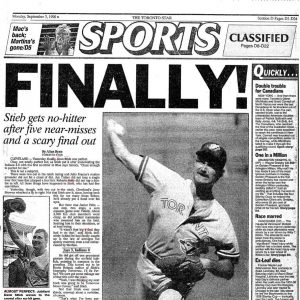
With Mark Buehrle, Tim Hudson, and Dan Haren on the Hall of Fame ballot this year, I am reminded of a similar type pitcher who held sway over the course of three different decades, and was an absolute stud in my formative years, the ‘80s. For a guy who never took the mound before his college-playing days at Southern Illinois University, Dave Stieb was the essence of a “pitcher,” with an overpowering fastball (for the era), a plus breaking ball, and a devastating slider towards the end of his career. He quickly caught the eye of the Blue Jays scouts after only his second relief outing in college, and the rest, as they say, is history. No one has ever won more games for the Blue Jays than Stieb, who garnered 176 over a career that spanned from 1979 to 1992. But over the course of 412 starts, there are five in particular [watch after you read] that make him a legend in my (and many others’) eyes. And the fact that they happened sequentially makes it all the more delicious.

Herewith:

Game #1: August 24, 1985 vs. the White Sox

Stieb walked the second batter he faced in the bottom of the first, then induced Harold Baines to ground into a 1-6-3 double play. He then hurt his own cause in the fourth with a wild throw on a Bryan Little bunt. But he struck out the next two batters to escape unscathed. He walked Carlton Fisk to lead off the fifth; and Little in the sixth; but through eight innings, he had not given up a hit.

All of that changed in the ninth. With a 6-0 lead, Stieb went right after the White Sox, and was rewarded thusly: home runs by Rudy Law and Little (that guy again) to start the frame. At that point, Stieb’s night was done. As an aside, the White Sox were not. Gary Lavelle relieved Stieb and promptly gave a home run to Baines. He lasted only two more batters (a ground out a single), giving way to Tom Henke who sandwiched a single around two pop outs to end the game.

But Stieb established himself that night with eight innings of no-hit baseball that were only a precursor of things to come.

Game #2: September 24, 1988 vs. the Indians

Stieb retired the first seven batters before yielding a full-count walk to Andy Allanson. Two pitches later Allanson was cut down trying to steal second. And three pitches later, Paul Zuvella struck out to end the third inning. But Stieb was not exactly cruising, as it took him 46 pitches to get through the order a single time.

Things didn’t start great in the fourth, with a leadoff walk to the leadoff hitter, Julio Franco. But only four pitches later the side was retired, after a 4-6-3 double play and a three-pitch strikeout.

Stieb sailed through the fifth, sixth, and seventh. He hit a bump in the road with a hit batter with two outs in the eighth. But when pinch hitter Terry Francona flew out deep to right, Stieb was three outs away…again.

Allanson struck out swinging and Willie Upshaw grounded out to second to start the ninth. Now Stieb was one out away. After four pitches to the next batter, Stieb was one strike away. Then Franco hit was seemed like a harmless ground ball to second. But the ghosts of Lake Erie must have been present that Saturday night, as the ball hit the lip of the infield and catapulted over Manny Lee’s head into center field to end the no-hit bid. Shocked, if not dismayed, Stieb couldn’t spend too much time lamenting his bad luck. He was nursing a 1-0 lead, and Dave Clark was coming to the plate representing the winning run. Stieb got Clark to fly out to deep center to end the game, but it was – at best – a moral 1-0 victory.

Game #3: September 30, 1988 vs. the Orioles

If you are paying close attention, you will note that this was Stieb’s very next start after the heartbreak by the lake six days earlier.

Stieb cruised through the lineup the first time, on only 31 pitches. He plunked Joe Orsulak to lead off the fourth, but got square one pitch later with a 3-6 double play. When Cal Ripken, Jr. grounded out, Stieb was through four on only 40 pitches. He was through six on 58; and after issuing a one-out walk to Pete Stanicek in the seventh, got Ripken to promptly line into a double play to retire the side having thrown only 70 pitches.

It took eight pitches for Stieb to get through the eighth, at which point he had faced 24 batters. Three pitches into the ninth he was, once again, one out away. Four pitches later he was, once again, one strike away. Pinch hitter Jim Traber hit a ball even more softly (if that is possible) than Julio Franco had the week before. This time it was a blooper over the head of first baseman Fred McGriff. When the ball landed harmlessly inside the right-field foul line, all Stieb could do was roll his head around in despair. But Dave was able to keep his composure and get Orsulak to ground out to third to end the 4-0 Blue Jay victory.

Game #4: August 4, 1989 vs. the Yankees

Stieb started his 23rd game of the 1989 season against the Yankees with a 10-6 record and a 4.11 ERA. He had a season-high eight Ks on April 21 against the Rangers, and hadn’t had more than five (twice) the rest of the year. He had walked at least one batter in each of his starts in ‘89. And yet, on this night in Ontario, through 8-2/3, after facing the minimum 26 batters, he had recorded 11 strikeouts and yielded nary a walk, tossing only 82 pitches. Stieb was, once again, one out away. But after falling behind 2-0 to Roberto Kelly, he gave up a solid double down the left-field line. It just was not meant to be, and my guess is that Stieb was beginning to wonder if it was ever meant to be.

But just like in the game against the Indians, Stieb didn’t have time to bemoan his fate, as Steve Sax came to the plate representing the tying run. Yet unlike his previous outings, Stieb allowed the moment to get the best of him, giving up a single to Sax to make it a one-run game. But the Yankees’ comeback was quickly quashed three pitches later. Stieb got the win, but lost the perfect game, lost the no-hitter, and lost the shutout in the space of three pitches.

Game #5: September 2, 1990 vs. the Indians (again)

When Dave Stieb found himself back on the mound in Cleveland the first weekend of September two years after the fact, he was having the best season of his career. By that point he was 16-5 with a 3.07 ERA. He had gone at least six innings on all but three of his 26 starts and had only surrendered nine home runs pitching in the AL East during the steroid era.

The afternoon started inauspiciously, as Stieb walked Alex Cole to start the game. Cole was promptly cut down trying to steal second, and Stieb finished off Jerry Browne and Dion James to end the first.

Stieb walked Carlos Baerga with two outs in the second, but he too was caught stealing, to make it (essentially) six up, six down.

Stieb then retired the next fifteen batters in a row before walking Ken Phelps on a 3-2 pitch to start the eighth. With 103 pitches thrown, nursing a 2-0 lead, and the 5-6-7 batters coming to the plate, Cito Gaston elected to keep Stieb on the hill. Three deep fly balls later from Brook Jacoby, Baerga, and Cory Snyder ended the frame.

And so here he was…again. For the fifth time in five years, for the fourth time in two years, where it all began at Cleveland Stadium (commonly known as Municipal Stadium), Stieb was three outs away. After Chris James flew out to deep left-center and Candy Maldonado struck out swinging, Stieb was, once again, one out away. It is impossible to know what was going through Stieb’s mind as he toed the rubber to face Alex Cole (who, remember, led off the game with a walk), but it is fair to think that he momentarily lost focus, as he walked Cole on four pitches. Stieb locked in on Jerry Browne, allowing Cole to take second on defensive indifference. Fortunately, Stieb never got himself to one strike away. On a 1-1 pitch, Browne lined out to right sealing the 2-0 win; but, more importantly, ending Dave Stieb’s five-year no-hit odyssey. He had finally climbed the mountain and stood, exultantly, with his first (and ultimately only) career no-hitter.

We often talk about athletes overcoming adversity to achieve greatness. But this type of adversity is of an individual nature. Stieb – and the Blue Jays – won all four of the previous no-hit bids. The accomplishment of throwing a no-hitter had nothing to do with his team’s success, but only with slaying the demons that had thwarted him time and again. It takes great mental fortitude to deal with “failure” (such as it was) and to get back on that mound and do it over and over again. With those five games, culminating with a much-deserved no-no on September 2, 1990, Dave Stieb cemented himself in the hearts and minds of baseball fans everywhere.

PLAY BALL!!

Enough Already About the Mookie Betts Trade

After stealing second, stealing third, and then diving around a sweeping tag to score in the 5th inning of Game 1 of the World Series, my son asked me: “Are you still mad that the Red Sox traded Mookie?”

My response, which has not changed since the rumors began last off-season: “I was never mad that they traded him. I thought it was the right thing to do.” I went on to lament that I am sick of hearing Bill Simmons cry that they traded the best Red Sox player of his lifetime, or how the team will regret making the deal, or what a stupid decision it was, or how Boston fans must enjoy wearing their “payroll flexibility” jerseys around the North End. Enough already!

On the eve of the season I wrote the following about the trade:

But the fact of the matter is that Boston could never “force” Mookie to sign a deal – a concept that keeps getting lost in the haze of vitriol. The team offered him at least $300M and he didn’t even counter – he was quite clear that he wanted to test free agency. Maybe he didn’t want to finish his career on the east coast and wanted to go somewhere warmer; maybe the pandemic changed his point of view and he felt like it was a bad idea to go into the market after an abbreviated season; maybe he just so loved it in L.A. that he couldn’t imagine playing anywhere else. We may never know why he chose to sign, but sign he did. And kudos should be given to Andrew Friedman and the Dodgers ownership, not criticism of their counterparts in the Back Bay.

And this week NBC Sports reported that the Red Sox actually offered Betts what he wanted, but he turned it down. That story has not been verified, but it jibes with Buster Olney’s reporting over the winter and into Spring Training that Mookie wanted to test the free agent market, and that he was under tremendous pressure from the MLBPA to get the best/highest deal possible to lift all other boats. One thing we do know for sure: Boston offered Betts at least 10/$300M to finish his career with the club, and he didn’t even respond. So, sure, go on with how the Red Sox could have resigned Betts if only they wanted to, if only they weren’t too cheap.

Fast forward to the 2020 playoffs, and Mookie is doing EVERYTHING. He is hitting and robbing home runs, he is making shoestring catches and stealing bases. Hell, he is responsible for delivering tacos to an entire country. CC Sabathia and Joe Posnanski (he of the Top 100 Players of All-Time List) proclaimed that Betts is now the best player in the game; and Joe Buck and John Smoltz are taking turns delivering Mookie hosannas every other inning. And they are all deserved – Betts is that good.

In 2020, Mookie turned in a 3.4 bWAR season, which, when extrapolated over a full 162 games, would/could have been his third best season in his short career. But if he had done that next to the Pesky Pole this year, the Red Sox arguably would have still only won 27 or 28 games and still would have missed the playoffs. And once you account for Alex Verdugo’s 1.9 bWAR as a steady if considerably less flashy or beloved replacement, the net loss was a total of 1½ wins. Instead of losing Betts to free agency and getting a supplemental draft pick, the Red Sox have Verdugo under team control for four more years, and have Jeter Downs and Connor Wong waiting in the minors.

“But wait,” Red Sox critics will say, “Boston could have still held on to Betts.” The haters point to the fact that Betts signed an 12/$365M extension with the Dodgers as ample evidence that the BoSox could have done the same. But that omits a few glaring details that no one – not writers, not radio callers, not broadcasters, not the “Boston Sports Guy” – ever seem to mention:

  • First, as stated above, Betts plan all along had been to hit the open market.
  • Second, the Dodgers organization is in a much better position – organizationally and financially – to compete now and into the future. Had Betts signed an extension with Boston on the same day that he signed his extension with the Dodgers, he would have known the following: (1) the team’s best pitcher would be out for at least twelve months, and most likely longer; (2) their second best pitcher was out indefinitely (due to Covid); (3) their second best hitter had opt-outs in his contract at the end of each of the 2020 and 2021 seasons; (4) one of his best friends on the team was about to become a free agent with only a small chance of being retained; and (5) only five teams had a worse farm system than the team he just resigned with (according to MLB Pipeline 2020 rankings).
  • Third, and most importantly, after the trade we all collectively faced a global pandemic. Much has been written (including by me) about the financial hit that MLB teams took having a shortened season with no fans in attendance. It is well beyond the conventional wisdom that this year’s free agent market is going to be a blood bath. Where Betts may have been thinking 10/$400-$420M, and thus looked at the Red Sox $300M offer as at least nine-figures too low, once the pandemic hit, everyone – including the (second) best player in the sport – had to downgrade their expectations.

Maybe the Red Sox – with their analytic gurus – could have anticipated Covid-19, and the long, hard CBA negotiations to get the players on the field, and the resulting 60-game schedule, and the lack of fans in the stands. And maybe they could have analyzed the massive impact that all of that would have on society at large and on baseball writ small, and been prescient about the upcoming off-season, and determined, with all of that information, how to discount Mookie’s expectations by just the right amount. And then Mookie would had to have bought into such a flight of fancy – he would have to have believed that Chaim Bloom was a soothsayer and knew more than the President of the United States, the CDC, the WHO, and Anthony Fauci – and said to himself: If what you say about a once-in-century plague is true, it is probably safest for me just to stay here in Boston. That whole scenario is and was a fairy tale.

When the Red Sox traded Mookie in early February, they were staring down the barrel of: a 162-game schedule; improved Yankees and Rays clubs (which proved to be exactly right); a middling season with holes in their rotation, their bullpen, and the right side of their infield; a low-ranked farm system; and another season over the CBT.

If the NBC Sports story is correct, there was nothing more the Red Sox could have done to keep Betts. But, if we assume the story is wrong, we can only speculate how Mookie would have reacted to a “Godfather” offer. My guess is that he would have shopped it to see if the bottomless-resourced Dodgers, or the newly-ownered Mets, or the another World Series season-less Yankees, or the nearly-made-it Braves, or the rebuilding Giants, or the brand new-ballparked Rangers, or the have-to-win eventually Phillies, or the we must get Trout to the playoff Angels, would have been willing to match whatever the Red Sox put on the table. And my hunch is that one of those teams – probably the Dodgers – with more resources and better short and long term prospects would have done so.

And if that had happened – if the Red Sox played the season with a lame duck star – they would have won about 27 games, missed the playoffs, and have no right fielder for next season. They would have an additional draft pick after the fourth round in 2021; so they would have that going for them…which isn’t so nice. Instead, they had a wasted season (which would have happened either way), found a potential new quasi-star in Verdugo, have an infield prospect who could make some noise in Spring Training next year, have a catching prospect that may make Christian Vasquez expendable in a year or two, and have reset their luxury tax.

So, again, go on with your howls about the Red Sox being cheap, or stupid, or short-sighted. Let’s continue to hear about Babe Ruth and the potential of a second curse. Let’s have another writer/broadcaster/guy at the bar (I know there is no such thing in 2020) tell us how we don’t root for financial flexibility and what is the point of owning a team if you don’t care about winning or having players like Mookie Betts.

The word “fan” is short for “fanatic.” Merriam-Webster defines fanatic as: “marked by excessive enthusiasm and often intense uncritical devotion.” The key word there is “uncritical.” It is easy to get caught up in emotion – especially when Mookie Betts is making a game-saving catch every night, running all over the bases, hugging his teammates and his opponents, and leading his team back to the World Series. But if you step back, just for a moment, and stop being a fan, stop being uncritical, and use reason, logic, and sound judgement, you are left with no alternative other than the Red Sox absolutely made the right decision in making the trade.

And that is even before we talk about the extra benefit of dumping David Price and the $96M left on his deal.

Agree or disagree, it’s time to…

PLAY BALL!!

Fan(less)tastic Finishes: What We Will Miss This Post-Season

A few days ago, for the first time this year, my son and I went to Dodger Stadium. Unfortunately, it wasn’t for a game or to ridicule the Astros. It was just to get a Covid test.

I simply cannot remember going this long without watching a baseball game in person (which makes me kick myself for not venturing to Spring Training before everything shut down). But, alas, even though Rob Manfred is opening the gates in Arlington, I would need to buy both plane and playoff tickets in order to attend any baseball games in 2020. At this point I would put the odds at 30/70.

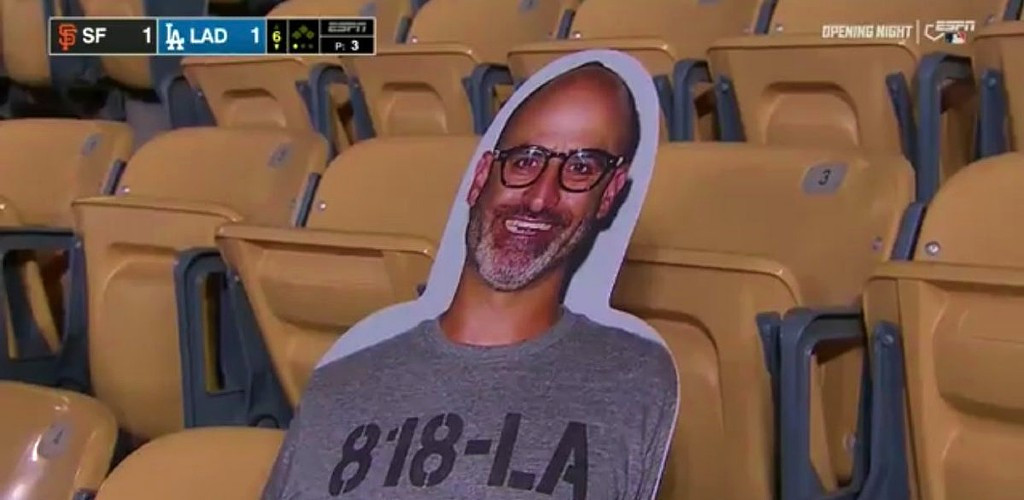
When the season started and certain teams populated their parks with cardboard cut outs, I was immediately on board. Putting aside the fact that a group of comedy friends bought one for the late Brody Stevens so he could posthumously represent the “818” at Dodger Stadium; and putting aside all of the great stories about family members getting to watch another game (or season) with a loved one, having “bodies” in the stands lent some dimension to the viewing experience. Having the “people” there made the ballparks look less empty, less cavernous, less lonely. But, the truth of the matter is that stadiums across the country were lonely this summer (just ask the play-by-play guys who broadcast away games from the press box in their empty parks). And that got me thinking about the impact of having insentient facsimiles rather than living, breathing fans in the stands.

Sam Miller of ESPN recently wrote an incredible article about the actual, real life impact of having patrons at the game, including the extra distance David Freese’s ball may have traveled in the ninth inning of Game 6 of the 2011 World Series due to the ambient heat of 43,000 fans. But I have a different angle: would the moments that we so cherish have the same resonance if they happened in sterile ballparks rather than ones foaming with fanatics?

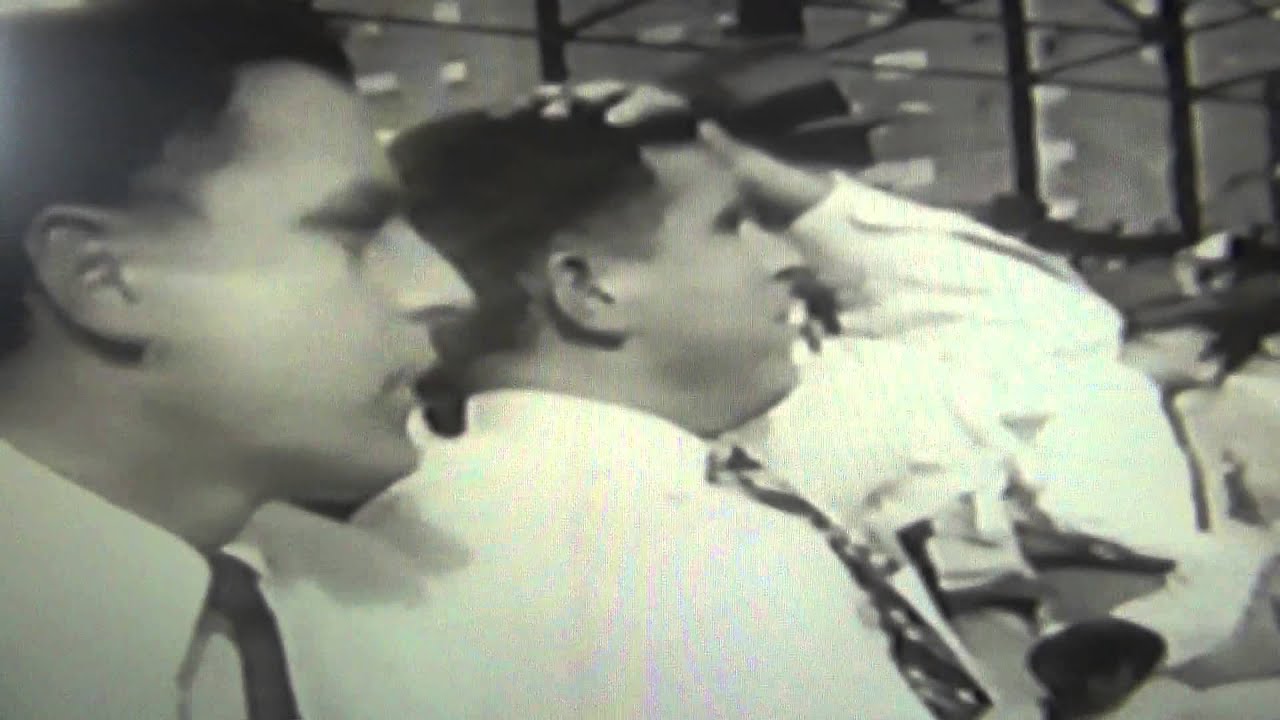
Sure Willie Mays’ catch in the 1954 World Series is an all-timer, but few of us actually saw it happen live. Is part of that memory more endurable because the camera caught a shot of these guys:

Imagine if Kirk Gibson hit his home run in the 1988 World Series into a poster board rather than a screaming hoard of Dodger bleacher bums? Go back and re-watch the full the nine-minute video and try to imagine the entire at bat happening in silence. But more than that, would this be the top-rated moment in Los Angeles sports history if Vin Scully didn’t turn off his mic for an astounding, stupefying, glorious 68 seconds (start at the 6:47 mark) and allow the roar of the crowd to carry Gibby and us – viewing at home – around the bases and back home again?

Piggy-backing on Sam Miller’s article, does anyone honestly believe that the 55,000 screaming patrons in Shea Stadium on the night of October 25, 1986, didn’t have any effect on Calvin Schiraldi? Do we think that Bob Stanley wasn’t at least a little rattled by the cacophony in Queens? Does Rich Gedman get crossed up on mediocre fastball if the park was so quiet that the players could hear Jason Gay pecking away on his laptop? (Ed. Note: Jason Gay was 16 in 1986, and most likely wouldn’t have had one of the first mass-market laptops, but you get the point.)

Is our memory of #755 made more indelible by the image of two white men chasing down a black man as he rounds second base after receiving too many death threats to count, after being provided FBI protection for him and his children, after breaking the most hallowed record in the game? Those two fans added to the relief then anxiety and then relief again of the moment. Not true if that had happened in an empty Fulton County Stadium.

Reasonable minds might differ about the distance of Jose Bautista’s bat flip/throw in the 2015 playoffs. But at least part of his reaction had to be attributable to the nearly 50,000 Fosters-induced Canadians losing their minds on contact. Bautista may have been fired up in a desolate Rogers Centre, but certainly not *that* fired up. That said, Fernando Tatís, Jr. did a pretty fair impersonation last night in an empty Petco Park, so who knows?

In the aforementioned Miller article, he makes reference to Mariano Rivera throwing over to first base only three times in Game 4 of the 2004 ALCS; and how, with no fans in attendance, pitchers are now more willing to throw over four times or more. Did New Englander’s lusty boos keep Rivera from doing so, as Sam posits? Did the energy of the crowd give Dave Roberts that tiny extra bit of adrenaline to beat a ridiculous pop time and throw from Jorge Posada to keep an 86-year curse at bay by a fingernail? Could the players have pulled that same rabbit out of their hats in a silent Fenway Park at 1:22am and then again less than 22 hours later? This lifelong BoSox fan is dubious. Would Mark Bellhorn’s dinger in Game 6 even have been reviewed if it hit off a cut-out rather than a lurching fan? Is a huge chunk of our collective memories of those final four games enhanced because of the insanity of the Fenway faithful and the silence of the Bronx zoo (especially after Johnny Damon’s grand slam in Game 7)?

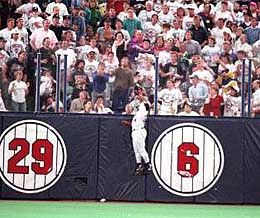
Did the sight of 55,000 white “Homer Hankies” flying around under the white roof of the Metrodome have any impact on our memories of the 1987 and 1991 Twins? Do the fans behind the outfield glass make Kirby Puckett’s Game 6 catch any more of a Web Gem?

And no list of this sort would be complete without asking about an eighth inning foul ball in Game 6 of the 2003 NLCS. With no fans in attendance, we would be able to answer the to-date unanswerable question of whether or not Moises Alou would have caught Luis Castillo’s pop fly. But assuming he couldn’t (some might say that is a fair assumption), our memory of that game, and the ensuing collapse (looking at you, Alex Gonzalez), and the following twelve years of futility, are forever altered by the fact that there were fans in the Friendly Confines on the night of my 31st birthday.

This recitation could go on and on (and I am sure you all are thinking of a few moments right now), but it will not for 2020. Regardless of how many people Manfred allows into the giant Costco that is Globe Life Field (it looks like it will be 11,500), it will not be comparable to having rabid fans rooting on their hometown team in the late innings on a cold October night. It will be antiseptic, it will be hollow, and it just won’t be the same. And, potentially, neither will the outcomes.

And yet, we will still watch.

PLAY BALL!!

The Unknown Impact

When I was about six years old, as a favor to my father’s cousin, Doug DeCinces brought me (and my dad) onto the field at the “Big-A” before a game. He introduced us to Jimmy Reese and Rod Carew, and let us step into the dugout. When it was over, I am pretty sure I floated back to my seat in the grandstand. More than four decades on, I still remember that day.

When Tom Seaver died this past week, the result of Lewy body dementia and Covid-19, the collective baseball community opened its nostalgia vein and bled all things “Tom Terrific.” So many great stories were written about Seaver not making the varsity team until his senior year of high school; his brief enrollment in the Marines before a late growth spurt; his time at USC and his then-voided draft by the Braves in 1966; and, of course, the serendipity of the Mets winning a mini-lottery and landing “The Franchise.” There was no shortage of tales about Seaver’s brilliance on the mound, and the lives he touched off of it.

In the midst of the Seaver hagiography, a buddy sent me an essay written by Josh Wilker of Cardboard Gods. It tells the story of an 18-year old Josh hitchhiking his way to Fenway Park in 1986 to watch Seaver pitch for the Red Sox. I won’t step on the article – it is well worth your read – but suffice it to say that watching a future Hall of Famer on the mound that day had a lasting impact on Josh’s life.

Reading Wilker’s story got me thinking about the relationship between athletes and us mere mortals, and the asymmetricality [Ed. Note: I know it is not a word.] of that bond. Performers perform, they do their job, and unbeknownst to them, our lives are oftentimes changed.

Athletes put on their uniform, take the field, and earn their pay. They have no idea the effect that that performance, on that one day, in that one game, has on the people in the stands. And I am not talking about Reggie Jackson or Kirk Gibson, Don Larsen or either “Game Six.” I am not talking about the games wherein the announcer states “35,000 in attendance but millions will claim to have been here.” I am talking about quotidian instances when a first baseman tosses a ball to a boy in the stands; or when a utility player gives his broken bat to a little girl; or when one man stepping on the mound fulfills a kid’s dream of witnessing that player pitch in person.

This phenomenon can happen in any sport, or any form of performance (see, Hamilton), but the imbalance seems that much more acute in baseball where they take the stage (in non-pandemic seasons) 162 times each year, so no particular game should have any more meaning than another…to the players. But to the fans, to the people who pay their hard-earned money, who surprise their children with tickets, or those who hitchhike from out of town, each game represents an opportunity to have a life impacted in ways one can never anticipate. And it doesn’t just have to happen on the field – it can just easily happen at a card signing or a chance encounter in the grocery store.

This concept begets a little chicken and egg dilemma. Do these encounters affect us because we hold athletes in such a high regard, or do we hold these athletes in such high regard because of the effect of our encounters? I, for one, am not philosophically adroit enough to answer that question. But I do know the impact is real. Any of us who have been fans for any period of time can think back to a specific moment and remember with perfect clarity what a player did or said that one time. These earworms are permanently embedded, but accessible enough to become stories told over and over, often to bored and weary friends and relatives.

But that begs a larger question – does this happen in our everyday life, outside the theater or the stadium? Is it possible that as we go about our lives, we are the players and the people with whom we interact are the fans? Maybe you gave up your seat on the subway to a pregnant woman, and she carries that act of chivalry with her forevermore. Maybe you allowed a driver to get ahead of you in traffic, and that allowed him to make the light and get to his kid’s game moments before he hit his first home run. That man will always hold the guy in the silver Civic in high regard. And the Civic driver – like Tom Seaver in Wilker’s story or Doug DeCinces in mine – is none the wiser. Maybe you passed along your friend’s kid’s resume to HR with a short note, and thus began a long and illustrious career. This concept could, conceivably, apply to everyone, everyday. It just may be that it is heightened when the do-gooder plays on a field in front of 40,000 fans.

People spoke of Seaver’s passing as if they lost a family member. And what a wonderful testament to a life lived – that a man who you didn’t know could impact your life in such a profound way that his death feels like losing one of your own. But Seaver didn’t know any of that. He went about his day, he did his job (better than maybe five or ten other people in the history of the game), and then behaved admirably off the diamond. He didn’t know whose life he affected, whose life he changed, whose earworm he created.

Bill Simmons is one of the most well-known sports journalists in the world, he calls any number of coaches and players good friends, he runs a media empire and can get anyone on the phone at nearly any time (including President Obama). And yet, even he has a Tom Seaver earworm. He reflects with great revelry the time he stood in a makeshift batter’s box while Seaver played catch with Bill’s buddy, Gus. Bill has traveled the world and seen every form of competition up close; he has hosted thousands of podcasts; he has written two books and millions of column words. And yet, nearly forty years after the fact, he can still describe, with precision, standing in his friend’s front yard when Tom Terrific buzzed him with a curveball. If you had asked Seaver about that day prior to his death, I feel fairly certain he would have had no recollection. But, no matter, Simmons does. And there are any number of stories just like that; when a performer did something or said something that impacted our lives – maybe not permanently, maybe not even significantly – but impacted us nonetheless.

These stories represent an important life lesson – our actions have reverberations well beyond our vision. The next time we pass a homeless man begging on the street or a kid selling chocolate bars or someone asks for a letter of recommendation, think about the impact that our response might have; consider those who may always remember a small word or deed, a simple act of kindness, something that we will forget in a day’s time, but they will keep with them forever. Tom Seaver did that for a generation of Mets fans; and so too have athletes, actors, and performers all across the world for their fans. We would be wise to follow their lead.

PLAY BALL!!

The Baseball Gods

Every season, it seems, for one reason or another, we are thrown into the abyss of the “unwritten rules.” The list is long, if not readily understood. There are the age-old tropes of the “right way to play” and “that’s not how it is done” and “everyone knows not to do that.” And even with those, we learned a new one this week – one with obvious racial undertones – by Rangers manager Chris Woodward when discussing not swinging on a 3-0 pitch up by seven runs:

“It’s kind of the way we were all raised in the game [emphasis added].”

There has been much written about Fernando Tatís, about his exuberance, and that of fellow Latin players. There has been gallons of ink spilt about new school vs. old school, about “letting the kids play,” about stodgy standard-bearers, and the aforementioned “unwritten rules.” There is no need to rehash the same here.

But what struck me this week was the beauty of the Baseball Gods (capitalized out of reverence). Don’t believe in them? Live as a Red Sox fan until mid-October, 2004; or as a Cubs fan until the rain started to fall in Cleveland on November 2, 2016; ask an announcer about mentioning the number of base hits allowed when a pitcher is pulling his car up for his date with destiny; or just ask any Astro about the status of their pitching staff this season. Or read either of these books.

The Baseball Gods struck back this week in ways only they know how.

On Wednesday, I had the following text exchange with my brother-in-law about the aforementioned Tatís brouhaha:

Him: Our house is buzzing with Tatís talk. We don’t get all the hoopla because in MLB people come back from 7 run leads and it’s on the pitcher to not give him that pitch.

Me: 7 runs in that bandbox is not insurmountable…

We discussed more, like Chase Tingler’s poor handling of the matter, and how Tatís should be more accountable if he missed a sign, but you get the essence.

And here is where the Baseball Gods decided to show up and flex all their celestial might: On Thursday, just about twenty-fours after the above back-and-forth, the Phillies put up seven runs on the Blue Jays in the first inning. Now, granted, a seven-run lead after half an inning is different than a seven-run lead after seven; and, granted, Sahlen Field is not the new Globe Life Field. Nevertheless, the lead is/was the same. The Jays scored two in the bottom of the first; and then – that magic number again – seven in the bottom of the sixth to take a 9-7 lead, ultimately winning 9-8.

No sooner had the baseball purists stepped down from Mt. Pious to say that players should play differently with a seven-run lead did a team come back from that exact deficit. Was the ultimate outcome of that Phillies-Blue Jays game the impetus for Tingler and Chris Woodward to change their respective tunes? Did all-timers like Johnny Bench and Reggie Jackson coming out on Tatís’ behalf change the temperature?

Did the sheer number of think pieces and/or the leveling of Woodward’s hypocrisy make this nothing more than a tempest in a teacup?

Or, did the Baseball Gods strike down once more to remove this silliness from the front pages of sports columns by opening Thom Brennaman’s mic before the second game of the Reds-Royals double-header on Thursday night? The truth is, we will never know.

But, if we learned anything these past few days it is that we doubt the Baseball Gods at our own peril.

PLAY BALL!!

Honor Among Cleves

I spent nearly my first two decades on the planet playing baseball, and nearly the next three observing the game (some might claim too closely). What I learned in that time is that baseball players are a lot of things, they are tough, they are competitive, they are ready to fight, and they have hollow legs when it comes to post-game libations (see, Boggs, Wade). But one thing you don’t hear too often is “principled.” Sure, baseball players abide by the “unwritten rules,” and will willingly throw at a batter’s head if the previous guy pimped a home run (thankfully that practice is employed less and less these days), but they don’t often take a stand. Ask Bruce Maxwell how well kneeling for the national anthem worked out for him.

It is with this as the backdrop that I was shocked, I dare say astonished, to hear what transpired after an Indians’ team meeting late this week. For those you who may have missed the story or don’t know all the details, allow me a small recap:

  • The Indians, like all teams, are governed by the strict MLB rules and regulations regarding Covid protections.
  • The Indians, like some teams, are more acutely aware of the potential impact of violations insofar as one of their star pitchers, Carlos Carrasco, elected to play this season even though he missed most of last year after being diagnosed with leukemia. Carrasco’s doctors warned him against joining the team, but he wanted to help his club win their first World Series since 1948.
  • The Indians, unlike some other teams, have so far managed to avoid the Covid bug, and have played all of their scheduled games to date.
  • The Indians were in Chicago last week to take on the White Sox and then the Cubs. After Saturday’s game, pitchers Zach Plesac and Mike Clevinger went out to dinner with some friends and back to one of the friend’s houses to play cards. In violation of the rules, neither player informed the team he was leaving the hotel. And Plesac was spotted by MLB security arriving back after the 10pm curfew. Clevinger was not sighted, nor was his absence from the team known at the time.
  • After the team learned of Plesac’s malfeasance, they ordered a car service to drive him back to Cleveland, and forced him to quarantine for three days. Clevinger, however, kept his part of the sojourn to himself, and boarded the team flight home. A flight, it should be noted, that also carried Carlos Carrasco and rest of the Indians players and coaching staff.
  • The team ultimately learned of Clevinger’s participation, and sent him home to quarantine as well.

The Indians players – non-Chicago dinner division – were apoplectic. They felt betrayed. They were hurt.

Pitcher Adam Plutko put it bluntly:

“They lied to us. They sat here in front of you guys [the media] and publicly said things that they didn’t follow through on. So those grown-ass men can sit here and tell you guys what happened and tell you guys what they’re going to do to fix it. I don’t need to do that for them.”

All-star shortstop Francisco Lindor was a little more gentle, stating:

“We’re humans, and we make mistakes. We’ve got to be accountable when we make those mistakes, and we’ve got to understand that you can’t put yourself first. In the times we’re in, you cannot put yourself first.”

Here is where the story gets interesting. The team ultimately traveled to Detroit to take on the Tigers. After completing their quarantines, Plesac and Clevinger each loaded up their respective cars and drove to outskirts of the Motor City to meet the team at their hotel. Once there, they pleaded their case, and attempted to fall on their swords.

It bears mentioning here that prior to the trip to Detroit (or possibly on the way) Plesac recorded a six-minute video to Instagram (while driving) wherein he tried to explain his side of the story, intimated that the MLB protocols were confusing and did not match with the CDC, claimed he is a responsible human because his mother is a nurse, and then blamed the entire episode on the media. Here is my favorite nugget:

“The media really is terrible, man. The media is terrible and they do some evil things to create stories and to make things sound better, makes things sound worse. Truthfully, I’m disgusted the way the media has handled this whole situation surrounding our team.”

So, in short, Plesac is a good guy, MLB bolloxed their rule-making, and it’s all the media’s fault. Okay. Got it. Now back to two players driving themselves to Detroit.

At the hotel Plesac and Clevinger spoke with the team and there was a Q&A. They provided their accounts. Now, this is where one would expect that baseball players being baseball players, guys who care about winning first and foremost, guys who overlook their teammate’s transgressions each and every day, guys who know that losing two-fifths of their starting rotation is less than ideal in this 60-game sprint, would, if not forget, at least forgive, and allow the players to rejoin the team. And that is where you would be wrong.

The front office and the coaching staff, after taking the temperature of the players in the room, elected to send the two offending pitchers to the team’s alternative training site in Eastlake, Ohio, where they must remain – by league rules – for at least ten days (unless someone gets injured). They drove three hours with the hope of recovering their dignity and their place in the rotation; they were forced to drive three hours home with their tails between their legs and their reputations in tatters.

I have never been a Cleveland fan. I rooted against them in the 2007 ALCS when they played my Red Sox; I rooted against them in the 2016 World Series against the (There’s Always Next Year) Cubs. But, with this season in shambles for the BoSox, I am pulling for the Indians. I want them to go all the way. I want them celebrating on the mound; I want Tito Francona and this group of players who stood on principle, who stood by one another, and who refused to stand for selfishness and self-importance; I want them to stand at the podium and hoist the Commissioner’s Trophy for the first time in 72 years.

And if, by that time, Plesac and Clevinger have properly repented and re-earned their teammates’ respect and ultimately help the team achieve that goal, then all the better. Go Tribe!

PLAY BALL!!

The $10,000 Fine

About three years ago I wrote an article entitled “The $25,000 Fine,” which dealt with the scourge of batters not running to first on an uncaught third strike. Surprisingly, much of the feedback I received from that missive was negative, as people didn’t seem to care too much about players’ laziness; people did not seem to think that players should be pecuniarily punished for their failures on the field; people didn’t seem to think that publicly shaming athletes for their indolence was good policy. Okay, fine, whatever. It was an idea, a lark; it was meant at least 50% tongue-in-cheek.

But my latest concept has much more serious implications – many of which are playing out in real time. In an effort to play the season safely (if that is even possible), MLB and the MLBPA developed what is called the 2020 Operations Manual, a 101-page document detailing the league’s health and safety protocols. The sheer volume of this document is staggering, and covers nearly every eventuality you could imagine – except, of course, what to do if four players on one team test positive before a Sunday afternoon game. But I digress.

There is no need to delve too deeply into the inch-thick document, but suffice it to say that it was well thought out and intended to keep the players as safe as possible. For our purposes, however, it is important to highlight just a few of the provisions:

• The only contact allowed on the field are tag plays and other incidental contact that occur during normal play.

• Players, coaches, and trainers are required to wear face coverings everywhere except the field.

• High fives, fist bumps, and hugs are prohibited.

• Dugout seating requires at least six feet between each player.

• Players and staff are required to put a personal towel over the dugout railing when leaning over the same.

• A ball will be thrown away after it is touched by multiple players, and throwing the ball around the infield is discouraged.

• First- and third-base coaches are not to approach baserunners or umpires, and players should not socialize with opponents.

I have pointed out these specific rules because after having watched baseball for six days, it seems that all of them are being broken…with impunity. And, in Houston last night, the Dodgers and Astros came dangerously close to breaching the “fighting will be met with severe discipline” edict (I guess severe discipline can be assessed for not fighting as well, as Joe Kelly, Dave Roberts, and Dusty Baker learned this afternoon).

What don’t the players and coaches understand about the global pandemic? Maybe some of them believe it is just a hoax. Maybe some of them believe – like the recently diagnosed Congressman, Louie Gohmert – that wearing a mask can actually give you coronavirus? Maybe some of them believe that the rules don’t apply to them, or that they are impervious to a disease that does not discriminate based on age, gender, or profession.

But if what happened with the Miami Marlins this week is not enough to scare players straight, I have an additional incentive. The players were informed of the litany of rules in late June, before they embarked upon Summer Camp. They have lived with the protocols for more than four weeks. If they don’t know or understand them by now, and if they don’t appreciate the gravity of adhering to them by now, they never will. So let’s put some money where their mask is supposed to be. Each player is given a mulligan for everything that has transpired to date – and that includes the Marlins players who (allegedly) went out on the town in Atlanta and were the architects of their own demise – and they are, as of today, given one additional warning for infractions. It is useful to note that while the league cannot track everything personnel does (especially away from the ballpark), a violation of any of the rules listed above can be seen on television every night. One need not contact trace to find an infringer; one just needs to log in to MLB.TV. After the warning, each player is fined $5,000 for each violation, and the team is punished in an equal amount. If Don Mattingly keeps his mask under his nose while in the dugout, $5,000 for him + $5,000 for the Marlins. If the Athletics jump on Matt Olson after a walk-off homerun (all but two without masks, natch), $5,000/each + $55,000 for the team (Olson does not get fined). All proceeds go to Black Lives Matters or other charities dealing with social justice issues.

Unlike the $25,000 fine I previously wrote about, there would be no announcement or public shaming aspect. Just cold hard cash. Players walk into the clubhouse the next day to find a bill from the league. Despite Charles Barkley’s protestations to the contrary, athletes are role models. And although it seems that more and more people are getting behind the idea of masks being incredibly helpful in curbing the spread of this disease (including, ever-so-gingerly, the Commander-in-Chief), and that social distancing is vital to keeping the disease at bay, you can turn on your television every night and see well-known athletes not abiding by these nearly-universally accepted concepts and not obeying their specific rules. What does that say to the general public?

And even if this is not about setting an example for society at large, what about the non-athletes these players encounter every day? It was reported today that a visiting clubhouse staffer in Philadelphia tested positive after the Marlins were in town. That guy doesn’t make millions of dollars per year; my guess is he doesn’t make six figures. And yet the players, so cavalier in their approach to the protocols, have put his life in danger. If the risk to the season isn’t enough; if care for your fellow man isn’t enough; if being a role model for kids and adults isn’t enough; then maybe taking a hit to their wallet will be. And you can be sure that if the owners, who fought and scratched to make the best financial deal possible for this abbreviated season, are forced to scratch a check every night for their team’s failures, they will be demanding that their manager starts running a tighter ship. There simply may not be any other way.

Here’s to hoping that everyone stays (and/or gets) healthy and that we continue to hear this every day from now through October:

PLAY BALL!!