Pick a Lane

Much has been written about organizations not caring enough to field a competitive team. In an effort to combat this scourge, the players tried to impose a salary floor in the latest CBA negotiations to thwart the concept of “tanking.” Shortly after the new CBA was signed, the Oakland A’s, doing their best Major League impression, went into fire-sale mode, bringing their 2022 salary commitments down to around $50M. The Orioles are in year pi of their rebuild. The Pirates are so parsimonious that the Effectively Wild podcast has dubbed any failure to pay players “Nutting” (after Pirates owner Bob Nutting).

We desperately need 30 teams to go out there and compete, to try to win.

We want teams to try to win, but, apparently, just not too hard. Based on what I have read and listened to since the start of the season, we don’t necessarily want our teams to try to win when doing so may come at the cost of individual achievements. We don’t want them to try to win when doing so might make the other team (or their fans) feel bad. We don’t want them to try to win when doing so might cause a violation of the so-called “unwritten rules.” To which I say, “Pick a lane.” What do we want?

The season is just a few weeks old, and we have already seen these issues rear their head on three occasions. Let’s take a look:

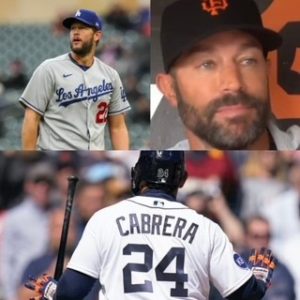
Clayton Kershaw & Dave Roberts

At this point, Clayton Kershaw is a national treasure. Love or hate the Dodgers, no one dislikes Kersh. The guy builds orphanages in Zambia; he hosts a ping-pong tournament each year to raise funds for Africa and the Dominican Republic. Oh, and he has had a Hall of Fame career, winning three Cy Youngs. However, the last few seasons have seen Kershaw make multiple trips to the IL with various ailments. His best days are behind him, but when healthy, he is still effective; and he is still someone the Dodgers will need in order to make a deep run in October.

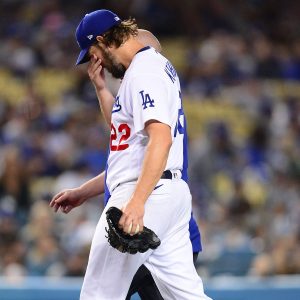
So when Kershaw threw seven perfect innings, on only 80 pitches, in his first start of the season, baseball fans begged for him to keep going. But Clayton knows his body; Dave Roberts knows his star; and neither thought it made any long-term sense to send Kershaw back out there for the 8th inning. We fans were denied a shot at history; but so, too, was Kershaw. He didn’t seem to mind. But talk-radio jockeys, beat writers, and armchair managers all felt they knew better.

“He may never get another chance at a perfect game; you’ve got to let him go” was one refrain. “So what if he got tired? He could skip his next start or two,” was another. This latter take was maddeningly myopic. Suffice it to say that pushing an oft-injured, 34-year-old pitcher after a shortened Spring Training beyond what he felt he was ready for in his first start of the season just for the chance he would make history, is not good for the player or the team. Any potential injury could and would have a long-lasting impact on the Dodgers’ goal…of winning.

But, to hear “fans” lament “modern baseball” and it being ruled by “analytics” and “front offices” (a) takes away Kershaw’s agency in the matter (before the game he told Dave Robert he could only throw 85 pitches) and (b) flies in the face of the ultimate goal. How many Dodger fans would be happy exalting a perfect game in April, but being one pitcher – one Hall of Fame pitcher – short come the (expanded) playoffs? How would those “fans” feel when the Dodgers were forced to throw a bullpen game in Game 6 of the NLCS because Kershaw is on the shelf? I don’t love every decision Dave Roberts makes, but this one was one of his easiest.

Miguel Cabrera & Aaron Boone

If Kershaw is the most beloved player in MLB, Miguel Cabrera could make a case for being 1A. Who doesn’t love this guy? Hell, he gave his glove to rookie Spencer Torkelson, telling him to play first base while Cabrera moved permanently to DH, so Torkelson could start his big league career. Jayson Stark laid out the insanity of Cabrera’s hitting prowess, and the rarified air he breaths for those who have played the game and swung a bat.

And with three hits last Wednesday night, Cabrera entered Thursday’s game sitting on 2,999 hits. After going 0-fer in his first three at-bats, he came to the plate with two outs in the eighth inning of a 1-0 game, with runners on second and third. Aaron Boone had the Yankees trailing by a run with one of the greatest right-handed hitters in the history of the sport at bat, facing a lefty with a left-handed hitter on deck. So Boone did exactly the right thing: he intentionally walked Cabrera. The fans at Comerica Park went nuts. Even Cameron Maybin, in the Yankees’ broadcast booth, was shocked that Boone did it – but he agreed with the decision. You know why, because that is what you do when your job – and your goal – is to win games.

The AL East stands to be the most competitive division in all of baseball this season, where every win will be of paramount importance – and potentially the difference between making the playoffs and not. So, was Boone supposed to push that aside and let Cabrera swing away, potentially getting hit number 3,000, AND giving the Tigers a 3-0 lead? Would Brian Cashman and/or Hal Steinbrenner have looked the other way at that obvious malfeasance if/when the Yankees lose the prize by a single game? 

The naysayers will say that Austin Meadows’ softly-hit double proved the Baseball Gods right, so it did not matter. But process matters. Good judgment matters. Bosses and owners can live with bad results that derive from good decisions. They can’t abide by putting the feelings of the hometown Tiger fans ahead of the goals of the team. And you know how I know I am right? When the inning ended the fans booed, Miguel Cabrera told them all to be quiet, to look at the scoreboard, to recognize that Aaron Boone made the right call.

Mauricio Dubon & Gabe Kapler

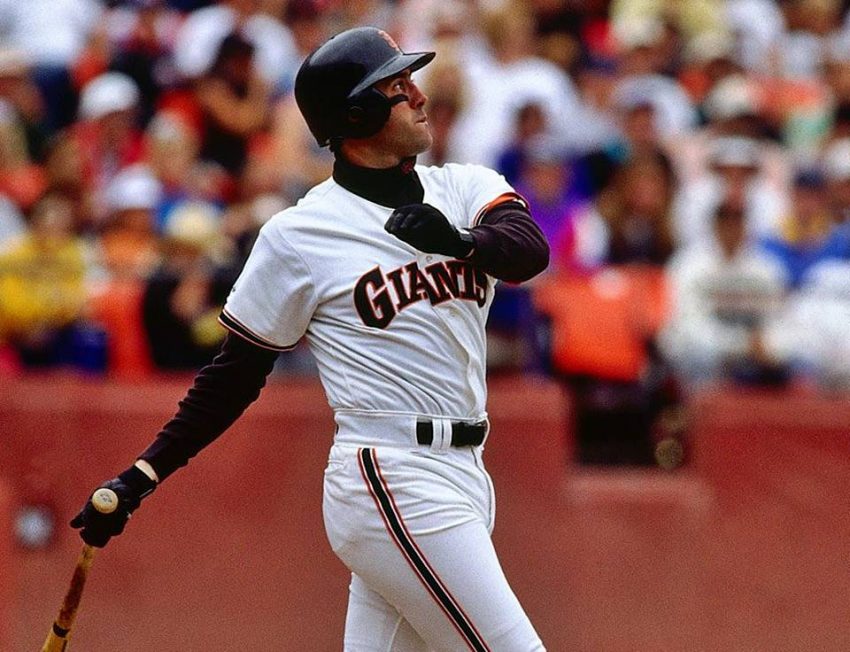
About a week ago the Giants started thumping their division rivals, the Padres, from the get-go. By the time there were two outs in the second inning, they led 10-2. Steven Duggar, who had just knocked in the tenth run with a single, elected to steal second base. Swiping a base with a nine-run lead is not de rigueur, but doing so in the second inning may be slightly more palatable. If the Padres were upset with Duggar, they hadn’t seen anything yet.

Leading off the bottom of the sixth, with the Giants comfortably ahead 11-2, Mauricio Dubon bunted for a single. When he got to first base, Eric Hosmer greeted him with some choice words. Hosmer told MLB.com that he told Dubon: “You’ve been playing professional ball for a good amount of time obviously if you’re at this level. You’ve got to be smarter than that.”

Smarter than what? Smarter than trying to play the game to win? Smarter than trying to increase his batting average so he will get a raise next season, and maybe more money when he reaches arbitration in a few years? Sure, the Giants were up nine runs, but Hosmer was still trying to win when he swung from his heels the inning before. The Padres were trailing by nine runs but still had their starters in the game (Bob Melvin did replace Hosmer and Manny Machado in the seventh). Clearly, one side was still playing to win. Why shouldn’t the other?

After the game, reporters threw a ton of mics in manager Gabe Kapler’s face, trying to get an answer as to what he and his players were thinking. Kapler (who it should be noted, I don’t always agree with), laid it out perfectly: 

“Our goal is not exclusively to win one game in a series. It’s to try to win the entire series. Sometimes, that means trying to get a little deeper into the opposition’s ’pen…We’re not trying to hurt anybody. We just want to score as many runs as possible, force the other pitcher to throw as many pitches as possible. If other clubs decide that they want to do the same thing to us, we’re not going to have any issue with it.”

And there it is. Kapler is paid to help his team win games. If his strategy in game one of a series has an impact on games two and three, all the better. Last season the Giants won the division over the Dodgers by one game. Every game – including the games in the days after a blowout – counts. Were the Padres upset? Yes. Should they have been? Well, I do seem to recall a certain Padres star swinging on a 3-0 pitch with the bases loaded up by seven runs just a few years ago.

The “unwritten rules” of baseball aren’t worth the paper they aren’t written on – they take away the competitive spirit of the game (with the exception of throwing at someone’s head – that one actually should be written in stone).

In that same interview, Kapler spoke the truth and summed up the ultimate goal:

“Everybody is competing on a Major League Baseball field. It doesn’t make any sense how one part of the field stops competing and the other part of the field keeps competing. I can’t think of a reason why that makes sense. The pitcher on the mound is trying to get you out, the batter at the plate stops competing with all the tools at his disposal?”

Baseball is hard. Ask the heralded rookies over the past two seasons all hitting below the Mendoza Line. Ask the Blue Jays who didn’t make the playoffs last season despite possibly being the best team in the American League at season’s end. Ask the aforementioned Giants who won the division by a single robbed home run in May, only to be knocked out of the playoffs on a checked swing.

The goal is to win and to put your team in the best possible position to win. The goal is not to make the fans happy with individual achievements at the potential cost of long-term success; nor is it to mollify opposing managers who believe there is a “right way” to play the game. If we demand that our owners spend money to put quality players on the field, then we have to demand that our managers allow those players to play the game to win, both for today and for October. Otherwise, we are just a jumbled mess of contradictions and hypocrisy. So look in the mirror, baseball fans, and ask yourself what it is that you want.

Either way, you need to pick a lane!

PLAY BALL!!

The Silver Age of First Basemen

There is a belief that your baseball fandom hits its stride between the ages of 12 and 14. That certainly holds true for me. And luckily for me, as a bats-left/throws-left first baseman, I hit my fandom stride in what I would call the “Silver Age” of first basemen. Why not the Golden Age? Because as good as the collection of first-sackers listed below are, I’m not sure they live up to an era that had Lou Gehrig, Jimmy Foxx, and Hank Greenberg.

Here is a non-comprehensive list of the veritable super-stars who held runners on base in the eighties:

Pete Rose: 4,256 hits; played for 24 years. Only not a Hall of Famer due to that pesky gambling thing.

Rod Carew: Retired in 1985 after more than 3,000 hits, with 13 seasons of 150 hits or more (four with 200 or more); 7 batting titles including four in row (1972-1975). Inducted into the Hall of Fame in 1991.

Eddie Murray: Between 1977 and 1995, had only one season with less than a 105 OPS+, and had a 103 OPS+ in his 21st year. He got a plaque in Cooperstown in 2003.

Jack Clark: You rarely hear his name any more, but from 1978 through 1991, his lowest OPS+ was 125, with five seasons above 150. Plus, he crushed the souls of Los Angelenos in the 1985 playoffs.

Wally Joyner: I already dedicated a whole article to him here.

Mark McGwire: Even before his goatee and biceps grew, he set a major league rookie record with 49 HRs in 1987. Would be in the Hall of Fame today but for Andro, Deca-Durabolin, and Winstrol.

Mark Grace: No batting gloves, no matter. 2,445 hits, lifetime .303 hitter, career OBP of .383. And how about this line for the 1989 playoffs: .647/.682/1.118/1.799.

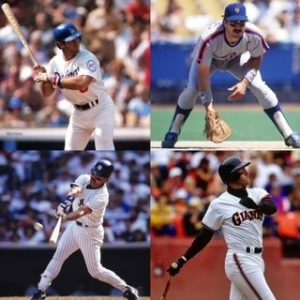
There are four very obvious names not listed above, all of whom hold a very special place in my heart; all of whom were cornerstones of ‘80s baseball:

My inaugural first-baseman’s mitt was a Rawlings Keith Hernandez model.

Before the Batting Stance Guy ever struck his first pose, I closed my stance and dropped the head of the bat over my shoulder – and even removed my batting gloves – just like Will Clark.

My first baseball coach was a diehard Yankee fan. The only thing we could agree on was that Don Mattingly was the best hitter in the league.

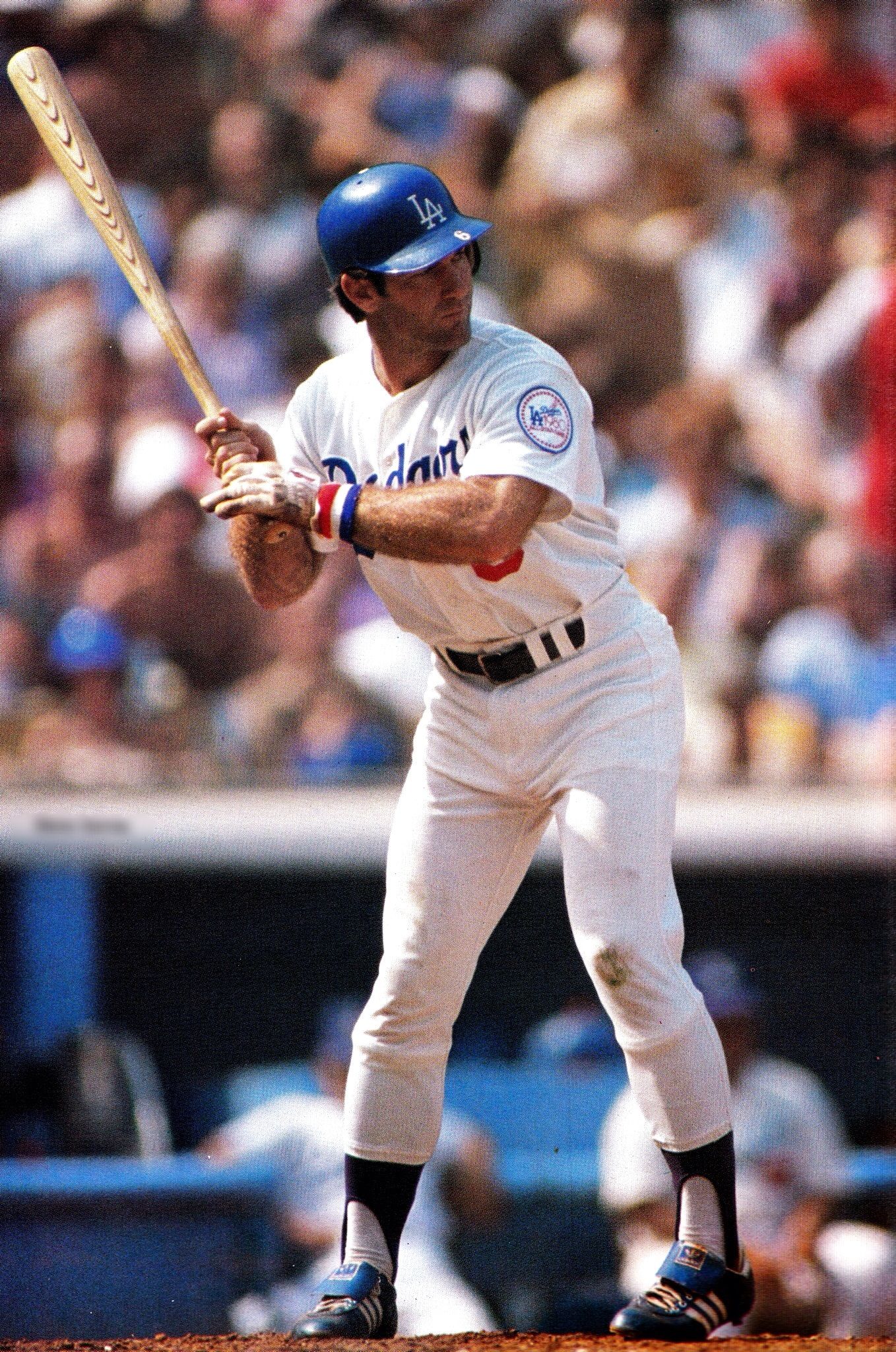
Steve Garvey defied what I looked for in a first baseman – he batted and threw (I use that word loosely) right-handed – but he was my hometown guy; and he played every…single…day; and he could stretch like a Russian ballerina, and picked every errant Bill Russell throw.

These guys were not only good, they were great. As such, each year, when Hall of Fame balloting comes around, all four get a ton of attention. There are some who will swear that if Player X is in the Hall of Fame, so too should Garvey. Others will say that Mattingly was well on his way, but a bad back thwarted his potential enshrinement. Some claim that cocaine slowed Hernandez down. As for Will, well, he’ll always be a Hall of Famer…in my heart, if not in my head.

But the truth is, despite their greatness for periods of time, and despite my unrequited love, none of these four guys had Hall of Fame careers. Sure, that can be a subjective analysis (ahem, Harold Baines, ahem), but the facts and the stats bear this out.

Each player included at www.baseballreference.com has a “Hall of Fame Statistics” section, which lists the following:

Black Ink: This is how many times the player led the league in “important” stats. Accordingly, you get four points for leading in HRs, RBI, and/or batting average; three points for runs, hits, and/or slugging; two points for doubles, walks, and/or stolen bases; one point for games, at bats, and/or triples. The average Black Ink points for a Hall of Fame first baseman is 27.

Gray Ink: This is the same as Black Ink, but the player need only be in the top ten of the league. The average Gray Ink points for a Hall of Fame first baseman is 144.

Hall of Fame Standards: This is a considerably more complicated math problem, with 17 different inputs. You can read more about it here. The average Hall of Fame Standard point total for a Hall of Famer is 50 (with 100 being the max).

WAR: This is also known as bWAR, and it is Baseball Reference’s calculation to determine how much better a player is than a player that would typically be available to replace that player. I will save you the headache of explaining how they do this.

JAWS: This is the preeminent tool for determining if a player is Hall-worthy. The sabermetrician Jay Jaffe first developed this system in 2004, comparing players at each position with players already enshrined, using advanced metrics to account for the wide variations in offensive levels throughout the game’s history. The JAWS score is a player’s career WAR averaged with his seven-year peak (not necessarily consecutive).

With that as the backdrop, let’s dig into the numbers.

Black Ink Gray Ink HOF WAR 7-Year Peak WAR JAWS
Average HOF First Baseman 27 144 50 65.5 42.1 53.8
Steve Garvey 12 142 32 38 28.7 33.4
Keith Hernandez 14 118 32 60.3 41.2 50.8
Don Mattingly 23 111 34 42.4 35.7 39.1
Will Clark 13 94 42 56.5 36.1 46.3

As you can see from the above metrics, none of these guys meet the criteria necessary to have plaques in Cooperstown. And despite the oft-heard “Garvey was a Hall of Famer” (on the field and in the bedroom), it appears that Keith Hernandez has the strongest case to ultimately be enshrined. His WAR is only 8% lower than the average; his 7-Year Peak WAR is within the margin of error; and his JAWS score should be close enough for government work (especially for a guy who played and now broadcasts in New York).

What is incredible about these numbers is that you would have sworn that for at least a seven-year window, both Don Mattingly and Will Clark were the best hitters in the world. And yet, the statistics belie that memory. I guess that is just nostalgia of my youth. Chuck Klosterman, the best-selling author who always has an interesting way of looking at things, recently said the following: “Nostalgia is looking at the past through the lens of your own personal experience and therefore changing the meaning of that memory based on the way you want to feel about your relationship to your own life.”

In my own life, I want Garvey, Hernandez, Mattingly, and Clark to be inducted into the Hall of Fame. In real life, they were good; they were, in-fact, great. They were part of the Silver-Era of first basemen. But try as I might, I cannot conjure them into being Hall of Famers. And, you know what, my memories will suffice.

Garvey’s chiseled jaw and dimpled chin perfectly placed on his front shoulder awaiting the pitch.

Hernandez’s mad-dash charge of a bunt.

Donny Baseball’s six grand slams in 1987.

Will the Thrill’s bat drop/arm cock as he launched another one into the upper deck at Candlestick.

Who needs plaques when I have those images burned into my brain.

PLAY BALL!!

MLB’s Middle-Class Isn’t So Middling

I have a great deal of ambivalence about the current lockout. I am, by no means, pro-owner. But that doesn’t mean I am necessarily pro-player, either. And I am really tired of the trite trope of billionaires vs. millionaires. Both sides are right and wrong. Unfortunately, the most intransigent issues are financial, with the players wanting to be paid more, and the owners wanting to pay less. That makes for tough sledding.

There are, of course, many issues on the table beyond the aforementioned financial ones, and those should be considered and fought for as vociferously as the ones related to pay. In fact, possibly even more so. Over the past few seasons, and in the lead-up to the lockout, there was a great deal of focus on the middle-class of players, who are being pushed aside for rookies and their minimum salaries, rather than being paid in the free-agent market. We, as fans, have been told that we are heading down the NBA road of rooting for teams comprised of stars and scrubs, with no in-between. The system is flawed. But how flawed? Who isn’t getting paid?

Last month I wrote about teams giving out raises to players when they have no contractual or, quite frankly, moral obligation to do so. I don’t see the MLBPA complaining about that. For those interested in that story, the article can be found here.

Despite all of the sturm and drang about middle-class players getting squeezed, the numbers don’t necessarily bear that out.

A quick primer: Typically, a player is under team control for the first three seasons, wherein the club can pay that player any salary at or above the minimum. After the player’s third season, the team can: (1) not offer the player a contract, effectively cutting him (known as “non-tendering”); (2) negotiate a new contract, either for one or multiple years (it is normally for one year); or (3) go to arbitration, where a neutral third party decides between the player’s proffered salary and the team’s (in “Baseball Arbitration,” there is no baby to split, it is one or the other).

It is hard to calculate how many arbitration-eligible players suffer the fate of option (1) above. There may be many. But for those to whom no contract is tendered, we can stipulate that the player is either really bad or simply not worth the money. Maybe those players should be squeezed out of the market/league.

If no deal is reached (option (2) above), then the player and team go to arbitration, which is an arduous and somewhat antiquated process. It forces an adversarial confrontation between two parties who, regardless of the outcome, will be on the same side, fighting the same battles, hoping to achieve the same goals, as soon as the proceedings end. It is a zero-sum exercise for a non-zero-sum relationship.

With the lockout, the arbitration process is on hold. But prior to December 2, 36 players settled their contract status with teams before going to arbitration (i.e., option (2) above). I analyzed each one of those 36. 

Players are correct in their thinking that – in the aggregate – the competitive balance tax is being used as a soft salary cap (only the Dodgers and Padres paid the CBT this past season). They are also correct that – in the aggregate – more and more teams are spending less (i.e., tanking) to procure better draft pick placement (total spending in 2021 was down 4% from 2019, and was at its lowest level since 2015). But before the players die on this hill, before they allow the 2022 season to be truncated, resulting in missed paychecks, they need to look at the state of the state, and how players are being compensated.

And, to reiterate, this analysis does not involve free agents, so we can take Max Scherzer and his $43M AAV and Corey Seager and his 10/$325M contract out of the equation. This is just players who teams thought enough of to tender contracts, fearing the heavy hand of an arbitrator. Based on the value of these deals, either owners are very risk-averse or the arbitration system is totally out of control (such that teams fear the outcomes). But either way, these middle-class players are not getting squeezed.

In every case but two, when the players settled, they got a raise. You may think, “okay, we all get an annual raise” (or so we hope). Well, the average raise for these 36 players was 66.6%. Do you get an annual raise of 66.6%?

And I wish I could report that a few massive deals throw this calculation out whack. Nope. The median was 46.5%. One player – Seranthony Dominguez – took a 0.3% pay-cut. That may be because he didn’t pitch last season due to Tommy John surgery. One player – Guillermo Heredia and his 0.3 bWAR – remained static at $1M. The other 34 got PAID.

So now you may be thinking, “well, those other players were most likely very deserving of raises, and it’s not my money, so pay the man.” That would be a fair guess, but far from the truth. Despite the players’ argument that mid-level players are being shoved aside for rookies who can do the job cheaper, the facts – at least in these cases – show something very different.

Of the contracts reviewed, three players received raises in the 4.1%-6.4% range; three players in the 12%-19% range; one player received a 22.7% raise. The highest bWAR of any of these players: Noe Ramirez and his 0.8. 

Of the 14 players receiving raises between 30.6% and 59.4%, only one had a bWAR of more than 1.0 (Lucas Luetge’s 1.5).

But it gets better/worse. Of the players analyzed, the average raise for a player with a negative bWAR was virtually the same as the entire control group: 66.7%. You read that correctly. There were 8 players with negative bWAR – meaning that if a replacement player came along, that replacement player would actually be better than those who received raises. I am quite certain that the MLBPA will not be touting these contracts when lamenting the fate of the middle-class player.

This topic struck my fancy due to a single contract. All season long, as Cody Bellinger got hurt, then hurt again, and then looked totally lost at the plate, the question du jour was “will the Dodgers cut Bellinger?” At season’s end, by bWAR, Bellinger was the fifth-worst player – out of 1369 – in MLB. Now, one season may be an aberration. And he was coming off two injuries that sapped his power. But not his eyesight. And not our eyesight. And, if additional information is needed, here are Bellinger’s wRC+ numbers (with 100 being average) over the past three seasons: 2019: 161 (5th best); 2020: 113 (67th best); 2021: 48 (223rd out of 224 players with at least 350 PA).

But okay, Bellinger is a mainstay in Los Angeles. He plays above-average outfield defense, can fill in at first base, and has speed on the bases. He was a Rookie of the Year and won a World Series and an MVP. So, of course, you tender him a contract and be prepared to go to arbitration. Bellinger was paid $16.1M to compile -1.5 bWAR in 2021. What argument could he possibly make to get a raise for 2022? What arbitrator would have agreed that Bellinger shouldn’t be happy with, at best, the status quo.

I could argue that the Dodgers could and should have offered him $5M and told him to take or leave it. But that is not what happened. Instead, the Dodgers gave Bellinger a raise. Sure, it was on the lower end of the raises in this control group, but it was still a 5.6% bump, which equates to an additional $900K for 2022. Again, this is small by baseball measures, but completely unwarranted. If Bellinger is getting nearly an additional $1M for stinking up the joint all year, who doesn’t get a raise?

More than $1,700,000,000 in contracts were doled out in November prior to the lockout. A cynic might say that the owners did this to soften the players’ argument about salary depression, but that is a seriously risky bet. A different cynic might say that by agreeing to so much prior to the lockout, that there will be very little left when negotiations resume (whenever that happens). But regardless, the deals that have been signed, including those referenced above and the 6 nine-figure deals closed prior to the lockout, cannot be taken back, they are a fait accompli, those players are not getting squeezed, they are getting paid, and paid handsomely.

As we head deeper into this lockout, with pitchers and catchers due to report in less than a month and no progress made on a new collective bargaining agreement, I would hope that the MLBPA focuses on battles they can win with facts and not emotion. There is no reason the Mets should pay a player (Scherzer) more than the total roster for an entire MLB team (Orioles). Teams like the Rangers, Diamondbacks, and Tigers cannot justify having less than $100M in committed contracts, so a salary floor makes sense. So too does a higher CBT threshold. And if the players can raise that tide, it will, ostensibly, raise other boats. Then crack down on service time manipulation, expand the playoffs, make the DH universal, and call it a day/deal.

Get back to the bargaining table with achievable goals, based on real numbers, not perceptions, so that on March 31st we can hear an umpire yell:

PLAY BALL!!

Rooting for the B-Student

Forget the “banging scheme” or the alleged buzzers or the “it’s my time gestures”, forget Ken Lay and Enron Field, forget Yuli Gurriel’s racist dugout impressions. I am rooting for the Braves in this World Series because I see myself in that team. I was an 88-win student in high school, in college, and in law school. I started slow – albeit better than .500 (or C-level) for more than the first half – but was never in the upper echelon. No one ever looked at my report cards and thought “potential pennant winner” or “one game from capturing the World Series”. No, they saw a student who did fine, even well sometimes. Sure, I was someone who would easily graduate each institution, and find gainful employment, but I was no juggernaut; I wasn’t a 95-game winner (let alone a 107-game winner). I played in the right division and did enough to make it to the next round. And then I flourished; took what I had learned, added a few new skillsets, and rode those to new heights. I allowed my performance on the field (or, more accurately, in the workplace) to speak for more than my middling 88-win academic credentials.

It is easy to root for the sensation, the 2001 Mariners and their 116 wins. Or the Yankees or Dodgers nearly every year. And, of course, I cheered on my beloved Red Sox when they won 108 games in 2018. But it isn’t the same as rooting for the almost dregs, like the 2006 Cardinals. It would be generous to say that that Cardinals team limped in the playoffs and then caught fire. On September 19, 2006, the Red Birds throttled the Brewers 12-2, to move eleven games over .500. They then went 3-9 over their last twelve, which included a seven-game losing streak, to finish 83-78. But that team was more than their GPA. They went on to beat the Padres three games to one in the NLDS, and the 97-win Mets in seven games in the NLCS. That 83-win team then beat the 95-win Tigers in five to capture another World Series. Not bad for a B-student team and their .516 winning percentage.

As has been written in various and sundry places, this year’s Braves took longer to reach .500 than any other World Series team ever. But the team they were is not the team they are. As has been reported ad nauseum, president of baseball operations Alex Anthopoulos reworked the Braves outfield after losing Marcel Ozuna to bad sliding and bad life decisions, and Ronald Acuña, Jr. to a torn ACL. Over the course of two weeks, Anthopoulos acquired Joc Pederson from the Cubs, Adam Duvall from the Marlins, Jorge Soler from the Royals, and NLCS hero Eddie Rosario from the Guardians née Indians. From July 31st to the end of the season, the Braves had the best record in baseball (37-19). But unlike the 2006 Cardinals, the Hammers (one can hope, right?) went 12-2 heading into the playoffs. With that momentum, they beat the Brewers in four and the heavily-favored Dodgers in six, and then jumped out to a 3-1 lead against (say it again) the heavily-favored Astros. And yet, as of this writing, the Braves remain one win away from getting that piece of metal for the first time since 1995.

Sure, listening to the Atlanta (suburbs) crowd drone on with their tomahawk chant is annoying at best and incredibly offensive at worst, and watching the former president sit in one of the Braves’ luxury boxes was somewhat disconcerting. But those are not reason enough not to cheer for the team who overcame mediocrity to get to the precipice of glory. Root for Pederson’s pearls and Rosario’s beard; root for Brian Snitker’s 41 years in/with the organization and Freddie Freeman’s, well, everything. Root for the team whose Game 4 starter had never started a MLB game before that night, got only one out, and yet still won. Root for the Astros to lose a second World Series in three years in their home park. Root for the B-student to achieve success, because we can’t all be valedictorian, we can’t all go to Harvard, we can’t all win 95 games. Sometimes, we need to do just enough, get hot, and ride the wave.

PLAY BALL!!

The Season of Second-Guessing

I guess it’s that time of the year. The leaves turn, the temperatures drop, the intensity heightens, and everyone becomes an expert. Fans have watched their team play for six months, they know their favorite roster backwards and forwards; they even know their opponents strengths and weaknesses. So, from the comfort of their couch, the typical fan –with beer in one hand and remote in the other – grunts, groans, and generally grumbles about the pre-game and in-game decision-making processes.

Take my son, for instance. Sitting behind the Red Sox dugout last Friday night in Houston, my son could not and would not stop lamenting Alex Cora’s decision to use Hirokazu Sawamura in the eighth inning of Game of the ALCS. In retrospect, and in terms of outcome, my son was correct. But, as I explained to him as we walked out of the ballpark, we simply had NO idea what Cora or pitching coach Dave Bush or anyone else in that dugout was considering when that decision was made. As a side note, I told him that one of the downsides of attending the game is that we miss out on the analysis you get from Ken Rosenthal and Ron Darling and Frenchy Francoeur, which is all that more important in the playoffs.

My final comment, as he hung his head and headed to the hotel, was that, at that moment, Cora had managed this team for 168 games, and was 15-5 as a post-season skipper. So, for some reason, I tend to trust his knowledge of the Red Sox pitching staff more than my own, and more than that of my 18-year-old son. He reluctantly mumbled his agreement.

And then there is (at least in my world) the much-maligned Dave Roberts. Depending on who I am talking to, or when, Roberts is either a front-office puppet or an over-manager who makes too many bad decisions. Try as I might, I have been unable to square that circle. To that end, I cannot recall how many texts I received last week when the Dodgers announced Corey Knebel as the NLDS Game 5 starter. “Roberts is screwing up again” my father wrote to me shortly after the lineup was released. My best friend sent an SOS text asking for an explanation. I tried to calmly explain to both – and others – that this was not just Dave Roberts’ call. He didn’t wake up Thursday morning, throw a thumb to the wind, and decide Knebel was his guy. I knew, in my soul, and as someone who follows baseball closely, that this was a whole-of-organization determination. And, much to my chagrin, Buster Olney didn’t help matters on Friday morning’s Baseball Tonight podcast, stating that if the Dodgers had lost, or if Knebel had given up a bunch of runs, Roberts would have had a lot to answer for. Thankfully, his guest, Karl Ravech, quickly made my point, and explained to both Buster and the listening audience that this wasn’t a one-man show.

And thank goodness for Andy McCullough of The Athletic. On Friday morning, he published a behind-the-scenes account of how and why the Dodgers decided to go with the opener in Game 5. I sent the article to my dad under the heading “As I was saying…” My father read it, and wrote me back: “After reading the backstory on the pitching strategy, it was genius. Wow!”

The point is, we – as fans – in the grand scheme of things, don’t know shit. We have more information at our fingertips than at any time in history. We subscribe to FanGraphs and check Baseball Reference each morning. We read Jayson Stark’s Weird & Wild column religiously, and listen to Buster and umpteen other baseball podcasts. We have fantasy teams and keeper leagues, and follow the goings-on in the Arizona Fall League. And yet, we have no idea who’s arm is dead, or who didn’t sleep the night before because his baby is sick, or who looked awkward walking back from the clubhouse. We don’t have a fraction of the analytics, advanced statistics, and player-by-player match-up information that each team loads onto those dugout iPads. We don’t know what Dave Roberts or Alex Cora or Brian Snitker or Dusty Baker know. We haven’t experienced what they have experienced. So, arm-chair Connie Mack, slow your roll.

All of that said, it doesn’t mean that managers can’t be and shouldn’t be second (and third) guessed. They can and they should. In fact, that is part of what makes being a fan so much fun. Managers make decisions nearly every night that confound not just us fans, but their front offices as well. And they don’t always do a very good job of explaining themselves. But the system is pretty much self-correcting: make too many of those bad calls, and they become former managers.

Tim Kurkjian has oftentimes repeated the advice that Buck Showalter once told him: a bad outcome doesn’t necessarily mean a bad process; and a good outcome doesn’t necessarily mean a good process. So, it might make sense to be a bit more judicious in our criticisms. We should probably give managers – especially those who have (repeatedly) made it to the final four – the benefit of the doubt before we chuck them under the team bus.

For instance, I have to believe there is some explanation as to why Roberts pulled Brusdar Graterol after nine (100 MPH) pitches to bring in Kenley Jansen to face Eddie Rosario in the ninth inning of Game 2. Brian Anderson opined on the telecast that he didn’t want to be like the aforementioned Buck Showalter, losing a playoff game with his closer in the pen. Fair enough, but from my couch, it seemed like a shaky move. And until Roberts tells me more, until he explains what he and his coaches saw and knew, until he conveys what information was contained on that iPad, you can bet I will second-guess that decision. And if/when he does, I will go back to thinking that the guy who has won six division titles, two pennants, and one ring is pretty good at his job.

Second guess with impunity, but do so with humility.

PLAY BALL!!

The Man Before “The Man” – The Walk Before the Trot

Lost in the hullabaloo of huge walk-off home runs are the little things immediately preceding that make them possible. Watching the Dodgers-Cardinals game last week, I had an incredible flashback that I don’t believe was discussed on the broadcast.

Ranked the No. 1 sports moment in the history of Los Angeles sports, Kirk Gibson’s walk-off two-run home run against the Oakland A’s in the opener of the 1988 World Series was truly something to behold. And when reliving the event with the nearly ten minute clip on YouTube (as I have done countless times), we almost forget the five-pitch walk Mike Davis earned before Gibby hobbled his way out of the dugout.

Mike Davis is a footnote in baseball lore. He played 10 seasons in the big leagues, eight with his opponent that night, the A’s. In 1988 with the Dodgers, he walked only 25 times in 310 plate appearances. As such, he certainly wasn’t the ideal choice when needing a baserunner in the bottom of the ninth. In fact, it bears asking if he was actually a better option than Alfredo Griffin (for whom he pinch hit), with his .199 batting average and .259 on-base percentage.

Davis has a pretty brutal ’88 season, and the Dodgers limited him to 103 plate appearances in the second half. At season’s end, he sported a .196 batting average, and a .260 OBP with just nine walks after May. But manager Tommy Lasorda called his number in the ninth inning of Game 1 of the World Series, with the directive to find a way on base so someone, anyone, could try to drive him in. Davis worked a five-pitch walk off Dennis Eckersley, a pitcher who issued a mere 11 walks in 72 2/3 innings that season.

But Davis wasn’t done. With the crowd going wild and Gibson fouling off pitches like the battered horse that he was, Davis swiped second base. This was important for a multitude of reasons, not the least of which was that now any Texas Leaguer, duck fart, or blooper over short would have at least tied the game (note, in Gibson’s condition, any ground ball in the infield – and maybe a shallow grounder to the outfield – would have resulted in an out at first to end the game). Also, in the years before multiple sets of signs, and quarterback-type wristbands, and back-pocket information cards, and center-field cameras relayed to dugout monitors, it was still to the batter’s advantage to have a runner on second base.

Of course, it is well-documented that the Dodgers had a pre-series scouting report that Eck would go to the backdoor slider on a 3-2 count, so it is unknown how helpful Davis’ positioning at second base may have been. Regardless, Davis was inexplicably on base representing the tying run when there was “a fly ball to right field…”

Kirk Gibson's home run moment still as powerful 25 years later – Daily News

Which brings me to last Wednesday night, in that same ballpark. Mike Davis was never the caliber of player that Cody Bellinger is. Cody has won Rookie of the Year and MVP awards. He is a two-time All-Star who has hit 47 dingers in a single season. But 2021 has been, in a word, a disaster for Cody. He played in 95 games, struck out three times as often as he walked, and had a .240 OBP. If not for the injury to Max Muncy on the last day of the year, it is highly likely that Bellinger wouldn’t have even been in the lineup in the Wild Card Game against the Cardinals. And yet, there he was.

So with the stage set for Albert Pujols to hit a pinch-hit, walk-off homer against his former club, he merely lined out to center. When Steven Souza Jr. did the same, it was up to Bellinger to keep this contest from going to extra innings. In August of this year, Bellinger had two walks in 93 plate appearances. He improved that a bit in September and October, with five in 59. But he hadn’t walked twice in a game since June 24, and seeing how he had already received a free pass in the third inning, another one didn’t seem likely.

Shockingly, after swinging through a 2-1 sinker, Bellinger took two sinkers just off the plate to earn the walk. There wasn’t a Dodgers fan in attendance, nor one watching on television, who wasn’t certain that Belly would swing through at least one of those pitches — but he didn’t.

Like Mike Davis, Bellinger found a way to get on. And then, like Davis, he stole second base.

Bellinger had previously swiped two bags in a game three times in his career: once in 2017, once in 2018, and then last September. But here he stole his second base of the night, and he did it with two outs in the bottom of the ninth inning of a win-or-go-home game in October. And in doing so, like Davis, he put himself in scoring position (this time for a chance to win, rather than just tie).

We will all remember Chris Taylor’s line shot into the left-field pavilion to propel the Dodgers to the next round of the playoffs. It wasn’t Gibby. But it may have scooted in front of Muncy and Justin Turner in the annals of celebrated Dodger moments. CT3 walked off the Cardinals and gave the Dodgers the Wild Card Game victory. But lest we forget, as so many have since 1988, it was the little noted two-out walk, and the subsequent stolen base, that truly set the stage. A tip of the cap to Davis and Bellinger, whose keen eyes and fleet feet paved the way for legends to be born.

PLAY BALL!!


It Can’t End Like This

As you may know, I have a great deal of affection for Clayton Kershaw. In recent years, I, like many Dodger fans, hold my breath when he takes the mound in the playoffs. We feel, at almost a cellular level, the pain of his many post-season losses. We know, with absolute certainty, that his managers and his teams have done him dirty too many times to count – keeping him in one inning (or one batter) too long, not providing sufficient run support, allowing inherited runners to score, etc. And yet, the big Texan never complains, never makes excuses, always owns the defeats.

Last year, Kershaw flipped the monkey off his back, finally winning the World Series. According to Andy McCullough of The Athletic, Kershaw was still playing “We Are the Champions” on his home stereo well into the off-season. And good for him. But, even with that title, even with all the victories, even with the first-ballot Hall of Fame induction waiting for him five years after he hangs ’em up, it just can’t end like this.

Clayton Kershaw deserves a better send-off. His career cannot end with a ruined elbow – whether it requires Tommy John surgery or is just never the same. Clayton Kershaw deserves to walk off the mound in the seventh inning of a meaningful game in September or October, tipping his cap to the crowd while they chant his name. It can end with a “Public Enemy #1” at 72MPH making a batter look foolish. It can end with a loss after Kershaw, gassed, gives up yet another late-inning hit. It can end in any number of ways. It just can’t end like this.

This was always going to be an interesting off-season as far as Kershaw was concerned, insofar as he becomes a free agent after the last out is recorded. He made – in effect, due to a signing bonus – $31M in salary this year. He has averaged 25 starts-per-year over the past five full seasons, down from nearly 32-per in the previous five. Since 2018, he has made six trips to the IL; most of these have been related to his balky back, but now he is having trouble with his elbow and his forearm. You don’t need to be a FanGraphs member or have a subscription to MLB.tv to have a vague sense what that means…and that it isn’t good. Kershaw already ruled himself out for the remainder of the season. So what happens next?

Even if healthy(ish), the Dodgers had a decision to make with their franchise pitcher. He certainly isn’t/wasn’t going to get (ahem) Trevor Bauer money, nor Gerrit Cole money. He was probably set up for 2/$50M on a “thank you” contract. Would he have accepted that? Will the Rangers, with money to spend, try to lure Kershaw home to North Texas by offering 3/$75M or 2/$60M? Will Kersh take more to be closer to his wife and kids? We know that Kershaw doesn’t play the game for money; and we know his family is the most important thing in his life, followed a close second by charity. Will loyalty or the desire to keep wearing Dodger Blue for the entirety of his career win the day? No one knows.

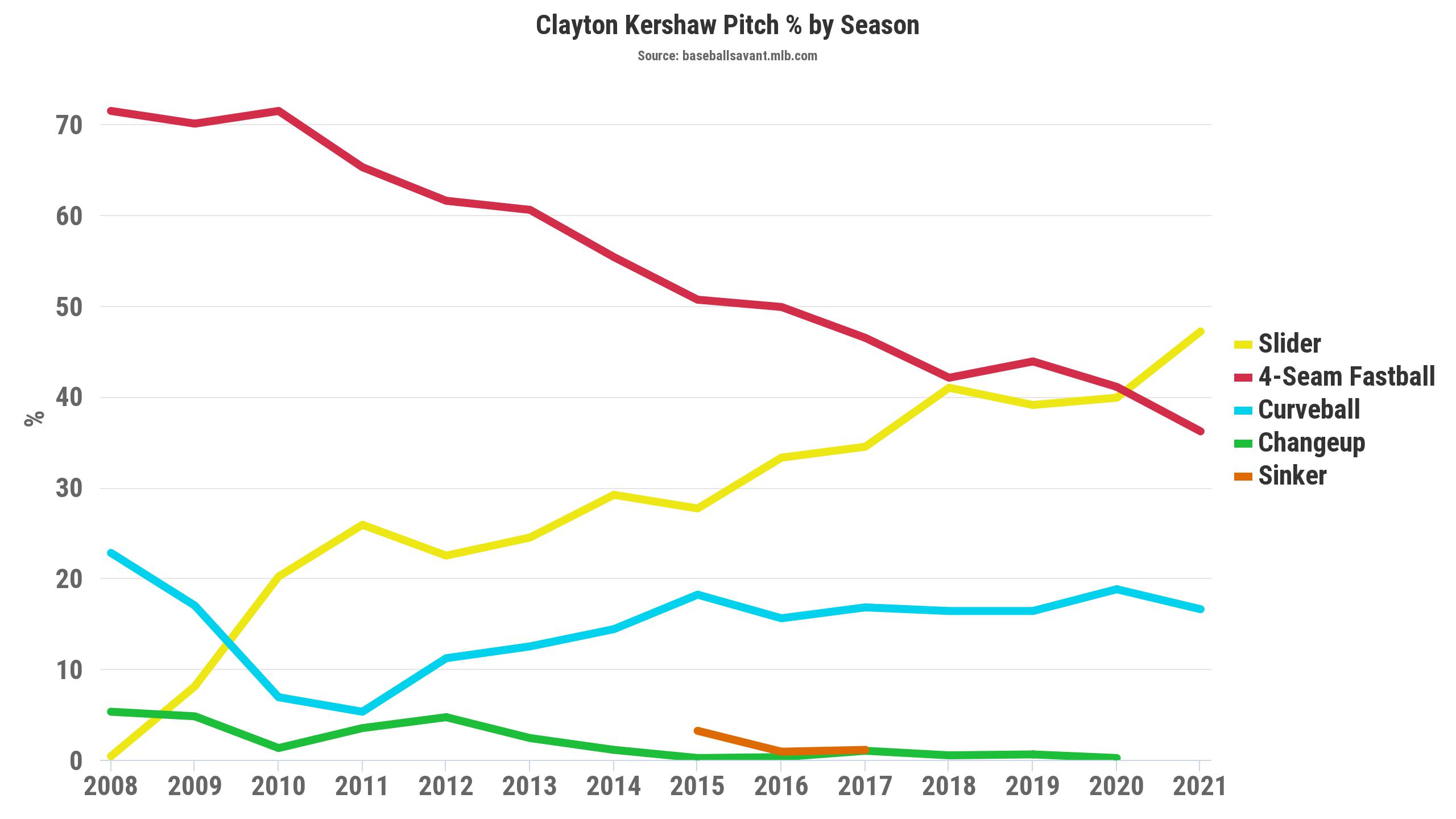
With this current injury potentially ending his 2022 season, the situation becomes even more complicated. The Dodgers have the prospect of paying the aforementioned Bauer $40M this year for half a season’s work, and will probably have to pay him something before they cut him next year (here’s to hoping that (a) he gets suspended and (b) the Dodgers finally do the right thing, admit their mistake, and bid Bauer adieu). Can they/will they pay $20M+ to another pitcher who cannot/will not take the hill next year? We know they can. So the question becomes: do they have the will? There is a reasonably good chance that Clayton Kershaw will not throw another pitch until after his 35th birthday. The history of pitchers faring well in their mid-30’s is quite ominous. Kershaw has already changed his game from power to crafty. What will he look like two years from now? What is that worth?

All of that conjecture aside, Kershaw is the final arbiter, and he may make it very easy for the club. He may elect to retire. He has nothing left to prove on a baseball field. He has his youth, his family, his foundation, and his millions. There is no reason – other than sheer desire to be great and to keep competing at the highest level – to play another game. But we know Kershaw has an unending desire to be great, that he loves nothing more than competing at the highest level. We know he bleeds for the game, and plays through pain for his teammates, and works harder than most, just for the honor of taking the bump every fifth day (or out of the bullpen).

So, from my selfish perspective, here is a logical solution for both the club and the player: 3/$66M, with the understanding that the team is paying $22M for a rehab year in 2022; $22M as a show of goodwill (to cleanse their souls for that other pitcher they signed last off-season); $22M as a “thank you” for all of the memories, all of the great moments, all of the mentoring and long-toss sessions, all of the charity ping pong tournaments, all of the jerseys sold, and all of the times he refused to throw anyone under a bus; $22M for #22. They pay $22M next year on the hope that they can pay $44M over the next two for a middle-of-the-road number three or four starter who will take the ball, take the heat, and never – not once – ever take it for granted. That is what I want. But I will take any variation on the theme…

It just can’t end like this.

PLAY BALL!!

Waiting For the Other Sock to Drop

When I was in my last year of law school, I visited a head hunter because, after almost three years of schooling and nearly six figures of debt, I decided I didn’t want to be a lawyer; and hell, “you can do anything with a law degree.” The recruiter and I bandied about a bunch of ideas, but, surprisingly, one that did not come up was MLB general manager. It should have, as according to Alex Anthopoulos — the general manager of the Atlanta Braves — one of the main responsibilities of that job is to worry about what will happen next. And, as a lifelong Boston Red Sox fan, that is my metaphysical condition from April through October (if we are lucky). 2021 has been no different.

Going into spring, I was care and worry free. ESPN predicted the Red Sox would win 79 games; SI: 80; PECOTA: 85. As of this writing, the Red Sox have already won 88 games, with nine still to go. They have surpassed all expectations, and thus increased my anxiety level many-fold. And regardless of their over-performance (at least against preseason predictions), this team consistently seems to underperform. As such, they trigger my general manager tendencies, and cause me to worry.

The BoSox spent 85 days in first place, but fell out on July 30th. Five weeks later, on September 7th, they were 10 games back of the Rays. In those 38 days, the team went 16-20, which wasn’t horrible, but neither was it great. And, truth be told, despite their record and their position in the standings, they are not very good. According to FanGraphs, their Pythagorean Record would have them at 84 wins, and their Base Runs record would have them at 81. All better than expected, but still not a team worthy of World Series aspirations.

As a team, the Red Sox are hitting .262; .269 with runners in scoring position, and .294 with the bases loaded. And yet, it feels like they never capitalize on those situations (including again last night). By comparison, the Rays are hitting .241 as a team; .250 with runners in scoring position, but .390 with the bases loaded. And that may be why the Rays have scored 17 more runs than the BoSox (811-794).

And if you have watched the Red Sox lately, you can’t miss another glaring difference: defense. Here, as above, the stats don’t even begin to tell the whole story. Boston leads the A.L. with 103 errors (by comparison, the Rays rank 8th with only 78). The Red Sox have given up 77 unearned runs, while the Rays have only given up 58. But it’s not just the errors and the unearned runs, it’s the plays that should be made, but are not. If you watched Tampa Bay’s 11-10 come-from-behind win in Boston on Sept. 6, you will know exactly what I am talking about.

Yet, the season has but nine days to go, and the Red Sox are in pole position for the Wild Card. Assuming you can get past the unclutch hitting and the woeful defense, you then have to contend with a deadly virus. Kiké Hernandez went down with COVID-19 on Aug. 27th, and the team suffered no fewer than 12 player cases (plus two staffers), including ace Chris Sale (who, we have learned, is not vaccinated — see the great piece by Steve Buckley in The Athletic). 

It would have been considerably easier if they had tanked during that period, ending their season — and my worries — once and for all. But the team went 10-9 and kept themselves in contention, adding to my angst.

So now, after getting past their pandemic woes, we fans must steel ourselves for nine innings of high leverage baseball with this pitching staff. At this point, the best outcome is hosting the Wild Card game against (most likely) either the New York Yankees or the Toronto Blue Jays. And, at this point, the best outcome is the Red Sox are able to line up Sale to pitch that game. But, since coming back from Tommy John surgery on Aug. 14th, he has gone 5, 5, 5 1/3, 6, 3 2/3, 5, and 5 innings. 

Which means that even if Sale gets the ball to start the Wild Card game, the shaky bullpen will be there to try to finish it. Do you really trust Adam Ottavino and/or Matt Barnes and/or Hansel Robles to get through either the Bronx Bombing Beef Boys or the Canadian Clubbers of Springer, Semien, Vladito, Bichette, and Teoscar Hernández — even if it is only one time through the order? As a lifelong Boston fan, I most certainly do not.

Oh, and if Sale and the bullpen are able to walk between the raindrops and make it to the ALDS, they will have to face the Rays in a best of seven. In short, I won’t be booking any flights to Boston for late October this year.

But my sincere hope is that it just doesn’t end too badly. I have seen this movie too many times. I was just a hair too young to remember Bucky Dent, but I do remember 1986 (which, conveniently, was the main focus of ESPN’s four-part documentary released last week). I will never forgive Grady Little or Aaron “Bleeping” Boone. None of us will ever forget 2011. There have been too many bad moments, too many bad months, too many bad streaks, too many bad hops and bad breaks to think anything other than bad news is on the horizon. When the end comes, just make it painless…

It is in these moments of heightened tension that I envy my son. Because, even with 2011, he has really only known Red Sox success. He has witnessed four World Series titles in his 18 short years. To him, the Red Sox are winners, not chokers; there is no curse or jinx or hex on his favorite team, just glory every three or four years.

That is why my son had no compunction about mocking the Yankees after they acquired Anthony Rizzo and Joey Gallo, saying, with absolute earnestness and confidence, that “it won’t mean anything when the Yankees don’t make the playoffs.” At which point I told him to go outside, turn around three times, and spit. In my heart, I know he didn’t stave off the wrath of the baseball gods. In fact, if history and thaumaturgy are any guide, it will be Rizzo and Gallo who hit the game-tying and game-winning home runs in the Wild Card game.

But, no matter. Whether it is the Yankees, the Jays, or the A’s, I will not — and never will — feel one bit confident that the Red Sox — this, or any other version — will come through. It is part of being a Red Sox fan; it is in our DNA. We live our lives waiting for the other sock to drop.

PLAY BALL!!

Laying Down With a Dog

I have always loved the Theo Epstein story. Local Boston kid leaves home, cuts his teeth, comes back and orchestrates the roster that ended an 86-year curse. When management wanted to go in another direction, he moved to the Midwest and orchestrated the roster that ended a 108-year curse. And then he became best buds with Eddie Vedder, the lead singer of his all-time favorite band. All the while he married a Harvard girl and had two adorable kids. What is not to love?

Well, there is this. It is a small detail that has always stuck in my craw. It is this one transaction that has sullied my appreciation for what Theo built in Chicago and my excitement over their finally turning “Next Year” into “This Year.” Right before the 2016 trade deadline, the Cubs sent pitcher Adam Warren and prospects Rashad Crawford, Billy McKinney (lately of the Dodgers), and Gleyber Torres (currently playing Derek Jeter-level defense in the Bronx) to the Yankees in return for All-Star closer Aroldis Chapman. The Cubs were looking for something to put them over the top, and Chapman had the highest K/9 in MLB and was rocking a 105 mph fastball. At the time of the acquisition, Chapman was 20 for 21 in save opportunities on the year. It seemed like a great deal, except…

Chapman started the 2016 season serving a 30-day suspension under the MLB Joint Domestic Violence Policy (“JDVP”) after an incident with his girlfriend wherein he allegedly choked her, pushed her against a wall, and then fired eight rounds in his garage in his ensuing fit of pique. Epstein and General Manager Jed Hoyer spoke with Chapman before closing the deal and felt sufficiently confident that he had learned his lesson, paid his debt to baseball (if not society), and was ready to help the Cubs win the World Series. Flags fly forever, but you have to ask yourself, at what cost?

As much as I – a fan of baseball – reveled in the Cubs victory in 2016, it pleased me to no end that Chapman melted down in Game 7 against Cleveland and wasn’t on the hill when the last out was recorded. He didn’t deserve that front page photo, that SI cover, that memory seared into the minds of every Cub fan within earshot of 670 The Score. The Chapman signing has always left a bitter taste in my mouth, and will always be a blight on Theo Epstein’s legacy.

If there is a Theo Epstein 2.0, it would be former Rays GM, and current Dodgers President of Baseball Operations, Andrew Friedman. A wunderkind from the world of finance, he cut his teeth with a microscopic budget in the backwaters of Tampa Bay, and then moved to the glitz, glamour, and gargantuan pocketbooks of Los Angeles. One can question some of the moves Friedman has made since joining the Bums in 2014, but none more so than signing Trevor Bauer last February to the richest deal on per-year basis (first season only) in baseball history.

Bauer’s exploits and “look-at-me” personality has rubbed enough people the wrong way, and enough writers have addressed his personality – shall we say – “issues,” that I feel no need to recount them here. But all of those incidents look quaint when compared to what we learned on June 29, 2021. On that day it was reported that the Pasadena Police were investigating a potential sexual assault by Bauer with an unnamed woman from San Diego. The more details that were released, the worse the story got.

We all knew Bauer wasn’t a good guy. He may not be Aroldis Chapman (or Milton Bradley), but he certainly isn’t anybody’s Nelson Cruz. It is hard to imagine any Dodger player learning that Bauer was joining their club and thinking, “alright, a great new addition to the team.” At best they were thinking, “hopefully he pitches well every fifth day, and shuts the hell up the other four.” Alas, it wasn’t Bauer’s mouth that got him into trouble.

Bad behavior from Bauer – in some form – was expected. What we should not have expected (and on this your mileage may vary) is the Dodgers woeful reaction and response to that behavior. When the news broke, the Dodgers publicly stated that Bauer would make the team’s road trip to Washington and would be on the mound the following Sunday. That was followed by Dave Roberts’ incredibly tone deaf – most charitably, ignorant – comment that the matter was “out of our hands.” It seems that Roberts believed he could sidestep the issue by relying on the JDVP, which defers punishment to the league, not the team.

But last I checked, Rob Manfred does not fill out the lineup card (insert, “no, the Dodgers front office does” joke here). The Dodgers could have come up with a valid reason – the emotional toll of being charged with a serious crime being a pretty easy one – for skipping Bauer’s next start. Hell, they could have come up with a magical hamstring strain – the same one that has caused the slumping Cody Bellinger to miss a few games last week. And while the Collective Bargaining Agreement prohibits teams from retaliating against players by benching them, the worst case scenario is that Bauer would have filed a grievance. And the Dodgers lost. And they were forced to pay a fine. As of last year, the team was worth $3.4 billion. You would think with that kind of scratch they could afford a small penalty from an arbitrator (assuming they lost the grievance) to retain the moral high ground, to send a message to the team that this conduct will not be tolerated, and to let their fans – many (50%?) of whom are women – know that despite signing Bauer in the first place, they are a class organization. Yeah, they chose not to do any of that.

Per the terms of the JDVP, MLB has the right to put a player on administrative leave for up to seven days while it investigates an incident. They have right to extend that with the consent of the MLBPA. Both of those things have occurred with Bauer. While on administrative leave, the player continues to get paid, continues to accrue service time, and has the right to continue working out at the team’s spring training facilities. And as much as I dislike Bauer, the first part of that makes me very happy.

If MLB ultimately determines that Bauer violated the terms of the JDVP, they can and will suspend him without pay. Since 2016, the shortest such suspension has been 15 games (twice), with five suspensions of 75 games or more. Sam Dyson incurred the harshest punishment: the entirety of the 2021 season.

As I am sure you are aware, Bauer has vowed to fight the charges, and there is a real chance that MLB elects not to take any action unless/until the criminal matter is resolved, whenever that occurs. But Bauer could force everyone’s hand and not consent to any additional administrative leave (he agreed this week to extend it through August 6th). If he were to do that, he would make the Dodgers put up or shut up, as they would no longer have the ability to punt their decision about what to do with their problematic pitcher.

Bauer’s contract is not public. We don’t know if the Dodgers would or will have a valid justification to terminate it. But, if such an off-ramp does exist in the legal boilerplate, it is unlikely that it would be possible to enforce that provision until the criminal matter is adjudicated. And that seems unlikely before September (when Bauer’s last 2021 paycheck will be due). And that makes me happy.

Sure, I don’t like seeing Bauer getting rich and not playing and trying to plead the fifth. But I find the idea of the Dodgers getting out their financial bind considerably more odious. The Dodgers bought their ticket; they bought a ticking time bomb; they knew the risks; they injected a virus into their World Series-winning clubhouse on a wing and a prayer that it would not turn into a cancer. Well, guess what?!? According to the Los Angeles Times’ Bill Plaschke, the majority of Dodger players do not want Bauer back under any circumstances.

Even if Bauer is ultimately exonerated in the criminal matter, he still may be suspended by MLB without pay (each tribunal has different standards). That would benefit the Dodgers in the event Bauer exercises his $32M option for next year. But even if Bauer were suspended without pay for the entirety of the 2022 season (see Dyson, Sam), he still could theoretically exercise his 2023 option and make the Dodgers pay him $32M to either pitch as a pariah or play somewhere else. Oh, and if Bauer threw the Dodgers a bone and opted out of the 2023 obligation, the Dodgers would still owe him a $15M buy-out.

So, absent a criminal indictment or conviction that allows the Dodgers to terminate Bauer’s contract, the Dodgers WILL PAY. It may not be the entire $102M, but they will cough up a huge chunk of it. And as loathsome as I find Bauer, the Dodgers being forced to spend nearly nine figures to rid themselves of this mess makes me happy.

The Boys in Blue can remove all the Bauer merchandise they want; they can cancel all the bobblehead nights they had planned; they can try to retcon their response to this episode however they choose. But we all know that they made a cold and calculated decision when they signed Bauer, who, as Plaschke rightly pointed out, “had a history of harassing and bullying women online, mocking transgender people, and spreading conspiracy theories.” Andrew Friedman, like Theo Epstein before him, put FIP and WPA and a recent Cy Young award ahead of character and rectitude and principle. The Dodgers laid down with a dog. And now they have to pay for the fleas.

PLAY BALL!!

A Game of Inches

I think I was about 14 years old when we had a bang-bang play on the baseball field. Some wise-beyond-his-years kid in the dugout said – to no one in particular – “Baseball is a game inches.” One of our wise-due-to-his-years coaches quickly retorted, “Baseball isn’t a game of inches. Sex is a game of inches.” This statement went over our heads, but we all laughed because our coach said “sex” and we were teenage boys. If life has taught me anything, it is that both the player and the coach were correct. And we saw the player’s view unfold last night at Dodger Stadium.

If the Dodgers ultimately find themselves in the one-game wild card round facing Yu Darvish, they will look back to July 22nd and they will be thinking about a game of inches.

If you didn’t watch or see highlights of the slow motion dumpster fire that was fourth game of the most recent Giants-Dodger series, allow me to set the stage.

On Monday night, the Giants thumped the Boys in Blue 7-2.

On Tuesday night, it looked to be more of the same. But the Dodgers scored three in the sixth, and then walked it off on a Will Smith three-run homer in the bottom of the ninth to complete a comeback from being down 6-1.

Wednesday night had the Dodgers poised to draw even in the standings with the Giants, leading 2-1 going to the top of the ninth. And then Kenley Jansen brought his gas can to the mound. Single, homer, K, double, walk, walk, Jansen replaced, K, walk, ground out. Giants 4, Dodgers 2. Gut punch.

But the Dodgers bounced back in the finale, going for the split and a one-game deficit. They led 3-1 going to the top of the ninth. Despite throwing 27 pitches (and blowing the save the night before) Dave Roberts sent Jansen back out there to try yet again. There are myriad reasons why a manager might want to get his closer back on the horse and wash the previous two save opportunities off. Roberts may believe that the Dodgers have no chance in October without a healthy Kenley (both physically and mentally), so now is the time to get him right. Maybe, as some opine, the front office dictated that the ninth inning belongs to Jansen. Maybe he demanded the ball, and Doc was too intimidated to say no. We will never know the truth. What we do know is that Kenley came out of the pen throwing darts. The announcers observed that it may have been a combination of adrenaline and embarrassment that got him to 96 MPH on the gun.

Whatever the impetus, Jansen used it to strike out Mike Yastrzemski on three pitches. He then gave up a single to Wilmer Flores (the ninth inning home run hero from the night before); followed by a strike out of Alex Dickerson on said 96 MPH heater. He started Donovan Solano with another 96 MPH cutter for a swinging strike. But MLB players can hit speed without movement, and Solano crushed the next offering (94 MPH) off the wall in dead center for a double. Tying runs in scoring position, two outs. Jansen got Jason Vosler, a rookie with all of 66 big league plate appearances, to 1-2. After a foul ball, we were introduced to our first game of inches. Jansen threw a nasty slider just inches low. The rookie spit on it; the umpire called it correctly. The next two pitches weren’t even close – bases loaded.

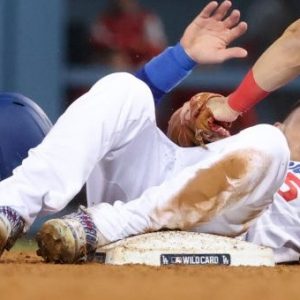
Next up, Thairo Estrada (yeah, me either). He hit a routine (although slow) grounder to short. Chris Taylor fielded it cleanly and tossed it to Sheldon Neuse who was standing on second base. Neuse caught the ball as if it were three hours before first pitch and he was having a catch with someone from the local Kiwanis Club. Neuse was drafted out of the University of Oklahoma by the Nationals in 2016. In college, Sheldon played exactly 1 game at second base. In the minors from 2016-2018, Sheldon played exactly 1 game at second base. Starting in 2019, both the A’s (to whom he was traded in 2017) and the Dodgers (to whom he was traded in 2021), started giving Neuse reps at 2B. He played 16 minor league games there before playing 20 for the A’s in 2019. He played there 21 times at Triple-A this season before being called up, and has now played there in 11 games with the Dodgers. So Neuse is no newbie at second base, but he certainly isn’t seasoned. Would a seasoned second baseman – or at least one more accustomed to the position, say Chris Taylor, or even Max Muncy who has played more than a thousand innings at second – have known to stretch for Taylor’s throw? I know Kiké Hernández would have (but he plays for the Red Sox). Gavin Lux would have (but he is out with a hamstring injury). Hell, Albert Pujols (he of 3.1 career innings at second base) would have. But that is not who was there with two outs in the ninth on Thursday night. That would be Sheldon Neuse, who didn’t heed the “game of inches” trope. So, despite an initial out call to end the game, upon further review, the runner was safe, the run scored, the bases remained loaded, and the game went on.

Still leading 3-2, the Dodgers just needed to retire Darin Ruf to go home happy. After working a 3-2 count, Ruf checked his swing on a cutter up in the zone, which, upon further review, was clearly a swing. But the first base umpire didn’t believe so. In the umpire’s “game of inches,” Ruf held up and took ball four, forcing in the tying run. Dave Roberts, likely frustrated with himself (why Kenley; why Neuse; why is this happening again?!), frustrated with his players (see, Jansen and Neuse), and angry at an umpire who blew the (would be) game-ending call, lost it. Out of the dugout he stormed, hat in one direction, arms in two other directions, and curse words and spittle in the direction of the offending (offensive?) umpire. Roberts got tossed, the next batter singled home two, at which point the game was all but done for.

The Dodgers were mere inches from splitting the series and being 8-5 on the season versus the Giants. They were mere inches away from being one game back of their NorCal rival. They were mere inches away from restoring some level of confidence in their $80M closer. Baseball, as the Dodgers learned the hard way Thursday night, truly is a game of inches. And, once again, the Dodgers fell short.

PLAY BALL!!