
Glass House of Emotion

When I coached my son’s baseball team, the kids would often have “big league” moments – trying to do it like the pros. Whenever I saw it, I would tell the player: “Just show me your professional contract, and you can do that. Until then, you have to do it my way”. The inference, of course, was to play fundamentally, be a good sport, and never show up the other side.

Due to what many view as overly stringent celebration rules, the NFL has derisively become known as the “No Fun League”. The same hasn’t been said of Major League Baseball, where pitchers police such behavior with a 5-ounce sphere hurled at 90+ miles per hour.

But there are times when fun and emotion should enter the sacred space between the lines. And the World Series is one of those times. And, if that is the case, there was no better time than Game 2 of this year’s Fall Classic, which some are calling the greatest non-clinching World Series game of all time. It’s hard to quibble with that assessment.

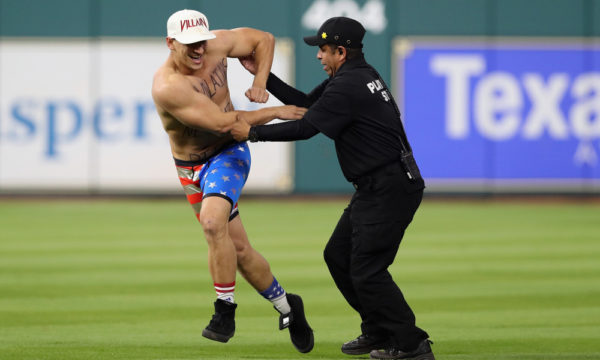
The beauty of Game 2, besides the lead changes, the ties, and the wacky bounces (the bill of a centerfielder’s cap, the groin of an umpire), was found in the many moments that, if they happened in our kid’s Little League game, would cause an uproar in the stands and a stern talking-to on the drive home. But, under the bright lights of the game’s largest stage, each was transcendent in their own right.

As great as Game 2 was, I believe it all started with the last out of Game 1. With the Dodgers clinging to a 3-1 lead, Kenley Jansen induced the dangerous Jose Altuve to fly out to right to end the game. One would think – for younger players we would demand – that securing the last out of a World Series game should be a by-the-book two hand reception, making certain nothing goes awry. If you were expecting that, you haven’t seen Yasiel Puig play. Puig caught the ball around his left hip with his tongue out (but he at least he used two hands). Puig was just warming up.

Verlander vs. Hill provided us with a handful of emotional, triumphant, and in light of the stakes, glorious moments that wouldn’t be acceptable if the bases were only 60 feet apart, but were spectacular because they are 90. A random sampling:

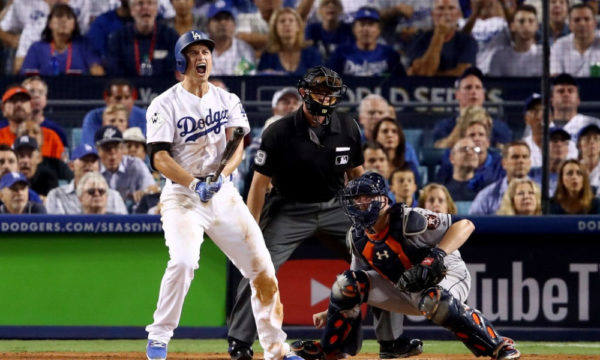
Corey Seager’s Primal Scream.
It’s one thing for a guy to make contact, and by the time he leaves the batter’s box to know he got it all. It is quite another for a hitter to let it all out immediately after contact. If any of our kids had done that, they wouldn’t have made to it to first base before being properly reprimanded. But when you take Justin Verlander deep to give your team the lead in the World Series, primal screams are the order of the day.

Carlos Correa’s Bat Flip.
I (and everyone else) previously wrote about the all-time bat flip in the 2015 ALDS. And there is no question that Jose Bautista still retains his position on the Mt. Rushmore of post-homerun-bat releases. But Carlos Correa joined the pantheon in the 10th inning of Game 2. And man did he earn it.


Yasiel Puig’s Glove Slam.
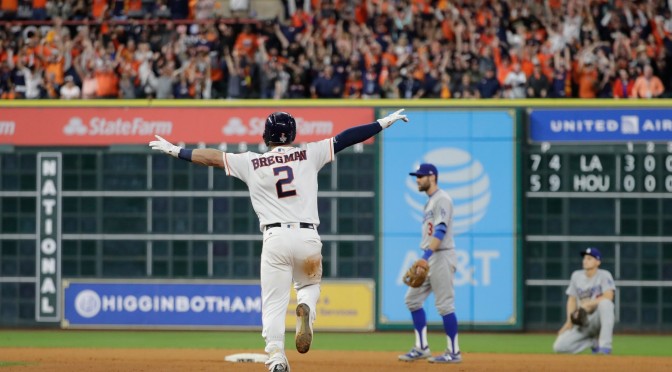
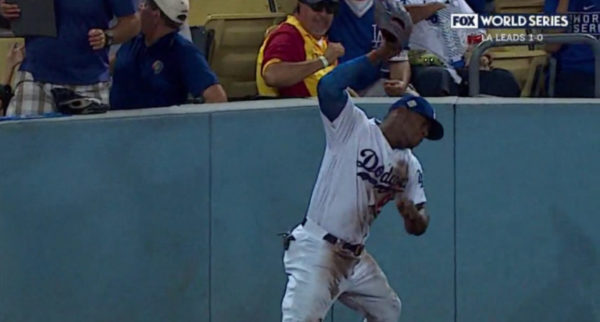
Alex Bregman led off the top of the 8th with a line drive to the rightfield corner. Puig went all out (or did he?), and with his run and dive, covered approximately 64.5 feet. Unfortunately, according to Stat Cast, he needed 65 feet to make the play. The ball flicked off the end of Puig’s glove and into the stands for a double. Yasiel leaped to his feet and slammed his glove down with such force that I half thought the grounds crew would need to be called to level off the warning track. Watching the game live, I thought Puig had nothing to be angry about – it would have been an amazing catch. However, in the world we now live in, we can determine things at the most granular level. According to Mike Petriello of MLB.com, during the season, Puig’s average “Sprint Speed” this season was 28 feet per second. In the 8th inning of Game 2 of the World Series, Puig’s “Sprint Speed” was 27 feet per second. Puig was running for approximately two seconds (probably a touch more). Had he been running at his average speed, he would have covered at least an additional two feet, and most likely made the catch. So maybe he had good reason to be angry. Either way, if your child or mine slammed his glove like that, ooh boy! (As an aside, maybe there is something about playing the outfield in the playoffs at Dodger Stadium the impels a glove slam.)

Charlie Culberson’s Rambunctious Trot.
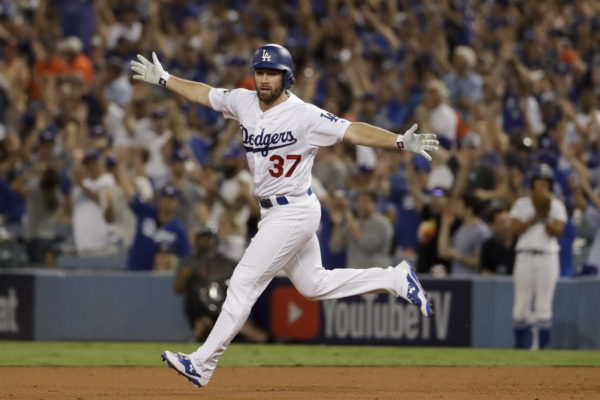
We may never know what was going through young Charlie’s mind as he rounded the bases with two outs in the bottom of the 11th inning. Maybe he forgot that George Springer had hit a two-run homer, so he thought he had tied the game with his blast. Maybe he forgot all about George Springer and thought that he had won the game. Or maybe, after being inserted into Cody Bellinger’s spot in the lineup as part of an 11th inning double-switch, and after only getting two hits the entire season, and after only being on the post-season roster because of Corey Seager’s balky back, he was overcome with emotion hitting a homerun with two outs in the bottom of the 11th inning of a World Series game. Had a 12-year-old done that, his coach would have said two things: “We haven’t won anything yet” and “Act like you’ve been here before”. For Culberson, while the former was accurate, there was simply no way for him to fake the latter.

Rich Hill’s Reaction.
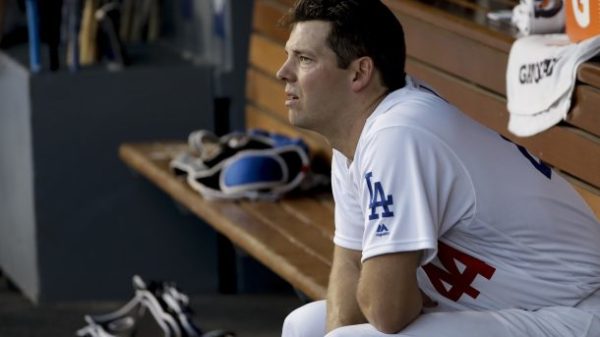
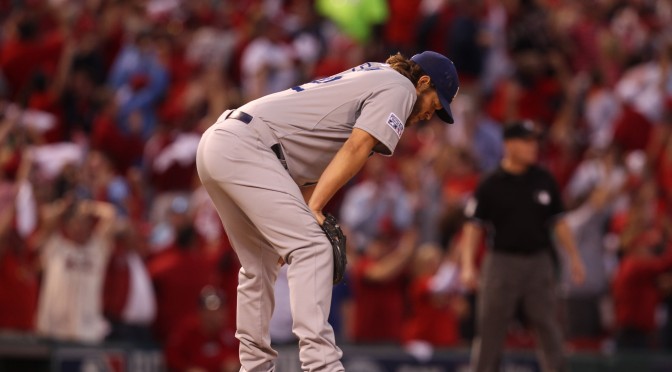
This picture doesn’t tell even half the story, but I think the Dodgers have scrubbed the internet of the images that the Fox cameras caught when Dave Roberts told Hill he was done after four innings and 60 pitches. Suffice it to say, Hill was none-too-pleased. I can certainly understand why. Twelve outs recorded, seven via the strike out, only one run allowed. I am sure Hill felt like he had many more bullets in the gun and, as a career journeyman who just started getting good at age 36, I can appreciate that he didn’t want this moment to pass without leaving it all on the field. However, this is how the Dodgers ran their staff all season. The top of the lineup – a heavily right handed lineup – was due to face Hill for the third time. And, truth be told, he was really one New Era bill away from being down 3-0 after 2½ innings. Roberts made the right call; but that doesn’t make Hill’s reaction any less human. We just wouldn’t tolerate the same from our kids.

We are just getting started in what stands to be an epic battle. I am predicting the Dodgers in seven; but it could easily go the other way. One thing is for sure: it will be a wild ride. So let’s continue to give these “kids” (by normal societal standards) the latitude they deserve to play with as much heart, excitement, and yes, emotion, as they can muster. Ask Cal Ripken – they may never be here again.

PLAY BALL!!

Net Over Yourself

On Wednesday afternoon, Aaron Judge hit his 45th homer, which was followed by Gary Sanchez’s 32nd.  The Yankees cruised to a 11-3 win over the Twins, completing a three-game sweep and keeping the pressure on the division-leading Red Sox.

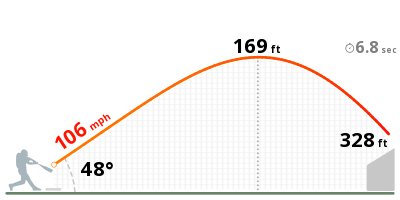
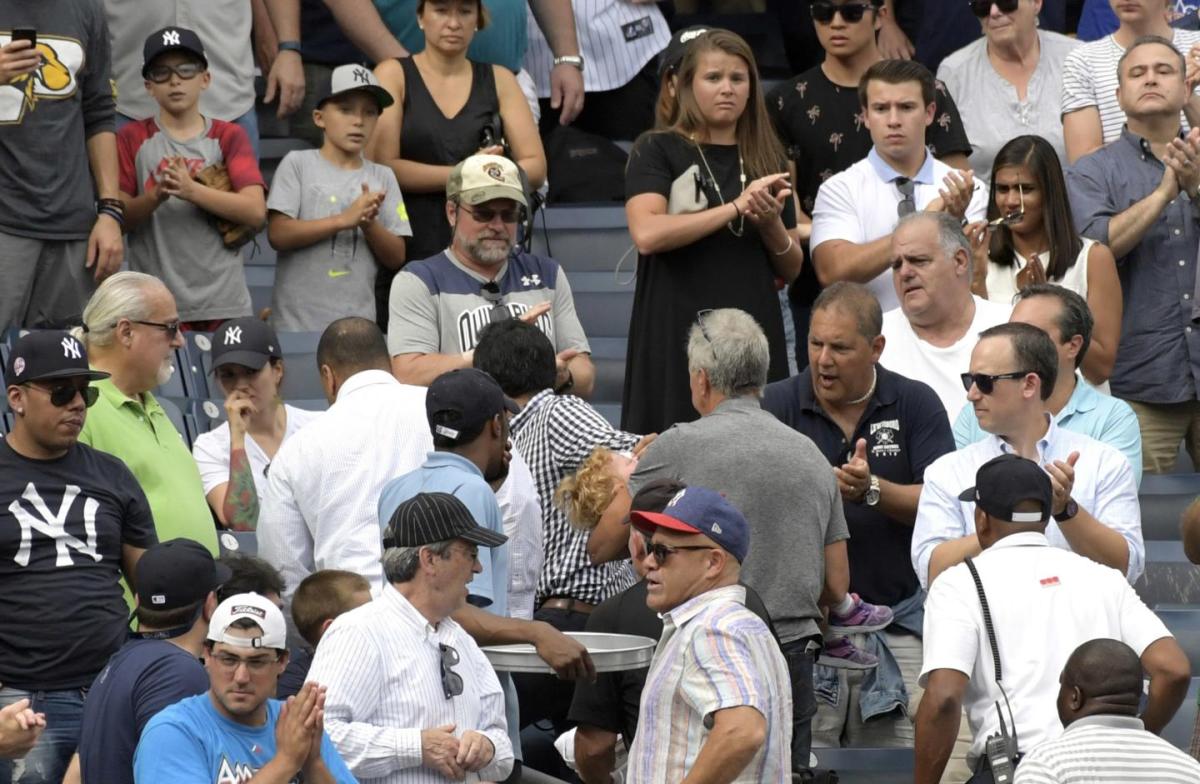
But the Yankees’ win was overshadowed by what happened in the seats behind the third base dugout in the fifth inning.  As I am sure many of you have seen by now, Todd Frazier rocketed a foul ball into the stands at 105 miles per hour.  The ball struck a young girl sitting with her grandparents.  Bloody and bowed, she was carried to the first aid station, and then transported to New York Presbyterian-Columbia Hospital.

Blog_Netting_2

As of this writing, per her father, the girl is “doing all right”, but he could not (or would not) confirm whether or not she would need surgery for her injuries.

After impact, the game came to a halt.  Frazier, a father of two children under the age of the three kneeled in the batter’s box, shaken and concerned.  Twins’ second baseman Brian Dozier actually cried when he saw her hit by the screaming liner.  The game did not resume until the little girl was taken from her seat; she, the fans around her, and the players on the field, all the worse for the wear.

This horrific incident has, once again, brought the issue of protective netting back to the forefront.  And this one is an absolute no-brainer.  In fact, since just Wednesday afternoon, the Reds, Padres, and Mariners have all committed to extending their netting for the 2018 season.

Now, for those of you who have not followed this closely, here is a little primer: There are about 1,750 incidents of fans being hit by foul balls at Major League stadiums each season.  Put differently, in a typical season, every time Mike Trout gets a base hit, about 10 fans get nailed by a foul ball.

After the 2015 season, Commissioner Rob Manfred “encouraged” teams to extend their netting to the “near end of both dugouts”.  Let’s unpack that a bit.  Through the 2015 season, many teams only had netting directly behind home plate; and despite the rash of injuries from foul balls and flying bats, the best MLB could muster was a gentle prod that the netting be extended to the near end of the dugout?!?  In fairness, MLB did offer some guidance about extending it even farther.  Nothing was required.  In fact, the Commissioner was clear that he wanted this to be a “localized process”, with each team working with its own fan base to determine the best course of action for safety and enjoyment of the game.  What a bunch of hooey.

The truth of the matter is that baseball – and all of its teams – have been hiding behind the protective netting of a legal theory known as “assumption of risk”, and colloquially known as the “Baseball Rule”.  In short, fans come to the game knowing it is dangerous, and thus assume the risk that they may be hurt.  And for years, courts have upheld this doctrine.  But the times, they may be a changin’.

A few years ago an appeals court in Ohio reversed a lower-court ruling in favor of the Cleveland Indians in a fan injury case.  In Idaho, the state Supreme Court elected not to impose the Baseball Rule and allowed a fan at a minor league game (who lost an eye) to present his case to the jury.  A fan who was badly injured at – get this, Yankee Stadium – is currently in litigation with the team and the league regarding the fine print on the back of the ticket and this outdated legal theory.

Michael Moran, an Atlanta lawyer who has litigated these types of cases, previously stated: “The game is different now. Ballparks are configured differently than they were 20 or 30 years ago; the foul lines are closer to the stands. Pitchers throw harder. Batters hit the ball harder. All these things increase the risk.”

Are we to believe that even the most adroit fan can (and should) react to a ball that is on top of them in less than a second? If that were so, why would teams put netting in front of the dugouts?  Shouldn’t the best athletes in the park – individuals who are paid to pay attention and who don’t have the myriad diversions and distractions that are intended and encouraged for the fans – be prepared to avoid a foul ball or a hurtling bat?

The most common refrain from the teams is that fans don’t want to sit behind the netting.  Really?  The next time you watch a game and they show the centerfield camera angle, please pay attention to the dearth of fans sitting behind home plate (where there is netting in every park), and the masses sitting behind each dugout?  What, you say?  The seats behind home plate (except, ironically, at Yankee Stadium) are full; and fans have paid upwards of $1,000/ticket to sit there?  Now I am thoroughly confused.

I will acknowledge that fans find the netting a distraction…at first.  But then they get used to it.  I speak from experience, as I sit behind home plate, behind a net, and now barely notice it.  Don’t believe me?  Where do baseball executives and scouts sit?  People who are literally paid to watch and analyze the game do so behind the net; but Joe Six-Pack cannot enjoy watching Aroldis Chapman pitch through 3/16 of an inch of braided nylon?

Hockey harbored this same fear about their fans.  And then a 13-year old girl was killed by an errant hockey puck in 2002.  You know what they did?  They added netting around the goals.  And you know happened?  Nothing.  Attendance was, and remains, virtually unchanged on a year-to-year basis.

There is a reason why they stop selling beer after the seventh inning.  There is a reason why bottles aren’t allowed in the park.  There is a reason why mini bats are no longer given away.  Fan safety has trumped the fan experience for years – except in this one area.  And is there is simply no (reasonable/rational) excuse.

So here is what should happen.  After the 2015 season, the Commissioner asked the teams to do their own research.  Ostensibly, the Yankees did this.  And, ostensibly, they made a business decision that, by installing/expanding their netting, they would lose X dollars from fans who no longer wanted to sit between the dugouts.  That little girl’s family needs to sue the Yankees; and through discovery, obtain that analysis and determine the value of X.  And then a court should award damages equal to three times X.  The Yankees should lose all that they hoped to avoid losing, three times over.

The little girl should get the first X.  She is the Neil Armstrong, the Rosa Parks, the Jackie Robinson of ballpark safety.  She earned X with the damage to her tiny nose and her little eye.

The next X should go to a fund for all fans injured at the new Yankee Stadium since it opened in 2009.  By that time, everyone – including the Yankees’ brass – knew that seats closer to the field + insufficient netting = unnecessary and potential serious risk.

The final X should go to building and refurbishing baseball fields all over New York.  Show the kids of the Empire State that baseball cares about them, their safety, and their fandom.

And one last thing: the Commissioner must issue an edict – not a suggestion, not a recommendation, not guidance – but an actual rule.  Every team must install protective netting to at least the far end of each dugout prior to the commencement of the 2018 season.  Each team that fails to do so is fined $1 million per game until the same is properly installed.

We have big, complicated, unwieldy problems in this country.  Fans having to worry about their life being altered/in jeopardy in less than the blink of an eye while trying to enjoy America’s favorite pastime shouldn’t be one of them.

Enough is enough.

PLAY BALL!!

Clayton’s Dad

Clayton Kershaw was born my sophomore year of high school. For reasons that we need not get into here, I cannot possibly be his father. However, when he takes the mound — and especially when he takes the mound late in the game — and especially when he takes the mound late in a post-season game — I may as well be.

The nerves I feel for Clayton are not dissimilar to those I feel when my own son toes the rubber for his JV team or when my daughter is astride the balance beam. My hope for them to do well is only surpassed by my desire that they not be in that  moment at all. I sometimes wish I had taught them that life can be a spectator sport.

I am, by nature, a pessimistic fan. I expect the worst to happen, and am only relieved when it doesn’t. I guess this is the product of a lifetime of Red Sox fandom and having the Arizona Wildcats as my alma mater.

I have no doubt, at 730pm Friday night, when Clayton Kershaw takes the field, in the words of Vin Scully, “in the loneliest place in the world, the pitcher’s mound at Dodger Stadium,” I will be biting my nails to the nub.

It will be for the same reason that when Clayton gave up a lead-off double to David Freese in the bottom of the fifth inning of Game 2 of the 2013 NLCS, with the score 0-0, I got a pit in my belly. This “dad” knew something wasn’t right. Runner on second with no outs!? When Kersh struck out Matt Adams, it looked like he had a way out. But then there was an A.J. Ellis passed ball, and the air got a little cooler. A harmless (had the runner been on second) flyball made the score 1-0, which is where it stood when the 27th out was recorded.

Who can forget October 3, 2014. Kershaw gave up solo homers to the second and eighteenth batters he faced; he retired all 16 in between (including seven Ks). The sixth inning ended with the Dodgers up 6-2. “Pull Kershaw,” this dad yelled from my kitchen, where I was helping prepare the Sandy Koufax-approved Erev Yom Kippur meal. Preserve the beauty of this performance and allow the bullpen to get the last nine outs. Alas, it wasn’t meant to be. We all remember the disaster that was that fateful seventh inning; the inning that, in many respects, defines Kershaw’s post-season career: 1B, 1B, 1B, 1B, K, 1B, K, 2B, BB, HR, 5-3. The top of the seventh ended with the Dodgers trailing 10-6, with Dodgers eventually losing 10-9.

But Kershaw had a chance to atone not four days later in St. Louis, and he was ready: K, K, K / BB, DP, K / 3, 5-3, K / 7, 1B, 4-3,  K / 8, 5-3, BB, 2-1 / K, K, K. Six innings, twenty batters faced, one hit, nine Ks, one BB. To this dad, it certainly seemed like he earned a hot shower and a cold beer. Yet again, it wasn’t meant to be. Kershaw trotted out for the seventh, and the pit starting forming in my belly. Matt Holliday (he of the 295 career homeruns to that point) led off with an infield single. By the time Jhonny Peralta knocked a clean single to center, I had a full-blown stomachache. Then three pitches later, Matt Adams hit a 3-R bomb to right. Game, set, match, and season over; reputation cemented.

Kershaw had to wait another 367 days to avenge those two Cardinals games. In Game 1 of the 2015 NLDS, Kershaw had made one bad pitch (a homer to Daniel Murphy to lead off the fourth), but was otherwise cruising into the seventh (23 batters faced, 4 hits, 1 walk, and 11 Ks). But then he walked Lucas Duda to open the inning; and we all know about leadoff walks (I know that the actual statistics show a walk isn’t any likelier to score than a hit, but it certainly feels that way). A ground out and then another walk, and my Spidey senses were on high alert.

Why couldn’t Mattingly have pulled him after six? Kershaw didn’t need to be out there for another trip through the order. Hadn’t he learned anything from the year before? Once again, I was no longer a baseball fan, I was a dad watching his son implode – in slow motion. In my alternative universe, this is when I would have excused myself from the stands and taken that long walk behind the bleachers, down beyond the dugout to watch this nightmare unfold in private – away from the prying eyes of the other parents, and where the coach wouldn’t hear me cursing him for keeping my kid on the hill too long.

A Jacob deGrom sacrifice bunt followed by yet another walk, and Kershaw’s night was over. Sacks full with Pedro Baez in to save the day…fat chance. David Wright singled in two, and my boy took the loss. In this alternate universe, I prepared for our long drive home.

It happened again a few weeks ago, in Philadelphia. Kershaw had retired 15 of the first 17 batters he faced, and had a 2-0 lead going into the sixth. But then Ty Kelly lead off with a walk (see above for that pit and that irrationally useless research). A pop-out (phew); single (uh-oh); K (nice); BB (uh-oh, again). This is when the baseball fan in me stepped back and said: “In 103 career chances, Kershaw has allowed five bases loaded doubles, and six bases loaded walks. But he has never allowed a bases loaded homerun.” And then my inner monologue went to Aaron Altherr – a career .234 hitter with a total of 25 big league dingers – and I just knew Kershaw could retire the side and turn a 2-0 lead over to the bullpen. But, the dad in me was still nervous. Father knows best.

When Kershaw hung a 1-1 slider and Altherr hit the ball 418 feet, and four runs scored, and the Dodgers now trailed 4-2, and Kershaw had been out there a few batters too long once again, and all the other parents in the stands were consoling me, I just knew it would be another long drive home.

I don’t know why I have such a filial connection to Clayton Kershaw. I certainly don’t feel this way about Tom Brady, or Andrew McCutchen, or Steph Curry. I want them to do well, but I am not heartsick about the prospect of them not. I don’t secretly hope Brady hands the ball off, or McCutchen draws a walk, or Curry passes up the big shot – I want them in there and I want them to succeed.

Maybe it is because I believe – in my soul – that Kershaw has been the victim of bad luck, and a player of such great quality (both on and off the field) deserves better. Maybe it is because I want the best pitcher alive to always be the best pitcher alive. Maybe it is just because I am a fan, which is short for “fanatic”. I have no idea.

But whatever the answer, I sit in the stands or on my couch holding the theoretical pillow, hoping to provide a soft landing for a grown man; a man with a wife and two kids; a professional athlete making more than $30 million per year. Which begs the question: What is wrong with me?

I guess that’s what makes sports great – we love the game, and we love the players that we root for/idolize/lionize – literally – beyond reason.

And so, when David Peralta or A.J. Pollock digs in for that first pitch of the NLDS on Friday night, rest assured that my heart will be in my throat.

PLAY BALL!!

THE JOY OF OWNERSHIP

So you want to own a baseball team?  Who doesn’t?  We sit in the stands, we sit on the couch, we think we have all the answers.

  • More cogent player personnel decisions, check.
  • A more efficient parking system at the stadium, check.
  • Cheaper beer, of course.
  • A better variety of food, done.
  • Fire that damn manager already, check, check, and check!

How hard can it be? Anyone who knows baseball could do it, right?  Maybe? It certainly would be fun to find out.

Well, a small-business owner in the leafy hamlet of Oneonta, New York got the opportunity and jumped at it. Four years ago, the Oneonta Outlaws went up for sale, and Gary Laing, a life-long resident of the City of the Hills, didn’t miss his chance. After a brief conversation with his wife, Karen, he plunked down the purchase price (amount, undisclosed) and along with a silent partner – a dear friend who Gary first met playing at Oneonta Little League – became the proud owner of an amateur baseball team.

But we are getting ahead of ourselves, as this story needs to have history in order to have context.

Oneonta, New York has been the home to some form of organized baseball going back nearly 100 years. The Utica Utes (of the NY-Penn League) first came in 1924, changed their name to the Indians, and folded after one season. The team came back in 1940, and won championships in 1941 and 1942. The League was shuttered for three years due to that pesky World War; but when play resumed, the renamed Oneonta Red Sox won championships in 1948 and 1951 (take that, Harry Frazee). And then the League folded (okay, maybe curses are real).

In 1966, the Red Sox came back to Oneonta for a single season. In 1967, Sam Nader bought the team and renamed them the Oneonta Yankees. And that, my friends, is where the legend truly begins.

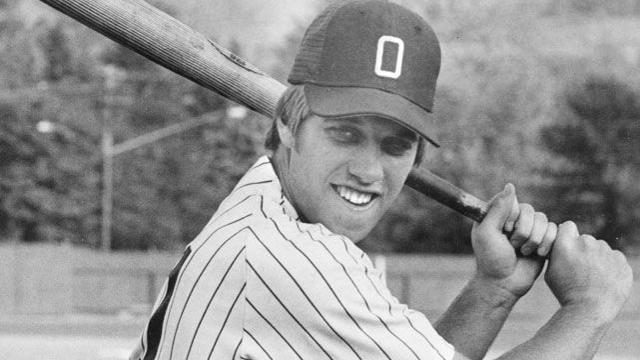
The O-Yanks would be an institution in town for three decades, winning 11 titles (apples and trees?). Don Mattingly, Bernie Williams, Andy Pettite, and Jorge Posada took their hacks at Damaschke Field; and future Hall of Famer John Elway roamed the outfield in Oneonta before scrambling on the gridiron in Denver.

Blog_Elway

The Boss was known to set up shop in a box down the first base line, carefully observing his future Bronx Bombers. Hell, back in 1920, the Sultan of Swat – playing with the Babe Ruth All-Stars – smacked a homerun over the right field fence at Neahwa Park (now known as Damaschke Field, the home of the Outlaws).  [Ed. Note: In the 5th inning of that game, the Babe broke a bone in his wrist sliding into first base.]

Man, if those baselines could talk . . .

But all good things must come to an end, and in 1999, the O-Yanks moved to Staten Island. The Tigers quickly moved to town. The O-Tigers played in Oneonta until 2009, and then left for Connecticut. Alas, Oneonta was not without baseball for long.

In 2010, Keith Rogers and Dan Scaring brought the Saratoga Phillies to Oneonta, renamed them the Outlaws, and set sail. After installing local legend Joe Hughes as the manager, the team won a championship in 2011.

Prior to the 2013 season, Gary Laing heard a rumor, made a few calls, and soon thereafter, a life-long dream came true. Growing up poor in Oneonta in the ‘60s, often without enough food to eat, Gary would shag foul balls for Sam Nader’s O-Yanks at Damaschke, bringing them back in return for free hot dogs. Never did Gary think that one day he would be the one giving out hot dogs to little kids who shagged balls at that same park, hit by players on his team.

Gary was born and raised in town, graduated from Oneonta High School (one year ahead of Joe Hughes), and never left. He started a local business 1991, built it into something very successful, and then decided to buy a baseball team.

Granted, it’s not a Major League team, and his day-to-day decisions are vastly different than those required by Hal Steinbrenner or Peter Angelos; but he deals with real baseball issues every day, real baseball economics, and real baseball fans.

A few weeks ago, I was fortunate enough to spend some time with Gary and Karen. The term “Salt of the Earth” was invented for these two. They, along with their young sons Chris and Josh, run the team – from concessions to ad sales to being a host family for the team’s manager.

The Outlaws are members of the Perfect Game Collegiate Baseball League, where college players from around the country come for a summer of fun, fans, and a whole lot of baseball. The PGCBL is made up of 13 teams in Upstate New York – from Jamestown to Glen Falls, from the Adirondacks to Saugerties.  (If you have never spent the summer in Upstate New York, get thee to the airport – it is spectacular.)

To get around the state, players are ferried in chartered buses. To save money on accommodations, teams typically do not stay overnight in any city/town/village/hamlet. Rather, when the game ends, players take a shower, get a small meal (provided by the home team directly from the concession stand), and back on the bus they go.

“Host” families take in a player or two for the summer in return for a small stipend and season tickets to the team’s roughly 25 home dates. And yet, there is never a shortage of families willing to open up their home, set an extra seat at their table, and add another stop to their carpool. The term “host” is often quickly dropped from the description, and each spring families travel around the country to see “their boys” play college ball.

But while the players and their families are having an experience they will never forget, the owner is trying to figure out how to pay the bills. Sure, when compared to the Cubs, a PGCBL team has considerably fewer expenses (both in quantity and in cost), but also considerably fewer revenue sources.

Want to own a team? Let’s take a look:

  • First, you have to buy the team. Out of deference to Gary, the community, and the league, this amount has not been disclosed.  But it does cost something.
  • A teams needs a place to play. Ideally, the team owns the stadium. More likely, they rent it from the local municipality or college. Either way, this is the single biggest annual expenditure.
  • In order to draw the most fans, games need to be played at night. Lights and electricity are not free, adding another line item to the budget.
  • Players need equipment. Granted, most of the kids bring their own gear; but very few of them have a collection of wood bats that are used in the PGCBL, so the team must provide. Add helmets, catcher’s gear, and a whole lot of baseballs, and the costs add up.
  • These games need umpires as well. The thirteen teams pool their money to ensure three umpires per game.
  • If you are new to a league, you must pay an admission fee. That amount varies from league to league and year to year.
  • In order to get to the games against the twelve other teams, the aforementioned buses must be procured. Drivers and gas cost real money.
  • As I stated above, the team provides each host family with a stipend (which cannot possibly cover the actual cost). Some teams provide apartments for the players – a choice that is fraught with danger if one thinks about the demographic being left unsupervised for long stretches of time. And some teams work out deals with local colleges to provide dorm rooms. Any way you shake it, it costs the team money to house their players.
  • If you have ever raised a teenager, or even been in contact with a 20-year old young man, you know that they can figuratively eat you out of house and home. The teams cannot possibly keep an accurate count of the number of PB&J sandwiches they provide each season, but the number is well into four figures. Add to that food for the visiting team (see above), and in most cases, a post-game meal of burgers/dogs/fries for your team, and a club’s grocery bill gets big, quick.
  • At the yard, teams pay an official scorekeeper, a public address announcer, potentially a radio play-by-play guy/gal, and concessionaires. The Outlaws enlist a pitcher not scheduled to throw to serve as the official ticket-taker.
  • Lest we forget, you need a manager and at least two (and sometimes 3 or 4) coaches to keep this band of roving youth in line and learning. Those gents get paid real (albeit small) salaries.
  • All teams have a General Manager who handles player procurement, travel, league business, and the like.  He (or she) gets paid for that work (a far cry, of course, from Andrew Friedman or Theo Epstein money, but it’s a paycheck nonetheless).
  • Some teams employee ad sales executives to get the most out of their billboards, fencing, signage, programs, etc.  Yet even more salaries.
  • And there are, of course, a myriad of other small, incidental expenses that are incurred in running any business.

In short, it takes a field of green to field a team.

So how does an owner balance the books? How are revenues generated?

  • Ticket sales. While the largest stadium in the league holds 8,000, the average yard holds about 3,000, which is more than a team can expect on any given night. Approximately 2,000 patrons come through the proverbial turnstiles each game, at ticket prices ranging from $2-$8 (average: $4-$5). Teams do sell season tickets to their most faithful, which is great way to ensure a certain level of income.
  • If a team controls the facility (either through ownership or a long-term lease), they can augment revenue by selling signage and sponsorships, as well as renting the facility for various events (e.g., rodeos, concerts, birthday parties, clinics, camps, weddings, high schools and other leagues – all of these are real-life examples).
  • Community members (think local companies) occasionally rent the entire stadium for a single game to invite their special guests. Season ticket holders can, of course, still attend.
  • And the most surefire way to try to stay in the black is what all of the teams do: charge the players to play. Oh, you thought that pay-to-play ended with Little League? Guess again. Players have to pony up anywhere from $500 to $2,000 to have the right to play for a PGCBL club. The price depends on a number of factors, with other revenue sources being the number one determinant. A team in a larger community with more third party revenue can afford to charge less; with the inverse being true as well. And, fortunately or unfortunately, the amount of the player fee is often the number one consideration of which team a recruited player selects. In this way, the PGCBL is no different than MLB: large market teams have a competitive advantage over small market teams.

Most teams run either right at break even, or at a slight deficit. This is not a money-making proposition – this is a labor of love.

So there it is. There are 41 summer collegiate baseball leagues all across this great country, accounting for approximately 376 teams (it changes season-by-season).

Find one for sale. Buy it. And soon you, too, will be putting your baseball knowledge, your business acumen, and your marriage to the test. Gary Laing will tell you that there is nothing he would rather do and no place he would rather do it. Ownership has its privileges, including incredible heartbreak and immense joy.

One last thing: If you find such a team and are looking for a partner, give me a call.

PLAY BALL!!

BLOOM BACK ON THE ROSE?


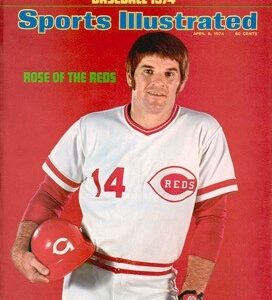
Last Monday, Peter Edward Rose made a formal request to be reinstated by Major League Baseball and asked that his lifetime ban be lifted. Newly-minted Commissioner Rob Manfred responded by stating he would consider the request “on its merits”. Spoken like a true attorney.

To be or not to be.

He loves me, he loves me not . . .

Will he or won’t he.

What’s with taking the oath of Commissionership that requires a bombshell be thrown in your lap within the first few months? Adam Silver had V. Stiviano and now Rob Manfred has Pete Rose.

So what to do with Pete Rose? If Manfred pulled out a legal pad, drew a line down the middle, and starting listing pros and cons, he might have to cut down a few yellow trees before he came to a conclusion. The simple question is: Has Pete Rose paid enough of a penalty? He has been banished from baseball – his one true love (replaced in recent years by money) – for over 25 years. Does that punishment fit the crime?

Apropos of nothing, as of 2013, 30% of murderers convicted and sent away on life sentences are let out of jail in less than 10 years, with an overall average of 16 years of incarceration. Now, I am not comparing Pete Rose’s betting on baseball to murder – not at all – I am just trying to show, for hyperbolic effect, how long a 25-year (and counting) sentence actually is.

It can be readily acknowledged that Pete Rose did something that we, as a society and as fans of baseball, feel is inherently wrong. We can also agree that in the years leading up to and following his banishment, Rose did not acquit himself very well. Time and again, when the powers-that-be were looking for contrition, they got stubbornness. When they were looking for remorse, they got obstinacy. He held his ground for nearly 15 years. Who knew you could hold your breath for that long?!?

It was not until 2004 when Pete finally admitted what everyone knew all along. Unfortunately, the timing of his (ahem) confession was marred on two fronts:

(1)  It was done not in the service of baseball, but in the service of making a buck. Pete made his confession three days before his autobiography “My Prison Without Bars” was released. People could not help but think this was less about seeking forgiveness than about seeking book sales.

(2)  It was done on the eve of the announcement of the 2004 Hall of Fame class. Knowing that he most likely would never be enshrined in Cooperstown, Pete took the occasion to piss on the Hall’s doorstep.

Stay classy, San Diego.

But, for the past decade, Pete has been a relatively model citizen. He has not ruffled too many feathers (other than setting up card tables for autographs on Hall of Fame weekend), and has basically kept as low a profile as one could ever hope/expect from the Pete Rose.

Here is the real: Baseball is better when Pete Rose is involved. You cannot deny what he brought to the diamond for nearly 25 years.  The hustle, the heart, the hits (both the Harrelson and base varieties).

(3:16 mark)

The fact of the matter is that Pete Rose played in more games, had more at bats, and got more hits, than any player in MLB history. Chew on that for a moment. He is an icon in Cincinnati, and he is a legend of the game. He has paid his penance. He should be allowed back in . . . with conditions.

Many people considerably smarter and more knowledgeable than I have written extensively on this topic, but I think I agree with the following premise: Pete Rose should be allowed back into the game on a limited basis. He should be allowed to come to the park, participate in team activities, and be honored at major events (e.g., the All-Star Game this summer in Cincinnati). He should not be allowed to be an executive or an on-field coach. He should not be allowed to be in a position to affect the outcome of any game. That seems easy enough, and Manfred could tailor this reinstatement in a way that preserves Bart Giamatti’s original intentions, without looking like he is reversing his predecessor’s course.

Little Known Fact #1 (that would be more widely known if you read Jayson Stark’s columns or his book “Wild Pitches”): In 2003, former teammates Mike Schmidt and Joe Morgan arranged a meeting between themselves, Bud Selig, and Pete, for Pete to fall on his sword, acknowledge his mistakes, apologize, and then, ostensibly, be reinstated. For reasons that a whole school of psychologists could spend semesters debating, Pete could not bring himself to the table. No meeting, no apology, no reinstatement. And here we sit today.

Okay, so let’s assume Manfred is inclined to let Rose back in. That always leads to the $64,000/bronze-plated question: Should Pete Rose be in the Hall of Fame? Sure, of course, without question, maybe. The answer is multi-layered, but before we go to the merits, we need to know who will be hearing the evidence.

Little Known Fact #2 (that would be more widely known only if you are a total and complete baseball nerd and/or live in upstate New York and/or write a blog that maybe a few people read): While the Baseball Writers Association of America is the organization we customarily associate with Hall of Fame voting, they will not play any part in the Pete Rose discussion because he has been retired for too many years (this form of eligibility expires 15 years after retirement). Thus, his election (or lack thereof) will be determined by one of the Veteran Committees. There are three (Pre-Integration Era (1876-1946), Golden Era (1947-1972), and Expansion Era (1973-Present). Pete overlaps the last two, but would most likely fall under the Expansion Era Committee.

This Committee is comprised of 16 people, including prior HOF inductees, executives, and veteran media members. And, if you are looking for a quick resolution, don’t. The Committee doesn’t meet again until the Fall of 2016 for potential induction in 2017. Manfred has some time to cool his heels and ponder reinstatement.

To quote Vin Scully, “it goes without saying, but I’ll say it anyway”. Pete Rose’s on-field achievements are Hall of Fame worthy. It truly comes down to his integrity. Do we believe he should be excluded from the Hall of Fame because his lack of integrity (at least with respect to betting on baseball) potentially affected the integrity of the game?

Little Known Fact #3 (and by little known, I mean widely known): The Hall of Fame is filled with people who lacked integrity, who were scofflaws, liars, cheaters, racists, and drug addicts, guys who through actions and deeds potentially affected the integrity of the game. It must be really hard to get a good view of all that when standing on top of Mount Pious. But I digress.

Little Know Fact #4: Pete Rose retired in 1986, and (but for being banned from baseball in 1989) would have been eligible to be on the Hall of Fame ballot in 1992. Shockingly, in 1991 the Hall ruled that players on the permanently ineligible list could not be voted in. Coincidence? I think not.

Here is where I land on the issue: The Hall of Fame is a baseball museum. It is not intended to be a home for the better angels of the game, but rather a collection of the game’s history. It should include the whole story, warts and all. (And, by the way, many pieces of Pete’s equipment already reside in the Hall’s permanent collection.)

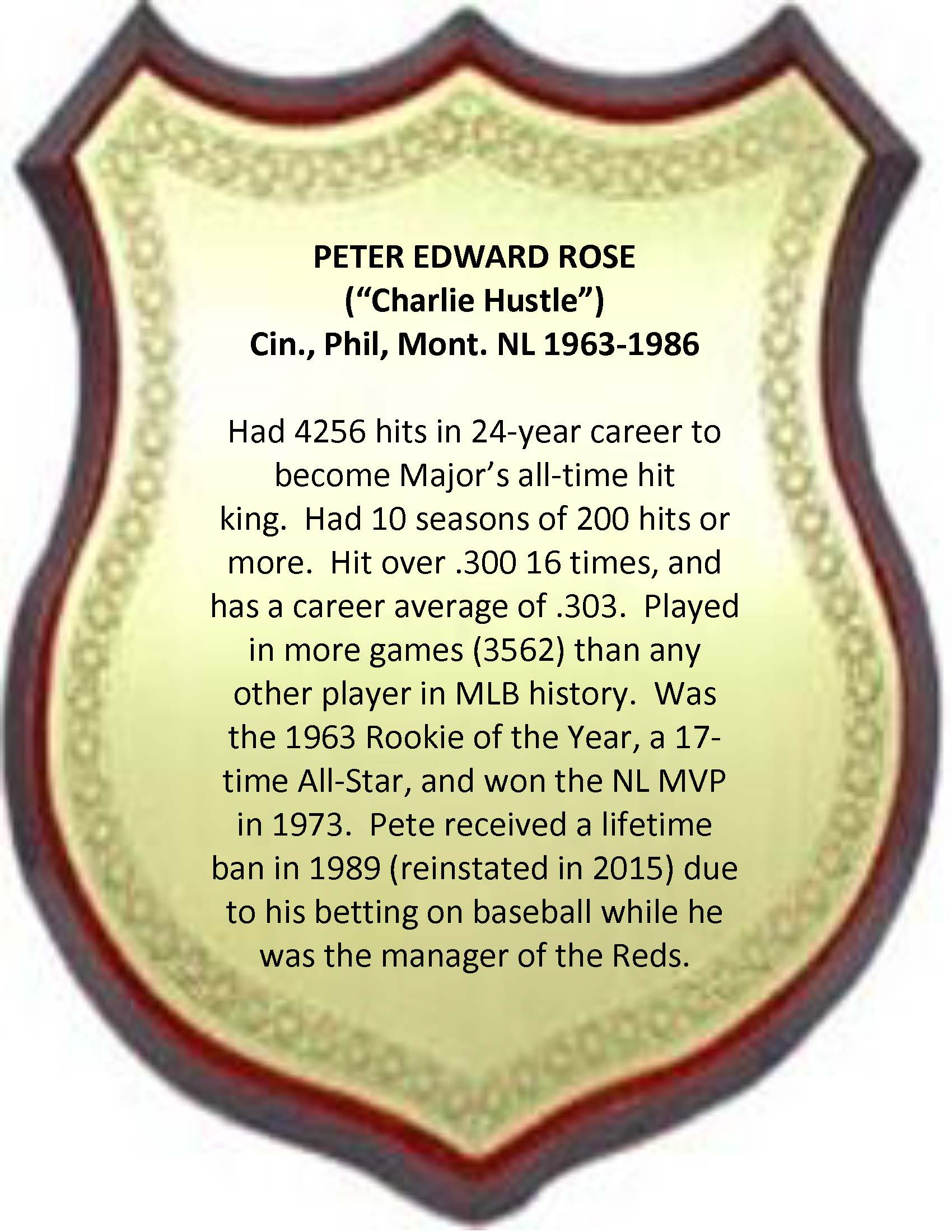
My solution is easy: Let him in, and put it all on the plaque. Pete’s plaque could look like this:

Pete Rose Plaque 3

That is what I would do. And, while we are on the topic, I would do the same thing for everyone who is Hall of Fame worthy but has been suspected of PED use. Put them in the Hall of Fame, tell the story, allow us to bring our kids to the museum so we can share our and their stories with the next generation – the good, the bad, and the suspected. I believe that is what Cooperstown was originally intended to represent.

Because, whether the baseball purists like it or not, try as they might, we simply cannot just ignore history.

Opening Day is just 2 weeks from Sunday.

PLAY BALL!