Lying Only Makes it Worse

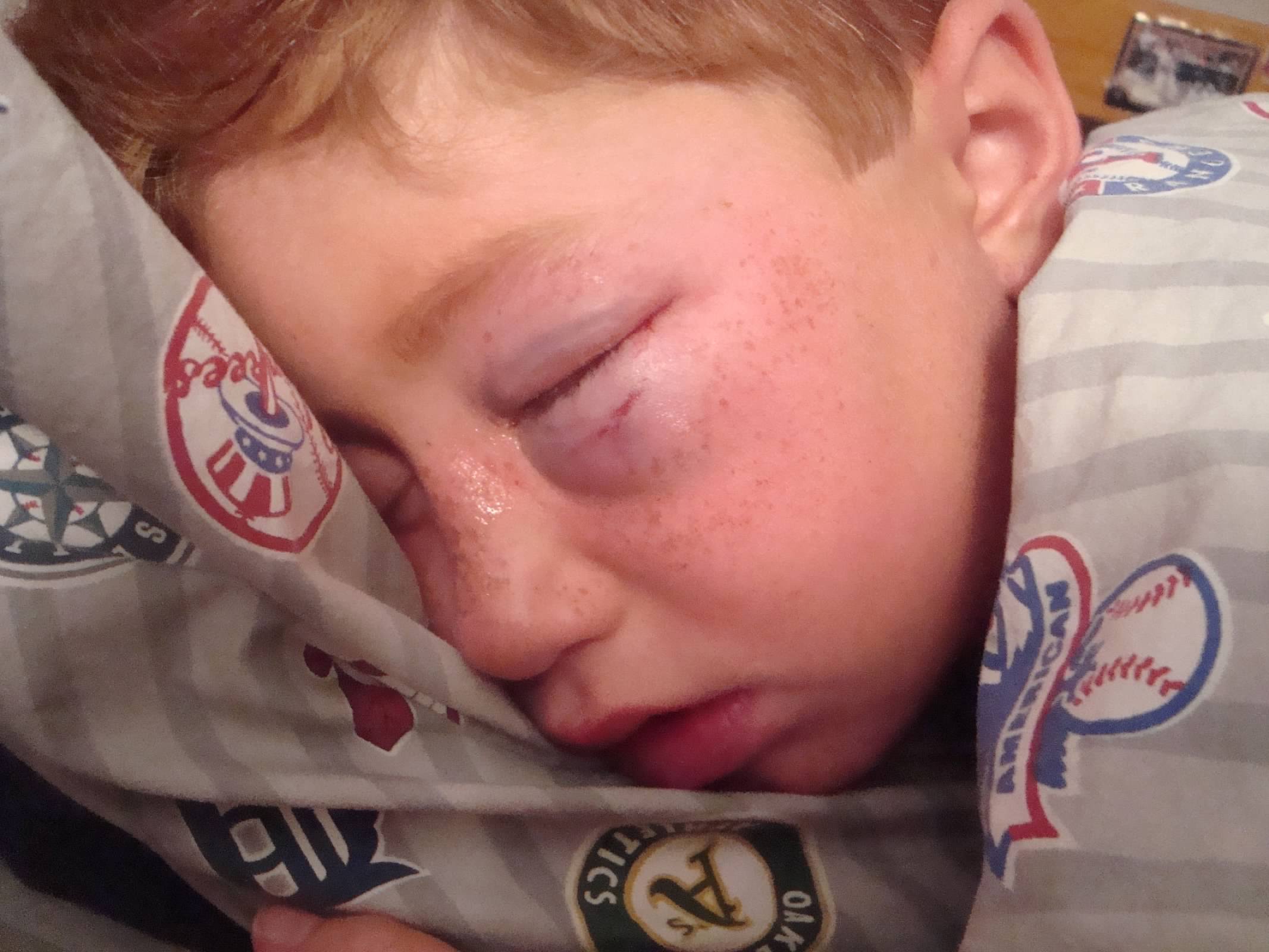
When I got home from work the other night, my 10-year old daughter had ink all over her arm. I asked her – maybe in a somewhat pointed way – what happened? She looked at her arm, and with feigned shock she said: “Hmm, that must have rubbed off from my paper.” I asked her if someone had written on her and she responded: “I don’t know.” Incredulous, I asked: “You don’t know if someone wrote on your arm?” And that is when the story fell apart and she acknowledged that she and her friend wrote on each other at school.

It was innocuous, frivolous, and thoughtless, but her first instinct – to avoid trouble – was to lie. She is not special. All (most?) kids do this all the time. (Well, I hope so. I would hate to be raising a sociopath.) We are all human, and we often take the path that we hope will offer the least resistance. Unfortunately, that path is often strewn with danger.

Which brings us to the non-baseball baseball topic of the week: Brandon Taubman and the Houston Asstros [sic]. I was speaking with a friend last night and asked him about L’Affair Taubman and he didn’t know anything about it. That reminded me that not everyone follows baseball as closely as I do; and not everyone lives in the baseball bubble – they have lives to live and non-sociopathic children to raise.

Here it is in a nutshell, but it does take some explaining. Here goes:

In 2018, Toronto Blue Jays pitcher Roberto Osuna was arrested on charges that he assaulted the mother of his child. The woman elected not to cooperate with the investigation, gathered her things, and fled back home to Mexico. But Osuna did not escape punishment. MLB suspended him for 75 games for violating the league’s domestic violence policy.

While under suspension, the Blue Jays essentially washed their hands of Osuna, trading him to the Houston Astros. The Astros are an organization steeped in analytics, run by many MBAs who started their respective careers in the banking, finance, and insurance industries. In short, they know a distressed asset when they see one; and they pounced on the opportunity to buy low on Osuna – a 23-year closer with an electric arm and allegedly a closed fist.

Much ink has been spilt about the poor optics of this decision, and the Astros were appropriately scorned for this trade. But, for all intents and purposes, over the past fifteen months the rancor dissipated. Until this past Saturday night.

Osuna came into the ninth inning of Game 6 of the ALCS with a chance to send the Astros back to the World Series. He failed. He gave up a game-tying two-run home run to DJ LeMahieu. He was, of course, bailed out by José Altuve in the bottom of said ninth inning, and Houston got to the World Series in spite of Osuna’s metldown.

In the midst of the clubhouse celebration, Astros Assistant General Manager, Brandon Taubman, got a little carried away. With a cigar in his mouth and a champagne bottle in his hand, he repeatedly (read: at least six times) yelled: “Thank God we got Osuna! I’m so fucking glad we got Osuna!” This was an odd time to be that exuberant, insofar as Osuna had just nearly blown the game. This was a horrific thing to shout for a bunch of other reasons as well.

Taubman apparently screamed this to, or in front of, or near, three female reporters, one of whom was wearing a purple domestic violence awareness bracelet. At first blush, there was no apparent reason for this outburst. But then we learned that Taubman had previously complained about the bracelet-wearing woman – he was unhappy with her tweets addressing domestic violence. The incident was so outlandish that an Astros staffer reportedly apologized for Taubman’s behavior in the immediate aftermath.

On Monday, Stephanie Apstein, a reporter for Sports Illustrated, and one of the recipients of Taubman’s tirade, reached out to Gene Dias, the Astros media relations director, to explain what she intended to write, and to ask if he, the Astros, or Taubman had a comment. Dias, apparently, rejected all three offers. So Monday night Apstein published her story.

That is when this whole thing became like the incident with my 10-year old daughter. My guess (and, truth be told, this is only a guess) the following is what transpired next:

  • Dias reported the incident to his boss, who reported it to his/her boss, who brought it to Jeff Luhnow, the Astros General Manager and President of Baseball Operations.
  • Luhnow confronted Taubman, and he could either admit someone wrote on his arm, or he could dissemble. He chose to dissemble.
  • Taubman made up a story about protecting a player and lied about what actually happened.
  • Luhnow huddled with the rest of the front office and thought, “that works.” And then they ran with it.

So, about one hour after Apstein’s story hit the internet, the Astros put out the following statement:

“The story posted by Sports Illustrated is misleading and completely irresponsible. An Astros player was being asked questions about a difficult outing. Our executive was supporting that player during a difficult time. His comments had everything to do about the game situation that just occurred and nothing else – they were also not directed toward any specific reporters. We are extremely disappointed in Sports Illustrated’s attempt to fabricate a story where one does not exist.”

Jeff Passan, Joe Posnanski, Buster Olney, Yahoo Sports, the Baseball Writers Association, and countless others have opined about this hogwash and how dangerous it was to the integrity of a sportswriter, so there is no need for me to pile on. Suffice it to say that at least four other members of the press immediately corroborated Apstein’s account and disputed the drivel offered by Houston’s front office.

Despite their best (worst?) efforts, when the issue wouldn’t just “go away,” when the “the ink just rubbed off on my arm” was being met by a cynical press corps, the Astros had to try again. Taubman tried his hand with the following:

“This past Saturday, during our clubhouse celebration, I used inappropriate language for which I am deeply sorry and embarrassed. In retrospect, I realize that my comments were unprofessional and inappropriate. My overexuberance in support of a player has been misinterpreted as a demonstration of a regressive attitude about an important social issue. Those that know me know that I am a progressive and charitable member of the community, and a loving and committed husband and father. I hope that those who do not know me understand that the Sports Illustrated article does not reflect who I am or my values. I am sorry if anyone was offended by my actions.”

Failed…again.

Lied…again.

When an equally feckless statement from Astros owner Jim Crane failed to move the societal needle, MLB stepped in and sent their own investigators. It took 72 hours, but on the fourth try, after being asked “do you really expect me to believe you don’t know if someone wrote on your arm?” the Astros issued the following statement:

“During the past two days, the Astros pro-actively assisted Major League Baseball in interviewing Astros employees as part of MLB’s investigation of the events published in the recent Sports Illustrated article. Major League Baseball also separately interviewed members of the media over the past 24 hours.

Our initial investigation led us to believe that Brandon Taubman’s inappropriate comments were not directed toward any reporter. We were wrong. We sincerely apologize to Stephanie Apstein, Sports Illustrated and to all individuals who witnessed this incident or were offended by the inappropriate conducts. The Astros in no way intended to minimize the issues related to domestic violence.

Our initial belief was based on witness statements about the incident. Subsequent interviews have revealed that Taubman’s inappropriate comments, were, in fact, directed toward one or more reporters. Accordingly, we have terminated Brandon Taubman’s employment with the Houston Astros. His conduct does not reflect the values of our organization and we believe this is the most appropriate course of action…”

What became clear, from MLB’s investigation and the above press release, is that Taubman, when faced with a bad situation, chose to lie. And the Astros, when faced with a bad situation, chose to lie. Taubman got fired, and the Astros faced a firing line. And then their two best pitchers lost back-to-back games at home for the first time ever; they now trail the World Series two games to none; and everyone in the country who knows this story is rooting against them. Karma is indeed a bitch!

The irony of all of this – what I tell my kids each and every time they try this bullshit – is that there was no need to lie, and the issue could go away with a simple “I’m sorry.”

In an alternate universe, when confronted with his aberrant behavior, Taubman could have said: “Man, I was so excited, and maybe a little tipsy on champagne, and I said something really stupid. I regret what I said and sincerely apologize to those writers.”

And in that same alternate universe, the team could have issued a statement saying: “One of our executives used poor judgment and used wholly inappropriate language in the clubhouse. We take these matters seriously. We have suspended Brandon Taubman for four weeks without pay, we have made a $500,000 donation to the Texas Council on Family Violence, and we – as an organization – sincerely apologize to the objects of this outburst as well as anyone else who witnessed or was affected by it in any manner.”^^

They could have done this on Monday, and by Tuesday there would not have been a story. Taubman would have been back at work before the winter meetings, and the Astros would not have engendered a level of ill-will not seen since…they acquired Osuna in the first place.

It is just so easy: Tell the damn truth. I sound like a broken record to my kids, but for the benefit of the entire Astros organization, here goes: Whatever it is, lying only makes it worse!

PLAY BALL!!

^^One last note: Moments before this posted, prior to Game 3 of the World Series, Stephanie Apstein met with Jeff Luhnow and asked that the original press release – the one that impugned her integrity and claimed she made the whole thing up – be retracted. Luhnow would not commit to doing so. Go Nats!

The Two-Strike Pitch (Redux)

Four years ago I wrote an article about what I love most about baseball. In case you have forgotten, or – more likely – in case you never read it, what I love most about baseball is the two-strike pitch.

And if that is my favorite aspect of the game, then boy-oh-boy did I get the motherlode on Saturday night. If, for some reason, you missed what happened in the top of the ninth inning of Game 6 of the ALCS, let me give you a brief recap:

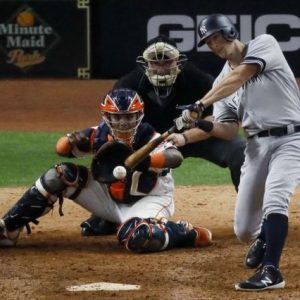
With Astros leading 4-2, three outs away from the pennant, Gia Urshela lined the third pitch he saw from Roberto Osuna into left field, thus bringing the tying run to the plate. Brett Gardner followed and struck out on four pitches. But that turned the lineup over, and the Yankees’ best hitter came to the plate. It is at this moment that I said the following: “I see a two-run homer in our future.” (True story; I have witnesses.)

When I was in high school I had a coach who was studying to get his PhD in Psychology. He used his team, a bunch of tenth graders, as his guinea pigs, and tried all sorts of psychological tricks on us. I once asked him: “Bart, which would you want up in a clutch situation? The guy who is 0-4 or the guy who is 4-4?” True to form, he responded: “I would prefer the guy who has the most confidence.” Yeah, thanks for nothing, Bart!

On Saturday night, we got to see Bart’s concept put to the test. DJ LeMahieu hit .327 this year – his second best season ever – with a career-high 33 homeruns. He was hitting .320 in the ALCS when he stepped to the plate representing the tying run. But he was also 0-4 in Game 6. So, Bart, did we want this guy at the plate or not?

As a Yankee-hater, I certainly did not. He looked confident to me.

Osuna was able to get ahead of LeMahieu 1-2, setting up the pinnacle of baseball situations: the two-strike pitch. A slider away and the count was even. DJ then fouled back four straight pitches. But how about this: he fouled off two 97+ MPH fastballs, then an 85 MPH change-up, and then a 98.7 MPH fastball. How does one do that, on that stage, in that situation. Maybe Bart was right; maybe you want the guy with confidence. LeMahieu then took a 98+ MPH up and in to push the count full. For those of you counting at home (I sure was), that was six straight two-strike pitches. An embarrassment of riches.

And as Osuna checked the sign from Martín Maldonado, my thoughts went in a different direction. I said to a friend of mine: “This guy’s parents are just a few years older than us, and they are sitting in that ballpark watching this. Imagine how they feel?!”

As we all know, DJ hit the tenth offering – the seventh two-strike pitch – into the bleachers in right field to tie the game. Unbelievable!

As we also all know, the homerun that could have gone down in history as an all-timer may soon be forgotten, as José Altuve hit a game-deciding, series-ending, pennant-clinching, walk-off two-run dinger with two outs in the bottom of the ninth inning. The only downside: he did it with one strike.

But we as baseball fans can never allow ourselves to forget the two-strike pitch, or the seven of them that DJ LeMahieu saw on Saturday night. If that at bat didn’t get your heart pumping, nothing ever can, nothing ever will.

One last note: I called Altuve’s homerun, but not like Gerrit Cole. From The Athletic:

“Man, if he throws anything down and in, it’s going out,” Cole said.

“It’s going out to right,” Miley replied.

Cole was having none of it.

“It’s not going out to right. It’s going out to left. And it’s going deep,” he said.

I called that homerun two years too early. With the Dodgers trailing 12-11 with two outs in the top of the ninth inning of Game 5 of the 2017 World Series, Austin Barnes was on second base representing the tying run. As I stood in the stands behind the Dodgers’ on deck circle in Minute Maid Park, I turned to the Astros fans next to me and said that Chris Taylor was going to get a hit to tie the game just so Altuve could walk it off in the bottom of the ninth. Sure enough, Taylor got that hit. But…Altuve flew out to lead off the bottom of the ninth. My career as a prognosticator seemed to be over. I guess I am just ahead of my time!

The Fall Classic begins tomorrow. Scherzer v. Cole; Strasburg v. Verlander. Before we even get to Greinke v. Corbin, we will witness four potential Hall of Fame pitchers starting the first two games of the World Series. Those guys have a total of 8,729 career strike outs between them, including 1,120 this season. I feel pretty confident we will see plenty of two-strike pitches.

PLAY BALL!!

Game Day of Atonement

The email came in a little before 8pm Monday night. It was so simple, so pure, it didn’t require anything in the body; just the “re” line: “game 5?”

I didn’t get the message right away, but upon reading it, the response was also simple: “Can’t do it.”

I have omitted the first two words of my reply, as many of you reading this have probably inferred. The reason my response was so quick and so simple was those two missing words: “Yom Kippur!”

Now, I’m no Sandy Koufax, and don’t hold myself to some grand level of religiosity. But Yom Kippur – that one is sacrosanct. I am sure there will be many an MOT in Dodger Stadium on Wednesday night, breaking their fast with stale buns rather than challah, Dodger Dogs in place of corned beef. I just won’t be one of them. And, to be perfectly clear, I won’t vilify anyone for doing so. It’s just not for me.

But this is where things get interesting. According to Jewish Baseball News, there are nine current Jews in the majors. I am not sure when they updated their site, but I know they missed at least two others: Rowdy Tellez played for the Blue Jays and Ryan Lavarnway got 18 ABs for the Reds this season. So there are eleven big leaguers who may (or may not) have been bar mitzvahed. (And, not for nothing, the list of Jewish minor leaguers reads like the temple all-aliya team: Fishman, Gold, Goldstein, Gurwitz, Kaminsky, Rosenberg, Weiss, Weitzman, etc.)

Of those eleven in the show, a shocking five play for teams who made the playoffs. Ryan Braun was sent home in the Wild Card game, and Garrett Stubbs didn’t make the Astros’ playoff roster. So then there were three that mattered…and boy do they matter. Alex Bregman is an MVP hopeful for the Astros, Joc Pederson is providing pop for the Dodgers, and Max Fried may find himself on the biggest bema of his life.

The Astros will take the field in Tampa tonight at 7:07pm EST. That is exactly one minute before the sun will set and Kol Nidre will begin (wouldn’t it be great to have the shofar blown right before the umpire yells “Play Ball”!?). For some reason, I don’t see Bregman leaving the field after the first pitch is thrown. For those less devout, they may claim Bregman isn’t actually playing on the holiest day of the year, but I think that is a loophole he may need to atone for come Wednesday morning – I am sure he can find a nice shul in the Tampa area. The good news for Bregman is that, win or lose, he will be able to break the fast without worrying about any game on Wednesday (Game 5 of that series would not be until Thursday).

The sun is due to set in Atlanta on Wednesday at 7:13pm. That is two hours and eleven minutes after the start of Game 5 of the Braves-Cardinals series. For baseball in 2019, we may only be in the fifth inning when the Day of Atonement draws to a close, which means that Max Fried may be able to take the field without any guilt or remorse. For multiple reasons, Mr. Fried will be asking his high school teammate, Jack Flaherty, not to make too quick of work of the Braves. But a main reason would be so that the Book of Life can be sealed before Max has to take the mound. Time seems to be on his side.

And Joc Pederson may get just as lucky. If Dave Roberts elects not to start Young Joc (which is unlikely with Stephen Strasburg* on the mound), he would need only 51 minutes from the first pitch (5:37pm PST) until sundown (6:28pm PST) to avoid offense. If Joc is not in the starting lineup, there is a fair chance he does not get called off the bench to pinch hit until holiest day of the year is officially over. One wonders which outcome Joc prefers. One wonders which outcome Joc’s rabbi prefers? And one wonders, will Sandy Koufax wait until 6:28pm to take his seat next to the Dodger dugout?

*At this moment, you may be asking about the pitcher Joc and the Dodgers are facing Wednesday night: Stephen Strasburg. Although he is a “burg” and married to a woman named Rachel, he is decidedly not Jewish, and typically wears a cross around his neck when on the mound. For him, there is no ecclesiastical dilemma.

For those of you observing Yom Kippur, I wish you an easy fast. May your Yizkor and Ne’ilah services end early enough that you get to watch the end of what stands to be an epic Game 5.

Good Yuntif and then…

PLAY BALL!!

Head First Strikes Out…Again

As a writer (am I a writer?), I love an evergreen topic. It makes it so much easier to create content.

As a baseball fan (I am a baseball fan), however, certain evergreen topics are infuriating.

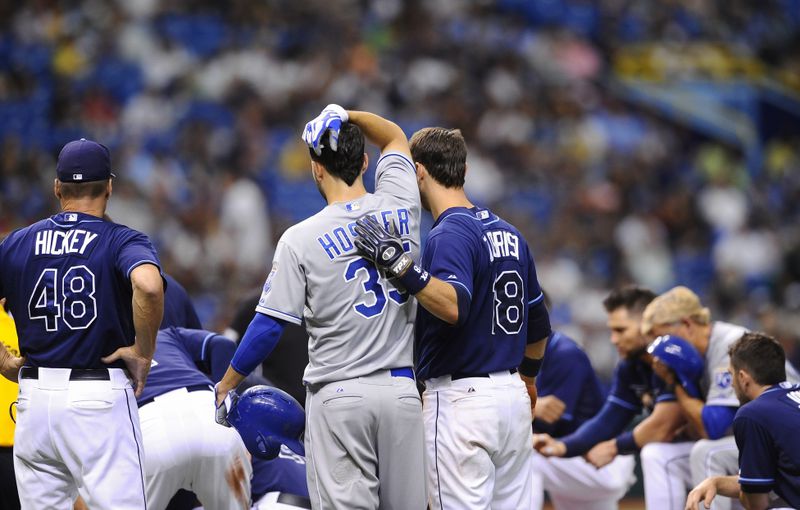
Last week I was listening to the Executive Access podcast (a must-subscribe if you love the inner working of baseball), and Mark Feinsand was speaking with Scott Sharp, Assistant GM of the Royals. They got to talking about the 2015 World Series, and Sharp was remarking about Eric Hosmer’s sprint home to tie Game 5 in the ninth inning. But, Sharp was lamenting about Hosmer got home, “after I told him countless times in the minor leagues: do not slide head first.” Sharp, as a former player, and a former director of player development, knows of the dangers that are inherent to leading with your hands, and instructed his players, repeatedly, not to do that. Obviously, they didn’t listen.

I wrote about this subject in 2015, and 2016, and 2017. I skipped last season, but as with other evergreen topics, we are back here again.

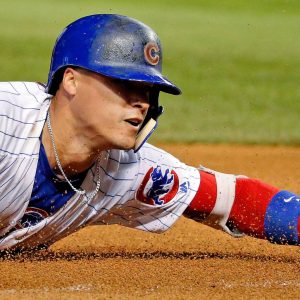
Two weekends ago, the Cubs MVP hopeful Javier Báez dove trying to steal second base. He ended up fracturing his thumb, and is out for the rest of the season. It’s not like the Cubs could use him for their last four weeks. It’s not like his .848 OPS, 4.7 WAR, and his glove work at shortstop would have been helpful down the stretch. The Cubbies are 6-5 since he got injured and fell out of a playoff spot for the first time since early in the season (as of this writing, they have a Wild Card spot). Do you think the Cardinals, leading the division and with seven games left against the Cubs, are licking their chops knowing that Nico Hoerner (he of the 20 career ABs) will be manning short in lieu of “El Mago”? I feel confident that the folks on the North Side don’t feel so good about that.

But I guess people (and teams) simply don’t learn their lessons. The other night I got home from work, plopped down on the couch, and turned on the television. The MLB Network was airing the Cubs vs. the Padres, and at the exact moment I turned on the game, Jason Heyward was diving into home plate, trying to score on a short fly ball to left. Upon review he was safe, and it may have been because of the impressive body control he displayed with the dive that he was so. The Cubs were trailing 6-2 at the time, and ended up losing the game. Did the reward of scoring a run down four in the fourth inning outweigh the risk of Heyward possibly breaking a finger, a hand, or a shoulder? In a pennant race? In a must-win game? When your best player had just been lost for the season doing the same thing? I can only imagine Theo, Jed, and Maddon all held their individual and collective breaths waiting for Heyward to pop up unharmed.

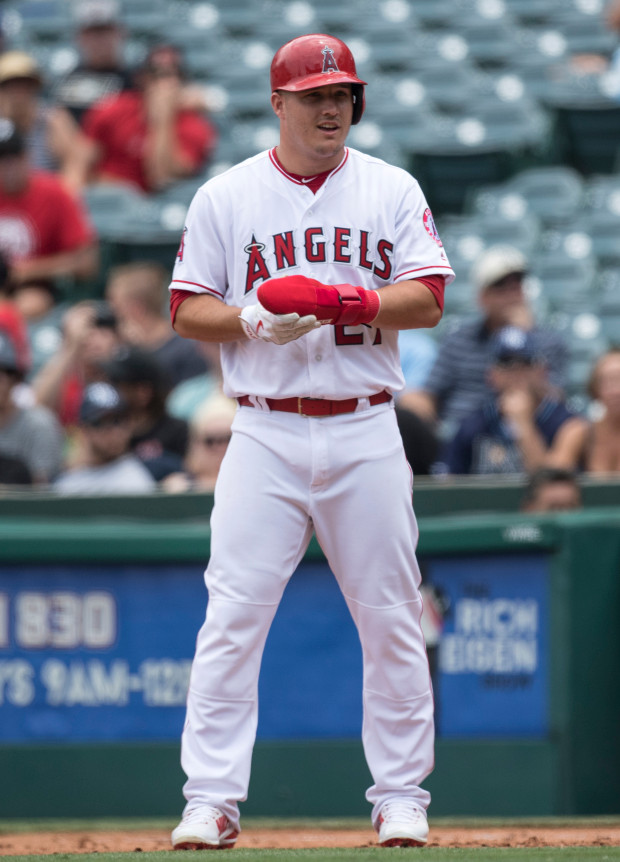
Why do players continue to do this? Why do teams still allow it? In 2017, Mike Trout potentially lost another MVP when he tore the UCL in his thumb sliding head first into second base. He was off to his best season ever. So what did Trout do upon his return? Did he forswear ever leading with his hands again? Nope. He got one of those new-fangled kitchen mitts that players wear to “protect” themselves when the slide…you guessed it, head-first. This is insanity.

What needs to happen to make this stop? Does a player need to break his neck and die on the field? Does a promising player have to have his career ended in one fateful moment? Does it need to start in Pony League (Little League already bans the practice)? High school? College?

All we read these days is how players who have swung the bat a certain way for 20+ years go to a hitting guru in the off-season and change their swing path. Think about that – a player has the ability to change something he has done probably a million times – swing a bat – in a matter of a few months. But, for some reason, he cannot “relearn” how to slide? Even though he slides feet first at least some of the time? Even though sliding is not as natural to him as swinging the bat. Any player who says he can’t change the way he has always done it is, pardon my French, full of shit. He doesn’t want to change – and no one is making him change. That has to change.

In 2016, I did a very rough break down of the costs associated with injuries resulting from head first slides (in salary terms only). That list and those costs could easily be recalculated upwards over the past three years. No matter; it is too depressing.

Every time I watch a player dive into a base, my heart stops – just for a moment. As a parent, it makes me angry; as a fan, it makes me nervous; and as a business person, it makes me crazy.

PLAY BALL!!

Head Shots and Humanity

In honor of Dustin May’s 22nd birthday, there is an issue that has been on my mind for a while.

When my son was seven years old, he took a comebacker to his left eye. On impact, he dropped to the ground, the batter advanced to first base, and, as you might expect, everything stopped while the coaches tended to his wound. Although this was just a scrimmage, I have no doubt that had this been an official Little League game, nothing would have been different about the chain of events. However, as you move up levels, and the games have higher stakes, that is not necessarily the case.

Last week, in the fourth inning of a game in Arizona, with the bases loaded and one out, the aforementioned Dustin May took a line drive off his head. And, true to form, he hit the ground (a point that I have not yet heard: the impact of his head on the mound from the fall may have been worse than the one on his head from the ball – watch the video). The ball deflected into left field, and two runs scored. But here is the existential question: Should both of those runs been allowed to score?

As many of you know, they are trying out a slew of new rules to improve (?) the game in the Atlantic League this year. Among the “robo ump” and “stealing first base,” there is no rule with respect to potentially catastrophic on-field injuries. Maybe there should be.

When a batter gets beaned in the head, it is – by rule (5.05(b)) – a dead ball. And thus everyone has time to stop and make sure we don’t also have a dead player. The same is not true for a beaned pitcher. When a batter crushes a ball off the pitcher’s skull, the play remains live until its logical end, at which point time is called and the player is attended to. Should we be so callous? Would it be better to let the ball fall wherever it may, and then rule the play dead immediately?

There have been instances in which a ball goes off the pitcher and the defense catches it on the fly, resulting in an out. There have been instances in which the ball strikes the pitcher and then goes out of play, resulting in a dead ball. But what about when, like with May, the ball ricochets into the outfield and runners circle the bases while a man lies helpless in the middle of the diamond?

My simple suggestion is that except when the ball lands in a fielder’s glove, the batter is awarded first base and every runner advances ninety feet. It is neat, easy, and clean. With this rule in effect, no one needs to hustle to anything other than the care of their fallen comrade. We shouldn’t see left fielders making throws to the plate, or runners trying to score from second amongst the confusion and agony. That is, quite simply, untoward.

When you dig down beneath the “play the game the right way” bromides, what exactly is meant? The concept, in essence, is to be human and be a good sport. How does taking extra bases while a player is lying in who knows what state of injury or consciousness make you human or a good sport? And yet, I have never once heard an “old school” player or manager or announcer do this analysis. In their view, on the one hand, don’t show emotion as it is disrespectful to the opponent; but on the other hand, don’t show humanity because it is, what exactly? A competitive disadvantage?

When you watch videos of pitchers taking liners off their heads (and I watched too many in preparation for this), your breath catches. Every batter finds himself stunned, trying to process what just happened, what he just did. It goes without saying that taking a ball hit 100 MPH off the cranium is scary for everyone involved. I am just saying everyone involved (baserunners included) should treat the moment with the solemnity it deserves.

PLAY BALL!!

What We Do For Our Kids

When we decided to send our youngest to sleepaway camp in Wisconsin four years ago, I didn’t appreciate that it would require me to make two trips to the Midwest each summer. Of course, there is always the possibility that she could fly alone, but insofar as she was seven years old her first time, we thought it best to actually drop her off at the bus.

And then the light bulb went off. It didn’t take long for me to figure out that camp drop-off and pick-up in Chicago gave me ample opportunities to visit some beautiful stadiums and see some great games.

That first year, I just dipped my toe, going to Wrigley Field for a Saturday matinee.

The second year I realized that there are two ends to the summer, and baseball could be had on both. So, for drop-off, we took a trip to the Southside, and saw the White Sox play at Guaranteed Rate Field (by far the worst name in the sport). But for pick-up, we forwent Chicago and took the Milwaukee option. That gave me a chance to visit Miller Park. That place is splendid – many parks could learn A LOT from what they do and how they do it in Brew City (aka Cream City). If you have never been, I highly recommend The Selig Experience (which, ostensibly is an homage to Bud Selig, but is actually a multimedia presentation that tells the story of major league baseball in Milwaukee) and the frozen custard (which needs no explanation).

Year three brought all sorts of new adventures. The Cubs were in town when I dropped my daughter, but I didn’t need another game in the Friendly Confines. Especially when Chicago is just a short flight from Minneapolis, where the Twins were taking on the Rays. So, after saying “goodbye,” I raced to O’Hare to catch a flight to the land of a thousand lakes. I walked through the gate a few minutes before the National Anthem and enjoyed the hell out of Target Field. They have a vast array of beers on offer, fantastic food, and the Bat & Barrel – a restaurant-bar with indoor-outdoor seating – has walls and furniture full of relics from Twins’ seasons and players past. It is the most casual team hall of fame I have ever seen.


One unsung feature of the park: In the Town Ball Tavern in the left field corner, they have the original parquet floor from the Minneapolis Armory that George Mikan and the Lakers used to play on.

When it came time to pick up from camp, I decided to be ambitious. Did you know that if you take an 8am flight from LA, you can be in Dallas by 1pm, and in Globe Life Park by the second inning? Neither did I, until I did. Sure, a day game in North Texas in mid-August ain’t a day at the beach (and is the primary reason they are about to unveil a domed stadium next year), but that is totally beside the point. The park will be closing soon, and this was my opportunity to visit. That park had a lot of cool features, including a right field porch that allows you to feel if not in the action, at least on top of it. Few ballparks still have this design (most notably, the former Tiger Stadium), and soon the Rangers won’t either. Now, if you have been to Dallas once, it is my humble belief you can check that box and move on with your life. So move on I did.

I took leave of the Rangers and Mariners after eight innings, headed to the airport, and found myself in the BBQ capital of the world a short while later. I was in the parking lot of Kauffman Stadium when the last notes of the National Anthem rang out, and had a seat behind home plate and a beer in my hand before the end of the first inning. The Royals took the wood to the Cubbies that night (I could not escape the Cubs); I ate barbequed pork and ice cream (not together), and had myself a hell of a night. The crew at “The K” could not have been friendlier, the Royals Hall of Fame was terrific, and I see how their kids’ area became the inspiration for many current stadium upgrades. The next morning I caught a quick flight to Chicago, and was there long before the camp bus pulled up.

This year I elected not to go to a game at drop-off. I took my other daughter with me, and we had lunch downtown and saw Hamilton in the old CIBC Theater. It was a great diversion; I was plenty “Satisfied” and was willing to “Wait for It.”

But, since I skipped a game on the front side, I needed to spruce things up on the back. And this year, my son would be traveling with me. As you can tell, I have hit a lot of parks in and around the Chicago-land area. At this point, I need to get creative. And, remember, the timing of all of it – flights, distance from the airport, and most importantly, games being played – has to be precise. The planning of this is not for the faint of heart. When the MLB schedule came out last spring, I overlaid that against the camp schedule. I perused all day games within a couple hour flight of Chicago, and then start checking the airlines. It took some imagination and some willingness to miss a few pitches, but it was doable.

And that is how I found myself waking up Wednesday morning at 3:45, to catch a 5:45 flight to Detroit. The plane landed a few minutes before 1pm local time, and we were in the park by the top of the second inning. (Note: Showing up a little late makes buying a single ticket from a scalper extremely reasonable ($15).)

Comerica Park is terrific. The ushers were unbelievably helpful (they came down before every inning to see how we were doing and if we needed anything). The Tigers have an awesome row of statues in left center field that give you a taste of their history; and they have displays along the concourse celebrating each decade of their existence (I was preferable to the Trammel-Whitaker-Evans-Gibby ‘80s teams, but your mileage may vary).


And thanks to the MLB Foodfest that came through LA earlier this year, we knew to eat the chicken shawarma nachos. They didn’t disappoint. Unfortunately, Miguel Cabrera (0-4), and the hometown team, did. The White Sox (what is it with these Chicago teams stalking me?) whacked them around. But if you ever find yourself in the Motor City, I highly recommend taking in a ballgame. Unfortunately, we had to leave after eight innings to make it to the airport for our 5:54pm flight to the Steel City, but we certainly got the flavor of the place.

The next plane landed right before the first pitch of the Pirates-Brewers game, and – despite some shaky Lyft driving – we were in the park by the second inning. Again, arriving late gives you incredible leverage with the few scalpers still hanging around (second row down the left field line, $20). PNC Park lives up to the hype. It truly does have the best press box view in the game (see above). It has a homey feel – like someone stretched a minor league stadium into major league size. The steel (fittingly) is exposed. The people are warm and convivial. The site lines are great. And the food is delicious (where else can you get a pulled pork and pierogi sandwich?). My one beef is that the game went by too quickly. I wanted a slugfest that lasted four-plus hours; I wanted a 15-inning marathon; I wanted an excuse to stay there longer. Alas, it was not meant to be. Continuing the theme of the day, the home team lost, but that at least afforded us a  full nine innings. While we didn’t get to see Christian Yelich play, I did get to meet Travis Shaw and the Pirate Parrot under the stands. All in all, it was a phenomenal experience.

There are tons of hotels around PNC Park, but I intentionally chose one on the opposite side of the Clemente Bridge. When planning this out, I wanted to make sure we walked across that famous bridge, got a view of the park above the Alleghany, and had one last moment to take in the day. It was the perfect capstone.

When we laid our heads on our pillows in Pittsburgh Wednesday night, we had traveled over 2,000 miles in the air and nearly 100 miles on the ground; we had been in three major cities, seen two baseball games, eaten way too much food; and we had memories for a lifetime.

The next morning we flew to Chicago to pick up my daughter from her camp bus. It was the least we could do. It really is amazing what we do for our kids!

PLAY BALL!!

Actions Should Have Consequences

Last weekend, in what turned out to be his final act as a member of the Cleveland Indians, Trevor Bauer hurled a ball from the pitcher’s mound into the batter’s eye beyond the center field fence – some 375 feet away. It was a moment of pique. It was, in Bauer’s words, “unbecoming, childish, and unprofessional.” And his manager, Terry Francona, who has been around professional baseball his entire life (he was born during his father Tito’s 4th season in the Bigs), upon reaching the mound to take the vanished baseball from his starter’s hand, had the same reaction that most of us did:


Bauer knew, immediately, he had done wrong. He was immature and did an act that we would never accept from our children. What made this all the more glaring is that it happened on the field, in the full view of everyone in the park and on television. But these things happen every…single…day in ballparks across our great land (which, to be sure, includes Baltimore). The difference is that most of the time these outbursts occur in the tunnel or in the clubhouse. We might hear about them later – like when a pitcher breaks his hand punching a wall, or we may never. Existential question: Does our ignorance make these actions okay? If a player destroys a urinal with a 34 oz. bat, but no one is there to hear it, does it make a sound? Did it happen?

All of this led me to another question: Who cleans up the mess? Who pays for the damage?

Two nights ago, after another horrible outing, Red Sox pitcher Rick Porcello took out his frustration on two television monitors above the tunnel. He smacked them on his way to the showers (after surrendering 6 runs…again), shattering them both.

I could not get a feed of last night’s game, but I feel certain that those monitors were replaced. Some AV guy in the organization worked late Wednesday night, or came in early Thursday morning, to make sure that the evidence of Porcello’s temper tantrum was wiped away. Was Porcello charged for the cost of the monitors? Did they dock his paycheck for the AV guy’s overtime?

In fairness, Porcello did apologize (sort of): “I kind of wish I did that without cameras being on me…I apologize to everyone that had to see that.” So, I guess, had he smashed some monitors in the video room, his behavior would have been acceptable?

How many times have we seen a player destroy a water cooler after a strikeout? Those cost real money. It may not be significant money to a player making millions of dollars, but that is beside the point.

How about the time David Ortiz – the beloved Big Papi – took his lumber to the bullpen phone at Camden Yards? This was a player committing an act of vandalism right before our eyes. Was he charged with a crime? Was he charged at all? My guess is no, insofar as the Orioles gifted the carcass of that phone to Papi when retired in 2016.

                 Image

Have you seen the clip of Brett Gardner chucking his helmet into the bat rack, only to have it fly back in his face, lacerating his lower lip. That eruption required six stitches. Who paid for those medical expenses? For the broken helmet?

Remember cult hero Chris Sale, going Edward Scissorhands to the White Sox throwback jerseys because he didn’t want to pitch in a collared uniform? He destroyed all of them, got sent home, and was suspended for five games. I guess that counts as paying the piper – but tell that to the clubhouse guy who had to scramble to outfit the team; the guy who utilized part of his budget to procure the jerseys; the guy who cleans, presses, and hangs Sale’s clothes – just right – each and every day. Sale apologized for his actions, but to whom? I sure hope he pulled that clubbie aside and said, “Hey pal, this was not your fault, and I hope I didn’t ruin your day. Here’s a Benjamin, have a meal on me.”

The point is, we allow athletes to get away with shit we would never accept from our kids. And, to make matters worse, there (seems to be) no repercussions for their bad acts. Just once I want to hear that a clubhouse remodel was paid for by the millionaire who took out his frustrations on a handful of inanimate objects. I would love to hear that Player X bought the entire organization a round of drinks for crushing a Gatorade cooler.

Truth be told, some of this may be handled internally, in kangaroo courts and in payroll departments league-wide. But we as fans are left in the dark. We as parents have to try to either justify the player’s actions (John Farrell said this of Chris Sale: “That’s a fiercely intense competitor”), or tell our kids “just because they do it doesn’t mean you can.”

But, contrary to Charles Barkley’s famous refrain, these guys are role models. And it would be great for us to learn the ramifications of their actions…and be able to communicate that to our kids.

In the case of Bauer, it was easy: he was traded two days later. I guess some actions do have consequences.

Now let’s see what the Indians do with The Wild Horse.

PLAY BALL!!


Baseball: The Tie That Binds

About eight months ago my son decided he would do a summer program at the University of Texas. This would be an opportunity for him – while still in high school – to live in a dorm, experience college life, and be on his own for a few weeks. It would be an opportunity for me – while still clinging to my kids’ childhoods – to get ready to say goodbye, let go, and lose control. This would be educational indeed.

As the drop-off day approached, as the knot in the parental rope got looser, the knot in my parental stomach got tighter. I felt, not adrift, but an acknowledgement that time is racing by; and, like it or not, he would be heading off to college before I know it. It’s not like he was sprinting away from home like some modern-day Jack Keurouac, saying, “see ya, old man.” To the contrary. But the day is coming. And I sensed it.

After we paid the deposit for this program, we immediately pulled up the MLB schedule to see if either the Rangers or the Astros would be in town around drop-off. Sure enough, the Astros answered our call.

Over the years I have attended ballgames with many different people in my life – and sometimes alone – and each offers a different experience. As I have previously written, taking my father to the World Series will go down as one of my all-time moments. Enjoying a game with my wife, who allows me to educate her about the game, and never seems by bored by my/its minutiae, is always a pleasure. Sitting in the stands with my buddies, drinking a beer while allowing our frenetic lives to slow to and with the pace of the game may be better than yoga. But going to a game with my son will always hold a special place in my heart. Baseball is my eternal gift to him; and he has grabbed it with both arms and has simply internalized it. So visiting Minute Maid Park with him on the same weekend that we began our long (2+ years) goodbye had a certain resonance.

We got to the stadium and took a few laps around. This was my third trip to MMP, but the last time I was there I didn’t get to enjoy the environs – I stood in one spot for hours as the Dodgers and Astros played one of the most epic World Series games of all time. This time I wanted to tour the park with my son, taking in everything it had to offer. I wanted to eat Texas BBQ, drink a Shiner, and enjoy “Deep in the Heart of Texas” during the seventh inning stretch.

After eating, walking, and visiting all the nooks and crannies, around the fourth inning my son and I took our seats behind the Mariners dugout. There were all sorts of baseball fans around us – young and old, near and far, Astros and Mariners. Sitting over my right shoulder was a father and son, both sporting matching Astros jerseys. The boy could not have been more than two or three. This was me, fifteen years and fifteen hundred miles ago. The kid was adorable, and the conversation between dad and boy couldn’t have been more sweet.

With baseballs flying out of ballparks at a record clip this year, we have come to expect fireworks. Hell, the Yankees and the Red Sox combined for 50 runs in two games last weekend in London. But on Friday night in Houston, for nearly three hours, all we got was a measly third inning solo homerun by Mariners rookie Austin Nola (first of his career). In short, there was not much to cheer about.

But then, with two out in the bottom of the eighth, Josh Reddick hit a towering fly ball that landed about five rows deep in the right field seats, tying the game.

The Houston crowd went crazy as the right fielder circled the bases. With all the hoopla – and how loud it gets in a dome – the father and son behind me caught my attention…and my ear. I heard the dad explaining the game as follows: “You see, he ran to first base, and then to second base, and then to third base, and all the way home. That is called a homerun.” And with that, the boy’s eyes lit up, he may have hopped a bit, and he began to cheer anew. I looked to my left, to my son. And then it hit me.

That is what this is all about. We pontificate about contracts and free agency; we worry about our team’s shaky bullpen or failure to hit with men on base; we lament ticket prices and television blackouts. We call in to radio shows and write blogs about the sport. But when you step back and remind yourself of the how and why we love baseball, this is it. A father and son. At the yard on a Friday night. Learning the most basic elements of the game. Root, root, root for the home team. Is there anything more pure? Is there anything more American? Is there anything more special than that?

I have been to countless games in countless parks with my son. And in the years to come, I certainly hope he does the same with his. As I look to the next few years, when he leaves for college – for real – and he doesn’t need me quite as much, and the ties that bind become ever looser, I will know that, whatever else, we have baseball. That bond will never be broken. And when I see a dad explaining the most basic aspects of the game, and a son discovering its inherent beauty, I know this tradition will carry on.

Happy 4th.

PLAY BALL!!

Three Million Reasons Not to Care

Since 2001, the Dodgers have drawn more than three million fans every year, save for 2011, when they fell 65,000 short. Not only are they on pace to hit the mark again this year, they might set their all-time record (2007’s 3.85 million is the number to beat). To paraphrase an Iowan ghost, if you build it, no matter how bad it is, they will come.

And yet, no matter how many fans do come, it has become increasingly clear that the Dodgers don’t care about them. I am not sure when I first started to notice that, but I know I wrote about it in 2016. It may have been…

  • When they allowed the failed and hated owner Frank McCourt to retain ownership of the parking lots, and then jacked up prices, and made it more difficult than ever to navigate.
  • When I noticed a beer line filled with surly customers backed into the single children’s play area on the upper deck.
  • When they essentially gave up on making their games available to 75% of their local television audience.
  • Each time I have tried to get something decent to eat.
  • When they decided to make the walking space between the outfield pavilions a veritable lung cancer PSA, forcing non-smokers who want to travel from right field to left to suffer the gauntlet of a hundred yards of blue cigarette haze.
  • When I finally took a good look at the “batter’s eye” (more about that below).

That said, I do know when I was certain that the Dodgers flat out do not care about their fans: It was around 8pm on Friday, October 26, 2018. It was at that time – the ninth inning of Game 3 of the 2018 World Series, with the score tied 1-1, that the Dodgers closed their concession stands. That is when I knew for sure. To be fair, this is common practice at Dodger Stadium. It is a well-known fact that you cannot get a beer after the seventh inning (a league-wide rule) and cannot get a crappy Dodger Dog after the eighth.

But this was the World Series. This was not the typical Dodger crowd, when half (more?) of those in attendance head to their cars while the last notes of Take Me Out to the Ballgame are still reverberating around the stands. The official head count for Game 3 was 53,114, and the vast majority of them were still there in the ninth inning that Friday night. But the concessionaires were not. The peanut vendors were not. The candy hawkers were not.

If you know me, you know that I will happily climb a soapbox and wax incessantly on the failure of Dodger Stadium concessions. This has become my stock in trade. But, my standard misgivings aside, what we witnessed that night was incredible. Nothing was available for nearly ten innings – for nearly four hours. Think about that for a moment.

Again, to be fair, in the sixteenth inning they did open a dessert window at Aisle 46. The line grew so long, so quick, in multiple directions, that a fan feared he or she might miss a magical baseball moment waiting for an overpriced sundae. I know, because I was one of them. As I have previously written, I took my father to this game, and he and I were famished by 11pm. So I went alookin’ for sustenance, and found myself in line for ice cream. But after a full half inning with no movement, I surrendered, afraid of missing the Dodgers turn at bat in the bottom of the 16th. I am certain people were still in that line when Max Muncy ended the game in the 18th – I just wasn’t going to be one of them.

From a business standpoint, I cannot even begin to calculate how much money the Dodgers (and their concession partner, Levy) left on the table between innings 9 and 18. From a marketing perspective, I cannot even imagine how someone within the organization didn’t stop to think – maybe in the 11th or 12th inning – “we probably have a lot of hungry fans sitting there…hell, there may be some really cranky kids who haven’t eaten in hours.”

Now this is where some team official tells me that union rules don’t allow the concessions to remain open past a certain inning. Fair. Unreasonable, crazy, unacceptable, but fair. To which I would reply that a fan relations person should have then grabbed some colleagues and some ushers, and started chucking bags of peanuts and boxes of Cracker Jacks up and down the aisles. Make it a communal experience. Have Todd Leitz announce:

“Ladies and Gentlemen, we are now amongst the longest World Series games ever, so the Dodgers would like to reward everyone still in their seats with some snacks – but if you are lucky enough to catch a bag or a box, be sure to share with your neighbors.”

What a great story that would be. In a battle of wills, with East vs. West, as the clock ticked past midnight, Chavez Ravine would have metamorphosed into a Don Draper Americana ad. Walls would have come down; friendships would have been made; stomachs would have been filled.

Instead, we sat there hungry and tired. So when the ball left the yard at 12:29 a.m., we collectively barely had the energy to hoot and holler. Sure, we did it, because that was what adrenaline and the moment called for. But the minutes and hours preceding Muncy’s heroics called for an organization to care about its fans; not to take its three million trips through the turnstile for granted. Simply put, the Dodgers had ten innings and four hours to prove that they give a shit about their fans. They failed.

Why am I writing about this now, seven months later? I have been to Dodger Stadium five times this season – twice this past week. I cannot say I am shocked, but I am at least stunned, at what I have seen. Two consecutive World Series appearances have done nothing for the Dodgers’ affection for their fans. They still don’t give a shit.

I will grant you, in advance, some of this is petty. But I ask you, shouldn’t the organization want to make its best showing; wouldn’t you expect that going into the season, that the ballpark would be gussied up and looking good? Haven’t we, as fans, earned that respect?

Apparently not.

To begin, as you enter the park in left or right field, you need to plot a course around construction zones. Was there not time to do this over the winter?

During opening week, I saw a sign at the entrance with paint peeling off. Huh?

This season the Dodgers moved Tommy’s Trattoria out of the pavilion and into the concourse. But you wouldn’t know that from the signage, which points you in the wrong direction towards its former location. How can this happen? Who is not looking or who is overlooking these details?

I caution you that what I am about to write will change your viewing experience at Dodger Stadium forever. Once you read these words, you will look and never be able to unsee. You have been warned. Take a look at center field – beyond the wall. You will see a stanchion of speakers. They may be an eyesore, but they do serve a purpose (we can debate the quality another time). Now glance slightly to the left. There you will find an elevated camera well. Every ballpark needs a center field camera – no argument there. But do you see the janky, torn, faded black table cloth/tarp that they use to as part of the batter’s eye to cover the scaffolding? Are we to believe that, in a town as flashy as Los Angeles, with a team as wealthy as the Dodgers, with a ballpark that sells itself on its vistas, that they cannot do better than this? If you have not noticed this before, you may be scoffing now…but just you wait.

There is a rumor – and some leaked sketches – that the Dodgers plan to overhaul center field ahead of the 2020 All Star game. Well, they better get cracking, because they have 13 months to turn a monstrosity into something worthy of the Mid-Summer Classic.

Yes, I am a hypocrite. I give them money, buy season tickets, and go to Dodger Stadium at least a dozen times per year. I could simply stop going. But I think my continued presence gives me standing to complain – I am not the one-time visitor from out of state who simply takes in the grandeur and the palm trees. I am a fan, with kids and disposable income; I am the fan the Dodgers should be trying to please. If, for no other reason, then to insure that I re-up my season tickets again next season.

But, when they are setting attendance records, they have more than three million reasons not to care.

PLAY BALL!!


This Isn’t That Hard

In 2015, at the height of the Matt Harvey inning-limit nonsense, I wrote an article about the insanity of all of it. For those of you who don’t recall the piece, I had two thoughts:

(1) An inning count is a silly way to measure pitcher usage – that a more accurate analysis would utilize total pitches thrown. I have been harping on this for years, but I have now resigned myself to the fact that it is falling on deaf (and dumb?) ears.

(2) The Mets (and the Nationals before them) failed to properly prepare to have their best young pitchers available throughout the season – even with strict innings limits. I opined that in 2012, the Nationals could have shut down Stephen Strasburg for four weeks in July to preserve some innings for the pennant race. I stated that if the Mets had been literally and figuratively forward-thinking, they could have had Harvey skip four or five starts over four or five months to keep him available down the stretch. None of this happened.

And, as the story goes, those who don’t learn the from the past are doomed to repeat it. This time it could be a West Coast team.

The San Diego Padres, who signed Eric Hosmer last season, and signed Manny Machado this season, and who brought up Fernando Tatis, Jr. to start the season (service time be damned), are set for the future. However, their future may have arrived a year early. In addition to Tatis, the Padres began the year with wunderkind Chris Paddack in the starting rotation (they should be praised for thumbing their nose at service time not once, but twice). And Paddack has been nothing less than fantastic. Through nine starts, he has a 1.93 ERA, with 56 Ks vs. 11 BBs. And for you real stat heads, he has a 2.74 FIP and a 211 ERA+ (which means he is currently 111% better than the average MLB pitcher). In short, he has become the ace of the Padres staff. But, with 51.1 innings thrown as of May 20th, and with a rough innings limit of 140 for the season, we – and more importantly, the Padres – risk not seeing Paddack on the hill in September.

The Padres are currently a .500 team and seven games back of the Dodgers. I don’t think they will catch the Boys in Blue to win the NL West. But, they are only half a game back in the Wild Card race, and may be in the hunt until the season’s final weeks – if not days. And if that happens, they will need their best pitcher taking the ball for some of the franchise’s biggest games in years.

As of this writing, Paddack is averaging 5-2/3 innings per start. If 140 is the magic number, he has about 89 innings left. Simple math has him starting 15-16 more games. On his current schedule – 5 days of rest between starts – Paddack’s last start will be August 25th at home against the Red Sox.

But what if the Padres approached this a little differently? What if they learned from mistakes made by the Nats and Mets? What if they read my 2015 column, and then this one, and decided – today – on a plan that would get them everything they want and potentially need? Below is a list of the Padres’ remaining games wherein Paddack would start (up to the 140 innings mark) based on his current 5-day rest schedule and his current 5-2/3 inning average. And next to that is a revised list, getting Paddack to the final game of the year.


Date (Current) Opponent (Current) Revised Date Opponent 
May 26 @ Blue Jays May 27 @ Yankees
June 1 Marlins June 2 Marlins
June 7 Nationals June 12 @ Giants
June 13 @ Rockies June 19 Brewers
June 19 Brewers June 28 Cardinals
June 25 @ Orioles July 4 @ Dodgers
July 1 Giants July 13 Braves
July 7 @ Dodgers July 23 @ Mets
July 13 Braves July 30 Orioles
July 19 @ Cubs August 8 @ Dodgers
July 25 @ Mets August 19 @ Reds
August 1 @ Dodgers August 25 Red Sox
August 7 @ Mariners September 1 @ Giants
August 13 Rays September 8 Rockies
August 19 @ Reds September 17 @ Brewers
August 25 Red Sox September 29 @ Diamondbacks


This took me fifteen minutes to figure out. Maybe, unbeknownst to the rest of us, the Padres have a plan like this in place. But they certainly haven’t told anyone about it.

Changing gears, and because I will die on the pitch count (as opposed to the inning count) hill, here is another way to look at it:

As of this writing, the average MLB inning takes 16.7 pitches to complete. (Paddack averages 15.4.) If we take the “average” and multiply that by 140 innings (this being the “accepted” measurement), Paddack could/should be on a 2,340 pitch count for the season. Since he has only thrown 788 pitches to date, he still has 1,552 in the bank. If Paddack can keep his pitches/inning constant, he would have nearly 101 innings still available (not the 89 based on innings alone). Give Paddack twelve more innings, and you give him two more starts on the schedule above.

Am I, a lowly baseball amateur, the only one thinking this way? Why haven’t the brilliant minds of baseball figured this out? Where is Padres G.M. A.J. Preller and his Ivy League education? How about Padres manager Andy Green, who graduated Summa Cum Laude from the University of Kentucky? Come on guys, this isn’t that hard.

Chris Paddack deserves to pitch those four additional games in September (and conceivably two more). The Padres fans deserve to have their best young pitcher throwing the most important games of the year. And we, the baseball fans, deserve to watch Chris Paddack with his cowboy hat and Texas swagger, on the biggest stage of all!

PLAY BALL!!