A Star Was Born: Kiké Hernández Goes Hollywood and Honors Puerto Rico

In the Summer of 2012, a few years before Sports Illustrated christened the Houston Astros the 2017 World Series champions, my son’s travel baseball team ventured to Lancaster, California to watch the Single-A Jethawks play.

The purpose of the visit was for each player on my son’s team to take the field for the national anthem (no kneeling) with his Jethawk counterpart, get a ball signed, and then head to the stands to take in a night of mediocre Minor League baseball.

When the kids met on the field with the head of Public Relations, they were told exactly what to do. A moment later, the Jethawks’ unassuming second baseman gathered the kids and told them, “as soon as the anthem is over, sprint to centerfield and give the player a high-five”. The P.R. woman balked – loudly. She implored the kids to follow her plan and come off the field immediately. The second baseman gave the kids a cockeyed grin, raised an eyebrow, and without saying a word, enticed them to follow his plan.

As you might imagine, the kids listened to the player, gave high-fives in centerfield, and hustled to the stands. The P.R. woman was only mildly annoyed, the boys had a laugh, and everyone had a story to tell.

Two years later, my son stopped me as I walked through the living room. “Dad, remember that guy in Lancaster who told us to go to centerfield? He’s playing second base for the Astros today.” “Really? What’s his name? How do you remember him?”, I asked. “His name is Enrique Hernández, and I just remember him”, he replied. I guess that second baseman was pretty memorable.

I didn’t give any of it much thought at the time. It is pretty rare for a Single-A player to make it to the “Show”, so that was different. But, why would I care about a scrub replacement middle infielder for the Houston Astros, a team that would go on to lose 92 games?

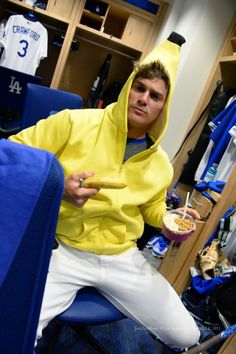
A month later, Hernández was traded to the Marlins, and I was certain I would never hear his name again. But that off-season, he was traded to my hometown team, the Los Angeles Dodgers. Kiké, as he is known, hit .307 in 76 games for the 2015 Bums. But, more importantly, he became the team cheerleader, the head of the Rally Banana brigade. The team and the city embraced this slightly off-kilter utility player, and a love affair was born.

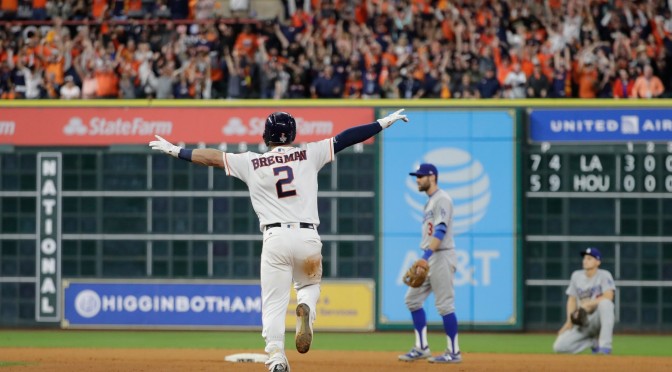
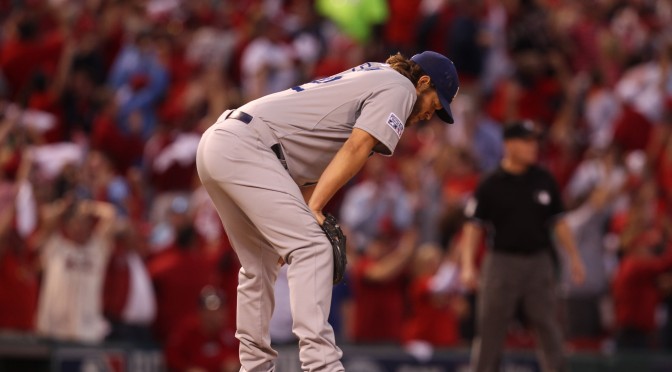
Fast-forward to 2017. Kiké is a staple of the Dodgers lineup, playing eight different positions over 140 games. But Hernández, a native of Puerto Rico, was only batting .125 in the first six games of the playoffs against the Diamondbacks and the Cubs. So Dodger Owner and Chairman Mark Walter gave Kiké a little incentive before Game 5 of the NLCS: Get on base twice, and Walter would donate $1,000,000 to Puerto Rico hurricane relief. Well, with one out in the third inning, Kiké had left the yard twice and Puerto Rico had $1M coming its way. But neither Walter nor Hernández was done. The owner got word down to the Dodgers dugout that if Kiké could go “big fly” one more time, Walter would add another million to the donation.*

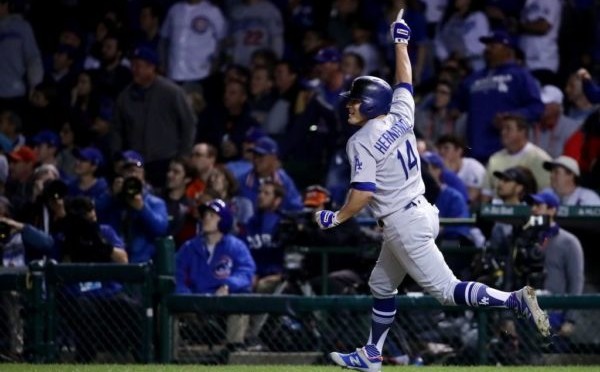
So when Hernández hit his third homerun of the game in the top of the 9th, and he jumped around the bases like one of those kids he instructed to run to centerfield five years earlier, very few people watching the game knew the reason for his excitement.

In many ways this has been a magical year for the Dodgers, with 104 wins and clinching the pennant while losing only a single game. They did it with the deepest lineup in baseball, with a group of players that never questioned their role or their number of at bats. They did it with their best players spending a considerable amount of time on the DL (their best position player wasn’t even on the NLCS roster). And they ultimately did it in the defending champion’s ballpark.

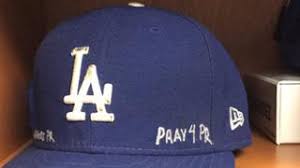
But, it has also been a tragic year for many people in many places around the globe. So how special is it that the Dodgers are heading back to the World Series for the first time in 29 years, on the bat of a player who has “Pray for Puerto Rico” written on his cap, and who through his play and the through the generosity of his boss, will bring desperately needed support to an island in horrific despair. It is nothing short of remarkable that the Banana Boy has become a local and national hero.

As I look back on that night in Lancaster half a decade ago, I guess I should have known that the kid with the twinkle in his eye, the kid who made an immediate connection with everyone he met, the kid who played the game with equal parts skill and heart, would become a star in Hollywood. Whatever happens over these next several days, in the face of all conventional wisdom, Kiké Hernández is now etched into Dodger lore.

PLAY BALL!!

*If you are feeling charitable, and want to contribute to the island where, as of this writing, 80% of the population is without electricity and 27% is without water, please visit this site: https://www.youcaring.com/peopleofpuertorico-957793.

Absolution or Ignominy

Some moments are indelible.  When they happen, we know we have witnessed history.  And no matter what happens after, those moments will be lodged in our memory, forevermore.

“The Giants win the Pennant…the Giants win the Pennant…the Giants win the Pennant” is arguably the most famous moment in baseball history.  And yet, the memory of that moment is no way diminished – in any manner – by the fact that the Giants lost the Series, the Giants lost the Series, the Giants lost the Series.

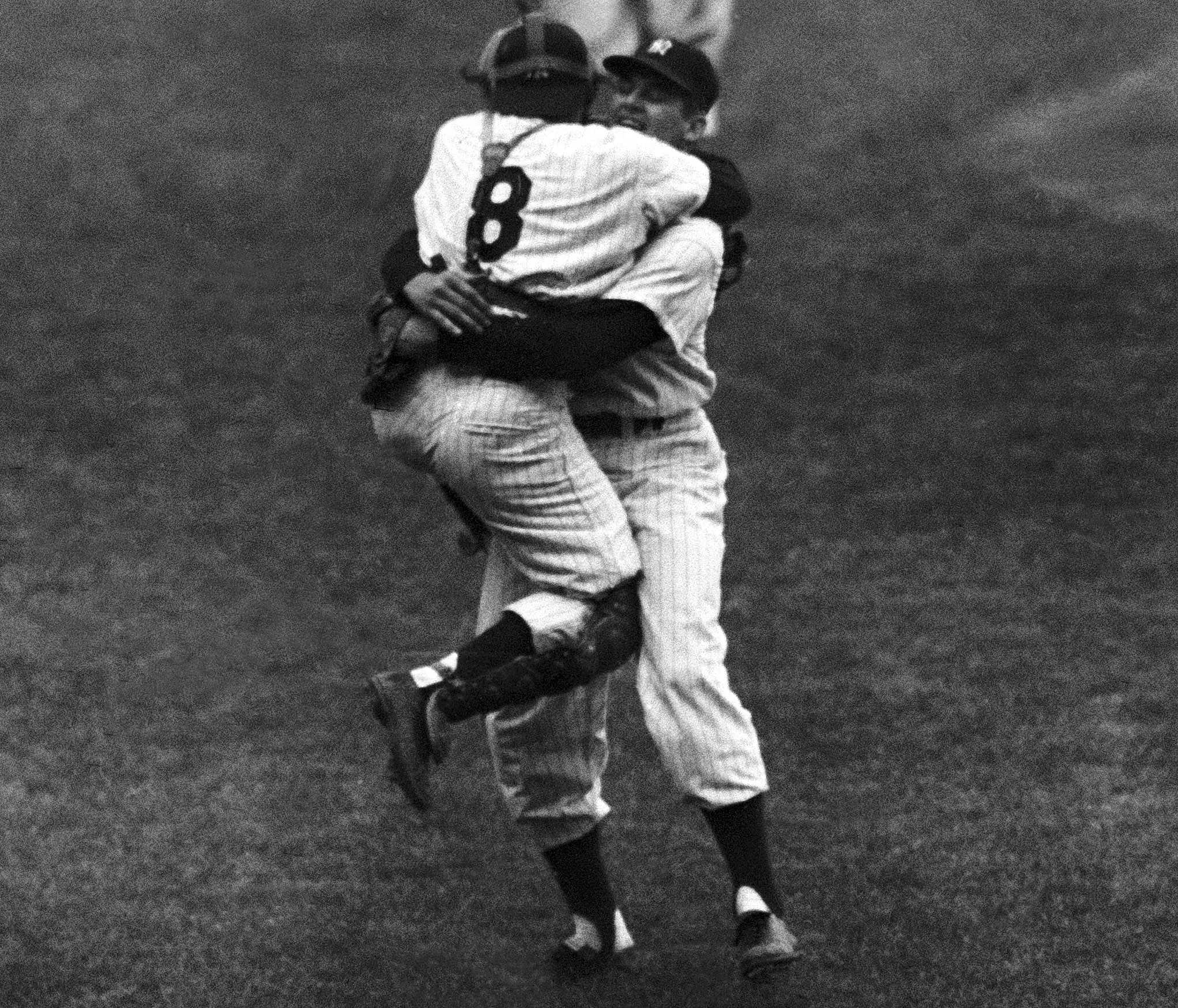
Regardless of the outcome of the 1956 World Series, no baseball fan can forget Yogi Berra leaping into Don Larsen’s arms after the only perfect game in World Series history.

New York Yankees' catcher Yogi Berra leaps into the arms of pitcher Don Larsen after Larsen struck out the last Brooklyn Dodgers' batter to complete his perfect game during the fifth game of the World Series, Oct. 8, 1956. Racing up in the background is Joe Collins. (AP Photo)

Has there ever been a better match-up than Bob Welch v. Reggie Jackson in Game 2 of the 1978 World Series?  I have written about that match-up many times, and we all know the outcome, which is not diminished in any way by the fact that Reggie took Welch deep in Game 6 as the Yankees finished off the Dodgers winning their 22nd world title.

I would argue that the outcome of the 1988 World Series is wholly irrelevant to our reverie for Kirk Gibson’s Game 1 heroics.

And, as of Sunday night, regardless of who wins the 2017 NLCS, I don’t anyone in Los Angeles will ever forget Justin Turner taking John Lackey deep to walk-off Game 2.

But there are other moments that stick in our craw because of the ultimate outcome of the game/series.  In short, some people are granted absolution and some people are granted ignominy due to matters wholly outside their control.  I was thinking about a handful of these (I am certain there are many more) after watching the playoffs this week.  It makes me think that some people have horseshoes, and some people have bad pennies.

To wit:

If Rick Sutcliffe was able to retire Alan Wiggins, Tony Gwynn, and/or Steve Garvey, do North Siders forgive a meager grounder through Bull Durham’s legs in the bottom of the 7th inning of Game 5 of the 1984 NLCS?  Does the Curse of the Billy Goat end thirty-two years earlier?

If Todd Worrell could have extricated himself from a runner on first, no out situation in the bottom of the 9th inning of Game 6 of the 1985 World Series, and then didn’t give up a single (a single?!) to Steve Balboni; and if Darrell Porter didn’t allow a passed ball, and if Dane Iorg hadn’t singled; and if the Cardinals hadn’t been blown out in Game 7, would Don Denkinger still be persona non grata in St. Louis?

If Alex Gonzalez turns a routine double play on Miguel Cabrera’s ground ball, and the Cubs get out of the 8th inning of Game 6 of the 2003 NLCS leading 3-1, would anyone ever learn or know the name “Bartman”?  Would we all now laugh at a grown man’s temper tantrum?  Would the Lovable Losers have found yet another way to rip the hearts out of their fans, resigning them to “wait til next year”.

If the Red Sox could have pushed across a single run in the 9th, or the 10th, or the 11th inning of Game 7 of the 2003 ALCS, does Grady Little lose his job for keeping Pedro Martinez in the game an inning and many batters too long?  Would Aaron “Bleeping” Boone roll off the tongue of New Englanders?

If the Rangers could have eked out a Game 7 victory in the 2011 World Series, how would we remember David Freese or Nelson Cruz?  Would Game 6 just be a blip on the radar, only important to Cardinals’ fans and David Freese’s friends and relatives?  That said, I believe Joe Buck’s “We will see you…tomorrow night” call would still be Hall worthy.

https://www.youtube.com/watch?v=4GQlkLSyCTA


Most flagrantly, if the Red Sox had not blown a 3-0 sixth inning lead in Game 7 of the 1986 World Series, and gone on to win their first championship in 68 years, would Bill Buckner have been vilified on the Back Bay for nearly two decades; the subject of an E:60 documentary; parodied on Curb Your Enthusiasm; and forced to move to Idaho?  Or would that play just been a clip on the highlight reel “Reversing the Curse” – the moment (in hindsight) when it all could have slipped away?

And, of course, we never would have even had “a little roller up along first” if Doug DeCinces’ flyball had reached the seats or Bobby Grich’s liner had fallen in the bottom of the 9th inning of Game 5 of the 1986 ALCS; or if the Angels could have won either Game 6 or Game 7 in Boston.  If any of that happens, maybe Donnie Moore doesn’t take his life less than three years later.

If Jason Kipnis’ line drive down the right field line in the bottom of the 9th inning of Game 7 of last year’s World Series not drifted foul, do we spend the entire off-season dissecting every decision Joe Maddon made, second-guessing him through Christmas and into Spring Training?  Does he lose his job like Grady Little?  Jason Kipnis would have become the modern-day Bill Mazeroski / Joe Carter, as beloved in Cleveland as LeBron.  One wonders if the Cuyahoga catches fire again?

Similarly, if Jayson Werth’s flyball down the left field line in the bottom of the 9th inning of Game 5 of this year’s NLDS doesn’t curve foul; or if Bryce Harper could have channeled his inner Michael A. Taylor and tied the game with one mammoth swing, do we spend this off-season castigating Maddon for trying to get seven outs from Wade Davis?  Those things didn’t happen, so Broad Street Joe gets off Scot free and lives to fight another day/series.

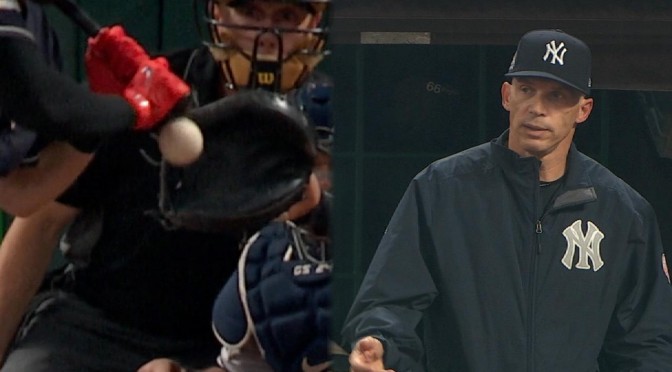
With the Yankees winning three games in four days against the best team in the American League, against the prohibitive favorite to win the pennant, I wonder if anyone will member Joe Girardi failing to challenge Lonnie Chisenhall’s foul tip that wasn’t?  Will the hit-by-pitch that wasn’t, which led to a Francisco Lindor grand slam, which led to a Jay Bruce homerun, which led to an Indians 9-8 victory in Game 2, be lost to the scrap heap of history now that the Baby Bombers find themselves in the ALCS?  Only time will tell.  But for now, Girardi keeps his job, Yankee fans are allowed to forget, and time marches on.

Who will be granted absolution?  Who will live with ignominy?  We potentially have fourteen games among four teams over two series to find out.

PLAY BALL!!

Narrative Lost

Sometimes the horse gets out of the barn, the toothpaste gets out of the tube, the water goes under the (Golden Gate) bridge. Sometimes the words you say are not the words the listener hears. Sometimes people have the best of intentions, and then other people co-opt those intentions. And sometimes, because of that co-opting, the original message gets lost in the noise that said message created. We live in cacophonous times.

Normally I write about baseball and how it relates to life. And because a little-known Oakland A’s catcher, the bi-racial son of a career military officer (who Jeff Passan wrote about wonderfully), elected to “take a knee” during the national anthem last week, I have been given an opening to write about this topic. But because it is my want, I will focus on its genesis.

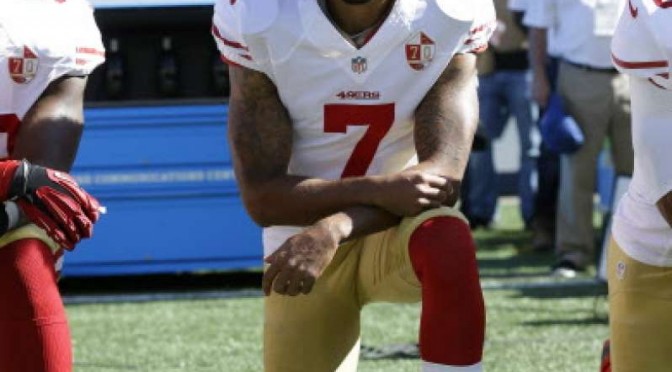
Back on August 14, 2016, when Barack Obama was still President (an important note), before the San Francisco 49ers’ first pre-season game, Colin Kaepernick decided to sit during the national anthem. He sat again the following week. No one seemed to notice. It wasn’t until after the third pre-season game, on August 26th, when a reporter’s curiosity was piqued, that Kaepernick addressed the issue. He released a statement that he was sitting because of the oppression of people of color and ongoing issues of police brutality. Two days later he met with the media and told them:

“I’m going to continue to stand with the people that are being oppressed. To me, this is something that has to change. When there’s significant change and I feel that flag represents what it’s supposed to represent, and this country is representing people the way that it’s supposed to, I’ll stand.

This stand wasn’t for me. This is because I’m seeing things happen to people that don’t have a voice, people that don’t have a platform to talk and have their voices heard, and effect change. So I’m in the position where I can do that and I’m going to do that for people that can’t.

It’s something that can unify this team. It’s something that can unify this country. If we have these real conversations that are uncomfortable for a lot of people. If we have these conversations, there’s a better understanding of where both sides are coming from.

I have great respect for the men and women that have fought for this country. I have family, I have friends that have gone and fought for this country. And they fight for freedom, they fight for the people, they fight for liberty and justice, for everyone. That’s not happening. People are dying in vain because this country isn’t holding their end of the bargain up, as far as giving freedom and justice, liberty to everybody. That’s something that’s not happening. I’ve seen videos, I’ve seen circumstances where men and women that have been in the military have come back and been treated unjustly by the country they fought have for, and have been murdered by the country they fought for, on our land. That’s not right.”

There it is, folks. That is why Colin Kaepernick sat and then kneeled. Anyone can now lay claim to any interpretation they want to invent; they can ascribe any meaning to this act they want to inject into the public conscience and political sphere; they can paint Colin Kaepernick as the poster boy for whichever side they want to take.

But these are his own words. More than thirteen months ago, long before Trump, long before Charlottesville, long before Alabama, and before the NFL, corporate sponsors, and fans in the stands had their say, Colin had his. But, as we know, we don’t always get to control the narrative. The claim was that Kaepernick had a bad season (even though his 2016 stats pretty closely resemble his 2012 stats, when he led the Niners to the Super Bowl, but I digress), and no team wanted a washed-up quarterback who comes, standard, with a political headache. For purposes hereof, we can put aside Kaepernick’s qualifications to play in the NFL today. The fact is, he is unemployed, and others have taken up his cause.

Or have they?

In Week 1 of the current NFL season, four players either knelt or sat during the national anthem; the same four did so in Week 2.

And then, on September 22nd, President Donald Trump went to a campaign rally in Huntsville, Alabama, and described football players who kneel during the national anthem as “sons-of-bitches,” and called for them to be fired. For purposes hereof, we can put aside the First Amendment and whether or not such a firing would be a violation thereof.

Trump’s speech was between Weeks 2 and 3. After Trump spoke, more than 200 players kneeled. What were they kneeling for? Did they even know? Do we?

Do the fans who booed their favorite players and their cherished teams, do the announcers who broadcast and highlight the protests, do the pundits who landed – firmly – on one side of the issue or the other, even know the why of what is happening on the gridiron? The obvious answer, of course, is “no.”

The players have taken a knee, locked arms, and raised their fists; but they have not spoken out. So, because nature abhors a vacuum, social commentators, thought-leaders, craven politicians, and bombastic demagogues all felt compelled to offer their own explanations.  The upshot: the rallying cry of “stand up nation” is that the players are disrespecting the military, the flag, and the country. Reasonable minds can differ – and have, vociferously – as to whether or not kneeling is disrespectful to any of the above. But that discussion wholly misses the point. No one is kneeling to intentionally disrespect the military, the flag, or the country.

However, some, nay many (from 4 to over 200), may be kneeling to disrespect the President of the United States who has chosen through words and (lack of) action, to divide this country. People have taken to calling him the “Divider in Chief,” and I don’t think the President would dispute or condemn that appellation. Sadly, this is just where we are.

Unfortunately, in all the noise, the message – Kap’s original message – is now lost. To the extent this was ever about the military, the flag, or our country, it was about love of country, what the flag should represent, and the ideals that members of our military shed their blood for. The act of kneeling was not intended to be disrespectful, it was a yearning for our better selves. Ironically, Kap knelt to Make America Great.

But, again, that message has been muddled and muddied. So players, and owners, and league officials began meeting to try to find a way forward – not necessarily a way through or a way out – but just forward, without alienating a large portion of the fanbase or a large number of sponsors. They all felt the need to put this genie back in the bottle, but could not come up with a magic elixir.

If the players intend to continue kneeling, incurring the wrath of the boo-birds, and risking their careers and potentially their lives, without offering more than a well-written Op-Ed in the New York Times, this will end badly, if it can ever end.

In moments like this, I like to reach for the sharpest instrument in the tool box: Occam’s Razor.  The easiest solution is just to tell people why; answers their questions; appeal to their humanity; ask them to respect you, even if they don’t respect your actions.

Will this solve the problem, absolutely not.  But it will cut out much of the noise; it will mitigate people’s attempts to co-opt the message; it will provide much-needed context. The logical next question is how? Here is how:

Before each Week 5 game, the captains of both teams come to mid-field prior to the singing of the national anthem. They will deliver a statement written/approved by/with the NFL Players Association and the Commissioner’s Office. The same message will be read at 14 stadiums before 14 games (four teams have byes), in front of an average live audience of 70,000, plus millions more at home. It won’t take but a minute or two. If it were up to me, I would either read Kaepernick’s original words (as set forth above) or the statement put out by the Indianapolis Colts earlier this week:

“Recently, there have been several misperceptions regarding a personal choice made by members of our team to bring awareness to prevailing issues facing our nation. To be clear – those of us who kneeled did not intend to disrespect our flag, our national anthem, or those who serve our country. We all have family and friends who are servicemen and women. We appreciate and respect the incredible sacrifices they make.

But as NFL players, we have a platform. And as Americans, we have a responsibility to speak up for those who cannot speak for themselves. Our intention was to raise awareness and to continue critical conversations about real equality, the injustices against black and brown people, police brutality, respect, unity, and equal opportunity. Our players are hurting, our people are hurting, our neighborhoods are hurting, and kneeling was a direct response to that hurt.

But what makes football so special is the way it brings people together – fans, players, coaches, all of us. We represent different races, backgrounds, and beliefs, but we come together for a common goal. That togetherness seen on the field and in the stands when we play should resonate even when we leave the stadium.

In that same spirit, as unified Americans, we will respect all forms of peaceful protests, as they are protected under the First Amendment of the U.S. Constitution. Some of our players may kneel, while others may stand. But this is just the beginning. There is much work to do, and it will take all of us.

Kneeling for JUSTICE. Standing for UNITY. Fighting for EQUALITY. Showing RESPECT.”

Fans may still boo. Sponsors may still flee. But if the players state their case, in these fora, no one can honestly refute the ultimate goal. No one can honestly ascribe a different meaning to the player’s actions. No one can honestly deny the sincerity of their cause.

We are in a era of social turmoil not seen in at least a generation. But we will not get through this if we cannot speak, and cannot be heard. Every Sunday there is a captive audience – let the players use it to heal, whether or not they kneel.

PLAY BALL!!
Clayton’s Dad

Clayton Kershaw was born my sophomore year of high school. For reasons that we need not get into here, I cannot possibly be his father. However, when he takes the mound — and especially when he takes the mound late in the game — and especially when he takes the mound late in a post-season game — I may as well be.

The nerves I feel for Clayton are not dissimilar to those I feel when my own son toes the rubber for his JV team or when my daughter is astride the balance beam. My hope for them to do well is only surpassed by my desire that they not be in that  moment at all. I sometimes wish I had taught them that life can be a spectator sport.

I am, by nature, a pessimistic fan. I expect the worst to happen, and am only relieved when it doesn’t. I guess this is the product of a lifetime of Red Sox fandom and having the Arizona Wildcats as my alma mater.

I have no doubt, at 730pm Friday night, when Clayton Kershaw takes the field, in the words of Vin Scully, “in the loneliest place in the world, the pitcher’s mound at Dodger Stadium,” I will be biting my nails to the nub.

It will be for the same reason that when Clayton gave up a lead-off double to David Freese in the bottom of the fifth inning of Game 2 of the 2013 NLCS, with the score 0-0, I got a pit in my belly. This “dad” knew something wasn’t right. Runner on second with no outs!? When Kersh struck out Matt Adams, it looked like he had a way out. But then there was an A.J. Ellis passed ball, and the air got a little cooler. A harmless (had the runner been on second) flyball made the score 1-0, which is where it stood when the 27th out was recorded.

Who can forget October 3, 2014. Kershaw gave up solo homers to the second and eighteenth batters he faced; he retired all 16 in between (including seven Ks). The sixth inning ended with the Dodgers up 6-2. “Pull Kershaw,” this dad yelled from my kitchen, where I was helping prepare the Sandy Koufax-approved Erev Yom Kippur meal. Preserve the beauty of this performance and allow the bullpen to get the last nine outs. Alas, it wasn’t meant to be. We all remember the disaster that was that fateful seventh inning; the inning that, in many respects, defines Kershaw’s post-season career: 1B, 1B, 1B, 1B, K, 1B, K, 2B, BB, HR, 5-3. The top of the seventh ended with the Dodgers trailing 10-6, with Dodgers eventually losing 10-9.

But Kershaw had a chance to atone not four days later in St. Louis, and he was ready: K, K, K / BB, DP, K / 3, 5-3, K / 7, 1B, 4-3,  K / 8, 5-3, BB, 2-1 / K, K, K. Six innings, twenty batters faced, one hit, nine Ks, one BB. To this dad, it certainly seemed like he earned a hot shower and a cold beer. Yet again, it wasn’t meant to be. Kershaw trotted out for the seventh, and the pit starting forming in my belly. Matt Holliday (he of the 295 career homeruns to that point) led off with an infield single. By the time Jhonny Peralta knocked a clean single to center, I had a full-blown stomachache. Then three pitches later, Matt Adams hit a 3-R bomb to right. Game, set, match, and season over; reputation cemented.

Kershaw had to wait another 367 days to avenge those two Cardinals games. In Game 1 of the 2015 NLDS, Kershaw had made one bad pitch (a homer to Daniel Murphy to lead off the fourth), but was otherwise cruising into the seventh (23 batters faced, 4 hits, 1 walk, and 11 Ks). But then he walked Lucas Duda to open the inning; and we all know about leadoff walks (I know that the actual statistics show a walk isn’t any likelier to score than a hit, but it certainly feels that way). A ground out and then another walk, and my Spidey senses were on high alert.

Why couldn’t Mattingly have pulled him after six? Kershaw didn’t need to be out there for another trip through the order. Hadn’t he learned anything from the year before? Once again, I was no longer a baseball fan, I was a dad watching his son implode – in slow motion. In my alternative universe, this is when I would have excused myself from the stands and taken that long walk behind the bleachers, down beyond the dugout to watch this nightmare unfold in private – away from the prying eyes of the other parents, and where the coach wouldn’t hear me cursing him for keeping my kid on the hill too long.

A Jacob deGrom sacrifice bunt followed by yet another walk, and Kershaw’s night was over. Sacks full with Pedro Baez in to save the day…fat chance. David Wright singled in two, and my boy took the loss. In this alternate universe, I prepared for our long drive home.

It happened again a few weeks ago, in Philadelphia. Kershaw had retired 15 of the first 17 batters he faced, and had a 2-0 lead going into the sixth. But then Ty Kelly lead off with a walk (see above for that pit and that irrationally useless research). A pop-out (phew); single (uh-oh); K (nice); BB (uh-oh, again). This is when the baseball fan in me stepped back and said: “In 103 career chances, Kershaw has allowed five bases loaded doubles, and six bases loaded walks. But he has never allowed a bases loaded homerun.” And then my inner monologue went to Aaron Altherr – a career .234 hitter with a total of 25 big league dingers – and I just knew Kershaw could retire the side and turn a 2-0 lead over to the bullpen. But, the dad in me was still nervous. Father knows best.

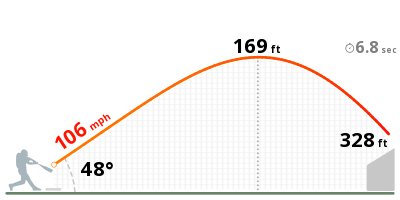
When Kershaw hung a 1-1 slider and Altherr hit the ball 418 feet, and four runs scored, and the Dodgers now trailed 4-2, and Kershaw had been out there a few batters too long once again, and all the other parents in the stands were consoling me, I just knew it would be another long drive home.

I don’t know why I have such a filial connection to Clayton Kershaw. I certainly don’t feel this way about Tom Brady, or Andrew McCutchen, or Steph Curry. I want them to do well, but I am not heartsick about the prospect of them not. I don’t secretly hope Brady hands the ball off, or McCutchen draws a walk, or Curry passes up the big shot – I want them in there and I want them to succeed.

Maybe it is because I believe – in my soul – that Kershaw has been the victim of bad luck, and a player of such great quality (both on and off the field) deserves better. Maybe it is because I want the best pitcher alive to always be the best pitcher alive. Maybe it is just because I am a fan, which is short for “fanatic”. I have no idea.

But whatever the answer, I sit in the stands or on my couch holding the theoretical pillow, hoping to provide a soft landing for a grown man; a man with a wife and two kids; a professional athlete making more than $30 million per year. Which begs the question: What is wrong with me?

I guess that’s what makes sports great – we love the game, and we love the players that we root for/idolize/lionize – literally – beyond reason.

And so, when David Peralta or A.J. Pollock digs in for that first pitch of the NLDS on Friday night, rest assured that my heart will be in my throat.

PLAY BALL!!

THE JOY OF OWNERSHIP

So you want to own a baseball team?  Who doesn’t?  We sit in the stands, we sit on the couch, we think we have all the answers.

  • More cogent player personnel decisions, check.
  • A more efficient parking system at the stadium, check.
  • Cheaper beer, of course.
  • A better variety of food, done.
  • Fire that damn manager already, check, check, and check!

How hard can it be? Anyone who knows baseball could do it, right?  Maybe? It certainly would be fun to find out.

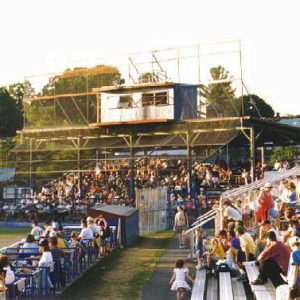
Well, a small-business owner in the leafy hamlet of Oneonta, New York got the opportunity and jumped at it. Four years ago, the Oneonta Outlaws went up for sale, and Gary Laing, a life-long resident of the City of the Hills, didn’t miss his chance. After a brief conversation with his wife, Karen, he plunked down the purchase price (amount, undisclosed) and along with a silent partner – a dear friend who Gary first met playing at Oneonta Little League – became the proud owner of an amateur baseball team.

But we are getting ahead of ourselves, as this story needs to have history in order to have context.

Oneonta, New York has been the home to some form of organized baseball going back nearly 100 years. The Utica Utes (of the NY-Penn League) first came in 1924, changed their name to the Indians, and folded after one season. The team came back in 1940, and won championships in 1941 and 1942. The League was shuttered for three years due to that pesky World War; but when play resumed, the renamed Oneonta Red Sox won championships in 1948 and 1951 (take that, Harry Frazee). And then the League folded (okay, maybe curses are real).

In 1966, the Red Sox came back to Oneonta for a single season. In 1967, Sam Nader bought the team and renamed them the Oneonta Yankees. And that, my friends, is where the legend truly begins.

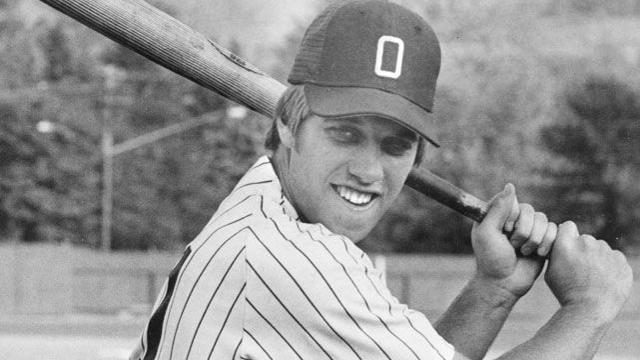
The O-Yanks would be an institution in town for three decades, winning 11 titles (apples and trees?). Don Mattingly, Bernie Williams, Andy Pettite, and Jorge Posada took their hacks at Damaschke Field; and future Hall of Famer John Elway roamed the outfield in Oneonta before scrambling on the gridiron in Denver.

Blog_Elway

The Boss was known to set up shop in a box down the first base line, carefully observing his future Bronx Bombers. Hell, back in 1920, the Sultan of Swat – playing with the Babe Ruth All-Stars – smacked a homerun over the right field fence at Neahwa Park (now known as Damaschke Field, the home of the Outlaws).  [Ed. Note: In the 5th inning of that game, the Babe broke a bone in his wrist sliding into first base.]

Man, if those baselines could talk . . .

But all good things must come to an end, and in 1999, the O-Yanks moved to Staten Island. The Tigers quickly moved to town. The O-Tigers played in Oneonta until 2009, and then left for Connecticut. Alas, Oneonta was not without baseball for long.

In 2010, Keith Rogers and Dan Scaring brought the Saratoga Phillies to Oneonta, renamed them the Outlaws, and set sail. After installing local legend Joe Hughes as the manager, the team won a championship in 2011.

Prior to the 2013 season, Gary Laing heard a rumor, made a few calls, and soon thereafter, a life-long dream came true. Growing up poor in Oneonta in the ‘60s, often without enough food to eat, Gary would shag foul balls for Sam Nader’s O-Yanks at Damaschke, bringing them back in return for free hot dogs. Never did Gary think that one day he would be the one giving out hot dogs to little kids who shagged balls at that same park, hit by players on his team.

Gary was born and raised in town, graduated from Oneonta High School (one year ahead of Joe Hughes), and never left. He started a local business 1991, built it into something very successful, and then decided to buy a baseball team.

Granted, it’s not a Major League team, and his day-to-day decisions are vastly different than those required by Hal Steinbrenner or Peter Angelos; but he deals with real baseball issues every day, real baseball economics, and real baseball fans.

A few weeks ago, I was fortunate enough to spend some time with Gary and Karen. The term “Salt of the Earth” was invented for these two. They, along with their young sons Chris and Josh, run the team – from concessions to ad sales to being a host family for the team’s manager.

The Outlaws are members of the Perfect Game Collegiate Baseball League, where college players from around the country come for a summer of fun, fans, and a whole lot of baseball. The PGCBL is made up of 13 teams in Upstate New York – from Jamestown to Glen Falls, from the Adirondacks to Saugerties.  (If you have never spent the summer in Upstate New York, get thee to the airport – it is spectacular.)

To get around the state, players are ferried in chartered buses. To save money on accommodations, teams typically do not stay overnight in any city/town/village/hamlet. Rather, when the game ends, players take a shower, get a small meal (provided by the home team directly from the concession stand), and back on the bus they go.

“Host” families take in a player or two for the summer in return for a small stipend and season tickets to the team’s roughly 25 home dates. And yet, there is never a shortage of families willing to open up their home, set an extra seat at their table, and add another stop to their carpool. The term “host” is often quickly dropped from the description, and each spring families travel around the country to see “their boys” play college ball.

But while the players and their families are having an experience they will never forget, the owner is trying to figure out how to pay the bills. Sure, when compared to the Cubs, a PGCBL team has considerably fewer expenses (both in quantity and in cost), but also considerably fewer revenue sources.

Want to own a team? Let’s take a look:

  • First, you have to buy the team. Out of deference to Gary, the community, and the league, this amount has not been disclosed.  But it does cost something.
  • A teams needs a place to play. Ideally, the team owns the stadium. More likely, they rent it from the local municipality or college. Either way, this is the single biggest annual expenditure.
  • In order to draw the most fans, games need to be played at night. Lights and electricity are not free, adding another line item to the budget.
  • Players need equipment. Granted, most of the kids bring their own gear; but very few of them have a collection of wood bats that are used in the PGCBL, so the team must provide. Add helmets, catcher’s gear, and a whole lot of baseballs, and the costs add up.
  • These games need umpires as well. The thirteen teams pool their money to ensure three umpires per game.
  • If you are new to a league, you must pay an admission fee. That amount varies from league to league and year to year.
  • In order to get to the games against the twelve other teams, the aforementioned buses must be procured. Drivers and gas cost real money.
  • As I stated above, the team provides each host family with a stipend (which cannot possibly cover the actual cost). Some teams provide apartments for the players – a choice that is fraught with danger if one thinks about the demographic being left unsupervised for long stretches of time. And some teams work out deals with local colleges to provide dorm rooms. Any way you shake it, it costs the team money to house their players.
  • If you have ever raised a teenager, or even been in contact with a 20-year old young man, you know that they can figuratively eat you out of house and home. The teams cannot possibly keep an accurate count of the number of PB&J sandwiches they provide each season, but the number is well into four figures. Add to that food for the visiting team (see above), and in most cases, a post-game meal of burgers/dogs/fries for your team, and a club’s grocery bill gets big, quick.
  • At the yard, teams pay an official scorekeeper, a public address announcer, potentially a radio play-by-play guy/gal, and concessionaires. The Outlaws enlist a pitcher not scheduled to throw to serve as the official ticket-taker.
  • Lest we forget, you need a manager and at least two (and sometimes 3 or 4) coaches to keep this band of roving youth in line and learning. Those gents get paid real (albeit small) salaries.
  • All teams have a General Manager who handles player procurement, travel, league business, and the like.  He (or she) gets paid for that work (a far cry, of course, from Andrew Friedman or Theo Epstein money, but it’s a paycheck nonetheless).
  • Some teams employee ad sales executives to get the most out of their billboards, fencing, signage, programs, etc.  Yet even more salaries.
  • And there are, of course, a myriad of other small, incidental expenses that are incurred in running any business.

In short, it takes a field of green to field a team.

So how does an owner balance the books? How are revenues generated?

  • Ticket sales. While the largest stadium in the league holds 8,000, the average yard holds about 3,000, which is more than a team can expect on any given night. Approximately 2,000 patrons come through the proverbial turnstiles each game, at ticket prices ranging from $2-$8 (average: $4-$5). Teams do sell season tickets to their most faithful, which is great way to ensure a certain level of income.
  • If a team controls the facility (either through ownership or a long-term lease), they can augment revenue by selling signage and sponsorships, as well as renting the facility for various events (e.g., rodeos, concerts, birthday parties, clinics, camps, weddings, high schools and other leagues – all of these are real-life examples).
  • Community members (think local companies) occasionally rent the entire stadium for a single game to invite their special guests. Season ticket holders can, of course, still attend.
  • And the most surefire way to try to stay in the black is what all of the teams do: charge the players to play. Oh, you thought that pay-to-play ended with Little League? Guess again. Players have to pony up anywhere from $500 to $2,000 to have the right to play for a PGCBL club. The price depends on a number of factors, with other revenue sources being the number one determinant. A team in a larger community with more third party revenue can afford to charge less; with the inverse being true as well. And, fortunately or unfortunately, the amount of the player fee is often the number one consideration of which team a recruited player selects. In this way, the PGCBL is no different than MLB: large market teams have a competitive advantage over small market teams.

Most teams run either right at break even, or at a slight deficit. This is not a money-making proposition – this is a labor of love.

So there it is. There are 41 summer collegiate baseball leagues all across this great country, accounting for approximately 376 teams (it changes season-by-season).

Find one for sale. Buy it. And soon you, too, will be putting your baseball knowledge, your business acumen, and your marriage to the test. Gary Laing will tell you that there is nothing he would rather do and no place he would rather do it. Ownership has its privileges, including incredible heartbreak and immense joy.

One last thing: If you find such a team and are looking for a partner, give me a call.

PLAY BALL!!

BLOOM BACK ON THE ROSE?


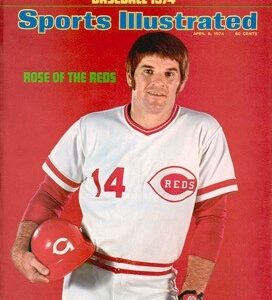
Last Monday, Peter Edward Rose made a formal request to be reinstated by Major League Baseball and asked that his lifetime ban be lifted. Newly-minted Commissioner Rob Manfred responded by stating he would consider the request “on its merits”. Spoken like a true attorney.

To be or not to be.

He loves me, he loves me not . . .

Will he or won’t he.

What’s with taking the oath of Commissionership that requires a bombshell be thrown in your lap within the first few months? Adam Silver had V. Stiviano and now Rob Manfred has Pete Rose.

So what to do with Pete Rose? If Manfred pulled out a legal pad, drew a line down the middle, and starting listing pros and cons, he might have to cut down a few yellow trees before he came to a conclusion. The simple question is: Has Pete Rose paid enough of a penalty? He has been banished from baseball – his one true love (replaced in recent years by money) – for over 25 years. Does that punishment fit the crime?

Apropos of nothing, as of 2013, 30% of murderers convicted and sent away on life sentences are let out of jail in less than 10 years, with an overall average of 16 years of incarceration. Now, I am not comparing Pete Rose’s betting on baseball to murder – not at all – I am just trying to show, for hyperbolic effect, how long a 25-year (and counting) sentence actually is.

It can be readily acknowledged that Pete Rose did something that we, as a society and as fans of baseball, feel is inherently wrong. We can also agree that in the years leading up to and following his banishment, Rose did not acquit himself very well. Time and again, when the powers-that-be were looking for contrition, they got stubbornness. When they were looking for remorse, they got obstinacy. He held his ground for nearly 15 years. Who knew you could hold your breath for that long?!?

It was not until 2004 when Pete finally admitted what everyone knew all along. Unfortunately, the timing of his (ahem) confession was marred on two fronts:

(1)  It was done not in the service of baseball, but in the service of making a buck. Pete made his confession three days before his autobiography “My Prison Without Bars” was released. People could not help but think this was less about seeking forgiveness than about seeking book sales.

(2)  It was done on the eve of the announcement of the 2004 Hall of Fame class. Knowing that he most likely would never be enshrined in Cooperstown, Pete took the occasion to piss on the Hall’s doorstep.

Stay classy, San Diego.

But, for the past decade, Pete has been a relatively model citizen. He has not ruffled too many feathers (other than setting up card tables for autographs on Hall of Fame weekend), and has basically kept as low a profile as one could ever hope/expect from the Pete Rose.

Here is the real: Baseball is better when Pete Rose is involved. You cannot deny what he brought to the diamond for nearly 25 years.  The hustle, the heart, the hits (both the Harrelson and base varieties).

(3:16 mark)

The fact of the matter is that Pete Rose played in more games, had more at bats, and got more hits, than any player in MLB history. Chew on that for a moment. He is an icon in Cincinnati, and he is a legend of the game. He has paid his penance. He should be allowed back in . . . with conditions.

Many people considerably smarter and more knowledgeable than I have written extensively on this topic, but I think I agree with the following premise: Pete Rose should be allowed back into the game on a limited basis. He should be allowed to come to the park, participate in team activities, and be honored at major events (e.g., the All-Star Game this summer in Cincinnati). He should not be allowed to be an executive or an on-field coach. He should not be allowed to be in a position to affect the outcome of any game. That seems easy enough, and Manfred could tailor this reinstatement in a way that preserves Bart Giamatti’s original intentions, without looking like he is reversing his predecessor’s course.

Little Known Fact #1 (that would be more widely known if you read Jayson Stark’s columns or his book “Wild Pitches”): In 2003, former teammates Mike Schmidt and Joe Morgan arranged a meeting between themselves, Bud Selig, and Pete, for Pete to fall on his sword, acknowledge his mistakes, apologize, and then, ostensibly, be reinstated. For reasons that a whole school of psychologists could spend semesters debating, Pete could not bring himself to the table. No meeting, no apology, no reinstatement. And here we sit today.

Okay, so let’s assume Manfred is inclined to let Rose back in. That always leads to the $64,000/bronze-plated question: Should Pete Rose be in the Hall of Fame? Sure, of course, without question, maybe. The answer is multi-layered, but before we go to the merits, we need to know who will be hearing the evidence.

Little Known Fact #2 (that would be more widely known only if you are a total and complete baseball nerd and/or live in upstate New York and/or write a blog that maybe a few people read): While the Baseball Writers Association of America is the organization we customarily associate with Hall of Fame voting, they will not play any part in the Pete Rose discussion because he has been retired for too many years (this form of eligibility expires 15 years after retirement). Thus, his election (or lack thereof) will be determined by one of the Veteran Committees. There are three (Pre-Integration Era (1876-1946), Golden Era (1947-1972), and Expansion Era (1973-Present). Pete overlaps the last two, but would most likely fall under the Expansion Era Committee.

This Committee is comprised of 16 people, including prior HOF inductees, executives, and veteran media members. And, if you are looking for a quick resolution, don’t. The Committee doesn’t meet again until the Fall of 2016 for potential induction in 2017. Manfred has some time to cool his heels and ponder reinstatement.

To quote Vin Scully, “it goes without saying, but I’ll say it anyway”. Pete Rose’s on-field achievements are Hall of Fame worthy. It truly comes down to his integrity. Do we believe he should be excluded from the Hall of Fame because his lack of integrity (at least with respect to betting on baseball) potentially affected the integrity of the game?

Little Known Fact #3 (and by little known, I mean widely known): The Hall of Fame is filled with people who lacked integrity, who were scofflaws, liars, cheaters, racists, and drug addicts, guys who through actions and deeds potentially affected the integrity of the game. It must be really hard to get a good view of all that when standing on top of Mount Pious. But I digress.

Little Know Fact #4: Pete Rose retired in 1986, and (but for being banned from baseball in 1989) would have been eligible to be on the Hall of Fame ballot in 1992. Shockingly, in 1991 the Hall ruled that players on the permanently ineligible list could not be voted in. Coincidence? I think not.

Here is where I land on the issue: The Hall of Fame is a baseball museum. It is not intended to be a home for the better angels of the game, but rather a collection of the game’s history. It should include the whole story, warts and all. (And, by the way, many pieces of Pete’s equipment already reside in the Hall’s permanent collection.)

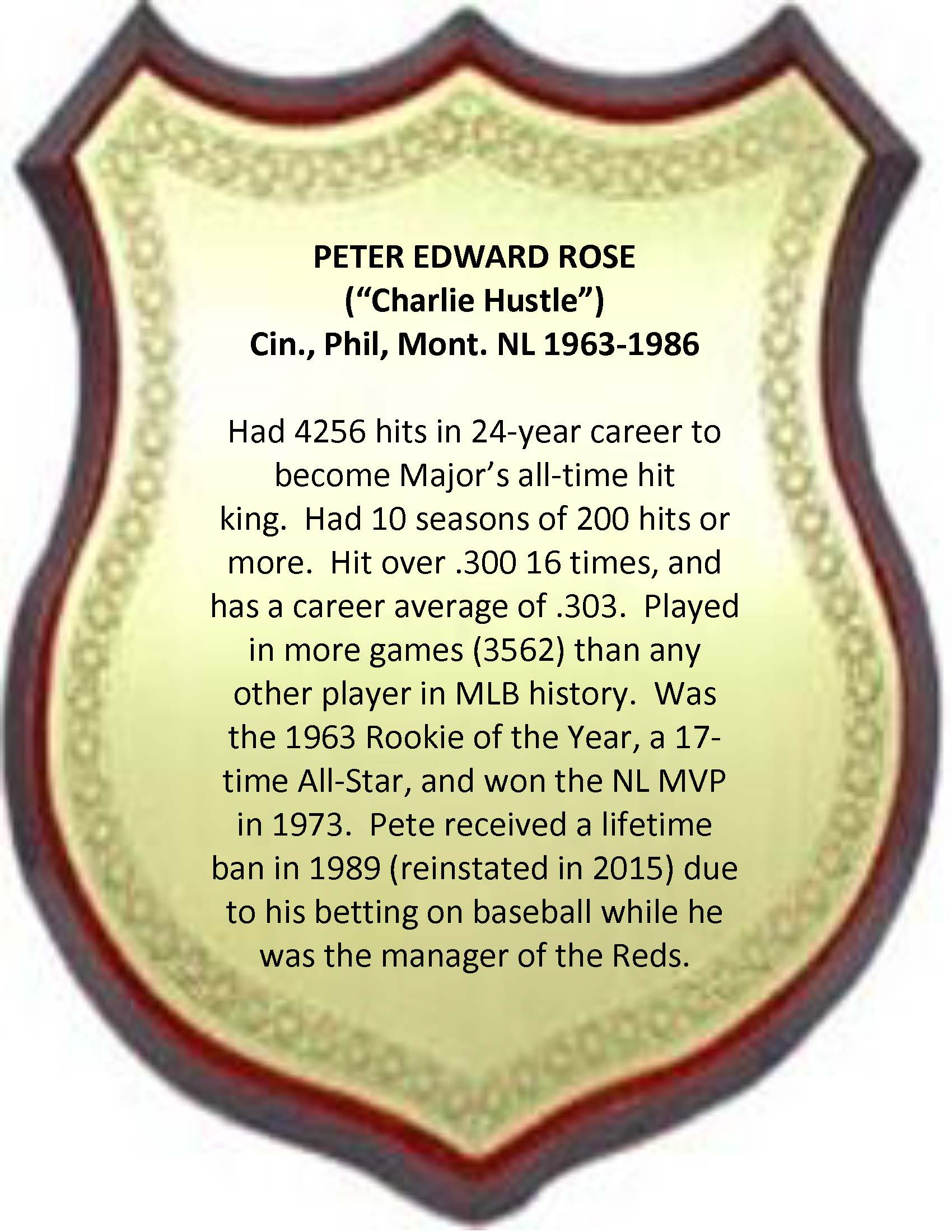
My solution is easy: Let him in, and put it all on the plaque. Pete’s plaque could look like this:

Pete Rose Plaque 3

That is what I would do. And, while we are on the topic, I would do the same thing for everyone who is Hall of Fame worthy but has been suspected of PED use. Put them in the Hall of Fame, tell the story, allow us to bring our kids to the museum so we can share our and their stories with the next generation – the good, the bad, and the suspected. I believe that is what Cooperstown was originally intended to represent.

Because, whether the baseball purists like it or not, try as they might, we simply cannot just ignore history.

Opening Day is just 2 weeks from Sunday.

PLAY BALL!