
Money for Nothing – Why Give Pre-Arbitration Raises?

As I may have previously mentioned, I am a very lucky guy. Among the many reasons, I married a woman who doesn’t know a ton about baseball, but is always interested in learning. And, for that reason, she has no compunction about listening to me drone on about the game’s minutiae for long soliloquies.

Over a glass of wine a few weeks ago, the conversation turned to baseball free agency. My wife wanted to better understand how it works, so I started by explaining how players are locked into their “rookie” contract for their first three years, and then become arbitration eligible for their next three, all prior to becoming a free agent. For the sake of ease and our marriage, I did not delve into “Super-2 Status”, but I did briefly touch on service time because, who wouldn’t?

The starting point was the Major League minimum salary, and how teams have the right to give a player whatever raise they want for years two and three (at or above the minimum, of course). And then my wife asked me the most simple question: Why? Why, if the team has total control, and the player has no other options (within the confines of MLB), would the team pay the player a nickel above the minimum? It was such an obvious question, and yet I had no real response. I fumferred something about a small raise for a job well done; I tried to make a case for building loyalty that may/might be rewarded down the road; I said something about how it has always been done.

And yet she trumped me with another “why?” She tolerated the idea that a player could be entitled to a raise if he earned it. But, she asked, if he didn’t play well enough, couldn’t the team cut him, which I had to acknowledge. So, she said, signing him for another year was its own reward – and it got him another year closer to arbitration and ultimately free agency. All good points.

She then questioned the concept of loyalty. She asked me if there is any research on players choosing to stay with their team in free agency based on how they were paid in years two and three. I told her I was certain that someone at Baseball Prospectus or FanGraphs had written an article about this – what haven’t they written an article about? – but I did not know off the top of my head. But, I said, using my overall knowledge of baseball, representatives, and free agents, I doubted that teams curried too much favor by giving players big raises in those years. Thwarted again.

And her reaction to the “that’s how it’s always been done” justification was “that’s stupid”. She then added, “haven’t you been telling me how smart and analytical front offices are…?” I had no response for that.

The MLB minimum salary this season is $555,000, and is subject to a cost of living increase in each of 2020 and 2021. The COLA for last year was 2.8%. Assuming next year is roughly the same, a player would get a $15,000 increase just for being on the roster – whether he deserves a raise or not. While not the $30M that the superstars are getting paid, $570,000 and then $586,000 is nothing to sneeze at. So why pay more?

Now, to be clear, I think the MLB salary structure is totally out of whack. With more and more free agents being skipped over for younger, salary-controlled players (see above), veterans who spent their careers waiting for a big payday are finding themselves unemployed. Two weeks before the 2019 Opening Day, Jayson Stark was able to put together a pretty heady lineup of unemployed players. And the reason for this, as I alluded to above, is that front offices have become smarter and ever more efficient with player acquisitions and long-term contracts. Teams no longer pay for past performance – only for tomorrow’s.

So why do they pay additional during team-controlled seasons (i.e., when the don’t have to)?

Below is a list of the Top 11 rookies from 2018 (based on Rookie of the Year voting) and their team-determined 2019 salaries. The first two names (Otani and Acuña) won the ROY.

2019 Salary Increase Above Req’d
Shohei Otani $650,000 $95,000
Ronald Acuña $560,000 $5,000**
Miguel Andújar $617,600 $62,600
Juan Soto $578,300 $23,300
Gleyber Torres $605,200 $50,200
Walker Buehler $570,000 $15,000
Joey Wendle $570,400 $15,400
Daniel Palka $567,000 $12,000
Brian Anderson $585,000 $30,000
Ryan Yarbrough $563,400 $8,400
Jack Flaherty $562,100 $7,100


**Acuna signed an 8/$100M extension after his 2019 salary was determined.

And how about these: The Yankees only had to pay Aaron Judge $545,000 last season, but they paid him $622,300; and they only had to pay him $555,000 this season, but they are paying him $684,300. They were required to pay Gary Sanchez $545,000 last season, but they paid him $620,400; and instead of $555,000 this year, he is getting $669,800.

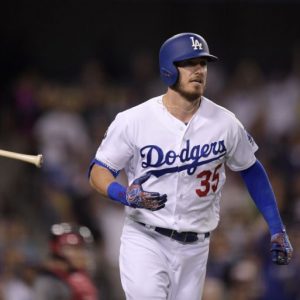
Cody Bellinger won the ROY in 2017, and got a $50,000 raise (in lieu of the requisite $10,000). He had a subpar sophomore year (14 less HRs, OPS down 119 points), and was rewarded with another $20,000 raise (the Dodgers could have given him a $30,000 pay cut). We could go on and on.

Which brings me back to wife’s thoughtful question: Why? Why did teams pay the 14 players listed above a total of $618,100 more than they were required? Do we believe that anyone of them (Acuña excepted) is more likely to sign a long-term contract come free agency because they got a $7,100 or $8,400 or even a $62,600 raise in one of their team-controlled seasons? Maybe. But that seems like a very risky proposition. There are countless more just like these.

There are exceptions, of course. The Angels gave Mike Trout a $1M salary in his third year, and he then signed a 6-year extension. Was giving him double the minimum in his third year the reason? Maybe. Most people tend to look favorably upon an employer who gives you a $500,000 raise.

But Bryce Harper got more than four times the minimum (a $1.5M raise) between years two and three, and that didn’t compel him to sign a long-term deal with the Nationals. Mookie Betts got a $384,000 raise between years two and three, and yet Red Sox fans throughout New England are sweating out a potential Betts free agency. Sully and Murph sitting on stools at the Cask ‘n Flagon aren’t too sure that that third year salary is going to make any difference in Mookie’s ultimate free agent decision.

So, if teams have all the leverage, and general managers have all the analytical tools, and every dollar saved is either a dollar in the owner’s pocket or a dollar that can be spent gaining a competitive advantage elsewhere in the organization, it begs the question: Why give raises at all?

The answer, unfortunately, may be the same as why Coke changed its flavor in 1985: No one knows.

PLAY BALL!!

Bell(inger) of the Box

We are a month-plus into the season, and it seems as if the National League MVP race has been whittled down to two players.

Christian Yelich started the season en fuego, hitting four home runs in his first four games, and 13 in his first 22 (two more were robbed).

Equally impressive has been the start of one Cody James Bellinger. Through 32 games, all he is doing is leading the NL* in batting, HRs, RBI, hits, runs, OBP, slugging, OPS, and WAR. Unless over the winter he somehow became a crossbreed of Barry Bonds/Ted Williams/Wade Boggs/Tony Gwynn, we know these numbers cannot last. But it is clear that Cody is really good. He came into the season with a new approach and a chip on his shoulder, and is well on his way to becoming a superstar. I am certainly not the first person to notice this. He was just named NL Player of the Month, and there have been about a zillion Cody Bellinger stories already written.

But superstars have kryptonite, and Bellinger’s is analytics. The Dodgers are as forward-thinking of an organization you will find, and have established the deepest bench in the game. They utilize that depth to employ more platoons than any other team; and Bellinger has found himself platooned at first base as well as the outfield. In 2017, his rookie season, he essentially got twice as many plate appearances, had twice as many hits, and hit twice as many home runs against right handed pitchers (interestingly, his batting average was actually better against lefties).

  Starts PA Hits HRs Avg. Slugging OPS
vs. RHP 94 325 86 27 .265 .588 .948
vs. LHP 33 173 42 12 .271 .568 .903


Last season he had roughly the same ratio of starts and plate appearances as in 2017, but was considerably less successful against lefties.

  Starts PA Hits HRs Avg. Slugging OPS
vs. RHP 95 422 103 19 .278 .518 .880
vs. LHP 40 210 42 6 .226 .376 .681


Based on last season’s number, even Dave Roberts haters would have understood benching Belly against lefties this year. But that has not been the case. Bellinger has started 31 of the team’s 33 games, and played in 32. He is batting regardless who is on the hill. And he is hitting everything.

So it was not shocking to see Bellinger remain in the game in the seventh inning of last Sunday’s tilt, when the Pirates brought lefty-specialist Francisco Liriano into a tie game with two on and one out. It was in this at bat that I witnessed the Cody Bellinger transformation in specific relief.

Anyone who watches the Dodgers knows that, as team, they struggle to score with runners in scoring position and less than two outs. And the seventh inning Sunday was shaping up to be more of the same. After a lead-off walk and an E-3 put runners on the corners with no outs, Corey Seager popped out to short. Max Muncy was able to muscle a 2-2 pitch into right to score the go-ahead run, leaving runners again on the corners, still with one out.

Bellinger came to the plate with a chance to add an important insurance run. Facing the lefty, Belly proceeded to wave feebly at two low and away sliders. Over the course of Bellinger’s first two seasons, I have seen this scene play out too many times. Prior to this year (and not counting the post-season), Bellinger was 19 for 92, hitting .207 after falling behind 0-2. But 2019 has given us a brand-new Belly.

After getting weak swings on the first two sliders, Liriano tried the same pitch again (who wouldn’t?). Bellinger didn’t bite. So Liriano tried it a fourth time in a row. Bellinger didn’t bite. Now the count was even.

Liriano then tried to sneak a fastball by him, but missed high and away. Bellinger had taken a horrible looking at bat and pushed the count full. Maybe Liriano had lost confidence in his slider, as he tried another fastball, and Cody fouled it back. Maybe Liriano should have lost confidence in the slider, because he hung the next one, and Bellinger pounded it for an RBI single, giving the Dodgers the insurance run they would need, as they ultimately won the game 7-6.

Now, the ball Bellinger hit was nothing special. We would be shocked if he didn’t/couldn’t hammer a hanging 88 MPH slider. But what made this so special was that the Old Bellinger would never have been there. He would have K’d – if not on slider number three or four, then on the 2-2 fastball. Cody has reduced his K% from 26.6% in 2017, to 23.9% in 2018, to 11.8% this season.

Bellinger has a long, powerful, upper-cut swing that can do an immense amount of damage. But, as a third-year player, he has matured as a hitter. He has learned to fight off tough pitches, not swing at others, and shorten that swing – when necessary – to score an important run.

October is a long way off, but Bellinger looks to be a different hitter than the guy who has batted .172/.226/.336 over the past two post-seasons. Time will tell if this New Bellinger can do it when the stakes are highest and the lights are brightest, but he is off to a damn fine start.

PLAY BALL!!

*NOTE: All stats current as of May 2nd.

Who Do Agents Represent?

Shortly before I graduated law school, I decided I didn’t want to be a lawyer (well planned, I know). So, nearly six figures in debt, with graduation on the horizon, I visited a corporate consultant to figure out what the “anything” is that you can do with a law degree.

I sat in that office for more than an hour, filled out a few questionnaires, and answered a bunch of questions. When my time was up, I was told I should be an agent. Armed with that information, after graduation and the bar exam, I went to work for a talent agency.

My tenure at the agency didn’t last long, but that had more to do with money (or lack thereof) than desire. Nearly a decade later, when the company I was working for was sold, I briefly flirted with following my passion and becoming a baseball agent. But the constant travel, cut-throat competition, and lack of clients thwarted that ambition.

For more than two decades I have worked on the corporate side of the ledger. And events over the past few weeks have made me appreciate that choice all that much more.

As many you have probably read, the Writers Guild of America has declared war on talent agents. Simply put, the WGA believes that agents are guilty of self-dealing and breach of fiduciary duty. The guild feels as if the agents, rather than representing their clients, are putting their needs, desires, and financial interests first. Insofar as I don’t represent talent, I am not in a position to judge or even truly opine. Suffice it to say, the whole thing is a mess.

Now for the more obscure. I am sure most of you by now know that Mike Trout signed a 10/$360M extension with the Angels; that Bryce Harper got 13/$330M from the Phillies; Manny Machado will spend the next 10 years earning $300M with the Padres; and Nolan Arenado received an 8/$260M extension from the Rockies. But unless you follow the game super-closely, you probably missed some of these smaller deals:

  • Ronald Acuña, Jr. (Braves): 8/$100M
  • Blake Snell (Rays): 5/$50M
  • Aaron Nola (Phillies): 4/$45M
  • Luis Severino (Yankees): 4/$40M
  • Ozzie Albies (Braves): 7/$35M
  • Paul DeJong (Cardinals): 6/$26M
  • Brandon Lowe (Rays): 6/$24M

So what do all of these deals have in common? For starters, none of them had to be made – all of these players were still under team control (a quick reminder: players get paid the Major League minimum (or close to it) for their first three years, and then are arbitration-eligible for the next three).

Next, for most of these players, their new contract represents a vast underpay. Some pundits are speculating that Acuña left anywhere from $100-$150M on the table. Snell, Nola, and Severino were all in line to earn nine figures down the road, but gave that up for lesser, but still life-changing, generational money. There is an argument to be made that Albies could have made the same $35M through his arbitration years, and come out a free agent with the world as his oyster. Instead, he gave up at least two years of free agency, but most likely four, at $7M/season.

If we were to channel the cynical thought process of the WGA, one might wonder if there was something else at play. When negotiating these deals so far in advance of arbitration and free agency, there is a question as to whether or not the agents were working in the best interests of their clients?

Most of the players referenced above are represented by smaller agencies. None of them has Scott Boras or Dan Lozano or the Wasserman Group in their corner. And, as you know, agents can only commission deals they make. So, if Acuña or Snell or Albies elected to remain on their rookie deals, and then jumped ship to a larger agency when free agency came around, the agents who discovered, nurtured, and guided these players to superstardom would be left holding 4-5% of maybe $10-$20M in total – for upwards of a decade or more of work. And then the big-name/big-firm agent could “poach” the client, sign the high eight-figure or potentially nine-figure deal, and take 4-5% of that.

Sure, the new agent would bring large-scale negotiation experience to the table. Sure, the new agent would leverage relationships with front offices honed over years of deal-making. Sure, the new agent would earn his/her keep. But that is of little consolation to the agent who repeatedly flew to the Dominican Republic to scout an unknown kid; or who hung around the stands at some podunk high school on a cold March day to speak with a 17-year old and his parents; or who helped navigate the back roads of the minor leagues, coaxing and cajoling, challenging and inspiring a player to have a short memory and to keep his eyes on the prize. Those agents are left at the altar, only to see the prettier lady swoop in, sign the player and the big contract, and enjoy the riches gleaned therefrom.

So what is a little(r) agent to do? Maybe, and this is just speculation, maybe that agent signs the big-money contract before the client has a chance to split. As you can see, these deals are for considerably less money than those signed in free agency; but 4-5% of something is a whole lot better than 4-5% of nothing. Maybe the idea is to cash in now. Make the $40M deal and get a $2M commission rather than waiting three or four years for the player to potentially get double that on the open market – but with a different agent – leaving you holding the (empty) bag.

Are agents always acting in their client’s best interests? That would be my hope. The WGA doesn’t seem to think so. Many baseball writers are a bit dubious. And there are plenty of savvy general managers who are preying on agent’s greed(?), lack of scruples(?), exploitative desires(?) to make a quick deal heavily in favor of the team. And yes, in these cases, the player is set for life. And yes, we as outsiders have no way of truly knowing what motivated the player to sign early. And yes, absent a serious injury, all of these players should have another chance to sign a big-money contract down the road. But that doesn’t mean we shouldn’t look at these deals with a critical eye.

To take it back to Hollywood, we can certainly view agency productions as creating more jobs. We can reason that packaging fees save clients from paying a 10% commission. But, that doesn’t mean we shouldn’t look at those deals with a critical eye.

Hell, it all may be much ado about nothing. It may be that every agent is looking out for his/her clients and living up to their fiduciary and ethical duties. But it’s not beyond the pale to ask the question.

But unlike the WGA, I don’t already have the answer.

PLAY BALL!!

Crushed Davis

I moved to Los Angeles in the summer of 1979. At that time, the Dodgers had an impenetrable infield, with Cey, Russell, Garvey, and Lopes.

Davey Lopes was in his eighth big league season, and he would go on to play in eight more. But by 1981, Lopes was beginning to see the end in L.A. The Dodgers had two second base prospects on the farm, Jack Perconte in Triple-A, and Steve Sax in Double-A. I was always confused as to why Sax leaped over Perconte. But my scouting skills shone bright when Sax won the Rookie of the Year in 1981, and Perconte played a total of 433 big league games. (I whiffed again (or did I?) when I vocally endorsed Chip Hale over Chuck Knoblauch to play second base for the Twins in the early ‘90s, but I digress.)

In the first week of the 1983 season, coming off that ROY, Sax made an errant throw to home plate in the ninth inning of a game against the Expos, and a switch flipped. By the All-Star Break, Sax had committed twenty-four errors, on his way to a total of 30 for the season. Fortunately, Sax was able to get his “yips” under control, and go on to play eleven more seasons, eight of them as a second baseman.

After 1983, fans and the media began referring to what happened in Los Angeles as “Steve Sax Syndrome.” But to baseball aficionados, it really was “Steve Blass Syndrome.” In 1971, Blass won 15 games with a 2.85 ERA, helping the Pirates win the World Series. In 1972 he was an All-Star, winning 19 games with a 2.49 ERA. But in 1973, he lost the ability to pitch. He walked 84 batters in 88 innings (triple his previous walk rate), hit twelve batters, threw nine wild pitches, and saw his ERA balloon to 9.85. Blass retired after pitching one game in 1974.

Mackey Sasser was a promising catcher for the Mets in the late ‘80s. His troubles began in 1990, exacerbated by a leg injury that forced him to remain crouched when he threw the ball back to the pitcher. It got to the point that Sasser simply could not throw the ball 60 feet to his battery mate, committing fourteen errors in just 87 games. Sasser caught half as many games in 1991, basically half as many as that in 1992, and then only sixteen more before he retired three years later.

This list could go on and on. We could include the aforementioned Chuck Knoblauch and Rick Ankiel and Jarrod Saltalamacchia, but there is no need to dig that deep. You get the point.

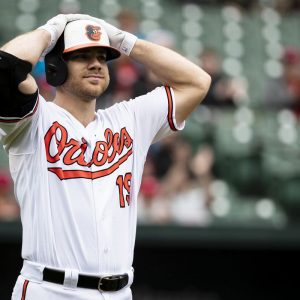
The reason for rehashing the syndromes of these players is in an attempt to make sense of what happened and is happening to Orioles 1B/DH Chris Davis. As recently as 2013, Davis led the league in homeruns (53) and RBI (138), won the Silver Slugger, and came in third in MVP voting.  In 2015, Davis hit another 47 dingers to lead the league, and then the Orioles signed him to a 7/$161M contract.

In 2016, Davis had a career high in strikeouts with 219 (only a 5% increase from his previous high the year before), but he also hit 38 homeruns. All seemed right with the world.

In 2017, Davis missed 34 games, but still managed to strike out 195 times, while hitting a swarthy .215 and slugging .423. A keen eye may have seen trouble on the horizon.

2018 is when the Crush Davis became Crushed Davis. He played in 128 games, struck out 192 times, hit .168, and slugged .296. And when the season ended, the Orioles still owed him $92M. The baseball world was agog with Davis’ performance; but, it should be noted, he has been forthright about his issues.

There was some hope that time away from the game and some tweaks with his mechanics would lead to better outcomes for the remaining three years of his deal. File that in the best laid plans category. As of this writing, Davis has yet to record a hit this season. He has struck out 13 of the 27 times he has come to the plate. If you go back to last season, he is 0 for his last 44 with 24 Ks. He is 1 for his last 55 with 27 Ks. In his last 559 PAs, he has 79 hits, 16 HRs, 46 walks, and 209 strikeouts! We could take these stats back to last his last 1,000 or 1,500 at bats, but they wouldn’t look any better.

I don’t relish listing any of the above. I have provided this information to denote that the yips are not the exclusive province of defensive players. It is quite clear that a couple of seasons ago, a switch flipped, and Davis can no longer throw the ball to first base, or back to the pitcher, or to home plate. He can no longer hit a Major League baseball. Sure, the broken clock theory is in play and he makes the occasional contact. And if the bat is in the right place at the right time, he is still strong enough to hit the ball really far. But, as a practical matter, Davis is more Steve Blass than Steve Sax.

I am not sure if there is a “right” thing to do. Far be it for me to tell a guy to hang ’em up and walk away from nearly $90M. Far be it for me to tell the Orioles to cut a franchise player or send him down to the minors. What I do know is that it is not fair to the team, the fans, but most especially, Chris Davis, to keep sending him up to the plate just to fail and flail – spectacularly – again and again.

I did have one thought: Mr. Davis could head about nine hundred miles southwest to Dothan, Alabama. Drive over to the campus of Wallace Community College and look for the baseball field. Seek out the head coach. I am sure Mackey Sasser – who came to grips with his yips with the help of Dr. David Grand – could have some helpful advice.

When he was at his best, Crush Davis was a joy to watch. No one hit the ball farther with less effort. He hit 223 homeruns over a six-year span. As a baseball fan, I sure hope he gets back there again.

PLAY BALL!!

Belt Tightening

Disclaimer: I may be biased.

I have spent the entirety of my career (save for four months at the very beginning) on the management side of the table. Agents and lawyers representing talent have been my professional foe for as long as I have drawn a paycheck. And while I am often exasperated by their efforts on behalf of their clients, I try to take solace in the fact that they are doing nothing more (or less) than providing zealous representation. I hope they feel the same about me.

When negotiating with talent to work on a collective endeavor, whether it is sports or entertainment, the game is non-zero-sum. In fact, the goal should be to have a winner on both sides. If management wins, they ostensibly have more resources to dedicate to the effort, which makes the likelihood of overall success that much higher. It doesn’t matter if you are talking about a movie deal or a baseball team. If the talent wins, they will be more inspired to excel and produce the best possible product. It doesn’t matter if you are talking about a Broadway stage or the friendly confines of Wrigley Field.

All of which makes baseball’s arbitration system so bizarre. For those of you unawares, baseball arbitration – which is available to players in years four through six of their career – works as follows: the player and his team exchange their desired salary. If they cannot agree, they submit the same to a three-judge panel. Each side is given one hour to argue their case, followed by a thirty minute rebuttal. After hearing both arguments, the panel decides which salary to award. There is no “meeting in the middle” or “splitting the baby.” There is a winner and a loser. In a non-zero-sum arena, this is a zero-sum game.

And here is the kicker, where things get really wonky: MLB rules require that the player be present for the hearing. So, when his team makes their 90-minute presentation to the panel justifying why the lower salary is appropriate and why the player’s higher ask is not, the player is forced to listen to all of the ways in which he is not as good as he thinks he is. Imagine asking your boss for a raise, and then having a seasoned trial attorney spend an hour and half telling you, to your face, why you don’t deserve it. I think I would prefer a simple “no” than suffer that humiliation. The player thinks he is the next Joey Votto, only to be told that he is really the next Joey Cora.

And when this process ends, win or lose, the player must suit up for an organization that told him how they truly feel. Talk about your labor relations.

This system, for the reasons stated above, is totally flawed. But it is the system that was collectively bargained for. Teams and players are incentivized to do their homework, prepare their case, and make their best presentation. By design, one side wins, one side loses. I am certain there are countless other ways in which a just result could be reached. But within the confines of what MLB and the MLBPA negotiated, players go into arbitration seeking to maximize their pay, while teams go in trying to minimize it. The goals are patent; there is no secret.

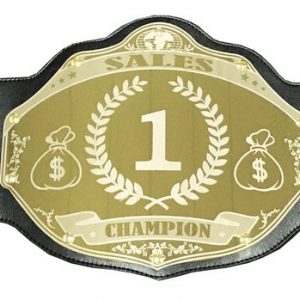
So when The Athletic reported last week that, at the end of year, when MLB teams have their annual arbitration seminar, they give out a belt to the team “that did the most to achieve the goals set by the industry,” there was a predictable outcry. Tony Clark, the MLBPA executive director responded by saying, “That clubs make sport of trying to suppress salaries in a process designed to produce fair settlements shows a blatant lack of respect for our Players, the game, and the arbitration process itself.”

Really? Is that what they are doing?

Isn’t this much ado about nothing? Why is Tony Clark suddenly clutching his pearls and claiming that teams are making “sport” of the process? Why is Clark totally fine with players being forced to sit idly by while they are run through the ringer in front their bosses, and then told to be happily on their way? With all of the talk about a minor league offers for major league players, and languishing free agents, and service time manipulation, does the fact that teams celebrate the one who was the most efficient really rise to the level of outrage? Don’t we have bigger issues to deal with?

And the idea that celebrating winning (however gauche a belt may be) shows a lack of respect is the same argument that flipping a bat is disrespectful to a pitcher. How can Clark take issue with trying to suppress salaries? Isn’t that the MacGuffin? Wasn’t the system put in place specifically to either suppress or expand salaries?

Belts aside, salaries have expanded…bigly. My questions for Clark would be: Should teams be offended and crying a lack of respect if Nolan Arenado’s representatives had a victory dinner when he received a record-breaking $26M arbitration award? Or if Mookie Betts and his team did a little victory dance when he won his arbitration and was awarded $20M. How about when Josh Donaldson got $23M coming off an injury-shortened season? What about Jacob deGrom’s $17M (up from $7.4M) or David Price’s $19.75M (a 41% raise)? Those salaries didn’t seem too suppressed.

As The Athletic article points out, according to MLB, players have won 18 of 32 hearings in the past two years, a 56% clip (up from around 40% historically). Teams gave out more than three-quarters of a billion dollars this past off-season to arbitration-eligible players. Marc Craig’s article intimates that the fight is unfair insofar as the teams have more information at their disposal, and they share that information amongst themselves. But the statistics above belie that. Players who have the goods, and who make the better presentation, get paid what they believe they are worth.

And let’s not lose sight of what is happening here. Teams are awarded the belt for a job well done. That is, they have taken their ninety minutes and convinced a group of neutral arbitrators that their position is correct. Players have that same opportunity. If you don’t want the batter to flip his bat…make a better pitch. If you don’t want teams to celebrate salary suppression…make a better case.

Again, teams could be a little more circumspect about the manner in which they celebrate their victories, but a $20 plastic belt certainly shouldn’t be the object of our derision. Now, if they gave a belt to the team that best suppressed service time, well, them be fighting words.

As a fan I worry that Tony Clark and the MLBPA are losing the forest for the trees and focusing on the wrong battles. And that makes me very nervous for the next CBA negotiation after 2021.

We are about a week into what looks to be an incredible season. Maybe the belt talk can go away. Maybe we can talk about Fernando Tatís Jr., Pete Alonso, and Chris Paddack breaking camp despite their rookie status; maybe we can talk about Bryce Harper making a home in Philadelphia; or Christian Yelich picking up where he left off. Maybe we can spend less time worrying about the inane actions of front offices and more time just enjoying this wondrous game.

PLAY BALL!!

Rich Beyond the Dream of Avarice

Bud Fox once memorably asked: “How many yachts can you waterski behind?”

I have thought about that question many times these past few days as Manny Machado, Nolan Arenado, and now Bryce Harper, have found themselves tuning in to Yacht Rock on Sirius Radio.

All three of these guys were rich on November 1st, and all knew they would soon be a lot richer – two via the free agent market and one via arbitration. Money was never going to be an issue. And yet, for at least one of these players, money was always going to be the issue.

Bryce Harper planned for this week (or a week like it) for nearly a decade. In June of 2009, Harper famously appeared on the cover of Sport Illustrated under the headline “Baseball’s Chosen One.” Shortly after that issue hit the newsstands, Bryce took the G.E.D. so he could leave high school after his sophomore year, enter junior college, and speed up the timeline for the day on which he would sign the richest contract in the history of North American sports.

And everything went according to plan. Harper became the number one draft pick in 2010, was Rookie of the Year at age nineteen in 2012, and won the MVP after his fourth season. Harper was shaping up to be an all-time great. Past success, however, is no guarantee of future performance. Harper – who is always mentioned in the same breath as another player from his 2012 class, Mike Trout – found himself consistently outpaced by that same guy. So even when Trout signed a 6/$144M extension after his third season, the baseball world knew that Harper – led by uber-agent Scott Boras – would never sign a team-friendly extension. No, the goal had been set, and it was always about the having the biggest, getting the most.

In 2014, Giancarlo Stanton signed a 13-year extension with the Miami Marlins worth $325M. While the average annual value (“AAV”) of that deal was not the highest, the total value of the deal – if Stanton does not exercise his opt-out after six seasons – was the largest in the history of the sport. That became the bullseye that Boras and Harper honed in on. There really was never a moment when one reasonably believed that Harper would sign for a dollar less than $325M.

There have been countless articles written in the last few days about Harper signing with the Phillies. This has been anticipated for months, so it really wasn’t too much of a shock. Not to break my arm patting myself on the back, but about four weeks ago I predicted a deal with the Phightins at 13/$338M (that would have outpaced Stanton by $1M/year). I was about 98% correct. But I digress.

According to NBC Sports, the Giants offered Harper 12/$310M, which would have been a higher AAV than the deal he signed with Philadelphia. But that couldn’t happen because (checking my math) $310M is less than $325M.

Also according to NBC Sports, the Phillies came up with $330M, but wanted flexibility with the Competitive Balance Tax, so offered that sum over 15 years. But $22M/year was too paltry for Boras. Fourteen years? $23.57M/year didn’t quite cut it. Okay, 13 years it is. Deal done.

Of course it was; it was always $325 or bust. Jon Morosi of MLB Network reported that the Dodgers offered Harper 4/$180M – yes $45M/year. As I previously wrote, a deal like that might make sense because these are Harper’s prime years, and if ever there was a chance to bleed value from a monstrous contract, this was it.

Ken Rosenthal sent out a tweet over the weekend that the Dodger offer was actually three years for less than $40M/year. Let’s assume, for giggles, that the number was $38M/year – the highest AAV ever by nearly $4M. Harper was never taking either version; and you know how I know that? Because neither was larger than $325M in the aggregate. As long as that number was available – somewhere – that is what Harper would sign.

Greed may be good; but greed is often short-sited. Let’s look at the two scenarios that were potentially on offer from the Dodgers. In one, Harper makes $114M over three seasons, and becomes a free agent at age 29. In that version, Harper would need only sign a 10/$216M deal to get whole. In the other, Harper earns $180M over four seasons, becomes a free agent at 30, and is only chasing 9/$150M. In either case, a year less or a dollar more and he is better off than the deal he signed with Philadelphia.

And let’s remember, Arenado just signed a contract extension worth $32.5M/year; and before Harper would have been a free in three or four years (depending on which option was actually available), both Trout and Mookie Betts will have signed new deals – ostensibly setting records with each contract. With those deals, and potentially Alex Bregman, too, it is pretty safe to conclude that Harper could have wrung another $150-$216M out of the rest of his career.

Which makes the idea that Harper “didn’t want any opt-outs,” “this is where I wanted to be,” “we wanted stability,” all that much more disingenuous. My guess is that John Middleton said to Boras: “Look, I am offering your client one-third of a billion dollars – the most any player has ever been guaranteed on this continent – and I am not going to get “A-Rod’d” after five or seven years when you demand more money to finish the deal. You either want the $330M or you don’t.”

And, lest there be any mistake, he wanted the money. There is no shame in that. Just don’t try to spin this into something it’s not.

Now, maybe all the bravado, all the hair flipping, all the “clown question, bro,” is an act, hiding an inner insecurity. Maybe Harper fears he won’t perform and thus could not get another deal that would have exceeded the $330M in toto. Possible, but doubtful. Harper is nothing if not confident.

He wanted the most money any player has ever been guaranteed. Period. And what makes that so ironic is that inside of two years, he will be second and most likely third on that list. He passed on a chance to make even more just to hold the crown for less than two seasons. Heavy is the head, indeed.

I don’t begrudge Harper for taking the money. And I don’t begrudge the Phillies for paying it – it’s their stupid money. I just don’t buy the after-the-fact explanations. But, at the end of the day, who cares? We are half way through Spring Training, and for Harper and everyone else, it’s time to…

PLAY BALL!!

Patience is a Virtue in Dodgertown

Living in Los Angeles this winter, after two consecutive seasons of “what-ifs,” two consecutive years of watching other teams celebrate on the green grass of Chavez Ravine, two consecutive years of sitting idly by, waiting for the deep-pocketed, second-largest market, mega-TV deal, Dodgers to spend on an impact free agent, has been trying, to say the least.

Sure, the Dodgers ponied up an additional $28M to keep “the franchise” in town for an additional year. Sure, they guaranteed A.J. Pollock $60M over four years to patrol center field for those games (how many, TBD) that he is not injured. Sure, the team made a qualifying offer to Yasmani Grandal, who elected to take $325K more to catch for openers in Milwaukee, rather than Kersh, Buehler, Ryu, and Jansen in SoCal.

But all we have heard for a few years now is that the Bums were looking to get under the luxury tax threshold so that they could reset the penalty and start spending like drunken sailors when the free agent class of 2018-19 became available. Fans and front offices were salivating over the likes of Kershaw, Kimbrel, Keuchel, Corbin, and, of course, Harper and Machado.

But since the Dodgers never intended to let Kershaw get to the open market, he came off the board. And since they signed Jansen to the second-richest relief contract in history, they didn’t have room for Kimbrel. And since they didn’t want or need another left-handed starting pitcher, Keuchel didn’t make much sense. And since Corbin decided to get off the market as quickly as possible, the Dodgers may never have had a chance to make a bid.

Which brings us to the two crown jewels. The two 26-year old free agent stars who were looking to set AAV and total compensation records. The two guys who were looking to be locked up for a decade or more. The two guys who the league has been waiting for to reverse two years of moribund free agency. And yet, a funny thing happened on the way to the market – the market changed and their performance waned.

It is a truism that players shine in their walk year. I guess these  guys didn’t get the memo. Harper decided to hit .239 with a career high in strikeouts and his worst defensive season to date. Machado told the world that hustling is for suckers, and showed the world that other teams’ defenseless infielders were open prey. So when Machado turned a shot off the top of the wall in the World Series into a single, and when Harper more than hinted that ten years was not a long enough contract, the market reacted. Just not in the way that either player or the MLBPA had hoped.

According to Chelsea Janes of the Washington Post, the Nationals offered Harper 10/$300M before the hot stove got cooking. There are some who believe that the Nationals made that offer so their fans knew they “tried,” all the while knowing that Harper would pass. And those same people believe Harper’s agent, none other than Scott Boras, leaked the offer to set a floor for future offers. To date, we have heard of none (except, maybe, the Nationals increased their offer).

According to Bob Nightengale of the USA Today, the White Sox offered Machado 7/$175K. To you and me, a cool $25M/year is pretty good scratch. For a guy who was expecting $300M and hoping for $400M, the numbers seemed a little underwhelming. And his reps were quick to condemn the reporting, but nothing has happened since, so who knows.

Which brings us back to the Dodgers.

Should they jump in with both feet and a large checkbook to sign either star? Are either worth the money? If you are the Dodgers, does – should – money even matter? Stan Kasten, in a clumsy interview with the Los Angeles Times seems to think so; but he doesn’t think enough of the average fan to explain why.

If you have followed the Dodgers under their new ownership group, and with Andrew Friedman at the helm, you know that signing long-term deals over $100M is anathema to them. You had to see this coming – that the team would be considerably more circumspect about spending upwards of $200 or $300M for either guy. And that was before Machado fell down striking out to end the World Series and Harper turned in a 1.3 bWAR season.

So before we castigate the front office for sitting on its hands and having short arms, let’s look at this unemotionally.

I am not a huge Corey Seager guy (I tend to think, advanced metrics aside, that he is overrated). But, would you rather have Seager at $4M for 2019 or Machado for $34M (guesstimating)? And keep in mind, Seager has two more years before he is a free agent. Even assuming he gets Mookie Betts-type arbitration money (say, $10M in 2020 and $20M in 2021), you are still $68M ahead of the game going into 2022, without having another seven-ish years of commitment to a player heading into his thirties. A player you have seen up close and know he ain’t the hustling type.

And, this analysis is only necessary because Machado insists that he is a shortstop – not a third baseman. This, despite the fact that he is in the conversation for the best defensive third baseman in the entire game (I see you Nolan Arenado and Matt Chapman). Let’s assume Machado gets over himself and agrees to play third base. What do you do with fan-favorite Justin Turner, who is owed $39M over 2019 and 2020? Do Dodgers fans think Machado is $31M better at the hot corner over the next two seasons?

Before any of you Boys in Blue answer, look at this:

Turner bWAR Machado  bWAR
2014 4.3 2.3
2015 4.0 7.1
2016 4.7 6.9
2017 5.8 3.4
2018 4.5 5.7
TOTAL 23.3 25.4


And from 2016-2018, Machado laps Turner by a whopping 1.0 bWAR. Still want Machado?

Now let’s talk about Harper.

When the Dodgers shipped the corpse and dead money of Matt Kemp and the rollercoaster that is Yasiel Puig to the Reds for a bag of balls and a contract they immediately ate, the conventional wisdom was that they were opening up right field for the slugger from Vegas with the flowing locks. But Andrew Friedman seemed to ask himself the following question: “Why would I do that?”

He must be thinking: “I have made it to the World Series the past two years without him, and Harper would not have made Yu Darvish pitch any better in Game 7 or Kenley Jansen pitch any better in Game 4.”

He might be thinking: “$300M is a lot of depth, a lot middle relievers, a lot guys who can carry us deep into October again…and again.”

The truth is that Harper is good, and may one day become great. But he ain’t “great” today. And it doesn’t matter what Scott Boras includes in his 75-page briefing book, it cannot change the fact that Harper came into the league in 2012 with a 5.2 bWAR, had a 10.0 in his MVP year of 2015, and has never cracked 5.0 in any other season. Is that guy worth $35-$40M per year? Maybe. Is he worth that for 8-10 years? You don’t need to be Harvard-educated (or even Tulane-educated) or a quant to answer that question.

So it seems, as per usual, the Dodgers are playing this smartly. They are keeping their powder dry and giving themselves payroll flexibility (insert billionaire joke here) so that they are ready to pounce before the July trade deadline. The Dodgers have gotten a ton of grief for being parsimonious, but to quote Bob Sugar, “it’s not show friends, it’s show business.” And these guys have shown, time and again, they know the business of baseball better than most. Have they made some mistakes, sure. Have they missed some opportunities, of course. But ask yourself this, do the Dodgers want to be spending $35-$40M/year on a 35-year old Bryce Harper in 2027? If you need some help with that one, drive a few miles down I-5 and ask Arte Moreno about paying Albert Pujols the back half of his contract. And before you tell me that Pujols was older when he signed his deal, know that in his age-35 season, Pujols had a 3.0 bWAR and earned $24M (and followed that with seasons of 1.3, -1.8, and 0.5, all while taking home $78M).

The Dodgers play the long game – both for the season and for their future. By not overspending in the winter, they can properly spend in the summer. At the 2017 deadline, they grabbed Yu Darvish, Tony Cingrani, and Tony Watson – all helpful pieces on their way to the pennant. Last year they acquired Machado and Brian Dozier – great and needed additions. People revere the Patriots for thinking long-term and building for sustained success. The Dodgers front office deserves the same benefit of the doubt.

Relax Blue Nation, patience is indeed a virtue.

PLAY BALL!!

Hall Worthy?

It’s that time of year…again. When honors are given out and people feel snubbed and hackles get raised. Critics get on their high horse and tell the collective voters what they did wrong, and in doing so, how certain people were wronged. There is no shortage of soapboxes, and there is certainly no shortage of ink spilt about what the right choices were, that we need to fix the system, and how we need to be better next year. It’s essentially a January rite of passage. But enough about the Oscars. Let’s deal with important matters – a museum in Central New York that houses the greatest to ever play the game, as well as a few others.

The festivities kicked off in December, when the Today’s Game Committee voted to induct Harold Baines (as well as Lee Smith) into the Hall of Fame. That’s right. In case you were not paying attention, a guy who never received more than 6.1% of the BBWA vote was chosen to have his plaque in the hallowed first floor Gallery. Suffice it to say, there was much pearl clutching about this decision. There were countless articles written asking if Harold Baines, then why not ______ (fill in your favorite player); and how allowing Baines in lowers the bar and thus dilutes the exclusivity and specialness of the Hall of Fame. Hell, my boyhood idol – Will Clark – was thrown around as deserving of induction if the likes of Harold Baines can get the call.

But after all the Sturm und Drang, we really need to ask one basic question: Should Harold Baines be in the Hall of Fame? By all accounts, no. Here are the facts:

  • It used to be 3,000 hits punched your ticket, but the PED era upended that assumption. Baines collected 2,866.
  • 500 homeruns was another key threshold. Baines had 384.
  • His career OPS of 121 is 340th on the all-time list, tied with Jason Bay, Jeff Burroughs, Ron Cey, and Cecil Cooper. Not exactly a list of Hall of Fame hopefuls.
  • He did make six all-star appearances and won the Silver Slugger Award in 1989 (at DH). So he has that going for him.
  • It seems Baines best qualification is that according to Bill James’ Similarity Score, his career looks a lot like that of Tony Perez, Al Kaline, Billy Williams, and Andre Dawson – all Hall members. So I guess, based on that standard, if it looks like a duck…

In short, Baines should not be making reservations at the Otesaga Hotel in mid-July, but he will be.

**********


Yesterday, the results of the BBWA voting were released (it’s hard to understand why they don’t coordinate the Today’s Game Committee vote with the BBWA vote, but considering all of the other issues with this process, that seems like the smallest nit to pick). Lost in the ballyhoo of Mariano Rivera being the first unanimous inductee was a former third-baseman turned designated hitter who made it to Cooperstown in his last year of eligibility. This, of course, was not lost on the denizens of Seattle, who have spent countless hours in the Kingdome and T-Mobile Park (née Safeco Field) lobbying for Edgar Martinez’s induction. For a baseball town that has suffered many slings and arrows, Tuesday was a banner day. And yet, the question resounds: Is Edgar Martinez Hall-Worthy (h/t to Elaine Bettis). He is right on the edge, but when put into the proper context, he makes the grade.

Edgar has a career OPS+ of 147 (meaning, for his career, he was 47% better than the average MLB player). That is 42nd on the all-time list. Here are the players with a higher career OPS+ who are not in the Hall of Fame:

  1. Barry Bonds (for obvious reasons)
  2. Mike Trout (still active)
  3. “Shoeless” Joe Jackson  (not eligible, for obvious reasons)
  4. Pete Browning (1882-1894)
  5. Mark McGwire (for obvious reasons)
  6. Dave Orr (1883-1890)
  7. Dick Allen (no one knows why)
  8. Joey Votto (still active)
  9. Manny Ramirez (for obvious reasons)
  10. Charlie Keller (1939-1952)
  11. Miguel Cabrera (still active)
  12. Gavvy Cravath (1908-1920)
  13. Charley Jones (1875-1888)
  14. Benny Kauff (1912-1920)
  15. Albert Pujols (still active)

Edgar had a career bWAR of 68.4. This is 115th all-time. Here is the list of players who have more career bWAR and are not in the Hall of Fame:

  1. Bonds
  2. Alex Rodriguez (not yet eligible)
  3. Pujols
  4. Pete Rose (not eligible, for obvious reasons)
  5. Curt Schilling (if he stops tweeting, he probably makes it)
  6. Jim McCormick (1878-1887)
  7. Bill Dahlen (1891-1911)
  8. Lou Whitaker (should be, and when he is inducted, it will be the subject of many think pieces)
  9. Larry Walker (his prospects are getting better each year)
  10. Derek Jeter (will be the second unanimous selection next year)
  11. Rafael Palmeiro (PEDs, smh)
  12. Scott Rolen (another controversial vote)
  13. Carlos Beltran (not yet eligible)
  14. Rick Reuschel (yeah, I can’t figure this one out either)
  15. Miggy
  16. Manny
  17. Robinson Cano (still active)

When you look at the above lists, it’s hard to justify not having Edgar in the HOF.

And if that is not enough to back up his candidacy, let’s go to Jay Jaffe’s JAWS analysis (Jay being the foremost expert on Hall of Fame worthiness), which compares career bWAR, a player’s 7-year peak, and total JAWS:

bWAR 7-Yr Peak JAWS
Edgar Martinez 68.4 43.6 56.0
Avg HOF 3B/DH 68.4 43.0 55.7


As I stated above, it’s close, but Edgar deserves to give a speech in July.

**********

Since Baines got in last December, and leading up to yesterday’s announcement, living in Los Angeles, I have heard the following question numerous times: If Harold Baines is a Hall-of-Famer, and Edgar Martinez is a Hall-of-Famer, then isn’t Steve Garvey a Hall-of-Famer?

Now, for some of you, that is a name you have neither heard nor thought of in quite some time. For others, his name evokes “Not My Padre” bumper stickers. But for many, those of you donning your #6 jerseys at Chavez Ravine, you are taken back to that perfect chin dimple, that mop of wavy brown hair, that slick glove, and that ever-so-clutch bat. The true fans can still see his golf swing outside the batter’s box, and his pigeon-toed stance inside it. We all remember the hand above his head as he rounds first base in a Padres uniform in the end credits of This Week in Baseball. For many of you, the answer is yes, sure, of course; if Baines and Martinez are in the Hall, you think, then my man Garvey certainly deserves to be enshrined.

Well, not so fast. Memory is a funny thing. The baseball saying “the older you get, the better you used to be” is perfect for Steve Garvey. We tend to remember with a longing for an easier time, and the ’70s and ’80s, with three basic statistics emblazoned on the screen each time a player came to bat, made it simple to discern the good from the great. But upon deeper inspection, Garvey is many miles and many mistresses from Cooperstown. Herewith, Garvey’s career stats:

Hits HR RBI OPS+ bWAR
2,599 272 1308 117 38.1


Garvey never got more than 42.6% of the BBWA vote while he was HOF eligible.

He did win the 1974 NL MVP, which gives him one more MVP than Baines, but he never won a Silver Slugger Award. Winning four Gold Gloves seems impressive, but when you consider the NL first baseman of his era, I don’t think Tony Perez or Willie Stargell or Pete Rose provided much defensive competition. And once Keith Hernandez joined the league, Garvey’s reign was over.

And, for the coup de grâce to all “Garvey for the Hall” campaigns, let’s again take a look at Jay Jaffe’s JAWS analysis:

bWAR 7-Yr Peak JAWS
Steve Garvey 38.1 28.8 33.4
Avg HOF 1B 66.8 42.7 54.7


To quote Jeff Spicoli, “not even close, bud.”

So there you have it. Edgar is in because he earned it. Garvey is not because he didn’t. And Baines somehow got in because his former manager (Tony LaRussa) and former owner (Jerry Reinsdorf) were on the committee that chose him after-the-fact. But, at the end of the day, the Hall of Fame is still an incredible place; it remains a bucket list destination for any true baseball fan; and – warts and all – it still represents (nearly) all of the best our favorite game has to offer.

Now, about those Oscar nominations…

PLAY BALL!!

In Our Day

I’m lying in bed Saturday morning, minding my own business. I’m scrolling through Twitter, as I am wont to do. And then I come across this beauty:

In the sixty-two seconds it took to watch that video, I was magically transported back to 1985. I’m sitting on the couch, enjoying the waning seconds of This Week in Baseball, sad that it will be a whole ‘nother week until Mel Allen regales us with tales from across the league; but equally excited that the Game of the Week is about to start.

I don’t want to be the “in my day” guy. And I certainly wouldn’t say “it was better when.” But there was something thrilling about that 31-minute sequence, This Week in Baseball followed by the first moments when you would learn which of the two Games of the Week would be airing in your area. If you checked the TV Guide, it would give you two potential games, and you never knew which was yours. The “A” game was called by Vin Scully and Joe Garagiola; the “B” game by Bob Costas and Tony Kubek. Either was a treat. Living in Los Angeles, we took Vinny for granted, so Bob and Tony was a nice change of pace.  No matter which, we were in for two and half hours of sheer bliss (Note: The average time/nine innings in 1985 was 2:39 (3:00 in 2018).)

Our kids have no idea. They have the At Bat app and the MLB Network. They have national broadcasts and games available every night. They can see and follow any player and any team their heart desires. But in our day, unless you had basic cable and were a fan of Dale Murphy or Ryne Sandberg, you didn’t get a whole of lot of mid-week baseball. And pity the American League fan. There were no interleague games. If you wanted to see your favorite Tiger or Indian or Twin, you had to wait until the All-Star game in July. Think about that – there was 50% of MLB that you could only see (a) if you lived in an American League town or (b) when a specific player appeared in the mid-summer’s classic. It is a concept I can barely get my head around – there is no way my kid could.

To make matters worse, in 1985 we didn’t have night baseball in Chicago. So, even if we were lucky enough to have this classic

on top of our television, you had to stay home from school in order to watch the Cubs’ home games. Living on the West Coast meant that, at best, we could catch new Hall of Famer Lee Smith on the hill in the eighth or ninth inning after the bus dropped us off. But, more often than not, we were relegated to Pete Van Wieren (RIP) and Skip Caray (RIP) and the WTBS Superstation (RIP) (now known simply as “TBS”) broadcast of the Braves game from Fulton County Stadium or Olympic Stadium or Three Rivers or The Vet.

But Saturdays were different. Saturdays lent us a world of possibility. Saturdays gave us a chance to see the Royals in their powder blue unis, or the Rangers in theirs. It gave us a chance to see Bell, Barfield, and Moseby roaming the vast expanse of Exhibition Stadium. For me, the moment the mailman delivered the TV Guide on Thursday, I checked to see if I would get another glimpse of Fenway Park. Would my beloved Red Sox at least get the Costas and Kubek treatment? My fingers absorbed a whole lot of ink flipping those small pages searching for who, and when, and where.

Like most kids, I played baseball on Saturdays, and thus was forced to missed many a TWIB and many a GOTW. That is why, even to this day, I still have certain VHS tapes in my attic (not that I have a machine on which to play them). A post-Pony League Carl’s Jr. Happy Star, crinkle-cut fries, and then a spot on the couch with the remote in hand. My spine still gets a tingle as I type these words.

Then, the moment of truth when you walked in the door – never certain that the new-fangled VCR did what it was supposed to do. And you were never sure if someone had pulled out that little tab on the cassette that rendered the tape useless. Tell me something more devastating than coming home and finding that your program didn’t record? The viscerality (yes, I made that word up) of those memories courses through my veins to this day.

I don’t imagine I am alone in this. If I am, please don’t tell me. I am comforted by the idea that there were hundreds, maybe thousands, of other thirteen year old kids who had the same Saturday morning/afternoon routine as me. And when I hear those dulcet chords, when I watch Doc Gooden pitch and Gary Pettis crashing into the wall and Tony Peña in his crouch, when I see Mike Boddicker’s curveball and Steve Garvey in the Padres brown and gold raise his right arm as the music crescendos, I am taken back to an easier and simpler time. I am not saying it was a better time, but I’m not not saying that either.

PLAY BALL!!

Green Fields and the Stories That We Tell

The baseball season ended on Sunday, October 28th. I knew the end was nigh, so even when Manny Machado succumbed to Chris Sale’s slider, it had, at most, three more days and two more games. But the ending is always abrupt. I awoke Monday morning to a final Baseball Tonight podcast. My “friends” Buster and Josh, the gents who informed and entertained my mornings from March through October are now gone from my life…for a few months, anyway.

My finger no longer reflexively finds the At Bat app on my phone. There are no box scores to check, no Joey Votto OBP to track. There are no more Premiere Plays or magic numbers. No, baseball is on hiatus. The game on the field is comfortably hibernating for the next four months while we, the obsessed fans, are left…to our memories. And football, and basketball, I guess.

I love this time of year. I love the changing weather and the coming holidays. But I do miss baseball. And I know I am not alone.

Baseball is more than a hobby, more than the National Pastime (a disputed fact at this point, I am aware). It is part of our daily culture – it is just there. There are no real days off; no Monday-morning quarterbacking or off day between a home and home. It is a metronome over seven months. And it is beautiful. Better writers than me have discussed this ad naseum, so there is no need to expound.

The aforementioned Buster Olney concludes each season – after the final World Series game, after the final interviews, after the final analysis – by playing Bart Giamatti’s reading of his poem The Green Fields of the Mind. If you have never heard it, click here now;  if you have never read it, click here now. It is the perfect capstone to the season gone by; it is the perfect ease into the long off-season. It is just…perfect.

I have read that poem too many times to count. I believe, in many ways, there can never be a better encapsulation of the game.

But there is even more to the game than what is in Bart’s prose. As I wrote last week about attending the World Series, first with my father, and then with my son, baseball is about time, and history, and family. It is about reliving memories, and creating ones anew. I am not skilled enough to fully express the emotions I have felt at a ballpark – be it when I was five years old or pushing fifty. But I write this column in an attempt to articulate my feelings and have a place for my kids to go one day (now? soon?) to understand the how and why of my love for baseball – in all its storied splendor. But I fall short in my depiction.

Then I heard Larry Wilmore interview the highly-lauded historian Doris Kearns Goodwin. In addition to being one of the world’s great political biographers (Team of Rivals, The Bully Pulpit, No Ordinary Time, The Fitzgeralds and the Kennedys, Every Four Years, etc.), she is also an avid baseball fan, born and raised in Brooklyn. When an audience member asked her what she does in her free time, after discussing her love of murder mysteries, she said this (and it is my hope and dream to ever be so eloquent):

I went to Fenway Park when I was at Harvard; so reminiscent of old Ebbets Field, and a team so reminiscent of the old Brooklyn Dodgers. We would almost always win but lose in the end. And I became an equally irrational Red Sox fan. We’ve had season tickets now for more than 35 years. And I must say, when I go to Fenway Park sometimes – my father died before I got married and had my three sons – so I have been able, when I go to Fenway Park, now to imagine myself a young girl once more – when my sons are by my side – in the days of my youth with Jackie Robinson, Pee Wee Reese, Duke Snider, Gil Hodges. Fabulous days.

And then when I see my sons, sitting in the place where my father once sat, I feel this invisible loyalty and love linking my sons to the grandfather whose face they never had the chance to see, but whose heart and soul they have come to know through all the stories I have told. Which I think is why in the end I have this curious love of history that I have had my whole life. Allowing me to spend a lifetime looking back into the past. Allowing me to believe that the private people we have loved and lost in our families and the public figures we have respected in history, just as Abraham Lincoln and all these guys wanted to believe, really can live on so long as we pledge to tell and retell the stories of their lives.

I can only hope that, through my words on this page, I am telling and retelling some of these stories.

PLAY BALL!!