We Don’t Talk Enough About Orel Hershiser

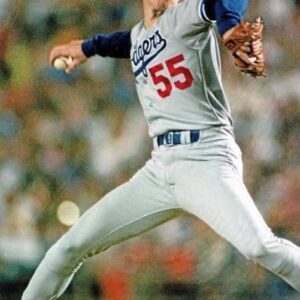
Not enough is written about Orel Hershiser’s career, and, specifically, his 1988 season.

The Los Angeles Dodgers drafted Hershiser out of Bowling Green State University in the 17th round in 1979. He made his major league debut four years later, pitching one inning, giving up two hits, and one run to the Montreal Expos.

For the first few years of his career, Hershiser was an enigma:

  • 1984: 11-8, 2.66 ERA
  • 1986: 14-14, 3.85 ERA
  • 1987: 16-16, 3.06 ERA

Smashed in the middle of those middling seasons was 1985, when he went 19-3 with a 2.03 ERA, and came in third in Cy Young voting. So, everyone in baseball knew that greatness lived within him.

That greatness was achieved in his magical 1988. He started the year with a three-hit shoutout against the Giants. He then went 8-1/3 innings, giving up one run in a win against Atlanta. Followed by a complete game win against the Braves five days later. Then he threw six innings, allowing just one earned run against the Giants. Next, while facing the Cardinals, he went eight innings and gave up three (!) earned runs.

When the calendar flipped to May, the Pirates touched him up for ten hits, but could only manage two earned runs. With the win, he ran his record to 6-0. The Buccos apparently had his number, as in Pittsburgh a week later he had his first bad game (12 hits, seven earned runs, three walks, and three homers allowed), suffering his first loss of the year. The next week he gave up just one earned run on five hits, but the Dodgers didn’t score, so he took his second loss.

Over the next ten weeks Hershiser went 12-6 with a 2.99 ERA and a 2/1 strikeout to walk ratio, which was just fine, but actually below his season totals to that point: 18-8, 2.84 ERA, 2.25 K/BB ratio. And that is when he decided to turn legend. Well, maybe even a bit before that.

You see, on August 19th, he threw a complete game shutout against the Expos. On August 24th, he threw seven scoreless innings before giving up two runs in the top of the eighth to the Mets, but did not allow them to score in the ninth (the Dodgers lost 2-1). On August 30th, he held the Expos scoreless for four innings, had a two-run blip in the fifth, and then shut them down for the final four innings. Those four innings would be the start of the incredible month to follow. And, to be clear, even before “The Streak” began, Hershiser had allowed no runs in 12 of his previous 14 innings (two runs in each of those two blemished frames).

As we all know, Hershiser went all of September without giving up a run. He went 5-0, threw 55 innings allowing just 30 hits, and struck out 34 while walking only nine batters. Oh, did I mention that – prior to coming out of a tie game in which he pitched ten innings and broke Don Drysdale’s scoreless innings streak — Hershiser had thrown eight consecutive complete games.

In his first playoff start, against the Mets in the NLCS, he went 8-1/3, but got a no-decision when Jay Howell couldn’t hold the lead. Four days later, Hershisher gave up one earned run over six innings in another Dodgers’ loss.

But since six innings was mere child’s play, the ace came in as a relief pitcher in the 12th inning the next day. After Kirk Gibson’s home run in the top half of the inning staked Los Angeles to a 5-4 lead, Tim Leary gave up back-to-back singles before recording the first out of the inning. Jesse Orosco (the former Met) came on to face two lefties, walking Keith Hernandez to load the bases, but then he got Darryl Strawberry to pop out to second. With the right-handed hitting Kevin McReynolds coming up with the bases loaded and the Dodgers facing a potential 3-1 deficit in the series, Tommy Lasorda called on “Bulldog” to get the final out. Three pitches later, he did just that.

It was no shock when he took the mound for Game 7 of the NLCS three days later at home and threw a five-hit shutout, propelling the Dodgers to the pennant.

Even superheroes need a day off, so Hershiser skipped Game 1 of the World Series, but started Game 2 in Los Angeles against the shell-shocked Athletics (try to recall how Game 1 of the 1988 World Series ended). He, of course, threw a three-hit shutout to put the Dodgers up to two games to none. Four days later, he took the hill for Game 5 and threw yet another complete game, yielding two runs on four hits, as the Dodgers won the World Series.

When all was said and done, counting both the regular season and the playoffs, in 1988 Hershiser tossed 309-2/3 innings, threw 18 complete games including ten shutouts, and went a combined 26-8. He won the NLCS MVP, World Series MVP, and Cy Young Award.

Hershiser pitched for 12 more seasons after that historic 1988. For his career, he went 204-150, with a 3.48 ERA and a 3.69 FIP. He appeared in the 1995 World Series with Cleveland after being named the ALCS MVP. He is in the Top-100 of all-time pitcher bWAR, but, unfortunately, is not likely to ever gain induction into the Hall of Fame. No matter, he was still a force of nature.

And, like I said, not enough is written about him or his season for the ages.

PLAY BALL!!

A Look At The Best First Basemen Of All-Time

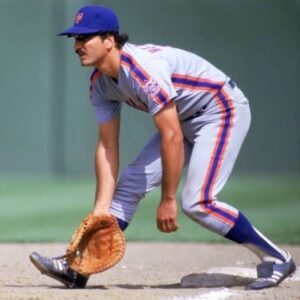
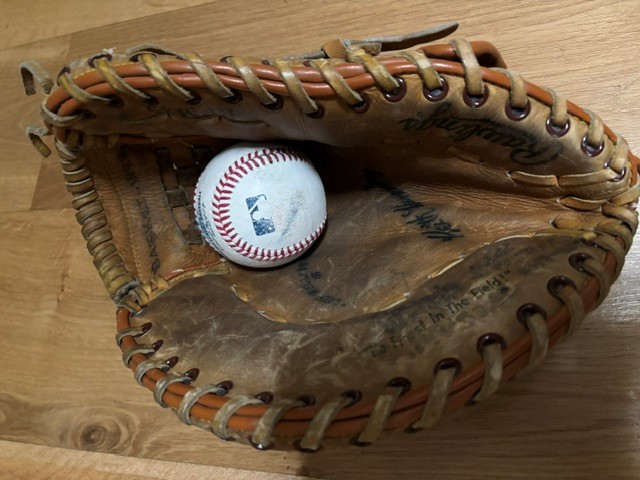
Fun fact, when I was 10 years old, my parents promised to buy me a first baseman’s mitt if I made my league’s all-star team. I did, so they did. It was a Rawlings Model RFM 35 with Keith Hernandez’s signature on the palm. So, the former Cardinal and Met holds a special place in my heart (even if he broke the same as part of the 1986 Mets squad, but I digress).

Hernandez has a strong case for the Hall of Fame, and that got me thinking about the greats of the game who played that/my position and how Hernandez compares to them.

The Top-10 players on the list of all-timers are all in the Hall of Fame, save for Albert Pujols, who should become the second unanimous entrant (along with Mariano Rivera) when he is on the ballot in 2028. His 101.3 bWAR is second only to the Iron Horse, whose 113.5 leads the way. The next eight are: Jimmie Foxx, Cap Anson, Roger Connor, Jeff Bagwell, Dan Brouthers, Frank Thomas, Johnny Mize, and Jim Thome.

Miguel Cabrera chimes in at #11, and he will become a Hall of Famer in 2029. Right behind him is Rafael Palmeiro, whose wave of a finger at the United States Congress while stating “I have never used steroids, period,” was undercut just weeks later when he tested positive for steroids. He need not make any plans to head to Central New York any time soon.

Behind Palmeiro will be this generation’s test for “Hall Worthy”: Joey Votto. He is a six-time All-Star and won the MVP in 2010. All of his Jay Jaffe’s JAWS and Bill James’ Hall of Fame Monitor/Standards measures are right at, just below, or just above Hall of Fame-level. Writers love him, he remains relevant as a guest broadcaster for NBC, and no one would balk at his induction.

Next is Paul Goldschmidt. Is he a Hall of Famer? Not to me, but his stats may say otherwise. He is a seven-time All-Star and, like Votto, won an MVP Award. And also like Votto, all of his Hall of Fame credentials are right on the line. He continues to play, so he continues to accrue numbers that will help his case five years after he retires.

Willie McCovey, Todd Helton, and Eddie Murray all have plaques in Cooperstown. Next is Freddie Freeman, who will be way higher on this list when his career ends, and should walk into the Hall. Mark McGwire would be in but for…

George Sisler and Hank Greenberg have had their days in the Hall of Fame sun. Then there is Bill Terry and Harmon Killebrew, inductees both. Sandwiched between these four players is Mr. Hernandez. Hernandez went on the ballot in 1996, and fell off nine years later when he only received 4.3% of the vote (a player needs at least 5% to continue).

Let’s take a look at how Hernandez measures up:

  • Black Ink (led the league in a category): 14 (average Hall of Famer: 27)
  • Grey Ink (top-10 in the league in a category): 118 (average HOF: 144)
  • Hall of Fame Monitor: 86 (likely HOF: 100)
  • Hall of Fame Standards: 32 (average HOF: 50)
  • bWAR: 60.4 (average HOF at 1B: 65)
  • 7-Year Peak bWAR: 41.3 (average HOF at 1B: 42.1)
  • JAWS: 50.8 (average HOF at 1B: 53.5)
  • bWAR/162: 4.7 (average HOF at 1B: 4.8)

All of the numbers above say that Hernandez is just below the borderline, and his failure to be inducted is warranted. But, as Bill wrote yesterday: “there has never been a first baseman who fielded the position the way he did, literally impacting opponents’ strategy.” His 11 Gold Gloves are a record for first baseman, and they were won consecutively from 1978 through 1988. In 17 seasons, the man committed 115 errors over nearly 20,000 chances. He finished with a .994 fielding percentage.

There is a reason I wanted his glove when I was 10 years old. And there is a reason more than 40 years later I want his skills at the plate, on the field, in the clubhouse, and now in the broadcast booth, to be recognized on a warm Sunday in Cooperstown. I may be biased, but that does not mean that I am wrong.

PLAY BALL!!

Dwight Evans Should Be Given Some Additional Hall of Fame Consideration

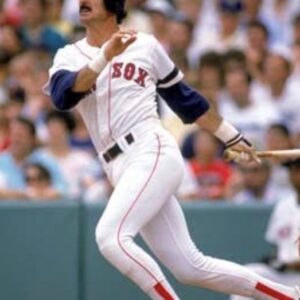
For a while during the mid-‘80s, the Boston Red Sox right fielder Dwight Evans, “Dewey” to the fans in the Back Bay, was always on base and always making great plays. He was the heart and soul of a Red Sox team that flirted with greatness.

Evans grew up in Southern California, and starred at Chatsworth High School on the same field where Mike Moustakas would eventually play. In 1969, the Red Sox selected Evans in the fifth round of the draft. Three years later he made his major league debut. He came in as a pinch-runner for Reggie Smith (who ended his career in Southern California and still runs a hitting clinic in the area) in the bottom of the sixth inning of a game in September, and then had his first plate appearance in the bottom of the eighth, popping out to short.

Evans got 63 more plate appearances over the final two weeks of the 1972 season, slashing .263/.344/.404, but ended the season with an 0-for-4 ten days before this writer was born.

Evans became an everyday player the following year, and won his first Gold Glove in right field in 1976 (he would go one to win seven more). He hit his stride in 1981, tying for the American League lead (with Eddie Murray) with 22 home runs, and leading the league in walks (85), OPS (.937), total bases (215), and bWAR (6.7). For all of that he became a second-time All-Star, a first-time Silver Slugger, and came in third in MVP voting (behind Rollie Fingers(?) and Rickey Henderson). He won his third Gold Glove, to boot.

The following year he played in every game and led the league with a .402 on base percentage. It was in 1981 when he got his first taste of being the team’s leadoff hitter (101 plate appearances). For whatever reason, I recall Dewey batting leadoff throughout the ‘80s, when in fact that was his calling in just 1985 (355 plate appearances). No matter, he was in top-ten in on base percentage eight years between 1981-1989. Over an illustrious 20-year career, he slashed .272/.370/.470, with 385 homers (68th all-time) and 483 doubles (82nd all-time).

Evans first appeared on the Hall of Fame ballot in 1997, and barely survived to fight another day, with just 5.9% of the vote (a candidate needs to receive 5% or more to remain in contention the following year). In 1998 he nearly doubled his support, with 10.4%. But in 1999, only 3.6% of the electorate checked the box next to his name, pushing him off the ballot altogether.

In 2020, the Veterans Committee heard his case, and 50% voted for his induction. Unfortunately, 75% is required. All of which begs the question: Is Dwight Evans a Hall of Famer?

This is where Baseball Reference is exceedingly helpful. Where the average Hall of Famer has 27 instances of “black ink” (i.e., leading the league in a category), Evans has only 15. According to Bill James’ Hall of Famer Monitor, where a score of 100 denotes a likely entrant, Evans is only at 70 (but, note, that this just considers his offensive production, and not his Gold Glove defense).

By James’ Hall of Fame Standards, where the average Hall of Famer scores a 50, Evans lands at 44. Per Jay Jaffe’s JAWS metric, Evans falls just shy in every category:

  • Career bWAR: 67.2 / Average Hall of Fame right fielder: 69.7.
  • Peak 7-year bWAR: 37.3 / Average Hall of Fame right fielder: 42.2.
  • bWAR/162: 4.2 / Average Hall of Fame right fielder: 4.9.
  • Evans’ overall JAWS score 52.2 / Average Hall of Fame right fielder: 56.

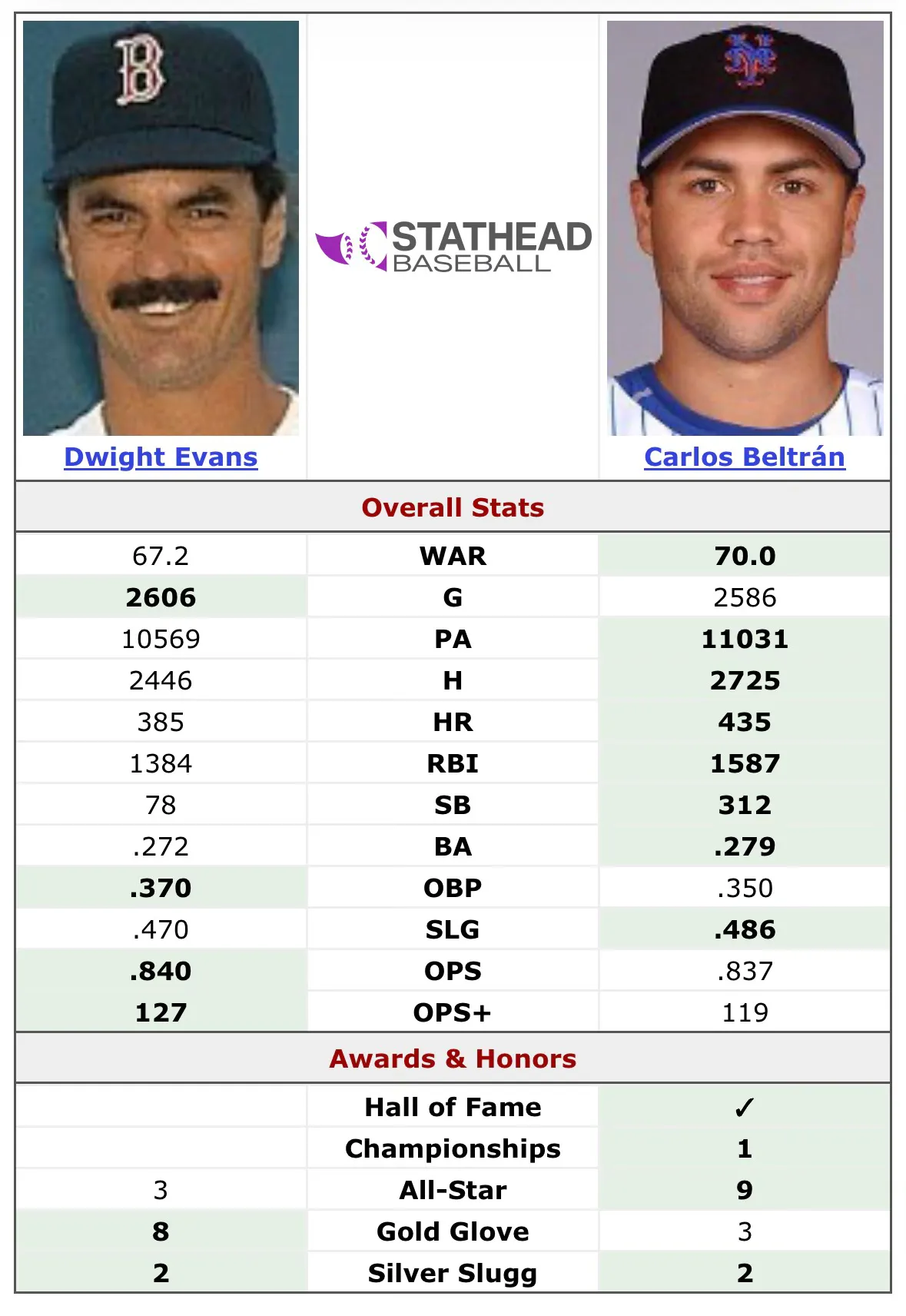
Does all of this advanced analysis mean that Evan is certainly not a Hall of Famer? By no means. If you are a “Large Hall” fan, you could definitely see Dewey with a plaque. If a “Small Hall” is more your speed, you think Evans probably belongs in the “Hall of Very Good.” Neither argument is incorrect. But, as we watch more and more players get further consideration for the ultimate honorific, it seems only right and reasonable that Dwight Evans get another look. And with Carlos Beltrán getting the nod this year, let’s compare the two:

Based on this side-by-side comparison, there is every reason for the Contemporary Baseball Era Committee, which meets again in 2028, to give Dewey serious consideration.

PLAY BALL!!

Fred Lynn Deserves Additional Hall of Fame Consideration

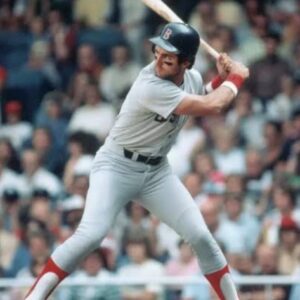
It was 1973 in Bristol, Connecticut. Two outfielders from vastly different backgrounds got together to play for the Boston’s Double-A affiliate. The next year they teamed up in Pawtucket, the club’s Triple-A team. So, for those following the Red Sox closely in the mid-70s, it was not a shock when the “Gold Dust Twins” took their respective positions in the outfield at Fenway Park to start the 1975 season (to be precise, they didn’t play at home until the third game of the season, after playing the first two in Baltimore).

Fred Lynn grew up in Southern California, and played collegiately at USC. He spurned the Yankees when they drafted him in the third round in 1970, signing with Boston after being drafted in the second round in 1973.

Boston selected Jim Rice with the 15th pick in the 1971 draft out of Hanna High School in Anderson, South Carolina. He played in the New York Penn League as an 18-year old, then in Winterhaven in 1972. Rice actually started the 1973 season in Triple-A, but was demoted to Bristol after ten games despite slashing .378/.425/.757 in that short span of time.

When Rice arrived in Bristol, he was paired up with Lynn, and it would remain that way for the next nine years, until Lynn was traded away to the (then) California Angels.

Both Lynn and Rice got cups of coffee with the Red Sox at the end of the 1974 season, playing in 15 and 24 games, respectively. Lynn collected 18 hits in 43 at-bats, while Rice got the same number of hits over 67 at-bats.

In 1975, Rice, playing left field, slashed .309/.350/.491, with 22 home runs and 102 RBI. To his left, playing centerfield, Lynn slashed .331/.401/.566, with 21 homers and 105 RBI. Lynn was an All-Star, won a Gold Glove, won Rookie of the Year, and was named the American League MVP. Rice came in second in Rookie of the Year and third in MVP voting. The future in the Back Bay was bright.

Rice was an All-Star eight times, won an MVP award in 1978*, and was top-five in MVP voting four more times in his sixteen year career.


*In 1978, Rice led the league in: bWAR (7.6), games played (163), plate appearances (746), at-bats (677), hits (213), triples (15), home runs (46), RBI (139), slugging percentage (.600), OPS (.970), OPS+ (157), and total bases (406). Rare has been a player been more deserving of an MVP award.


Lynn was an All-Star eight more times, over the course of the next eight seasons. He had one more top-five MVP year (fourth place in 1979), but didn’t truly do anything of note after 1983. That said, starting in 1983, he was still a high-quality ballplayer, with an OPS+ above 100 every season from 1984 through 1988, falling to 99 in his penultimate season, 1989.

Lynn’s reputation became that of an injury-prone player who could not stay on the field. Nicknamed “Fragile Freddy” by the Boston press, he played all-out and often suffered the consequences. From 1980 through 1990, he averaged just 114 game per season, but still had a 121 OPS+ for that decade-plus. Ironically, over roughly the same period, Rice – not labeled injury-prone – averaged just 129 games per season, with a 120 OPS+.

In 2009, on his fifteenth (and last) appearance on the ballot (this was reduced to ten years in 2015), Jim Rice was elected to the Hall of Fame. By contrast, Lynn got 5.5% of the vote in his first year of eligibility (1996), and then fell off the ballot the following year when he received only 4.7% (a player needs at least 5% to roll over to the next year’s ballot).

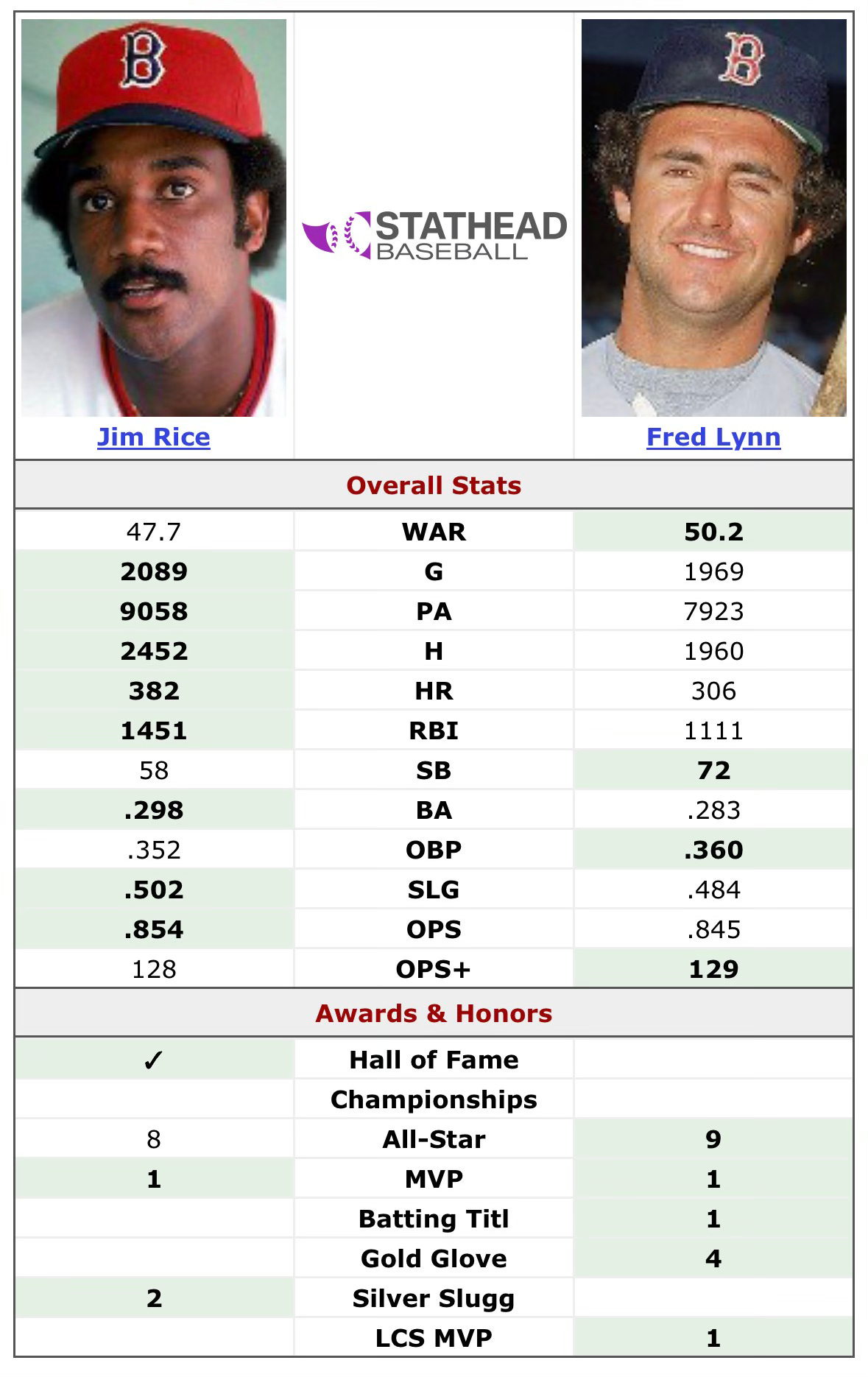
But when you look at these players side-by-side, they look a heck of a lot more similar than you might imagine. Where Rice outpaces Lynn, it is just by a hair.

Should Fred Lynn be in the Hall of Fame? Was his candidacy given short shrift by the votes? Should a future Contemporary Baseball Era Committee give Lynn another look? All fair questions. If Jim Rice is the barometer, I think the answer to the last question is most certainly yes.

PLAY BALL!!

Dodger Stadium Has Hosted Many Of Clayton Kershaw’s Greatest Moments

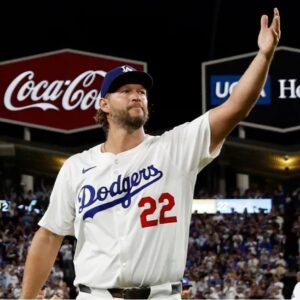
Last Monday night, Clayton Kershaw entered Game 3 of this year’s World Series in the 12th inning, with the score still tied, with two outs, and with the bases loaded. According to him – and later confirmed – it was the first and only time he had pitched in extra innings in his illustrious 18-year career. Kershaw cannot recall ever pitching in extra innings at any point in his life.

And yet, when the bullpen gate opened in left field at Dodger Stadium, the three-time Cy Young winner, eleven-time All-Star, two-time World Series winner (now three-time), one-time MVP, and soon-to-be first-ballot Hall of Famer, strode to the mound in the biggest moment of his team’s 2025 season.

The series was tied at one game apiece. The score was tied at 5, and had been that way since Shohei Ohtani’s second home run of the game evened everything up in the seventh inning. With two outs, the visiting Blue Jays had loaded the bases against Emmit Sheehan on two walks and an 85-foot slow roller to third. Manager Dave Roberts walked to the mound, took the ball from Sheehan, and motioned for the lefty who had been loose for at least four innings. In fairness, Kershaw has come out of the ’pen in years past, but never in a moment as fraught as this one, and never against a team that simply refuses to swing and miss.

Nathan Lukes dug in for a lefty-on-lefty match-up. Kershaw went with a slider, and threw it in the dirt for ball one. He tried it again and got strike one. He tried it again and barely missed the inside corner for ball two. He tried it again and Lukes watched strike two fly by. A fifth straight slider was in the dirt, running the count full. The old expression, “they sell you the whole seat, but you only need the edge,” was true for the more than 52,000 fans in attendance. Kershaw’s wife, Ellen, stood in the second deck behind home plate with her hands either in front of her face or on her head as she watched her beloved try to wiggle out of yet another post-season jam. The sixth pitch was yet another slider, slightly below the zone, but Lukes, taking nothing for granted, fouled it off. According to Statcast, on the seventh pitch of this at-bat, Kershaw threw his hardest fastball of the season – and that was just 91.9-mph – but up enough in the zone to induce Lukes to swing and foul it away. For his final pitch ever at Dodger Stadium, Kershaw went back to the slider, and it was not a particularly good one – low and away – but the left fielder offered at it and hit a slow roller to second. Tommy Edman charged in and flipped the ball to Freddie Freeman with his glove to end the inning, end the rally, and end Kershaw’s career at the only ballpark he has ever called “home.”

The one-batter, three-act, epic in the 12th inning of Game 3 of this year’s World Series is another in the long list of memorable moments for the lanky lefty at Dodger Stadium. It joins the annals of (in chronological order):

May 25, 2008: Clayton Kershaw, age 20, wearing #54, makes his major league debut, going six innings against the Cardinals, allowing two runs on five hits, with a walk and seven strikeouts.

April 1, 2013: As the Opening Day starter against the rival Giants, Kershaw twirls a four-hit shutout with seven strikeouts and no walks. The only run of the game: Kershaw’s first and last career homer in the 8th inning.

June 18, 2014: Kershaw throws his one and only no-hitter against the Colorado Rockies. But for a throwing error by shortstop Hanley Ramirez, it would have been a perfect game.

May 15, 2015: Kershaw goes 6-2/3 innings, gives up three runs and four hits while striking out ten Rockies to notch his 100th career win.

October 4, 2015: On the final day of the season, Kershaw faces just 13 batters, allowing two hits, and striking out seven. The sixth K gives him 300 for the season, which is one of just nine such seasons in the 21st century.

August 1, 2019: En route to his 10th win of the year, with a strikeout of Austin Hedges in the 6th inning, he passes Sandy Koufax for the most strikeouts for a left-handed pitcher in Dodger history.

April 30, 2022: After passing Koufax and Don Drysdale, Kershaw passes Don Sutton to become the Dodgers’ all-time strikeout leader when he fans Detroit’s Spencer Torkelson in the 4th inning.

July 2, 2025: While strikeouts have become increasingly more difficult for Kershaw over the past few seasons, he entered this game needing only three to become the 20th player to join the 3,000 K Club. A slider on his 100th pitch of the game with two outs in the sixth inning froze the Rockies Vinny Capra, allowing history to be made.

And, of course, as referenced above, there was the eight pitch battle on October 27, 2025, that left the bases full of Blue Jays, allowed five more scoreless innings to proceed, and paved the way for Freddie Freeman to play World Series hero once again.

There may be no player in modern baseball history who has provided more highlights, made more memories, and achieved more milestones, in front of his home crowd than Clayton Kershaw. One day there will be a statue of the lefty outside Dodger Stadium, and the only question is which moment in Dodger Blue it will depict. The great news for Los Angelenos and baseball fans the world over, we can relive those highlights again and again, as we most certainly will on warm Sunday afternoon in upstate New York in the summer of 2031, when Clayton Edward Kershaw is inducted into the National Baseball Hall of Fame. Until then, there is always YouTube (see below).

PLAY BALL!!