BLOOM BACK ON THE ROSE?


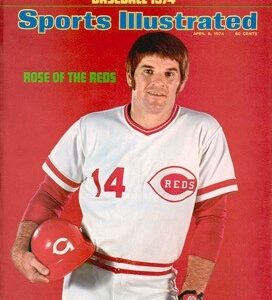
Last Monday, Peter Edward Rose made a formal request to be reinstated by Major League Baseball and asked that his lifetime ban be lifted. Newly-minted Commissioner Rob Manfred responded by stating he would consider the request “on its merits”. Spoken like a true attorney.

To be or not to be.

He loves me, he loves me not . . .

Will he or won’t he.

What’s with taking the oath of Commissionership that requires a bombshell be thrown in your lap within the first few months? Adam Silver had V. Stiviano and now Rob Manfred has Pete Rose.

So what to do with Pete Rose? If Manfred pulled out a legal pad, drew a line down the middle, and starting listing pros and cons, he might have to cut down a few yellow trees before he came to a conclusion. The simple question is: Has Pete Rose paid enough of a penalty? He has been banished from baseball – his one true love (replaced in recent years by money) – for over 25 years. Does that punishment fit the crime?

Apropos of nothing, as of 2013, 30% of murderers convicted and sent away on life sentences are let out of jail in less than 10 years, with an overall average of 16 years of incarceration. Now, I am not comparing Pete Rose’s betting on baseball to murder – not at all – I am just trying to show, for hyperbolic effect, how long a 25-year (and counting) sentence actually is.

It can be readily acknowledged that Pete Rose did something that we, as a society and as fans of baseball, feel is inherently wrong. We can also agree that in the years leading up to and following his banishment, Rose did not acquit himself very well. Time and again, when the powers-that-be were looking for contrition, they got stubbornness. When they were looking for remorse, they got obstinacy. He held his ground for nearly 15 years. Who knew you could hold your breath for that long?!?

It was not until 2004 when Pete finally admitted what everyone knew all along. Unfortunately, the timing of his (ahem) confession was marred on two fronts:

(1)  It was done not in the service of baseball, but in the service of making a buck. Pete made his confession three days before his autobiography “My Prison Without Bars” was released. People could not help but think this was less about seeking forgiveness than about seeking book sales.

(2)  It was done on the eve of the announcement of the 2004 Hall of Fame class. Knowing that he most likely would never be enshrined in Cooperstown, Pete took the occasion to piss on the Hall’s doorstep.

Stay classy, San Diego.

But, for the past decade, Pete has been a relatively model citizen. He has not ruffled too many feathers (other than setting up card tables for autographs on Hall of Fame weekend), and has basically kept as low a profile as one could ever hope/expect from the Pete Rose.

Here is the real: Baseball is better when Pete Rose is involved. You cannot deny what he brought to the diamond for nearly 25 years.  The hustle, the heart, the hits (both the Harrelson and base varieties).

(3:16 mark)

The fact of the matter is that Pete Rose played in more games, had more at bats, and got more hits, than any player in MLB history. Chew on that for a moment. He is an icon in Cincinnati, and he is a legend of the game. He has paid his penance. He should be allowed back in . . . with conditions.

Many people considerably smarter and more knowledgeable than I have written extensively on this topic, but I think I agree with the following premise: Pete Rose should be allowed back into the game on a limited basis. He should be allowed to come to the park, participate in team activities, and be honored at major events (e.g., the All-Star Game this summer in Cincinnati). He should not be allowed to be an executive or an on-field coach. He should not be allowed to be in a position to affect the outcome of any game. That seems easy enough, and Manfred could tailor this reinstatement in a way that preserves Bart Giamatti’s original intentions, without looking like he is reversing his predecessor’s course.

Little Known Fact #1 (that would be more widely known if you read Jayson Stark’s columns or his book “Wild Pitches”): In 2003, former teammates Mike Schmidt and Joe Morgan arranged a meeting between themselves, Bud Selig, and Pete, for Pete to fall on his sword, acknowledge his mistakes, apologize, and then, ostensibly, be reinstated. For reasons that a whole school of psychologists could spend semesters debating, Pete could not bring himself to the table. No meeting, no apology, no reinstatement. And here we sit today.

Okay, so let’s assume Manfred is inclined to let Rose back in. That always leads to the $64,000/bronze-plated question: Should Pete Rose be in the Hall of Fame? Sure, of course, without question, maybe. The answer is multi-layered, but before we go to the merits, we need to know who will be hearing the evidence.

Little Known Fact #2 (that would be more widely known only if you are a total and complete baseball nerd and/or live in upstate New York and/or write a blog that maybe a few people read): While the Baseball Writers Association of America is the organization we customarily associate with Hall of Fame voting, they will not play any part in the Pete Rose discussion because he has been retired for too many years (this form of eligibility expires 15 years after retirement). Thus, his election (or lack thereof) will be determined by one of the Veteran Committees. There are three (Pre-Integration Era (1876-1946), Golden Era (1947-1972), and Expansion Era (1973-Present). Pete overlaps the last two, but would most likely fall under the Expansion Era Committee.

This Committee is comprised of 16 people, including prior HOF inductees, executives, and veteran media members. And, if you are looking for a quick resolution, don’t. The Committee doesn’t meet again until the Fall of 2016 for potential induction in 2017. Manfred has some time to cool his heels and ponder reinstatement.

To quote Vin Scully, “it goes without saying, but I’ll say it anyway”. Pete Rose’s on-field achievements are Hall of Fame worthy. It truly comes down to his integrity. Do we believe he should be excluded from the Hall of Fame because his lack of integrity (at least with respect to betting on baseball) potentially affected the integrity of the game?

Little Known Fact #3 (and by little known, I mean widely known): The Hall of Fame is filled with people who lacked integrity, who were scofflaws, liars, cheaters, racists, and drug addicts, guys who through actions and deeds potentially affected the integrity of the game. It must be really hard to get a good view of all that when standing on top of Mount Pious. But I digress.

Little Know Fact #4: Pete Rose retired in 1986, and (but for being banned from baseball in 1989) would have been eligible to be on the Hall of Fame ballot in 1992. Shockingly, in 1991 the Hall ruled that players on the permanently ineligible list could not be voted in. Coincidence? I think not.

Here is where I land on the issue: The Hall of Fame is a baseball museum. It is not intended to be a home for the better angels of the game, but rather a collection of the game’s history. It should include the whole story, warts and all. (And, by the way, many pieces of Pete’s equipment already reside in the Hall’s permanent collection.)

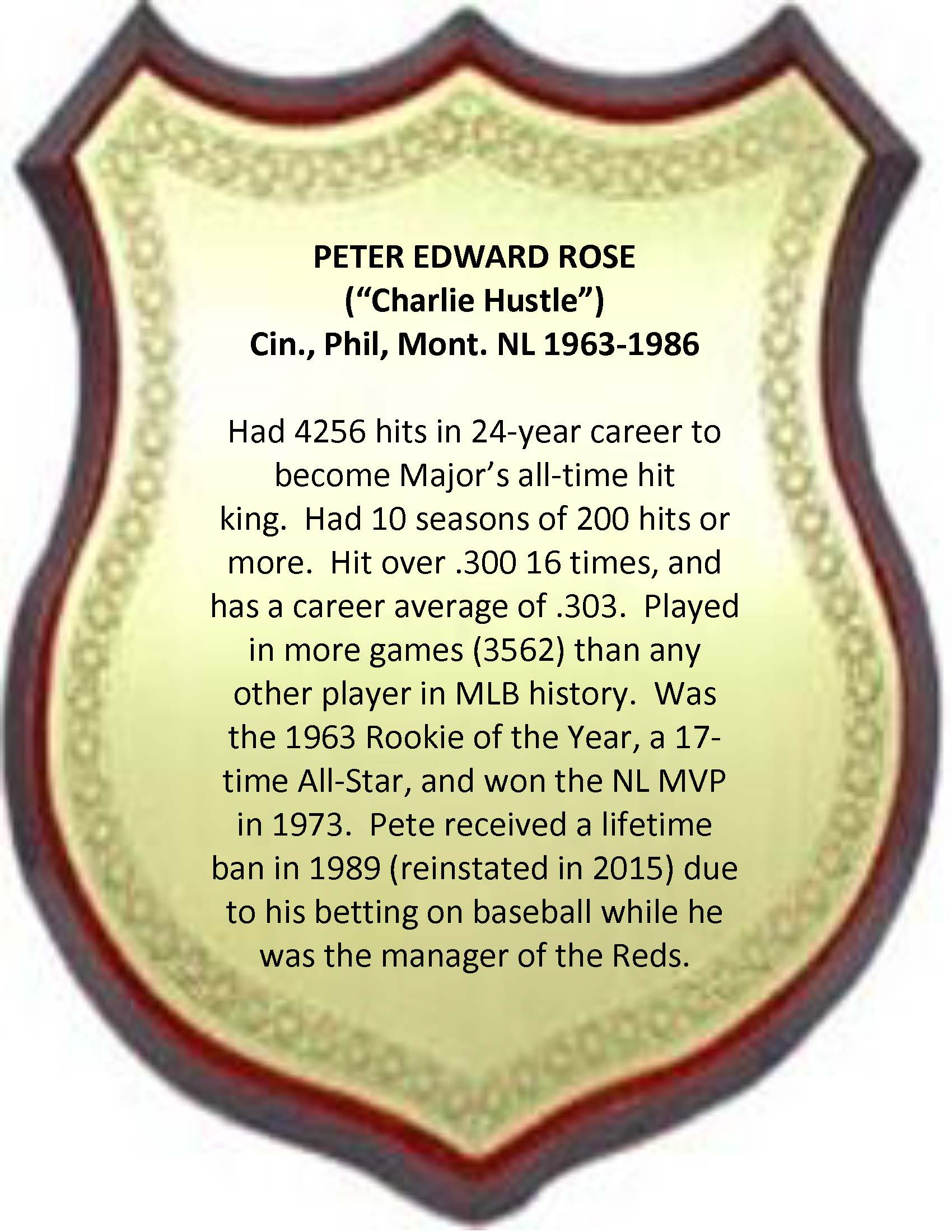
My solution is easy: Let him in, and put it all on the plaque. Pete’s plaque could look like this:

Pete Rose Plaque 3

That is what I would do. And, while we are on the topic, I would do the same thing for everyone who is Hall of Fame worthy but has been suspected of PED use. Put them in the Hall of Fame, tell the story, allow us to bring our kids to the museum so we can share our and their stories with the next generation – the good, the bad, and the suspected. I believe that is what Cooperstown was originally intended to represent.

Because, whether the baseball purists like it or not, try as they might, we simply cannot just ignore history.

Opening Day is just 2 weeks from Sunday.

PLAY BALL!

HOWE WILL JOSH’S STORY END?

HOWE WILL JOSH’S STORY END?

As I think I may have mentioned here in the past, each morning, before I even put two feet on the floor, I check Peter Gammons’ “Around the Majors” blog.  He always have useful tidbits from the day before, and loads of advanced metrics that even true baseball nerds would find overwhelming.  And each day, at the end of the blog, he lists current and former MLBer birthdays.  These birthdays will be the source material for another posting at another time, but one name earlier this week got me thinking.

On March 10 , it would have been Steve Howe’s 48th birthday.  You read that right, it would have been.  I am not sure how I missed – or more likely just forgot – that Steve Howe died.  I feel pretty confident that if you are reading this, you are well aware of Steve Howe, his career, and his downfall.  I would go so far as to guess that more than half of you know the exact number of times he was suspended (make your guess, the answer is below).  But I have to relate that I was shocked to realize (or be reminded) that he died in 2006.  And that got me thinking about our modern day Steve Howe   . . . Josh Hamilton.

If you all know Steve Howe’s story, I am certain that you know Josh Hamilton’s story.  But even if you do, it is worth recapping some of the high/lowlights:

He was the Number One pick in the MLB Draft in 1999 (ahead of Josh Beckett), and received a signing bonus of just under $4M.

In the Minors “he was introduced to tattoos and alcohol” (per his bio), and had his first rehab stint in 2001.  He checked in to Betty Ford in 2002.

In 2003, he showed up late for training camp and ended up missing the entire season for various “personal reasons” (including substance abuse).

In 2004, he failed at least three drug tests and was suspended for the entire season.

He tried a comeback in 2005, but was arrested for vandalism.  He relapsed again (was he ever sober?) in 2006, and, you guessed it, missed the entire season.

During the 2006 season Josh began a slow and steady rise out of the abyss, starting when he showed up on his grandmother’s porch, strung out and penniless.  Through hard work, dedication, an amazing support system, and an unbelievably forgiving MLB community, Josh was given a sixth chance.  And he made the most of it.

He played amazingly well for the Reds in 2007, but lost out to Ryan Braun (ironically) for Rookie of the Year.  He was traded at the end of the season to the Rangers.

2008 was a break out year, with the crowning achievement either:

  • His show of shows in the Home Run Derby at Yankee Stadium (worth the watch).

OR

In 2009, even though injured for part of the season, Josh was an All-Star.  The season, however, was marred when his old demons reared their head and Josh ended up hammered in a bar in Arizona.  It is unclear if he spent any time in rehab after this incident.

Regardless, he bounced back in 2010 with just the following (despite missing 29 games due to injury):

  • Batting title with a .359 average.
  • Led the AL with a 1.044 OPS.
  • ALCS MVP.
  • And finally, the American League MVP.

In 2011, Hamilton chapped my personal hide by diving head first into home plate and breaking his hand.  Well played, sir/jackass.  And he still hit 25 homeruns.  And then he was one Nelson Cruz catch away from being the MVP of the World Series.

In 2012, he went 5-5, with 4 two-run dingers in a game in Baltimore:

But that season ended with Hamilton first misplaying a flyball in the division championship game against the A’s:

https://www.youtube.com/watch?v=o5Fx4z0V2mY

and then striking out in his final at bat as the Rangers fans booed him:

As we all know, Arte Moreno backed up the Brinks truck around Christmas, 2012, and gave Josh a 5-year/$125M contract.  In my humble opinion, signing with the Angels was the beginning of the end.  When Josh was playing in Cincinnati and Texas, those teams employed a gentlemen named Johnny Narron to serve as a special assignment coach and Josh’s mentor.  Johnny traveled with Josh and stayed at his side nearly every minute of every day.  When with the Rangers, their then-manager, Ron Washington, was a recovering cocaine addict, so he was especially attuned Josh’s problems and needs.

However, when the Angels signed Josh, they did not bring Narron along.  The reasons for this are a mystery (made more mysterious by the fact that they eventually hired him last year, but not at the Major League level).  So Josh did not have the same support system in Anaheim that he had in Cincinnati and Dallas.  And guess what happened?

We may never know (and it’s not our business) how many relapses Hamilton has had in the past few years.  His most recent descent involved alcohol and cocaine, and he voluntarily confessed his sins to the Commissioner – it is not like he was caught doing lines in the bullpen.  Because of the manner in which Josh came back into the league in 2007, per an edict by the Commissioner, he does not automatically fall under the MLB Drug Program.  Rather, a four-person disciplinary committee was convened to determine his fate, and they deadlocked.  Thus, a neutral, third party arbitrator will make the final decision regarding Josh’s current predicament.

The Angels owe Hamilton $83M between now and the end of the 2017 season.  Ouch!  There is hope (quiet, unspoken, but hope nonetheless) within the Angels organization that he gets suspended, giving them some salary relief.  (If he is sent to rehab, he would be owed his full salary for 30 days, then half his salary for the next 30 days — a total of $6.2 million.  If he is suspended and not in treatment, he would not be paid.  It is unclear whether the Angels would have to pay Hamilton at all if he previously entered a rehabilitation program that lasted at least 60 days.  Heady and expensive questions to be decided by a single judge.)

But should the Angels get any relief?  As it is commonly said, “they bought their ticket”, or as we lawyers like to say, caveat emptor.  They knew what they were getting when the signed the contract; they didn’t provided the necessary support system; and even if they had, they had to know that relapse was nearly inevitable.  (The statistics say that between 50-90% of addicts relapse at some point.  I could not find specific statistics of repeated relapsers.)

I am pulling for Josh.  Not because he plays for a local team, and not because I care about the Angels throwing away nine figures on a broken down drug abuser, but because I am a fan of greatness.  And from 2010-2012, Josh was the picture of greatness.  A five-tool player who made it look too easy and was required viewing whenever he came to the plate.

As a side note, my friend Matt represented Hamilton when he came back with the Reds.  Josh called him after the season to say he was switching agents.  This was not because of anything Matt had done, but because Matt was Jewish; and Josh felt more comfortable being represented by a born-again Christian like him, someone who had also turned his life over to Christ.  My son and I ran into Matt at the 2010 All-Star game, and we asked him if it was still okay to root for Josh (friendship over fandom).  Matt’s response: “Of course, he’s too great a player and too great a guy not to root for him”.  That was all the license I needed.

How(e) will Josh’s story end?  Unfortunately, history has a way of repeating itself.  I have this feeling, this pit in my stomach, that one day we will open the Sports Page (or fire up the browser) like we did in 2006 (and then forgot about), and learn that another talented baseball player with a checkered past was found dead; another player gone as the result of some drug-fueled accident that we all saw coming a thousand miles away.  For the sake of Josh, his family, and for fans of baseball , Boy do I hope I am wrong!

PLAY BALL!!

Trivia Answer: 7

p.s.  For those who have known me a long time, Happy Birthday to this guy:

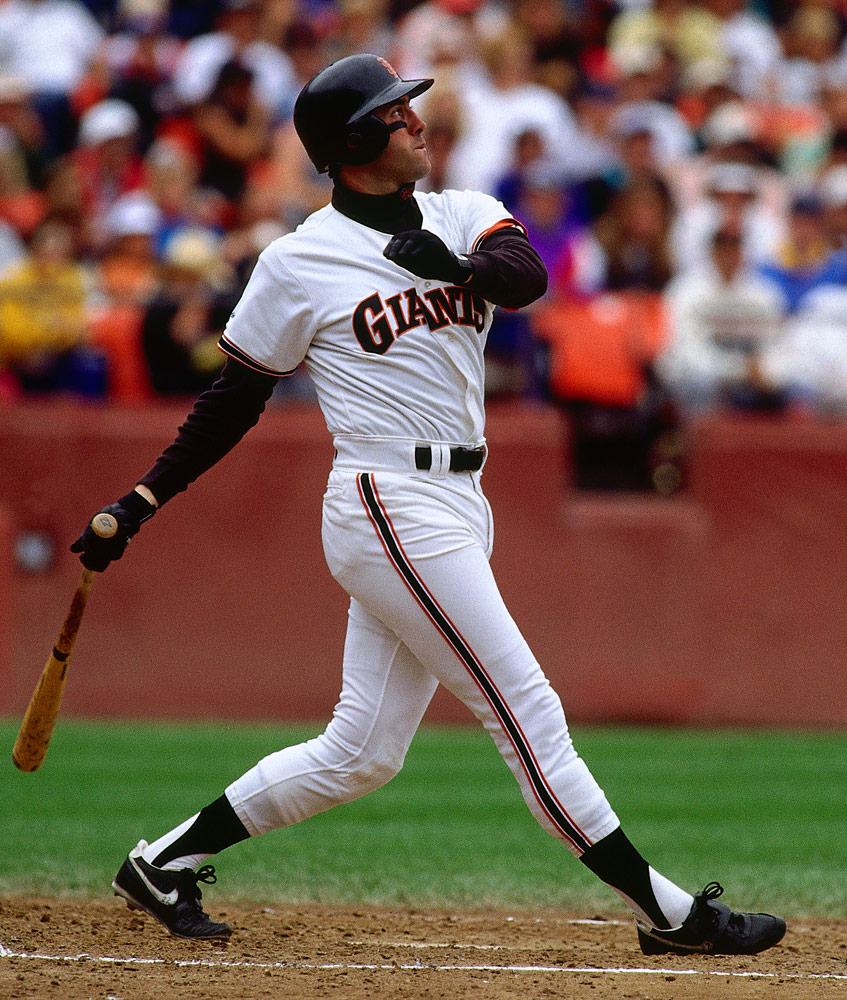
Blog_Will_Clark

Opening Gay (A Conversation)

OPENING GAY (A Conversation)

Daniel Murphy, the Mets second baseman, skipped Opening Day last season to be with his wife for the birth of their first child.  He got a ton a flak for that in the New York media – as would be expected as they give flak for essentially anything.  At the time – and still to this day – I commend(ed) him for this decision.  It wasn’t Game 7 of the World Series, and there would/should be many more Opening Days, but that is a moment that you can never get back.  So, other than being a slick fielder, swinging a good left-handed stick, and wearing Franklin batting gloves, that was about all I knew about Daniel Murphy.  And what I knew, I liked.

Fast forward 11 months.

But first, fast forward 4 months or flashback 7 months; however you want to flip the calendar.

Last July, then-Commissioner Bud Selig appointed former Major Leaguer Billy Bean as MLB’s first Ambassador of Inclusion.  In case you don’t know Billy’s story (he is not the Moneyball G.M. of the Athletics; this is Billy Bean without the “e”), he played in the Majors for part of six seasons.  He retired in 1995 because it was too difficult to hide his sexuality from his family, his friends, his teammates, and the fans.  In 1999, at the age of 35, Billy came out publicly.  And he has handled the fallout ever since.

MLB, having dealt with the likes of John Rocker, Ozzie Guillen, Yunel Escobar, and Roger McDowell, decided to be proactive.  They created the position of Ambassador of Inclusion in an effort to “offer guidance and training and to encourage equal opportunities for gays and lesbians in Major and Minor League clubs”.

Billy’s first few months in the position were relatively uneventful.  Then, he accepted Mets’ G.M. Sandy Alderson’s invitation to address the team at Spring Training.  Billy came in, gave a short speech, donned a uniform, and pitched the last round of batting practice.  All was right with the world.  After the workout, some journalists asked Daniel Murphy about Bean’s visit.   A quick, but very important, side note: Murphy is a devout Christian.  His response, however, may surprise you.  Herewith:

“I disagree with his lifestyle.  I do disagree with the fact that Billy is a homosexual.  That doesn’t mean I can’t still invest in him and get to know him.  I don’t think the fact that someone is a homosexual should completely shut the door on investing in them in a relational aspect.  Getting to know him.  That, I would say, you can still accept them but I do disagree with the lifestyle, 100 percent.

Maybe, as a Christian, that we haven’t been as articulate enough in describing what our actual stance is on homosexuality.  We love the people.  We disagree the lifestyle.  That’s the way I would describe it for me.  It’s the same way that there are aspects of my life that I’m trying to surrender to Christ in my own life.  There’s a great deal of many things, like my pride.  I just think that as a believer trying to articulate it in a way that says just because I disagree with the lifestyle doesn’t mean I’m just never going to speak to Billy Bean every time he walks through the door.  That’s not love.  That’s not love at all.”

There is so much in that statement, and I truly don’t know what to do with any/all of it.  This Blog never intends to be overtly or overly political, and certainly not religious, but I could not keep myself from throwing this out there to see what other people have to say, what you all think.

If we put aside the word “lifestyle” for just a second (which I know you can’t), the statement may be a model of what we want to teach our kids about accepting people who are, who look, who think, who act differently than we do.

If a devout Christian who has “surrender[ed] to Christ” can love someone who they vehemently disagree with, then the lyrics to Imagine may not be an impossible dream.  If you can “acknowledge a man whose words make your blood boil, who’s standing center stage and advocating at the top of his lungs that which you would spend a lifetime opposing at the top of yours”, then maybe there is hope for mankind.  [Bonus points for anyone who can give attribution to that quote. Link below.]

Unfortunately, we have no choice but to come back to the word “lifestyle”.  How much stock should we put into that word and that concept?  Is Murphy’s statement the start of a better dialogue and understanding, or is as far as some people will ever go on the issue?  Billy Bean seems to think the former:

“After reading his comments, I appreciate that Daniel spoke his truth.  I really do.  I was visiting his team, and a reporter asked his opinion about me.  He was brave to share his feelings, and it made me want to work harder and be a better example that someday might allow him to view things from my perspective, if only for just a moment.

I respect him, and I want everyone to know that he was respectful of me.  We have baseball in common, and for now, that might be the only thing.  But it’s a start.

The silver lining in his comments are that he would be open to investing in a relationship with a teammate, even if he ‘disagrees’ with the lifestyle.  It may not be perfect, but I do see him making an effort to reconcile his religious beliefs with his interpretation of the word lifestyle.  It took me 32 years to fully accept my sexual orientation, so it would be hypocritical of me to not be patient with others.

Inclusion means everyone, plain and simple.  Daniel is part of that group.  A Major League clubhouse is now one of the most diverse places in sports.  It wasn’t always that way, but we can thank No. 42 for that.  So in his honor, with a little patience, compassion and hard work, we’ll get there.”

I am conflicted, but Billy has considerably more credibility on this issue than do I.  So, after hearing Billy speak on the matter, I felt pretty positive; pretty upbeat.  And then I switched the channel to CNN and heard a retired neurosurgeon from Johns Hopkins, a man who is contemplating a run for President, say that homosexuality is a choice because people “go into prison straight – and when they come out, they’re gay”.  And then my head exploded.

I don’t have any answers, just more questions.  What I do know is that, fortunately, in my quiet little corner of the world, my kids are being raised in a community where being gay is only different in that it is not the norm.  Most kids in our neighborhood have a mom and a dad; but some have a mom and mom while others have a dad and a dad; and my kids have a stepmom and a dad.  Regardless of your beliefs on this issue, I think it is important to discuss it openly – out of the closet, so to speak – so that people can make their own informed and impassioned assessments.

Billy’s appearance at Mets’ camp and Daniel’s statement have not received nearly enough media coverage (what with private email accounts, and racist fraternity members, and NFL free agency), but it really should.  If for no other reason than the more light that is shone, the better we can understand the issues and each other.

And with that I say, truly unironically . . .

PLAY BALL!!!


p.s.         The answer to the question asked above is at 1:22.


LIFE LESSONS

LIFE LESSONS

The crack of the bat.

The pop of the glove.

The smell of the grass.

The click of the smart phone?

Ah, Spring Training is here.

If you are wondering which of the above is not like the other, you may have missed the current brouhaha involving Curt Schilling and his daughter, Gabby.

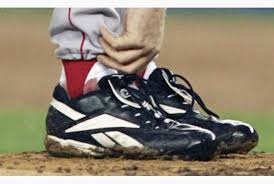
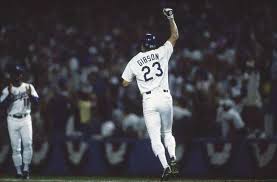
For starters, I have great ambivalence about Curt Schilling.  I have always found him to be pompous, arrogant, a poor businessman, and little too far to the right of Rush Limbaugh for my taste.  But then there is that small issue of the bloody sock and one of the greatest Willis Reed moments in the history of baseball (top two below). Theo Epstein showed up at his house for Thanksgiving dinner in 2003; Schilling promised Theo he would bring a championship to Boston; and 11 months later he helped Reverse the Curse.  And now this.

Blog_Bloody_Sock_1  Blog_Gibson_1

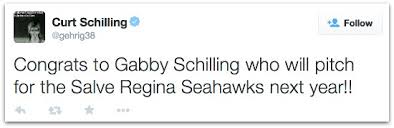
If you missed this story amongst the A-Rod hype or the LeSean McCoy trade or your own Little League opening days, it goes a little something like this: Curt Schilling has a 17-year old daughter who just got offered a scholarship to play softball at Salve Regina University.  As any proud papa might, Curt tweeted out congratulations.

Blog_Gabby_Tweet

What followed was shocking, but not necessarily unexpected. Internet/Twitter trolls started responding with some of the most vicious, hateful, nasty, and obscene comments you can imagine. (Note: I will not quote or link to any of them here.  If you are so inclined, they are available all over the Web.)  Okay, you think, that’s what happens on the Internet.  Maybe you, but not Schill.

No, Schill went all William Foster on some of these jackasses.  He (or some intern at ESPN) dug around and found out who these trolls are, where they work, where they go to school, and most importantly, their actual names.  And then he proceeded to blast that info across the Internet.


https://www.youtube.com/watch?v=muBJimrD7_M

One of the guys is a part-time ticket seller for Yankees.  Or at least he was.  He has been fired.  A student at Brookdale Community College has been suspended.  As of now, Schilling has decided not to go after any of the others, but he is looking into all legal options.

A couple of yahoos clicked 140 characters and probably had a good chuckle.  I guess they didn’t see this coming:

But wow, is there a life lesson to be learned here.

For me, the most important line of the movie “Social Network” is when Rooney Mara tells Jesse Eisenberg that the Internet is written in ink.

This is a message I have tried – time and again – to communicate to my teenage niece and nephew, and that which I am increasingly trying to get across to my soon-to-be teenage son.

Every kid I know has an iPhone or an iPod, with texting and Instagram and now Snapchat, and other apps just like them.  Soon they will be on Facebook.  But they simply don’t have the mental capacity to know – to truly understand – the implications of what they do/post/write.  We need to take advantage of these moments.

The Gabby Schilling situation has brought to the fore, writ large, what can happen when people write things on the Internet that they would never write on the blackboard in front of class or say to a person’s face.  And now, for at least two people, any Google search of their name will forever make reference to behavior that is/was/and always will be deemed deplorable.

While I am not sure what to do with the specific language in some of the horrendous tweets, I do want to share the entire story with my son so he can see the real-life, long-term consequences of what, I am sure, seemed like momentary cyber fun.

As I have said before, sports often offer up some of the best life lessons.  It is just a shame that Gabby Schilling had to go through this ringer so that we might be in a better position to teach our kids.

One last note: Opening Day is but 1 month away.

PLAY BALL!!

FOR THE LOVE OF . . . PART 2

 FOR THE LOVE OF . . . PART 2

So now we know.   Maybe.   Sort of.

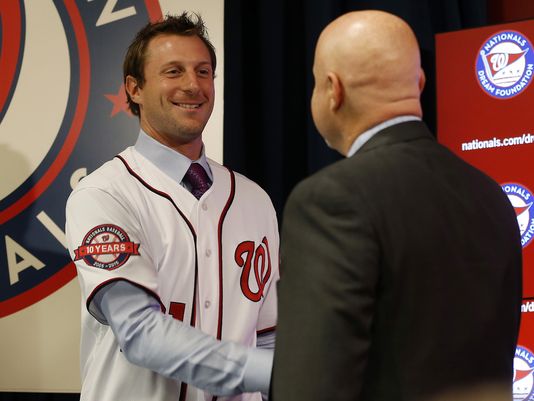
Did Max Scherzer sign the second richest pitching contract in history for the love of money or to win a ring?   Or both?  One thing we do know, another team had to offer $66M more than Detroit to make him change teams.  (Or did they?  See below.)

At the end of the day, it doesn’t really matter.   What matters is that Scherzer has aligned himself with a Murderer’s Row of a starting rotation that may very well lead to a World Series championship next October.

Blog_Fister Blog_Gio MLB: Washington Nationals at Chicago Cubs  Blog_ZimmermanBlog_Scherzer

Now, let’s get wonky.   If you don’t like math or minutiae, stop reading and clicking now.

Scott Boras, the dark lord of baseball agents, was able to put yet another player on the Nationals.  If you are scoring at home (or if you are alone (-K.O.)), that makes 7 players (out of 25) on the Nats’ roster represented by Boras.  Fine, that all makes sense.

But if you are Scott Boras, and you and your client turned down $144M last year, and you watched arguably your biggest agenting rival (the Levinson Brothers) sign Jon Lester to a $155M deal, and you know Clayton Kershaw got $215M last year, how do you compete?  Well, you use a little misdirection.

If you are so inclined, the link below will walk you through the “true value” of Scherzer’s deal (roughly $170M/7).  But, suffice it to say, the $210M number that has been reported doesn’t truly/accurately reflect the value of Scherzer’s contract.  Three Card Monty it is not; but true and accurate it ain’t either.

http://www.fangraphs.com/blogs/max-scherzer-and-when-210-million-isnt-210-million/

The structure of the deal is as follows:

  • $10M this year
  • $15M in each of 2016, 2017, 2018
  • $35M in each of 2019, 2020, 2021 (all deferred and paid over the ensuing 7 years)
  • $50M signing bonus spread over the life of the contract

http://espn.go.com/mlb/story/_/id/12212896/max-scherzer-pact-washington-nationals-gets-35m-per-last-3-seasons

Question #1 for all you labor lawyers out there:  How does Scherzer work for free from 2019-2021?  Doesn’t that violate some law?

Question #2 for math majors and accountants:  How is it a “signing bonus” if it is spread over the life of the contract?  (Note: I had this same question with respect to Jon Lester’s $30M “signing bonus” paid over the life of his contract.)

Question #3 for Boras and Mike Rizzo:  Does the “life of the contract” mean the 7 years of service or the 14 total years of payment?

I guess these are all high-class questions that don’t really matter to anyone other than business managers and the IRS.  But, dammit, I want to know!!

As I was discussing with a friend earlier this week, this deal harkens back to Bobby Bonilla’s renegotiated contract with the Mets from 2000.  In case you don’t regularly click on Cot’s Baseball Contracts (and you really should), here are the broad strokes:

In 2000, Bonilla was an aging, 36-year old, ex-slugger, to whom the Mets still owed $5.9M.  The Mets wanted to release Bonilla, and not pay him.  Shockingly, Bonilla was okay with that concept.  In return, he agreed to defer the money, with interest, as an annuity.  Starting on July 1, 2011, and continuing every July 1st for the next 24 years, the Mets cut Bonilla a check for slightly less than $1.2M.  If you do the math, Bonilla traded $5.9M in 2000 for $29.8M over what is essentially the rest of his life.  In short, Bonilla gets $1.2M/year for 25 years.

Now, based on everything I have read about Scherzer’s deal (way too much, to be sure), we can do the following math:

At the end of Scherzer’s 7 years of service to the Nationals (or any other team he is traded to, as he does not have a no-trade clause), after playing 14 years in the Majors and earning roughly $135M, Max will be paid $1.2/month every month, for 7 years.  Take that, Bobby Bo.

The best part of all of this: regardless of annual salary or the years or the amount of the deferral, Scherzer, and all other pitchers, report to Spring Training in 27 days.

PLAY BALL!!


FOR THE LOVE OF . . .

FOR THE LOVE OF . . .

What do we want from our athletes?  What is – or should be – their driving force?  They play for the love of . . . what, exactly?

From a young age we are taught – we are told – it is “all about the rings”.  I remember playing intramurals in college, where it was “all about the cotton” (championship t-shirts, that is).  But is that what it’s all about?

Should athletes play for rings?  Or should they play “for the love of the game”?  Or, knowing that they have very short shelf-lives, should they try to make as much money as possible, and let everything else be a secondary consideration?

These questions popped into my mind during some crazy Hot Stove action before the New Year.  As part of the Dee Gordon trade, the Dodgers sent Dan Haren to the Marlins.  Haren had previously told the Dodgers, who in turn informed the Marlins, that he would rather retire than be paid $10M to spend another 8 months away from his family.  Noble or knuckleheaded?  Too rich or too rude?  (As a side note, the Dodgers included the entire $10M salary as part of the deal, which the Marlins get to keep, gratis, if Haren retires.)

In 2011 – after an 86-win season in which they finished 10 games out of first place – Jered Weaver signed a discounted deal with the Angels to stay in his hometown.  Here is what he said at the time (it should be noted that he signed this deal over the objection of Scott Boras):

“If $85 (million) is not enough to take care of my family and other generations of families then I’m pretty stupid, but how much money do you really need in life?  I’ve never played this game for the money.  I played it for the love and the competitive part of it.  It just so happens that baseball’s going to be taking care of me for the rest of my life.”

Do we think less of him as an athlete because of this?  Or do we applaud his choice?

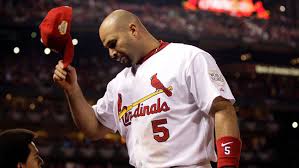
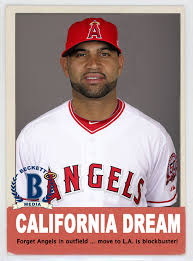
Albert Pujols could have retired the second greatest Cardinal of all time – a living legend in St. Louis.  Instead, he turned his back on the only professional organization he had ever played for and went for Arte Moreno’s riches (in actuality, he left St. Louis for a mere $20M more).  Good guy or bad?

Blog_Pujols_CardsBlog_Pujols_Angels

My personal bee-in-the-bonnet: Johnny Damon, the leader of the Idiots who brought Boston its first World Series title in 86 years, the guy who would never have had to pay for another meal in Boston, took an additional $12M over 4 years to play for the hated Yankees (the Red Sox offered 4/$40M, the Yankees 4/$52M).  I never understood why he would do this.  But maybe he loved the City of New York and always wanted to live there; maybe his wife was a Broadway aficionado who cajoled him into moving; maybe he was sick of the Back Bay and lobstah rolls; and maybe money was the only factor.  (Side note: Damon was represented by Scott Boras, so you do the literal math).  I don’t think we will ever know.  But we can still speculate . . . and stew.

Blog_Damon_NY_1

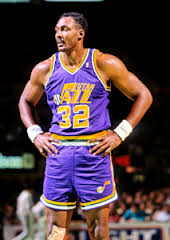
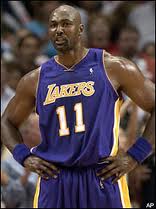
Back in 2003, Karl Malone (one of the two mainstays of the entire Jazz franchise) left Utah after 18 seasons to chase a ring with the Lakers.  A true professional? Or a disloyal backstabber?

Blog_Karl_Malone_Jazz Blog_Karl_Malone_Laker

We can all recount – from memory – the greats of the games who have never tasted the championship champagne.  Quick, off the top of your head, name five (mine below).  We always discuss these players in solemn tones, as if their careers ultimately lack something.  But do they?  Are their careers any less because they have never stood on the podium or visited the White House?  Maybe they were perfectly content playing for the love of the game and all of the riches (even if not maximized) that came with it.

How do we feel about these guys?  What is it that we want?  Play for rings, riches, region?

It’s easy to stand on mount pious and say what we would do.  But we don’t live in their world.  Bud Fox once asked Gordon Gekko “How many yachts can you jet ski behind?  How much is enough?” (Editor’s note: this line has always bothered me as, from my pauper’s viewpoint, I don’t believe you can actually jet ski behind a yacht.  See  1:46 mark below.)

But we, as normal people, cannot fathom how people calculate untold riches.  $74M may mean the same to us as $129M – at some point you cannot keep track.  But for Carmelo Anthony, based solely on dollars, that was the decision he had to make last summer when he re-signed with the Knicks.  He would have given up $55M to sign with the Bulls.  Add to that the fact that his wife loves living in New York and he has an 8-year old son who ostensibly goes to school and has friends.  And yet, Anthony was crushed by the basketball cognoscenti for putting money ahead of championships.  Is that fair?  Does anyone, with the exception of other athletes, have standing to opine on this topic?

Last Spring, Jon Lester – much to the chagrin of his agents, I am sure – told the Red Sox he would take a hometown discount to stay in Boston (despite the fact that he is from Atlanta).  The Red Sox tried to take advantage of this loyalty and low-balled him – offering him approximately 2/3 of what he eventually got (original Red Sox offer: 4/$70M; final deal with Cubs: 6/$155M).  With the Red Sox he had a chance to play for rings; he would have been able to stay home (in Newton); he would have shown loyalty.  But does anyone blame him for taking Theo Epstein’s money?

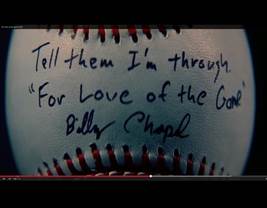
One last thought/question: What will we make of the eventual contract Max Scherzer signs?  The Tigers offered him 6/$144M last Spring and he turned it down.  Although he is not “from” Detroit (he is from the St. Louis area), he has lived and pitched in Detroit for 5 years.  He has no kids; just a wife who is active in the Detroit community.  The Tigers are a perennial contender.  How much more would another team have to offer, and who would that team have to be, to entice Scherzer make a move?  Depending on which team’s hat Max dons next month, we may know a whole lot more about him: is he playing for rings, riches, or region?  We already know – unlike that other Tigers’ pitcher – it isn’t just for love of the game.

Blog_Chapel_3

I truly don’t know the answer, as I am not even sure I can comprehend the question.  But, now that I have spent a minute contemplating the issue, I know I will think twice before I castigate another athlete for making a decision mere mortals cannot possibly grasp.

Last Note: The first pitchers and catchers report 6 weeks from tomorrow.

PLAY BALL!!
 

MY UN-TITLED ATHLETE ANSWERS:

  • Ted Williams
  • Ernie Banks
  • Dan Marino
  • Charles Barkley
  • Karl Malone


HOPE

HOPE

Hope is a dangerous thing.

We as fans – and as fathers – often fall victim to the curse of “hope”. We hope that our team will win the World Series; we hope that we get that raise or sign that client; we hope that our kids grow up healthy and happy.  And somewhere, in the deep recesses of our dreams – in places that we don’t talk about at cocktail parties – we hope our young son will one day play big league baseball.  Hope.  It’s a dangerous thing.

When I was 12 years old, I went over to a friend’s house to take batting practice.  You read that right, in 1984, he had a batting cage in his backyard.  And he swung a wood bat.  His dad had hope – maybe/probably too much hope.  He pushed and prodded, yelled and screamed, and made his son take batting practice with a broken wood bat to punish him for a late swing and bad mechanics at the plate.

Red told us that “hope can drive a man insane.”  So how was that father-of-the-year-candidate rewarded?  Third pick overall, a 14-year Major League career, 2 All-Star Game appearances; a Gold Glove; a 30-HR year and a season hitting .300.  Oh, and over $50M in lifetime earnings.  Dad may have been insane, but he wasn’t crazy.

You want crazy, here is crazy:

Each year, more than 2,500,000 kids play Little League baseball.  And that is just in the United States.  Add to that over 500,000 kids playing Pony Baseball.  And we simply cannot account for the tens (hundreds?) of thousands playing with rocks and sticks in far-away places and on far-away islands. In short, a lot of youngsters lace up (or, more accurately, have their dad lace up) their cleats each Spring.

In any given year, there are 1280 Major League baseball players.  If we assume that the only universe of players is from Little League and Pony baseball (which is a horrible assumption, but one we will use for illustration purposes only), that means that, on average, 4 out of every 10,000 Little League/Pony players will make it the big leagues.

“Well,” you say, “my goal is just to have my son play ‘professional’ baseball.”  Okay, let’s take a look at that: There are approximately 242 teams in the Minor Leagues, with each having 25 players on their roster.  Not accounting for movement within teams, you have approximately 6000 Minor League players.  That means that 20 out of every 10,000 Little League/Pony players might play professional baseball.

So, if your Little League, like ours, has roughly 700 players in a given season, 1-2 kids in entire league (Wee Ball through Majors) may play “professional” baseball at some point in their life.  Purely on a statistical basis, you would need to run through all 700 players, nearly 4 times, before you found a Major Leaguer in the mix.  High hopes indeed.

https://www.youtube.com/watch?v=cJVewWbeBiY

But then, one morning, you pick up the newspaper or you fire open your web browser – or, if you are like me, you get alerts from MLB and ESPN – and you see that a local boy just 7 years out of high school, has signed a contract worth nearly a third of a billion dollars.  That is Monty Burns money.

And you think to yourself…maybe?!

As we look ahead to yet another Little League or Pony season, as we yell at our kids from the dugout or the stands, as we lament their failings and overly praise their successes, always remember the Wisdom of Red:

Hope is a dangerous thing!

PLAY BALL (and eat turkey)!!

112

112

In early March, we headed to Arizona (and some headed to Florida) and watched PFP on side fields.  We sat on the grass and drank cold beer in the warm late-winter sun.  We harangued superstars, has-beens, and never-will-bes for autographs and baseballs.  We got our juices flowing, then they “headed north”.

For seven months we could go to bed with the dulcet tones of the Web Gems jingle lulling us to sleep and wake up to read a box a score.  Like Kenny’s wooby, we had the comfort of knowing that baseball was with us – day in, day out.  Whether your drug of choice was Baseball Tonight or Quick Pitch or, or, heaven forbid, FoxSports1, you got your drug.  Whether your dealer was Buster Olney or Derrick Goold or Keith Olbermann, or heaven forbid, Fred Roggin, they were there, on the corner (of your dial) waiting to give you wanted – what you needed – every evening.  And now, in the blink of an eye, like a Keyser Soze, it’s gone.

We wake up this morning with no “today” or “tomorrow” – in the baseball sense.  We only have yesterday.  And what an amazing yesterday it was.  For seven months, we were the lucky recipients of so many brilliant yesterdays that we will have the luxury of telling the tales of Jose Abreu and Derek Jeter and Josh Beckett (someone born the day of the Dodgers previous no-hitter would have a driver’s license and be getting ready to vote), of Mike Trout and Victor Martinez (he of 32 HRs and only 42 SOs).  We will be able to bounce our grandkids on our knee and tell them that we got to watch Clayton Kershaw pitch at the height of his powers – that for one majestic 4-week period, we watched the best pitcher on the planet make something so difficult look so easy, that it had to be seen to be believed.  And that was just the regular season.

When the leaves began to change, and the weather (everywhere outside of Southern California) began to cool; when the kids were fully entrenched in school, and the pumpkin patches started popping up on otherwise desolate fields we never before noticed, baseball took on a new intensity.  October started with the Royals rallying from 4 down with 5 outs to go to start them on an enchanted journey that would end up littered with Halos and migratory birds; a yellow brick road that actually led back to Kansas (City).

The Giants set themselves up by having their best pitcher pitch their biggest game (on October 2nd), and then jumped on his back for the next four weeks.

We were then treated to a terrific 10 days of baseball.

We love to speak in hushed tones of times past; of historic World Series moments. Those moments – in our words – are basked in a sepia glow – never as bright as the moment itself, but ever more poignant. We all have our favorites:

Jackie Robinson sliding in (safely?) at home, stealing a base that only a cat burglar would have tried to swipe.

Yogi Berra jumping into Don Larsen’s arms at the end of the only no-hitter (a perfect game, no less) in World Series history.

Bill Mazeroski walking off the World Series for Western Pennsylvania and the history books (at least until 1993).

There is Pudge Fisk (we have to explain to our kids that there was an original “Pudge” before Rodriguez) waving and willing a ball fair in the 12th of inning of Game 6 of one of the greatest World Series ever played.

http://www.youtube.com/watch?v=agkJ5WFNL4k&feature=player_detailpage

Who can forget Reggie Jackson’s “3 Swings”?

Or, just that single swing against rookie Bob Welch?  (BTW, it’s worth the 6 minutes.)

How about Pops Stargell literally jumping for joy in 1979?

Or when Don Denkinger became a household name.

When Bill Buckner’s life – and the lives of New Englanders up and down the Eastern Seaboard – changed forever (or for at least another 28 years).

Bill Buckner Error

“She is . . . gone!”

Kirby Puckett scaling walls.

MLB.com animated GIF

Joe Carter doing his best Bill Mazeroski impression, and then celebrating like a Little Leaguer (in a good way).

Jim Leyritz doing the unimaginable.

Luis Gonzalez breaking his bat (and the hearts of New Yorkers a month after 9/11) against a drawn-in infield.  (Not for nothing, but listen to Tim McCarver’s observation at the :30 mark of this video.)

23-year old Josh Beckett completing a 5-hit shut-out in the House that Ruth built – on 3 days’ rest.

Josh Beckett, 2003 World Series Game 6--5-hit shutout

A one-hopper to Keith Foulke that ended one of history’s longest droughts and brought the phrase “Now I can die in peace” into the vernacular.

Three of the wildest innings you will ever watch (endure?) on cold night in St. Louis in 2011.

Baseball officianados – or so we thought – (re)learning the obstruction rule in real time.

But, even considering all of above, we had the pleasure and honor these past few days of watching Mad Bum.  What did he do?  Well, quite simply, he made history.  In a world of pitch counts and specialized relief corps; in a world of $200M arms, and countless Tommy John surgeries (39 in the Majors and Minors between February and May); in a world of cautious managing, we saw something remarkable.  And, like Halley’s Comet, something we may never see again in our lifetime.  Time may dull the memory, but the statistics and records will forever stand: 21 IP, 9 H; 17 K; 0 BB; 0.43 ERA; .476 WHIP; 2 Wins; 1 five-inning Save (the longest in WS history) on 2 days’ rest.  We have run out of superlatives; he was simply astonishing.

There have been 110 official World Series.  Some are memorable, and others are easily forgotten (quick quiz: who played in the 2005 World Series?  Answer at the bottom.).  In an incredible season of baseball, we were treated to a fantastic finish.  Two Wild Card teams, neither with 90 wins, neither with great odds to get past their first game, let alone three rounds.  Blow outs and nail biters.  And it ends with a 25-year old horse doing things we may never see again, with the tying run dying 90 feet from rapture.  Does it – can it – get any better?

A quick aside so it can be put to rest forever: There is no world in which Alex Gordon should have been sent home; and had he been, we would have seen the first World Series end with an out at home plate (lest we forget the 2003 Division Series ending with JT Snow lying prone and Ivan Rodriguez clutching the ball like it was Temple of Doom.

View image on Twitter

A secondary aside: Had they sent Gordon, the World Series may have been determined based on an interpretation of Rule 7.13, which was put into effect after a season-ending injury to whom?  That’s right, Buster Posey.

A tertiary aside: Moments before that ball was hit, my son said, “I am glad I am not on that field.” And sure enough, Gregor Blanco let the moment (and the ball) get away from him, and seconds later Juan Perez did the same.  Lost in all of the hoopla, though, was Brandon Crawford’s play on Perez’s low throw.  Crawford fielded that throw from the wall on a clean short-hop, and was in a perfect position to throw Gordon out.  Had Crawford’s hands not been so Palmolive soft, Gordon could have scored with any form of bobble or drop.

A last aside: Third base coach Mike Jirschele is in his first major league season (as a player, coach, or otherwise).  After playing 13 years in the minors (topping out in Triple-A), after 11 seasons managing the Omaha Storm Chasers, after a total of 36 years on buses and in motels in the bush leagues, at age 59, Mike Jirschele “got the call”.  Do we think that guy, in that situation, was going to go to take that risk?  An aside to the aside, this is a great read if you have a moment:

http://espn.go.com/espn/feature/story/_/id/10619278/a-long-journey-spring-royals-coach-mike-jirschele-path-mlb

So here we are.  We awaken on the day before Halloween as we have three times in the last 5 years – with the San Francisco Giants as champs.  But it feels different in that we wake up today with a potential juggernaut on our hands in Missouri, and they don’t have birds on their chest.

And, regardless of the winner or the loser, we face today with a tiny glimmer of hope; a miniscule lining of silver on an otherwise cloudy day; we face today with the promise of tomorrow:

There are but 112 days until pitchers and catchers report!

http://www.springtrainingcountdown.com/

PLAY BALL! (Soon enough!)

Answer: Astros vs. White Sox

IT’S ONLY JUST A GAME

IT’S ONLY A GAME

The tragic and shocking news of Oscar Taveras’s passing on Sunday cast a pall over Game 5 of the World Series.  Buster Posey, the potential new face of baseball had this to say:  “My first thought was, ‘This game is not that important.’  I mean, we make so much about the World Series and it’s fun, it’s a fun game that we get to play, but life is much more important.  Something like that will bring you back down to earth really quickly.”

We put so much value on sports, we figuratively live and die with our teams.  Kids and adults alike shed tears when the ball doesn’t bounce “our” way.  And yet, at the end of the day, it is just a game.

Roberto Clemente, one of the greatest players of all time, died in an aviation accident at the age of 38, while en route to deliver aid to earthquake victims in Nicaragua.

Thurman Munson, the heart and soul and captain of the ‘70s Yankees, died when his Cessna crashed, at the age of 32.

Darryl Kile, a 20-game winner for the Cardinals, was found dead in his hotel room from a sudden heart attack, at the age of 33.

Nick Adenhart, the 22-year phenom for the Angels, dead at the hands of a drunk driver.

Blog_Adenhart_1  Blog_Adenhart_2

Tim Crews, veteran starting pitcher, died in a boating accident at 31. His 27-year old teammate, Steve Olin, was also killed in the accident.

Blog_Crews_1

Josh Hancock, a pitcher on the 2006 World Series champion Cardinals, killed in a drunk driving accident at age 29.

Blog_Hancock_1 Blog_Hancock_2

Longtime major league pitcher, Cory Lidle, was 34 and pitching for the Yankees when his plane crashed into a building in New York.

Blog_Lidle_1

Donnie Moore took his life in 1989.  We all thought it was because no one him taught him “it’s only just a game”, but his demons ran considerably deeper.

http://www.theatlantic.com/entertainment/archive/2011/10/the-myth-of-the-home-run-that-drove-an-angels-pitcher-to-suicide/247447/

The eight names above are part of a list of 41 players who, since 1964, died while playing Major League baseball.

Contained in this list are so many life lessons.  Drunk driving; drug use; the need to take care of your body and mind; and, universally, the unpredictability of life.

What we impart to our children, on the field, in the classroom, and around the house, needs to include that last lesson.  Life is short; enjoy every moment.  I can speak with first-hand knowledge of how precious the moments are, and how you regret them when they are gone.  Play hard, play to win, but, most importantly, play.  Smile, laugh, enjoy yourself.  You never know when those moments will be no more.

http://www.youtube.com/watch?feature=player_detailpage&v=kuq7RYQ8Wa0

As baseball fans, we talk about the hit-and-run, and the suicide squeeze, and gunning him down, and do-or-die moments, and yet none of those actually ring true.  Life is precious, games are games, and perspective is necessary.  So, no matter who you root for, come Tuesday (or Wednesday) night, when people are rioting and looting in San Francisco and/or Kansas City, try to remember, and try to teach our kids, it’s only just a game.

And with that, PLAY BALL!

THAT JUST CAN’T HAPPEN

THAT JUST CAN’T HAPPEN

 Over the past few years, I have seen my son strike out looking with runners on base in late innings situations.  And each time I have the same response: “that just can’t happen”.

I coach my son’s travel team, and I find myself saying, on a weekly basis, after one pratfall or another, “that just can’t happen”.

And yet, time and again, it happens.

I think we sometimes (read: all the time) forget that (a) we are dealing with kids and (b) the fact that they are kids is wholly and totally irrelevant.  I was reminded of this – yet again – as I watched the Dodgers lose to the Cardinals – yet again.

It seems that the Cardinals rarely have a “that can’t happen” moment, while the Dodgers had a few too many.  But it isn’t just the Dodgers.

And, when I reference “that just can’t happen” plays, I don’t mean bloopers.  I mean plays that, if your head was in the game, if you kept your focus, if you played like you were taught, and/or if you understood the magnitude of the moment, the play would never have happened.

My first memory of a “that just can’t happen” moment hails from the 1988 NLCS (although I am sure if I really search my memory banks, I could probably come up with an earlier example).  Two years ago this Sunday, Game 7 of the NLCS, Dodger Stadium, top of the 9th inning, two outs, and a 3-2 count (before you scroll down, do you remember what happened?).

**

**

**

**

Howard Johnson strikes out looking to end the 1988 NLCS:

Two years later, a somewhat meaningless game early in the season, the Mets strike again.  David Cone decides it makes more sense to have his voice heard than concern himself with the runners on base:

I am sure the ‘90s are chalk full of examples, but I was too busy in college and law school to plop myself in front of SportsCenter every night to catalogue them.  Worry not, the most recent decade does not want for examples of “that just can’t happen” moments:

2006 NLCS, Game 7, Mets trail the Cardinals 3-1, the bases are loaded with a 3-2 count and 2 outs in the bottom fo the 9th .  Does it get any more perfect?  Oh, and at the plate is a guy who hit 41 HRs and knocked in 116 during the season.  So, naturally . . .

But wait, there’s more.  2010 NLCS, Phillies trail the Giants 3-2 with 2 on and 2 out in the bottom of the 9th inning, a guy who had 229 homeruns over the course of the past 5 seasons at the plate:

http://m.mlb.com/video/topic/0/v12902225

League Championship Series, that is chump change.  Let’s up the ante.  2012 World Series, Tigers trail the Giants three games to none, down a run in the bottom of the 10th inning, THE TRIPLE CROWN WINNER at the plate:

The following season.  A lovely Sunday afternoon at Chavez Ravine. Juan Uribe holding third after a sacrifice fly that moved all the runners up, when Evan Longoria does his best Little League or Bill Veeck impersonation, and catches the portly third baseman off guard:

Here is a really painful one.  Game 4 of the 2013 World Series, Cardinals trail the Red Sox 4-2 in the bottom of the 9th.  With one out, Allen Craig singles to right, bringing the tying run to the plate.  After an out is recorded, the Cardinals’ last hope is potential future Hall of Famer Carlos Beltran – he of the career .333 post-season batting average and 16 post-season homeruns; the guy looking for redemption for his ʞ in 2006.  Before Beltran could even dig in, let alone swing his lofty bat, Wong got caught leaning:


This one hits a little too close to home, as I was coaching a game a few years ago that we lost when our pitcher could not execute an intentional walk with the winning run on 3rd base and two outs. However, in this case, it worked out well, as the Nationals ended up recording the out when (a) Buster Posey was late breaking to the plate (borderline “that just can’t happen”) and (b) Wilson Ramos makes a terrific recovery and throw.  To set the stage, Game 4 of the 2014 NLDS, the Giants have just taken a 3-2 in the bottom of the 7th inning (on a wild pitch, no less), and the Nationals were intentionally walking Pablo Sandoval to set up the double-play:

http://www.cbssports.com/mlb/eye-on-baseball/24742788/video-wild-pitch-on-intentional-walk-leads-to-nats-giants-controversy

And lastly, to the chagrin of Dodgers fans all over the Southland; a play that has been overlooked due to a knock, a bloop, a hanging curveball, and a legacy tainted.  But, lest there be any doubt, this play will loom large for years to come.  Game 4 of the 2014 NLDS, the Dodgers plate two runs in the top of the 6th to break a scoreless tie.  With two outs, Andre Ethier leads from 3rd and Juan Uribe scoots off 1st.  Seth Maness bounces a pitch that looks to get past Yadier Molina.  If nothing else, the Dodgers will have two runners in scoring position with A.J. Ellis (he of the .538 average in the series) at the plate.  Well, if nothing else, unless (a) Ethier strays too far from the bag, and (b) Ethier decides to keep his uniform pristine.  Get dirty, get safe.  Ethier chooses not to; Molina guns to Matt Carpenter (damn that guy!); Carpenter tags Ethier on the forearm (the forearm, really!?); rally over; inning over; a few minutes later, season over.

http://m.mlb.com/news/article/97888478/cardinals-challenge-overturns-safe-call-ends-dodgers-threat

The moral of the story: it’s not worth pulling our hair out when our kids do stupid shit on the baseball field.  All told, the stories above include players who made a combined $80M in salaries in the years those plays occurred.

It seems that money can’t buy happiness, and it sure as hell can’t always buy competence.

[SMH] “That just can’t happen!”

PLAY BALL!!