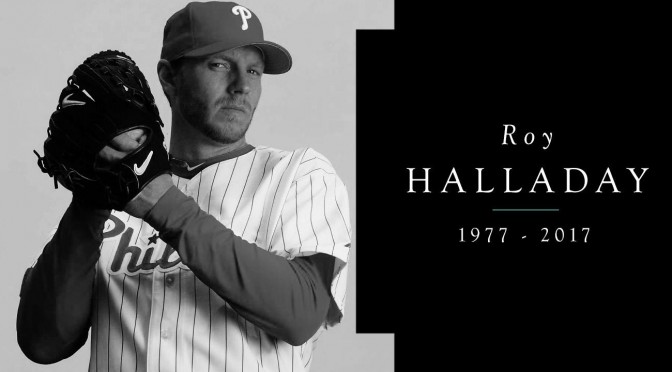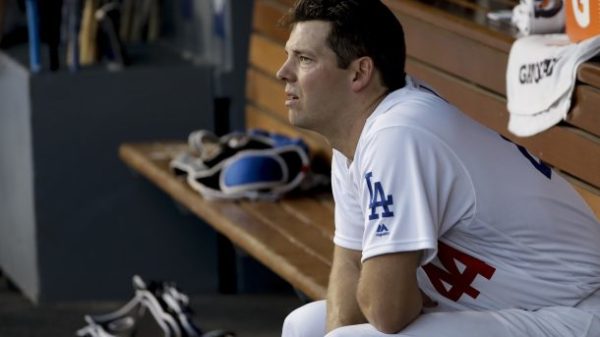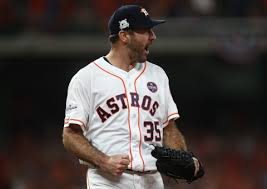

Roy Halladay: 1997-2017

I have suffered a great deal of loss in my years. I have attended more funerals, and delivered more eulogies, than most people do in a lifetime. And when someone dies, we, as a society, have an immediate reflex to turn the deceased into a saint, a hero, a flawless soul who graced this mortal coil for too short a period. In those moments of despair, we often overlook the faults, imperfections, peccadilloes, that made the person whole, made them human, made them them.

I have never subscribed to this theory of post-mortem hagiography. Maybe I am just a “warts and all” type of guy. Maybe I am just an unrepentant pessimist. Or maybe I am just honest. With all of that said, feel free to deify me upon my interment.

I have given this idea a great deal of thought while reading so many glowing obituaries and memorials and tributes to Roy Halladay, who died tragically in a plane accident on November 7th. To read the words written by those who knew him well, by those who him a little, by those who rooted for him, and those who just watched him from afar, you get the sense that this man was really as great as he seemed.

Halladay’s statistics speak for themselves, and even absent an untimely death, it is safe to say that they are clearing a spot for his plaque in Cooperstown some time after 2019. Doc’s intensity was well-known to baseball fans in two countries – his refusal to speak to teammates on pitch days; his glaring at batters to get back in the box; his 5am Spring Training arrivals. It wasn’t just teammates, rivals loved watching him pitch.

“I can’t believe it. So many times we competed against each other and even while competing, I wanted to see you! My condolences to his family” — via Twitter, @45PedroMartinez

But there are so many other attributes that are either overlooked or unknown. There was the mentorship that happened in the clubhouse, but was not publicized. There was the quiet donations, including a police dog to the very sheriff’s office that led Halladay’s recovery effort. There was (and will continue to be) the Halladay Family Foundation that aides children’s charities, hunger relief, and animal causes. There was the Little League coaching that spread to both dugouts, as Roy was loathe to horde his knowledge and deny other children the experience and expertise he had gained over a lifetime on the diamond. There was the love of flying that endeared him to his new “team” in the aviation community. There was his being a role model for scores of pitchers, including the man who saved the final game of the World Series just over a week ago. And there was the multiple nominations for the Roberto Clemente Award, given to an MLB player for sportsmanship and community involvement, an award named for a man who died, ironically/coincidentally/cosmically, too young in a plane accident.

Roy Halladay, coming off a season with a 10.64 ERA, was a dark horse to become his generation’s best pitcher. He was the rare bird who lived up to the words written about him by professional scriveners. He was a hard-working Phillie and a free-flying Blue Jay, an inspiration to all.

R.I.P. Doc, the world of baseball, and the world in general, was a better place for having you.

PLAY BALL!!

It’s Better to Be Lucky Than Good (or Smart)

The Dodgers and the Astros are two of the most analytically-driven organizations operating in baseball today. Andrew Friedman has a background in finance, and ran the low-budget Rays for years on a diet of limited dollars and copious spreadsheets. Jeff Luhnow came to the Astros (from the Cardinals) in 2011, armed with degrees in Economics and Engineering, and revamped the Astros’ front-office, installing a lose-to-win strategy (read: “tanking”), which paid off handsomely Wednesday night.

We, as fans, are not privy to the scores of data that are provided to the manager, coaches, and players before each series, ahead of each game, during each inning. So we are often left scratching our heads at decisions that look, to us, irrational. But to the managers, coaches, and players, they are all part of a master plan. We may not love this form of baseball; we may prefer decision-making from the good ol’ gut or based on something imperceptible to us, but glaring to someone who has spent a lifetime sitting on the top step of a dugout. Welcome to baseball in 2017.

For executives like Friedman and Luhnow, it is about having the world’s best inputs, the most rigorous analysis, and then trusting the #process to produce the most advantageous results. These types of leaders strive for outcomes derived from a thoughtful plan, which is predicated on the aforementioned input and analysis. Outliers are unimportant; what matters most are the aggregate fruit plucked from a well-planted decision tree.

However, even with all of the statistical back-up, the iPad on the bench, and laminated cards in the players’ back pockets, we witnessed a handful of, um, strategies, during the World Series that defy explanation. These were decisions that did not seem to flow from a thoughtful process or with a strong statistical advantage. After a thrilling World Series, seven games filled with tension, lead changes, and many, many homeruns, we won’t talk about these moments as they somehow ended in the team’s favor. Yet if these decisions had produced a different result, we may be discussing them for years to come. I guess sometimes it is better to be lucky than good (or smart).

Because Buster Olney, Joe Sheehan, Tom Verducci, Bob Nightengale, and Jerry Crasnick don’t have time to write about these; and before Jayson Stark finds the novelty in each one; and before Ben Lindbergh and Michael Baumann and Jeff Sullivan break them down to their most granular level; and before Joe Posnanski writes something pithy about them, allow me to address some of the 2017 World Series’s most head-scratching moments:

GAME 5

7th Inning: With the score tied at seven , Justin Turner led off with a double. Kiké Hernández hit only .159 against right-handed pitching this season, so asking him to bunt may have seemed like the correct call. But for a guy with nearly 1,000 career at bats, Hernández has a total of 2 sacrifice bunts. And it showed. Kiké bunted right to Brad Peacock who wheeled and threw out Turner at third. One out, runner on first. When Cody Bellinger tripled three pitches later, Hernández scored, and Kiké’s bunt and Turner’s out did not matter. But all of that begs the larger question: In a slugfest wherein 14 runs had been scored in the first six innings, did Dave Roberts honestly believe that one run over the next three would win the game?

9th Inning: This one doesn’t fall on the manager, per sé, but coaching may have played a role. After Yasiel Puig’s one-out, one-handed two-run homer in the 9th inning to cut the Astros’ lead to 12-11, Austin Barnes stretched a long single into a way-too-close-for-comfort double. Being aggressive is great, being reckless is not. A slightly better throw leaves the Dodgers with the bases empty, chasing a run, down to their last out. Chris Taylor singled home Barnes, tying the game, and now Barnes looks daring, not careless.

GAME 6

5th Inning: Rich Hill threw four innings in Game 2. After the epic Game 5 in which the Dodgers used seven pitchers throwing a total of 195 pitches, the conventional wisdom held that Hill needed to go deep into Game 6. Dave Roberts eschewed convention and scoffed at wisdom. After getting himself into a second and third no-out jam, Hill struck out Josh Reddick and Justin Verlander. That turned the lineup over with two outs. Roberts elected to intentionally walk George Springer to face Alex Bregman. I guess this was a lesser-of-two-evils dilemma with first base open: at that point, Springer was 8-23 with four homers and two doubles; Bregman was 7-24 with two homers, a double, and a walk-off hit the game before. Heads you win, tails I lose. With Springer now on first and the bases now loaded, Roberts pulled Hill after 58 pitches (45 strikes). So much for going deep. And he replaced Hill with the gassed Brandon Morrow. The same Brandon Morrow who gave up four runs over six pitches in his last outing. What did Morrow do? He induced Bregman to ground out to end the inning. Great result, but I’m not too sure about the process.

6th Inning: With the Dodgers trailing 1-0 and the pitcher due to bat second in the bottom half of the inning, Roberts elected to make a double-switch in the top half. Going by the book, Roberts removed the player who had made the last out. In doing so, he replaced Logan Forsythe, who was hitting .313 in the series, with Chase Utley, who was 0 for his last 29. Huh? Of course, no harm was done as Utley got hit by a 2-2 breaking ball and eventually scored on Corey Seager’s sac fly. (Side note: Can someone please explain to me how Seager’s flyball didn’t land ten rows into the Pavilion?)

7th Inning: The sixth inning ended with the Dodgers leading 2-1. Verlander was due to bat second. He had thrown 93 pitches, so he probably had another 35 in him. Upon leaving the field, Hinch told Verlander he was done for the night. Justin donned his jacket and got a drink of water. My question is why not wait to see what the leadoff hitter does? If Reddick gets on base, Verlander could (attempt to) bunt him over; and if Reddick fails, then you simply pinch hit for Verlander. But at least give yourself the option. Of course Reddick walked, and instead of having Verlander bunt him to second (or, at worst, strike out with Reddick stuck at first), Evan Gattis pinch-hit and rolled into a force out. After a Springer single, Hinch was forced to use Derek Fisher as a pinch-runner. Kenta Maeda then retired Bregman and Jose Altuve; and now the Astros had one less pinch-hitter and one less pinch-runner available. Oh, and they now had to go to the leaky bullpen instead of getting a little more out their horse while trying to keep the game in check. Joc Pederson hit a homerun off Joe Musgrove in the bottom of the 7th, so that didn’t work out so well. But the Astros won the World Series, and Verlander was available (?) out of the pen in Game 7, so I guess all’s well that ends well.

8th Inning: Two on, two out in the bottom half, Dodgers lead 3-1 with a chance to break it open. A.J. Hinch replaced Luke Gregerson with Francisco Liriano to face Cody Bellinger. At that moment, Liriano had not pitched in nearly two weeks – his last appearance was in Game 5 of the ALCS. In Liriano’s career, he has fared just slightly better against lefties than righties, and in Bellinger’s rookie season, he has a higher batting average against lefties than righties. So, yes, this was an odd decision. And, of course, Liriano struck out Bellinger (his fourth K of the game; his sixth in his last ten plate appearances; and in the midst of what would be nine out of fourteen to end the World Series).

8th Inning: Dave Roberts went to the Kenley Jansen well early in Game 6. Sure, this was a must-win. Sure, Jansen had been the best closer in baseball the past few seasons. But Jansen had also thrown in four of the last five games, he had thrown 90 pitches in the World Series, he already had one loss and one blown save, and given up a garbage-time homerun. So Roberts asked Jansen to record six outs, and then be ready to do the same in Game 7. Had the Dodgers been protecting a one-run lead, an argument could be made for this move. But shouldn’t a 104-win team with bullpen strength at least try to get an out or two out of Cingrani, Fields, McCarthy, and/or Stripling? Jansen went on to get six outs using 19 pitches (18 strikes), forcing a Game 7, and made Roberts look like a genius.

GAME 7

7th Inning: Speaking of misusing Jansen, what is the thinking behind having him take the mound so early in Game 7, while trailing 5-0? I get that you want to keep the Astros at bay, but Alex Wood did that in the 8th and 9th, and ostensibly could have done so an inning earlier. Assume – for the sake of making the game more exciting – that the Dodgers mounted a rally and scored four, five, or imagine, six runs in the seventh and eighth innings. Who was Roberts going to use to close the game after burning Morrow and Jansen? This seems like a risk not worth taking in a deciding game. Alas, the Dodgers couldn’t muster any offense and the issue became moot. But what if…?

THE WORLD SERIES

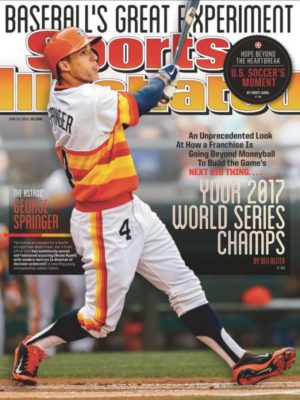
One would think – but I cannot opine with certainty – that big corporations have really smart people using really advanced data to make really difficult decisions every day. And I assume that publishers, in this subscription-troubled, online-centered, fragmented marketplace, are careful about what and how they market their wares. So it seems to me that making a bold prognostication – three years in advance – on the cover of one of your flagship magazines, is not in keeping with a conservative approach to investment returns. And yet, that is exactly what Time Inc. did with Sports Illustrated in June, 2014. Not only did SI get it right, they had the World Series MVP on the cover. Yup, sometimes it is better to be lucky than good.

PLAY BALL!!

Game 5: A Long Day’s Journey Into Morning

At about 11pm Eastern time on Saturday night, as the Dodgers wrapped up Game 4, my wife asked me the following question: “Do you want to go to the game tomorrow night?”

I dismissed the idea out of hand; but she was already fingers-deep into Travelocity, attempting to change flights out of Florida and into Texas. Before I could even ponder the imponderable, she had a plane ticket and a hotel room on hold. Her next question was the big one: “Can you get a ticket?” I explained to her that in today’s world, you can always get a ticket. As the old adage goes, “it’s just a question of price.”

After querying friends and family, I elected to sleep on the time-consuming and expensive decision. I woke up Sunday morning wholly ambivalent; I cannot recall the last time I was so torn. Mark Twain once opined: “Twenty years from now, you will be more disappointed by the things you didn’t do than by the ones you did do.” Twain sat on my shoulder and whispered in my ear. The idea that I might miss something magical (I was thinking a Kershaw no-hitter), and regret it forever, was too much to bear. So, as Mr. Clemens implored, I threw off the bowlines and sailed away from the safe harbor of Palm Beach airport.

When I arrived in Charlotte to switch planes, I learned my 4:50pm flight to Houston (which would have gotten me there in time for the national anthem) was delayed until 7pm.

Crestfallen. That is the only word I can use. Despondent, crushed, hopeless? Those work as well. I was trapped in North Carolina with a stupidly-priced ticket burning a hole in my pocket, and no way to get deep in the heart of Texas. 7pm became 7:15pm, which became 7:25pm, which became an 8pm take-off. Doing the math – which I had been doing for three hours – I knew I would arrive at the park, at best, in the 6th inning, but if Kershaw and Keuchel duplicated Game 1, I would get there in time to help clean the stands.

I considered bagging the whole plan and grabbing the next flight to L.A., but I had come this far (and didn’t want to spend more money changing another flight). Like it or not, this was my journey; destiny my guide.

The 2 hour and 37 minute flight to Houston came in 11 minutes early – minor miracle. Channeling my inner Ezekial Elliott, I charged to the front and was the first to deplane at 9:29pm. Channeling my inner Jerry Maguire, I sprinted through George Bush Intercontinental Airport, literally threw my suitcase into a cab and told the cabby – in a cliché – “there is something extra if you get me downtown in twenty minutes.” I was standing in the Crawford Boxes at 10:04pm – it was the top of the sixth.

I had missed the first five innings. I had missed the Dodgers blow 4-0 and 7-4 leads. I had missed Bellinger’s three-run homer and Altuve’s counter-punch. I had missed Kershaw and Keuchel. I was not about to miss another pitch.

Before the bottom of the sixth, I walked down the third baseline and found a family leaving Section 116 (mind you, it was nearly 10:30pm on a school night). They gave me a seat in Row 20, and I did not move for more than two hours. No bathroom breaks; no beer runs; no seventh-inning-stretch ice cream. Hell, I barely sat down. The Astros fans in Row 19 decided this was a “stand all game” situation, so I followed suit.

What I witnessed, endured, and withstood for next five innings was unlike anything I have ever experienced. If you are like me, you have obligations outside of sports. You have wives/husbands, kids, a job. You cannot devote your life to a sporting event. How many times have you wished a game would just end because you have a meeting early the next morning? Or the anticipation of post-game traffic fills you with so much dread that it interferes with your enjoyment of the game? But on this night, 1,500 miles from home, with no wife and no kids to attend to, a hotel room across the street, my only concern being a flight more than ten hours away, I was all-in. When Chris Taylor came to bat with two outs in the top of the 10th and the tying run on second, I wanted the base hit because I was rooting for the Dodgers; I wanted the base hit because a three-run ninth to tie the game would be epic; but mostly, I wanted the base hit because I simply didn’t want this game to end. I. Could. Not. Get. Enough!

Many writersall more skilled than I, have written about this game. You all watched it. You know the highs and lows, the ins and outs, the excitement and disappointment, and all the moments in between. But being there was something else. It was an emotional roller coaster with no end in sight. One of the beauties of baseball is the lack of a clock, so there are no constraints on the potential end point. This game could still be going, with Bob Knepper pitching against Tom Niedenfuer. In the stadium, we weren’t privy to the statistical oddity we were witnessing, we just had to intuit it. We didn’t have the replays and the commentary available to those watching at home, so we relied on one another to talk ourselves through what just happened. Did that actually happen? It was a communal experience, and I wasn’t even a real member of the community.

As good as the coverage and analysis has been, there are certain things you cannot appreciate watching the game on television. An in-person observer’s account:

  • Angela Matthews, a 10-year veteran of the Texas Air National Guard sang “God Bless America” as part of the 7th inning stretch. She was joined by 43,000 back-up vocalists, who made this rendition one of the coolest I have ever heard. Houstonians and Angelenos joined together as Americans for three minutes of beautiful harmony in the midst of a gut-wrenching battle of wills.
  • From my angle, George Springer’s homerun on the first pitch of the bottom of the 7th was still rising as it left the yard. It was gone instantaneously, and landed – as many have pointed out – with an explosion on the train tracks above the left field seats. It seems implausible you could hit a ball harder.
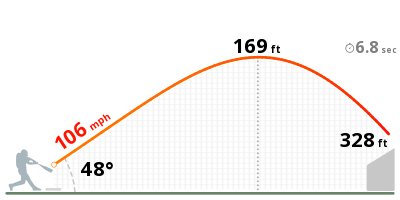
  • I have never seen a ball hit higher than Carlos Correa’s homerun three batters later. Off the bat, I was excited to finally see a ball hit the roof. It went so high, and hung in the air so long, that I had time to track the ball, then track Kiké Hernández tracking the ball, then track the ball again, then watch Kiké drift back to a few feet in front of the left field wall, and then watch the ball drop into the second row of the Crawford Boxes as if discarded by a wayward seagull. StatCast tells us that the ball went 169 feet in the air and stayed there for 6.8 seconds. It was unreal.

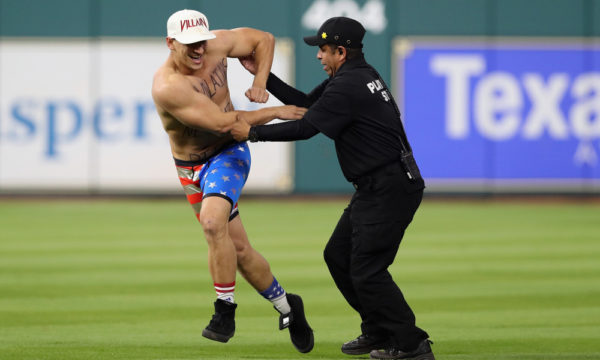
  • At one point, an overzealous fan in American flag boxers (and not much else) sprinted onto the field. He juked and jived, pissed off Houston’s finest, and ultimately found himself hogtied with multiple knees in his back. Bummer he missed the rest of this game to win a sophomoric bet.
  • With two out in the bottom of the 9th, Asia’s public enemy number one hit a long drive to left center. Off the bat, I was certain this was a walk-off homerun. This was Gibby, Kirby Puckett, David Freese, and a handful (13) of others who ended a World Series game with a dinger. As sure as I was that Cody Bellinger had ended Game 2, there was no doubt that the guy who should have been suspended just ended Game 5. The ball hung in the air for what seemed like forever, only to touch down in the one place – the only place – in the entire ballpark where it was not a round-tripper. While that ball traveled nearly 400 feet, 43,000 people held their collective breath. It was an odd sensation. Somehow the ball hit just below and just to the left of that all-determining yellow line. Karma? Gurriel was left in scoring position and we had free baseball.
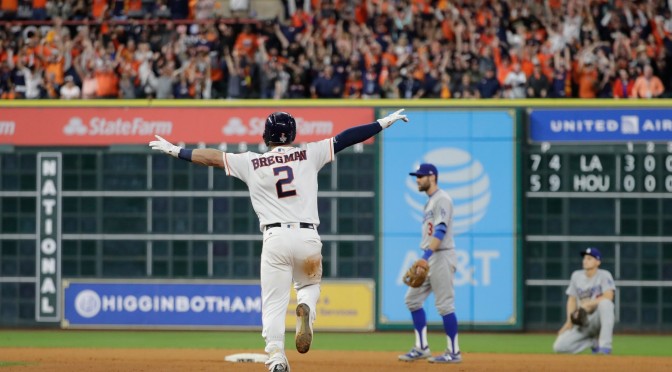
  • When little-known Derek Fisher slid home with the game-winning run following Alex Bregman’s 10th inning single, the roar in Minute Maid Park was extraordinary. Equal parts exultation and exhalation, the Houston Hopeful were going home Monday morning one win away from a World Series title. I am told you could get a feel for the crowd noise on television; I cannot imagine that is even half true. It was thunderous, raucous, cacophonous; and it stayed that way for a long time.

This game had ties in the 4th, 5th, and shockingly, the 9th inning. Three 3-run leads were blown. There were 11 runs scored from the 7th inning on. The Dodgers scored three runs (to tie the game) in the top of the 9th, each time with two strikes. So many crazy, insane, incomprehensible things happened in this game that we can hardly remember the merely extraordinary. In time, we will remember, and we will look back with awe.

My Sunday started in Florida, and ended on Monday morning in Texas. In between I experienced more emotions than I can recount. Upon leaving the park well after 1am local time, I called my wife – the instigator of this odyssey – and she asked me: “Was it worth it?”

If you love baseball as much as I do, and if you have read this far I am assuming you do. And if so, then such a question needs no response!

PLAY BALL!!

Addendum: The foregoing was written in the haze of Game 5. In that time, Game 6 was played. Dave Roberts did all sorts of weird things, and they all seemed to work. Joc Pederson continued to only get extra-base hits. And the Dodgers beat Justin Verlander. By 2017 standards, this game was somewhat quotidian. As such, Game 7 stands to be one for the ages. As I write these words, I feel tonight much like I did early Monday morning: unsure how I will be able to fall asleep! An incredible season has but one game left, winner take all.

Glass House of Emotion

When I coached my son’s baseball team, the kids would often have “big league” moments – trying to do it like the pros. Whenever I saw it, I would tell the player: “Just show me your professional contract, and you can do that. Until then, you have to do it my way”. The inference, of course, was to play fundamentally, be a good sport, and never show up the other side.

Due to what many view as overly stringent celebration rules, the NFL has derisively become known as the “No Fun League”. The same hasn’t been said of Major League Baseball, where pitchers police such behavior with a 5-ounce sphere hurled at 90+ miles per hour.

But there are times when fun and emotion should enter the sacred space between the lines. And the World Series is one of those times. And, if that is the case, there was no better time than Game 2 of this year’s Fall Classic, which some are calling the greatest non-clinching World Series game of all time. It’s hard to quibble with that assessment.

The beauty of Game 2, besides the lead changes, the ties, and the wacky bounces (the bill of a centerfielder’s cap, the groin of an umpire), was found in the many moments that, if they happened in our kid’s Little League game, would cause an uproar in the stands and a stern talking-to on the drive home. But, under the bright lights of the game’s largest stage, each was transcendent in their own right.

As great as Game 2 was, I believe it all started with the last out of Game 1. With the Dodgers clinging to a 3-1 lead, Kenley Jansen induced the dangerous Jose Altuve to fly out to right to end the game. One would think – for younger players we would demand – that securing the last out of a World Series game should be a by-the-book two hand reception, making certain nothing goes awry. If you were expecting that, you haven’t seen Yasiel Puig play. Puig caught the ball around his left hip with his tongue out (but he at least he used two hands). Puig was just warming up.

Verlander vs. Hill provided us with a handful of emotional, triumphant, and in light of the stakes, glorious moments that wouldn’t be acceptable if the bases were only 60 feet apart, but were spectacular because they are 90. A random sampling:

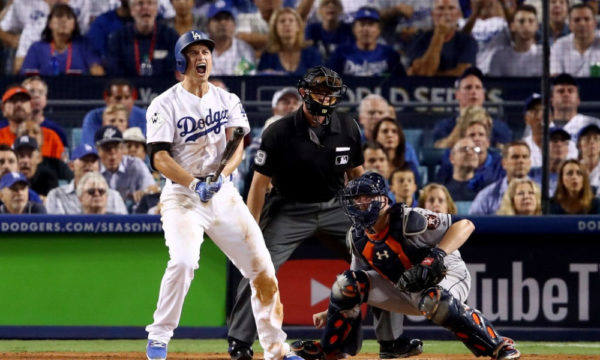
Corey Seager’s Primal Scream.
It’s one thing for a guy to make contact, and by the time he leaves the batter’s box to know he got it all. It is quite another for a hitter to let it all out immediately after contact. If any of our kids had done that, they wouldn’t have made to it to first base before being properly reprimanded. But when you take Justin Verlander deep to give your team the lead in the World Series, primal screams are the order of the day.

Carlos Correa’s Bat Flip.
I (and everyone else) previously wrote about the all-time bat flip in the 2015 ALDS. And there is no question that Jose Bautista still retains his position on the Mt. Rushmore of post-homerun-bat releases. But Carlos Correa joined the pantheon in the 10th inning of Game 2. And man did he earn it.


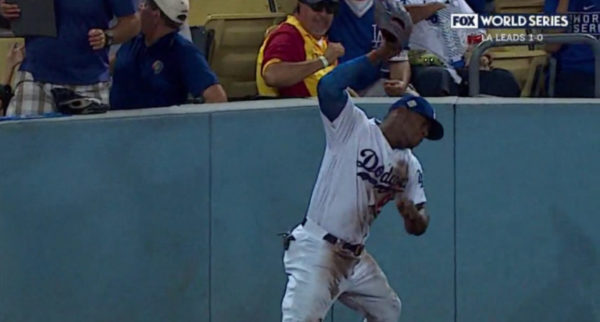
Yasiel Puig’s Glove Slam.
Alex Bregman led off the top of the 8th with a line drive to the rightfield corner. Puig went all out (or did he?), and with his run and dive, covered approximately 64.5 feet. Unfortunately, according to Stat Cast, he needed 65 feet to make the play. The ball flicked off the end of Puig’s glove and into the stands for a double. Yasiel leaped to his feet and slammed his glove down with such force that I half thought the grounds crew would need to be called to level off the warning track. Watching the game live, I thought Puig had nothing to be angry about – it would have been an amazing catch. However, in the world we now live in, we can determine things at the most granular level. According to Mike Petriello of MLB.com, during the season, Puig’s average “Sprint Speed” this season was 28 feet per second. In the 8th inning of Game 2 of the World Series, Puig’s “Sprint Speed” was 27 feet per second. Puig was running for approximately two seconds (probably a touch more). Had he been running at his average speed, he would have covered at least an additional two feet, and most likely made the catch. So maybe he had good reason to be angry. Either way, if your child or mine slammed his glove like that, ooh boy! (As an aside, maybe there is something about playing the outfield in the playoffs at Dodger Stadium the impels a glove slam.)

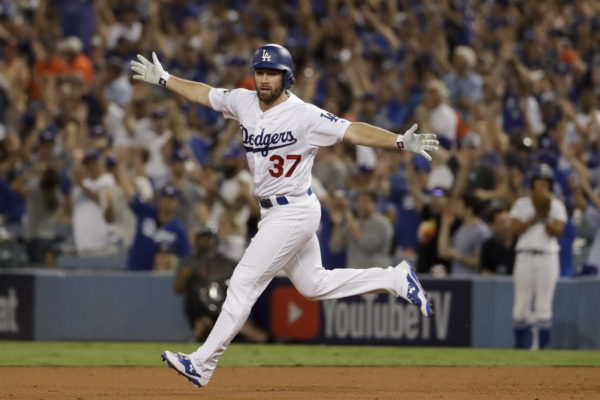
Charlie Culberson’s Rambunctious Trot.
We may never know what was going through young Charlie’s mind as he rounded the bases with two outs in the bottom of the 11th inning. Maybe he forgot that George Springer had hit a two-run homer, so he thought he had tied the game with his blast. Maybe he forgot all about George Springer and thought that he had won the game. Or maybe, after being inserted into Cody Bellinger’s spot in the lineup as part of an 11th inning double-switch, and after only getting two hits the entire season, and after only being on the post-season roster because of Corey Seager’s balky back, he was overcome with emotion hitting a homerun with two outs in the bottom of the 11th inning of a World Series game. Had a 12-year-old done that, his coach would have said two things: “We haven’t won anything yet” and “Act like you’ve been here before”. For Culberson, while the former was accurate, there was simply no way for him to fake the latter.

Rich Hill’s Reaction.
This picture doesn’t tell even half the story, but I think the Dodgers have scrubbed the internet of the images that the Fox cameras caught when Dave Roberts told Hill he was done after four innings and 60 pitches. Suffice it to say, Hill was none-too-pleased. I can certainly understand why. Twelve outs recorded, seven via the strike out, only one run allowed. I am sure Hill felt like he had many more bullets in the gun and, as a career journeyman who just started getting good at age 36, I can appreciate that he didn’t want this moment to pass without leaving it all on the field. However, this is how the Dodgers ran their staff all season. The top of the lineup – a heavily right handed lineup – was due to face Hill for the third time. And, truth be told, he was really one New Era bill away from being down 3-0 after 2½ innings. Roberts made the right call; but that doesn’t make Hill’s reaction any less human. We just wouldn’t tolerate the same from our kids.

We are just getting started in what stands to be an epic battle. I am predicting the Dodgers in seven; but it could easily go the other way. One thing is for sure: it will be a wild ride. So let’s continue to give these “kids” (by normal societal standards) the latitude they deserve to play with as much heart, excitement, and yes, emotion, as they can muster. Ask Cal Ripken – they may never be here again.

PLAY BALL!!

A Star Was Born: Kiké Hernández Goes Hollywood and Honors Puerto Rico

In the Summer of 2012, a few years before Sports Illustrated christened the Houston Astros the 2017 World Series champions, my son’s travel baseball team ventured to Lancaster, California to watch the Single-A Jethawks play.

The purpose of the visit was for each player on my son’s team to take the field for the national anthem (no kneeling) with his Jethawk counterpart, get a ball signed, and then head to the stands to take in a night of mediocre Minor League baseball.

When the kids met on the field with the head of Public Relations, they were told exactly what to do. A moment later, the Jethawks’ unassuming second baseman gathered the kids and told them, “as soon as the anthem is over, sprint to centerfield and give the player a high-five”. The P.R. woman balked – loudly. She implored the kids to follow her plan and come off the field immediately. The second baseman gave the kids a cockeyed grin, raised an eyebrow, and without saying a word, enticed them to follow his plan.

As you might imagine, the kids listened to the player, gave high-fives in centerfield, and hustled to the stands. The P.R. woman was only mildly annoyed, the boys had a laugh, and everyone had a story to tell.

Two years later, my son stopped me as I walked through the living room. “Dad, remember that guy in Lancaster who told us to go to centerfield? He’s playing second base for the Astros today.” “Really? What’s his name? How do you remember him?”, I asked. “His name is Enrique Hernández, and I just remember him”, he replied. I guess that second baseman was pretty memorable.

I didn’t give any of it much thought at the time. It is pretty rare for a Single-A player to make it to the “Show”, so that was different. But, why would I care about a scrub replacement middle infielder for the Houston Astros, a team that would go on to lose 92 games?

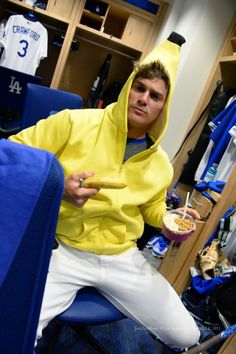
A month later, Hernández was traded to the Marlins, and I was certain I would never hear his name again. But that off-season, he was traded to my hometown team, the Los Angeles Dodgers. Kiké, as he is known, hit .307 in 76 games for the 2015 Bums. But, more importantly, he became the team cheerleader, the head of the Rally Banana brigade. The team and the city embraced this slightly off-kilter utility player, and a love affair was born.

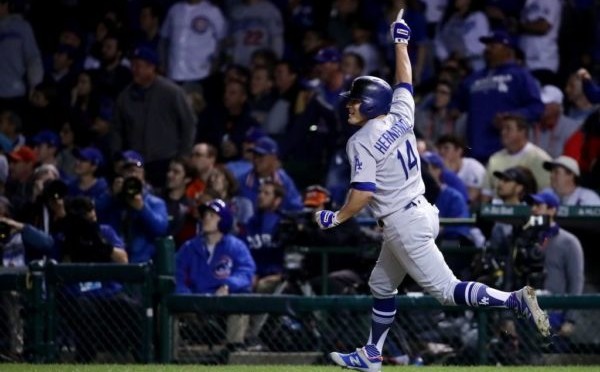
Fast-forward to 2017. Kiké is a staple of the Dodgers lineup, playing eight different positions over 140 games. But Hernández, a native of Puerto Rico, was only batting .125 in the first six games of the playoffs against the Diamondbacks and the Cubs. So Dodger Owner and Chairman Mark Walter gave Kiké a little incentive before Game 5 of the NLCS: Get on base twice, and Walter would donate $1,000,000 to Puerto Rico hurricane relief. Well, with one out in the third inning, Kiké had left the yard twice and Puerto Rico had $1M coming its way. But neither Walter nor Hernández was done. The owner got word down to the Dodgers dugout that if Kiké could go “big fly” one more time, Walter would add another million to the donation.*

So when Hernández hit his third homerun of the game in the top of the 9th, and he jumped around the bases like one of those kids he instructed to run to centerfield five years earlier, very few people watching the game knew the reason for his excitement.

In many ways this has been a magical year for the Dodgers, with 104 wins and clinching the pennant while losing only a single game. They did it with the deepest lineup in baseball, with a group of players that never questioned their role or their number of at bats. They did it with their best players spending a considerable amount of time on the DL (their best position player wasn’t even on the NLCS roster). And they ultimately did it in the defending champion’s ballpark.

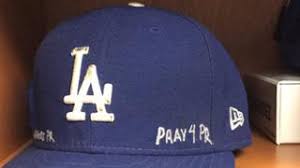
But, it has also been a tragic year for many people in many places around the globe. So how special is it that the Dodgers are heading back to the World Series for the first time in 29 years, on the bat of a player who has “Pray for Puerto Rico” written on his cap, and who through his play and the through the generosity of his boss, will bring desperately needed support to an island in horrific despair. It is nothing short of remarkable that the Banana Boy has become a local and national hero.

As I look back on that night in Lancaster half a decade ago, I guess I should have known that the kid with the twinkle in his eye, the kid who made an immediate connection with everyone he met, the kid who played the game with equal parts skill and heart, would become a star in Hollywood. Whatever happens over these next several days, in the face of all conventional wisdom, Kiké Hernández is now etched into Dodger lore.

PLAY BALL!!

*If you are feeling charitable, and want to contribute to the island where, as of this writing, 80% of the population is without electricity and 27% is without water, please visit this site: https://www.youcaring.com/peopleofpuertorico-957793.

One Pitch


The Astros won the AL pennant on Saturday night.  A clean 4-0 victory over the one-season-too-soon Baby Bombers.  However, one pitch could have changed it all.

If you checked Sportscenter Friday night, you would have seen that the Astros beat the Yankees 7-1 in Game 6 of the ALCS.  “Wow”, you would have thought, “the Astros got their mojo back and blew out the upstart Yankees”.

But if you were watching the game, and specifically the 7th inning*, you might have an entirely different view on the matter.

As a quick reminder, the Astros won the first two games of the series, and led 4-0 in the 7th inning of Game 4.  The Astros were six outs away from a commanding 3-1 series lead, with Dallas Keuchel and Justin Verlander set to pitch the next two games.  In the space of less than two innings, that all came crashing down; the Yankees scored six unanswered runs, won the game 6-4, and then won Game 5.  And, just like that, the ‘Stros had their backs against the wall.

So when the Astros found themselves leading 3-0 in the 7th inning of Game 6, the ghosts of the Bronx had to be floating about the home dugout.  Verlander had been cruising – 75 pitches through six innings.  But he started the top of the 7th by walking Greg Bird on six pitches.  Two pitches later he had hit Starlin Castro.  Now the Yanks had the tying run at the plate with nobody out.

In case you haven’t been following, the Houston bullpen is a minor dumpster fire at this point.  It is not a Cubs-level conflagration, but it is smoldering.  So A.J. Hinch desperately wanted to get seven innings out of Verlander and just find a one-inning bridge to Ken Giles.  However, when Verlander started Aaron Hicks with three straight balls, things were not going according to plan.

I have previously written that the two-strike pitch is what makes me love baseball.  There is nothing like it in all of sports. However, it need not be a two-strike pitch that changes the entire complexion of a game – or a series. Sometimes, it is just one pitch. And in Game 6 of the 2017 ALCS, we saw that one pitch, over and over again.

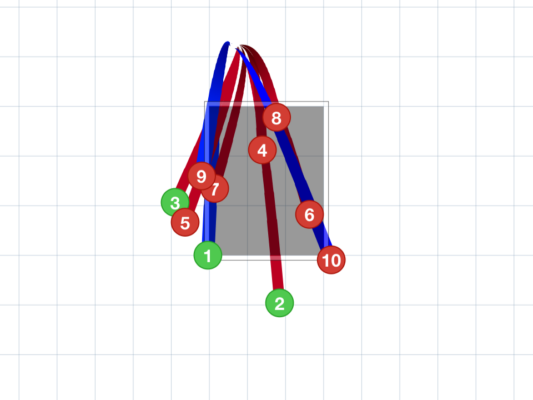
Two on, no outs, a 3-0 count to the batter representing the tying run. If Verlander throws one more ball, the bases are loaded for the Todd Father, who has had a career resurgence – just in these playoffs. Verlander throws a strike down Main Street. But we are still dealing with one pitch. On 3-1, home plate umpire Jim Reynolds calls on a strike on what is clearly a ball (see pitch #5 above). Rather than loading the bases, he loaded the count. What happens if that call is made correctly?
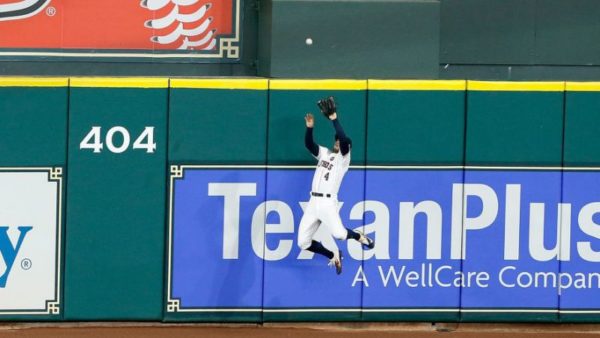
Now we have one pitch writ large – it is now a two-strike pitch. So what does Aaron Hicks do, he fouls off four straight. On the tenth pitch, and by my count, the seventh one pitch, Hicks strikes out swinging. But we are hardly out of the woods.

Verlander is clearly tiring. He is now up to 93 pitches (and 217 over his last two appearances). Verlander’s second pitch to Frazier is rifled to dead-center. George Springer makes a leaping catch against the wall to, in my estimation, save the season. If that ball lands, the score is 3-2, and the Yankees have the tying run in scoring position with one out. And, if that shot turned into a double, Hinch has no choice but to go to his leaky bullpen. Shades of Game 4 all over again.

But that one pitch is turned into the second out of the inning. Verlander then starts out the #9 hitter, Chase Headley (who already had two hits on the night), with two balls. And here we go again. The next pitch to Headley is one pitch that can change everything. As of 2016, batters hit .282 on 2-0 counts; and that jumps to .301 on 3-0 counts. As a general rule, hitters “love to hit 2-0”. Headley took a 2-0 slider at the upper end of the zone for strike one. With the count 2-1, batters hit .247, and Headley was no different, grounding to Jose Altuve to end the end inning and end the rally.

Verlander was done after throwing seven scoreless innings, giving up five hits, and striking out eight. He threw 99 pitches. However, he threw one pitch at least 9 times. Had that one pitch gone differently in any of those nine chances, it is quite possible that Verlander’s effort would have been wasted, and in all likelihood the Yankees are the AL Champions, prepping for a rematch of the 1977, 1978, 1981 World Series.

One pitch.

PLAY BALL!!

*The 3-0 slider to Gary Sanchez with two on and two in the 6th inning may be the subject of any entirely different article.

When Safe is Out

I am an attorney.  As such, my bookcases are stocked with legal tomes, filled with confusing text, obscure events, and various and sundry arcana.  After practicing for nearly twenty years, I rarely reach for any of these dusty books, as it is often difficult to discern the meaning of anything written in them.

Among the those littering my office is the Official Baseball Rules.  This softback, covering 240 pages, is also filled with ambiguous regulations, bizarre concepts, and wacky examples.  The amazing thing is, armed with this book, not one of us could stump an MLB umpire.  Wake an umpire in the middle of the night, and he could opine on the specifics of Rule 6.01(g) (Interference With Squeeze Play or Steal of Home) before he rubs the crust out of his eyes.

But umpires are limited by what they find in those 240 pages.  So, from time to time, it is incumbent upon the MLB Rules Committee to enact some new rules to deal with the evolution of the game.  This became painfully obvious late last week.

Blog_Base_1

Years ago (before any of us were watching or playing baseball), bases were soft and billowy, filled with sand or sawdust, affixed to the ground via a leather strap attached to a wooden spike.


Today, bases are made of hard rubber and have a metal attachment that connects to a steel tube anchored by concrete in the ground.  Suffice it to say, today’s bases are considerably less hospitable to the players trying to reach them.

In the hundred plus years or so between the advent of baseball and the current incarnation, players – on average – have gotten about 5 inches taller (average height in 2010 was nearly 6’2” vs. 5’9” in the 1870s) and about 23 pounds heavier (190 now vs. 167 then).  Now, I don’t want to get all Sports Science here, and I certainly don’t want to start doing math or coefficients, but I think we can all agree that players today are faster than they were in the 19th century, and because they are taller and heavier, they run with more force than players from the Rutherford B. Hayes-James Garfield-Chester Arthur-Grover Cleveland era.  And yet, today’s ballplayers are required to interact with a base that has considerably less (read: no) give.  This is where many problems arise.

I have written (extensively) about the dangers of sliding head first into bases (as well as home plate), but neither José Lobatón nor the Washington Nationals care about injuries right now.  They are more concerned with basic physics.  And here’s why:

With two outs and the Cubs leading 9-8 in the bottom of the 8th inning of Game 5 of the NLDS, the Nats had one run in and two runners on when Willson Contreras threw a back-pick to Anthony Rizzo at first base, hoping to catch Lobatón napping.  He wasn’t, and got back safely.  Or so we thought.

Upon further review, when all 73 inches and 205 pounds of Lobatón slid feet first and impacted the 15×15 inch rubber square that is essentially bolted to the earth, the result was not flawless.  Lobatón’s right leg hit the bag and then, ever-so-slightly, lost contact with the base.  When bodies of considerable mass make contact with immovable objects, these types of things tend to happen.  Rizzo adroitly held his tag, and the replay guys in New York were able to find a fraction of an inch of daylight between the foot and the base.  Rally over…inning  over…season essentially over.

This is not an issue of fair vs. not fair.  Those are the rules, have been since time immemorial, and Lobatón was correctly called out.  But when something like this happens, in a game of this magnitude, it just means we need to change the rules.  As players get bigger and bigger and faster and faster (either naturally or otherwise), we need to make sure that the game is in a position to make accommodations, and we need to allow for umpires to make reasonable calls in relation thereto.

Because disconnecting with the bag for a fraction of a second and being called out certainly is not in the spirit of the game, Dave Cameron of Fangraphs came up with a solution last year that he reposted again after Thursday night’s debacle in Washington.  In short, he wants a vertical “safe space” above the bag to account for these types of plays.  It is an interesting concept, and I encourage you to give it a read.

I would augment, supplement, or replace Dave’s idea with the following (taking out the concept of verticality or any other plane):

If a base runner, sliding either head first or feet first, reaches the base prior to the application of the fielder’s tag, and the base runner loses contact with the base, in the umpire’s judgment, for reasons other than his own volition (i.e., only due to the impact of his body to the base), and in the umpire’s judgment the base runner had no intent to advance to the next base, provided the loss of contact is for a de minimis period of time, the base runner shall be ruled safe.  The foregoing shall not be applicable to instances wherein the base runner slides past the base in question, regardless of the period of time he loses contact with the base.  In such event, provided the tag is applied when the base runner is off the base, he shall be called out.

My version of the rule incorporates Dave’s vertical concept but allows for a player to go off to the side as well.  I can imagine, without the benefit of a direct overhead camera, replay officials debating whether or not the impact caused the runner to bounce to the side of the base, in which event Dave would have him called out, or remained atop the base, resulting in ultimate safety.  I guess I am just more liberal with my body movement allowance.

Take Dave’s idea, take my idea, or come up with another.  But, sometime before the first pitch is thrown for the 2018 season, the MLB Rules Committee needs to fix this glaring omission, and get us back to what the rules intended, not what 4K Ultra HD digital technology discovered.

PLAY BALL!!

Absolution or Ignominy

Some moments are indelible.  When they happen, we know we have witnessed history.  And no matter what happens after, those moments will be lodged in our memory, forevermore.

“The Giants win the Pennant…the Giants win the Pennant…the Giants win the Pennant” is arguably the most famous moment in baseball history.  And yet, the memory of that moment is no way diminished – in any manner – by the fact that the Giants lost the Series, the Giants lost the Series, the Giants lost the Series.

Regardless of the outcome of the 1956 World Series, no baseball fan can forget Yogi Berra leaping into Don Larsen’s arms after the only perfect game in World Series history.

New York Yankees' catcher Yogi Berra leaps into the arms of pitcher Don Larsen after Larsen struck out the last Brooklyn Dodgers' batter to complete his perfect game during the fifth game of the World Series, Oct. 8, 1956. Racing up in the background is Joe Collins. (AP Photo)

Has there ever been a better match-up than Bob Welch v. Reggie Jackson in Game 2 of the 1978 World Series?  I have written about that match-up many times, and we all know the outcome, which is not diminished in any way by the fact that Reggie took Welch deep in Game 6 as the Yankees finished off the Dodgers winning their 22nd world title.

I would argue that the outcome of the 1988 World Series is wholly irrelevant to our reverie for Kirk Gibson’s Game 1 heroics.

And, as of Sunday night, regardless of who wins the 2017 NLCS, I don’t anyone in Los Angeles will ever forget Justin Turner taking John Lackey deep to walk-off Game 2.

But there are other moments that stick in our craw because of the ultimate outcome of the game/series.  In short, some people are granted absolution and some people are granted ignominy due to matters wholly outside their control.  I was thinking about a handful of these (I am certain there are many more) after watching the playoffs this week.  It makes me think that some people have horseshoes, and some people have bad pennies.

To wit:

If Rick Sutcliffe was able to retire Alan Wiggins, Tony Gwynn, and/or Steve Garvey, do North Siders forgive a meager grounder through Bull Durham’s legs in the bottom of the 7th inning of Game 5 of the 1984 NLCS?  Does the Curse of the Billy Goat end thirty-two years earlier?

If Todd Worrell could have extricated himself from a runner on first, no out situation in the bottom of the 9th inning of Game 6 of the 1985 World Series, and then didn’t give up a single (a single?!) to Steve Balboni; and if Darrell Porter didn’t allow a passed ball, and if Dane Iorg hadn’t singled; and if the Cardinals hadn’t been blown out in Game 7, would Don Denkinger still be persona non grata in St. Louis?

If Alex Gonzalez turns a routine double play on Miguel Cabrera’s ground ball, and the Cubs get out of the 8th inning of Game 6 of the 2003 NLCS leading 3-1, would anyone ever learn or know the name “Bartman”?  Would we all now laugh at a grown man’s temper tantrum?  Would the Lovable Losers have found yet another way to rip the hearts out of their fans, resigning them to “wait til next year”.

If the Red Sox could have pushed across a single run in the 9th, or the 10th, or the 11th inning of Game 7 of the 2003 ALCS, does Grady Little lose his job for keeping Pedro Martinez in the game an inning and many batters too long?  Would Aaron “Bleeping” Boone roll off the tongue of New Englanders?

If the Rangers could have eked out a Game 7 victory in the 2011 World Series, how would we remember David Freese or Nelson Cruz?  Would Game 6 just be a blip on the radar, only important to Cardinals’ fans and David Freese’s friends and relatives?  That said, I believe Joe Buck’s “We will see you…tomorrow night” call would still be Hall worthy.

https://www.youtube.com/watch?v=4GQlkLSyCTA


Most flagrantly, if the Red Sox had not blown a 3-0 sixth inning lead in Game 7 of the 1986 World Series, and gone on to win their first championship in 68 years, would Bill Buckner have been vilified on the Back Bay for nearly two decades; the subject of an E:60 documentary; parodied on Curb Your Enthusiasm; and forced to move to Idaho?  Or would that play just been a clip on the highlight reel “Reversing the Curse” – the moment (in hindsight) when it all could have slipped away?

And, of course, we never would have even had “a little roller up along first” if Doug DeCinces’ flyball had reached the seats or Bobby Grich’s liner had fallen in the bottom of the 9th inning of Game 5 of the 1986 ALCS; or if the Angels could have won either Game 6 or Game 7 in Boston.  If any of that happens, maybe Donnie Moore doesn’t take his life less than three years later.

If Jason Kipnis’ line drive down the right field line in the bottom of the 9th inning of Game 7 of last year’s World Series not drifted foul, do we spend the entire off-season dissecting every decision Joe Maddon made, second-guessing him through Christmas and into Spring Training?  Does he lose his job like Grady Little?  Jason Kipnis would have become the modern-day Bill Mazeroski / Joe Carter, as beloved in Cleveland as LeBron.  One wonders if the Cuyahoga catches fire again?

Similarly, if Jayson Werth’s flyball down the left field line in the bottom of the 9th inning of Game 5 of this year’s NLDS doesn’t curve foul; or if Bryce Harper could have channeled his inner Michael A. Taylor and tied the game with one mammoth swing, do we spend this off-season castigating Maddon for trying to get seven outs from Wade Davis?  Those things didn’t happen, so Broad Street Joe gets off Scot free and lives to fight another day/series.

With the Yankees winning three games in four days against the best team in the American League, against the prohibitive favorite to win the pennant, I wonder if anyone will member Joe Girardi failing to challenge Lonnie Chisenhall’s foul tip that wasn’t?  Will the hit-by-pitch that wasn’t, which led to a Francisco Lindor grand slam, which led to a Jay Bruce homerun, which led to an Indians 9-8 victory in Game 2, be lost to the scrap heap of history now that the Baby Bombers find themselves in the ALCS?  Only time will tell.  But for now, Girardi keeps his job, Yankee fans are allowed to forget, and time marches on.

Who will be granted absolution?  Who will live with ignominy?  We potentially have fourteen games among four teams over two series to find out.

PLAY BALL!!

Narrative Lost

Sometimes the horse gets out of the barn, the toothpaste gets out of the tube, the water goes under the (Golden Gate) bridge. Sometimes the words you say are not the words the listener hears. Sometimes people have the best of intentions, and then other people co-opt those intentions. And sometimes, because of that co-opting, the original message gets lost in the noise that said message created. We live in cacophonous times.

Normally I write about baseball and how it relates to life. And because a little-known Oakland A’s catcher, the bi-racial son of a career military officer (who Jeff Passan wrote about wonderfully), elected to “take a knee” during the national anthem last week, I have been given an opening to write about this topic. But because it is my want, I will focus on its genesis.

Back on August 14, 2016, when Barack Obama was still President (an important note), before the San Francisco 49ers’ first pre-season game, Colin Kaepernick decided to sit during the national anthem. He sat again the following week. No one seemed to notice. It wasn’t until after the third pre-season game, on August 26th, when a reporter’s curiosity was piqued, that Kaepernick addressed the issue. He released a statement that he was sitting because of the oppression of people of color and ongoing issues of police brutality. Two days later he met with the media and told them:

“I’m going to continue to stand with the people that are being oppressed. To me, this is something that has to change. When there’s significant change and I feel that flag represents what it’s supposed to represent, and this country is representing people the way that it’s supposed to, I’ll stand.

This stand wasn’t for me. This is because I’m seeing things happen to people that don’t have a voice, people that don’t have a platform to talk and have their voices heard, and effect change. So I’m in the position where I can do that and I’m going to do that for people that can’t.

It’s something that can unify this team. It’s something that can unify this country. If we have these real conversations that are uncomfortable for a lot of people. If we have these conversations, there’s a better understanding of where both sides are coming from.

I have great respect for the men and women that have fought for this country. I have family, I have friends that have gone and fought for this country. And they fight for freedom, they fight for the people, they fight for liberty and justice, for everyone. That’s not happening. People are dying in vain because this country isn’t holding their end of the bargain up, as far as giving freedom and justice, liberty to everybody. That’s something that’s not happening. I’ve seen videos, I’ve seen circumstances where men and women that have been in the military have come back and been treated unjustly by the country they fought have for, and have been murdered by the country they fought for, on our land. That’s not right.”

There it is, folks. That is why Colin Kaepernick sat and then kneeled. Anyone can now lay claim to any interpretation they want to invent; they can ascribe any meaning to this act they want to inject into the public conscience and political sphere; they can paint Colin Kaepernick as the poster boy for whichever side they want to take.

But these are his own words. More than thirteen months ago, long before Trump, long before Charlottesville, long before Alabama, and before the NFL, corporate sponsors, and fans in the stands had their say, Colin had his. But, as we know, we don’t always get to control the narrative. The claim was that Kaepernick had a bad season (even though his 2016 stats pretty closely resemble his 2012 stats, when he led the Niners to the Super Bowl, but I digress), and no team wanted a washed-up quarterback who comes, standard, with a political headache. For purposes hereof, we can put aside Kaepernick’s qualifications to play in the NFL today. The fact is, he is unemployed, and others have taken up his cause.

Or have they?

In Week 1 of the current NFL season, four players either knelt or sat during the national anthem; the same four did so in Week 2.

And then, on September 22nd, President Donald Trump went to a campaign rally in Huntsville, Alabama, and described football players who kneel during the national anthem as “sons-of-bitches,” and called for them to be fired. For purposes hereof, we can put aside the First Amendment and whether or not such a firing would be a violation thereof.

Trump’s speech was between Weeks 2 and 3. After Trump spoke, more than 200 players kneeled. What were they kneeling for? Did they even know? Do we?

Do the fans who booed their favorite players and their cherished teams, do the announcers who broadcast and highlight the protests, do the pundits who landed – firmly – on one side of the issue or the other, even know the why of what is happening on the gridiron? The obvious answer, of course, is “no.”

The players have taken a knee, locked arms, and raised their fists; but they have not spoken out. So, because nature abhors a vacuum, social commentators, thought-leaders, craven politicians, and bombastic demagogues all felt compelled to offer their own explanations.  The upshot: the rallying cry of “stand up nation” is that the players are disrespecting the military, the flag, and the country. Reasonable minds can differ – and have, vociferously – as to whether or not kneeling is disrespectful to any of the above. But that discussion wholly misses the point. No one is kneeling to intentionally disrespect the military, the flag, or the country.

However, some, nay many (from 4 to over 200), may be kneeling to disrespect the President of the United States who has chosen through words and (lack of) action, to divide this country. People have taken to calling him the “Divider in Chief,” and I don’t think the President would dispute or condemn that appellation. Sadly, this is just where we are.

Unfortunately, in all the noise, the message – Kap’s original message – is now lost. To the extent this was ever about the military, the flag, or our country, it was about love of country, what the flag should represent, and the ideals that members of our military shed their blood for. The act of kneeling was not intended to be disrespectful, it was a yearning for our better selves. Ironically, Kap knelt to Make America Great.

But, again, that message has been muddled and muddied. So players, and owners, and league officials began meeting to try to find a way forward – not necessarily a way through or a way out – but just forward, without alienating a large portion of the fanbase or a large number of sponsors. They all felt the need to put this genie back in the bottle, but could not come up with a magic elixir.

If the players intend to continue kneeling, incurring the wrath of the boo-birds, and risking their careers and potentially their lives, without offering more than a well-written Op-Ed in the New York Times, this will end badly, if it can ever end.

In moments like this, I like to reach for the sharpest instrument in the tool box: Occam’s Razor.  The easiest solution is just to tell people why; answers their questions; appeal to their humanity; ask them to respect you, even if they don’t respect your actions.

Will this solve the problem, absolutely not.  But it will cut out much of the noise; it will mitigate people’s attempts to co-opt the message; it will provide much-needed context. The logical next question is how? Here is how:

Before each Week 5 game, the captains of both teams come to mid-field prior to the singing of the national anthem. They will deliver a statement written/approved by/with the NFL Players Association and the Commissioner’s Office. The same message will be read at 14 stadiums before 14 games (four teams have byes), in front of an average live audience of 70,000, plus millions more at home. It won’t take but a minute or two. If it were up to me, I would either read Kaepernick’s original words (as set forth above) or the statement put out by the Indianapolis Colts earlier this week:

“Recently, there have been several misperceptions regarding a personal choice made by members of our team to bring awareness to prevailing issues facing our nation. To be clear – those of us who kneeled did not intend to disrespect our flag, our national anthem, or those who serve our country. We all have family and friends who are servicemen and women. We appreciate and respect the incredible sacrifices they make.

But as NFL players, we have a platform. And as Americans, we have a responsibility to speak up for those who cannot speak for themselves. Our intention was to raise awareness and to continue critical conversations about real equality, the injustices against black and brown people, police brutality, respect, unity, and equal opportunity. Our players are hurting, our people are hurting, our neighborhoods are hurting, and kneeling was a direct response to that hurt.

But what makes football so special is the way it brings people together – fans, players, coaches, all of us. We represent different races, backgrounds, and beliefs, but we come together for a common goal. That togetherness seen on the field and in the stands when we play should resonate even when we leave the stadium.

In that same spirit, as unified Americans, we will respect all forms of peaceful protests, as they are protected under the First Amendment of the U.S. Constitution. Some of our players may kneel, while others may stand. But this is just the beginning. There is much work to do, and it will take all of us.

Kneeling for JUSTICE. Standing for UNITY. Fighting for EQUALITY. Showing RESPECT.”

Fans may still boo. Sponsors may still flee. But if the players state their case, in these fora, no one can honestly refute the ultimate goal. No one can honestly ascribe a different meaning to the player’s actions. No one can honestly deny the sincerity of their cause.

We are in a era of social turmoil not seen in at least a generation. But we will not get through this if we cannot speak, and cannot be heard. Every Sunday there is a captive audience – let the players use it to heal, whether or not they kneel.

PLAY BALL!!

Net Over Yourself

On Wednesday afternoon, Aaron Judge hit his 45th homer, which was followed by Gary Sanchez’s 32nd.  The Yankees cruised to a 11-3 win over the Twins, completing a three-game sweep and keeping the pressure on the division-leading Red Sox.

But the Yankees’ win was overshadowed by what happened in the seats behind the third base dugout in the fifth inning.  As I am sure many of you have seen by now, Todd Frazier rocketed a foul ball into the stands at 105 miles per hour.  The ball struck a young girl sitting with her grandparents.  Bloody and bowed, she was carried to the first aid station, and then transported to New York Presbyterian-Columbia Hospital.

Blog_Netting_2

As of this writing, per her father, the girl is “doing all right”, but he could not (or would not) confirm whether or not she would need surgery for her injuries.

After impact, the game came to a halt.  Frazier, a father of two children under the age of the three kneeled in the batter’s box, shaken and concerned.  Twins’ second baseman Brian Dozier actually cried when he saw her hit by the screaming liner.  The game did not resume until the little girl was taken from her seat; she, the fans around her, and the players on the field, all the worse for the wear.

This horrific incident has, once again, brought the issue of protective netting back to the forefront.  And this one is an absolute no-brainer.  In fact, since just Wednesday afternoon, the Reds, Padres, and Mariners have all committed to extending their netting for the 2018 season.

Now, for those of you who have not followed this closely, here is a little primer: There are about 1,750 incidents of fans being hit by foul balls at Major League stadiums each season.  Put differently, in a typical season, every time Mike Trout gets a base hit, about 10 fans get nailed by a foul ball.

After the 2015 season, Commissioner Rob Manfred “encouraged” teams to extend their netting to the “near end of both dugouts”.  Let’s unpack that a bit.  Through the 2015 season, many teams only had netting directly behind home plate; and despite the rash of injuries from foul balls and flying bats, the best MLB could muster was a gentle prod that the netting be extended to the near end of the dugout?!?  In fairness, MLB did offer some guidance about extending it even farther.  Nothing was required.  In fact, the Commissioner was clear that he wanted this to be a “localized process”, with each team working with its own fan base to determine the best course of action for safety and enjoyment of the game.  What a bunch of hooey.

The truth of the matter is that baseball – and all of its teams – have been hiding behind the protective netting of a legal theory known as “assumption of risk”, and colloquially known as the “Baseball Rule”.  In short, fans come to the game knowing it is dangerous, and thus assume the risk that they may be hurt.  And for years, courts have upheld this doctrine.  But the times, they may be a changin’.

A few years ago an appeals court in Ohio reversed a lower-court ruling in favor of the Cleveland Indians in a fan injury case.  In Idaho, the state Supreme Court elected not to impose the Baseball Rule and allowed a fan at a minor league game (who lost an eye) to present his case to the jury.  A fan who was badly injured at – get this, Yankee Stadium – is currently in litigation with the team and the league regarding the fine print on the back of the ticket and this outdated legal theory.

Michael Moran, an Atlanta lawyer who has litigated these types of cases, previously stated: “The game is different now. Ballparks are configured differently than they were 20 or 30 years ago; the foul lines are closer to the stands. Pitchers throw harder. Batters hit the ball harder. All these things increase the risk.”

Are we to believe that even the most adroit fan can (and should) react to a ball that is on top of them in less than a second? If that were so, why would teams put netting in front of the dugouts?  Shouldn’t the best athletes in the park – individuals who are paid to pay attention and who don’t have the myriad diversions and distractions that are intended and encouraged for the fans – be prepared to avoid a foul ball or a hurtling bat?

The most common refrain from the teams is that fans don’t want to sit behind the netting.  Really?  The next time you watch a game and they show the centerfield camera angle, please pay attention to the dearth of fans sitting behind home plate (where there is netting in every park), and the masses sitting behind each dugout?  What, you say?  The seats behind home plate (except, ironically, at Yankee Stadium) are full; and fans have paid upwards of $1,000/ticket to sit there?  Now I am thoroughly confused.

I will acknowledge that fans find the netting a distraction…at first.  But then they get used to it.  I speak from experience, as I sit behind home plate, behind a net, and now barely notice it.  Don’t believe me?  Where do baseball executives and scouts sit?  People who are literally paid to watch and analyze the game do so behind the net; but Joe Six-Pack cannot enjoy watching Aroldis Chapman pitch through 3/16 of an inch of braided nylon?

Hockey harbored this same fear about their fans.  And then a 13-year old girl was killed by an errant hockey puck in 2002.  You know what they did?  They added netting around the goals.  And you know happened?  Nothing.  Attendance was, and remains, virtually unchanged on a year-to-year basis.

There is a reason why they stop selling beer after the seventh inning.  There is a reason why bottles aren’t allowed in the park.  There is a reason why mini bats are no longer given away.  Fan safety has trumped the fan experience for years – except in this one area.  And is there is simply no (reasonable/rational) excuse.

So here is what should happen.  After the 2015 season, the Commissioner asked the teams to do their own research.  Ostensibly, the Yankees did this.  And, ostensibly, they made a business decision that, by installing/expanding their netting, they would lose X dollars from fans who no longer wanted to sit between the dugouts.  That little girl’s family needs to sue the Yankees; and through discovery, obtain that analysis and determine the value of X.  And then a court should award damages equal to three times X.  The Yankees should lose all that they hoped to avoid losing, three times over.

The little girl should get the first X.  She is the Neil Armstrong, the Rosa Parks, the Jackie Robinson of ballpark safety.  She earned X with the damage to her tiny nose and her little eye.

The next X should go to a fund for all fans injured at the new Yankee Stadium since it opened in 2009.  By that time, everyone – including the Yankees’ brass – knew that seats closer to the field + insufficient netting = unnecessary and potential serious risk.

The final X should go to building and refurbishing baseball fields all over New York.  Show the kids of the Empire State that baseball cares about them, their safety, and their fandom.

And one last thing: the Commissioner must issue an edict – not a suggestion, not a recommendation, not guidance – but an actual rule.  Every team must install protective netting to at least the far end of each dugout prior to the commencement of the 2018 season.  Each team that fails to do so is fined $1 million per game until the same is properly installed.

We have big, complicated, unwieldy problems in this country.  Fans having to worry about their life being altered/in jeopardy in less than the blink of an eye while trying to enjoy America’s favorite pastime shouldn’t be one of them.

Enough is enough.

PLAY BALL!!