DUDGER STADIUM


DUDGER STADIUM

Hot Take: The Dodgers hate their fans?  More than three million people have flowed through the gates at Chavez Ravine in 18 of the past 20 seasons, so the fans obviously don’t hate the Dodgers, but the feeling certainly doesn’t seem mutual.  The only explanation I can come up with is that with so many fans coming each year, they must believe “if it ain’t broke, don’t fix it.”

Every Dodger game you watch on television starts with an aerial view of the park, with palm trees to the north and downtown to the south, and then Vin Scully or Dan Shulman or Bob Costas regaling us with the majestic beauty and unparalleled views and the perfect day/night for baseball.  Unfortunately, 70% of Angelenos cannot see that aerial view on a regular basis (thanks, Time Warner and the Dodgers for not stepping in to try to resolve that issue); and for those who can, it is significantly better to watch the games from the comfort of your living room.  Because, once you pull through Elysian Park or off the 110 or through the Sunset Gate, the fan experience comes to a screeching halt.

Dodger Stadium is the third oldest ballpark in baseball.  But that statistic is a bit deceptive.  Fenway Park is 104 years old; Wrigley Field is 102 years old.  Dodger Stadium is, by comparison, a mere pup at 54.  And, like many things in L.A., it looks considerably better from afar.  Get too close, and you may not like what you see, what you hear, or how you feel.

When real estate magnate Frank McCourt bought (leveraged?) the team in 2004, he immediately raised the price of parking.  Despite new ownership, that hasn’t changed.  You do get a deal if you buy online in advance – a deal that matches the drive-up price at Anaheim Stadium just 32 miles down the road.  Speaking of the Angels, do you know Arte Moreno’s first official act as the team’s new owner?  He lowered beer prices.  The Angels don’t hate their fans!

The Dodgers also went about rejiggering the parking lot, seemingly for easier ingress and egress.  Unfortunately, this plan requires drivers to leave from the gate they entered, even if they are heading somewhere different from whence they came.  And getting a parking space in Dodger Stadium means braving a ridiculous bottleneck (16 lanes down to 3-4), and rude flag-wavers who are drunk with power and direct you to a spot roughly half a mile from the actual gate.  In fairness, this problem is not unique to the Dodgers.

Once you cross the threshold, the Dodgers have done a nice job of making the ballpark more inviting.  They have beer gardens in the outfield and two new concession stands: a BBQ joint and an Italian restaurant (?) (more about those below).  But, the bread and butter (pun intended) of Dodger Stadium is, was, and always will be the Dodger Dog.  So, guess what, that is essentially all you can get as you circle the ballpark.

Sure, you can get a Super Dodger Dog if you are so inclined.  You can get a piece of Stouffer’s that is hailed as “Brooklyn Pizza” (if I were the Borough president, lawsuits would be filed over that misrepresentation).  In a city of nearly five million Hispanics, there is a single Mexican stand (a total of three is you count the “Express” versions with less fare).  I guess that is about right, insofar as this is a city with the second highest Jewish population in the U.S., and there is a single deli – that serves a beef dip and a pastrami sandwich.  And those are the choicest options in the best sections of the park (where tickets start at $40 and go up above $175).

Head upstairs to where the proletariat sit, and the options get lesser and lesser; until you are at the Top Deck wherein you have your choice of the aforementioned two types of Dodger Dogs, French fries, and soft serve ice cream in a helmet.  Enjoy!

The Dodgers thought they were classing the place up a few years ago when they opened the Think Blue BBQ and Tommy Lasorda’s Trattoria.  Each has roughly five items on their respective menus.  Compare that with the full BBQ pit at Anaheim Stadium, and tell me that the Dodgers tried their best.  Compare that with the North Beach stand at AT&T Park and tell me Tommy is really proud of what they have done.

I could do this all day; I could compare each concession at Dodger Stadium to any other ballpark (save, maybe, Fenway Park and Wrigley Field) and “other” would win every time.

This past weekend I was in DC at Nationals Park.  I walked around the field level three times trying to decide which delicious food item I wanted to eat.  My options seemed unlimited; I am hard-pressed to think of something that wasn’t on offer.  To take that to its illogical conclusion, the Nats have a stand called “Taste of the Majors”, which has food from various major league parks.  Suffice it to say, the Dodgers were not represented (settle down Dodger Dog lovers; they are not nearly as good as you think they are).  I went with a grilled chicken sandwich; it was delicious.  Imagine trying to get a grilled chicken sandwich at Dodger Stadium . . . I’ll wait ’til you stop laughing.

Later that night I was at Citizens Bank Park in Philadelphia.  I ended up making the same three rotations before I landed.  I was torn between Bull’s BBQ (owned and overseen by the great Greg Luzinski)
Blog_Dudger_Bull1    58

and Tony Luke’s (considered by many locals to be the best cheesesteak in town).
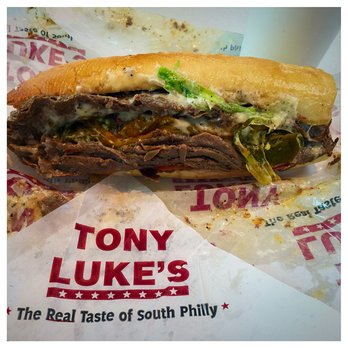
Blog_Dudger_Tony

I also weighed standing in line for Chickie & Pete’s Crab Fries – another local legend available at the yard.

Blog_Dudger_Chickie

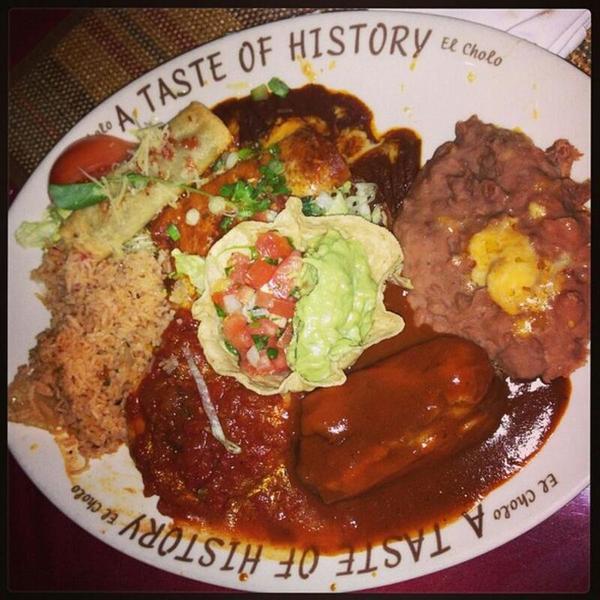
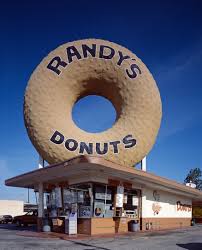
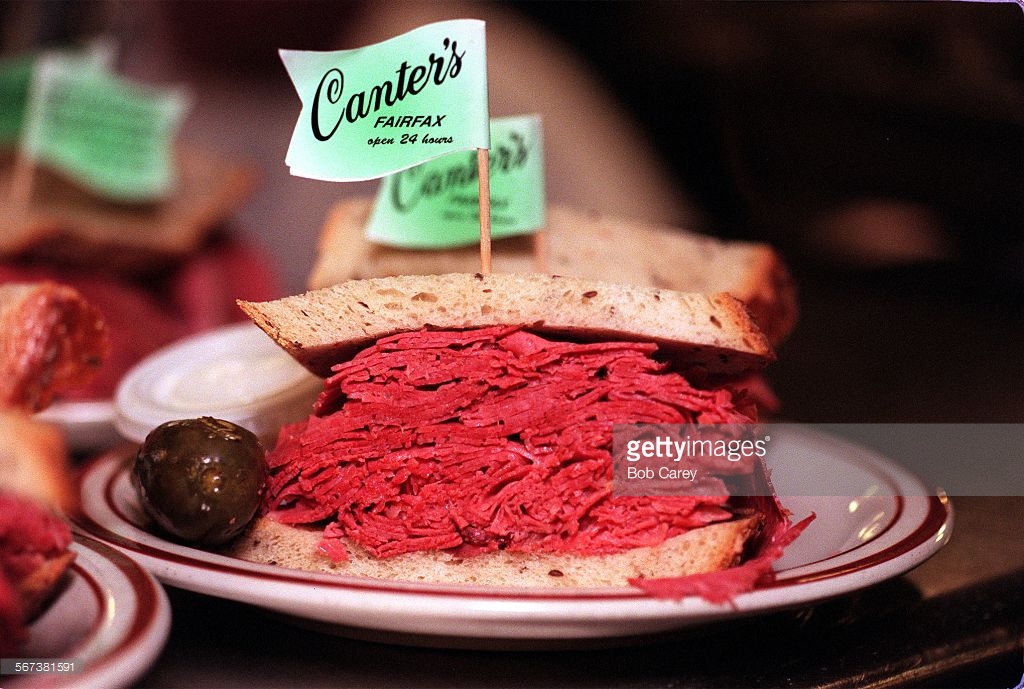
Remind me what local legends are on offer at Chavez Ravine?  Is it too much to ask to get a Felipe’s window?  Would anyone object to an El Cholo stand?  Randy’s Donuts wouldn’t be right at home behind homeplate?  No one would eat a Canter’s corned beef or a Langer’s pastrami sandwich?

Blog_Dudger_Felipes      Blog_Dudger_ElCholo

Blog_Dudger_Randy        ME.Canters.3.0112.BC.1–––Canter's Deli celebrated its 50th anniversary by offering corned beef sandwiches like this one for the 1048 price of 50 cents. Photo taken 1/12/98.Photo/Art by:Bob Carey

Blog_Dudger_Langers

What makes this so infuriating is that Los Angeles is going through a massive food renaissance.  Wolfgang Puck got his start here; Thomas Keller has a restaurant here; Tom Colicchio has a restaurant here; David Chang is about to open a restaurant here; two of the ten best new restaurants in the state are located essentially within walking distance of the park (Broken Spanish and B.S. Taqueria).  And yet, the powers-that-be cannot bring themselves to offer more than soggy dogs/stale buns or a single concession selling a Wagyu burger.  Thanks, but no thanks.

And let’s not even get started on the lines.  The stadium has gotten better about this on the Field Level over the past few seasons, but go upstairs – even one level – and try to get a bite or a beer in less than an inning.  There have been games where I, and friends, have missed multiple innings trying to get some ice cream.  No fair adding an extra concessionaire or opening another window or maybe incentivizing your workers to have a touch more urgency than a DMV clerk on siesta.  This is a problem that is easily solved, not prevalent at most other parks, and frustrating as hell.

But enough about the eats.  As I so often do in these columns, I ask the question: What about the kids?

Remind me again what is fun for kids at Dodger Stadium.  There is, of course, a tiny playground on the roof level.  Anyone have any interest in bringing their kids up there?
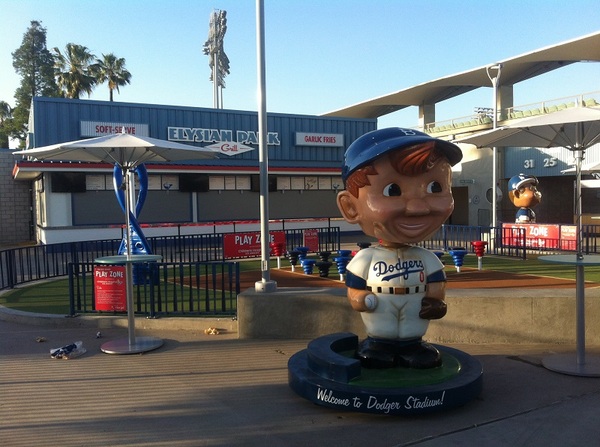
Blog_Dudger_Playground

As an aside, coincidentally and anecdotally, the last two times I was near the playground, I witnessed the following: (1) A gang-banger (or what I believed to be based on dress, tattoos, and speech) dropping F-Bombs while waiting in line for beer at the stand shown above.  Unfortunately, that beer line snaked right into said playground; and (2) A man being led around the playground in handcuffs, as he was escorted out of the park.  Family-friendly indeed.

Again, I could go chapter and verse about the kid-friendly activities available at nearly every other park in America.  And, are you telling me that the Dodgers don’t have the space to create a kids’ area?  How about between the aforementioned BBQ and Tommy restaurants?  Do you think a little batting cage; radar gun; mini-diamond couldn’t fit somewhere on the 352 acres that make up the entire complex?  For the love of Vin, they talked about building a football stadium on the site; but they cannot figure out how or where to put a jungle gym/slide/bounce house/pop-a-shot?

No mascot.  No in-game traditions (and no, I don’t count the “under which hat is the ball located” game a tradition).  No more Nancy B.  I will give them that they have improved the replays on DiamondVision (a little throwback phrase), but those still pale in comparison to other parks.  The new scoreboard is definitely an upgrade over the one they had in place since the ‘60s, but it doesn’t compare to what is out there.

And while this may be picking a nit, this is Hollywood – the entertainment capital of the world – shouldn’t the Dodgers be held to a higher standard?  Shouldn’t the Dodgers want to set the standard?

At this point I know a lot of Dodger faithful are muttering to themselves one of two things: (1) you are wrong and/or (2) then just don’t go.  On the former, I am not.  On the latter, I am considering that (even though I know it is an idle threat and one I will never go through with).

But when I hear the Rams’ new stadium will have for their fans, when I see what is available at the Big-A, when I visit Staples Center and get a full immersive experience, I simply feel cheated by the Bums.

One of my favorite things to do is visit different ballparks.  Each trip I have planned from March through August of this year involves visiting at least one new/different ballpark.  I love going to a game, taking in the atmosphere, having a beer and a brat.  But I need more.  And even if I don’t need more, other people need more.  For the prices we are paying, we all deserve more.

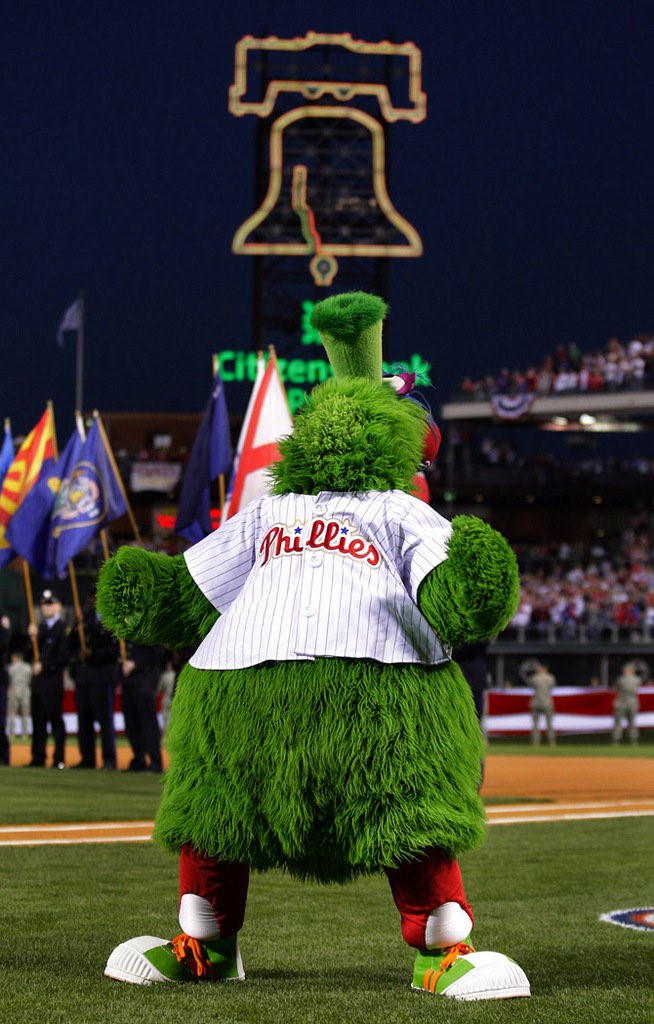
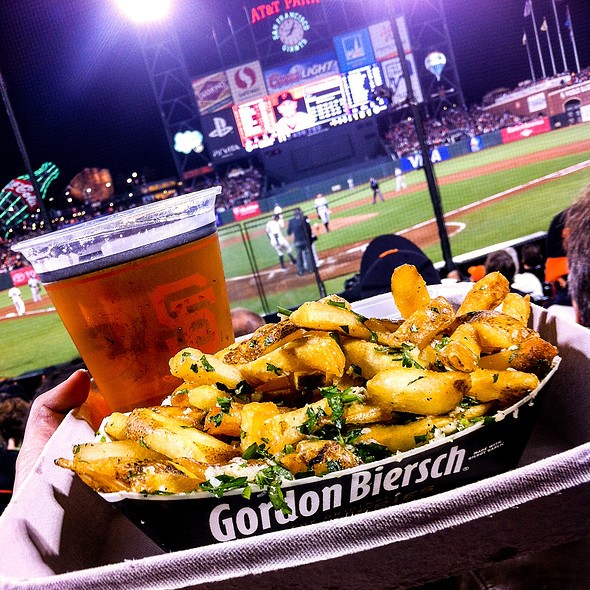
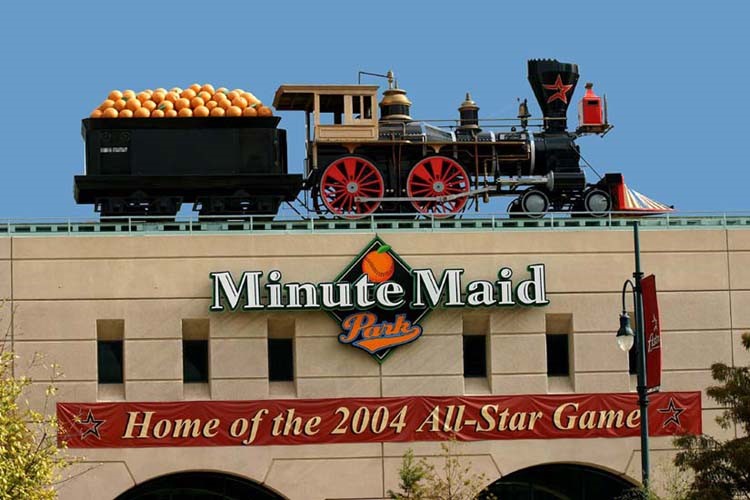
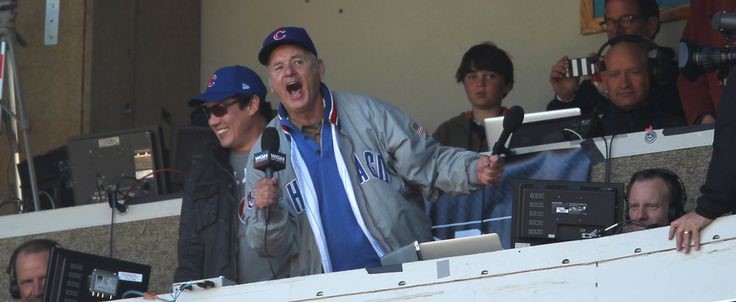
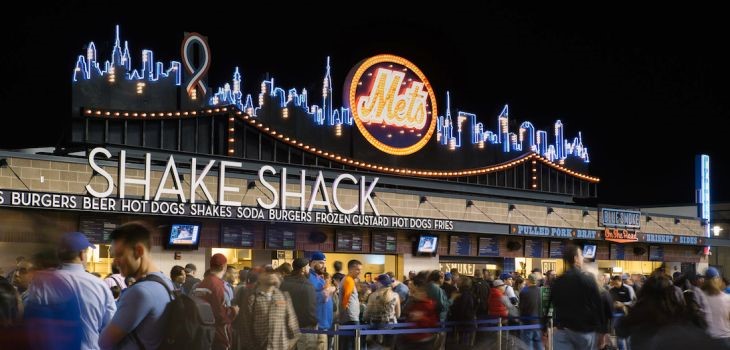
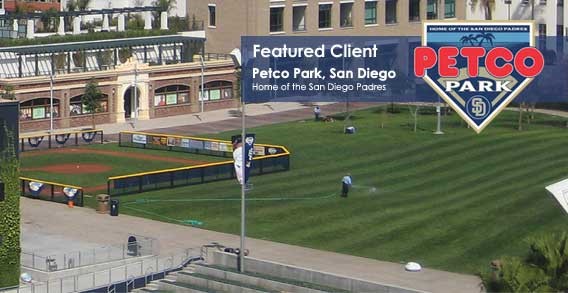
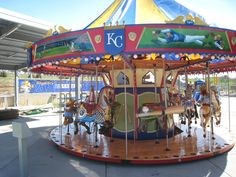
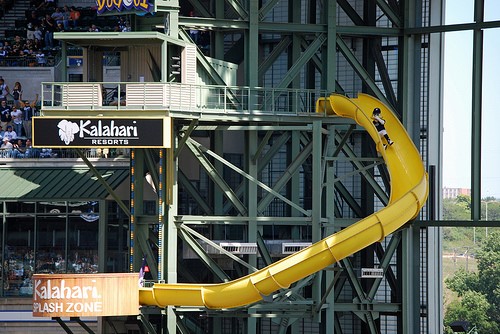
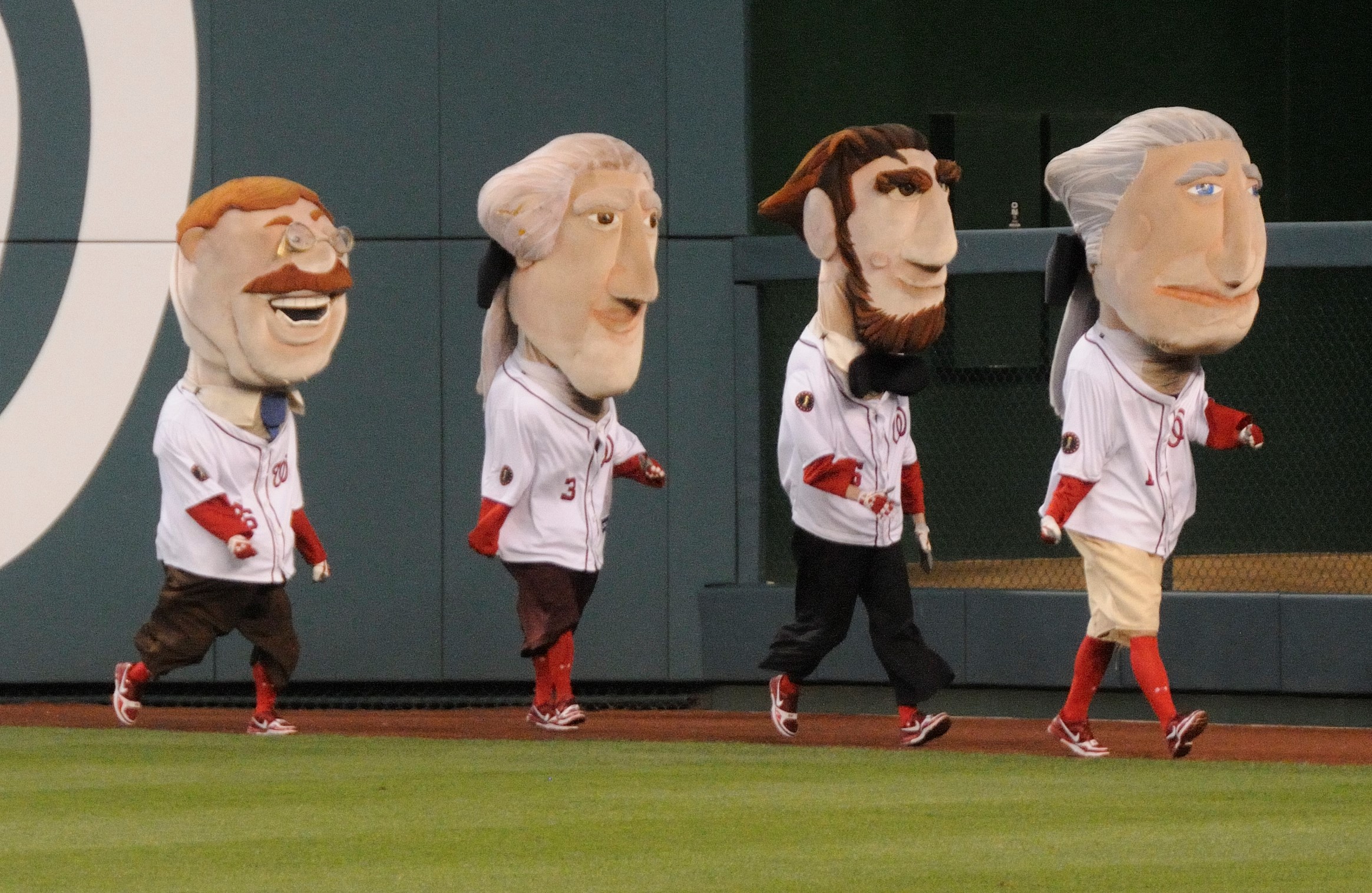
I am left to believe that the vast majority of the three million people who roll into Dodger Stadium each season simply haven’t had the good fortune of visiting other parks.  They have not tasted the crab cakes at Camden Yards; they haven’t watched the Phillie Phanatic do his thing at Citizens Bank Park; they haven’t enjoyed the carnival atmosphere on Yawkey Way; they haven’t eaten the garlic fries at AT&T; they haven’t watched the train circle Minute Maid Park; they haven’t heard a local celebrity belt “Take Me Out of the Ballgame” at Wrigley Field; they haven’t been to the Shake Shack at CitiField; they haven’t played on the diamond at Petco; or ridden the merry-go-round at The K; or watched Bernie the Brewer slide into a beer mug after a dinger at Miller Park; or had a Ted Drewes at Busch Stadium; or rooted in the President’s Race at Nats Park.  Again, this list could go on and on . . .
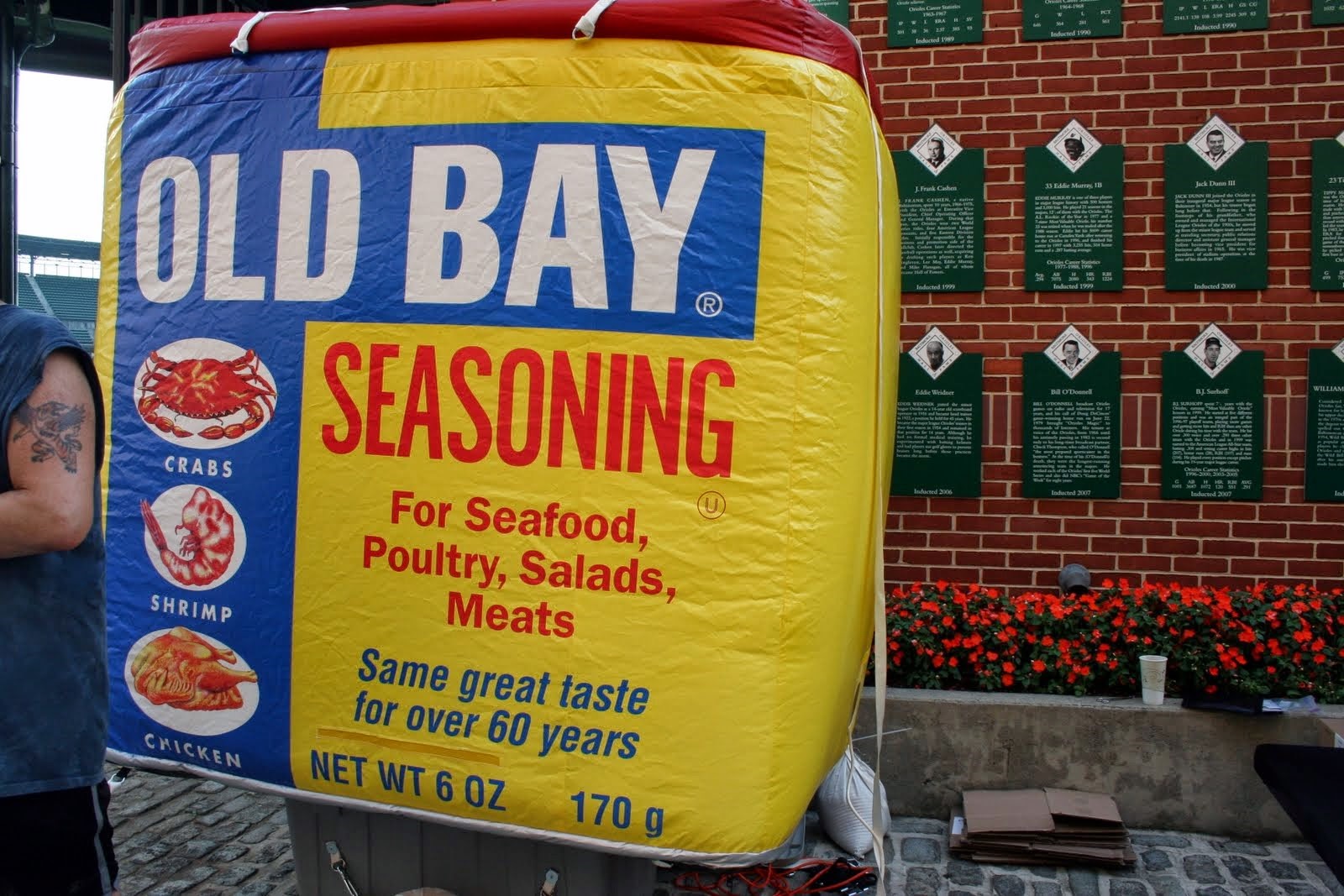
Blog_Dudger_Camden     Blog_Dudger_Phanatic1

Blog_Dudger_Yawkey        Blog_Dudger_ATT

Blog_Dudger_Train    Blog_Dudger_Wrigley

Blog_Dudger_Shake  Blog_Dudger_Petco

Blog_Dudger_K    Blog_Dudger_Miller

Blog_Dudger_Drewes    Blog_Dudger_Prez

Sure, you do get a five-minute fireworks show on Friday nights.  Sure, the Dodgers have done more in the community lately and added two movies nights and sleepovers in the outfield.  But, for a place that wants to be a fan and family destination 81 times over a six-month period, the Dodgers simply aren’t up to snuff.

When one of your owners is the man who coined the phrase “Showtime”, you expect – and you should demand – more.

Memo to the Dodgers: Three million fans notwithstanding, it’s broke, fix it!

PLAY BALL!!

WHO HAS IT WORSE?

WHO HAS IT WORSE?

Remember the good old days, when Kevin Brown’s 7/$105M deal with the Dodgers seemed like the worst contract in history?  Brown was baseball’s first $100M man; and the deal included twelve chartered flights from Georgia for Brown’s family.  A year later the Angels, not to be outdone, gave Mo Vaughn 6/$80M.  GMs from around the league clutched their pearls and warned of the end of the world.  GMs today would give anything for a bad $13-$15M deal.

With the baseball season two weeks old, and teams beginning to take shape, it seems like the right time to evaluate who is holding this year’s “Kevin Brown Bag” or who has the “Mo Worse Blues”.  Here are the leading contenders:

Even with the offset paid by the Rangers, the Angels are giving Josh Hamilton about $21M to play for a division rival.  “Play” is a relative term, as Hamilton is currently on the DL with no return date set.  Here’s to hoping that the Angels share some of the insurance money.

Unfortunately, there is no insurance for the Albert Pujols deal.  The Angels are paying him a mere $24M this season . . . and will have to for another four years.

Maybe the Mets are in the worst position.  Their franchise player has spinal stenosis and cannot swing the bat, field a grounder, or throw the ball like he used to.  And yet, David Wright will take home $20M this season, and is signed for another 4/$67M.

The Mets can take solace in the fact that their cross-town rivals have three massive albatrosses weighing down the books (and this doesn’t even count Mark Teixeira).  The Yanks will pay Jacoby Ellsbury $21M this season to play mediocre centerfield (see: http://m.mlb.com/video/v594676183/seanyy-ketel-marte-goes-first-to-home-on-a-single/?game_pk=447034) and hit .213.  The good news is that Ellsbury is on the field and not on the DL.   The bad news is that he is signed for four more years.

The Yankees are paying A-Rod $21M this season, and next.  What some may not know is that he is currently batting 6th, hitting .118, and doesn’t even bring a glove to the ballpark.

But the Bombers biggest dead weight may be C.C. Sabathia.  C.C. will get $25M this season (and next), barely made the starting rotation, is averaging 5 IP, and has an 5+ ERA.

The Rangers are paying Shin Choo Soo $20M this year (and still have another $82M to go).  His biggest contribution this season: getting hurt so Nomar Mazara could take his place in the lineup.

But if the Soo deal isn’t bad enough, the Rangers are paying Prince Fielder $18M this season (the Tigers are kicking in another $6M), and will do so until 2020.  Through two weeks, he is hitting .167, with one extra base hit.

And maybe not as egregious, Elvis Andrus gets $15M this season – and potentially for seven more.  To date, he has one extra base hit.

People may think Guggenheim has unlimited money, but paying Carl Crawford $21M this year (and next) to, once-again, be on the DL, doesn’t seem like good business.

And the Dodgers also get to throw in $3.5M this year – and for three more years – for Matt Kemp to play for a division rival.  The Padres are paying $18M for a guy who is only a shell of his former self.

Although he is still one of the best hitters in baseball (and in the conversation for best right-handed hitters of all time), the Tigers paying Miguel Cabrera $28M this year, and then at least that much for the next seven years, is absurd.  That is a lot of Little Caesars pizza.

The end is near on the Ryan Howard deal.  But, the Phillies still must pay him $25M this season to be a platoon first baseman, and another $10M at the end of the year to make him go away.

The end isn’t quite so near on the Joe Mauer deal.  The mid-market Twins are committed to $23M this year, and two more years, to have Mauer be a light-hitting first baseman with blurry vision and potentially serious concussion issues.

The Rockies inherited the Jose Reyes deal, which will require them to shell out $22M this year and next – just to watch him languish on the DL.  The Rockies best hope is that Rob Manfred throws the book at Reyes for his domestic violence incident, and he gets suspended without pay.

In a brass move, the Red Sox sent Rusney Castillo to Pawtucket, even though they are paying him $10M this season, and have him under contract for four more years – with escalators.

Robinson Cano may end up being worth $24M this season, so he doesn’t really belong on this list.  But he will at some point between now and 2023.

The same goes for Zack Greinke, who is getting $34M this year.  So far, he is 0-2 with 6.75 ERA.  To put that in perspective, Greinke would have to give up 1 run/game over his next 30 starts to match last season’s career year.  The next five years may be painful for Arizona’s bottom line.

But this article would not be complete without mentioning the Big-Two, the bookends of the Red Sox infield.  Pablo Sandoval found himself on the bench, and then on the DL, while cashing $17.6M worth of checks this season, and at least that much over the next three years.  And Hanley Ramirez has potentially reinvented himself as a first baseman – and he better – because he is taking $22M/year from now until 2018.

Somewhere Kevin Malone and Bill Bavasi are having a beer and laughing at what were once believed to be “bad” deals.

One last note: the Blue Jays are paying R.A. Dickey $12M this season – not too bad.  But to think he was traded for Noah Syndergaard (and others), who may be the best pitcher in baseball right now, and who is making $535K this season and won’t be eligible for arbitration until 2018.

This list should be Exhibit #1 for the owners when they sit down to negotiate the next collective bargaining agreement.

PLAY BALL!!


Dan


____________________________________________

Dan Freedman

Senior Vice President | Business & Legal Affairs

GOOD UNIVERSE
9777 Wilshire Boulevard | Suite 400

Beverly Hills | California | 90212

P: 310.623.9868


HEAD FIRST SLIDES HURT BOTTOM LINES

HEAD FIRST SLIDES HURT BOTTOM LINES

According to FanGraphs, A.J. Pollock tied for second in wins above replacement (WAR) among outfielders last season; and he was fourth overall in WAR in the National League. His unique combination of speed and power (20 HRs/39 SBs) make him a must-have for any fantasy team. And, when paired with Paul Goldschmidt and Zack Greinke, he helped make the Diamondbacks a force to be reckoned with in the NL West. That is, until the final weekend of Spring Training. That is when Pollock dove home and fractured his elbow – which occurred either as he stopped his dive or as he pushed himself up.

But regardless of what actually caused the break, it seems that this injury could have been avoided in the most simplistic of ways: don’t slide into a base – especially home plate, where the catcher, his equipment, a loose bat, and even the umpire, are all obstacles that present potential for severe injury – head first.

Which begs the question: Why do players insist on diving into any base? The common argument is ‘that is how we have always played, so we can’t change now’. Unfortunately for today’s players, that argument doesn’t hold water.  Little League doesn’t allow head first slides, and various leagues have outlawed the practice at first base and home plate. The fact is, players could – if they so choose – slide feet first.

But this issue is more important than just old-school vs. new-school, or player preferences. This is a true bottom line issue – players are getting injured sliding head first, and it is costing teams millions of dollars in lost time (not to mention the medical care/rehab costs attendant to such injuries).

Credit: Kim Klement-USA TODAY Sports

What is set forth below is by no means a comprehensive list – rather just a representative list – of players who have been injured over the past few years sliding head first, how many games they missed, and the total salary cost of that missed time (based on their salary in the given season):

  • Josh Hamilton (2014, home plate): $154K/game x 48 games = $7.4M
  • Rafael Furcal (2011, third base): $80K/game x 75 games = $6M
  • Ryan Zimmerman (2011, third base): $55K/game x 44 games = $2.45M
  • Ian Kinsler (2013, third base): $80K/game x 25 games = $2M
  • Melky Cabrera (first base): $49K/game x 22 games (season-ending injury) = $1M
  • Ryan Ludwick (2013, third base): $12K/game x 116 games = $1.4M
  • Michael Bourn (2013, first base): $43K/game x 20 games = $864K
  • Bryce Harper (2014, third base): $13K/game x 57 games = $756.5K
  • Ben Zobrist (2014, second base): $43K/game x 13 games = $561.7K
  • Nolan Arenado (2014, second base): $3K/game x 37 games = $111K
  • Alex Gordon (2010, second base): $7K/game x 9 games (missed Opening Day) = $63K

And those are just a handful of the quantifiable injuries. There are many others, like Dustin Pedroia, who tore the ulnar collateral ligament in his left thumb on Opening Day in 2013 diving into first base. Pedroia played the entire season with the injury (he had surgery in the off-season), but suffered his lowest homerun output in six seasons, a then-career-worst slugging percentage, and a then-career-worst OBP. Pedroia was paid $10M for this injury-caused below-average season.

As of today, we don’t know how many games A.J. Pollock will miss, but it may be the whole season. He is due $3.5M, regardless.

Of course, insurance offsets some of the lost amounts set forth above, but teams are not paying these players huge salaries to have them sit on the bench or the trainer’s table or in the operating room.  They pay them to play – and play well.  And one easy way to at least protect against a stupid injury is for players to use their head, and then use their feet.

PLAY BALL!!

DOLLARS & SENSE

DOLLARS & SENSE

It was quite an (un)eventful off-season for the Boys in Blue.  When the Diamondbacks swooped in and paid Zach Greinke 6/$206.5M, Andrew Friedman and company took a ton of flak.  An oft-held belief is that the Dodgers have unlimited money, and that not signing Greinke was simply a bad business decision.  Unfortunately for those not in the know, the facts don’t bear that out.

The Dodgers reported to Spring Training ready to defend their NL West crown.  However, from nearly the first day of camp, the news out of Camelback Ranch could not have been worse.  With the pre-season winding down and the Dodgers getting ready to head West, here is a list of their walking/limping/crutching wounded:

  • Brett Anderson (back)
  • Mike Bolsinger (ribs)
  • Andre Ethier (shin)
  • Yimi Garcia (knee)
  • Yasmani Grandal (forearm)
  • Alex Guerrero (knee)
  • Kike Hernandez (rib cage)
  • Howie Kendrick (calf)
  • Brandon McCarthy (elbow)
  • Yasiel Puig (hamstring)
  • Hyun-Jin Ryu (shoulder)
  • Corey Seager (knee)
  • Alex Wood (forearm)

And with each injury, the chattering class kept dredging up the Greinke deal.  It is the naysayers belief that if the Dodgers had just opened the vault and paid Greinke what he wanted (and given him that risky sixth year), all these ailments would be healed; all these problems would be solved.  There is a fair argument, however, that just the opposite is true.

The Dodgers’ payroll has exceeded the Luxury Tax threshold each of the past three seasons; and it is expected to do so again this year.  Four or more seasons results in a 50% penalty.  So, regardless of the number of years they gave Greinke, the Dodgers would be paying 150% of his salary in actual dollars.  Or, said differently, at $34.6M/year, Greinke would have cost the Dodgers more than $50M.  Is Zach Greinke worth $50M/year?

It bears repeating, but the Dodgers don’t have unlimited funds.  Guggenheim Partners didn’t become a billion dollar company by being profligate or stupid.  They are asset managers; they know how to manage assets.

So, rather than effectively spending $50M for one pitcher, Friedman and Farhan Zaidi decided to allocate those resources in a manner that provided depth – the type they know they would need if they wanted another chance at the Fall Classic.

Well, how’d they do?  Here is a list of the Dodgers’ off-season deals:

  • Brett Anderson (1/$15.8M per a Qualifying Offer)
  • Scott Kazmir (3/$48M; but only $11M for 2016)
  • Kenley Jansen (1/$10.65M)
    Chase Utley (1/$7M)
  • Justin Turner (1/$5.1M)
  • Howie Kendrick (2/$20M; but only $5M for 2016)
  • A.J. Ellis (1/$4.5M)
  • Joe Blanton (1/$4M)
  • Kenta Maeda (8/$25M)
  • Yasmani Grandal (1/$2.8M)
  • Brandon Beachy (1/$1.5M)
  • Luis Avilan (1/$1.39M)
  • Scott Van Slyke (1/$1.225M; arbitration eligible)
  • Chris Hatcher (1/$1.065M; arbitration eligible)
  • Yasiel Sierra (6/$30M; but only $1M for 2016)
  • Louis Coleman (1/$750K)
  • Jamey Wright (Minor League contract)

The Dodgers signed 17 players (including 11 pitchers) for a total of $76.78M of 2016 dollars.  Strangely (smartly?), the total value of all of the contracts the Dodgers gave out for those 11 pitchers is roughly the same as the actual value of Greinke’s deal.  (As an aside, the well-informed might wonder about the defunct Hisashi Iwakuma deal, but it is fair to think that the Dodgers would not have signed Kazmir had they completed that deal; so that is essentially a financial wash.)

For the same $76M, the Dodgers could have re-signed Greinke and the position players listed above, and hoped for the best on the hill.  Or, they could have invested in their depth and their future, and put themselves in a position to win this year, next year, and in 2018 – the last season before the Best Pitcher on Earth can opt out of his contract.

So, contrary to what Dylan Hernandez wrote in the Los Angeles Times about the Dodgers wasting the best years of Kershaw’s career, the Dodgers actually did exactly what Kershaw says they have done: “I can only speak for what’s happened since I’ve been here, and every single year I feel we’ve had the chance to win.”

Had the Dodgers signed Greinke in lieu of all of the players listed above, it would have been the first time they didn’t – at least strategically – give Kershaw a chance to win.

PLAY BALL!!

HOT SEAT

HOT SEAT

The Boston Red Sox 2012 season – what was supposed to be a bounce-back year after the fried chicken and beer calamity that was the 2011 campaign – ended with a thud.  The Bobby Valentine experiment failed (in Spring Training), and so the Red Sox needed their third manager in three years.  In an effort to move up, the team looked up; they went to Canada and hired John Farrell as their new skipper.  In his first year at the helm, the Red Sox went 97-65 and won the World Series.  Not a bad start.

However, in 2014, the Red Sox resumed their position in the cellar, going 71-91, a grave disappointment.  And 2015 didn’t start much better.  By mid-August, the Sox were comfortably ensconced in last place, with a 50-64 record.  And then, on August 14th, Farrell announced that he was suffering from non-Hodgkin’s lymphoma and that he would immediately undergo treatment.  The team named Torey Lovullo as the interim manager for the remainder of the season.

As these things tend to go, the team responded.  Maybe it was the inspiration of their fallen leader; maybe it was just a different voice in their ears; or maybe it was simply aggression to the mean.  But whatever it was, over their last 48 games, the team went 28-20 (a nearly 95-win pace).

However, not wanting their manager to get “Wally Pipped” by a cancer diagnosis, shortly after the season ended, the team announced that Farrell would return for the 2016 season.  And then the following happened:

• The BoSox acquired closer Craig Kimbrel from the Padres.
• And then they made the move of the off-season, signing David Price for 7/$217M.
• And then they finished off their Hot Stove by acquiring Carson Smith and Roenis Elias from the Mariners.
• After that, Red Sox Nation started polishing the duck boats in anticipation of another parade through the Back Bay.

But then Spring Training started.  Pablo Sandoval came in overweight (to put it kindly).  Rick Porcello and Clay Buchholz and Henry Owens and Brian Johnson proceeded to look awful on the hill.  And Carson Smith left a game with the dreaded forearm tightness.  Now suddenly, the outlook ain’t so brilliant, and Farrell finds himself squarely on the hot seat.

If the Red Sox break camp and start slowly – and there are many indications that they will – the front office will need to use their heads, not their hearts.

It is one thing to not fire a manager who is out on medical leave, fighting for his life.  But, by all accounts, Farrell is healthy, and the Red Sox are no longer required to take pity on the man if the team isn’t playing well.

Torey Lovullo remains right there on the bench; the man with the .583 winning percentage (admittedly, a small sample size) is but a seat cushion away.  World Series victory or not, Farrell comes into the season with a career record of 372-390; a Red Sox record of 218-220, with two last place finishes in the last three years (and 4 of 5 managerial seasons finishing in fourth place or worse).  Neither Farrell nor the Red Sox can allow that to become five out of six.

So, keep a watchful eye on Boston in April and May.  Dave Dombrowski and John Henry should have no issue eating the remainder of Farrell’s salary for 2016 and all of 2017 for a chance to win now.  And they should have even less compunction about doing so knowing that the right guy is already there, a few feet away, under contract, undervalued, and ready to take the reins.

PLAY BALL!!

FAMILY TIME

FAMILY TIME

If you are like me, you spend a great deal of time worrying about being a good parent, making sure you spend quality time with each of your kids, and giving/showing/having the appropriate amount of love for each (if you have more than one).  That said, when you have a son who has the same interests as you, it is a hell of a lot easier to grab a ball and glove, or toss around the pigskin, or hit the links, than it is to set up the teacups or pull out the rainbow loom.  But no one ever said being a parent was easy.

Parenting, as you all know, is hard work.  And oftentimes, parenting is a study in absenteeism.  We all struggle with the perfect (best/appropriate/acceptable) work-life balance.  Wouldn’t it be so much easier if you could just bring your kids to work with you?  All your problems would be solved (you think), and you would never feel bad about leaving early or coming home late – you would never miss a minute of time with your kid(s).  In short, all would be right with the world.

As anyone with an internet connection knows, gigabytes have already been written about Adam LaRoche and his decision to walk away from $13M with the White Sox because they asked him to reduce the amount of time his son, Drake, spends with the club.  After LaRoche issued a statement last week, there is now some discrepancy between whether the team asked him to “dial back” or eliminate Drake’s presence at the yard.  Adam clearly believes he had an agreement with the team wherein Drake could be there all the time, and he felt that the team simply reneged when Kenny Williams made this request/demand.  And, judging from the outpouring of support from LaRoche’s teammates, it doesn’t seem as if Drake, who, by all accounts is a great kid, caused any disruption to the team.

But putting all of that aside, and notwithstanding any handshake to the contrary, the White Sox – as the employer – do have the right to set the workplace rules.  And LaRoche – as the employee – has right to take his bat and go home.  Neither side is wrong.

As the closeness of Adam’s relationship with Drake got more and more coverage, I began to wonder about Adam’s relationship with his 12-year old daughter, Montana.  It is not for me (or you) to judge, and Montana may be perfectly happy and content spending time with her mom and away from her dad.  But Adam, by his own words, laments the situation.  Last year (coincidentally, around Father’s Day), Adam told the Chicago Tribune that “it’s unfortunate she can’t come [into the clubhouse]. That’s thousands of hours of time we missed together, and Drake and I get to spend it together.”

This is not to say that Adam doesn’t treat Montana fairly (even if not equally).  I just know the hell I would take from my wife – not to mention my daughters – if I spent six months with my son and not my daughters, and if there were “thousands of hours of time we missed together”.  I know how hard it was on the family when I was on the field coaching my son for 2-3 hours on a Saturday afternoon, or for whole weekends when we had travel-ball tournaments.  But, even in those instances, the girls normally came to the fields, and I was just on the other side of the fence; I saw what they were doing, and could slip them a finsky for the snack bar.  Being on a big league field, hanging out in a Major League clubhouse, doesn’t offer that kind of access for a player and/or his daughter(s).

And then, how do you explain to your daughter that your relationship with your son is worth $13M?  I am sure some mental health professional out there would say that at least part of that $13M would have been handy for therapy down the road.  But I digress.

At the end of the day, how Adam and Jennifer LaRoche raise their children is their choice, and our feelings on the matter stop at the end of our fingers (regardless of how much they may be waived or wagged).  And Adam’s decision to walk away from $13M was well within his rights (and, not to be said too loudly, much to the benefit of the Pale Hose).  And how Montana LaRoche deals with her father – not to mention her brother – is her concern.  All I know is what would and would not fly in my house.

So when I think of my relationships with my kids, and I think about Drake and Montana LaRoche, I couldn’t be happier that I have already planned a father-daughter trip with my girls this summer (to Chicago, natch).

PLAY BALL!!

THE GOOSE IS LOOSE

THE GOOSE IS LOOSE

If you even tangentially follow baseball, by now you probably have heard about Rich “Goose” Gossage’s tirade about the current state of baseball.  If you don’t have the time to listen to an old man shouting “get off my lawn”, allow me to provide you with just a handful of highlights:

Goose’s take on front offices:

“The game is becoming a freaking joke because of the nerds who are running it.  I’ll tell you what has happened, these guys played Rotisserie baseball at Harvard or wherever the fuck they went and they thought they figured the fucking game out.  They don’t know shit”.

Um, sorry, Goose.  All evidence is to the contrary.  I think the fine folks in New England are pretty happy with Theo Epstein’s Yale education and the two rings he brought to Fenway.   People in Dallas seem pretty satisfied with the Cornell-educated Jon Daniels.  And, just for giggles, the “old school” General Manager of the Mets, a guy who has been in baseball since 1983, Sandy Alderson has degrees from both Dartmouth and Harvard.

(Side note: Of the 30 current GMs, there are 4 Harvard graduates, 2 each from Cornell and Dartmouth, and 1 from each of Princeton and Penn.  There are also grads of MIT, Amherst, Georgetown, and Wesleyan, 2 law degrees from Harvard, 2 MBAs from Northwestern, and a Ph.D. from Berkeley.  Time will tell how good – or bad – they are at their jobs.)

I guess it is fitting that Goose made these remarks this week, as the MIT Sloan Sports Analytics Conference kicked off today – this is its 10th year.  Someone, somewhere, thinks the nerds have something valuable to add to the conversation.

And then Goose took on current players:

“[Jose] Bautista [he of the epic bat flip in Game 5 of the ALDS] is a fucking disgrace to the game” and “he’s embarrassing to all the Latin players, whoever played before him”.

Now, putting aside Goose’s bona fides as a mouthpiece for all Latin players, these are pretty strong words that don’t reflect reality, at least with respect to embarrassing other players.  Jose Bautista is well-respected in the baseball community – by players of all nationalities.  Apparently, Goose has learned a thing or two from Donald Trump – if you say it, it must be true.  But I digress.

And some special vitriol was saved for ESPN The Magazine’s Baseball Preview Edition’s cover story, the reigning NL MVP, one Mr. Bryce Harper.  What did ol’ Rich have to say about arguably the best player east of the Mississippi:

“What does this kid know?  This kid doesn’t know squat about the game, and [has] no respect for it . . . So let me tell Bryce Harper something: go look at the history, figure it out and quit acting like a fool.”

Well, okay then.

But it wasn’t just players, it was the game itself that Goose has a problem with:

“You can’t slide into second base.  You can’t take out the fucking catcher because Posey was in the wrong position and they are going to change all the rules.  You can’t pitch inside anymore.  I’d like to knock some of these fuckers on their ass and see how they would do against pitchers in the old days.”

Fair point.  But if that is what he wants, then he has to get the inverse.  I would like to see how Rich would react if Giancarlo Stanton charged the mound after being “knocked on his ass”.  Goose was 6’3” and threw hard; but he was about 180 pounds.  Stanton rolls out at 6’6” and 240.  How about Yasiel Puig?  I don’t think he would take too kindly to being brushed back by the ‘stache.  How would Goose fare when 6’2” and 255 pounds of Cuban fury came out of the batter’s box at full tilt?  But those are the extreme examples.  Let’s take a middle infielder – the days of Bucky Dent being prototypical are over.  What if Troy Tulowitzki and his 215 pounds looked askance at Goose?  I am not saying that Goose wouldn’t throw down – there is no question he would.  I am just saying that the outcome may not be too pretty.

Now, for some context.  Goose was doing a radio interview and he was asked to respond to comments that Bryce made in said ESPN The Magazine.  That is when the Goose got cooked, and Mount Goosuvius erupted.  So what, exactly, did Bryce say to cause this type of reaction:

“Baseball’s tired . . . It’s a tired sport, because you can’t express yourself.  You can’t do what people in other sports do.  I’m not saying baseball is, you know, boring or anything like that, but it’s the excitement of the young guys who are coming into the game now who have flair.  If that’s Matt Harvey or Jacob deGrom or Manny Machado or Joc Pederson or Andrew McCutchen or Yasiel Puig – there’s so many guys in the game now who are so much fun.”

He went on to say:

“If a guy pumps his fist at me on the mound, I’m going to go, ‘Yeah, you got me.  Good for you.  Hopefully I get you next time.’  That’s what makes the game fun.  You want kids to play the game, right?  What are kids playing these days? Football, basketball.  Look at those players – Steph Curry, LeBron James.  It’s exciting to see those players in those sports.  Cam Newton – I love the way Cam goes about it.  He smiles, he laughs.  It’s that flair. The dramatic.”

Apparently that was a bridge too far for a guy who played it old school in the ‘70s and ‘80s.  But, putting all hyperbole aside, this is just an age-old generational question.  I am sure Early Wynn and Warren Spahn would have had a few words to say about Gossage and Guidry.

Which brings us to the big question of the day, and one I have asked in this space enumerable times, especially on generational issues: What about the kids?

With Little League opening days this, or this past, weekend, with high school and college seasons already under way, what do we tell the kids?  There has to be some happy medium between sharpening your spikes and drilling guys who “disrespect the game” and guys flipping their bats on flyouts to the warning track?  Do pitchers have to be docile when striking out the clean-up hitter with two outs and two on in a one-run game?  Do hitters have to simply put their heads down and circle the bases when they hit a game-tying homerun in the bottom of the 8th?

This is a very tricky topic for me because I can see both sides.  I like to think that I was taught to play the game the “right way”.  What do I mean by that?  Well . . .

  • Never walk in front of the catcher to get into the batter’s box (always walk behind).
  • Never run across the mound on your way off the field.
  • Try to run out every ground ball or pop out (admittedly, I wasn’t always successful at that).
  • Slide hard into second base, but never with spikes high and always within arm’s reach of the bag.
  • As a first baseman, this was even more personal: Never intentionally step on a fielder’s foot or hand.
  • I did slap down a hard tag – and would expect the other team to reciprocate (as an aside, and opposing coach once came up to me after a game and said/threatened, “payback’s a bitch”).
  • Always bring teammates their glove and hat between innings (and expect them to do the same).
  • Because I didn’t hit many homeruns, I never had a bat flip or a Cadillac trot (but, had the moment called for it and it was a no-doubter, I am sure I might have had a little Ricky in me).
  • I did show emotion on the field.  I was definitely known to slam a helmet or throw a bat – but those were out of frustration, not to show anyone up.  It seems that even The Goose would be okay with those infractions.

But I am on the fence because I also recognize that the landscape has changed.  Today we have social media (even in Little League games, friends film each other and then immediately post the outcomes on Instagram); we have branding; we have ESPN, Top Plays, and Web Gems.  We live in a slam-dunk, chest-thump, fist-pump, bat-flip world, and – regardless of what Goose Gossage (or Oscar Robertson (if you don’t know this reference, Google “Oscar Robertson Stephen Curry”)) have to say – that genie ain’t going back in the bottle.

So, again I ask, what do we tell our kids?

Well, I think we tell them to play the game the right way.  We tell them to enjoy the game, and everything associated with it.  And we tell them that emotions on the field are okay as long as (a) they are appropriate to the situation, (b) they don’t show up the other team/players, and, most importantly, (c) they are not pre-meditated.

If your kid is practicing his bat flip during BP, nip that in the bud.  If your star pitcher is staring down opposing hitters in a pre-season game, give him the hook, pronto.

But if your player just hit the walk-off homerun in front of friends and family on a beautiful Saturday afternoon, let that kid go crazy.  And not because Jose, Manny, or Hanley do it, but because – in the moment – his/her emotions took over.

Does Goose begrudge the 1:00 mark of this video:

And if your kid just struck out the other team’s best hitter with the bases loaded on that same Spring day, let him go a little Max Scherzer, a little Jose Fernandez, a little Jonathan Papelbon (okay, maybe just a little Pap).

And the next time ol’ Rich opens his mouth about the “good old days” and “in my day”, ask him about his former teammate Reggie Jackson . . .

(Enjoy Howard Cosell, and then check the reaction at the 1:15 mark)

And then show Goose this clip from 1987:

And then, in the words of Brian Cashman regarding another Yankee legend, tell Goose to “shut the fuck up”.

PLAY BALL!!

TRANSCENDENT STARS

TRANSCENDENT STARS

Every few years baseball is graced with a couple of transcendent stars.  Merriam-Webster would tell you that “transcendent” means “far better or greater than what is usual”.  When we – as baseball fans – discuss transcendence, we talk about players whose names span the ages – players who can easily be dropped into the “best of a generation” conversation.

Now, I won’t bore you with a litany of players who have fit this description over the years – you all know who they are, and most have plaques in Cooperstown – but I do want to focus on two transcendent stars.

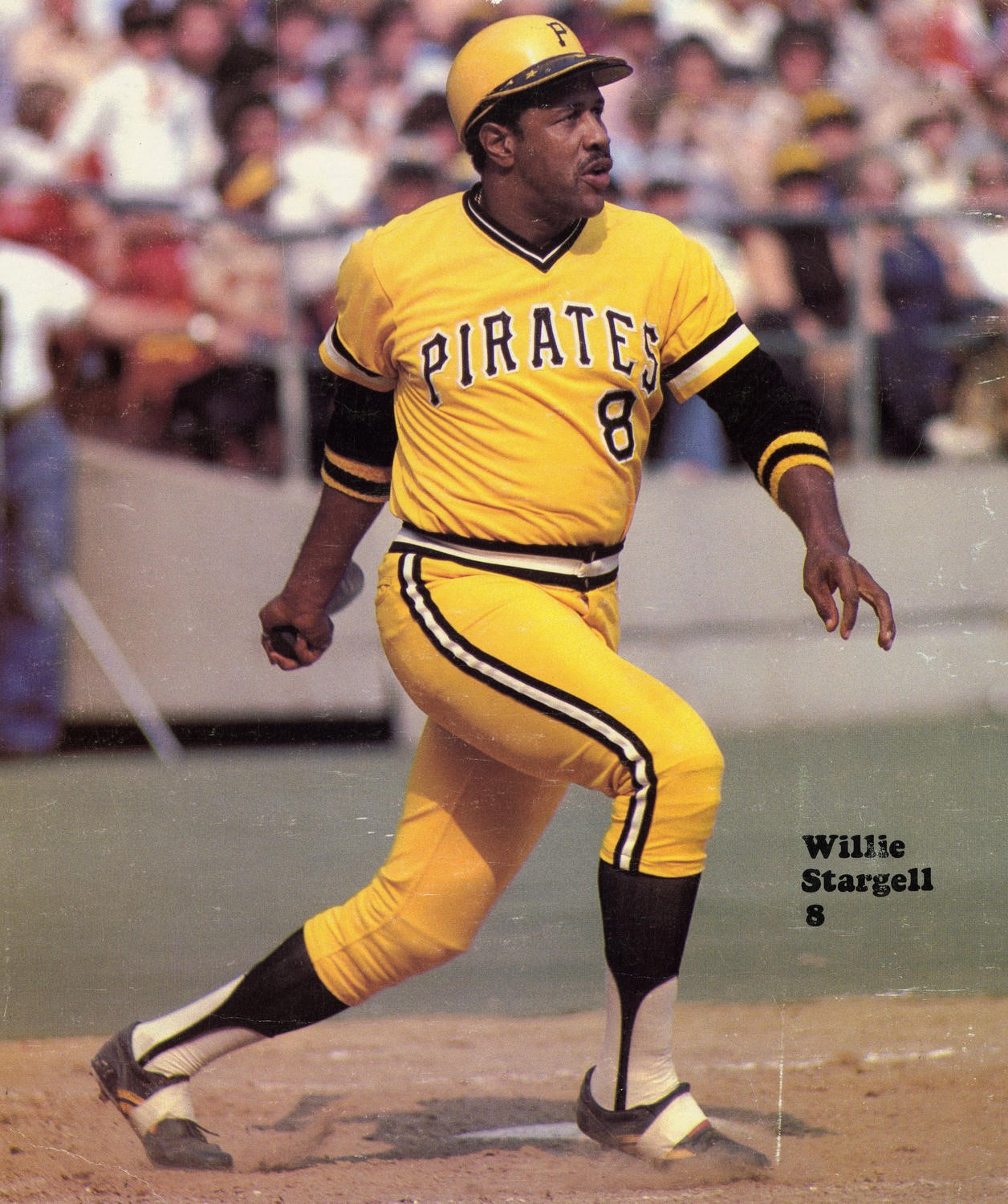
When I was a kid, when I first really became interested in baseball – as a fan, not as potential T-Ball player – there were a few transcendent stars – Brett, Ryan, Rose, Carlton, Schmidt, Guidry, arguably Winfield.  But the guy who jumps to the top of any such list – for me – is Pops.  Can anyone think back to late-70s baseball and not picture Pops Stargell leaping in the air after the last out of the ’79 World Series?


Who could forget Willie being the first to hit a ball out of Dodger Stadium?

Is anything more 1970s than that bear of a man in stirrups, a bright yellow pullover jersey, wearing a skull cap, and playing on cheap Astroturf?

Blog_Stargell

Willie Stargell was more than a once-in-a-generation player.  He was a once-in-a-lifetime man.  In 1988, Willie became only the 17th player inducted into the Hall of Fame in his first year of eligibility.  And yet, even after hitting 475 homeruns, being a seven-time All-Star, and winning the 1979 NL MVP, the Pittsburgh Post-Gazette’s obituary for Willie stated that “his numbers were dwarfed by his humanity”.  High praise, indeed.

Starting about midway through the 1978 season – Willie’s 17th in the big leagues – he began handing out “Stargell Stars”.  A Stargell Star was bestowed upon teammates for their exceptional performance.  And more than any perfunctory “Attaboy”, this was the equivalent of a hug from Dad or a smile from the Prom Queen.  This was ultimate prize for players playing for the ultimate prize.  Day after day and night after night, Willie’s teammates sought to be recognized by the big man so that they could add another “gold star” to their pillbox hats.

And even though the ’78 Pirates fell short on the final day of the season, Pops kept this tradition going the next year.  And, while not exactly scientific, I believe it was the Stargell Stars that catapulted the Buckos to 1979 World Series title.

In recent years, with exclusive branding and licensing deals and corporate sponsorships and a more global sport, baseball has imposed strict limitations on what players can put on their hats, jerseys, and other equipment.  In the theater of the absurd, MLB told the Yankees and the Mets that they could not wear NYPD or NYFD hats in games after 9/11.  You want corporate concerns run amok: MLB physically took caps from the Mets’ dugout on the one-year anniversary of 9/11 to keep the players from wearing them.  All the while, the New Era American Flag cap that the Mets were required to wear that day was being sold at the ballpark for $36.99.  Nothing like a little free-market patriotism.

But I digress.

When word got out that the Pirates would dust off their pillbox hats for Sunday home games this season, Todd Radom (if you don’t know him, but you love sports and logos, look him up @ toddradom.com) suggested that the Pirates also bring back the Stargell Stars.  And that is where transcendent players come back into the conversation.

As we enter the 2016 season, the Pirates are lucky enough to have one of the most transcendent stars in the game patrolling centerfield.  Andrew McCutchen is on the short list of the best and brightest in the game – both on and off the field.  Here is a five-tool guy who can also sing, draw, do impersonations, and make certain young kids remain fans for life:


While it is too soon to say that McCutchen is the next Pops Stargell in the Steel City, he is quickly approaching that exalted status.  So who better to restart this tradition?  What better way for this generation of players and fans to be tied to a prior generation of players and fans?  Could MLB really stand in the way of joy, happiness, and the rewarding of a job well done?  Will Rob Manfred become Roger Goodell and impose No Fun League-type rules, or will he allow the game to grow and prosper by taking just a small piece of its past and allow it to become a small piece of its present?

Riddle me this: If McCutchen and the Pirates are allowed to bestow Stargell Stars (McCutchen Medals?) starting on April 3rd, what Little League team in the Rust Belt won’t be donning these emblems on their hats for the rest of the Spring and Summer?  What kid won’t be diving into the hole, or moving a runner to third with less than two outs, or going first-to-third on base hit to right, or working an 0-2 count for a walk, just for the pride of lousy piece of yarn?

All this will do is inspire a younger generation to play, and play better.  All this will do is re-stoke the flame of what makes baseball great.  Forget the huge contracts and the fancy spikes and the packed stadiums.  Kids – both young and older – play for the love of the game, and for the adulation that comes from a playing it right and from playing it well.

So hang a star on that.  Give the Big Kid at PNC Park the right and the ability to dole out this symbol of greatness (no matter how small), and watch those little gold stars light the night sky from Western Pennsylvania to Chavez Ravine, from the Pacific Northwest to South Beach.  Andrew McCutchen is already on record as saying he wants to restart this tradition, he just needs the league to say it is okay.

To that I implore Rob Manfred to

PLAY BALL!

PATIENCE . . . PART 2

PATIENCE . . . PART 2

As it is written, it is done.

On Friday I wrote about many contracts – and one specifically lacking.  And, over the weekend, that one player got a new deal.  Ian Desmond, he of the turned down 7/$107M offer, took a 1-year deal to play leftfield for the Rangers.  So, he gets to change teams, change leagues, and change positions, all for the right to play on a one-year deal for $3M less than he made last year.  The hits just keep on coming.

This deal was the topic du jour over the weekend, culminating with former Nationals General Manager Jim Bowden saying: “I have never seen a worse contract, ever.”  Strong words indeed.  I think Desmond is a good guy and a good player, so I hope that he plays well and gets a nice multi-year deal next Fall to at least make up for some of that lost money.

After I posted on Friday, I thought more about the deal Dexter Fowler ultimately signed with the Cubs.  Apparently, the sticking point on his deal with the Orioles was that Fowler wanted an opt-out clause after the first season (Yoenis Cespedes got one of those from the Mets, and Scott Kazmir got one from the Dodgers).  The difference is that neither the Mets nor the Dodgers were required to give up a draft pick to sign their respective deals (Cespedes remained with the Mets, and the Astros did not make Kazmir a Qualifying Offer).  For the Orioles to give Fowler $11M to play in 2016, commit themselves to another $22M, give up their first-round draft pick and the money allocated thereto, just to have Fowler potentially walk next November, was a bridge too far.

And, upon further reflection, it may very well be that Fowler got exactly what he wanted, and more:

  • He stays with a team he knows.
  • He has a better chance to win with the Cubs than the Orioles (even though the Orioles do look to be competitive in the stacked AL East).
  • He continues playing CF (in Baltimore, Fowler would have moved to RF because Adam Jones lives in CF at Camden Yards).
  • He gets an opt-out after one season (remember, it is a mutual option for Year 2).
  • If he utilizes the opt-out, he will make $13M this season (remember, there is a $5M buy-out).
  • And here is the kicker: After looking at all of the deals being done, I am sure his agent convinced him that there is no world in which he won’t get him 2/$20M in the open market after 2016. Or, said differently, the worst Fowler could do over a three year period would be 3/$33M.  That sounds a lot like the deal he turned down from Baltimore.

Of course, Fowler is taking a performance risk; he is taking an injury risk; and after seeing Ian Desmond’s deal, he may be taking a market risk.  But, it just may be that having the chance to break the Curse of the Billy Goat was worth all of those risks (oh, and a guaranteed $13M if it all goes to hell helps as well).

Which brings us to the other story of the weekend: Gerrit Cole not being happy with his $10K raise.  A brief explanation: Players with less than three years of service time in the Major Leagues are obligated to accept the contract offered by the team.  Cole has less than three years of service time.  He was paid $531K last season, and was offered $541K this season (as point of reference, the MLB Minimum is $507.5K).  The Pirates claim to have a policy about these types of things, and Cole and his agent (more about that in a minute) think an exception should be made for a guy of Gerrit’s stature and skill level.

It is a valid argument, but one that, upon closer inspection, doesn’t hold water.  Here are just a few reasons why:

  • At $541K, Cole is still the Pirates highest-paid pre-arbitration player.
  • As a mid/small market team, the Pirates need to count nickels, and not give away C-Notes just to make one player happy.
  • Cole received an $8M signing bonus when drafted by the Pirates in 2011.
  • In 2013, Mike Trout, in the same position as Cole (but not, because by then he was already one of the best players in baseball and just won the Rookie of the Year Award), received $510K.
  • But, the most important reason why this doesn’t hold any water is that Gerrit Cole is represented by the Dark Knight himself, Scott Boras.  Boras nearly always (always?) brings his players into Free Agency, hardly ever (has he ever?) gives a team a hometown discount, and extracts every ounce of value (plus an additional pound or two; see Fielder, Prince in Detroit; Ellsbury, Jacoby in New York; Werth, Jayson in Washington) from an acquiring team.  You can bet that when Cole hits arbitration in 2017, and the open market of free agency in 2020, Boras won’t remember any beneficence on the part of the Pirates in the Spring of 2016.  No, Boras will don a mask, wield a gun, and empty some team’s vault for his prized right-hander.

The last chapter of this book has not yet been written.  It may be that the Pirates cave to the pressure and throw Cole an extra $100-$200K (Boras wanted a deal of at least $650K) just to make him happy.  But they really shouldn’t.  Gerrit Cole is a member of the MLBPA who negotiated the CBA, and he will most certainly be the beneficiary of that CBA in a few years’ time.

Sometimes, young Gerrit, patience is a virtue.

Teams started official Spring Training games today.

PLAY BALL!!

PATIENCE ISN’T ALWAYS A VIRTUE

PATIENCE ISN’T ALWAYS A VIRTUE

I try to teach my kids patience.  It is an uphill battle – has been since birth – but I constantly try.

Delayed gratification, I explain to them, is the best kind.  A bird in the hand is only half as much as two in the bush, I calculate for them.  Just wait another minute/hour/day or so.  All good things come to those who wait, I try to reassure them.  I tell them we can walk down the hill and fuck them all.  (Okay, I don’t actually tell them that.)

[**Bonus points if you can pull that reference.  The answer is below.]

But sometimes patience can be its own worst enemy.  Patience isn’t always a virtue.

Take free agents.  Each year I make a mental note of guys who simply “blew it” by being patient, by not taking the bird in the hand.

I started this after the 2008 season, with Jason Varitek and my beloved Red Sox.  The Boston captain was finishing up a 4/$40M contract, and was offered salary arbitration.  By all reported accounts, an arbitrator would have awarded Varitek between $8-$10M for a single season.  Jason and his overlord (er, agent), Scott Boras, decided it would be better to test the free agent market.  Guess what, there were no takers for a 37-year old catcher who hit .220 the previous season.  He then came back to the BoSox, hat in hand.  The Red Sox offered a 1-year deal at $5M, with a team option for the second year at another $5M, or a player option for $3M.  Simply put, Varitek cost himself at least $3M, and potentially $5M, in 2009 alone.  And, in all likelihood, gave the Red Sox the lovely buy-one/get-one free deal, because the Red Sox got Varitek for two years at $10M.  Well played sir, well played.

This issue has come into specific relief the last few seasons with advent of the Qualifying Offer (“QO”).  For the uninitiated, it goes like this: when a player’s contract is over, his current team has the right to make him a Qualifying Offer, which would be a 1-year deal at the average salary of the top 125 players from the previous season.  The player has one week to accept or reject.  If he rejects, he becomes a free agent, and – this is the kicker – any team that signs him must forfeit – to the other team – their highest available draft pick in the upcoming draft.  In addition to losing the draft pick, the acquiring team also loses the dollar allocation that goes with that pick.  So, come June, the free-agent acquiring team will not only have less draft picks, they will have less money to spend on the picks they retain.  In short, there is a high price to pay for any free agent who previously rejected a QO.

In some cases, losing the pick and the compensation is a no-brainer.  If you are spending $200M+ on David Price or Zack Greinke, you are not going to let a little thing like a few hundred grand and a prospect stand in the way.  But, if you are looking at a fringe guy, you will think twice about signing him.

With that as the backdrop, through the 2012 off-season, not only had no player ever accepted a Qualifying Offer, no player had ever felt negative repercussions for not doing so.  That all changed after the 2013 season.  In 2013, general managers started getting smart.

Here is the thinking:

From the current team’s perspective, there is no issue with making a Qualifying Offer.  General Managers live by the credo that there is no such thing as a bad 1-year deal.  You liked the guy enough to pay him last season, so why not pay him again.  If you wouldn’t offer him a deal anywhere near the value of the Qualifying Offer (again, the average of the top 125 salaries), then you let him run off into free agency.  But if he is worth the price, you make the offer and you win either way.  (And, in many cases, you hope he signs elsewhere, as you then get the draft pick and the financial allocation attached thereto).

From the acquiring team’s perspective, you put a great deal of value into your draft picks and your draft dollar allocations.  If the player isn’t worth both the money and the loss of a prospect down the road, you hold your water.

After the 2013 season, teams made Qualifying Offers to 13 players.  Say yes, and the player was guaranteed $14.1M.  Not too shabby.  Some guys decided to roll the dice; and three, in particular, crapped out:

Stephen Drew, coming off a lackluster season with the Red Sox in which he hit .253, thought more than $14.1M was waiting on the open market.  By May he (and his overlord, er, agent, Scott Boras) figured out there wasn’t.  The Red Sox threw him a lifeline and signed him to a 1-year deal at $10.2M.  That would be a loss of $3.9M.  But, it gets worse for Drew.  Since he missed all of Spring Training and had to come in cold in mid-May, he had another lackluster season in 2014.  He was traded midway through the season from Boston to the Yankees (think how bad he must have been for the BoSox to send a player to Bombers mid-season), and hit a swarthy .162.  The Yankees resigned him for 2015 for $5M (a gift).  Drew, too, liked the buy-one/get-one concept, as he could have played 2014 for $14.1M, but chose to play 2014 and 2015 for $15.2M.  Poorly played sir, both in the boardroom and on the field.

Maybe playing in Seattle is really that bad.  How else to explain that Kendrys Morales could have stayed in the Pacific Northwest and earned $14.1M in 2014.  Instead, he played the field.  On June 7th, the Twins finally threw him a life raft, and signed him for $7.4M.  He did hit .218 with 8 homers, so that worked out pretty well.  And you want the best irony: six weeks after he signed, the Twins traded Morales back to the Mariners.  Enjoy Starbucks, Kendrys, you just have $6.7M less to spend at Pike Place Market.  (Ed. Note: Morales was also represented by Scott Boras in this catastrophe.)  (Ed. Note #2: I guess Morales got the last laugh, as he signed with the Royals in 2015 and won the World Series.  That said, he got paid $6.5M in 2015; another 2 for the price of 1 deal.)

The Boom Stick was also feeling his oats after the 2013 season.  The Rangers offered Nelson Cruz $14.1M to play mediocre left field and hit homers in North Texas for another season.  Cruz said no.  When no multi-year offers were forthcoming, Cruz accepted a 1/$8M deal with the Orioles.  Simple math: Cruz left $6.1M on the table.  He did end up leading the league in dingers, and got himself yet another qualifying offer of $15.3M, which, of course, he turned down.  He eventually signed a 4/$57M contract with the Mariners, so I guess all’s well that ends well.

Talk about your life lines.  The Royals went way outside their comfort zone after the 2013 season (remember, this was pre-World Series appearances), and made a Qualifying Offer to Ervin Santana.  Santana said no, and went to market.  Unfortunately for him, the market was closed.  A month into Spring Training, the Braves offered Santana a 1-year deal at, you guessed it, $14.1M.  Literally/financially, nothing lost/nothing gained.  Incidentally, the Braves finished 17 games out of first place; the Royals went to the World Series.  I hope Santana enjoyed his baseball-free October.

After the 2014 season, 12 Qualifying Offers were made, and none were accepted.  Here is a list of the players to whom QOs were made, and the deals they eventually closed:

  • Max Scherzer: Turned down the Tigers, signed with the Nationals for 7/$210M
  • Victor Martinez: Turned down the Tigers, but then re-negotiated with them and closed at 4/$68M
  • Hanley Ramirez: Turned down the Dodgers and suckered the Red Sox into 4/$88M
  • Pablo Sandoval: For reasons that may never be known, rejected the Giants QO and then the Giants $100M offer, and signed with the Red Sox for 5/$95M
  • James Shields: Everyone expected Shields to be the first player to accept a QO, but he declined, and signed with the Padres for 4/$75M
  • Russell Martin: The Pirates broke their bank in an attempt to retain Martin, but he chose to go home to Canada for 5/$82M
  • Nelson Cruz: This guy’s got nothing on Kenny Rogers (the singer) – he gambled again, and, as stated above, was rewarded with a 4/$57M deal with the Mariners
  • David Robertson: Bailed on the Yankees and signed with the White Sox for 4/$46M
  • Ervin Santana: Like Britney Spears, he did it again; this time he got what we wanted: 4/$55M with the Twins
  • Francisco Liriano: Rejected the QO, but worked out a 3/$39M deal with the Pirates
  • Melky Cabrera: Turned down the Blue Jays, and chose the White Sox for 3/$42M
  • Michael Cuddyer: This one is fascinating.  Coming off a 4/$42M deal with the Rockies, he received a QO, and turned it down.  He ended up signing a 1-year deal with the Mets for $8.5M, and then retired.  Granted, he made more than $79M in his 13-year career.  But who couldn’t use an extra $6.8M as they ride off into the sunset?  Apparently Michael Cuddyer, that’s who.

Finally, after the 2015 season, some players (agents?) started to wise up – but not that many.  Teams made 20 Qualifying Offers, and 17 were rejected.  But, that means that 3 players took the money and stayed:

Matt Wieters of the Orioles was the Jackie Robinson of Qualifying Offers.  Coming off of Tommy John surgery, the catcher decided $15.8M for a season in the comfy confines of Baltimore, rehabbing and getting himself in position for a bigger payday, made a lot of fiscal sense.

Colby Ramus quickly followed suit with the Astros.  He has bounced around a bit (3 teams in 8 seasons), worn out some managers (see, LaRussa, Tony), but then found a home on Tal’s Hill.  $15.8M with a team that has a great shot of winning its division was a safe bet.

Brett Anderson decided, after going 10-9 with a 3.69 ERA, to take Guggenheim’s $15.8M to stay in Southern California.  Seems like a good choice – especially since (a) there weren’t (m)any suitors and (b) he may be one of the best (of the bleak list of) free agent pitchers available next season (after Stephen Strasburg, the quality falls off precipitously).

Which brings me to my favorite story of this young season, and the inspiration for this post: the curious and costly case of one Dexter Fowler.  Fowler roamed centerfield for the Cubbies last season, and got a taste of success with this young core.  Theo Epstein offered Fowler $15.8M to do it again in 2016; Fowler said no.  And then no one called.  After pitchers and catchers reported, there was word that Fowler’s patience was about to be rewarded: the Orioles were going to give Fowler a 3/$33M deal.  But then, out of nowhere, Fowler resigned with Cubs – for WAY less money.  The Orioles were mad – they thought they had a deal; the Cubs were ecstatic – they saved a bunch of money (see below); and reporters and teammates were confounded – they were all duped.

If, during the first week of November, Fowler had simply said “yes”, he would be paid $15.8M for this season.  But, as we know, he didn’t.  Instead, four months later, he decided to take that same 1-year deal, but just for $7.8M less.  What?!?  The deal has a mutual option for 2017 at $9M, and a buyout of $5M.  So, in essence, Fowler could get $13M for this season, and still be a free agent next season (i.e., only a loss of $2.8M (not counting the time value of money)); or he can be paid $17M for 2016-17, or just $1.2M more than he would have received for 2016 alone.  And his agent had the temerity to send out an incendiary press release about the deal!?

Fowler may be happy to be “home” and playing for history, but I am sure he would rather be doing that with another $7.8M in his pocket over the course of the next few months.

And just when you thought it was safe to go back to the diamond, we have the case of Ian Desmond.  Desmond turned down $15.8M to play SS for the Nationals in 2016.  Spring Training is now two weeks in, and Desmond is still looking for work – he is unsigned.  Oops!!  Oh, and it bears mentioning that after the 2013 season, Desmond turned down a 7/$107M offer from the Nats.  He thought it made more sense to sign for 2/$17.5M, and keep his options open.  Double oops (actually $89.5M oops)!!

Hisashi Iwakuma turned down the $15.8M QO from the Mariners, and thought life was good with the Dodgers.  The Bums were going to sign him for 3/$45M, but then he failed his physical.  The Mariners took him back for $12M.  Net loss, $3.8M.

Howie Kendrick turned down the Dodgers’ QO, tested the market, and got no takers.  He resigned with the Dodgers for 2/$20M (or, just $4.2M more than he would have gotten for 2016 alone).  But, alas, there is always a kicker.  The Dodgers 2-year deal actually has deferred money, with no interest.  Howie gets $5M/year over four years.  Thus, Kendrick is playing 2016 for $10.8M less than if he had just said “yes”.

Axl Rose preached “just a little patience”.  But some of these guys have been walking the streets at night, just trying to get it right, and they have failed . . . miserably.

Now, don’t shed any tears for any of these millionaires; and maybe these decisions seem inconsequential when you have eight figures in the bank.  But I still don’t understand (a) how players let these things happen and (b) why more agents aren’t fired every season.

Okay, now we all have to go back to our pedestrian lives, spend $109 to renew our MLB.TV accounts, and get ready for that underpaid umpire (average salary: $120-$350K/year) to say:

PLAY BALL!!

p.s.  The answer to the trivia question can be found here:

https://www.youtube.com/watch?v=qHcoMMaW2ZU