Hitting a Home Run In Your First MLB At-Bat Is Exciting, Not Indicative of Anything

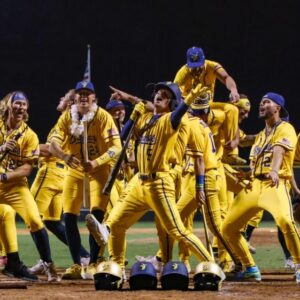
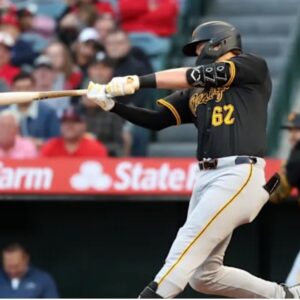
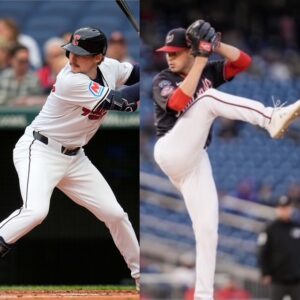
Two weeks ago, Matt Gorski of the Pittsburgh Pirates hit his first major league home run in his first major league at-bat, on the first pitch he saw. With that swing, Gorski became the 136th member of this not-so-exclusive club – the first MLB at-bat homer club. And he joined an inclusive subset of that club, becoming just the 31st player to do so on the first pitch.

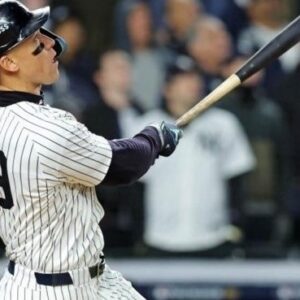
Interestingly, of the 136 times this has happened, 90 have done it in the last 50 years. From 1895–1974, only 46 players hit a home run in their first big league at-bat, with Joe Harrington of the Boston Beaneaters being the first, on September 10, 1895. There is really no rhyme nor reason as to who does this. Aaron Judge did it, but so did James Outman (just called up from Triple-A).

Luke Stuart did the deed in 1921, and that was his only hit in the majors. Keith McDonald did it for the Cardinals on July 4, 2000, and never hit another home run. Hoyt Wilhelm, known for his knuckleball – which was good enough to get him into the Hall of Fame – hit a home run in first at-bat, never hit another, and finished his career with a .088 batting average.

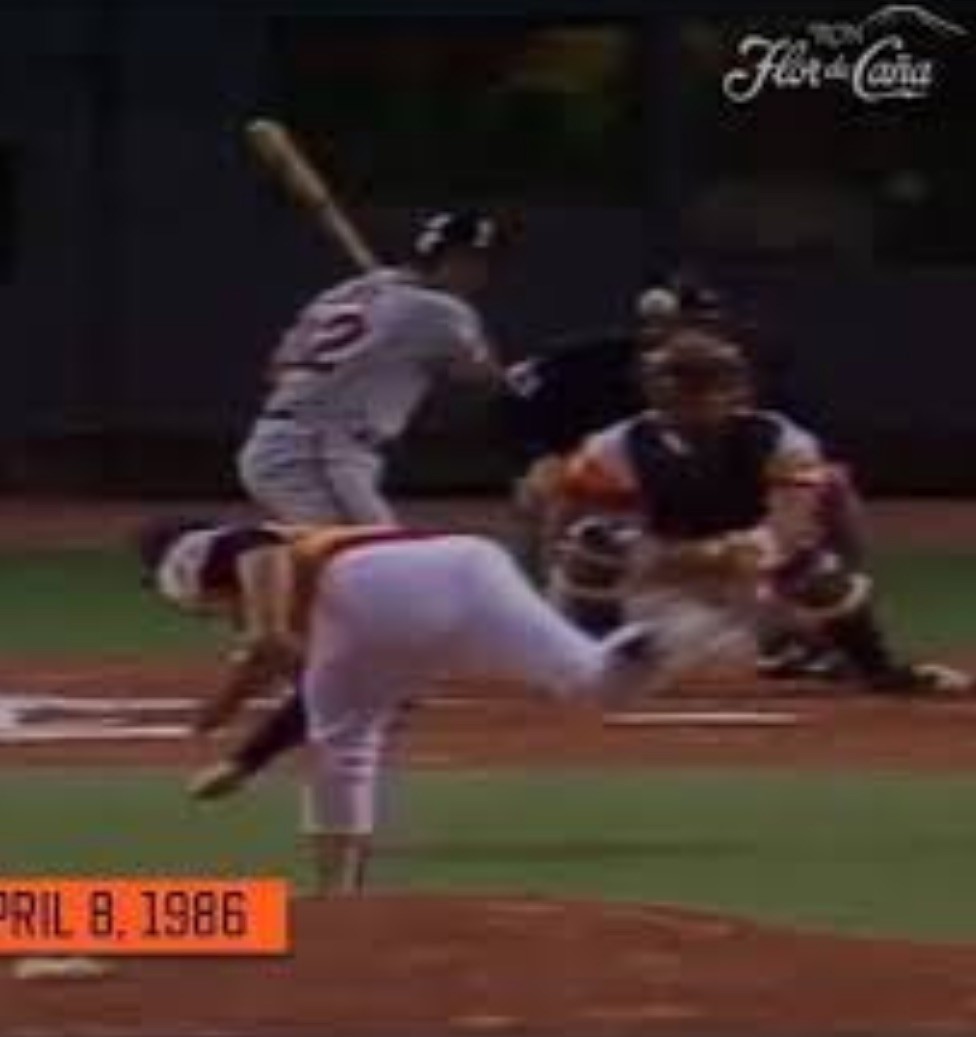
My personal favorite happened on April 8, 1986, when rookie sensation Will Clark took future Hall of Famer Nolan Ryan out to dead center in the Astrodome in his first big league at-bat. Historically, the Astrodome was a pitcher’s park, with bad lighting and dead air that did not allow the ball to carry. To hit a dinger to dead center off Nolan Ryan was quite the feat. Clark has discussed how the wily veteran, known for his “Ryan Express” fastball, started him with a curve. “Welcome to the big leagues, rook!”

On June 12, 2010, Daniel Nava made his major league debut with the Boston Red Sox with the bases loaded. He deposited Joe Blanton’s first offering into the bullpen for a grand slam.

This phenomenon is becoming almost old hat. Since the start of the 2020 season, it has happened 16 times. Noted first-timers include:

Akil Badoo (Tigers, 2021). Badoo also did it on the first pitch, and used that as a jumping off point for the best year of his now four-year career.

Christopher Morel (Cubs, 2022). Morel, now with the Rays, has fallen off the last two seasons since his trade to the American League.

Brett Baty (Mets, 2022). Baty has not hit enough to become the everyday third baseman the Mets had hoped for, and after that first dinger, he has hit only 15 more.

Spencer Steer (Reds, 2022). The Reds have high hopes for Steer, who hit 23 home runs in 2023 and then another 20 in 2024. A shoulder injury has slowed him this year.

Josh Jung (Rangers, 2022). Injuries have derailed a strong start to Jung’s career. He played in only 46 games last season, and a finger laceration has sidelined him again this year.

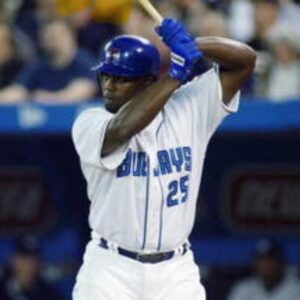
Davis Schneider (Blue Jays, 2023). Schneider came to the big leagues like a house on fire, accumulating 1.8 bWAR in just 35 games, while hitting seven more home runs after that initial blast. Since then, the results have been considerably more muted.

Jasson Domínguez (Yankees, 2023). “The Martian” was supposed to be a savior for the Yankees, but he has not yet lived up to the hype. He has two home runs this season in 98 at-bats, and has only hit seven since his initial shot.

Jhonkensy Noel (Guardians, 2024). “Big Christmas” hit one of the biggest and loudest home runs of the post season last year (see below), which was on top of the inaugural dinger. This year has only hit two, while slashing .164/.186/.269.

Hitting a home run in your first major league at-bat is, more than anything, a fluke. It does not bode anything for the rest of your career. But it does provide an incredible moment for the player and his family if they were able to make it to the yard in time for the game. And really, at the end of the day, aren’t those special moments one of the main reasons why we love the game?

PLAY BALL!

Aaron Judge, The 2024 World Series, and Sliding Doors

My wife is always giving me hard time about playing the sliding doors game. She thinks it’s a waste of time. I had a colleague who once gave me a t-shirt that reads: “What if there were no hypothetical questions?”. And one my favorite books is Mike Pesca’s anthology, “Upon Further Review: The Greatest What-Ifs In Sports History.” (As an aside, if you haven’t done so already, be sure to pick up a copy. The Muhammad Ali and Tom Brady stories alone are worth the cover price.)

Last week I streamed “Fight For Glory,” the three-part Apple TV documentary about the 2024 World Series. It is an incredible watch, as the cameras and microphones were able to see and hear so much that we as viewers of just the Fox telecast could not. Having cameras in Freddie Freeman’s house, being with his family, and then in the training room with him prior to a game, gives us fans an entirely different vantage point and appreciation for what he went through to become a World Series hero.

The documentary does a fantastic job of interweaving actual game footage and various broadcast feeds. And whether it was Joe Buck on Fox, or Michael Kay and Suzyn Waldman on WFAN, or Steven Nelson and Rick Monday AM570, there was one consistent theme we heard over and over as the World Series progressed: “If and when Aaron Judge gets hot, he can carry this team to a championship.” As the documentary makes clear, each broadcaster said this nearly every time Judge came to the plate over the first four games.

As a reminder, through the first four games (well, through his first three at bats of Game 4), the eventual AL MVP was 1-for-13 with seven strikeouts and seven runners left on base. In the first three games of the Series, Judge swung and missed 18 times.

In the bottom of the eighth inning of Game 4, Judge laced a 107.8 MPH single to left. That at bat, that swing, that hit, felt different. He would end game 1-for-3, but he had to be feeling good about coming to the plate four times and not swinging through any pitches.

Judge’s first at bat of Game 5 resulted in a 108.9 MPH missile to right center for his first home run of the Fall Classic. On the Fox call, Joe Davis proclaimed: “Sleeping giant has awoken.”

Two at bats later he hit a ball 101 MPH to deep left for a fly out. Then in the eighth, he hit a 100 MPH double to left. At that point, it was clear to everyone watching that Judge was locked in and doing damage. Unfortunately for Yankees fans, Judge never got another at bat in the series. As we all know, the Dodgers came back to win Game 5 and with it, the World Series.

But what if the Yankees had not lost Game 5. What if they had not choked away a no-hitter and a 5-0 lead? What if they had held on to their 6-5 advantage late in the game? What if the series went back to Los Angeles, with Yankees having won three straight and having all the momentum and with the Dodgers on the ropes? Well, we will never know.

The Dodgers never had to throw another pitch to the six-time All-Star, two-time MVP, American League single-season home run champ, the man who had hit 196 home runs the previous four seasons combined, while still batting .300 with a 1.056 OPS and a 191 OPS+. In a different universe, there would have been two more World Series games. How would Judge have fared? It is impossible to know for sure, but we can speculate based on his next two official games.

On Opening Day (which would have been Game 6), Judge went 1-for-4 with a double, striking out twice. The next day, the Yankees second game of the 2025 season (what would have been Game 7), Judge went ham. How about 4-for-6 with three homers, eight RBI, and 14 total bases. What would that have looked like in Chavez Ravine, on the biggest stage, in a deciding game, on national television?

Just for kicks, Judge hit a home run the following day as well, while walking three times and scoring four runs.

Would the Judge of early 2025 (.417/.481/1.167 with five home runs through his first six games) have been who the Dodgers would have contended with in the final two games of the World Series? Probably not. But they would have had to contend with the guy whose previous seven World Series at bats went like this:

  • 92.8 MPH fly out
  • 107.8 MPH single
  • 108.9 MPH home run
  • Walk
  • 100.9 MPH fly out
  • Walk
  • 100.1 MPH double

Does anyone think that the shaky Dodgers rotation and/or bullpen wanted to face that version of Aaron Judge with the title on the line? Does anyone think that Judge wouldn’t have had at least a couple of memorable at bats in Games 6 and/or 7? Does anyone think that the Dodgers weren’t thanking their lucky stars that they came home with the Commissioner’s Trophy rather than trying to figure out how to get the suddenly red hot Aaron Judge out eight or ten more times?

Sliding doors. They are fun to think about.

PLAY BALL!!

Opening Day Performances May or May Not Be a Sign of Long-Term Success

Last Thursday was MLB’s Opening Day. A day of renewal, as teams start the season with a clean slate and great hope for the future. The same is true for the players. While they all start with a .000 batting average, that can only go up from there.

Some players get their seasons off to brilliant starts, having Opening Days for the ages. This year was no exception, two players remarkable games:

Kyle Manzardo of the Cleveland Guardians walked in his first at bat of the year. In the top of the fourth, he tripled and ultimately scored. In the sixth inning, he hit a solo home run. After striking out looking in the eighth, Manzardo took advantage of extra innings, hitting a two-run double in the top of the tenth to ultimately win the game for the Guardians. When all was said and done, Manzardo was a single shy of the cycle—which would have been only the second Opening Day cycle in MLB history (more about that below)—with four RBI.

MacKenzie Gore of the Washington Nations threw six innings, allowing just one hit, while striking out 13 Phillies. Gore matched Bob Gibson (more about that below) as the only pitchers in AL/NL history with that many strikeouts and no walks in a scoreless outing on Opening Day.


While those were quite the performances for one guy who with 156 previous big league at bats and only 15 runs batted in before Thursday afternoon, and one guy who only has 73 big league starts to his credit, they pale compared to some of the greatest Opening Days of all time. Here are just a few, starting with the pitchers:

Walter Johnson, pitching for the Senators in 1926 tossed 15 innings, giving up no runs while striking out nine against three walks in the their 1-0 win over the Athletics (then in Philadelphia).

Bob Feller, throwing for the then-Indians in 1940 what is still the only AL/NL Opening Day no-hitter. He struck out eight but issued five walks.

In the first of his nine straight Opening Day starts in 1967, Bob Gibson threw a complete-game shutout against the Giants, allowing just five hits and striking out 13 without issuing a single walk. Pretty good company for Mr. Gore.

Future Hall of Famer Clayton Kershaw fell short of Feller and Gibson in 2013, allowing four hits, but he handed out no walks while striking out only seven. Kershaw also added his own home run. (At the plate, Feller went 0-for-3 in his gem; Gibson, alas, went 0-for-4.)


Now, for the hitters, including a few from Detroit:

In 1937, Gee Walker of Tigers hit for the cycle and went 4-for-4 while also scoring twice in the Detroit’s 4-3 win over Cleveland.

On Opening Day in 1986, future October hero Kirk Gibson went 4-for-4 without cycling: he hit two home runs and drove five home, helping push the Tigers past the Red Sox, 6-5.

On that same day, Jim Presley of the Mariners went 3-for-4 with two home runs and 6 RBIs in a ten-inning, 8-4 win over the Angels.

Coming off a 47-homer season in 1987, George Bell rang in 1988 with three dingers against the Royals in a 5-3 Blue Jays win.

On Dwight Gooden’s final Opening Day as a Met, Karl (“Tuffy”) Rhodes hit three homers off Doc at Wrigley Field. The bad news: it was not enough, as the Cubs fell to the Mets, 12-8.

In 1999, Dodgers’ outfielder Raúl Mondesi tried his best to match the best previous Opening Days: going 4-for-5 with two homers and six RBIs, plus a walk. That helped the Dodgers to an 8-6 win over the Diamondbacks.

Corey Patterson of the Cubs went 4-for-6 with two homers and seven RBIs as his Cubs drubbed the Mets, 15-2 in 2003.

Another Tiger, Dmitri Young went wild in 2005, hitting three home runs with five RBI in a 4-for-4 day (plus a hit-by-pitch) as Detroit throttled Kansas City, 11-2.

The Royals were victimized yet again in 2018 as Matt Davidson crushed three homers in the White Sox’s 14-7 win over the Royals.

Most recently, in 2023, Adley Rutschman went a cool 5-for-5 with a home run, a walk, and four RBIs, as the Orioles edged the Red Sox, 10-9.


Baseball analysts are always quick to downplay “small sample size” assessments, so there is no need to extrapolate anything from any of the above games. Johnson, Feller, Bob Gibson, and (eventually) Kershaw are Hall of Famers, so their Opening Day success is not shocking.

But Walker went on to slash .335/.380/.499 in 1937 for the second-highest OPS of his career, making his only All-Star team. Kirk Gibson’s 1986 turned out to be relatively pedestrian, but Presley’s was the second-best season of his career.

Bell’s 1988, Rhodes’ 1994, Mondesi’s 1999, Young’s 2005, and Davidson’s 2018 were all middle-of-the-road. Patterson’s 2003 was his best. And Rutschman ended 2023 as a Top-10 Most Valuable Player Award vote-getter while winning a Silver Slugger Award.

Long story short, it is best simply to appreciate these great Opening Day performances, as there are absolutely no conclusions that can be drawn from them. After that one great game, there are still 161 to go.

PLAY BALL!!

A version of this story appeared in the April 2nd edition of IBWAA’s “Here’s the Pitch” newsletter.

Charlie Grimm, a Glove, Wrigley Field, and Generations of Baseball Love

Today would be my late wife’s 54th birthday. In addition to giving me nine wonderful years of marriage and three beautiful children, she gave me her dad, Marty.

Marty was an interesting man. He never met an illness he didn’t have or couldn’t diagnose (with the help of the Physicians’ Desk Reference that he kept handy), or a line he couldn’t beat. He grew up in Chicago as a Cubs fan, and then joined the Army. Shipped off to Germany during the Korean War, he never saw military action. Rather, he whiled away his time playing baseball with his fellow recruits. Marty loved baseball.

His passion for the game was fueled by his father, Irwin, who also grew up in Chicago, and was even closer to baseball. Irwin was a concessionaire at Wrigley Field. Sometimes he sold sodas and hot dogs, other times he took tickets. But regardless of the job, the Friendly Confines were his home away from home, and his workplace.

One day in the late 1920s, Irwin was leaving the ballpark after another afternoon game on the North Side (they were all afternoon games then, as Major League Baseball’s first night game didn’t take place until May 24, 1935, at Crosley Field in Cincinnati; and the Cubs’ first night game didn’t happen until 53 years later, in 1988). As he was about to step onto Addison Street, Irwin heard a voice behind him.

“Hey [in the retelling of the story, it is unknown if he was called by his name], “hang on a minute.” Jogging towards the Wrigley Field employee and not yet father of two was Cubs’ first baseman Charlie Grimm, known affectionately as “Jolly Cholly.” Grimm must have seen Irwin tossing peanuts with his left hand, or handing out sodas with his “southpaw,” or maybe he just had an inkling – lefties tend to be able to spot each other in the wild. When Grimm caught up to Irwin, he handed the man his first baseman’s mitt, telling him not to worry, he had others.

Irwin brought that glove home and put it away. Maybe, one day, he could share it with a son. A few years later, his wish was granted. Marty was born in 1933, and when he was old enough to fit the glove on his hand, Irwin bestowed the mitt upon his boy. As a youngster, Marty used that glove in the street and on ballfields all over Chicago. He eventually moved on to a Spalding, which he brought with him to Europe in his duffel bag along with his shaving kit and dog tags.

Marty held onto Grimm’s old mitt, first leaving it in his childhood closet, then in the home he shared with his wife (my mother-in-law), and then in his apartment as he crested into old age. Marty, like his father, had wished for a boy to play catch with. However, he was blessed with two girls.

Of his girls, one couldn’t tell an inside pitch from a soccer pitch, and had no interest in sports. The other, whom I would eventually marry, liked sports just fine, but never those played with a ball and glove. So Marty would play tennis and shoot the occasional hoop with his daughter, but he had no one to play ball with.

And then he met me. My then-girlfriend and her father weren’t especially close, but she did introduce me to him shortly after we started dating. One time, early in our courtship, we visited him at his apartment.

After a perfunctory greeting, he said to me, “Wait here.” After a few minutes and the sound of boxes and papers shuffling in the other room, he appeared with an old baseball mitt. It was in horrible shape. Dried out and stiff, with an aged Spalding ball in the pocket. He immediately said, “Let’s play catch.” I didn’t have a glove, but wasn’t too worried about his velocity hurting my bare hand, so we went to the parking lot to toss that old ball into that old glove.

While flipping that actual horsehide back and forth, we were chatting, as two are wont to do. That day he told me the story of Charlie Grimm and his father and Wrigley Field and how he had always wanted to pass the glove down to his own son. He spoke nearly as lovingly about “Jolly Cholly” as he did his own dad.

While it was clear to me that I had won this man over (the same was not yet true of his daughter), he most certainly didn’t offer the glove to me.

Over the years Marty and I would share our love of baseball, watching on television and comparing players and eras. I took him to a handful of Angels games (he lived in Orange County and rooted for his new hometown team). He was always good for a story or two and a beer or three. We truly enjoyed each other’s company.

Time passed, his daughter and I got married and had a boy of our own. And then Marty got sick. Truth be told, with so much going on in that stage of our lives, I had completed forgotten about the glove.

A few weeks before our son turned three, Marty passed away. My wife was a busy litigation attorney, and I was between jobs, so it was my responsibility to clean out his apartment. Marty was a pack rat. I found yellowed newspapers, decades old cups that McDonald’s gave away as part of Happy Meals in the ‘70s; and that dog-eared copy the Physicians’ Desk Reference.

Marty smoked and didn’t like the cool air, so the apartment had a must that was hard to bear. But I worked quickly, trying to make sure I grabbed anything and everything that had meaning. I found a cache of photographic slides (kids, ask your grandparents) from his time in Europe during the war, and an old jewelry box with some incredible heirlooms. There were Cubs and Bulls jerseys, and his letterman jacket.

I stumbled across some old scrapbooks and pictures from his childhood. And just when I thought I had gotten everything of value, everything I could fit in his trunk and mine, I gave the apartment one more look over. I went to his closet and pushed over a pile of clothes. And laying in the corner, abandoned and forgotten (first my him, and then almost by me), was Charlie Grimm’s first baseman’s mitt, with that Spalding still in the pocket.

In that moment, I knew why people go to flea markets and thrift stores, why people stop at antique shops on the side of the road or wake up early to attend estate sales. You simply never know what you might find.

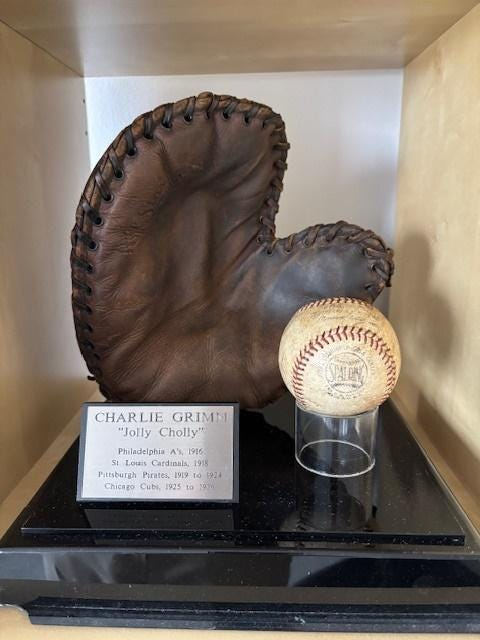
I grabbed the glove and put it on the front seat of my car. This was a wonderful find, and it would get the appropriate treatment. I took it home and oiled her up. When the first cycle still left the glove dry, I did it again. And then I took the ball and glove to a local trophy store and asked them to make a special case and nameplate for both. This treasure went from Charlie Grimm to Irwin Osheroff to Marty Osheroff to me. And it was not going to be lost or mistreated while I cared for it before passing it on to my son. The watchmaker Patek Philippe has a slogan: “You never actually own a Patek Philippe. You merely look after it for the next generation.” This baseball mitt is my Patek Philippe.

Charlie’s mitt and ball currently live in my office, but won’t be there forever.

As luck would have it, my son loves baseball as much as his grandfather (both of his grandfathers, actually). And it turns out that my son, like his father and his maternal grandfather, throws from the left side. As the years went on, I became an even bigger fan of baseball, and then a baseball writer. My fandom and my travels have allowed me to visit nearly every major league ballpark. Call it coincidence, chance, fortune, or fate, but my favorite of all, in fact, my favorite place to be, is Wrigley Field. It is my happy place.

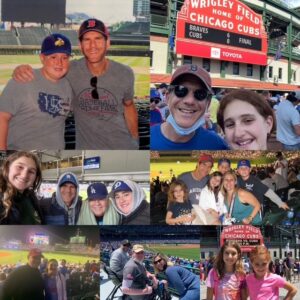
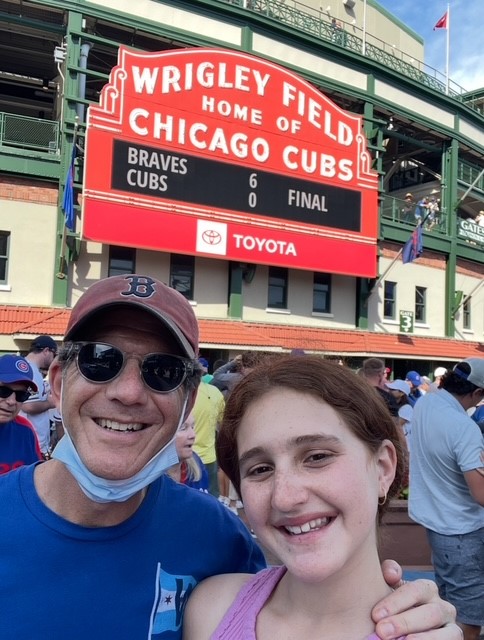
Wrigley Field is where I dragged my family on our first trip to Chicago; my girls on the next; my youngest daughter on Father’s Day a few years ago because, well, it was Father’s Day.

Father’s Day in Wrigleyville

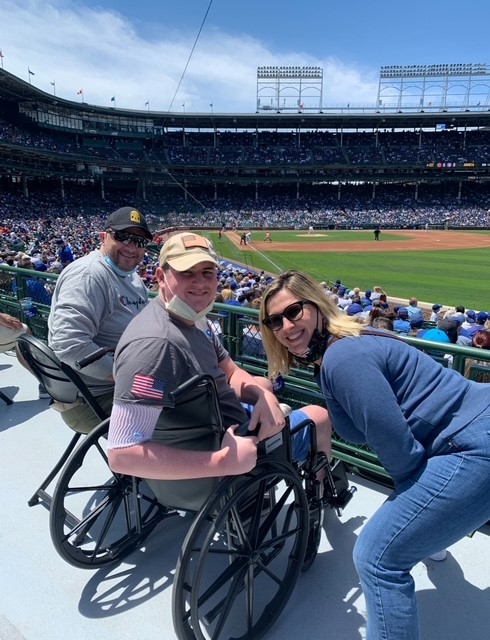
The Friendly Confines is where I took my stepson and his father as the former was recovering from cancer treatment, as there is nothing like a Sunday in the North Side sun to brighten your spirits.

The road to Wellville goes through Wrigley Field

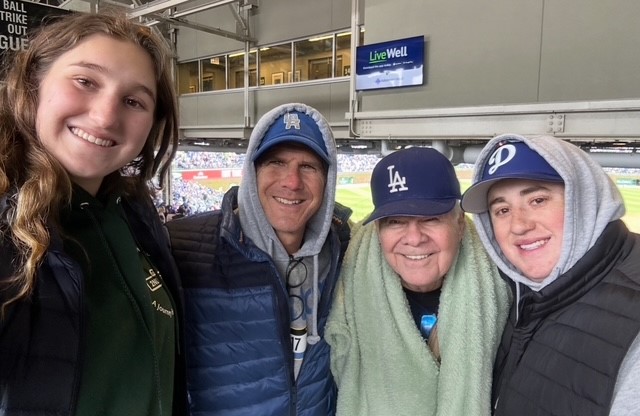
It is where I took my father (and son and daughter) on a blustery day in 2023 just so we could truly experience the winds off Lake Michigan.

Coldest game I have ever attended – couldn’t have been more fun!

One night a few summers ago I forwent the actual ballpark, and had dinner right on Clark Street just so I could experience the sounds of the game smack in the heart of Wrigleyville. Wrigley Field calls to me like Charlie Grimm called to Irwin Osheroff; I find myself drawn to the corner of Clark and Addison time and time again.

Does my love of Chicago, and that park, trace back to Charlie Grimm? Did his beneficence to my grand father-in-law eventually, somehow, trickle down to me. Is my ardor an (in)direct result of some cosmic event that none of us is smart enough to understand? Who’s to say?

What I do know is that my late wife introduced me to her father, who told me the story of his father, and the kindness of an average big league first baseman who went out of his way to give a gift that has passed through generations, with yet more to go.

So, thank you “Jolly Cholly,” you had no way of knowing the long-term impact your small gesture would have on multiple families; thank you Irwin, for being the type of person that Charlie Grimm felt compelled to bestow such a special gift upon; thank you Marty, for indirectly bequeathing your birthright to me; and thank you Samantha, for giving me the son to whom this beautiful piece of leather will eventually pass. And, also, Happy Birthday!

PLAY BALL!!

This article first appeared in the March 7, 2025 edition of IBWAA’s Here’s the Pitch newsletter.

Mike Trout: Angel in Right Field

It finally happened. After years of speculation and too many years cut short due to injury(ies), future Hall of Famer Mike Trout is moving out of center field.

As you may recall, when Trout made his major league debut in 2011 at age 19, he played ten games in left field, and thirteen in each of center and right.

In 2012, he started 29 games in left (108 in center, none in right). In 2013, he started 40 games in left field and another 108 in center. The last time Mike Trout donned a glove and jogged out to play anywhere other than up the middle was on September 2, 2013, when he played seven innings in left field against the Rays at The Trop.

However, after missing 382 games over the past four seasons, after losing his place as the best player in the game, after his team suffered its worst season in franchise history (99 losses), and not having had a winning season since 2015, the Angels have decided that a change is in order. Trout, general manger Perry Minasian, and manager Ron Washington all discussed the matter and decided that for the health of their star that he would get the majority of his reps on the right side of the outfield, with an occasional stop in center field, and also some days as the team’s designated hitter.

Of the meeting, Trout was quoted as saying: “It went great and we just threw everything on the table, as in, what’s best for me, body-wise, to keep me on the field.” Ironically, Trout’s move to right gives Jo Adell yet another chance to prove that he is the player that the Angels hoped he would be when they drafted him with the tenth pick in the 2017 draft.

With Trout now becoming the everyday right fielder, he is clearly the best player in the team’s 64-year history to play that position. Or is he?

When the Los Angeles Angels debuted in 1961, Albie Pearson was their first right fielder. He slashed .288/.420/.400 that season, with seven home runs, 41 RBI, and a total of 31 extra base hits. Not exactly the prototype corner outfielder, but he did lead the Angels right fielders with 3.2 bWAR.

You may have missed or forgotten this, but Tony C. – Tony Conigliaro – started in right field for the Angels on Opening Day in 1971. After playing six years in Boston – he missed the entire 1968 season recovering from a Jack Hamilton fastball to the eye that nearly killed him – Conigliaro caught on with the Angels and played 74 games for them in 1971, hitting four home runs and driving in 15.

Bobby Bonds was an Angel in the outfield in 1976 and 1977. In the latter season he slashed .264/.342/.520, with 37 home runs, 115 RBI, 41 stolen bases (just shy of a 40/40 season*), which led to a 136 OPS+.

*In 1973, Bonds came this close to MLB’s first 40/40 season, slugging 39 homers and stealing 43 bases.

“Disco” Danny Ford was out there in 1979 and 1981.

In 1982, the original “Straw that Stirs the Drink” – Reggie Jackson – came to Anaheim on a very unique contract. He signed a four-year, $3.6 million deal, with a bonus of 50¢ for each fan in attendance beyond 2.4 million. When the Angels drew 2.8 million, Jackson earned an additional $200,000. In five seasons in Southern California, he hit 123 homers and drove in 374 runs, with a 114 OPS+. Suffice it to say, Jackson’s Hall of Fame plaque has him in a Yankees – not an Angels – hat.

Following in the Yankee footsteps was Dave Winfield. He patrolled right field in 1990 and 1991. His time in Anaheim was unremarkable, but when he left for Toronto in 1992, he came in fifth in MVP voting. He went into the Hall of Fame with a Padres hat.

One of the most beloved Angels came next. He played for the club for the entirety of his 14-year career, with nearly all of it in right field. Tim Salmon hit 299 home runs, drove in 1,016, with a career OPS of .886. He won Rookie of the Year in 1993, a Silver Slugger award in 1995, and had two Top-10 MVP finishes. He may be best remembered for the two-out, two-run homer he hit in the bottom of the eighth inning of Game 2 of the 2022 World Series to give the Angels a 11-9 lead over the Giants.

Following Salmon was the one player who entered the Hall of Fame wearing an Angels cap: Vladimir Guerrero. From 2004 through 2009, Vladdy roamed right field and crushed any pitch thrown in the vicinity of home plate. In those six seasons, he slashed .319/.381/.546, with 173 homers, 194 doubles, and a 141 OPS+. He was elected to the Hall of Fame on his second ballot.

Borderline Hall of Famer Bobby Abreu played right field for the club from 2009 through 2011. But his time there was not that interesting.

Torii Hunter played center field for two-plus seasons in Anaheim, and then moved to right. He left the Angels after five seasons and finished his career in right field for the Tigers and then the Twins.

When Josh Hamilton came to the Angels on a 5-year, $125 million contract in 2013, he played 83 games in right, but was traded to the Rangers after two lackluster years.

Cole Calhoun became Anaheim’s primary right fielder in 2014. In six seasons he had a perfectly pedestrian 104 OPS+, with 132 home runs and too many dirty uniforms to count.

Now here in 2025, right field for the Angels will be covered by the team’s all-time leader in home runs, walks, runs scored, OPS, and bWAR. He claims to be in good shape and excited about the new opportunity. Interestingly, he stated his first thought when he made the move to the right was former teammate Torii Hunter, who will be in Angels camp as a guest instructor.

Left field, center field, right field, and/or DH, it doesn’t matter. When Mike Trout enters the Hall of Fame five years after he retires, he will be wearing an Angels hat, making him the second Halo to do so.

PLAY BALL!!

We May Be In the Golden Age of “The Sound”

Last week, in his daily newsletter, Joe Posnanski wrote the following:

“You will remember how Buck O’Neil always talked about hearing that sound three times in his life — hearing it when the ball came off Babe Ruth’s bat, then hearing it when the ball came off Josh Gibson’s bat, then hearing it a third time when the ball came off Bo Jackson’s bat.”

Batting Practice

One of my favorite things to do is get to the ballpark early and watch – and listen – to batting practice. I love the sound of the fielders catching balls; but what I love even more is the rhythmic sound of the ball making contact with the bat. It is different during BP, as that is a concerto, not a one-off experience (more about that below). If you are so inclined, close your eyes during batting practice and just listen. If the bullpen catcher or whoever is throwing that day is on his game, then every five to ten seconds there will be a “thwap.” Some “thwaps” will be soft, and others will be hard. And then, every so often, without opening your eyes, without hearing anything else, you will know that a ball has left the yard. It just sounds different. And there is a consistency to it. Unfortunately, most clubs don’t open the gates until the final batting group is in the cage, and this cohort typically doesn’t have the big boppers, and thus the chances of hearing “the sound,” goes down. But do give it a try some time.

Game Time

During the game, this “sound off the bat” exercise takes on a different dimension. Because now it matters. And now it is the result of a mano a mano battle, with the hitter winning. And when you hear it, it normally means either a souvenir or an incredible play is about to be made. For obvious reasons, you don’t close your eyes during live action on the off-chance that you will hear something magical. Rather, you watch intently – and don’t leave your seat when the middle of the order is due up – and hope to hear the music.

The Hardest Hits of 2024

According to Statcast, the hardest hit ball last season came off the bat of Oneil Cruz of the Pittsburgh Pirates. With two outs in the bottom of the ninth inning in a game against the Giants, with the Pirates trailing 6-5 and runners on the corners, the shortstop laced a ball 121.5 MPH down the rightfield line for a game-tying double. It must be noted that he turned around a 100.3 MPH cutter from Camilo Doval. The ball was hit so hard that the runner on first had no chance to score on the play (Pittsburgh won the game in the bottom of the 10th). The laser to right was Cruz’s third hit of over 115 MPH that game, including a 116.5 MPH opposite field double in the third inning. He became the first player to ever have three such hits in one game.

The list of hardest hit balls last season is a who’s who of MLB sluggers, many of whom you would guess from the outset. Giancarlo Stanton comes in at #2 at 120 MPH. Shohei Ohtani is #3, at 119.2. Vladimir Guerrero, Jr. is #4, with 117.6. Aaron Judge is right behind at 117.5 MPH. Yordan Alvarez is #9 with a ball hit at 117 flat. Fernando Tatís, Jr., Pete Alonso, Adolis García, Juan Soto, Kyle Schwarber, and Manny Machado are all in the Top-20.

What is surprising about this list are some of the other names that most certainly were not on your bingo card. Coming in at #7 is Yandy Díaz of the Rays, with a ball hit 117.4 MPH – the hardest of his career by nearly three miles per hour.

Ketel Marte, a great player who came in 3rd in MVP voting last season, was #10 after hitting a ball 117 MPH. Marte is quite interesting. His career average exit velocity is 89.8, which is just slightly above the MLB average of 88.5. But, he has hit one ball at least 115 MPH every season since 2018. And 117 isn’t even his career best – he hit one 117.1 in 2023.

Coming in at #13 is José Ramírez, with a ball struck 116.6 MPH, far and away the hardest of his career. Ramírez was one of the most underrated players in all of baseball (until that trope was repeated so often that he has now become properly-rated), who hits for average, for power, and in the clutch. But his average exit velocity of essentially league-level (88.8 vs. 88.5) is probably how most fans view him. And yet, every year he laces a ball or two over 110 MPH.

Jo Adell of the Angels has been on the cusp of greatness for years. The former #10 pick in the 2017 MLB draft, he was Anaheim’s top prospect. FanGraphs gave him a future value of 60 (on the 20-to-80 scale) with 70 Raw Power. Many viewed him as the perfect companion to Mike Trout in the Angels’ outfield, but it just never came together for him. Over five seasons he has played in 308 games, hit .207, rapped 38 home runs, slugged .381, for a 79 OPS+. When he makes contact, he can make contact. But that’s the issue. By Statcast’s measurements, he is in the 98th percentile for bat speed, but in the 2nd percentile in “squared up” percentage. That is an awful combination. As a rookie, Adell hit a ball 115 MPH, and followed that up with shots of 117.2 and 115.6 in the coming years. Unfortunately, he simply cannot do that consistently enough to become even a good everyday player. That said, both FanGraphs and ESPN have Adell in Anaheim’s starting lineup come Opening Day, so hope truly does spring eternal.

To round out the Top-20 is new Texas Ranger Jake Burger. Last year, while playing for the Marlins, he hit a ball 115.5 MPH. But this one isn’t so shocking, insofar as Burger ranks in the 84th percentile in average exit velocity (91.3 MPH), and his hardest hit balls in each of his four big league seasons are: 115.2, 114.4, 118.2, 115.5. Burger has been penciled in as the Rangers everyday first baseman next season. If you want to hear “the sound,” head to the heart of Texas, where their lineup will include – in addition to Burger – the aforementioned Adolis García (78th percentile in exit velocity at 91 MPH), Corey Seager (91st at 92.1), and newly acquired Joc Pederson (93rd, at 92.3).

Hitting has never been harder in the major leagues. Last year we had the seventh worst overall batting average since 1871. But the players are in better shape and the hitters are more keen to swing from their heels than ever before (the 15 highest number of strikeouts per game have been achieved in the last 15 seasons). So, when they hit the ball, when they truly make contact, we as fans sitting in the stands or watching from our couches are treated to “the sound” – maybe not the same sound that Buck O’Neil heard – of greatness, the sound that draws us to the game, the sound that reminds us how truly special these guys really are. Forget batting average and strike out totals, we may be in the golden age of “the sound.”

PLAY BALL!!

If Joe Mauer Is a First-Ballot Hall of Famer, Shouldn’t Will Clark Get Another Look?

Two players appeared on the Hall of Fame ballot for only one year.

Player A was drafted 1/1 (first pick in the first round) by his hometown club. Player B was selected 1/2 (second pick in the first round) by a team far from his hometown.

Player A spent his entire career with one club, but changed positions mid-way. Player B played the first eight years of his career with one club, but then bounced to three other teams while remaining at one position the entire time.

Player A played in ten post-season games, never getting past the Division Series, while slashing .275/.341/.300. Player B played in 31 post-season games, including one trip to the World Series, slashing .333/.409/.547, and winning a Championship Series MVP.

You have read the headline to this article, so you can probably guess which player is which. If you follow baseball, you know that Joe Mauer (Player A) was inducted into the National Baseball Hall of Fame last year after being named on 76.1% of the ballots. What you may not recall is that Will Clark (Player B) received only 4.4% of the vote in 2006, and thus fell off the ballot forevermore.

Why?

Joe Mauer

Mauer had a remarkable start to his career, and was arguably the best catcher in baseball (offense + defense) in his first seven seasons. Repeated concussions and a neck injury forced him to hang up the tools of ignorance and move to first base to prolong his career. And prolong it he did.

From 2004 through 2010, while catching nearly every day, Mauer slashed .327/.407/.481, won an MVP award, and had three straight Gold Gloves and Silver Sluggers. After he moved to first base full time in 2014, for the final five years of his career, he slashed .278/.359/.388, accruing an additional 10.5 bWAR.

Will Clark

But Will Clark was no slouch, as the above statistics attest. “The Thrill” hit a home run off Hall of Famer Nolan Ryan in his first big league at bat. By the end of his first season, he had a 121 OPS+, and came in fifth in Rookie of the Year voting. (Todd Worrell won with a 2.08 ERA and 36 saves. Interestingly, Clark came in behind then and future teammates Robby Thompson (2nd) and Kevin Mitchell (3rd).)

In 15 seasons, the slugging first baseman never had an OPS less than 101, and he logged a whopping 175 in 1989 when he came in second in MVP voting (behind then-teammate Mitchell and his 1.023 OPS). It is hard to track a prime of Clark’s career as he stayed good/great for the entirety. He hit .300 twelve of his fifteen seasons, including in all of the final six. He slugged over .500 eight times, and led the league with a .536 mark in 1991 (which was only his third best, trailing his .580 in 1987 and .546 in 1989). The Natural’s final All-Star appearance was in 1994, and after that he played six more seasons, slashing .306/.393./.492, while accumulating an additional 17.1 bWAR.

Hall of Fame

Hall of Fame voting is always a mysterious gambit. When you realize that 11 voters didn’t check the box next to Babe Ruth’s name; or 23 voters didn’t check the box next to Willie Mays’ name; or 28 voters omitted Rickey Henderson from their ballot, you get a sense that it doesn’t make sense why so many BBWAA writers have no sense. Heck, one unnamed scofflaw didn’t vote for Derek Jeter, and one did not vote for Ichiro Suzuki (it is unknown if it is the same culprit).

But Joe Mauer getting into the Hall of Fame on his first ballot and Will Clark falling off on his first ballot – when you break down their respective careers – simply feels unjust. I don’t know if either actually belongs in “The Hall,” but one is in and the other must wait for some Veterans Committee to review his case and find twelve votes for his induction. It does not seem likely. But, if nothing else, like Jim Edmonds and so many others, Will Clark deserved at least a second look.

PLAY BALL!!

Dustin Pedroia a Hall of Famer? A Case Can Be Made

The 2025 Hall of Fame votes are in. Ichiro Suzuki, CC Sabathia, and Billy Wagner will be celebrating in central New York at the end of July. Carlos Beltrán and Andruw Jones are on the cusp, and will be hoping for a better outcome next year.

But there are certain players who deserve better (David Writer), who should have received more votes (Andy Pettitte), who should have remained on the ballot for at least one more year (Ian Kinsler). And then there are players such as Dustin Pedroia, the height-challenged second baseman who played his entire career for the Boston Red Sox, who received 11.9% of the vote this year.

Pedroia was drafted in the second round of the 2004 draft out of college baseball powerhouse Arizona State University. He made his major league debut in 2006, getting 98 plate appearances over 31 games, while preserving his rookie status for 2007. In 2007, Pedroia took the league by storm. He slashed .317/.380/.442, with 39 doubles and more walks than strikeouts, all on the way to becoming Rookie of the Year.

More importantly, he was a vital cog in Boston’s second World Series title in four years. Then, in 2008, Pedroia got even better. He slashed .326/.376/.493, with 213 hits, which included 17 home runs and 54 doubles. He also stole 20 bases while becoming a first-time All-Star, first-time Gold Glover, first-time Silver Slugger, and first (and only) time American League MVP.

In 2009, he led the league in runs with 115, while tallying another 185 hits and 48 doubles, to go along with 20 more steals. Pedroia was an All-Star in 2009 and in 2010. In 2011, he won another Gold Glove and finished ninth in MVP voting. He did not lead the league in any category, nor did he win any awards in 2012, but he did slash .290/.347/.449, with 57 extra base hits.

In 2013, with the Red Sox on their way to yet another world championship, Pedroia played in 160 games (after tearing a UCL in his thumb on April 1st) and led the league in plate appearances. He hit .301 with 53 extra base hits, was named an All-Star for the fourth time, won his third Gold Glove, and finished seventh in MVP voting.

His 2014 and 2015 were off years by comparison, as he only accumulated 3.9 and 2.6 bWAR in those two seasons, but he still had an OPS+ of 101 and 112 OPS, making him above average each season. In 2016, he regained his form, playing in 154 games and adding another 52 extra base hits to his .318/.376/.449 slash line, for a robust 117 OPS+.

On April 21, 2017, Pedroia’s left knee was injured while trying to turn a double play. Despite the fact that team doctors told him that playing with the injury could (and ultimately did) have long-term consequences, the diminutive second baseman gutted out a total of 105 games that season, still hit .293, still had a 101 OPS+, but he managed only 26 extra base hits (seven home runs), with his second-worst career slugging percentage.

Knee surgeries limited him to a total of nine game and 34 plate appearances over the 2018 and 2019 seasons. He recorded his last hit and his last RBI on April 11, 2019 in a 7-6 victory over the Blue Jays in front of the Boston faithful. He would go 0-for-12 over four more games. On April 17th, he came to bat at Yankee Stadium and lined out to right on an 0-2 pitch. That—fittingly, going the other way, refusing to concede a single pitch let alone an at bat—would be his final plate appearance.

Pedroia played in all or part of 14 seasons. His career slash line is .299/.365/.439, with a 113 OPS+. He was a Rookie of the Year and MVP and a four-time All-Star and four-time Gold Glove winner. In 1,512 games, he had 1,805 hits, 394 doubles, and 140 home runs. He had five seasons with at least 185 hits, and six seasons with at least 50 extra base hits. He was the emotional leader of a team that won three World Series. He was the loudest voice in the clubhouse, in the dugout, and on the field. He was beloved by his coaches, his manager, his teammates, and the fans.

But none of that—even when added up and given a high shine—probably makes Pedroia a Hall of Famer.

The average Hall of Fame player has black ink (leading the league in a specific category) 27 times, according to the Bill James Black Ink test. Pedroia had eleven.

According to James’ Hall of Fame Standards, where the average Hall of Fame player scores 50, the Red Sox second baseman merits only 32.

And Jay Jaffe’s robust JAWS system has Pedroia as the 19th best second baseman of all-time, well behind non-Hall players Lou Whitaker and Willie Randolph. Further, when compared to players of his ilk, here is how it shakes out:

  • Career bWAR: 51.9 (average Hall of Fame second baseman: 69.5)
  • 7-Year Peak bWAR: 41.0 (average Hall of Fame second baseman: 44.4)
  • JAWS: 46.5 (average Hall of Fame second baseman: 57.0)

Pedroia was on his way to a Hall of Fame career. But for the Machado slide in 2017 (a slide, it must be noted, that Pedroia felt was clean and for which he holds no grudges), he might have played out his contract through 2021 (through his age-37 season), accumulated another 750 hits (150 hits/season is not an unreasonable guess), plus another 60 home runs (twelve per season was well within range), finished up with a .300 batting average (not just .299), and collected more than 2500 lifetime hits.

Those additional five seasons, at let’s say 3.0 bWAR per year, gets him in the neighborhood of Roberto Alomar and Ryne Sandberg, and probably gets him a speaking slot one weekend in late July and a lifetime of cold beverages on the porch at the Otesaga Hotel in Cooperstown, New York.

It should be noted that Chase Utley received 157 votes for the Hall of Fame this year, which is 39.8%. He is definitely trending in the right direction. He compares to Pedroia favorably, too:

 UtleyPedroia
Hits1,8851,805
OPS+117113
HOF Monitor*9494
5.0 bWAR Seasons66

*Per Bill James Hall of Fame Monitor, 100 is a likely Hall of Famer.

Of course, a career is made up of more than the above stats. The good news is that by appearing on nearly 12% of the ballots this year, we can continue to analyze Pedroia’s Hall of Fame worthiness.

PLAY BALL!!

Should David Cone Be in the Hall of Fame?

Rob Friedman, the Pitching Ninja, recently did an interview with, and a deep dive into, David Cone, the variety of his nasty pitches, and the highs and lows of his long career.

For the uninitiated, over a 17-year career, Cone won 194 games (against 126 losses), finished with a 3.46 ERA, struck out 2,668 batters, and compiled 62.3 bWAR. He was a five-time All-Star, won twenty games on two separate occasions, led major league baseball in strikeouts twice, and won the 1994 Cy Young. From 1988 to 1999, only Roger Clemens and Greg Maddux had a higher bWAR than Cone, and only Randy Johnson and Clemens had more strikeouts. And oh, by the way, Cone through a perfect game in New York in 1999, won five World Series, with a 2.12 ERA in six appearances Fall Classic appearances. And yet, even with that résumé, Cone received only 3.9% of the Hall of Fame vote in 2009, making it his first and only year on the ballot (a player must receive 5% of the vote to be eligible the following year).

Granted, 2009 had some heady players eligible for induction. Namely, the recently-deceased Rickey Henderson, who cruised in with 94.8% of the vote; and Jim Rice, who squeezed in with 76.4%. Andre Dawson, Bert Blyleven, Lee Smith, Jack Morris, Tim Raines, Alan Trammell, Dave Parker (this year), and Harold Baines all fell short of the 75% threshold in 2009, but all eventually made it in. Cone’s 3.9% was behind Mark Grace’s 4.1% and Baines’ 5.9%. Grace and Baines both had fine careers, but none were as impactful or as laudable as Cone’s. To wit, Grace finished his career with 46.4 bWAR, Baines with 38.8.

For New York Yankees fans, Cone’s career looks eerily similar to Whitey Ford’s, as each were part of dynasties (Ford won six World Series in New York vs. Cone’s four). Cone bests Ford in bWAR: 62.3 vs. 57; Cone had two 7-bWAR seasons while Ford never achieved more than 6.7 (once, in 1964). Cone’s five-year peak bWAR was 33.3, while Ford’s was 25.6. Despite that, Ford was elected to the Hall of Fame on his second try – in 1974 – while Cone was knocked off the ballot on his first.

According to Baseball Reference, Cone had 19 instances of leading the league in a pitching category, while the average HOFer has 40. According to Bill James’ Hall of Fame Monitor, where a score of 100 means a “good possibility” of being elected and 130 is a “virtual cinch,” Cone scores 103.

James also has a Hall of Fame Standard, where the average HOFer scores 50. Cone comes in with 39 (Ford was at 56).

Jay Jaffe’s JAWS scoring system, which is to many the current gold standard in these assessments, ranks Cone as follows:

 Avg. HOF PitcherDavid Cone
Career bWAR73.062.3
7-Year Peak bWAR49.943.4
JAWS61.552.8
bWAR/1624.54.9

By those objective measures, Cone isn’t up to snuff. But, he most certainly should have gotten more than one look at it. If Cone were on the ballot this year, he would most likely be compared to Andy Pettitte, whose numbers are 128 on James’ Hall of Fame Monitor; 60.2 career bWAR; 34.1 7-year peak; 47.2 JAWS. Pettitte did win 256 games (vs. Cone’s 194), but his ERA is nearly half a run higher; he never won a Cy Young; and only led the league in any category seven times (again, Cone did this 19 times). And yet, Pettitte is currently on the ballot for the seventh time. With 13.5% last year, it is unlikely he will find enough votes to get to 75%. But the point is that he is still in the game. And David Cone deserved (and still deserves) that same consideration.

Frank Tanana Deserved At Least 1 Hall of Fame Vote!

I previously wrote about a former fire-baller who, midway through his career, became considerably more crafty, and pitched for nearly two decades, winning more than 200 games. My conclusion was that while David Cone may not have had a Hall of Fame resumé, he deserved at more than one year on the ballot.

This week we will look at another former fire-baller who, midway through his career, became considerably more crafty, and pitched for more than two decades, winning more than 200 games. My conclusion, as you will see below, is that Frank Tanana deserved at least one vote on the Hall of Fame ballot.

The then-California Angels made Frank Tanana the thirteenth pick in the 1971 draft. And two years later, at the tender age of 19, he made his major league debut. He threw four innings and gave up four earned runs in his first appearance, taking the loss against the Kansas City Royals. He faced the Royals again five days later, and didn’t relinquish the hill or the ball, going nine innings, giving up one earned run, en route to his first big league complete game and victory. Tanana would finish the season with a 2-2 record and a 3.08 ERA.

Tanana spent eight years in Anaheim, was traded to Boston for a year, then to Texas for three-plus seasons, before being sent to his hometown team, the Detroit Tigers. Tanana finished his career in New York – spending parts of the 1993 season in Queens and then the Bronx. When the final tally was done, he won 240 games against 236 losses, with a 3.66 ERA, 3.79 FIP, and a 106 ERA+. At first glance, with those stats, he was a just-above-average pitcher who played long enough to accumulate more counting stats.

But the truth is harder to parse. When Tanana first came on the scene, he was part of a one-two punch with Nolan Ryan that rivaled Warren Spahn and Johnny Sain (there was a common saying during the time: “Tanana and Ryan, and two days of cryin’”) and other local heroes, Sandy Koufax and Don Drysdale. In 1975, Tanana led the American League in strikeouts with 269 (Ryan had only 186), including 17 in one game against the Rangers, and came in fourth in Cy Young voting. He was an All-Star the next three seasons, leading the league in WHIP in 1976, and ERA and bWAR in 1977. But injuries started to take their toll, and by the end of his tenure with the Angels, he had gone from a fastball pitcher to one who relied on off-speed pitches and deception to get batters out. And yet, from 1981 through the end of his career in 1993, he still averaged 31 starts and 198 innings per season (which would make him a workhorse today). Despite a 138-158 record during that time, he pitched to a 100 ERA+ – perfectly average.

And although it was a different time, it is notable that Tanana completed more than twenty percent of his career starts: 143 of 638.

Unfortunately for the lefty, he only made two post-season appearances, both in the American League Championship Series. In the first, in 1979 for the Angels against the Orioles, he went five innings, surrendering two earned runs, taking a no-decision in his team’s loss. The second, eight years later while pitching for the Tigers against the Twins, he went 5-1/3, giving up three earned runs, and took the loss.

When sizing up Tanana’s Hall of Fame bona fides, he doesn’t really stack up. The average Hall of Fame pitcher has 40 instances of black ink (leading the league in a category) on his Baseball Reference page. Tanana has nine.

Bill James’ Hall of Fame Monitor, which has a score of 100 as a likely Hall of Famer, nets the lefty out at 55.

And according to Jay Jaffe’s JAWS measurement, Tanana comes up short in every category:

  • Career bWAR: 57.1 (Avg HOF Pitcher: 73.0)
  • 7-Year Peak bWAR: 38.1 (Avg HOF Pitcher: 49.9)
  • JAWS: 47.6 (Avg HOF Pitcher: 61.5)
  • WAR/162: 3.1 (Avg HOF Pitcher: 4.5)

Tanana appeared on the 1999 Hall of Fame ballot along with his former teammate Nolan Ryan, and other future Hall of Famers George Brett, Robin Yount, Carlton Fisk, Tony Pérez, Gary Carter, Jim Rice, Bruce Sutter, Jim Kaat, Dave Parker (this year), Bert Blyleven, and Minnie Miñoso. Even with Steve Garvey, Dale Murphy, Tommy John, Dave Concepción, Luis Tiant, and Dwight Evans on the same ballot, some writer – from the Orange County Register or the Detroit Free Press – from some publication, could have found some room on their ballot for one measly vote for a pitcher who, at the time, was eleventh all-time in left-handed pitcher wins. Alas, it was not meant to be, and Tanana joins the ranks of very good players who only got one shot at Hall of Fame induction.

PLAY BALL!!